
Year seven. The pergola a homeowner off Browns Bridge Road paid $14,800 for in 2019 has soft posts at the base, dark streaks running down the beams, and a sag in the west rafter that will not come out. The cedar was sealed on schedule. The builder was competent. The problem is the air — Forsyth County sits inside a 68% average relative humidity envelope that Atlanta proper does not.
There is a version of this story playing out in roughly three hundred backyards across Forsyth County right now. It is not a cedar-quality problem. It is not a staining problem. It is a climate-fit problem, and it is the single most expensive mistake we see homeowners repeat from the 30028, 30040, and 30041 zip codes.
Forsyth County has a signature humidity profile that separates it from every county south of the Chattahoochee. Lake Lanier covers the entire southern border, the Chattahoochee forms the eastern edge, and the rolling foothills around Sawnee Mountain trap warm, wet air in a basin effect after summer storms. The moisture hangs longer here. Wood that would last a decade-plus in Roswell or Marietta gives up years early, and the decay pattern is consistent enough that we can predict it down to the year.
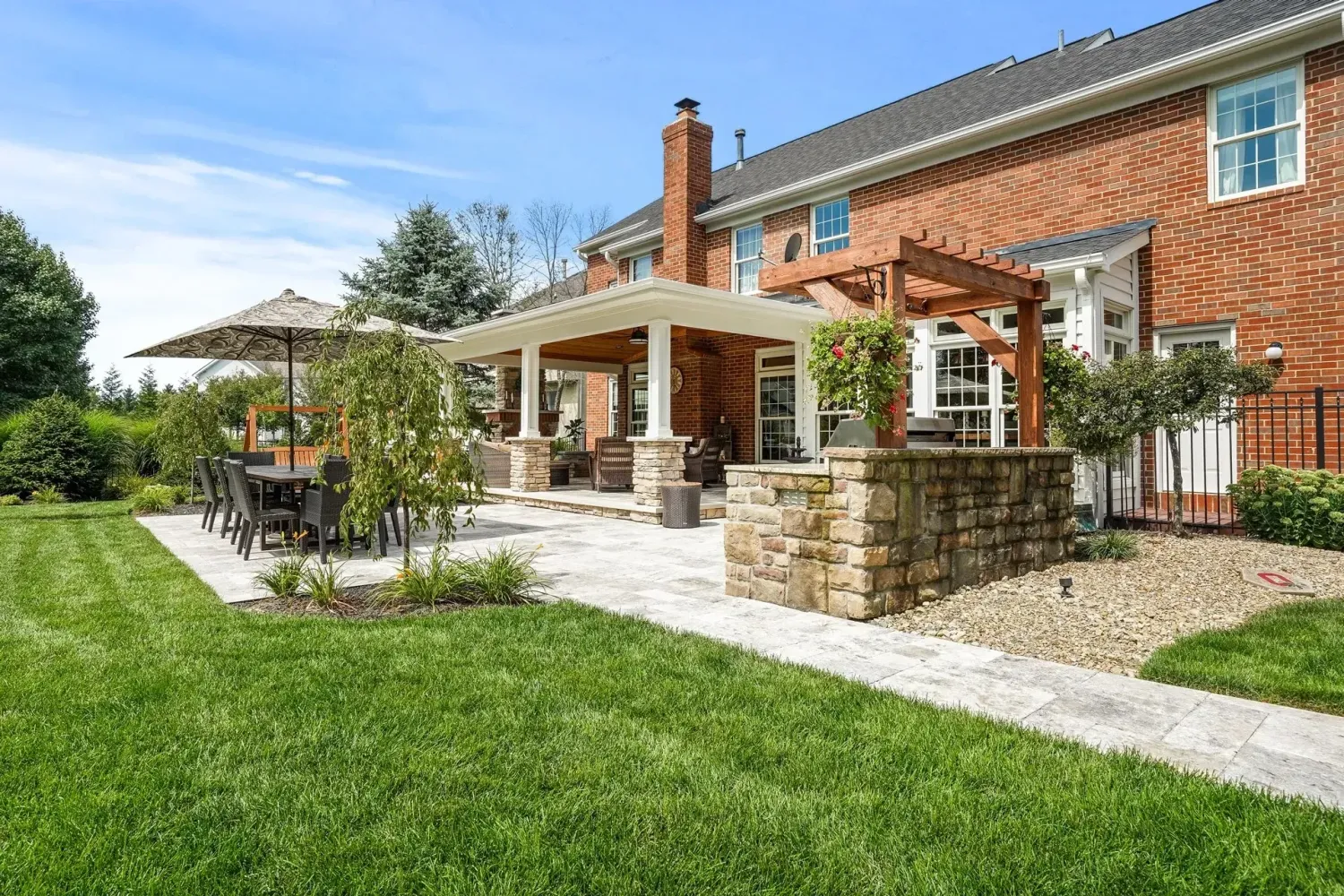
The 68% Number — Why Forsyth Is a Different Humidity Market
The National Weather Service station at Cumming logs a summer mean relative humidity of 68% measured over the last ten-year average window. The Peachtree-DeKalb station inside I-285 logs 62% for the same window. Six points sounds trivial. For wood decay it is not.
Wood rots when its moisture content climbs above 20% and stays there. Humidity above 65% ambient pushes unfinished or weather-checked cedar into that range during morning and evening hours through most of June, July, August, and early September. Cedar that dries out between rain events in Sandy Springs never fully dries out in north Forsyth — especially north of Hwy 369 toward Coal Mountain, where the Lake Lanier evaporation effect rolls inland after 10 p.m. most summer nights.
The USDA Forest Products Laboratory decay-hazard index places Forsyth County in Zone 4 (severe) for above-ground untreated wood. Cobb and most of Fulton sit in Zone 3. That single zone shift equates to roughly 1.8x the decay rate in ground-contact and splash-zone conditions, and that multiplier is why a cedar pergola built to the same spec in Milton and in Coal Mountain will fail on different timelines.
The Forsyth humidity differential: Average summer RH is 68% in Cumming vs 62% at PDK Airport. That six-point gap pushes cedar moisture content above 20% for an additional 400+ hours per summer — the exposure band where fungal decay initiates.
Why Cedar Was Ever the Default — And Why It Shouldn’t Be Here
Western red cedar became the Southeast pergola default in the 2000s for three reasons that are all real and all secondary to climate fit. It accepts stain beautifully. It has natural thujaplicins that resist fungi in dry and moderate-humidity climates. And it mills clean — clear grades pull straight, hold detail on chamfered corners, and produce the visible craftsmanship homeowners are paying for when they sign a $12,000 to $18,000 pergola contract.
None of those advantages survive contact with 68% sustained humidity. Cedar’s thujaplicin concentration drops sharply in the outer 1/8 inch within three years of weather exposure, and once that protective chemistry leaches out the sapwood-adjacent heartwood is functionally no more rot-resistant than pine. What homeowners think they are buying — the 25-year cedar life their contractor quoted from a manufacturer pamphlet — is a number drawn from Pacific Northwest and Mountain West field studies. It is not a Georgia number.
In Forsyth County specifically, the cedar life cycle we measure on pergolas we inspect, re-stain, and tear out runs 8 to 11 years before the first structural member needs replacement, with a realistic full-system life of 10 years before the total repair spend exceeds the original build cost. Cedar built to the same spec in Knoxville, Tennessee or Asheville, North Carolina routinely hits 13 to 15 before that crossover.
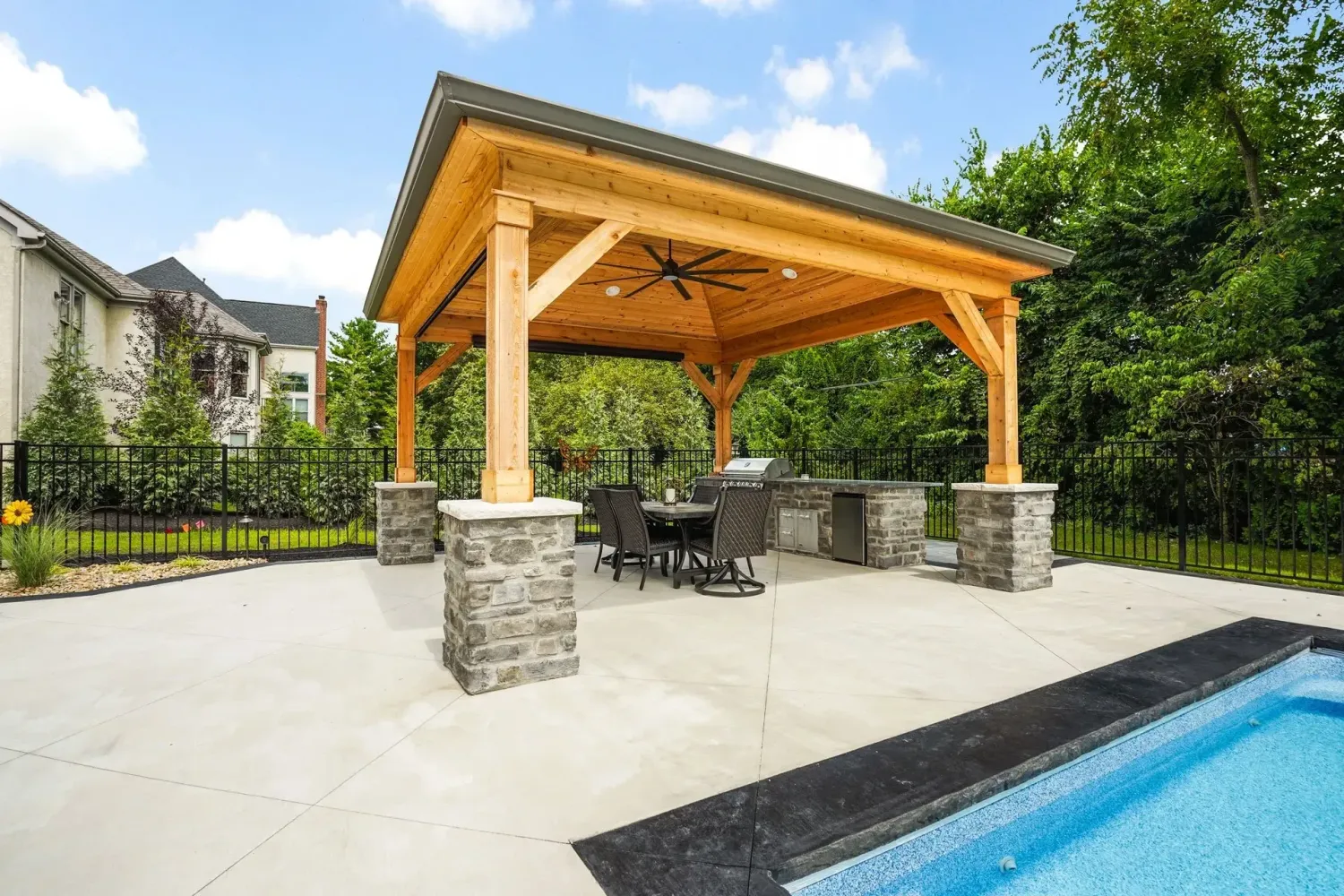
The Decay Pattern — Exactly Where Forsyth Pergolas Fail First
We have documented the failure sequence on enough Forsyth County pergolas to map it. Year one through three looks fine from every angle. Year four is when the first cosmetic signs show: dark streaking below the beam-to-post junctions, slight cupping on the top faces of the rafters, and the early west/southwest face of the posts beginning to check along the grain.
Year five and six is when the re-stain interval drops. A cedar pergola in Atlanta proper needs staining every three to four years. In Forsyth, at the Lake Lanier shoreline or in neighborhoods off Post Road and Kelly Mill Road, the realistic interval compresses to two to three years. Homeowners who stretch to four find the stain is no longer penetrating — it is sitting on a surface that has already breached.
Year seven through nine is when the load-bearing failures begin. The post bases absorb ground-reflected moisture, the end grain at the post tops wicks beam moisture downward, and the notched saddles where rafters seat on beams hold standing water after every Forsyth afternoon thunderstorm. We core-sample in year eight regularly and find interior moisture content at 28% to 34% — well above the 20% decay threshold — on posts that still look structurally sound from outside.
- Post base (first 8 inches): ground-reflected humidity plus sprinkler spray, softens by year 6–8
- Post top end grain: wicks water down from beam-to-post junction, checks and opens by year 5
- Beam saddles where rafters sit: collect standing water, fail by year 7–9
- West-facing rafter faces: UV plus afternoon storm cycles, cup and check by year 4–6
- Any horizontal flat trim: fascia, cap boards — fail 2–3 years ahead of structural members
Three Alternatives That Actually Work in Forsyth’s Climate
If cedar is a 10-year answer to a 25-year question, the obvious follow-up is what belongs in a Forsyth County pergola instead. There are three materials we build with regularly and stand behind in writing, each with distinct cost, life, and look.
Pressure-Treated Southern Yellow Pine with Advanced Protection
Modern pressure-treated southern yellow pine is not your uncle’s green-tinted deck lumber. The MicroPro Sienna and Wolman AG classes use micronized copper azole treatment rated for above-ground and ground-contact UC4A exposure, which is the actual Forsyth humidity environment. Installed at $8 to $11 per square foot of pergola footprint including hardware and stain, they carry a realistic 18-year structural life in our climate with an every-four-year restain cycle. The material machines clean, takes stain to look nearly identical to cedar, and costs roughly 35% less upfront.
The tradeoff is weight and the occasional knot. Pressure-treated yellow pine is denser than cedar, so rafter spans over 12 feet need upsized members. We typically run 2×10 rafters instead of 2×8 for unsupported spans over 11 feet.
White Oak — The Premium Answer
Appalachian white oak, quartersawn or rift-sawn, is the material we specify on pergolas attached to homes where the architecture justifies the spend. White oak’s tyloses (cellular plugs that block water movement through the wood grain) give it a decay resistance roughly double cedar’s even in high-humidity conditions. Installed at $14 to $22 per square foot depending on grade and hardware, it carries a realistic 25-year structural life in Forsyth conditions with a five-to-seven-year restain cycle.
White oak is what you see on the historic outbuildings still standing in Sawnee Mountain Preserve — the same hardwood, same climate, 80+ years of service. It is also what the higher-end custom builds in Bethelview, Shiloh, and Big Creek’s 3-to-5-acre estate lots have been specifying since 2022, and the material we expect to see become the new default at the top of the Forsyth pergola market by 2027.
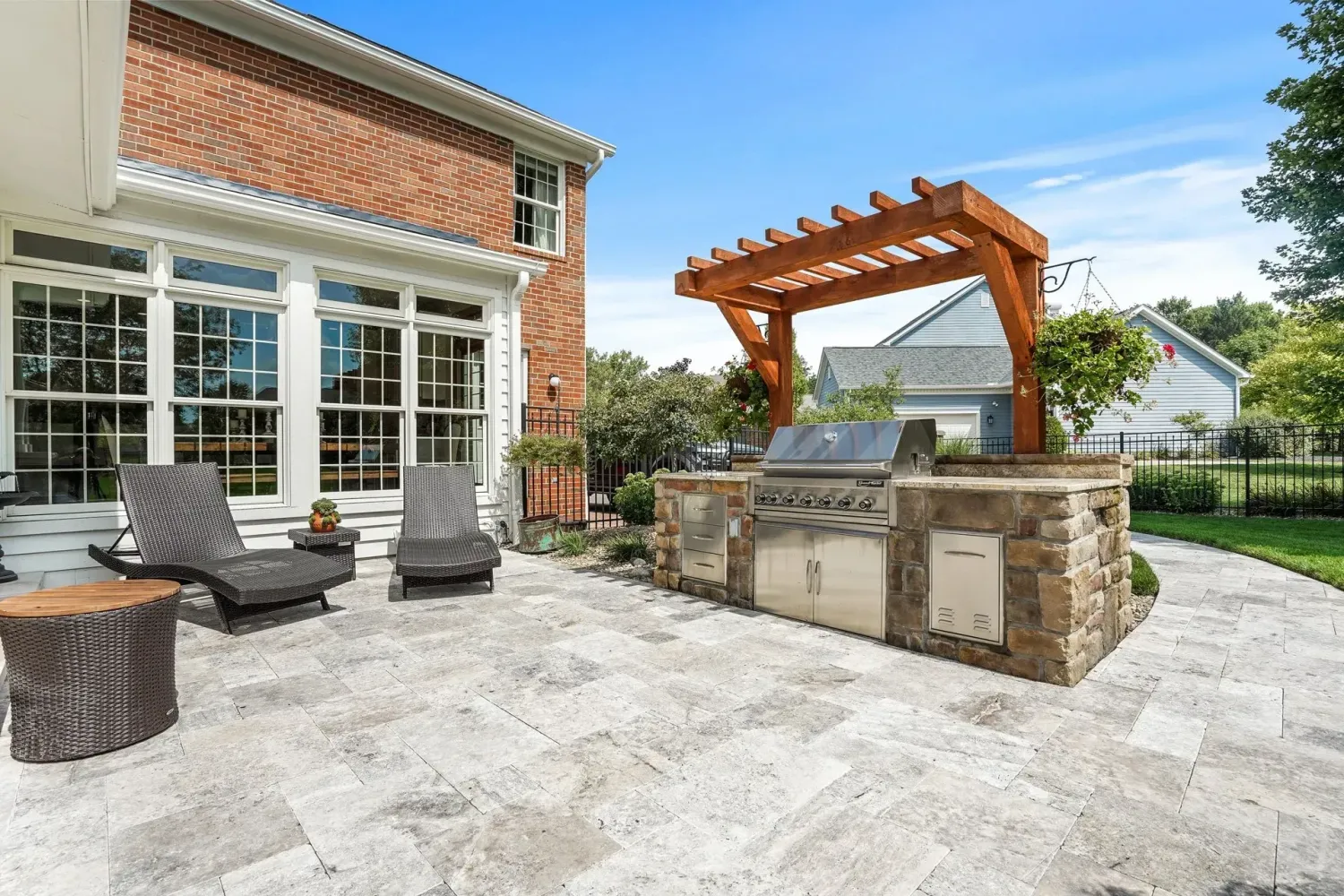
Structural Aluminum
Powder-coated structural aluminum pergolas — brands like Struxure, Azenco, and Renson — enter at $26 to $38 per square foot installed and carry a 40-year powder-coat warranty that applies in Forsyth’s humidity band without modification. There is no stain cycle. There is no re-seal. There is no seasonal expansion problem.
The aesthetic is different. Aluminum reads modern, often louvered, and slots into contemporary architecture better than traditional ranch or Craftsman homes. For the newer south Forsyth subdivisions built 2010 or later — particularly the ones clustered off GA-400 exits 13 through 15 — aluminum is now our most-specified pergola material, running roughly 55% of installs in that submarket.
Total Cost of Ownership — The Real Math Over 20 Years
Upfront pergola price is a misleading number when the material life cycles differ by 2x to 4x. The honest comparison is total cost of ownership over a 20-year window, because that is the realistic period a Forsyth homeowner will own the pergola they build today.
Run the numbers on a 14 x 18-foot pergola (252 square feet of footprint, industry-standard Forsyth spec) and the spread is large enough to change the decision:
- Cedar: $14,000 build + $4,200 in 7 restain cycles + $11,000 full replacement at year 10 = $29,200 over 20 years
- Pressure-treated pine w/ Advanced Protection: $9,800 build + $2,400 in 5 restain cycles + $0 replacement (18-yr life) = $12,200 over 20 years
- White oak: $17,500 build + $2,800 in 4 restain cycles + $0 replacement (25-yr life) = $20,300 over 20 years
- Structural aluminum: $24,500 build + $0 restain + $0 replacement (40-yr life) = $24,500 over 20 years
Cedar comes out the most expensive option over 20 years in Forsyth County — by $17,000 over pressure-treated pine and by roughly $8,900 over white oak. The reason it still sells is that the first contract is the smallest number, and most homeowners are not being shown the second and third contracts that follow it.
The 20-year truth for Forsyth buyers: cedar’s $14,000 sticker becomes $29,200 of total spend once you amortize restain cycles and the inevitable year-10 rebuild. Pressure-treated southern yellow pine at $9,800 upfront delivers better structural life and costs 58% less over the same window.
Forsyth Submarkets — Why the Right Answer Changes by Zip Code
Forsyth County is not one market. It is at least three, and the right pergola material shifts with geography. Treating all 247 square miles of the county as a single spec is where most builders cost their clients money.
North Forsyth (30028) — Coal Mountain, Shady Grove, Ducktown, and the rockier ridgeline neighborhoods north of Hwy 369. This submarket runs the highest humidity exposure in the county because of the Lake Lanier evaporation effect after dark and the basin topography that traps wet air. We will not bid cedar here anymore. For custom estate builds on the 3-to-5-acre lots common in this zip, white oak and aluminum split the market roughly 60/40.
West Forsyth (30040) — Cumming proper, Bethelview, and the Hwy 9 corridor. This is the traditional subdivision belt where most of the county’s pergolas get built. Pressure-treated southern yellow pine with Advanced Protection is our default spec here; it hits the price point the market expects ($9,000 to $14,000 typical build) and delivers the 18-year life the homeowners need.
South Forsyth (30041) — Big Creek, Brookwood, Shiloh, and the GA-400 commuter corridor south of Hwy 20. Newer homes, tighter HOA-governed neighborhoods, and a strong architectural lean toward contemporary and modern farmhouse styles. Structural aluminum has become the default in this submarket since 2023, particularly in the Vickery, Windermere, and St. Marlo club communities.
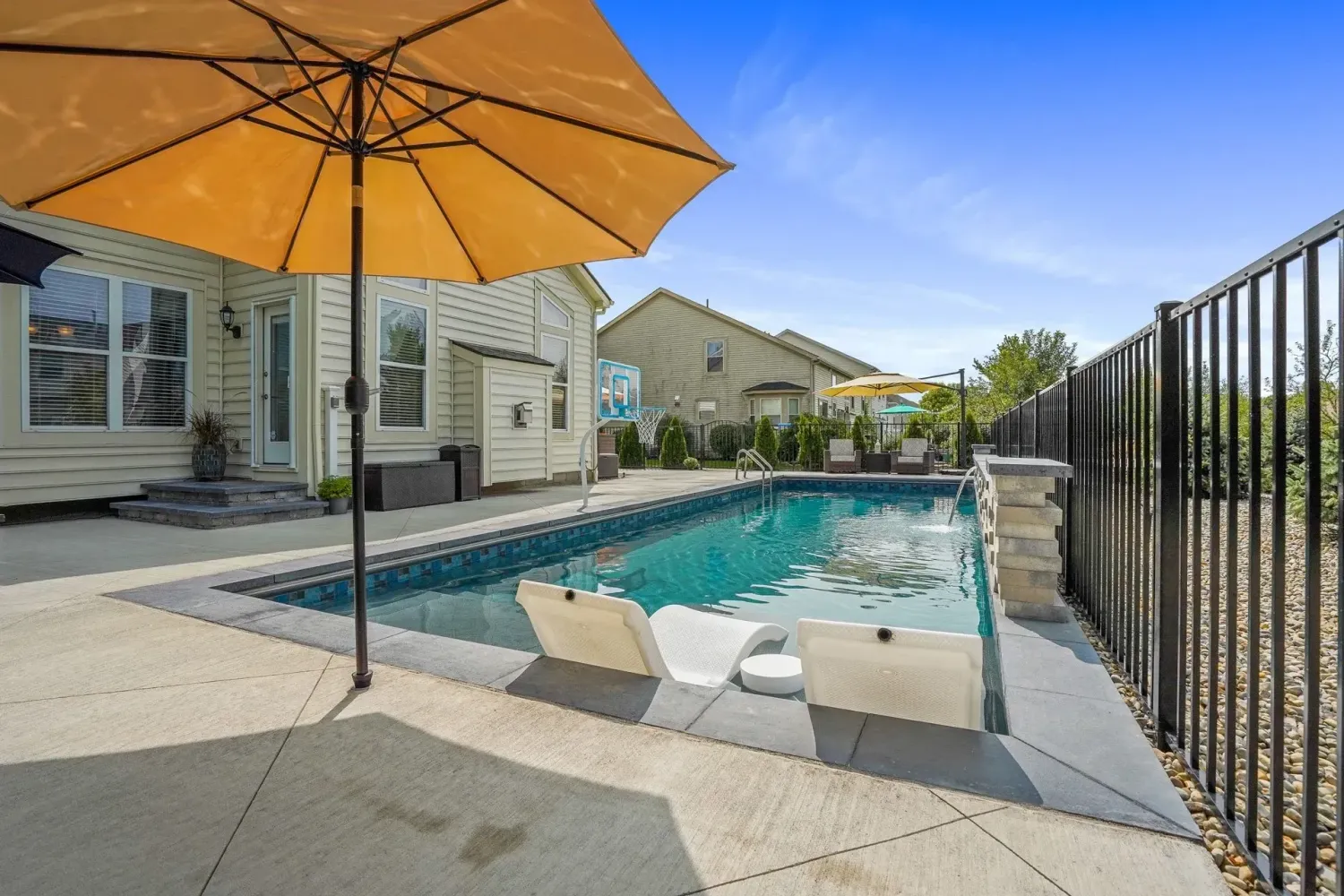
What to Ask Your Pergola Contractor Before You Sign
The Forsyth County permitting office approves over 200 pergola permits per year — roughly 4 every business day at peak season — and the county building department does not specify wood-species performance on the permit. That is the contractor’s call, and most default to cedar because it is what they have always built. If you are buying a pergola in Forsyth, the contract conversation has to cover five specifics.
- Material name and grade written into the contract. “Cedar” is not a spec. “Western red cedar, clear heart grade, architectural” is a spec. “Pressure-treated southern yellow pine, MicroPro Sienna, UC4A ground-contact rated” is a spec. If it is not in writing, it is not in the build.
- Published manufacturer warranty on the wood preservation treatment. Cedar has no warranty. Treated pine from reputable mills carries a limited lifetime warranty against decay and termites. Aluminum carries a powder-coat warranty. Ask for the warranty document before you sign.
- Hardware specification — ACQ-rated fasteners and hangers. Modern treated pine requires hot-dip galvanized or stainless hardware. Electroplated screws corrode in two seasons. Simpson Strong-Tie ZMAX or stainless is the right answer.
- Post anchor detail — no posts in direct concrete contact. Every post should land on a standoff bracket (Simpson PBS or equivalent) that holds the wood at least 1 inch above the concrete. Posts cast directly into concrete footings fail from the ground up in Forsyth every time.
- Stain and seal schedule in the 5-year maintenance addendum. The realistic restain interval for wood pergolas in Forsyth is two to three years. The contract should name the product (Cabot Australian Timber Oil, TWP 1500, Armstrong Clark), the interval, and who is responsible.
A contractor who cannot answer those five in writing is a contractor who has not priced the real climate. Almost every failed pergola we tear out and replace in Forsyth traces back to a contract that skipped at least three of the five.
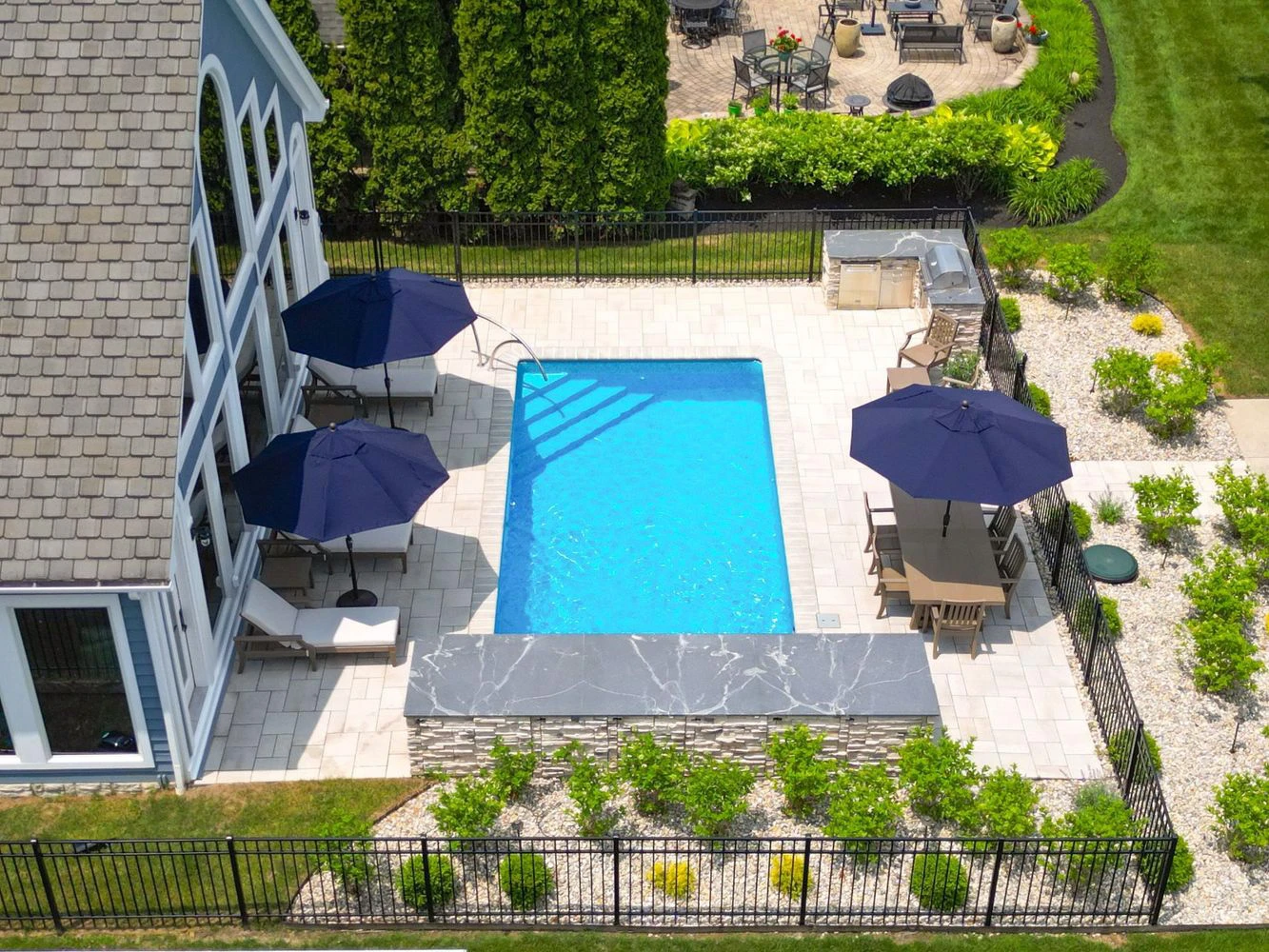
Pergola construction engineered for Forsyth County’s humidity across 20+ cities within 30 miles of Snellville, GA
Cedar is a climate-mismatch in Forsyth’s 68% humidity envelope. We build pergolas in pressure-treated southern yellow pine, white oak, and structural aluminum — specified by submarket, written into contract, and engineered for 20-year performance.