
The call came in on a Tuesday afternoon from a dad in St. Marlo who had just sat through a 40-minute HOA architectural review meeting. “They told me they’d rather approve ten beach entries than one diving board,” he said. “My kids are 3 and 6. Build me the beach entry.”
That conversation is not unusual. Since 2021, the architectural review boards serving St. Marlo Country Club and Polo Fields Country Club in Cumming have approved beach-entry pool plans over traditional diving-well plans at roughly a four-to-one ratio. Parents with young kids are driving that trend, and Forsyth County — the fastest-growing county in Georgia, now pushing 260,000 residents — has a deep bench of those families.
This post walks through exactly how we build a beach entry for a Cumming backyard. Slope math, non-slip plaster choice, tanning-ledge integration, ARB submission timing, and the real dollar spread over a standard step-entry build. If you are comparing this feature to a diving well or a traditional step entry, you should walk away knowing whether it fits your family and your lot.
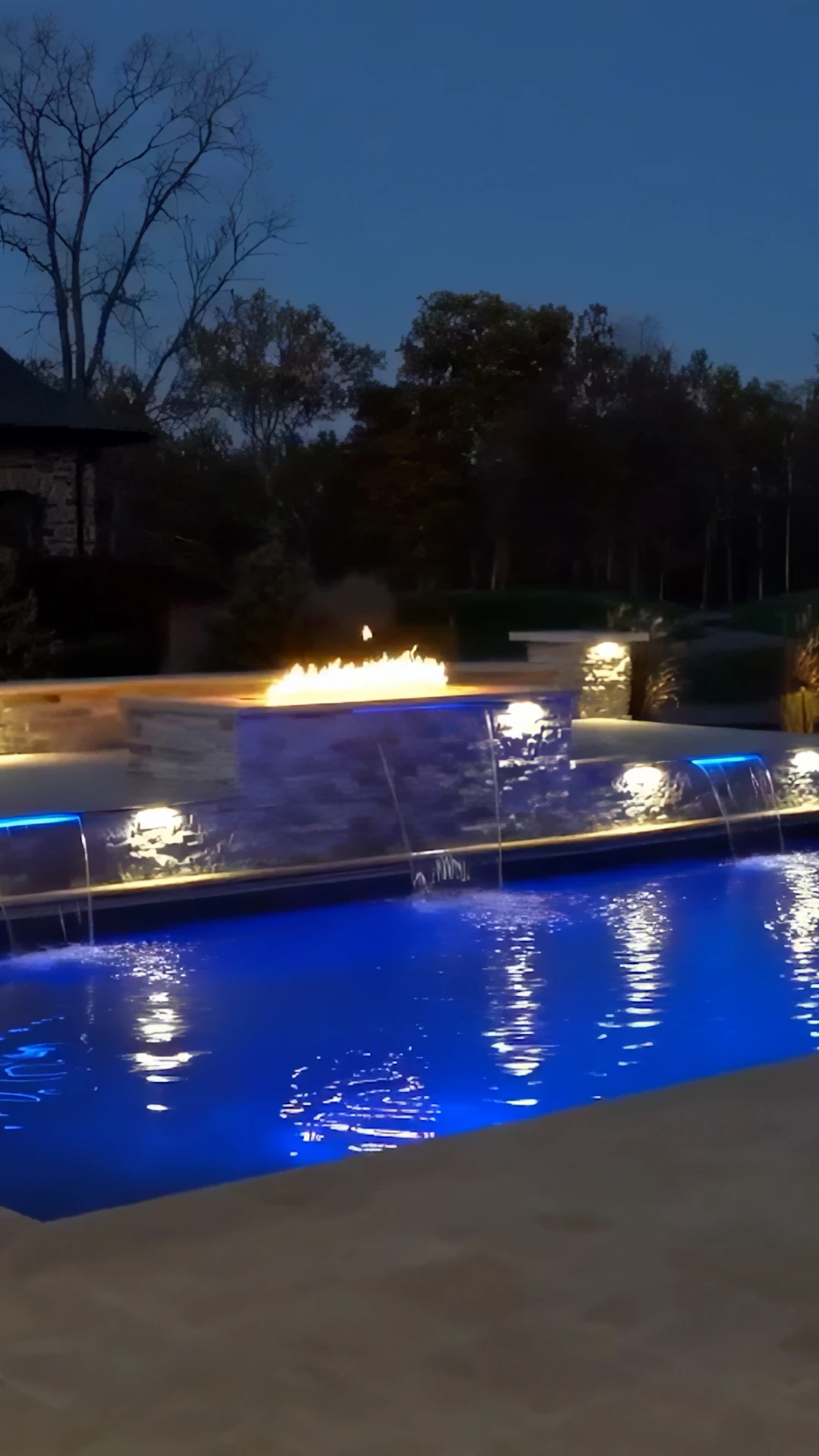
Why Beach Entries Dominate ARB Submissions in St. Marlo and Polo Fields
A few years back, the default luxury-subdivision pool in the 30040 and 30041 zip codes had a diving board, a deep end at eight feet, and three tiled steps at the shallow end. Now, a pool installed in the same neighborhood in 2024 almost never has a diving board — and almost always has a beach entry.
Three reasons drive that shift.
Insurance liability. Most of the HOAs in St. Marlo and Polo Fields, along with the homeowner policies their residents carry, treat diving boards as an elevated-risk feature. Beach entries, by contrast, actively reduce risk for the youngest swimmers — zero depth means a toddler can walk in instead of stepping off a vertical edge.
Demographic. Cumming is attracting Atlanta-metro relocation buyers in their mid-30s to mid-40s with kids under ten. They tour model homes, they see beach entries in the backyard photos on the listing, and that is what they ask for when they close.
Design language. A beach entry reads as luxury resort. A diving well in a residential pool reads as 1990s. The Forsyth County Department of Planning & Community Development at 110 E. Main St. has been issuing permits for this pattern so frequently that their reviewers recognize the slope diagrams at a glance and tend to turn plans around faster.
ARB submission window for St. Marlo & Polo Fields: Expect a 2-3 week turnaround from stamped drawing to approval for clean beach-entry submissions. Complicated freeform or attached-spa designs can add another review cycle. Always schedule the ARB clock before the county permit clock.
The Build Spec — What a Correctly Engineered Beach Entry Actually Is
A beach entry is not just a ramp. A correctly built one is a carefully graded, textured, drained, and lit transition from dry deck to swimming depth. The geometry we use at Primetime Pools for Cumming builds is consistent across projects because the physics do not negotiate.
The slope runs from zero depth to 3 feet over 12 to 16 linear feet. That produces a 6% gradient, which is shallow enough for a toddler to walk in without falling but steep enough that the shallow zone does not eat the entire pool footprint. Go any flatter and you lose useable swim space. Go any steeper and the entry becomes a slip hazard under sandal-wet feet.
The floor is textured with Pebble Tec Sheen in the entry zone. Sheen is the smoother of the Pebble Tec finishes, but we add a light aggregate broadcast in the beach area specifically for grip. Smooth white plaster fails this test — it becomes a skating rink when wet. We have rebuilt exactly that mistake on two resale pools in the Lake Windward and Windermere neighborhoods in the last four years.
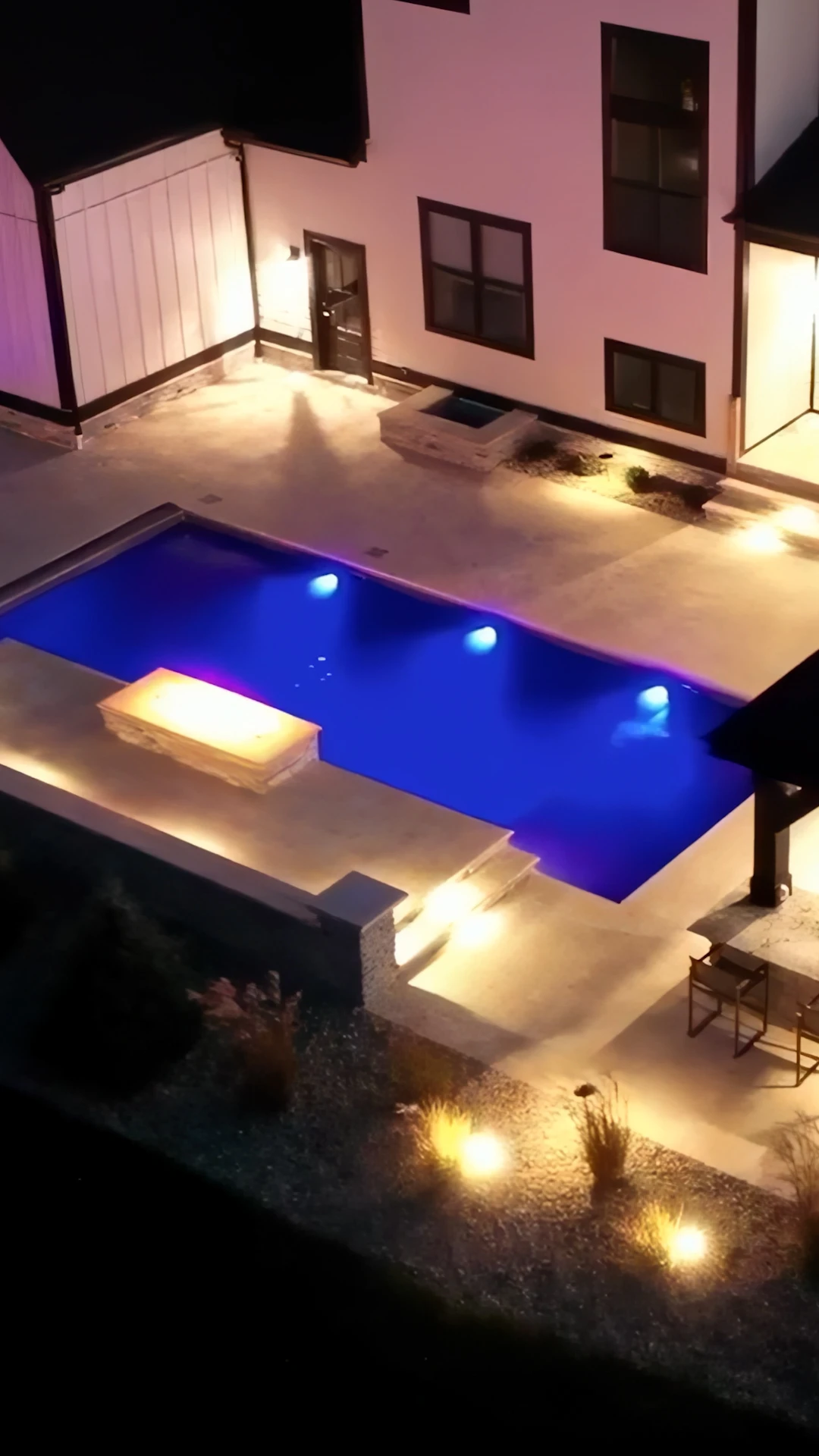
The Tanning Ledge That Belongs Inside the Beach Entry
A beach entry without a tanning ledge is half a feature. Every Cumming build we deliver includes an 18-inch-deep integrated tanning ledge sized for two chaise lounges side by side, positioned at the inside bend of the beach entry so adults can sit ankle-to-waist deep while toddlers splash in the zero-depth zone beside them.
The ledge itself is built with two specific infrastructure moves. First, we set two umbrella sleeves into the concrete deck at the ledge edge. Each sleeve is a 2-inch stainless receiver, flush with the plaster, so the pole of a standard patio umbrella drops straight into the ledge and does not have to be wrestled against wind. Second, we install submersible LED accent lights at the waterline transition between the beach entry and the ledge. Those lights do two jobs: they define the depth change visually at night so adults do not mis-step, and they turn the ledge into a lit feature after dark.
The total upcharge for a beach entry plus tanning ledge over a standard step-entry pool is $18,000 to $32,000. The spread depends on square footage added, whether the ledge is plumbed for bubblers, and whether you are installing color-change LED or single-color submersible fixtures. Polo Fields builds typically land in the upper half of that range because the lots favor larger pools.
What Cumming’s Soil and Elevation Actually Demand
Three environmental realities in Forsyth County shape how we detail a beach entry. None of them show up in a generic builder’s catalog — but they show up in a two-year-old pool that is settling, cracking, or reading chemistry wrong.
Piedmont clay base. The dominant soil across Cumming is the Cecil series of Piedmont clay, with pockets of Appling sandy loam in the older farm tracts. Cecil clay is dense and high-shrink. A beach entry built on unstabilized Cecil clay without proper subgrade prep will telegraph a hairline crack across the beach surface at the 2-foot mark inside three winters. We stabilize the beach zone subgrade with a 12-inch compacted gravel base and a steel mesh cage running the full slope.
Grade drops. Many backyards in Three Chimneys, Mashburn Plantation, and along Bethelview Road have 3 to 8 feet of grade drop toward South Forsyth drainage tributaries. That matters for beach entries because the visual horizon of the feature wants to sit roughly level with the house patio. If the lot drops eight feet, a retaining wall at the deep end is non-negotiable and has to be engineered alongside the pool shell, not added later.
Lake Lanier humidity. Forsyth County sits on the southwest edge of Lake Lanier, and proximity to the lake drives evaporation rates slightly higher than you see in Dacula or Grayson just to the south. That means a beach entry — which has more surface area exposed to sun per gallon than a rectangle — loses water faster. We sequence our pool fills to account for it, and we sometimes recommend an autofill line for beach-entry builds that a standard step-entry pool would skip.
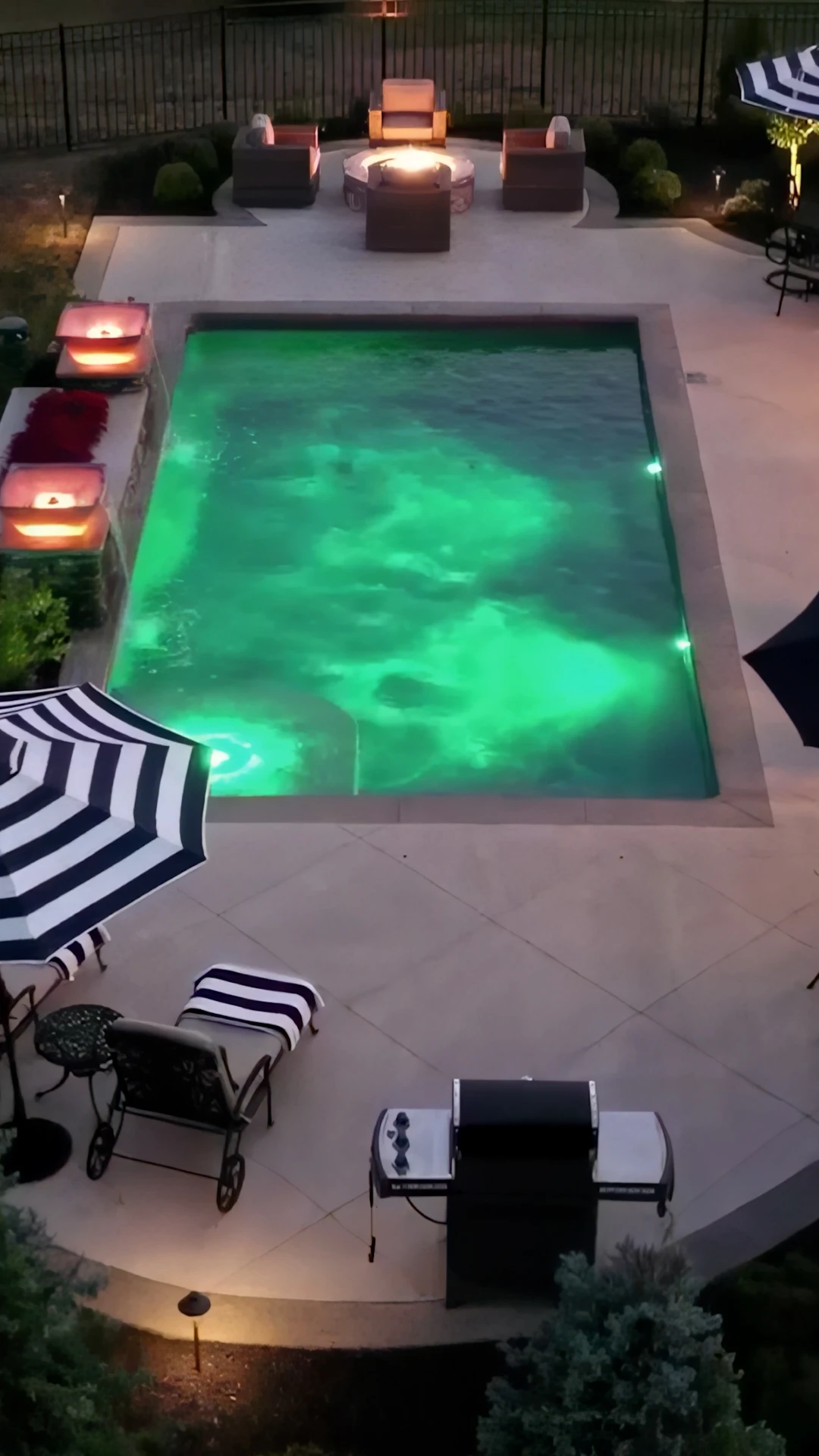
A Real Project — Polo Fields, Summer 2024
The Polo Fields family came to us in February 2024. Two kids, ages 4 and 7. Existing backyard with a 7-foot grade drop toward the property line, a 240V subpanel on the back of the house, and a clean view south across the golf course. They had seen a beach entry on a resort vacation in the Florida panhandle and wanted that feeling at home.
We delivered stamped drawings on March 4. Polo Fields ARB approved in two weeks. Forsyth County permit came through from the office at 110 E. Main St. eleven days after submission. Sawnee EMC — one of the largest EMCs in Georgia — coordinated a 240V service upgrade for the pool equipment pad; that took another three weeks and was the longest line item on the critical path, which is common in Forsyth. Sawnee EMC 240V service work is a standard sequence now for every luxury pool we build in the county, and if a contractor does not mention it in the first meeting, that is a signal.
The final shell was rectangle 18×38 with a 14-foot beach entry on the south long side and an 8×8 tanning ledge at the inside corner. Beach surface finished in Pebble Tec Sheen with aggregate broadcast. Two umbrella sleeves cast in 32 inches apart. Four submersible color-change LEDs on the ledge-to-entry transition. Total build time from excavation to first fill: 14 weeks, with a 3-day rain delay in week 6.
The upcharge on this pool for the beach-entry and tanning-ledge package versus a traditional three-step entry was $28,400. The family has since told us their daughter learned to swim in that beach area between June and August of 2024. That outcome is the point.
The Polo Fields critical path: ARB approval (14 days) → Forsyth County permit (11 days) → Sawnee EMC 240V upgrade (21 days) → excavation through fill (14 weeks). Total elapsed time 20 weeks. The EMC service upgrade almost always sets the real start date — not the permit.
The Cumming Neighborhoods Where This Feature Makes the Most Sense
Not every Cumming backyard needs a beach entry. We turn down about one in six inquiries for this feature because the lot, the family’s usage pattern, or the budget makes a simpler design smarter. The families where beach entries deliver the clearest return share a few traits.
Young children — typically the oldest child is under 10 when the pool breaks ground. Lot size of at least a third of an acre, because a beach entry consumes 200 to 260 extra square feet of pool footprint. A flat or mildly rolling back yard; severe grade drops push the retaining cost high enough that the beach entry stops penciling. And an HOA that reviews pool plans — the feature earns its keep fastest where ARBs explicitly favor it.
Neighborhoods where the pattern repeats most frequently: St. Marlo, Polo Fields, Windermere, Vickery, Hampton Park, Lake Windward, and the newer 2018-and-later luxury tracts along Post Road and McFarland Parkway. We also see consistent demand from the Sadie Farms and Haw Creek areas, where lot sizes tend to be generous.
Cumming families in smaller 2000–2010 subdivisions with tighter back yards are often better served by a stretched rectangle with a generous tanning ledge and no beach entry — the footprint does not lose swim space that way. We will say so in the first meeting if that is what your lot tells us.
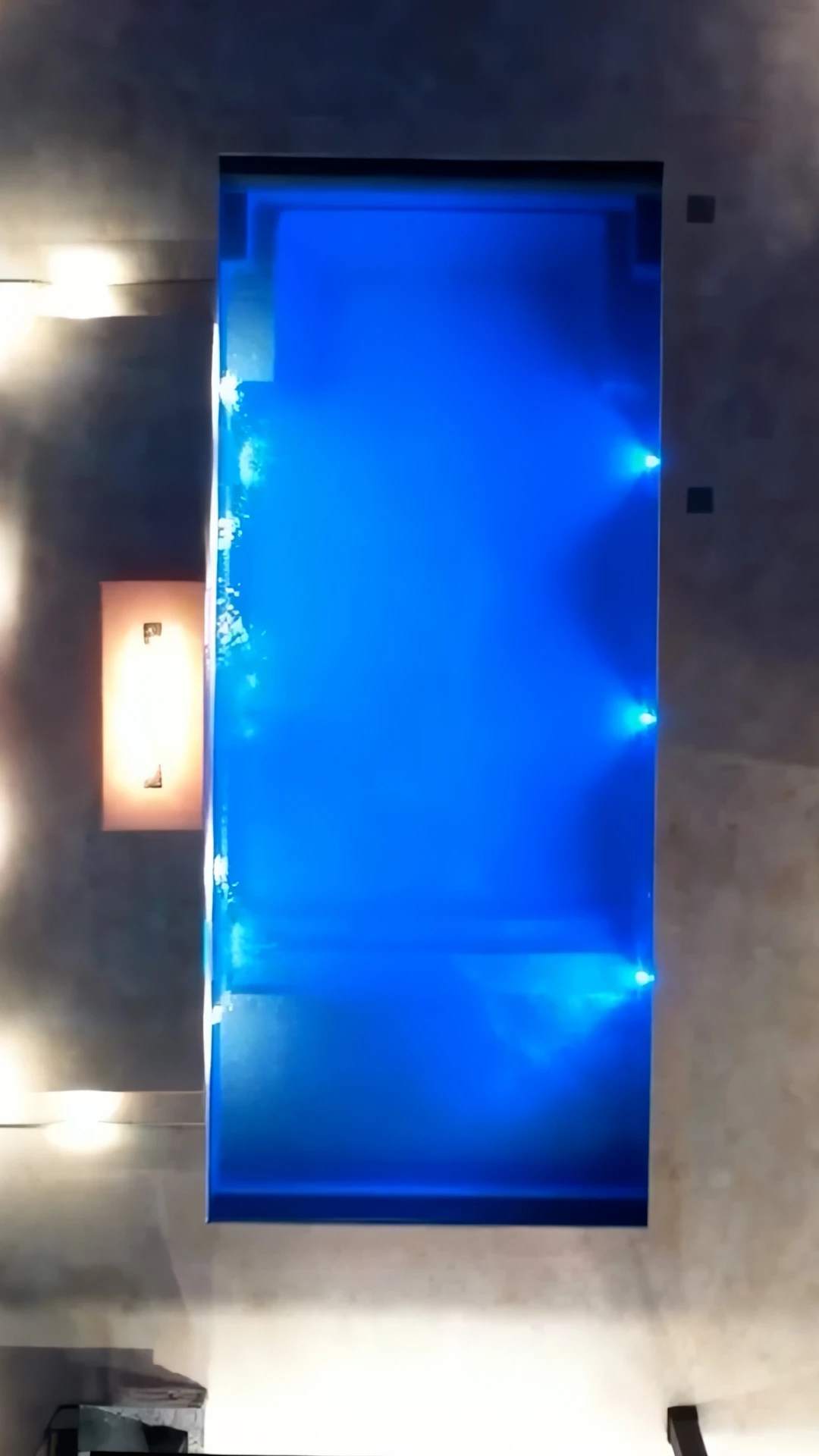
Chemistry and Maintenance — What Changes With Zero Depth
A beach entry changes how the pool heats, how it circulates, and how chemistry reads. Ignoring those changes is how good beach-entry pools get bad reputations.
Heat. Zero depth means the first 18 inches of pool water is in direct solar contact for most of the day. In July and August, when Cumming highs hit 89 to 94°F, beach-entry pools naturally run 2 to 4 degrees warmer in the shallow zone than the main basin. Most families love this. A few order a chiller for the hottest months; we specify them in the upper 10% of beach-entry builds.
Circulation. A beach entry is a dead zone for return flow unless plumbed correctly. We set two dedicated return jets below the waterline at the 1-foot and 2-foot marks, angled to push water across the beach toward the main basin. Without those returns, the beach entry becomes a puddle where algae blooms first and the skimmer never catches it.
Chemistry. The higher surface-area-to-volume ratio of a beach-entry pool means chlorine burns off faster in direct sun. Combined with the slightly elevated evaporation from Lake Lanier proximity, Cumming beach-entry owners should expect to add roughly 10-15% more chlorine over a season than they would for a comparable rectangle. Salt-chlorine systems handle this automatically; tab-fed systems need attention.
What to Ask a Contractor Before You Sign — Cumming-Specific
If you are interviewing builders for a beach-entry pool in Forsyth County, these are the questions that separate a seasoned local contractor from a generalist reading a spec sheet.
- Have you submitted a beach-entry plan to St. Marlo or Polo Fields ARB in the past 12 months? If not, expect a slower review cycle.
- What is your subgrade spec for a beach entry on Cecil clay? A good answer names compacted gravel depth, steel mesh, and a control-joint strategy.
- Have you coordinated a Sawnee EMC 240V service upgrade before? If the answer is no, your build start date is at risk.
- What is your slope gradient and what is the textured finish in the entry zone? 6% and Pebble Tec Sheen with aggregate broadcast is the benchmark.
- How do you plumb returns through the beach zone? The right answer is at least two dedicated jets, not skimmer draw alone.
- What is the written dollar spread for the beach-entry + tanning-ledge upcharge? A real builder will quote $18K to $32K and explain what drives the variation on your lot.
The families who call us about beach entries almost never call us back with buyer’s remorse. They call to send a photo, to ask about a pool cover for winter, or to tell us the three-year-old finally swam the length of the tanning ledge unassisted. That is the feature doing its job — turning the backyard into the place the family spends the summer instead of the place they photograph and avoid.
If you are in our service area and you are building in Cumming, Forsyth County, a beach entry is worth seriously considering. If your lot and family profile fit, it will be the feature you thank yourself for every June for the next fifteen years.
Custom Pool Construction across 20+ cities within 30 miles of Winder, GA
Beach-entry and tanning-ledge builds for Cumming, St. Marlo, Polo Fields, and the surrounding Forsyth County neighborhoods — engineered for Cecil clay, Lake Lanier humidity, and Sawnee EMC service realities.