
Every Marietta homeowner planning a pool eventually hits the same fork in the road: attached spa or detached hot tub? The brochure photo makes it feel like an aesthetic choice. It isn’t. It’s a plumbing, heating, and 240V service decision that reshapes the whole project budget.
Here is the comparison in the simplest terms before we get into the math. An attached spa is a concrete vessel poured with the pool shell, sharing the same heater, the same pump room, the same plaster or pebble finish. A detached hot tub is a self-contained acrylic unit — a Jacuzzi J-495, a Hot Spring Grandee, a Bullfrog STIL7 — sitting on its own concrete pad with its own heater and its own dedicated 240V circuit.
Both heat water. Both hold 104°F. That is where the similarity ends. On an East Cobb build with Piedmont clay soil and a 6-foot grade drop, the difference between the two options ranges from $14,000 on the low end of detached to $38,000 on the high end of attached — and the decision touches everything from your permit pull at 1150 Powder Springs St to how fast the water hits 104°F on a 34°F February night.
This post walks you through the actual plumbing and heating math, a cost breakdown you can compare against any bid on your desk, and the neighborhood-by-neighborhood reality of which option gets approved where.
1. What an Attached Spa Actually Costs to Build in Marietta
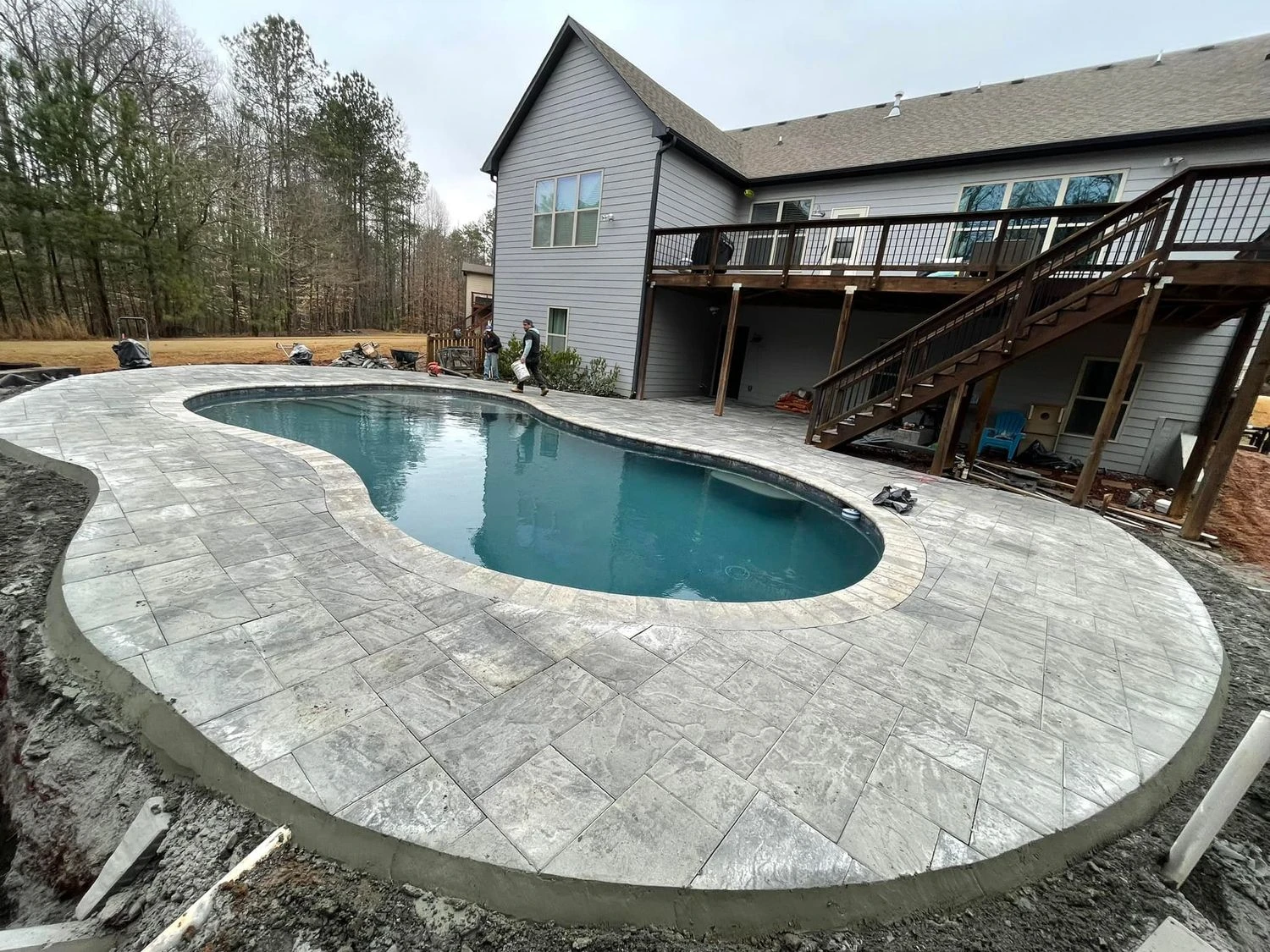
An attached spa is not a hot tub. It is a second concrete vessel — typically 450 gallons, roughly 7 feet square — poured integral with the pool shell, sharing rebar, sharing plumbing, and sharing the pump room. Because it is part of the pool build, every line item scales: more plaster, more tile, more coping, more excavation, more rebar, more shotcrete.
On a Marietta build, the honest adder for an attached spa is $22,000 to $38,000. The range widens by finish. A simple spa with the same plaster as the pool, a standard waterline tile, and a pair of jets lands near the bottom. A spa with an all-tile interior, a linear trough spillover, full-color LED, and a dedicated 400,000 BTU heater lands at the top. Across recent East Cobb builds, homeowners tend to settle at $27,000 to $31,000, which buys a 450-gallon vessel with six hydrotherapy jets, a raised spillway, and a shared heater.
The most common mistake on the attached side is forgetting that a spa is also a plumbing job. You need a dedicated spa loop — a 2-inch suction line, a 2-inch return, and independent spa jets tied back to the same circulation pump. On a walkout-basement lot where the equipment pad is 40 feet from the shell, that is another 160 feet of Schedule 40 PVC and a few extra fittings. The rough plumbing has to be set before the rebar crew wraps the shell. Skip that sequencing and you end up coring shotcrete later, which is not a line item anyone wants to pay for.
Attached spa all-in range on a Marietta build: $22,000 low (shared plaster, 2 jets, shared heater) to $38,000 high (all-tile interior, 6 jets, dedicated 400k BTU MasterTemp, LED, trough spillover). Median East Cobb build lands near $29,000.
2. What a Detached Hot Tub Actually Costs to Drop In
The detached side is a different species. You are buying a finished product, running a dedicated electrical circuit, and pouring a pad. That is the whole job.
On unit cost, the Marietta price floor for a genuinely premium detached spa is the Bullfrog STIL7 at about $14,000 delivered. The Hot Spring Grandee sits in the middle at about $17,500. At the top, the Jacuzzi J-495 with full PowerPro therapy seats runs $22,000 to $24,000. These aren’t the Costco aboveground models — they are seven-seat, 340-gallon, closed-cell-foam-insulated units rated for Zone 7b winters.
Then add the site work. A 4-inch reinforced concrete pad sized 8 feet by 10 feet with wire mesh and a vapor barrier runs about $2,400 in Cobb County, assuming decent access. The 240V/50A service — a subpanel breaker, 50 feet of 6/3 wire in conduit, a GFCI disconnect within sight of the tub per NEC §680.42 — runs $1,800 to $2,400 depending on how far you are from the main panel and whether you are on Cobb EMC or Marietta Power.
All-in, a detached hot tub on a Marietta lot is $18,000 to $28,500. That is the number to hold in your head. The ceiling on detached is below the midpoint on attached.
3. The Heating Math — Why the 400k BTU Heater Changes Everything
This is the section where most blog posts wave their hands. The math actually matters, so we will do it.
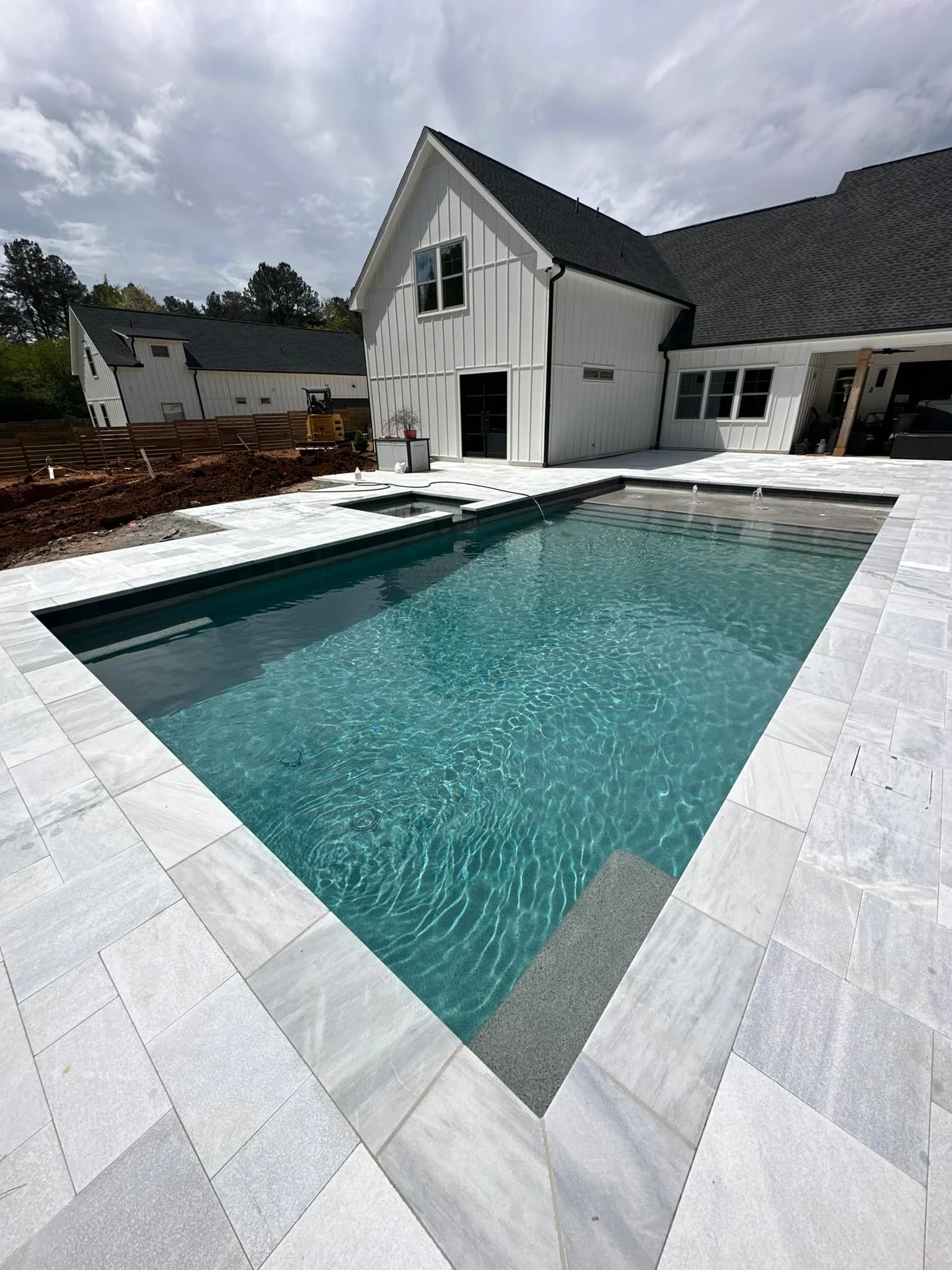
An attached spa on a Marietta build typically shares a Pentair MasterTemp 400k BTU natural-gas heater with the pool. For the spa alone, 400,000 BTU of input against a 450-gallon vessel raises the water roughly 1.8°F per minute on a cold day with the spa thermally isolated (suction valves shut from pool). Mathematically, 28 minutes takes 60°F source water to 104°F. Real-world on a 34°F February night in Cobb: closer to 32 to 35 minutes, because ambient loss through the exposed spa surface is not free.
A detached hot tub runs a different physics problem. A Hot Spring Grandee ships with a 6 kW (about 20,500 BTU) electric heater. Against 340 gallons, that’s roughly 0.1°F per minute of recovery. But — and this is why detached is the daily-use option — a detached spa is never cold. Its closed-cell foam and hard cover hold 104°F continuously, bleeding 2°F to 4°F per day to ambient. Recovery is measured in 15-minute top-ups, not 30-minute cold starts.
The attached spa wins the sprint. The detached hot tub wins the marathon.
Gas vs electric cost, on paper
Natural gas at the current Marietta rate of roughly $1.30 per therm means a 400k BTU heater burning four therms an hour costs $5.20 an hour to run. A detached spa at 6 kW on a Cobb EMC rate around $0.12 per kWh costs $0.72 an hour to run at full electric load. The attached spa is more expensive per minute of runtime — but it only runs 30 minutes. The detached spa is cheaper per minute, but it idles 24 hours a day. Annual operating cost lands about equal for a homeowner who uses the tub three nights a week.
4. Plumbing, Equipment Pad, and Where the Lines Actually Run
Attached spas add real complexity to the pump room. You are installing a second set of jet plumbing — typically six 1.5-inch jet lines tied to a dedicated spa blower and a booster pump. That is a six-return manifold, a Jandy valve to switch between pool and spa circulation, and a check valve to prevent the spa draining into the pool overnight. The pad gains about 18 inches of width.
On a 6-foot-grade walkout-basement lot like you see all over Burnt Hickory and the ridges above Sope Creek, the pump room placement drives the spa plumbing run. We prefer to tuck equipment pads below grade in a low-profile screened enclosure on the downhill side — which keeps noise out of the kitchen window and shortens the spa run to under 30 feet. If the pad ends up on the uphill side, you are looking at 50+ feet of buried plumbing, and every extra foot of 2-inch PVC burns a little heater recovery time.
Detached hot tubs are the opposite. You need one 50A circuit, one concrete pad, and an accessible location for the cover and the maintenance panels. The only real planning question is how far the tub sits from the panel. Houses in Indian Hills and Atlanta Country Club frequently have basement-mounted panels that mean a 70-foot conduit run from panel to subpanel to tub. That is why the electrical line item swings from $1,800 to $2,400.
5. Permits, HOAs, and the East Cobb Split
Both options pull a permit through Cobb County Community Development at 1150 Powder Springs St. An attached spa rides on the pool’s swimming pool permit — one application, one inspection schedule, one bond beam inspection, one final. A detached hot tub, because it is self-contained portable equipment, usually only pulls an electrical permit for the 240V circuit. No pool permit, no fence-code second look (though a code-compliant cover is required for the portable unit too).
HOA rules are where the conversation gets tighter. The Atlanta Country Club ARB approves either, but their design review process explicitly prefers attached spas for “visual continuity with the pool envelope.” We have built both in that neighborhood, but the attached route glides through review in one submission. A detached unit usually triggers a screening requirement — typically a three-sided enclosure of cedar or aluminum louver at minimum 5-foot height — which adds about $2,800 to the detached column.
Indian Hills and Marietta Country Club are more relaxed, but both want the detached tub screened from neighbor sightlines. Brookstone and Walton Woods tend not to weigh in at all. Atlanta Country Club, Indian Hills, and Seven Oaks together account for about 70% of the high-end pool builds we do in Marietta — and the split on those jobs runs roughly 70% attached to 30% detached.
Permit and approval timeline in Cobb: Attached spa adds zero weeks to the pool permit (runs concurrently). Detached hot tub electrical permit approves in 5 to 8 business days. HOA review in Atlanta Country Club or Indian Hills adds 2 to 4 weeks to either path.
6. How to Actually Decide — A Step-By-Step Framework
Here is the sequence we walk Marietta homeowners through during the design consult. It is not a survey. It is six numbered decisions, each of which eliminates an option.
Step 1 — How often will you actually use it? Three nights a week or more, detached wins on daily-use convenience. Once a week or less, attached wins on all-event-at-once usage and faster party-ready heat-up.
Step 2 — Is your yard on a grade? Walkout-basement lots in Burnt Hickory, Chestnut Hill, and Willeo Creek give us more design freedom for attached spas — we can wrap a raised spa into a retaining wall and make it architecturally inevitable. Flat lots in Marietta Country Club are easier sites for detached because the pad location isn’t competing with retaining-wall geometry.
Step 3 — What is your heating utility? If you already have natural gas for the pool heater, attached spa shares the infrastructure. If your lot only has propane or electric, running a new gas line to Cobb EMC’s meter ($1,400 to $2,400 trenching in east-of-Roswell-Road neighborhoods) reshapes the attached math. Detached hot tubs run fine on electric-only builds.
Step 4 — What is your total pool budget? If the pool itself is landing at $125,000, adding $29,000 for an attached spa keeps you under $160,000. If the pool is already at $175,000, adding a $22,000 detached tub later lets you finish the project today and add the tub in year two when the landscape is in.
Step 5 — Is your HOA an ARB neighborhood? Atlanta Country Club, Indian Hills, Brookstone. If yes, attached is the path of least resistance. If no, either works.
Step 6 — What does the resale picture look like? In Marietta’s 30062 and 30068 zip codes, an attached spa integrated with a pool recovers 75 to 85% of its build cost in appraised value at resale. A detached hot tub recovers roughly 15% — it is personal property, not real property. If you are planning a 10-year hold, this matters. If you are in forever-home territory, it matters less.
Two real Marietta scenarios — what we built and why
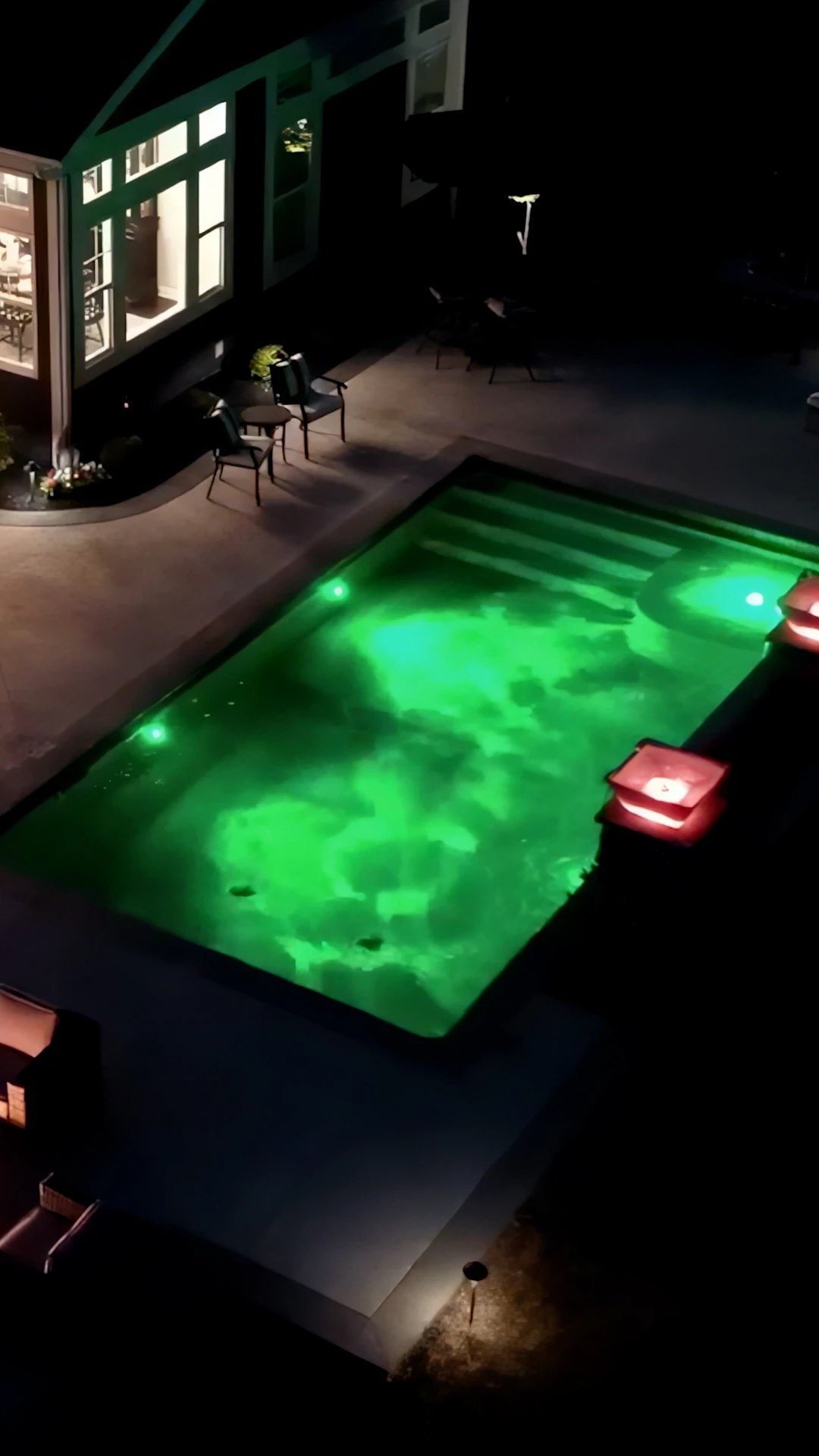
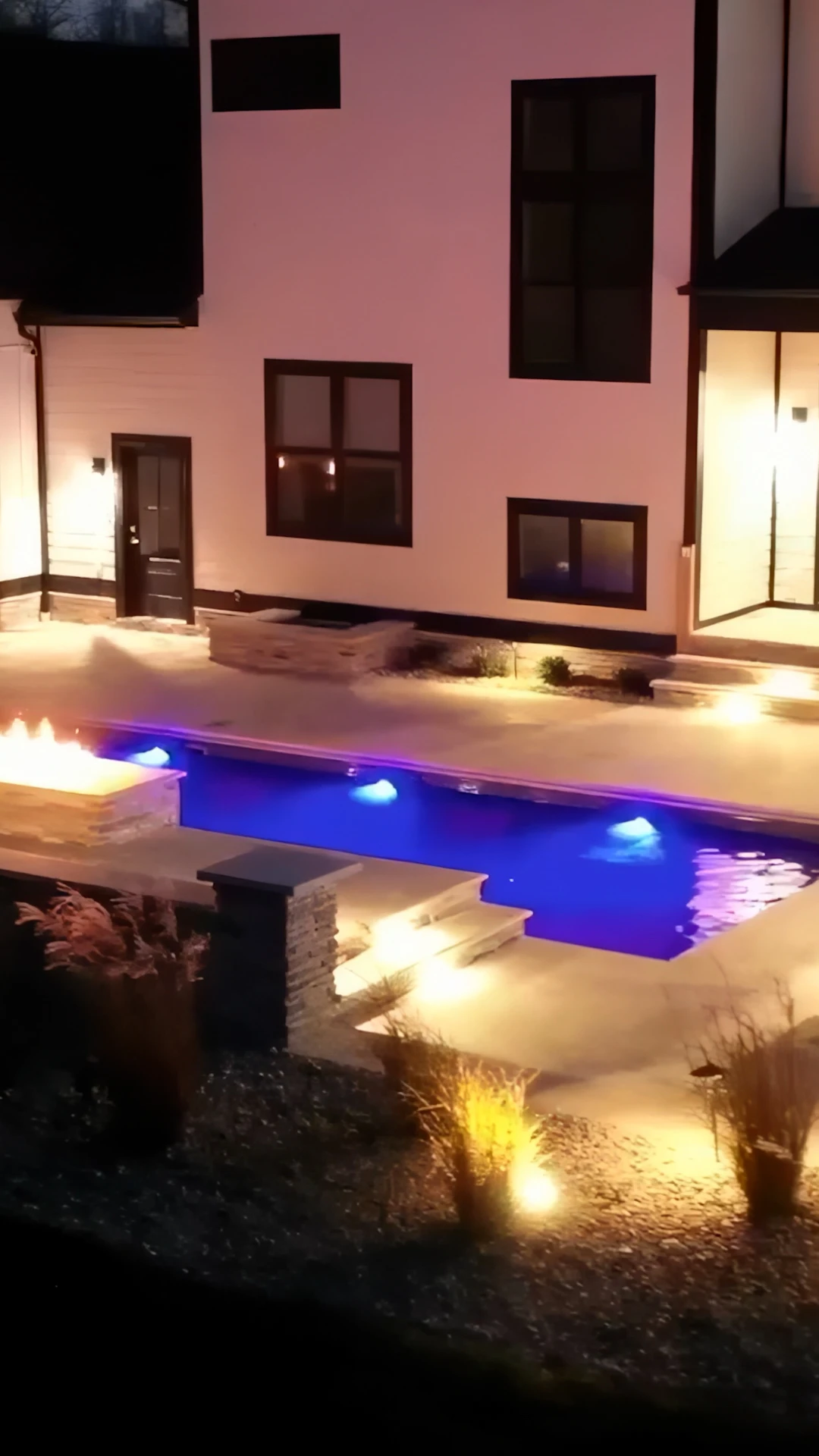
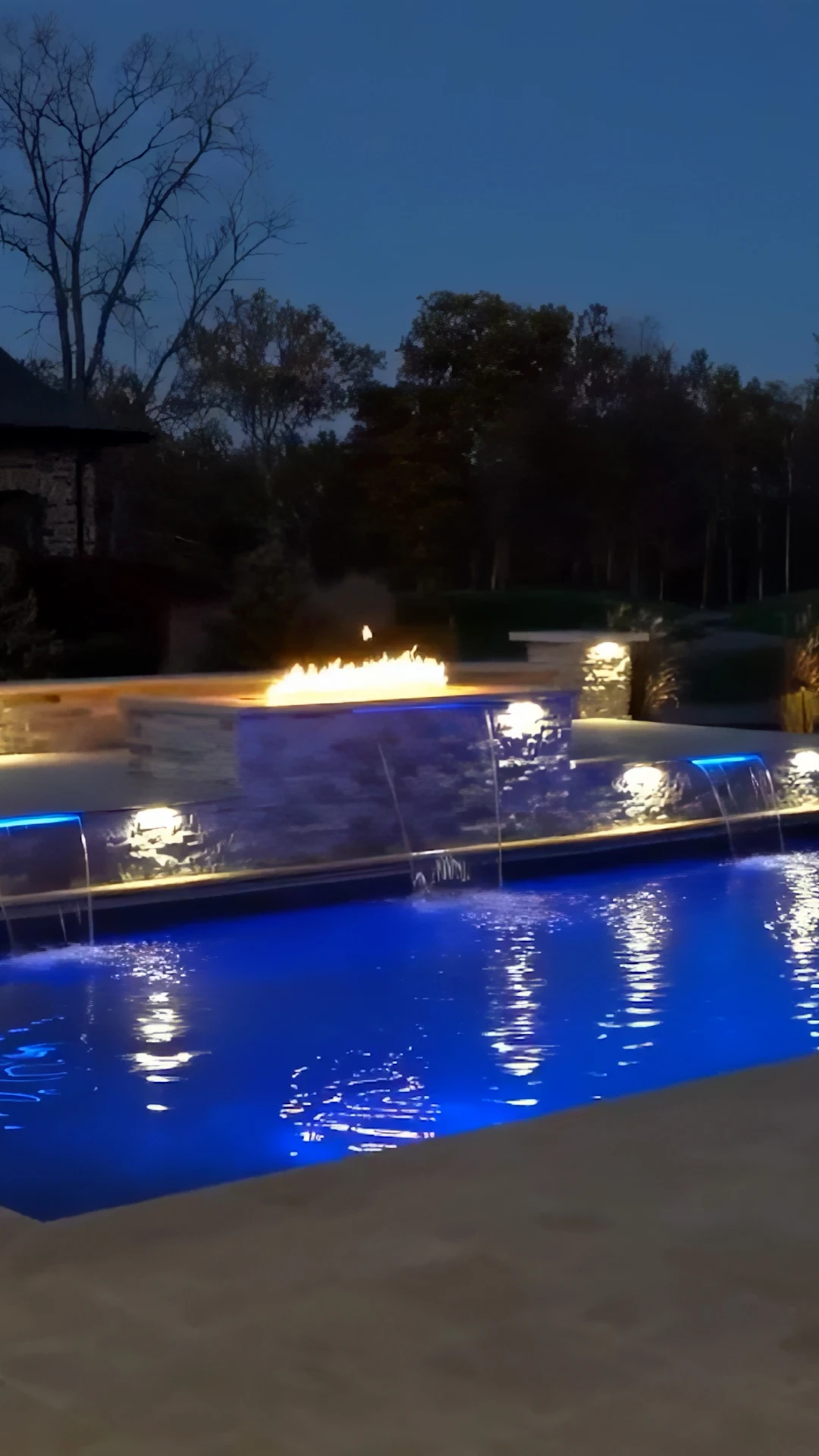
Atlanta Country Club, Johnson Ferry Road. Homeowner with a sloped lot, existing natural gas service, three kids, entertains every weekend. We built a 16×36 rectangle pool with a 7×7 attached spa, shared MasterTemp 400k BTU, all-tile spa interior, and a linear trough spillover. Total adder over bare pool: $34,200. ARB approved in one submission. The spa heats from 60°F to 104°F in 34 minutes when the family calls for a pre-dinner use window. That matches their rhythm.
Walton Woods, Lower Roswell Road. Empty-nester couple, flat lot, no kids, plans to use a tub four or five nights a week for sore shoulders. We built a 14×30 rectangle pool with a sun shelf, no attached spa, and installed a Hot Spring Grandee on a 10×12 pad 20 feet from the rear door. Total hot-tub side of the bill: $21,600 all-in. They saved about $11,000 versus an attached build and gained the always-ready 104°F tub their use pattern demanded.
Both are right answers. Neither is a compromise. They are just different answers to different use-pattern questions.
What to write into the contract either way
Attached side, demand these lines in writing: spa gallon capacity, dedicated or shared heater BTU rating, spa jet count and brand, spillway type (sheer descent, trough, or scupper), spa interior finish, tile band detail, and heat-up time guarantee at 45°F ambient. If the contract doesn’t commit to a minute count, get one added. “The spa will reach 104°F from 60°F source water in under 40 minutes at 45°F ambient” is a reasonable ask.
Detached side, demand these lines: concrete pad size and PSI, rebar or wire-mesh reinforcement detail, subpanel size and wire gauge, GFCI disconnect location per NEC §680.42 within sight of the tub, and a commitment that the delivery path won’t require removing fence sections unless itemized. Each of those saves you from the surprise $600 change order.
The one question nobody asks — where does the water go at drain time?
An attached spa drains through the pool’s plumbing, out through the pool’s backwash line, into the homeowner’s sanitary sewer cleanout or approved yard discharge. A detached hot tub drains through a 3/4-inch hose bib at the bottom of the cabinet — typically 340 gallons that you run out to a daylighted drain or into the lawn. In East Cobb neighborhoods with mature oak canopy and slow-draining clay, draining into the lawn creates standing water for 48 hours. That is worth knowing before you buy a detached unit.
None of this is mystical. The choice between attached and detached is a series of small, answerable questions: How often do you use it, what is your grade, what is your heating utility, what is your HOA, what is your budget, what is your resale horizon? Answer those six and the right column falls out of the math.
Custom pool construction across 20+ cities within 30 miles of Winder, GA
Whether you are running the plumbing math for an attached spa in Atlanta Country Club or sizing a detached hot-tub pad in Walton Woods, we will walk the actual numbers with you before any contract gets signed.