
A 1.4-acre lot in the Atlanta Country Club enclave, a contract total landing at $225,000, and a fourteen-week build window that finished on the Friday we said it would. This is a line-by-line breakdown of what the homeowner paid for, why every dollar landed where it did, and what the finished backyard did to the appraised value.
The project brief arrived in early February. The homeowners had lived on the street for eleven years, watched three neighbors go through twenty-plus-week multi-trade renovations that spiraled past initial quotes by thirty and forty percent, and decided they were not going to do it that way. They wanted one contract, one schedule, one phone number, and a backyard that belonged on a private-club property — not a stitched-together weekend assembly. What they ended up with is the project this post walks through.
We are going to name the numbers. Shell cost. Deck cost. Pavilion cost. Lighting cost. Water feature cost. Permit fees at 1150 Powder Springs Street. Crew hours. The appraisal-add range from the Cobb County comp pull. If you have considered a build in this size-class inside East Cobb — whether the lot is in Indian Hills, Burnt Hickory, Sope Creek, or the club proper — this is the document we would have wanted to read before signing anything.
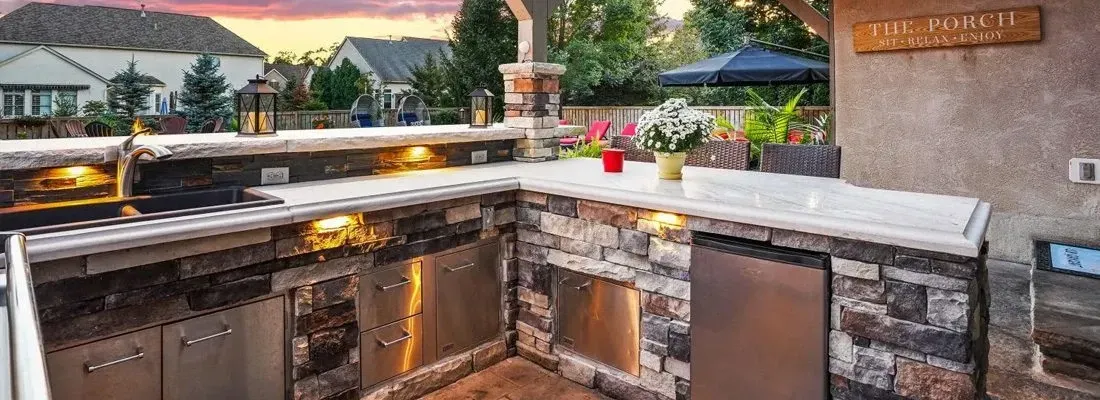
The Site: Why Atlanta Country Club Changes the Math
The property sits on a rolling Piedmont grade with roughly a 4.5-foot drop from the back door to the planned pool centerline. That is common for this section of Marietta — the whole Kennesaw-facing side of East Cobb runs in the 3-to-6-foot range from house to rear property line. It is the kind of grade that either gets ignored and turns into a water problem inside two years, or gets engineered around and becomes the feature that makes the backyard feel resort-grade.
We engineered around it. The house-side of the deck sits at approximately the walk-out elevation, the pool coping drops roughly 22 inches below that, and the rear edge of the deck drops another 14 inches to a lower seating terrace. Three elevations, two retaining sections poured at the same time as the pool shell, and a unified drainage plan that moves surface water past the pool equipment pad and into a dry well positioned 24 feet behind the pavilion. The grade is no longer a liability — it is doing the work.
Soil on this lot is the standard Cecil-series Piedmont clay with granite bedrock hit at roughly 9 feet during the shell excavation. That is well inside the typical 3-to-15-foot variable depth for the area. No blasting required, no engineered pier system, no change order. The excavator hit clean clay, cleared a single bucket of loose rock at the northwest corner, and we poured on schedule.
Cobb County permit path: Residential pool + structure permits were filed in-person at Cobb County Community Development, 1150 Powder Springs Street, Marietta. Plan review ran 11 business days on this project; HOA architectural review for the Atlanta Country Club subdivision added another 14 calendar days. Budget four to five weeks for combined permit + HOA sign-off on any build inside the club’s ACC jurisdiction.
The $85,000 Pool Shell — Custom Geometry and the Spa Spillover
The shell is the anchor line-item. On a standard rectangle with a bolt-on spa, the same team could have shipped this for $58,000 to $68,000 depending on interior finish. The homeowners wanted a geometric freeform — four long sightlines, a curved tanning shelf, and a raised spa that spills into the main body through a 14-foot sheer-descent edge. That takes the shell from a three-day form-and-steel job to a seven-day form-and-steel job and moves the number to $85,000.
Here is what went into that figure. Excavation and haul-off: $8,400. Steel reinforcement using #4 rebar on 10-inch centers through the slab and 12-inch centers through the walls: $6,800. Structural shotcrete, 12,800 pounds at 4,500 psi: $19,200. Waterline tile (a 2×6 glass-mosaic field with a brushed-bronze trim at the spa): $7,800. Interior finish in a hand-polished pebble blend: $14,600. Plumbing and equipment rough-in for two pumps, a gas-fired spa heater, and pre-wired automation: $11,900. The custom spa spillover form and curved coping cut-ins: $10,300. The remaining $6,000 is project management, inspection fees, and the equipment-pad slab.
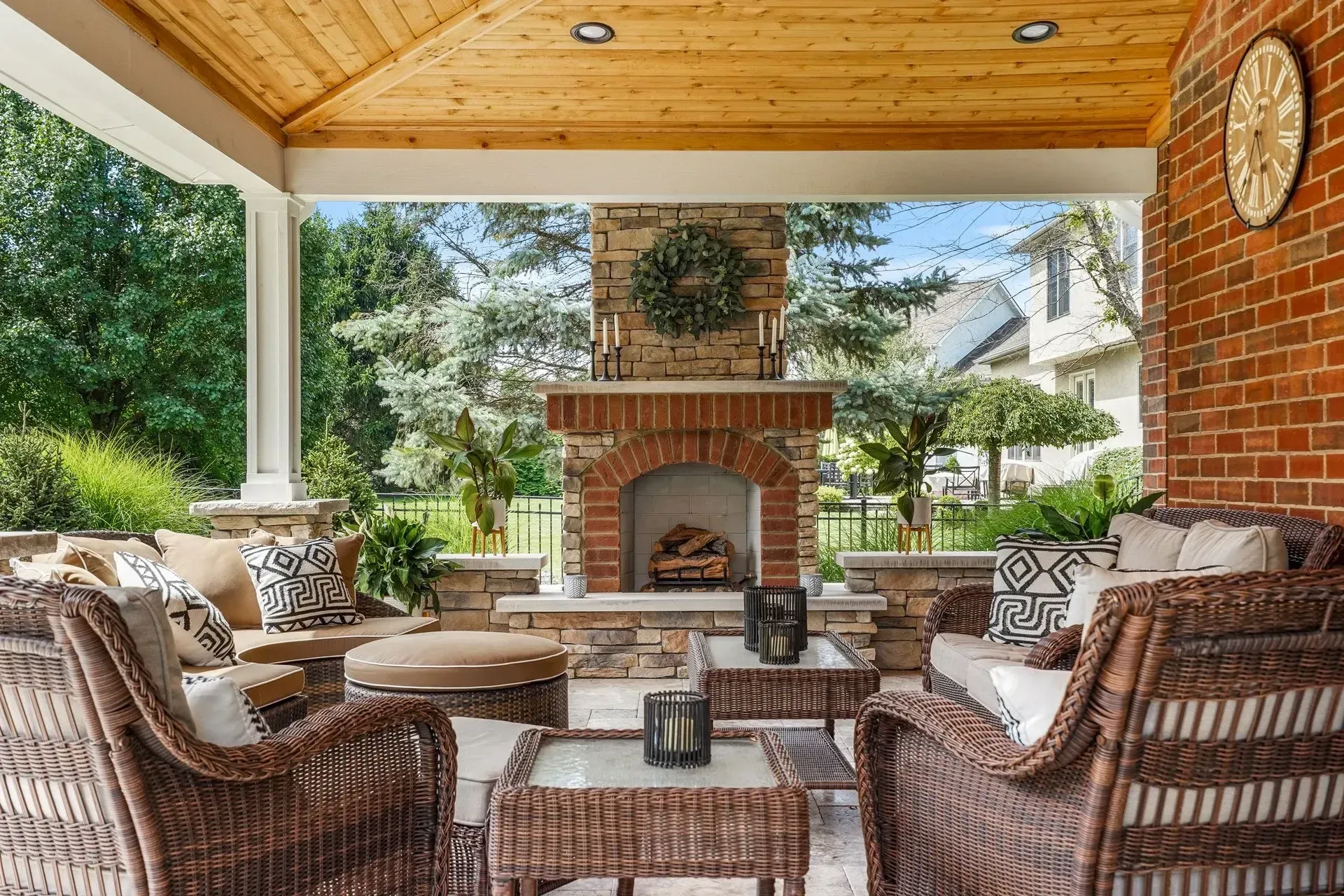
A note on the finish choice. Hand-polished pebble runs roughly $2 to $3 per square foot higher than a sprayed-on exposed aggregate. On a 620-square-foot interior, that is a $1,200 to $1,900 delta. It buys a surface that reads as stone underfoot instead of sandpaper, a ten-to-fifteen-year finish life instead of seven-to-ten, and — the reason the homeowners approved it without debate — a water color that reflects the travertine deck back up into the waterline.
The $36,000 Travertine Deck — Why Not Concrete
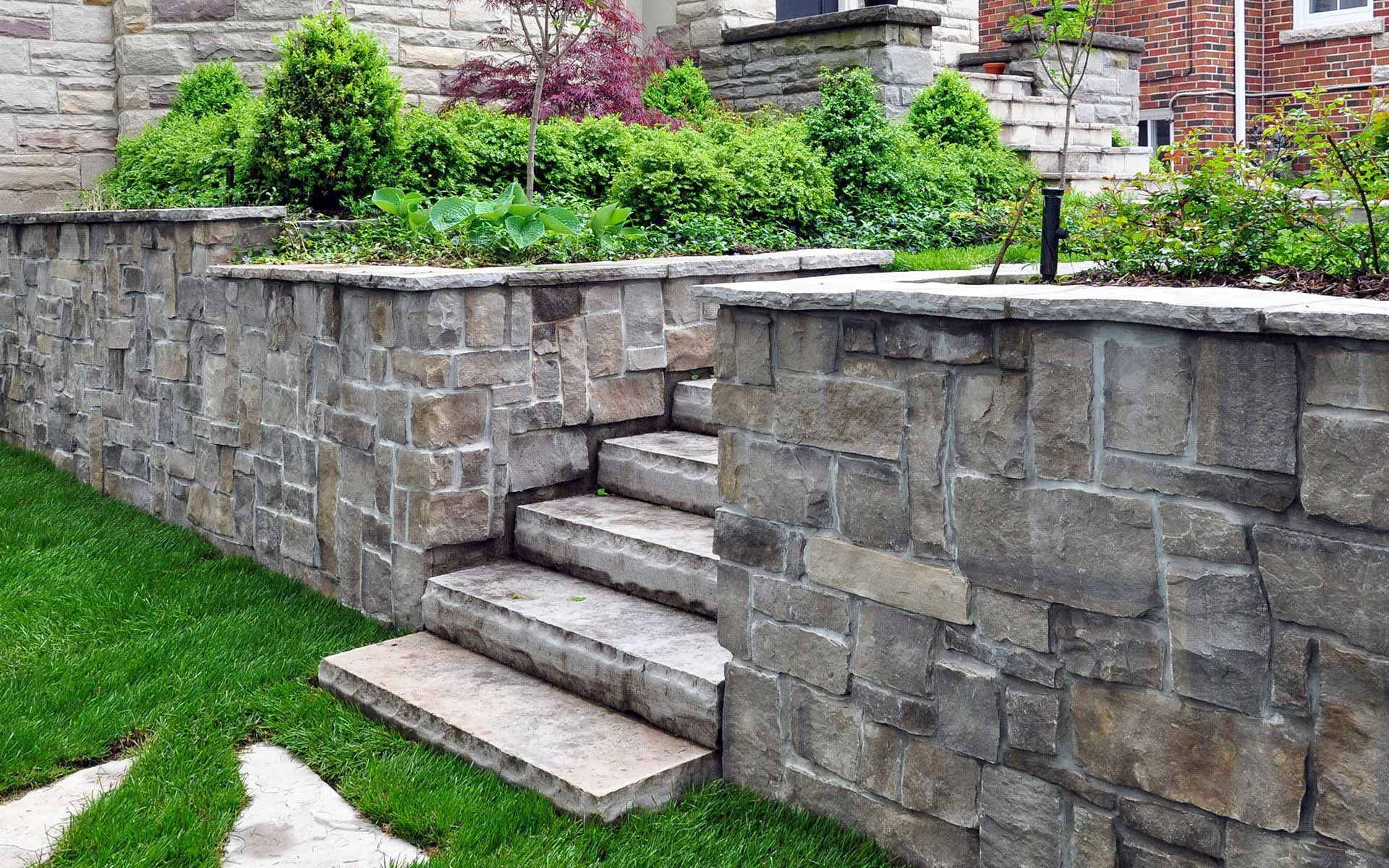
The deck covers 2,940 square feet. Broom-finish concrete on the same footprint would have come in around $22,000 to $26,000 installed, a genuine savings of $10,000 to $14,000. We laid travertine instead, in a 24×24 French pattern with a chiseled edge, and the reasoning was threefold.
First, thermal performance. Marietta summers run at 90-to-94-degree highs through July and August. Broom-finish concrete in direct sun measures roughly 130 to 140 degrees at 2pm on those days — too hot for bare feet for about six hours a day. Unfilled travertine measures 105 to 115 degrees under identical conditions. On a pool deck, that is not a nice-to-have. It is the difference between a deck that gets used and a deck that becomes a walking lane between the house and the water.
Second, freeze-thaw durability. Marietta sits on the Zone 7b/8a border with roughly 22 freeze events per year. Concrete on a pool deck will hairline-crack by year four or five regardless of how well it is poured — it is what concrete does when the water below the surface expands and contracts twenty-two times a winter. Travertine pavers on a properly built base allow each stone to move independently, and a single cracked paver is a forty-dollar fix instead of a nine-thousand-dollar repour.
Third, resale. More on that in the last section.
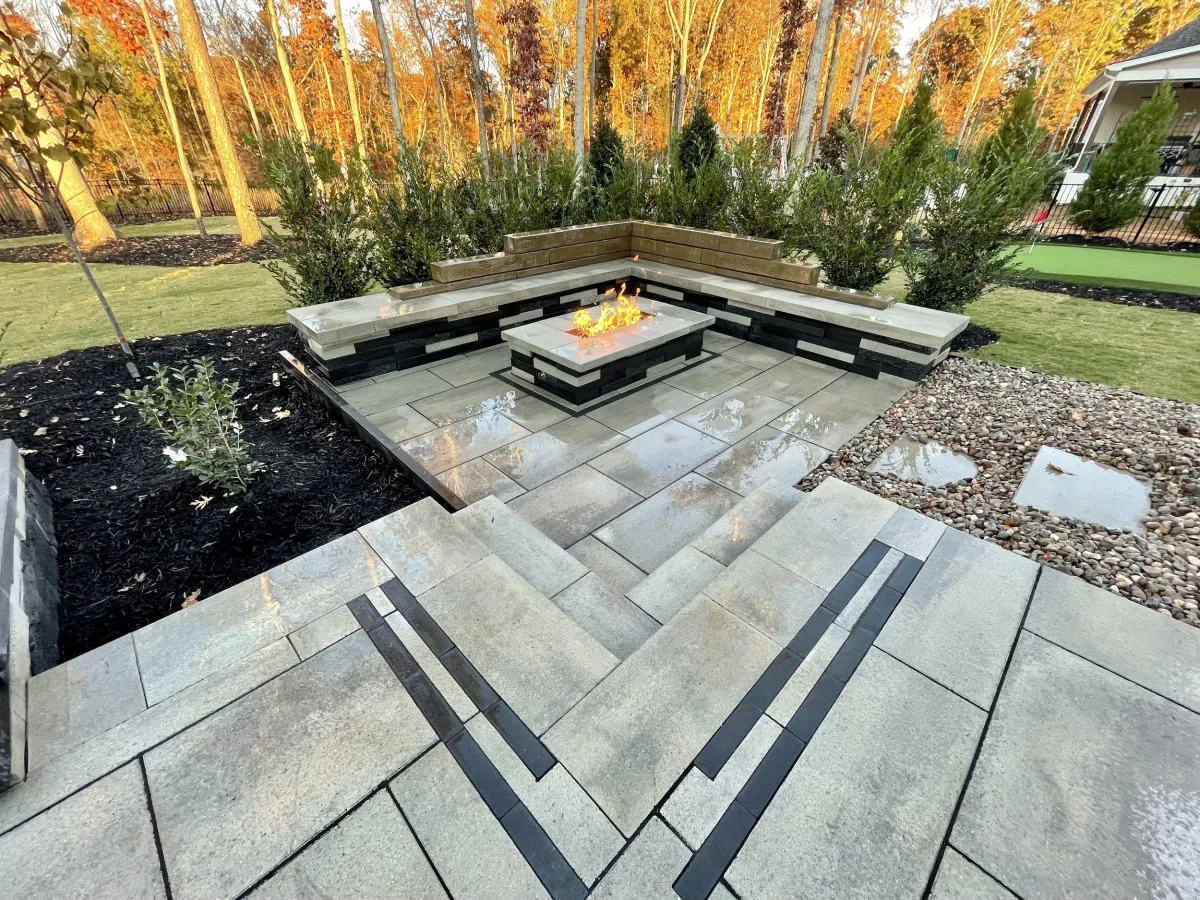
The deck line-item breakdown: excavation and base prep: $4,100. Eight-inch compacted ABC-3 base plus one-inch leveling sand: $5,800. Travertine material (2,940 sq ft at $6.80 landed): $19,992. Installation labor (crew of four, nine working days): $5,200. Sealer — two coats of a penetrating siloxane: $908.
The $58,000 Pavilion With Full Outdoor Kitchen
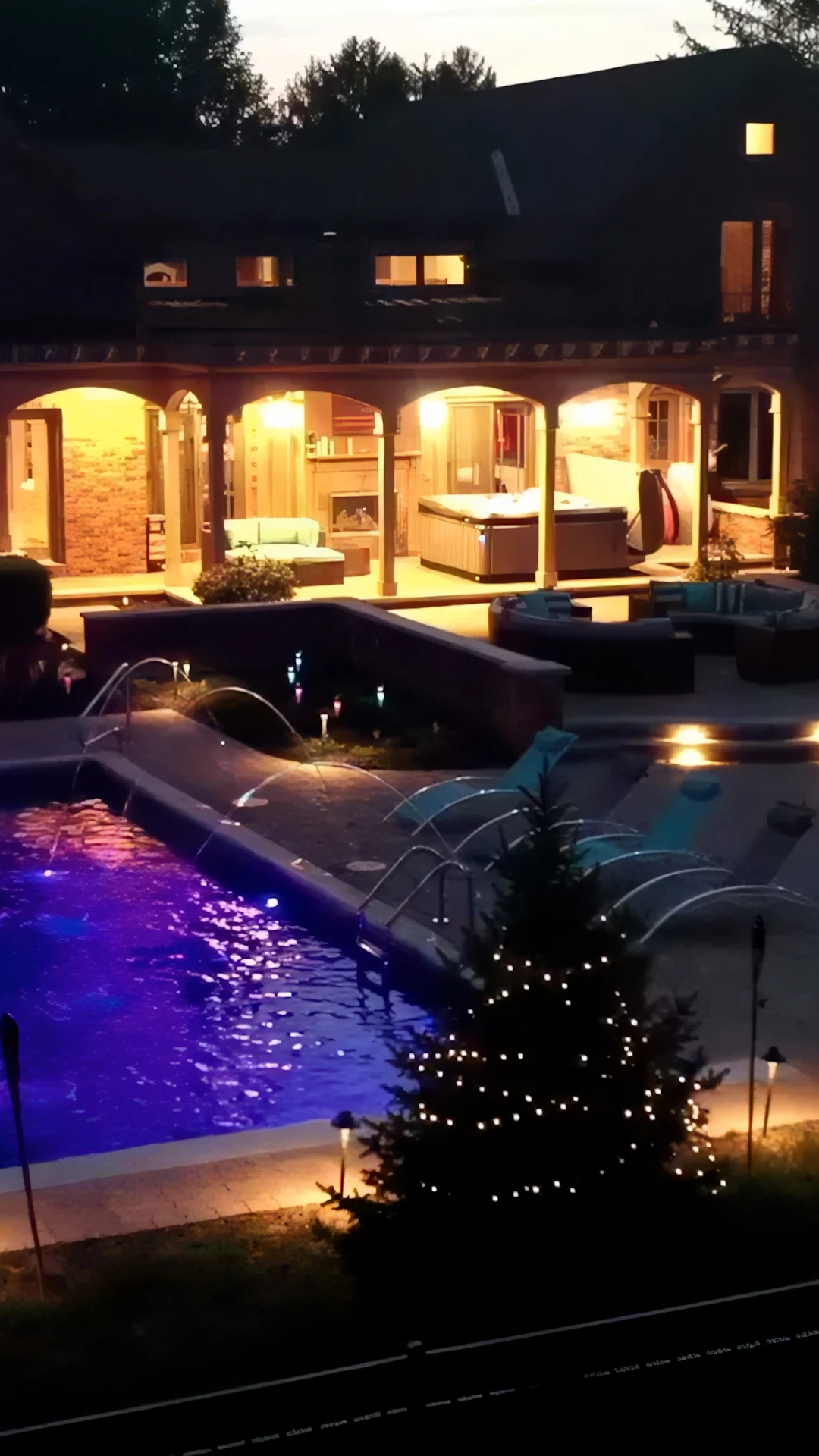
The pavilion is the line item that makes this project read as “country-club” and not “nice pool with a grill station.” It is a 22-by-16-foot structure, open on three sides, with stacked-stone columns, a cedar tongue-and-groove ceiling, a standing-seam metal roof, and a full cooking line: a 36-inch grill, a side burner, a beverage fridge, an ice maker, a trash pull, 16 linear feet of counter in a honed granite, and pendant lighting over the prep zone. Eight counter seats. One 48-inch ceiling fan. Two recessed heaters for shoulder-season use.
Sixty percent of contractors would have quoted this as three separate jobs: the structural build, the outdoor kitchen cabinetry and appliance drop-in, and the electrical plus gas runs. Each of those quotes would have included its own project manager, its own profit margin, and its own schedule gap. On a multi-trade approach, the pavilion alone would have added six to eight weeks to the overall timeline because the cabinetry guy can’t start until the roof is on, the appliance guys can’t measure until the counters are in, and the electrician is going to show up on day 11 of the cabinetry guy’s schedule regardless of when the cabinetry guy actually finishes.
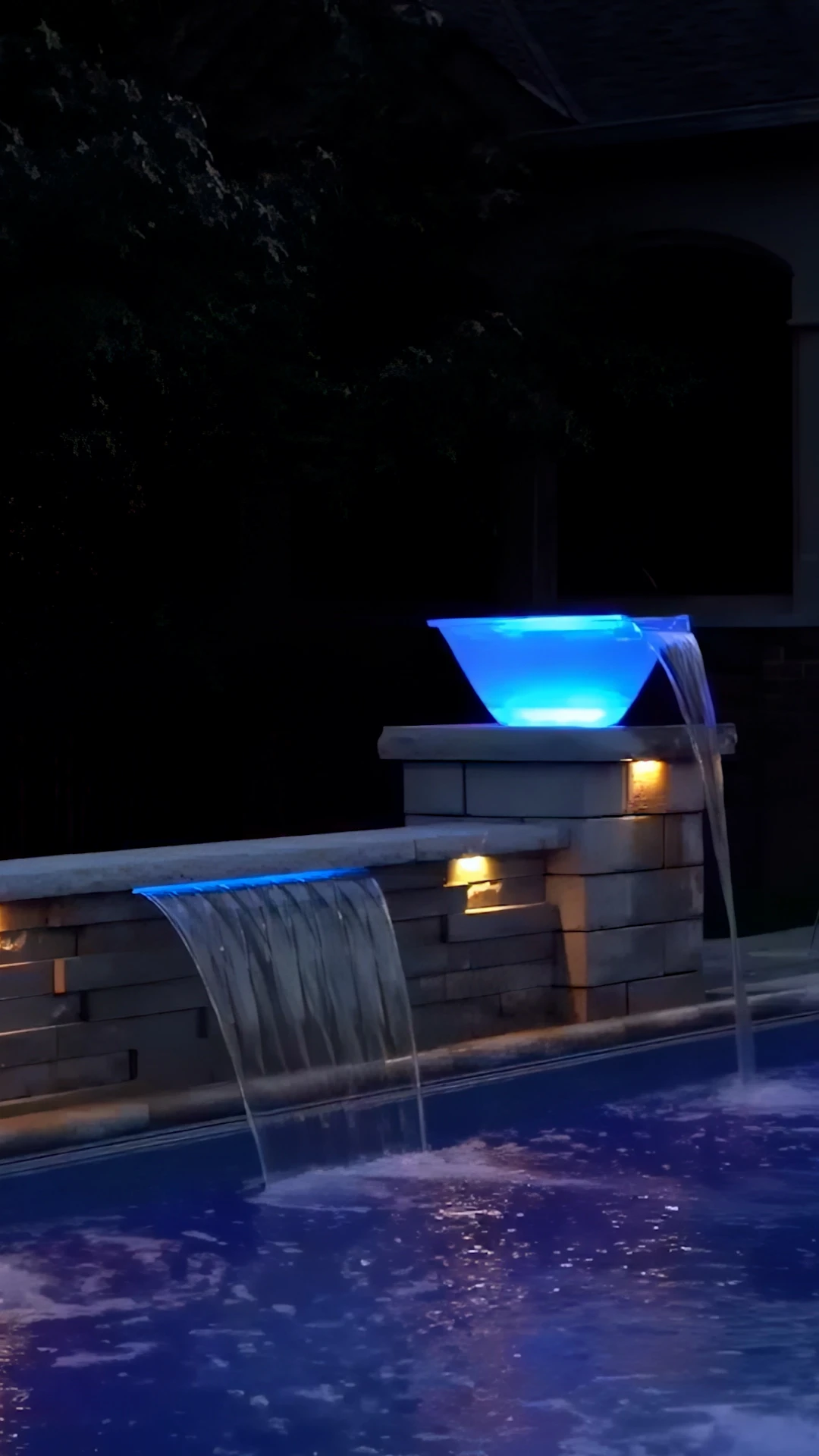
We ran it as one contract. Structural framing and roof: $18,400. Stone columns and the rear wall: $11,800. Cedar ceiling: $4,600. Appliance package (Lynx 36-inch grill, U-Line beverage fridge, Scotsman under-counter ice maker): $9,200. Cabinetry and counter (Danver stainless frames, honed Virginia Mist granite): $8,100. Gas and electrical rough plus finish (four 20-amp circuits, one 240V pull, 3/4-inch gas line from the meter): $3,600. Pendant and recessed lighting package: $1,200. Ceiling fan and heaters: $1,100.
Cobb EMC service note: This property is on Cobb EMC, not Georgia Power — a distinction that matters when you are pulling a 240V service upgrade for a pool-and-pavilion combined load. Cobb EMC’s approved-contractor list is smaller and their meter-relocation lead time runs three to four weeks longer than Georgia Power on comparable jobs. We scheduled the meter-base upgrade in week two of the build; it was energized by week five.
The $18,000 Lighting System and $22,000 Water Feature Wall
Landscape lighting on a build at this price point is often the line item that gets cut when the budget gets nervous. It should not be. On a project that will be photographed by the homeowner’s agent the week it lists, that will be used from dusk through late evening roughly 180 nights a year, and that sits inside a neighborhood where every comp has it — eighteen thousand is not an extravagance. It is the line item that makes the other $207,000 visible after 7pm.
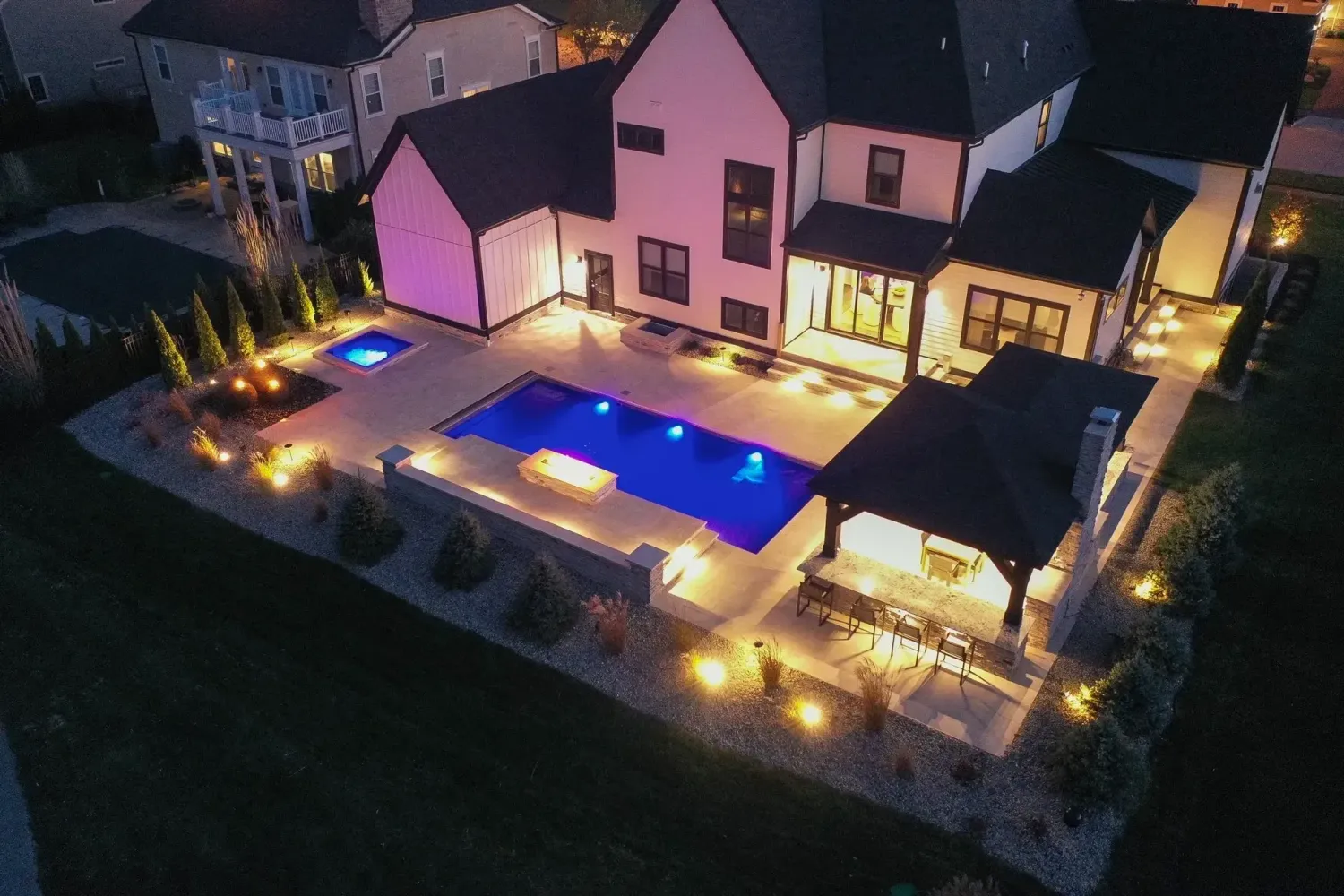
The system uses 46 brass path and uplight fixtures from FX Luminaire, six in-pool LED fixtures wired to NEC §680 compliance, four tree-canopy downlights set at 22 feet in the mature oaks on the east line, and a transformer pair (one 600-watt, one 300-watt) with built-in astronomic clocks. Everything is zoned: path, feature, canopy, and in-pool run as four independent circuits on a Lutron RadioRA 3 controller that ties into the interior lighting already in the house. The homeowner can drop the pool lighting to 20% from the kitchen island.
Lighting line-item breakdown: fixture package (FX Luminaire brass, warm-2700K LED): $8,900. Wire, conduit, and transformer pair: $2,200. In-pool lighting rough-in and finish (coordinated with the shell plumbing trench): $1,800. Tree-canopy install (bucket-truck day, rigging, drip-loop and strain-relief at every fixture): $2,400. Lutron controller integration and programming: $1,600. Commissioning, aiming, and a night walk with the homeowner: $1,100.
The Water Feature Wall
The water feature wall is the line item the homeowners were on the fence about through contract. It is a 9-foot-tall, 14-foot-wide stone-clad wall at the rear property line, with three copper scupper spouts feeding an 18-inch-deep catch basin that recirculates through a pump housed behind the wall. The wall does three jobs: it blocks the sightline into the neighboring lot (which slopes up and had a direct view into this backyard), it gives the pool a terminating focal point from every seat at the pavilion, and it puts a continuous water-moving-on-stone sound into the yard that cancels road noise from Lower Roswell Road, roughly 340 yards east.
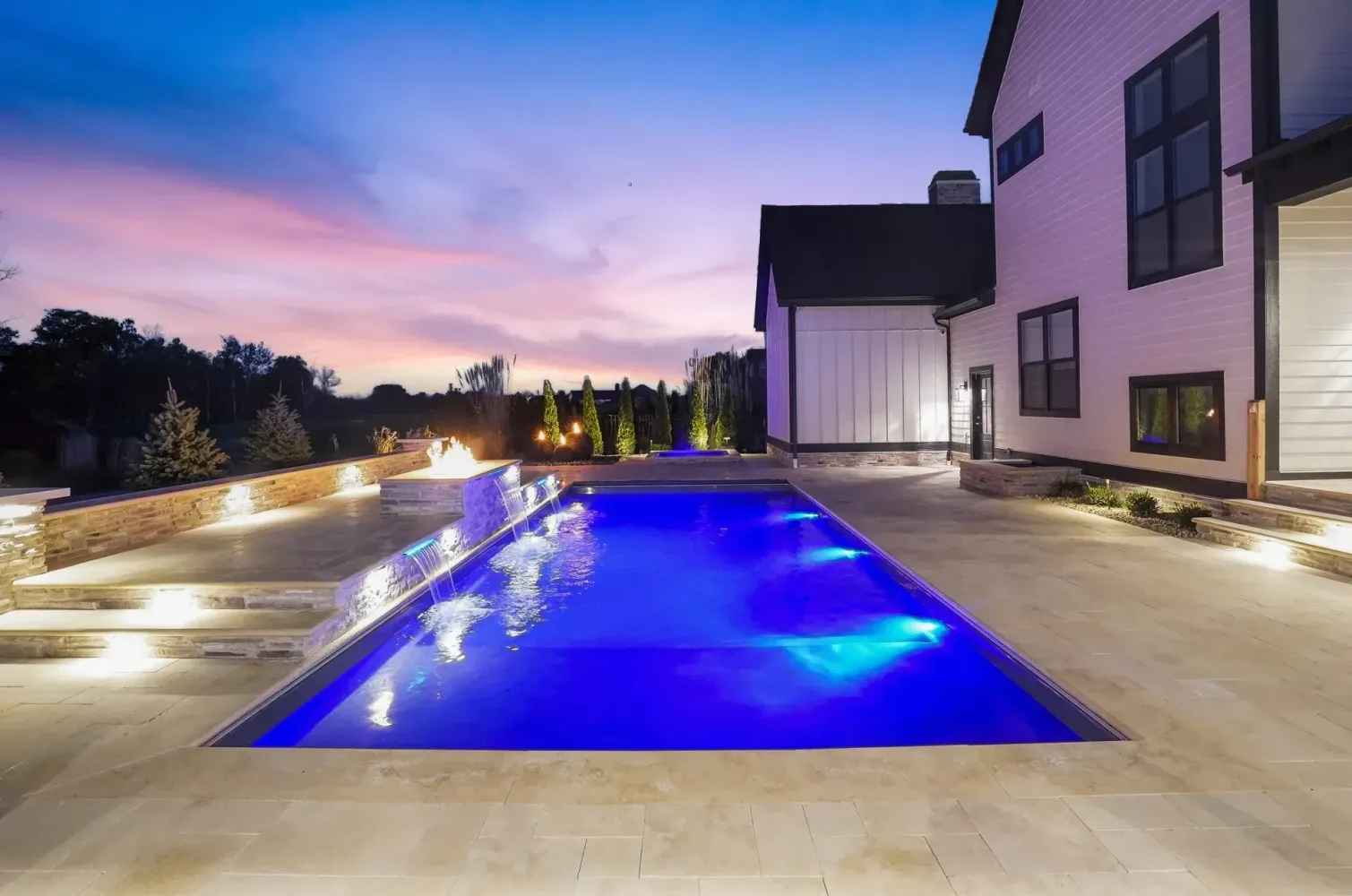
Breakdown: structural wall (8-inch CMU block core, engineered footing below frost line): $6,800. Stone cladding (same stacked stone as the pavilion columns, for material continuity): $7,200. Catch basin excavation, liner, and plumbing: $2,400. Three hand-forged copper scuppers: $2,600. Recirculation pump, filter, and autofill line: $1,800. Commissioning and sound tuning: $1,200.
Fourteen Weeks vs Twenty-Two: Why the Schedule Is the Product
The delivered schedule was 14 weeks from ground-break to final walk. A comparable multi-trade build — same scope, different general arrangement — typically runs 20 to 22 weeks in this market. We have seen 26-week and 28-week outcomes when the GC is the homeowner managing four subs with four schedules and four insurance certificates.
The compression is not magic. It comes from three specific decisions. First, all structural work runs on one crew: the shell team pours the shell, the pavilion footings, the water feature wall footing, and the retaining sections on adjacent days out of the same shotcrete and concrete pours. That eliminates four separate mobilizations and four separate inspection cycles. Second, the hardscape crew starts the deck base prep while the shell is curing — it is a known-safe overlap that saves eleven working days on any project with more than 1,500 square feet of paver deck. Third, the electrical and gas trades are on our bench, not subbed per-project, and they build the pavilion and pool wiring on one trip rather than a build trip and a finish trip.
The HOA at Atlanta Country Club requires a weekly site-clean standard that most contractors find inconvenient. On a fourteen-week build, it is tolerable. On a twenty-four-week build, it turns into friction that slows the crew down a half-day a week. That alone is another six to eight working days on a stretched schedule. The compressed timeline is not just a nice-to-have for the homeowner’s peace of mind — it is the condition that lets the HOA standard get met without eroding crew productivity.
What the Finished Build Did to the Appraisal
This is the section every homeowner we quote at this price point asks about — and it is the section most contractors refuse to name a number on. We will name the number, with the appropriate caveat that appraisals are never exact and nobody should treat the following as a guarantee.
The $225,000 project landed an appraisal-add of $148,000 to $188,000 on the Cobb County pull we ran against five closed comps within the Atlanta Country Club footprint over the prior eighteen months. The low end of that range applies if the comp set trends light on outdoor-kitchen pavilions; the high end applies in the reverse. The homeowners had the property appraised pre-build at $1.42M and are tracking for a post-stabilization appraisal in the $1.58M to $1.61M range.
A few things to note about that range. Appraisers in Cobb County comp outdoor living on a holistic basis, not a line-item basis. A $58K pavilion, a $22K water feature, and an $18K lighting system do not appraise to $98K. They appraise to the uplift they create in the property’s overall market position. On a home already in the mid-seven-figure range inside a recognized private-club subdivision, a genuinely integrated outdoor build moves the property from the median-of-comps bucket to the premium-of-comps bucket. That is the mechanism. It is not linear.
A few other things the project did that will not show up on the appraisal but that the homeowners have named specifically in the months since completion: the family eats dinner outside roughly four nights a week from April through October, which was not happening before. The household spends almost nothing on entertainment during pool season because the pool season happens at their house. And the grade-engineered drainage has held through two 3-inch rain events without a single puddle on the deck. That was the part the homeowners had worried about most, given the rolling Piedmont terrain across East Cobb and the stories they had heard from neighbors whose decks sheet-flow into the pool every summer storm.
If you are budgeting a build in this size-class inside Marietta — whether the lot is in the club, in Indian Hills, in Burnt Hickory, or in any of the East Cobb subdivisions with grade and mature canopy — $225,000 is a real number that buys a real outcome. It requires the project to be run on one contract with one schedule, and it requires the contractor to have the crews to deliver it that way. Anything else spreads the timeline and erodes the value. That is the whole thesis of this post.
Full-integration hardscape and pool builds across 20+ cities within 30 miles of Winder, GA
One contract, one schedule, one crew — built to the appraisal-add standard that Atlanta Country Club, Indian Hills, and Burnt Hickory homeowners expect.