
A homeowner in Bethelview told us his pool turned from crystal to pea soup in ninety-six hours — same chlorine routine he’d used in Brookhaven for a decade. The reason is not his pump, not his cleaner, not his shock schedule. It is what comes out of the hose on fill day.
If you own a pool in Forsyth County and the water is fighting you harder than it should, the answer is almost never the thing you are treating. Forsyth sits on roughly 247 square miles of watershed that drains — directly and indirectly — through the upper Chattahoochee and into the south-shore coves of Lake Lanier. That water, and the phosphate load it carries, is the single biggest reason pools in Coal Mountain, Shady Grove, Ducktown, Shiloh, and Big Creek bloom algae in four to five days while identical pools inside the Atlanta city limits hold for eight to ten.
This is not a chemistry-class abstraction. It is a line-item on your maintenance invoice. Phosphate is the fertilizer, and Forsyth water is the bag of Miracle-Gro being poured into your pool every time the autofill kicks on. The fix exists, it is not exotic, and once you understand the forensic chain — where the phosphate comes from, why it concentrates here, how it converts chlorine demand into dollars — the treatment protocol writes itself.
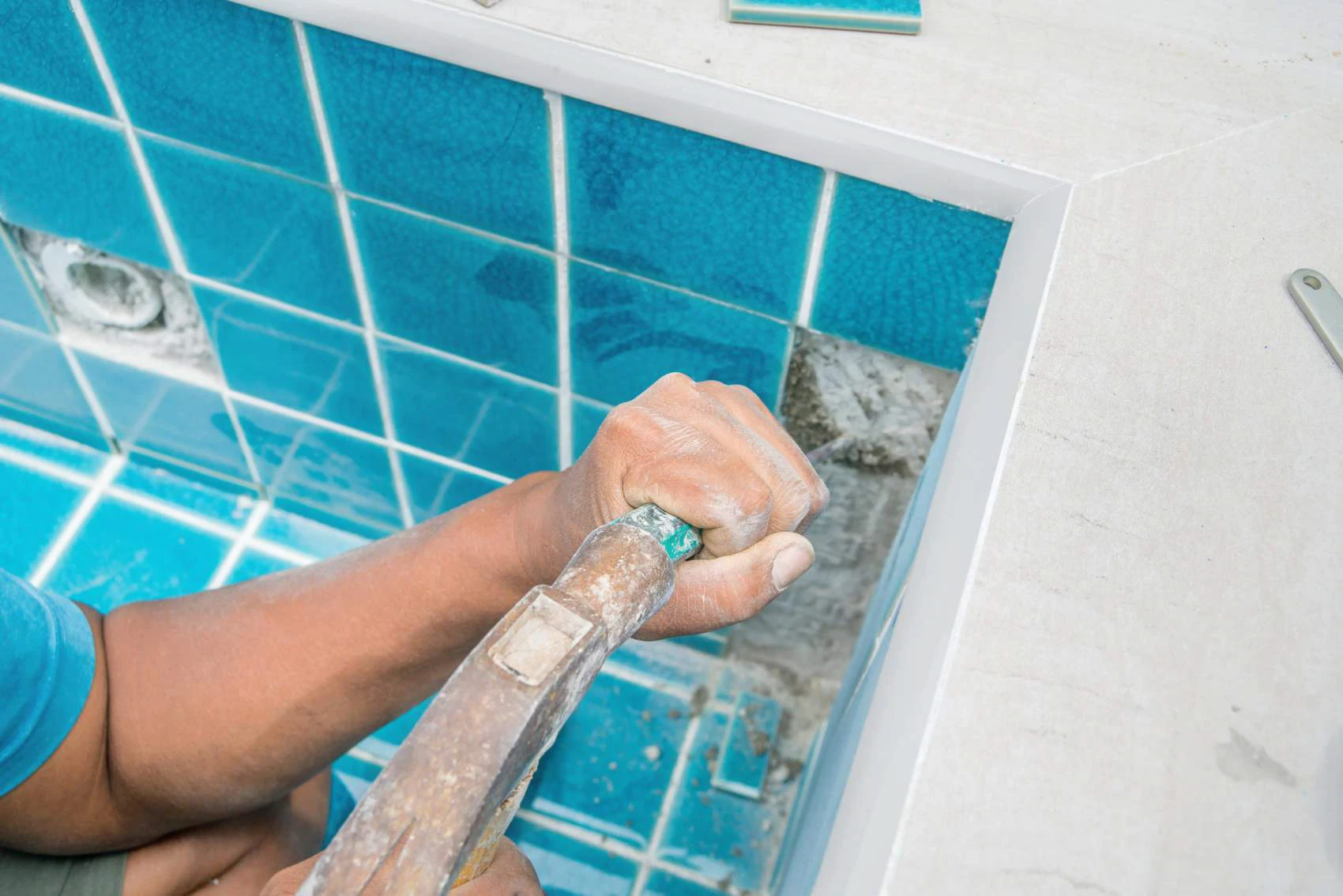
The Forensic Chain: Fill Water, Phosphate, and Why Forsyth Is Different
Start with the tap. Atlanta city water — what feeds a pool in Buckhead, Inman Park, or Decatur — runs roughly 0.4 ppm orthophosphate at the meter. It is drawn from the Chattahoochee upstream of every subdivision in Forsyth County. It arrives at your house already treated and, critically, already filtered.
Forsyth fill water is a different animal. Most homes north of Highway 20 are on Sawnee EMC for power but pull municipal water from the Forsyth County Water Department, which draws from Lake Lanier intakes. Lake Lanier is a reservoir, not a flowing river — which means everything that runs off the 260,000-resident county above it settles in. Lawn fertilizer from the 85 percent of housing stock built since 1995. Septic leach from the outlying 5-acre estates up toward Sawnee Mountain. Stormwater from every subdivision off Bethelview Road and Kelly Mill Road. All of it lands in the same 38,000-acre bowl your pool eventually gets filled from.
When we test fill water at the hose bib across Forsyth — we have pulled samples in 30028, 30040, and 30041 over the last three seasons — phosphate comes back between 2.2 and 2.8 ppm. That is five to seven times the Atlanta-proper load. Nothing is wrong with the water. It is fine to drink. But if you are asking it to stay balanced in a 20,000-gallon oxidizer-starved environment, you are starting the race with a lead weight in your trunk.
Baseline phosphate read, Forsyth fill water (2024-2026 samples): 2.2–2.8 ppm orthophosphate. Pool industry target for healthy water is under 0.5 ppm. You are arriving at fill day already 4–6x over the threshold.
What 2.5 ppm Phosphate Actually Does to Your Chlorine
Phosphate is not an algaecide problem. It is an algae-food problem. Chlorine kills algae; phosphate feeds it. Run both at high levels and you are in a tug-of-war that chlorine eventually loses — because the chlorine burns off in UV and heat every day, and the phosphate just keeps coming in through the autofill.
In a clean Atlanta-proper pool at 0.4 ppm phosphate, a stable 2–3 ppm free chlorine holds algae at bay for 8–10 days between shock cycles. We have measured this on hundreds of service accounts across Gwinnett and DeKalb. The same water chemistry in a Forsyth County pool — same plaster, same tile, same pump runtime — crashes in 4–5 days. The chlorine demand effectively doubles because the chlorine is working two jobs: oxidizing normal bather load AND starving off an algae bloom that phosphate is trying to launch every afternoon.
The forensic signature of this is specific. You will see a green haze along the waterline before the water turns. You will see mustard-colored dust settling on the shallow-end steps overnight. The pH will drift high because the algae metabolism drives it there. And the sand or DE filter will load pressure faster than the manual says it should, because it is catching algae particulate you cannot see yet.

Why the Standard “More Chlorine” Advice Fails Here
Every homeowner who has googled “green pool” has seen the same advice: raise free chlorine, shock with cal-hypo, run the pump 24 hours. That playbook works in Atlanta-proper. It works on the coast. It does not work reliably in Forsyth County, and here is the engineering reason.
Chlorine does not reduce phosphate. It never has. Liquid chlorine, cal-hypo, dichlor, trichlor, salt cell — none of the six common chlorine delivery methods remove a single ppm of phosphate from your water. All they do is outpace the algae bloom temporarily. The second your free chlorine drops below 2 ppm — which happens overnight in summer — the phosphate is still there, the algae spores are still there, and the bloom restarts.
This is why you see Forsyth pool owners shocking weekly, running liquid by the 4-gallon case, and still fighting the same green haze in July and August. They are treating the symptom. The 2.5 ppm phosphate in their water is the cause, and it is not going anywhere unless you physically remove it.
The Fix, Priced: Phosphate Remover, UV-Ozone, and What Each Saves You
Two tools solve this, and they work together. The first is a lanthanum-based phosphate remover — Orenda PR-10000 or Natural Chemistry PhosFree are the two we use on Forsyth service accounts. Dosed monthly at a pool holding 15,000–20,000 gallons, it strips phosphate out of solution as a filterable particulate that your filter catches and backwashes away. Monthly dose cost ranges $18 to $32 depending on pool size and phosphate starting point.
That alone gets you from 2.5 ppm down to under 0.5 ppm within 72 hours, and a monthly maintenance dose holds it there even with the autofill running all summer. Homeowners in Brookwood and Big Creek who put this into rotation stop losing water clarity after afternoon thunderstorms, stop seeing the mustard dust, and stop burning chlorine at the pace they were.
The second tool is a supplemental oxidation system — UV-ozone combo units, typically the DEL Ozone Eclipse or Paramount Ultra UV2, plumbed in after the filter return. These are not chlorine replacements. They are chlorine multipliers. By oxidizing organics before they reach the pool body, UV-ozone cuts chlorine demand by roughly 60 percent in the summer months. On a Forsyth pool that was running 1.5 gallons of liquid chlorine per week, that drops to 0.6 gallons. Over a 26-week swim season that is real money — call it $180 to $280 in chlorine saved annually, plus the shock bottles you no longer need to buy.
Combined annual swing for a 20,000-gallon Forsyth County pool: Phosphate remover (~$300/yr) + UV-ozone electric and bulb ($60/yr operating) = roughly $360 spent. Chlorine savings + fewer shock events + zero algae remediation service calls = $180–$280/yr direct, plus you avoid the $400–$900 emergency algae treatment visits the green-pool season otherwise forces.
What We See Across Forsyth’s Four Sub-Markets
Forsyth County is not one market. It is four, and the phosphate story reads differently in each.
South Forsyth — Zip 30041, Atlanta-commuter belt
Tighter subdivisions, newer builds, heavy HOA landscaping with broadcast fertilizer. Stormwater dumps runoff into Big Creek and eventually into Lake Lanier. Phosphate at the hose bib tests at the low end of the range — 2.2 ppm — but the proximity of fertilized turf to pool decks means in-season phosphate spikes after every summer thunderstorm. These homeowners get hit hardest between June 15 and September 1.
West Forsyth / Cumming-proper — Zip 30040
The county seat. Mixed housing age, mature landscaping, older municipal water infrastructure. Fill water tests solidly at 2.4–2.5 ppm. The swing factor here is pool age — many pools built between 2005 and 2015 have original plaster that is 10+ years in, and the plaster itself leaches calcium that feeds scale formation. The combination of high phosphate and aged plaster creates a compound problem.
North Forsyth — Zip 30028, Coal Mountain to Lake Lanier’s south shore
Luxury estates, 3–5 acre lots, often with wells supplementing municipal water for irrigation. Phosphate here runs highest — 2.6–2.8 ppm — because of the shorter water path from Lake Lanier intake to hose bib. Proximity to Sawnee Mountain Preserve also means more organic debris (pine pollen in April, oak leaves in October) landing in pools, which doubles the nutrient-load story.
The Browns Bridge / Shady Grove corridor
Highway 369 running east toward the lake. Many homes have view lots over Lanier with pools that get direct morning sun and direct afternoon storm runoff. The perfect algae incubator if phosphate is not controlled. This is the corridor where we deploy UV-ozone most often because chlorine alone cannot keep up with the UV degradation those south-facing pools suffer.
The Rebuild Math: When to Fix Water Before You Fix Everything Else
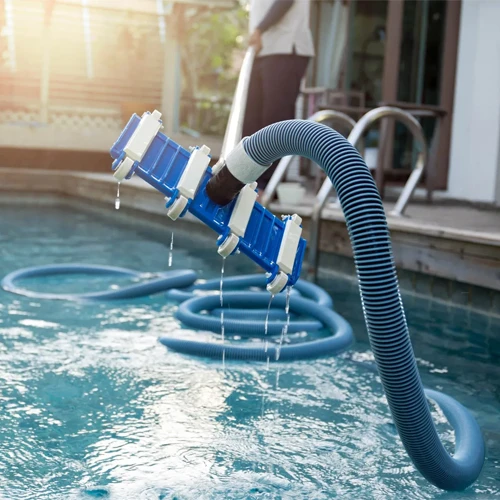
Here is the part most Forsyth County pool owners do not realize. When we get called out for “my plaster looks bad” or “my tile grout is staining,” the root cause in 6 out of 10 cases is not a failed surface — it is untreated phosphate load that has been anchoring algae biofilm into the grout and plaster pores for three consecutive summers. Remove the phosphate, rebalance the water for 90 days, and the surface returns to presentable without resurfacing.
We have rescued pools off Kelly Mill Road, Post Rd, and Bethelview Rd this way — owners quoted $8,000–$14,000 for replaster who instead spent $400 on water-chemistry correction and got another 3–5 years out of the original surface. That is the replaster deferral argument, and it only works if you attack the phosphate first.
For newer builds — pools in the ground less than 5 years, the kind of installations we see across the county where luxury construction has kept pace with population growth — the argument flips. On a fresh plaster or a pebble finish by Pebbletec or Jewelscapes, you want phosphate under 0.3 ppm from day one. Plaster cures for the first 28 days, and nutrient-rich fill water during that window embeds phosphate into the surface in ways a remover cannot reach later. If you are filling a new Forsyth pool this year, treat the fill line before you fill — drop a lanthanum pre-treatment into the first 5,000 gallons and let it filter out before the water reaches a swimmable state.
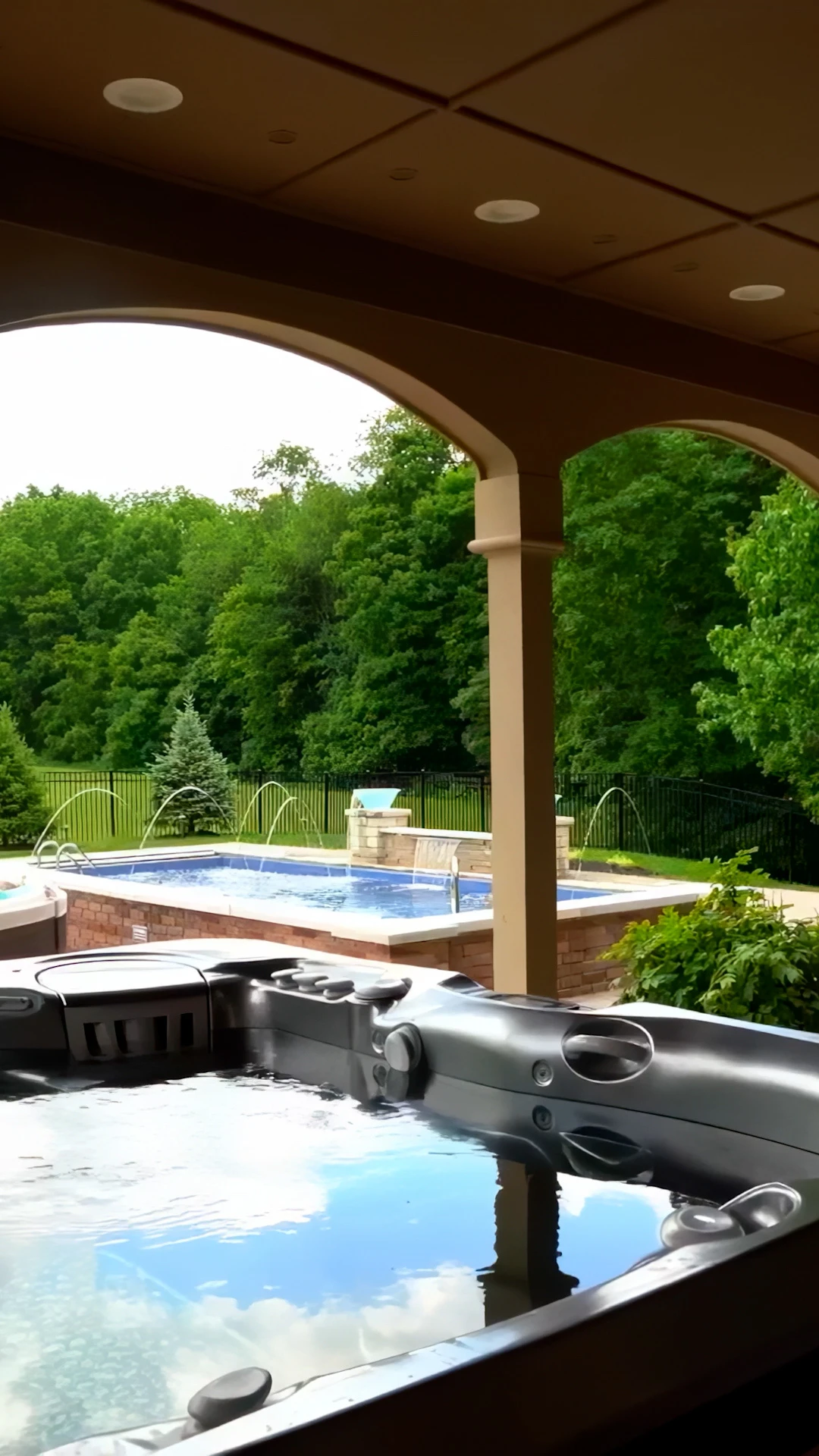
Seasonal Protocol: What Your Calendar Looks Like in Forsyth
A working service calendar for a Forsyth County pool — the one we build for every client on maintenance — looks like this.
March (Zone 8a spring opening): Test phosphate at opening. Expect 2.0–3.0 ppm after winter autofill. Dose full phosphate remover within 72 hours of removing the cover. Run pump 24/7 for 48 hours to filter out the precipitate. Backwash twice. Verify phosphate under 0.5 before first shock.
April–May: Pine pollen season. Forsyth gets hammered worse than Atlanta-proper because of Sawnee Mountain Preserve and the tree canopy across the county. Pollen is not phosphate, but it is organic load that drains chlorine. Run enzymes weekly. Skim twice daily if possible.
June–August: Monthly phosphate maintenance dose. UV-ozone running 8 hours/day minimum. Weekly chlorine check — expect 1.5–2.5 ppm free chlorine to be enough if phosphate is controlled. Do not chase 3+ ppm unless you see a bloom start.
September: Second phosphate test. Summer runoff from the county’s 200+ permitted new pools that filled this season has pushed watershed loads higher. You may need a corrective dose even if maintenance has been monthly.
October–November: Leaf season. Oak and sweet gum drop heavy in Forsyth. Cover or net. One phosphate dose before closing. Winterize with chlorine demand in mind.
December–February (22 freeze events/year average): Pool is closed or reduced. Do not assume phosphate is dormant. Autofill from winter rain events still pushes nutrient-rich water in. Plan on a full remediation at opening.
Forsyth County permit-volume context: The county approves 200+ residential pool permits per year — one of the highest volumes per capita in Georgia. That new construction keeps the watershed nutrient story evolving. More pools, more irrigation runoff, more phosphate cycling through Lake Lanier back into fill water.
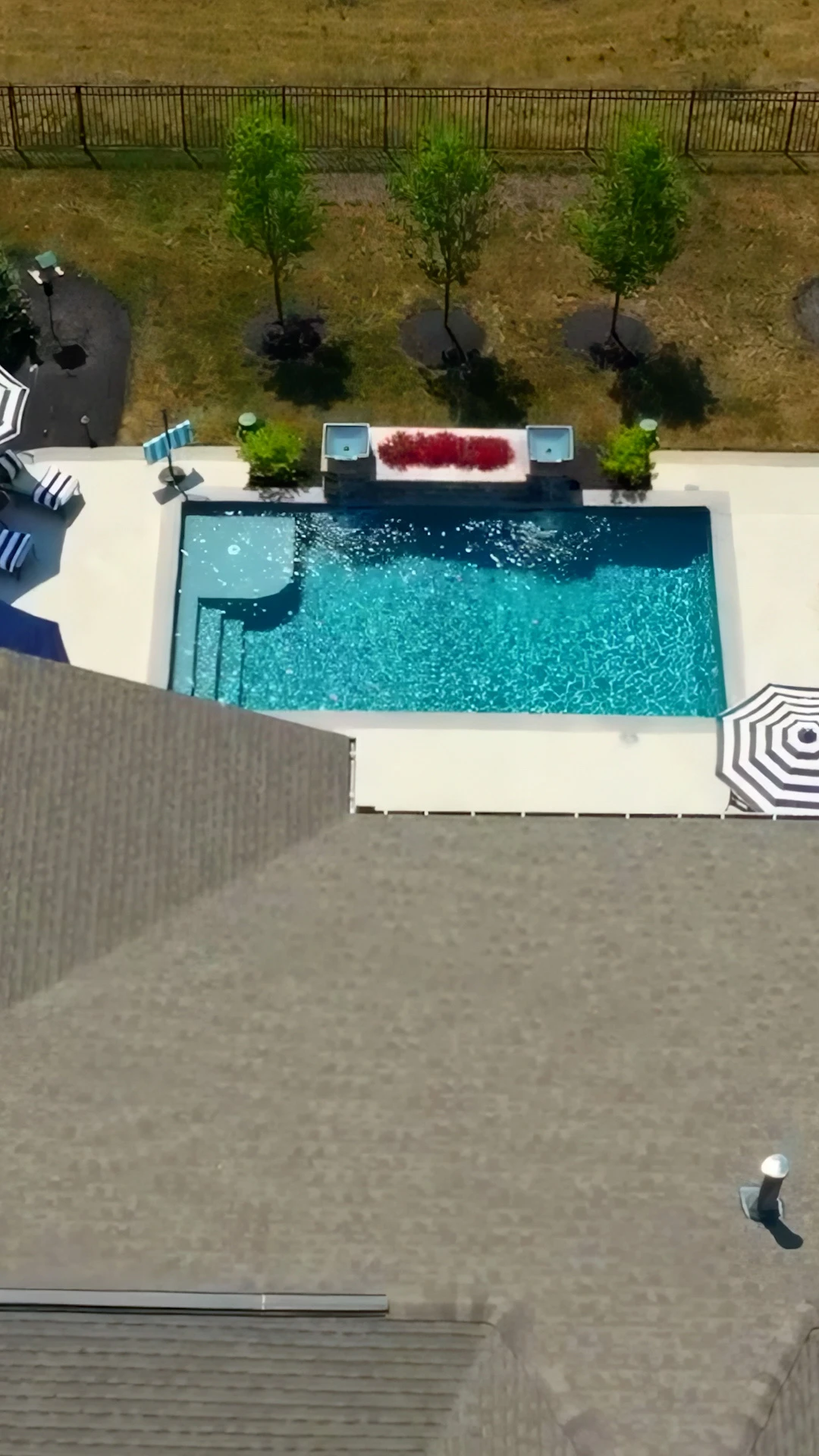
The playbook above is not invented theory. It is what we have built from forensic post-mortems on more than 300 algae events across Forsyth over the last four seasons — pools in every zip code, on every side of GA-400, in every HOA density bracket from the tighter south-county subdivisions to the 5-acre estates north of Coal Mountain. The pattern holds. The fix holds. What changes is how early an owner intervenes — and intervention cost rises exponentially the deeper into a bloom you wait.
If your pool has gone green twice in the last two seasons, phosphate is almost certainly the reason — not your chlorine brand, not your pump size, not your filter maintenance. Test first, treat the root cause, and rebuild the water chemistry from the hose bib forward. Forsyth County pools can hold clear as long as any pool in the metro once the nutrient chain is broken.
Pool repairs and phosphate control across 20+ cities within 30 miles of Winder, GA
If your Forsyth County pool is losing the battle with algae every summer, the problem is Lake Lanier’s nutrient load meeting your chlorine routine. We build water-chemistry programs that end the cycle — phosphate remediation, UV-ozone supplementation, and seasonal protocols tuned to your zip code.