
In Laurel Springs and The River Club, the average hardscape-plus-pool scope sold in 2024–2025 landed between $180,000 and $340,000 — which means homeowners walking in with an $80K budget are arriving at roughly one-quarter of the going rate for a full resort build, and nobody is being honest with them about what that number actually covers.
So let’s be honest. In Suwanee, $80,000 is real money and it buys real hardscape — but it does not buy the pool-plus-pavilion-plus-kitchen fantasy that Houzz and Pinterest are selling. It buys a tight, well-engineered patio package with one premium feature and the discipline to stop there. The minute a homeowner lets scope creep add a spa, a covered structure, and landscape walls to an $80K package, the job either blows past $130K or gets built with thin materials, undersized base, and quietly compromised drainage.
The purpose of this piece is to map that $80K number — and the tiers above and below it — onto specific square footage, specific brands, specific permit realities in Gwinnett County, and the specific Suwanee conditions that shift the math: Piedmont clay soil, Jackson EMC 240V service, HOA architectural review in the gated communities, and Chattahoochee River floodplain designations that occasionally turn a $80K project into a $110K project before the first paver is cut.
We’ve run this exercise in person with more than forty Suwanee homeowners in the last two years, from Highgrove and Woodbury on the eastern side of town to the gated estate lots at The Manor and Bear’s Best Atlanta. Every single conversation that ended in a signed contract started the same way: we walked through the tier math, we named the trade-offs, we pulled the neighborhood’s architectural guidelines up on the tablet, and we agreed on one premium feature rather than three. Every conversation that fell apart fell apart for the same reason too: the homeowner wanted three tiers up from their budget and wasn’t ready to hear that a $80K scope is a $80K scope, not an $80K deposit on a $180K fantasy.
If that sounds blunt, it’s because this is the post we wish someone had given our clients two weeks before they met with their first contractor. Most of the bad budgets we see weren’t written by bad contractors — they were written by homeowners and salespeople chasing a number that wasn’t real in the first place. The rest of this piece is the real number, broken down step by step.
Step 1 — Understand What a Suwanee $80,000 Scope Actually Includes
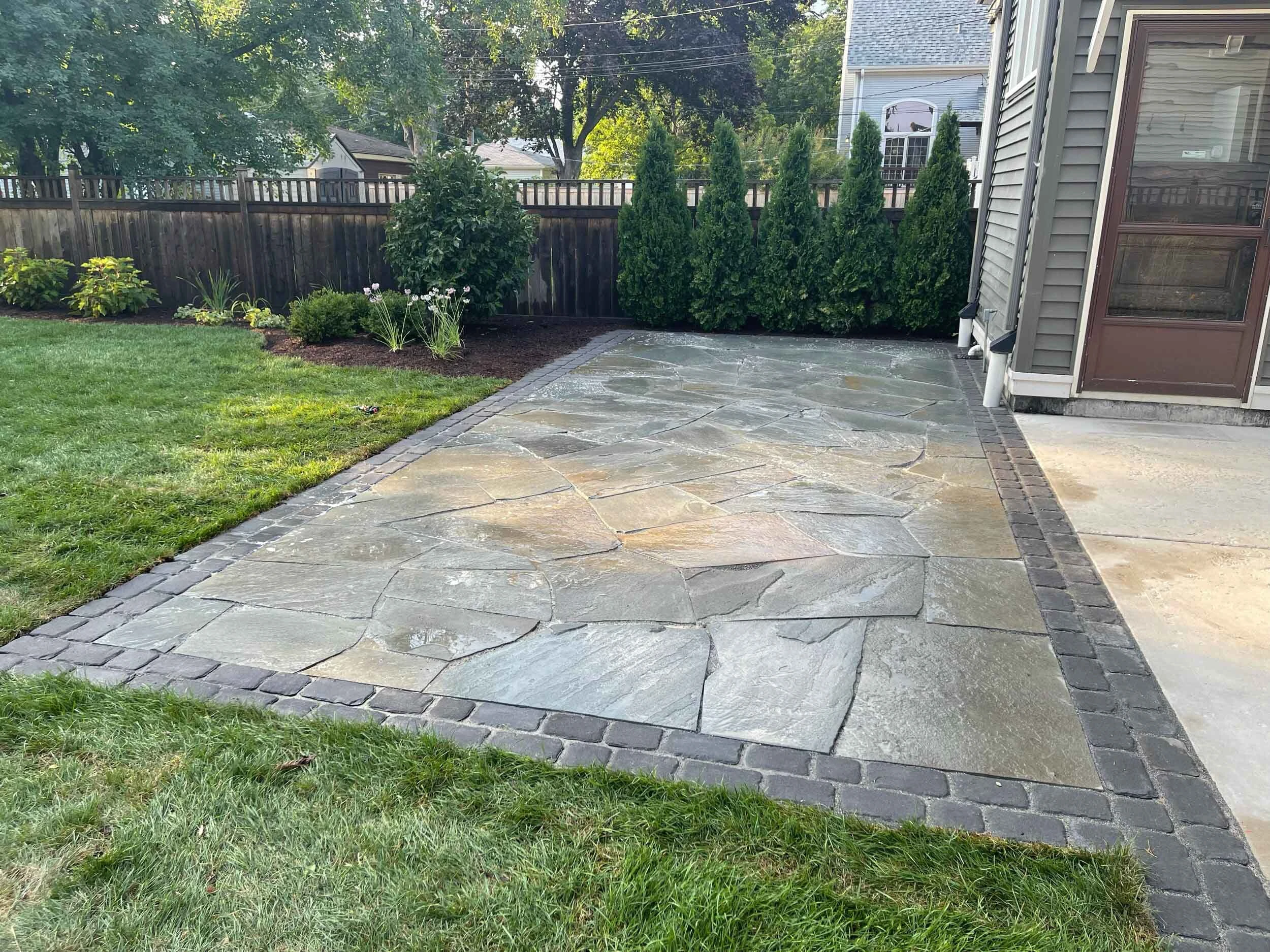
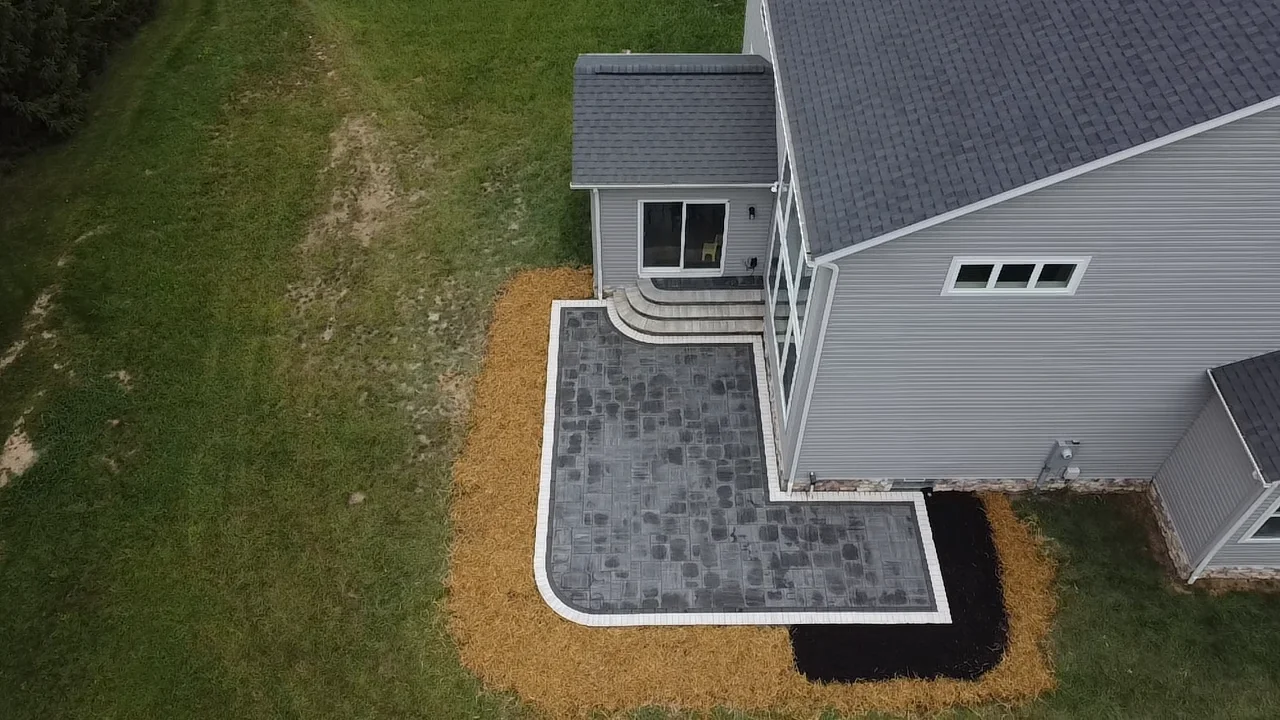
A realistic $80,000 Suwanee hardscape, built to the standard we put our name on, looks like this: a 600 sqft paver patio in a mid-tier product (Techo-Bloc Blu 60 or Belgard Holland), a low seat wall averaging 35 to 50 linear feet with a built-in gas fire ring, a landscape-grade low-voltage lighting package with roughly 12 to 18 fixtures, and one premium feature — either a roughed-in outdoor kitchen pad with gas and electrical stubs, or a small above-grade spa with its own pad and sub-panel. Not both. One.
That package, executed correctly on a typical Suwanee lot in the 30024 zip code, runs roughly $78,500 to $84,000 before site-specific upcharges. The upcharges are where the budget gets interesting — and where the honest conversation has to happen before a contract is signed, not after.
That premium feature choice — spa versus kitchen rough-in — is not a coin flip. The spa makes sense for homeowners who want the backyard usable nine months a year and plan to host small groups on winter evenings; the kitchen rough-in makes sense for homeowners who want the backyard to be an entertaining hub in peak summer, and who are willing to phase the appliance, counter, and door-package install into year two or three. Pick one. Pre-plumb and pre-wire for the other so you’re not cutting open finished hardscape in 2028 to run a gas line.
For houses in Settles Bridge near the Chattahoochee, two things regularly bump that $80K figure. First is the Zone AE floodplain designation that applies to several lots west of Settles Bridge Road — if any portion of the hardscape lives within the flood zone, Gwinnett requires an elevation certificate and, depending on fill and impervious surface added, possibly a FEMA review. That’s a $2,800 to $6,500 consultant line item and a 4-to-7-week schedule hit. Second is the soil: the Chattahoochee floodplain deposits sandy loam that drains better than standard Cecil clay, but the transition zones at the bluff edge are unpredictable and routinely require an additional 4 inches of compacted ABC-3 aggregate base to hit spec — call it $3,400 on a 600 sqft patio.
What the $80K number covers — line by line: 600 sqft paver patio (Techo-Bloc Blu 60 or equivalent) — $30,000 to $34,000. 45 lf seat wall with gas fire ring and dual cap courses — $14,500 to $17,000. 14-fixture landscape lighting package with Kichler or FX Luminaire transformer and hardwired drops — $6,800 to $8,200. Site prep, excavation, geotextile, 6-in compacted ABC-3 base, polymeric sand — $11,000 to $13,500. Gwinnett County permit, survey tie-in, inspections — $1,800 to $2,400. One premium add: spa pad with 240V sub-panel ($8,500) OR outdoor kitchen rough-in with gas + electric stubs ($7,500 to $9,200).
Step 2 — Know Where the Next Two Tiers Sit (and Why $80K Doesn’t Cross the Line)
Suwanee has three working tiers for premium hardscape, and a homeowner pricing a project needs to know which one they’re actually buying into before they start talking to contractors. The temptation is to imagine Tier 3 and budget for Tier 1. That produces the bitter conversations.
Tier 1 — Foundation Premium ($80,000 to $120,000): The scope described above, with a little runway. At $100K to $120K, the one-premium-feature rule becomes a two-feature rule: a 700 sqft patio plus both the spa pad and the kitchen rough-in, or the patio plus an 18×16 pergola in cedar or powder-coated aluminum. This is the starter premium tier in Laurel Springs — neighbors will consider it completed but not competitive. It’s the floor.
Tier 2 — Full Premium ($135,000 to $210,000): Add a covered structure (pavilion with cedar T&G ceiling, asphalt or metal roof, electrical rough-ins), a real outdoor kitchen with a Bull or Lynx built-in grill, a stone-veneer fireplace replacing the fire ring, and 900 to 1,100 sqft of hardscape. This is what most homeowners picture when they search “backyard resort.” On the Chattahoochee riverfront lots in The River Club, this tier is table-stakes.
Tier 3 — Full Resort ($240,000 to $400,000+): All of Tier 2, plus a gunite pool with spa spillover, tanning ledge, pool decking in large-format travertine or Techo-Bloc Aberdeen, retaining walls if the lot demands them, and a full landscape lighting scheme with zoned control. A legitimate Laurel Springs resort-scope backyard on a 1.5-acre estate lot lands here.
The honesty problem in our industry is that contractors routinely sell Tier 1 budgets as Tier 2 scopes, then value-engineer the pavers down to 60mm, the base down to 4 inches, the lighting down to solar-plastic stakes, and the fireplace down to a fiberglass shell. The patio looks fine for eighteen months. Then the joints heave, the seat wall settles, and the homeowner is paying again.
For context on where these tiers land geographically: we’ve priced roughly the same scope — a 700 sqft patio, a 45 lf seat wall, a gas fire feature, landscape lighting, and a single premium add — in Dacula, Buford, Cumming, and Suwanee, and the Suwanee number runs 6% to 11% higher than the same scope in Dacula. The premium comes from three places: HOA review overhead, slightly tougher permit timelines because Gwinnett routes the more complex Suwanee submittals through a senior reviewer, and material delivery logistics on the Peachtree Industrial Blvd corridor where truck access is more constrained than on the Dacula/Hamilton Mill side. It’s not a huge premium. It is a real one, and it shows up in honest bids.
Step 3 — Budget Around the Suwanee-Specific Site Conditions That Move the Number
Three site conditions regularly shift a Suwanee hardscape budget by $4,000 to $18,000 before design even starts. A homeowner who hasn’t priced these in is not working with a real budget — they’re working with a wish.
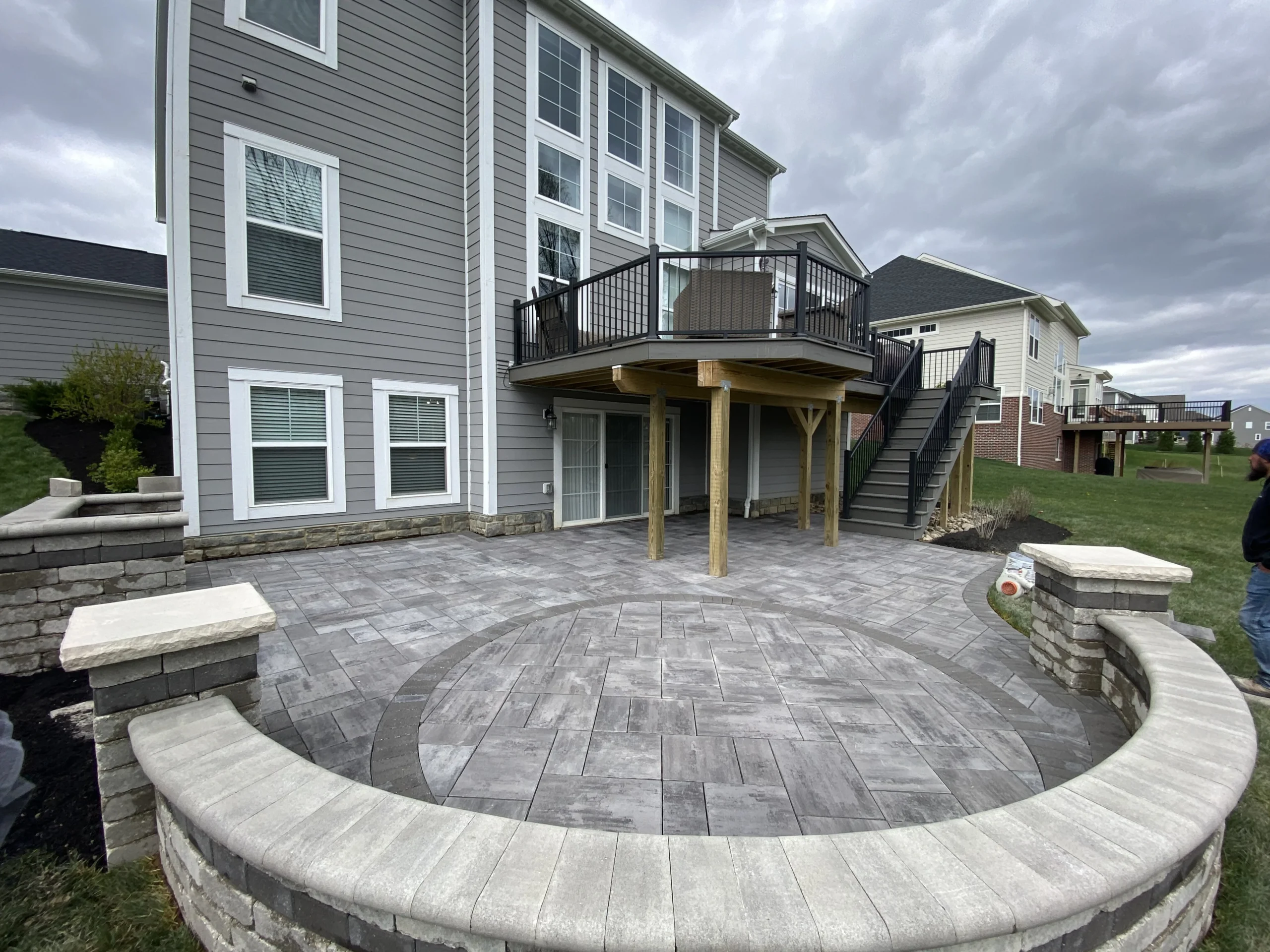
Cecil clay and Piedmont grade change. Suwanee sits on Cecil series clay, the same red-subsoil Piedmont clay that runs from Dacula down through Norcross. It is strong in bearing when compacted, miserable in drainage when left natural, and prone to expansion-contraction movement if the base isn’t deep enough. Our spec on every Suwanee patio is a minimum 6-inch compacted ABC-3 aggregate base with a woven geotextile separator underneath. On lots with notable grade change — most of the Piedmont rolls — that base depth doubles in the downhill corner. The cost isn’t the stone, it’s the excavation, the haul-off, and the labor hours.
Chattahoochee River floodplain. If the backyard sits within the FEMA-mapped Zone AE corridor along the river, a licensed surveyor must pull an elevation certificate before permit, and the design may need a hydrologist sign-off. In practice this affects roughly a dozen lots at the west edge of Settles Bridge and along the river-adjacent portions of The River Club. If this applies to your property, budget $2,800 to $6,500 in soft costs and add 4 to 7 weeks to the timeline.
HOA architectural review. The Laurel Springs HOA runs one of the strictest architectural review boards in Gwinnett County, with a typical 3-to-4-week turnaround. Bear’s Best Atlanta and The River Club at Suwanee run similar boards. Material samples — actual paver samples, actual wall-cap samples, actual stain swatches for any wood — are required, not just spec sheets. A project that fails the first review cycle loses six to eight weeks. Factor this in when setting a completion date, especially if the backyard hosts a summer event the homeowner cares about.
There’s a fourth condition worth flagging for older Suwanee proper — homes in the 1980s and 1990s ranch and traditional stock off Buford Highway and Old Peachtree Road. These lots routinely have mature root systems from hardwoods planted at original build: 40-year-old oaks, pines, and river birches whose roots radiate 30 to 50 feet from the trunk and live 6 to 18 inches below grade. Excavating a patio footprint through that root mat is not the same as excavating a new-build lot in Highgrove or Woodbury. It’s slower, it’s more expensive (plan for an extra $1,800 to $4,200 in labor and root pruning), and if the arborist determines a major root needs protecting, it shapes the final patio geometry. Never hide this cost in a base bid. Ask about it directly.
Permits in Gwinnett County: all hardscape over 30 inches in height, and any attached structure, pulls a permit through the Gwinnett Department of Planning & Development at 446 W. Crogan Street, Lawrenceville. Standard patio-plus-seat-wall permits run $180 to $320 and issue in roughly 10 to 15 business days. Pool permits run separately and take longer. Landscape lighting below 50 watts per fixture on a single transformer does not require a permit; anything larger does.
Step 4 — Sequence the Build to Protect the $80K Number (and Stay Off the Value-Engineering Slide)
An $80K hardscape budget survives the build process by sequencing every decision in a specific order, signing off, and not reopening it. Below is the six-step order we run every Suwanee project through.
- Site visit and scope reality check (week 1). We walk the lot, note grade, mark drainage paths, check for root obstructions from mature hardwoods (Suwanee’s 1980s ranch lots are heavy with oak and pine root balls 40+ years old), and call the Jackson EMC service line to confirm the 240V service capacity before any electrical features get scoped. Jackson EMC service is not Georgia Power — the transformers are sized differently, and a 200-amp house panel running an AC plus pool equipment plus a spa may need upgrading. Budget $1,800 to $3,400 if so.
- Design lock (week 2–3). One round of significant revisions, then scope locks. Paver brand and color, wall material, lighting fixture count and model, fire feature model (Travis Industries for gas ring, Solus for gas bowl, masonry for stone fireplace) — all specified by name and SKU. No “we’ll figure that out later” line items. That’s how $80K becomes $112K.
- Permit submission and HOA review run in parallel (week 3–5). Not sequentially. Running them in parallel saves 3 to 4 weeks.
- Site prep, excavation, utilities (week 6–7). Excavation to subgrade, haul-off, utility locate via 811, gas stub from the meter, electric stubs from the subpanel. On lots with the Cecil clay sub-surface, this phase always reveals something — a buried stump, an old septic line, a drainage tile from the 1990s. Budget 5% contingency minimum.
- Base and build (week 8–10). Geotextile, 6-inch compacted ABC-3, edge restraint, paver lay, seat wall courses, cap installation, polymeric sand, wash and seal. A 600 sqft patio with a 45 lf seat wall takes a 3-to-4-person crew roughly 10 to 14 working days depending on weather.
- Lighting and features (week 10–11). Low-voltage lighting gets installed last so the landscapers aren’t cutting runs and the crews aren’t breaking fixtures. Final inspections. Walkthrough. Punch list. Done.
Eleven weeks is a realistic target on an $80K Suwanee build, assuming no HOA re-review and no floodplain variance. Add two to six weeks for those. Any contractor promising a six-week turnaround on this scope is either cutting corners or hasn’t hit weather delays yet.
Weather is the variable that bites schedules hardest in Northeast Atlanta. Suwanee sits in USDA Zone 8a with roughly 20 freeze events per year and about 52 inches of annual rainfall. Two rainy weeks in March can push a permit-ready project into mid-April. The Chattahoochee river fog that rolls over Settles Bridge on fall mornings doesn’t stop work, but it delays morning starts by 45 minutes to an hour. Good project managers build weather buffer into the schedule they quote, not into the schedule they hope for. Ask how much buffer is in the number you’re being given.
Step 5 — Decide Where to Spend and Where Not To (Material-Level Honesty)
At the $80K tier, every material choice is a zero-sum trade. Spending $12 more per square foot on pavers means pulling dollars from lighting, from the fire feature, from the seat wall height, or from future pool allowance. Here’s how we counsel homeowners to allocate — this is the part most posts gloss over.
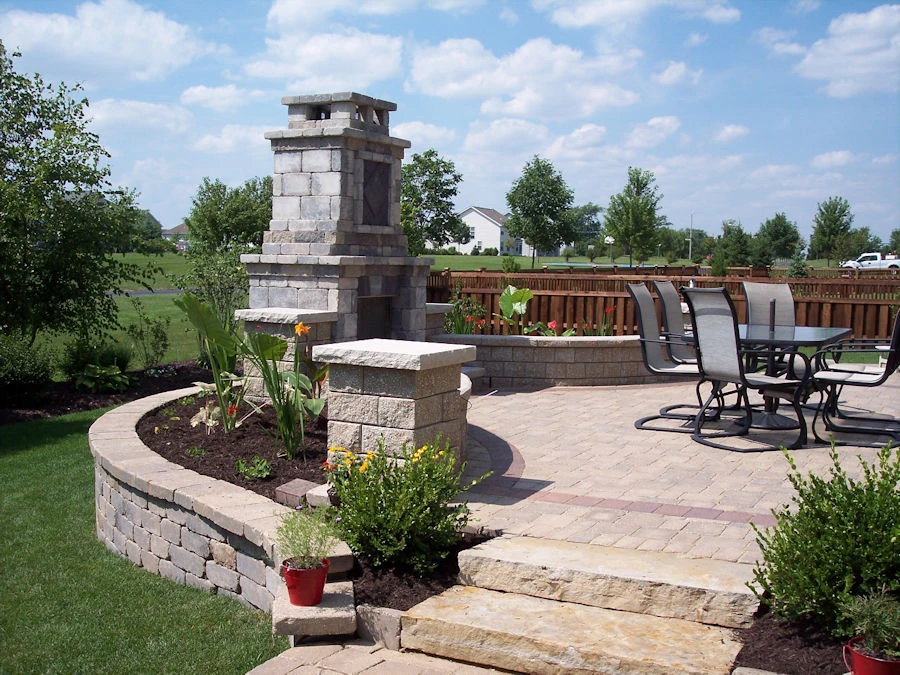
Spend more on: (1) aggregate base — 6 inches non-negotiable, 8 inches on sloped lots; base is invisible and bulletproof, and it’s where cheap contractors cut first; (2) paver thickness — Techo-Bloc 80mm over 60mm for vehicular-adjacent patios, even if the spec allows thinner; (3) polymeric sand over plain sand; (4) professional Kichler or FX Luminaire low-voltage fixtures on a hardwired transformer, not plug-in solar or big-box fixtures.
Spend less on: (1) coping complexity — a running-bond single-color field reads cleaner than a three-color pattern and costs 8% to 14% less; (2) wall height — 18 inches is a comfortable seat, 24 inches is a backrest, 32 inches is overbuilt for seating and triggers permit complexity; (3) fire feature — a quality Solus gas fire bowl at $2,400 reads more custom than a $7,800 masonry fireplace at this tier, and it leaves budget for a real kitchen later; (4) planter count — integrated planter walls look dense on a rendering and disappoint on install.
Two material notes specific to Suwanee. First, on pavers: the Techo-Bloc Blu 60 and Blu 80 lines have proven the most reliable mid-tier product in this climate over the last decade. They resist efflorescence in the humid Piedmont summers, hold color through freeze cycles, and the manufacturer’s spec allows tighter joints than many competitor lines — which matters when a homeowner in Laurel Springs asks “why don’t I see sand between my pavers.” Second, on lighting: the number-one reason an $80K hardscape reads cheap after dark is that the lighting package was value-engineered. Do not buy a plug-in solar system. Do not buy big-box plastic path lights. A Kichler LED Pro Series or FX Luminaire low-voltage system on a 300-watt hardwired transformer with 14 to 18 fixtures will transform the hardscape, last a decade, and can be moved or expanded when the scope phases up.
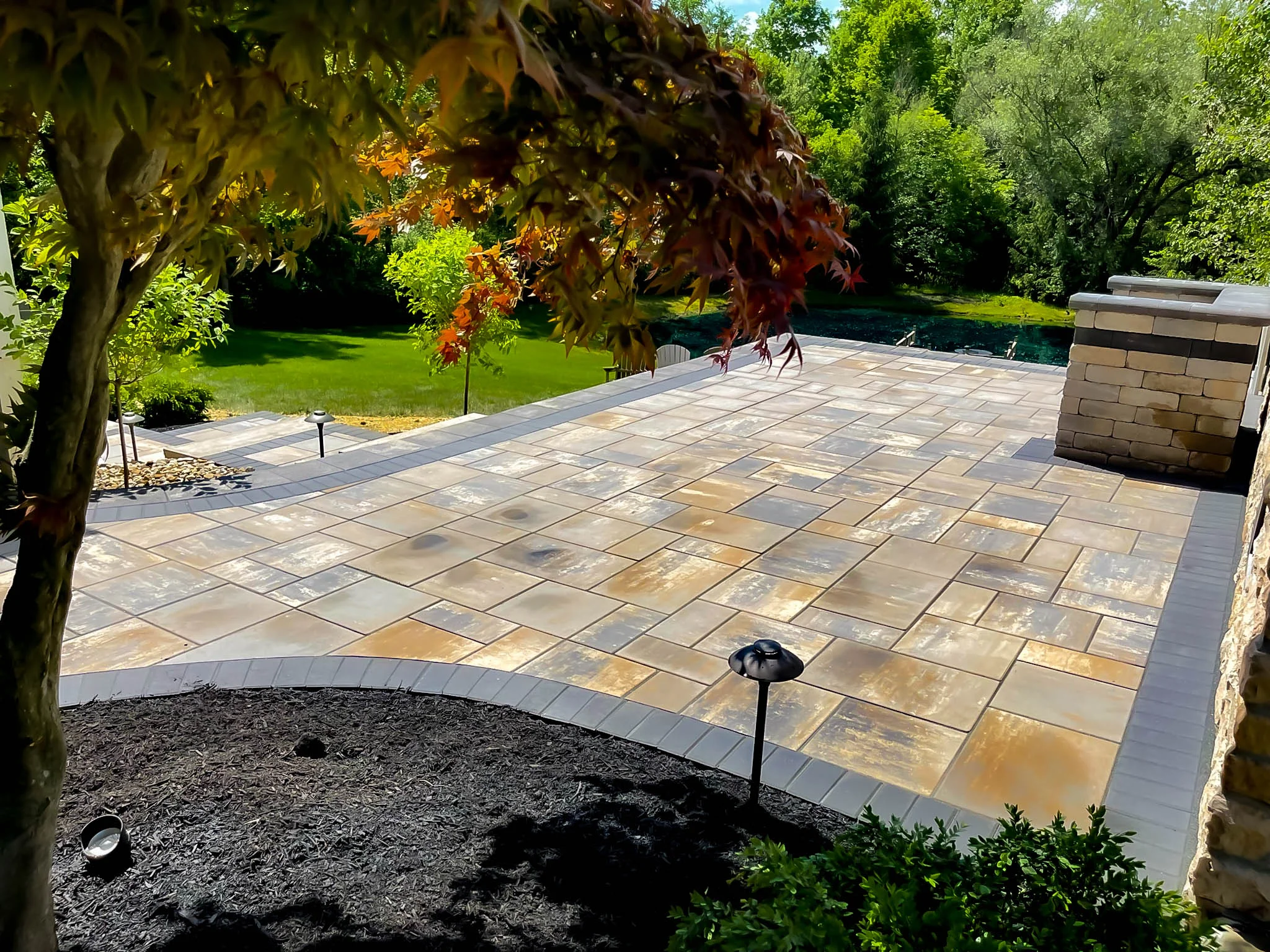
The temptation at $80K is to try to buy visual complexity — more curves, more colors, more walls, more bump-outs. Resist it. The most satisfied clients we work with in Settles Bridge and Village Grove spent their budget on fewer but larger and better-built elements: one generous field of pavers, one well-proportioned seat wall, one fire feature sized correctly for the space, and lighting that makes the hardscape usable after dark. That’s the package that reads premium at move-in, holds up for fifteen years, and doesn’t embarrass itself next to the neighbor’s Tier 2 build.
A final honesty: if the scope a homeowner wants genuinely needs Tier 2 money and all they have is Tier 1 money, the right answer is not to compress Tier 2 into Tier 1 by thinning materials. The right answer is to phase. Build Tier 1 this year with the infrastructure (gas stubs, electric stubs, spa pad, structural seat wall footings) already sized for Tier 2 expansion. Then add the pavilion, the kitchen, the fireplace, and the upgraded fire feature in year three or four. We’ve phased a half-dozen Laurel Springs projects this way — year one at $82K, year three at $94K — and the finished product is indistinguishable from a $180K one-shot build, except the homeowner paid for it over four years instead of one.
If you’re sitting with $80K earmarked for a Suwanee backyard and you want the honest scope conversation — not the Pinterest conversation — ask for an itemized line-item bid that names the paver brand and SKU, the base depth, the fixture model numbers, and the permit allowance. If a contractor can’t produce that, they don’t know what they’re building. And if they can but the numbers don’t line up with the ranges in this piece, ask where they’re cutting. Because somewhere, they are.
Honest-scope hardscape design across 20+ cities within 30 miles of Winder, GA
If you’re budgeting a Suwanee backyard and want a line-item bid that names the brands, the base depth, and the permit allowance — not a glossy rendering with a vague number attached — we build the same way in every city we serve.