
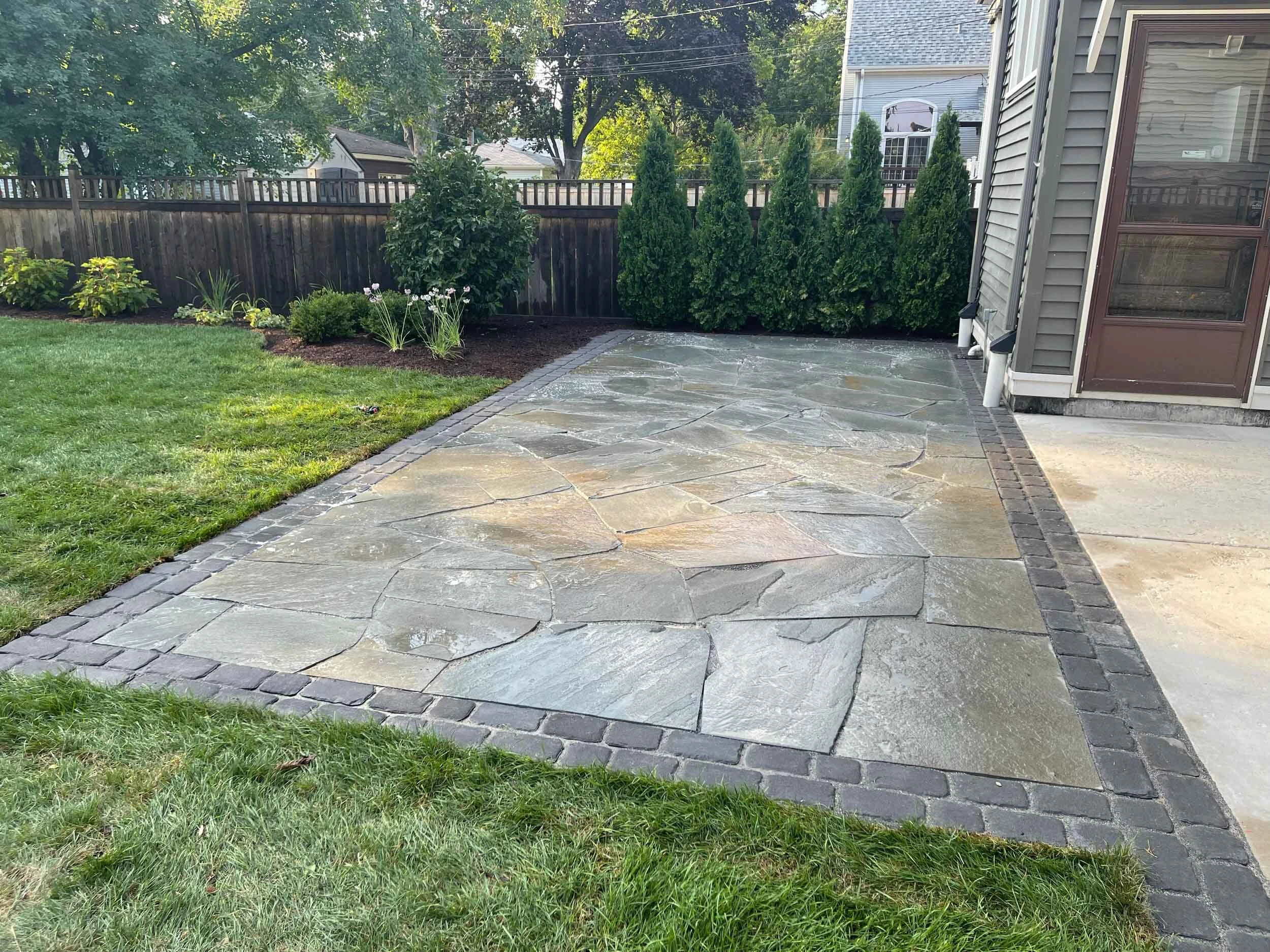
You’ve signed the contract on April 3rd. Your in-laws are booking flights for May 19th. The scope is a full-backyard transformation in Hamilton Mill — 720 square feet of paver patio, a 38-foot retaining wall dropping about four feet toward the property line, a gas firepit with a curved seat wall, and a flagstone walkway wrapping back to the driveway. You hand us the down payment and ask the only question that matters: will it be finished?
The honest answer in Dacula, GA is six weeks on a clean site — Gwinnett permits in ten business days, two weather delays instead of five, the same crew on day one and day forty-two. This post is a project-manager’s walkthrough of every week: what gets built, who shows up, and where a 6-week schedule quietly slips into nine.
Why Six Weeks Is the Honest Number in Dacula
Four weeks sounds competitive on a quote sheet. Four weeks works for a 300-square-foot paver patio on flat sandy fill in a brand-new subdivision with a pre-staged material drop. That is not the Dacula project we’re describing.
A full-yard transformation in a 1995-to-2010 Hamilton Mill subdivision — mature oaks, a 15% backyard slope toward an Alcovy River tributary, Cecil-series topsoil over weathered saprolite, and an HOA review board that meets the second Tuesday of the month — is a six-week project. Every one of those variables adds days. When a bid skips past them, the schedule doesn’t get shorter; the overrun just hasn’t been priced in yet.
Before the crew ever shows up, we run Week 0 — the invisible week that governs every week after it. Day one of Week 0 is the permit application at Gwinnett County Department of Planning & Development, 446 W. Crogan Street in Lawrenceville. A 720-square-foot paver patio alone doesn’t require a permit, but the moment the scope includes a retaining wall over three feet of retention, Gwinnett triggers an engineered-drawing requirement — a stamped drawing from a licensed structural or geotechnical engineer before the hardscape permit issues. On our Hamilton Mill example with a four-foot wall, we’re in engineered-wall territory.
While the permit sits in queue (7 to 12 business days at average depth, longer in March–May), three tracks run in parallel: HOA architectural review (14–21 days in most Dacula subdivisions — Hamilton Mill, Sycamore Ridge, Chandler Ridge, Providence Club, Ivey Chase, Auburn Park), Georgia 811 utility locates three business days before any digging, and a Hamilton Mill street-access permit for dumpster and truck staging on the delivery day when the cul-de-sac can’t hold a 30-yard roll-off and a 25-ton tandem at the same time.
Typical 6-Week Budget Distribution: demo and dig — 15%. Retaining walls — 25%. Base preparation and patio pavers — 30%. Features (firepit, seat wall, walkway, coping) — 20%. Punch list, sealing, and final polymeric sand — 10%. If a bid puts more than 35% in the patio line or less than 20% in walls on a sloped Dacula lot, the contractor is either under-building the wall or overselling the top layer.
Gwinnett’s other signature requirement: any retaining wall with more than 3 feet of retained height (measured bottom of footing to top of wall at the highest exposed point) needs an engineered drawing and a hardscape permit. Walls at or under 3 feet are exempt from the stamped-drawing requirement but still benefit from engineered drainage. If you signed on April 3rd, the dig realistically starts April 17th to 21st. Those two weeks of prep aren’t delay — they’re the foundation of every week that follows.
Week 1 — Demo, Excavation, Spoils Removal
Week 1 is the loudest week. Sod strip, tree protection fencing, demo of any existing concrete slab, and the start of excavation — all simultaneously. On a typical Hamilton Mill 1/3-to-1/2-acre lot with an accessible backyard (not the cliffside builds you see in North Fulton), we land a mini-excavator in the backyard through the side gate or over a driveway-to-yard ramp built from plywood and 2x10s.
Monday of Week 1 starts at 7:15 a.m. with a three-person crew: one excavator operator on a Kubota KX040 or Bobcat E42, one skid-steer operator, one laborer on grade checks. In Cecil-series clay, the honest bucket excavation rate is 6 to 9 cubic yards per hour — meaningfully slower than sandy or loamy soil (12–16 CY/hour) because the clay packs against the bucket teeth and has to be shaken off. A 720-square-foot paver area excavated 11 inches deep for base is about 24 cubic yards of spoil. The 38-foot retaining-wall footing cut adds 17. Plus firepit footprint, walkway trench, and rough grading — call it 55 to 65 cubic yards total.
At 6–9 CY/hour that’s 7 to 11 working hours of bucket time, but you schedule two full days because the operator is also cutting to grade, establishing the retaining-wall base bench, checking depths with a laser level, and moving between four work zones. Week 1 in the schedule is Monday through Thursday; Friday is buffer.
Spoils removal is the hidden cost nobody sees. A 30-yard dumpster holds roughly 22 cubic yards of compacted clay — clay loads heavy, you hit the weight limit before the volume limit. For 55–65 CY of spoils we rotate three roll-offs through the driveway across Week 1. Dumpster rotation alone is $1,200–$1,800 on a project this size, which is why bids that skip the spoils line are almost always lowballing.
Week 2 — Drainage, Footings, Geotextile, First Base Lifts
Week 2 is the first quiet week. The excavator leaves Tuesday morning after the last drainage trench. Dumpsters drop from three to one. If the homeowner is on vacation they’ll come back to a yard that looks almost the same as end-of-week-1 — and that’s exactly the point.
Monday is drainage. Under every paver patio in Dacula we run a 4-inch SDR-35 perforated pipe wrapped in a non-woven geotextile sock, bedded in #57 stone, daylighted to a rock pit or curbside outfall depending on lot position. Hamilton Mill lots that drain toward Alcovy River tributaries get their outfall into a rip-rap dissipator pad so discharge doesn’t scour the downhill slope. Providence Club lots closer to flat get a 4-foot diameter, 5-foot deep gravel drywell wrapped in geotextile.
Tuesday is the retaining-wall footing. For an engineered wall in Gwinnett, the spec is typically 6 inches of compacted #57 stone on a leveled, moisture-conditioned subgrade, with density testing at footing level if the permit requires third-party verification. Wednesday and Thursday are geotextile layout and the first base lifts for the paver field. Under every paver installation we place a non-woven separation geotextile (4.5 oz or heavier) directly on the exposed subgrade — in Dacula clay that fabric isn’t optional; it’s what stops clay from migrating up into the base stone during wet cycles and undercutting the compaction you paid for.
Signature Detail — Base System: We install an 8-inch compacted open-graded base (#57 clean stone, then #89 or #78 choker course) on a non-woven geotextile separator directly over the subgrade. Each lift is 2 inches maximum, compacted to 95% Modified Proctor with a 15,000 lbf reversible plate compactor, walked minimum twice in perpendicular directions per lift. Four lifts, each one passing twice, across the entire 720-square-foot paver area.
Thursday night the footings are in, drainage is plumbed, geotextile is down, and the first two base lifts are compacted. Friday is grade-check day — we shoot laser-level readings across every base zone against design elevations. Any spot more than 1/8-inch off the design line gets corrected before Week 3.
Week 3 — Base Compaction, Wall Vertical, Geogrid Layers
Week 3 is the week that separates a 10-year patio from a 30-year patio, and it’s the week nobody can see what we’re doing. From the outside, Week 3 looks like three people spending five days walking a plate compactor back and forth across a rectangle of gravel.
Here’s what’s actually happening. We finish the remaining base lifts to bring the base to its final elevation roughly 1.25 to 1.5 inches below the finished paver surface. Each lift is placed in a 2-inch loose thickness and walked twice in perpendicular directions with the 15,000 lbf reversible plate at 95% Modified Proctor density. A plate that size covers 35 to 45 square feet per minute at a proper pace — roughly 22–26 minutes per full pass across 900 square feet of patio plus walkway. Four lifts at two passes each is eight total passes, or about three and a half hours of pure compactor running time per zone. Spread across wet checks, laser-level verifications, and the operator stepping off to shake clay clumps, Week 3 burns five working days on base alone.
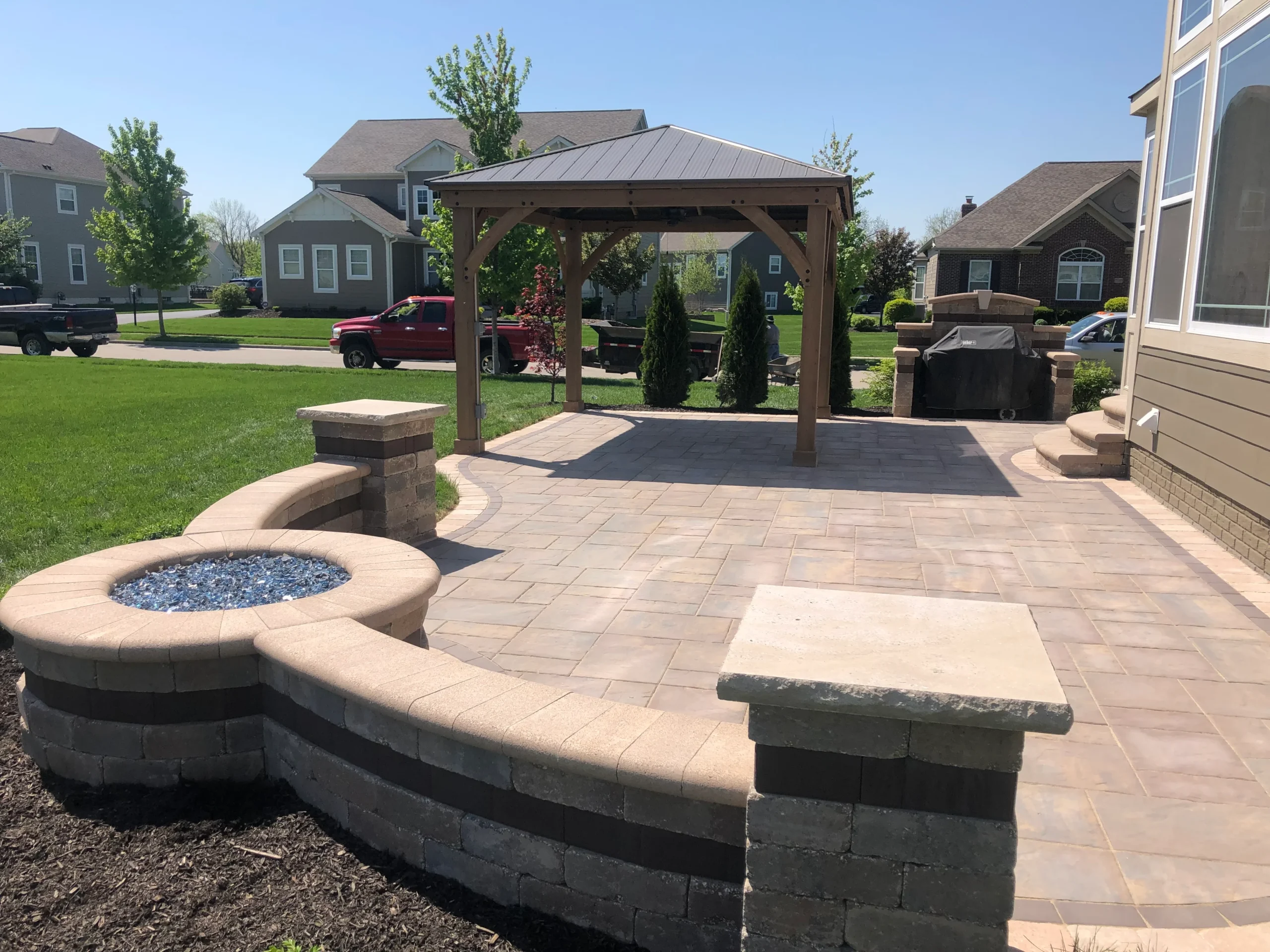
This is also the week the retaining wall goes vertical. On our Hamilton Mill example the wall is a tumbled modular block (Techo-Bloc Mini Creta or Belgard StoneLedge) with a geogrid layer every two block courses extending 5 to 6 feet back into the soil mass per the engineer’s drawing. Geogrid is the reason a block wall at four feet doesn’t pancake in year seven. It isn’t optional on any Dacula wall over three feet.
Behind the wall: 12 inches of clean #57 drainage stone, wrapped in geotextile, on top of a 4-inch perforated drain pipe daylighted to the lowest corner of the site. Behind that stone: compacted structural backfill in 6-inch lifts — not native Dacula clay. Native clay behind a retaining wall is how walls fail.
Week 4 — Wall Cap, Feature Footings, Gas & Electrical Rough-In
Week 4 is when the yard starts looking like something. The retaining wall tops out Monday or Tuesday — 7 to 10 block courses up depending on exposure — and the cap stones go on Wednesday with a polyurethane hardscape adhesive (PL Premium or SRW) holding them to the top course. Cap install is a full-day job for two people on a 38-foot run because every cap meets the curve and the cap joints stagger against the block joints below.
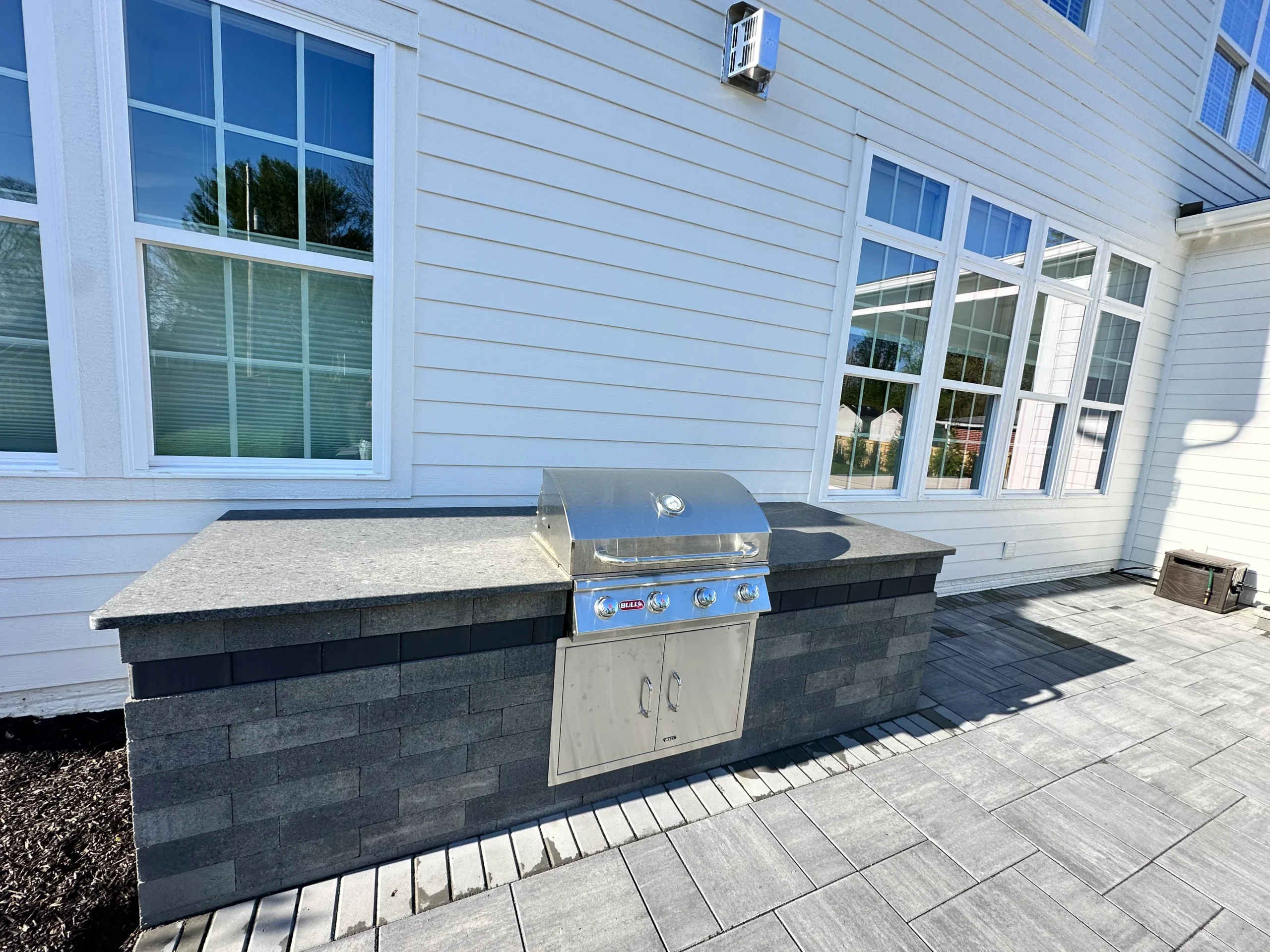
Thursday and Friday are feature work and utility rough-in. For a gas firepit we run a 3/4-inch black iron line from the existing house meter, sleeved in 2-inch PVC where it crosses the patio footprint, pressure-tested to 30 psi for 15 minutes and documented for the Gwinnett gas inspector. Electrical rough-in for LED seat-wall lighting and path lights also happens this week — 12-gauge low-voltage cable in conduit sleeves at every paver crossing, pigtails left at each fixture location. Fixtures don’t set until Week 6.
Weather reality check: Week 4 is the first week that weather becomes a serious variable. A full-day rain on Monday after the base is compacted is recoverable — the open-graded system drains. A full-day rain Thursday when we’re setting cap stones with adhesive is a 24-hour delay minimum. Our rule: two weather-contingency days built into every four-week stretch — three contingency days across the full six-week arc. Dacula averages 12 rain days between late April and mid-May; the odds of zero delays across six weeks are essentially zero.
Week 5 — Pavers, Coping, Firepit Kit, Walkway
Week 5 is the most visual week. Monday the paver field goes down. A good two-person crew in Dacula can set 250 to 320 square feet of pavers per day in a running-bond or herringbone pattern once the base is properly screeded. On a 720-square-foot patio that’s three full paver days plus a fourth day for cuts.
The screed bed is a 1-inch layer of ASTM C33 concrete sand (or ICPI-approved 2NS sand), screeded level off PVC screed rails, then pavers placed without sliding — lifted and dropped into position to avoid disturbing the bedding. No foot traffic on a screeded bed until pavers are down. If a worker steps on it, we re-screed that zone. This is one of the rules that separates pro crews from day-labor crews.
Tuesday and Wednesday are the bulk of the set. Thursday is cuts — perimeter stones, curves around the firepit, and transitions where the patio meets the walkway. Cuts happen on a 14-inch wet saw (Husqvarna TS60) with a diamond-segmented paver blade. Spoils and slurry water sweep into a containment tarp so nothing runs into the HOA-managed drainage swale.
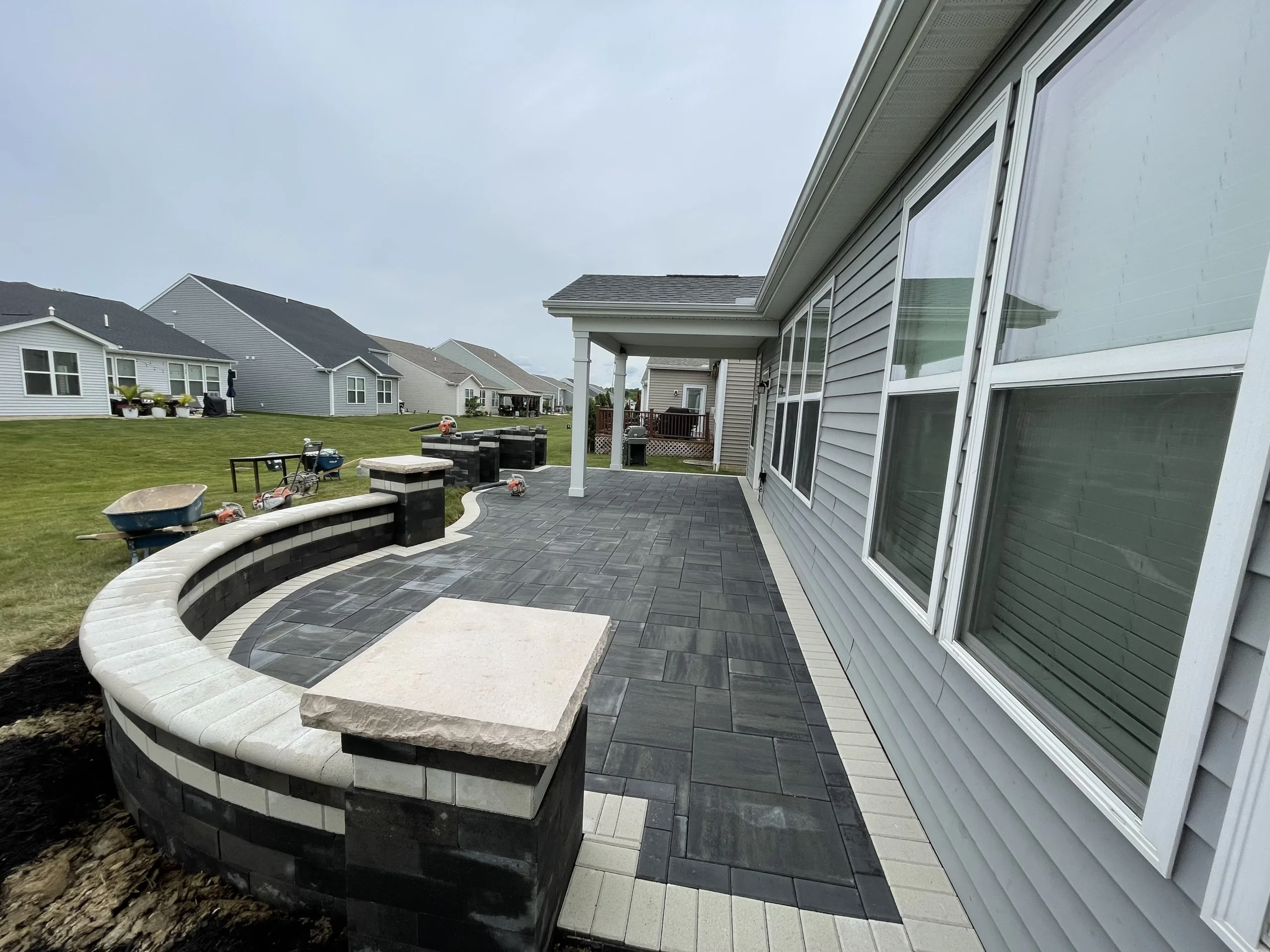
Friday is firepit kit assembly and coping. A tumbled modular firepit kit (Techo-Bloc, Pavestone, or Belgard) is 36–48 inches in diameter, 18 inches tall, and comes in 40–60 blocks plus caps. Assembly is a half-day for two people. Gas-line final connection and first test burn happen here — pressure drop re-verified, burner ring seated in lava media, homeowner walked through ignition and the emergency shutoff valve inside the garage. Seat-wall LED strip lights get pre-wired into the wall cavity before the cap goes on; dry fit first, cap off, wire run, cap back down on adhesive. You can only do this sequence once.
Week 6 — Punch List, Polymeric Sand (Two Applications), Lighting Commission
Week 6 is where the difference between a 5.5-week contractor and a 6-week contractor becomes obvious. A 5.5-week contractor hands you a patio Friday of Week 5 with polymeric sand already in the joints. A 6-week contractor waits seven days after paver lay-down, then sweeps polymeric sand in on Monday of Week 6, tamps it to seat, blows excess off the surface, and activates with a fine water mist.
Here is the rule we follow in Dacula, and the single piece of craft that separates a 30-year patio from a 5-year patio: polymeric sand gets applied twice, 48 hours apart, on every project. The first application seats into the upper 1.5 inches of joint, activates, and cures. Then it settles about 3/8 inch as it compacts under its own weight and the first thermal cycle. On day three we re-sweep, re-tamp, and re-apply — topping joints back to flush with the paver surface and activating a second time. Two applications is why our joints don’t sink in year two.
Polymeric Sand Protocol: Use a dedicated polymeric jointing sand (Techniseal HP NextGel or Alliance G2, depending on joint width). Apply in dry weather with pavers completely dry. Sweep to overflow, tamp with plate compactor over a protective roller pad at low amplitude, blow surface clean, mist-activate in three passes. Second application 48 hours later, same sequence. If rain is forecast inside 24 hours, delay the entire application — never rush polymeric.
Tuesday and Wednesday are LED lighting commissioning. Fixtures thread onto the low-voltage pigtails, the transformer timer programs to a dusk-to-midnight schedule (Kichler Pro 300W or 600W), and we walk the site at dusk to confirm aim, color temperature match (we standardize at 2700K warm-white for Dacula residential), and photometric balance.
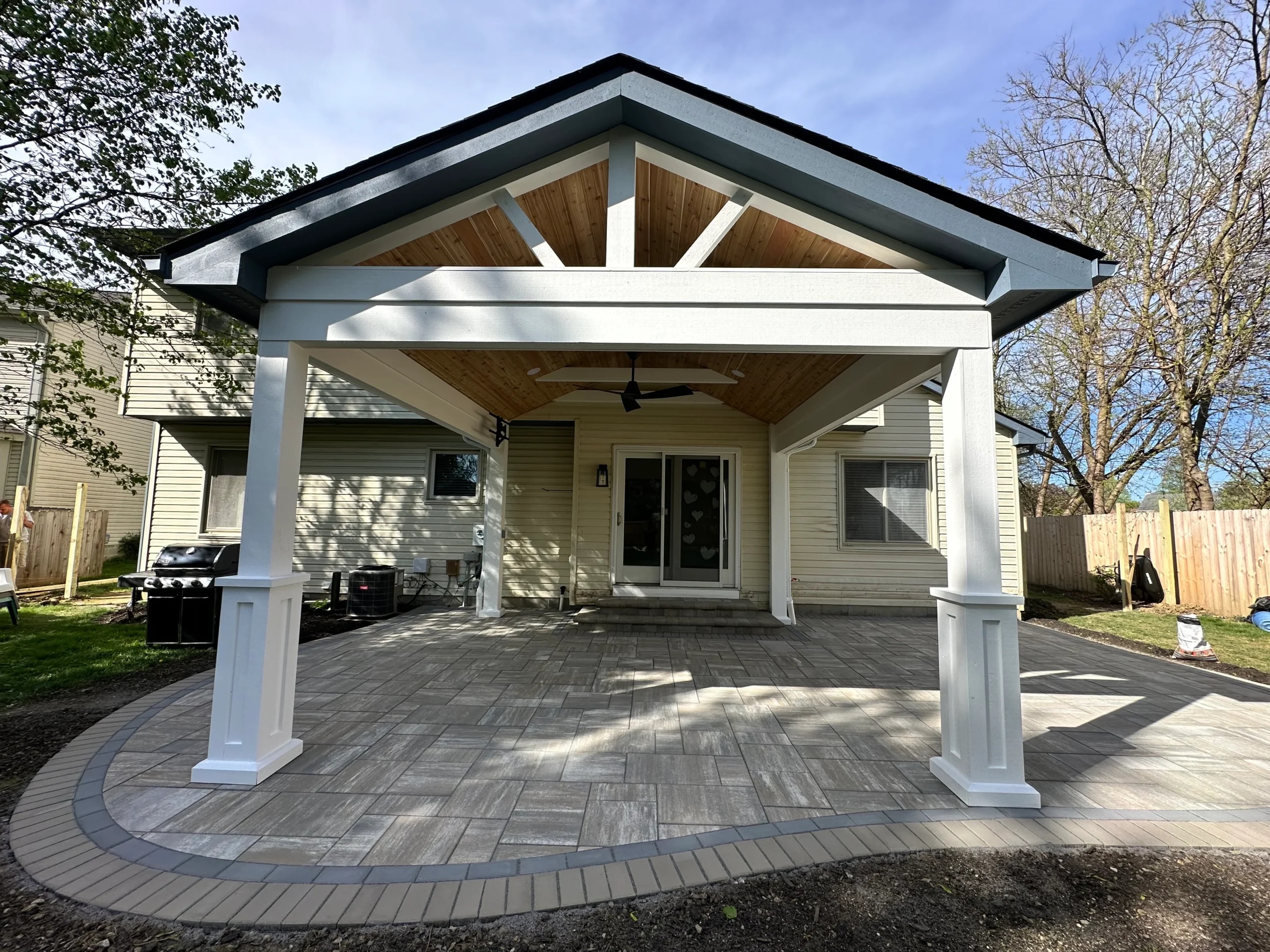
Thursday is the punch-list walk-through with the homeowner. We hand over a typed punch list on a clipboard — every deficiency listed with a fix date and crew assignment. Typical items: two or three pavers with a wet-saw chip (replaced from attic stock), a section of joint sand a shade lighter (re-swept, re-activated), a sod edge needing a second trim, a low-voltage fixture that flickers (connector re-crimp), adhesive residue on two cap stones (solvent-wiped with Techniseal PSR cleaner), and a final homeowner walkthrough of the firepit ignition and emergency shutoff.
Friday closes punch and triggers final payment. On a clean project the punch list closes Thursday afternoon and Friday is photographs, HOA compliance shots, and the warranty handoff.
Where the Schedule Slips — And What You Get on the Final Friday
A six-week timeline slips for four repeatable reasons, and knowing which one is happening is the difference between a conversation and a fight. Permit delay — Gwinnett’s queue at 446 W. Crogan fluctuates seasonally; spring is the worst because every homeowner files pool, deck, and hardscape permits at once. A 10-business-day review can stretch to 18. Weather — a full-day rain on base-compaction day loses 24 hours; a full-day rain on polymeric-sand day loses 48–72 hours because joint activation has to be perfect. Material delay — a special-order Techo-Bloc color can add two to three weeks; we flag that at design stage, not at pour day. Scope change — a walkway extension or upgrade from firepit to full fireplace mid-project adds 2–5 days and gets documented, priced, and scheduled separately; there’s no such thing as a free change to a schedule running at full daily burn.
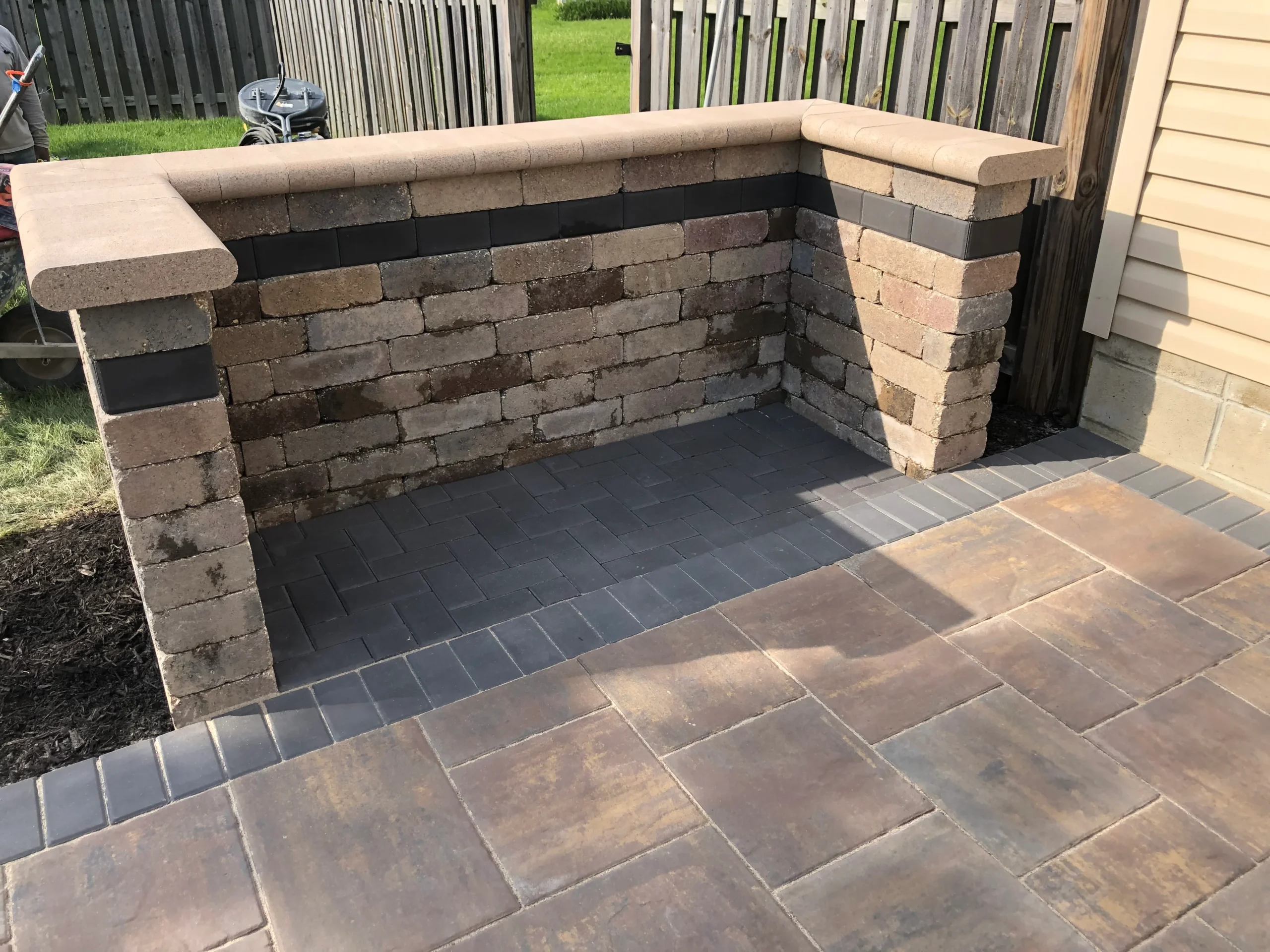
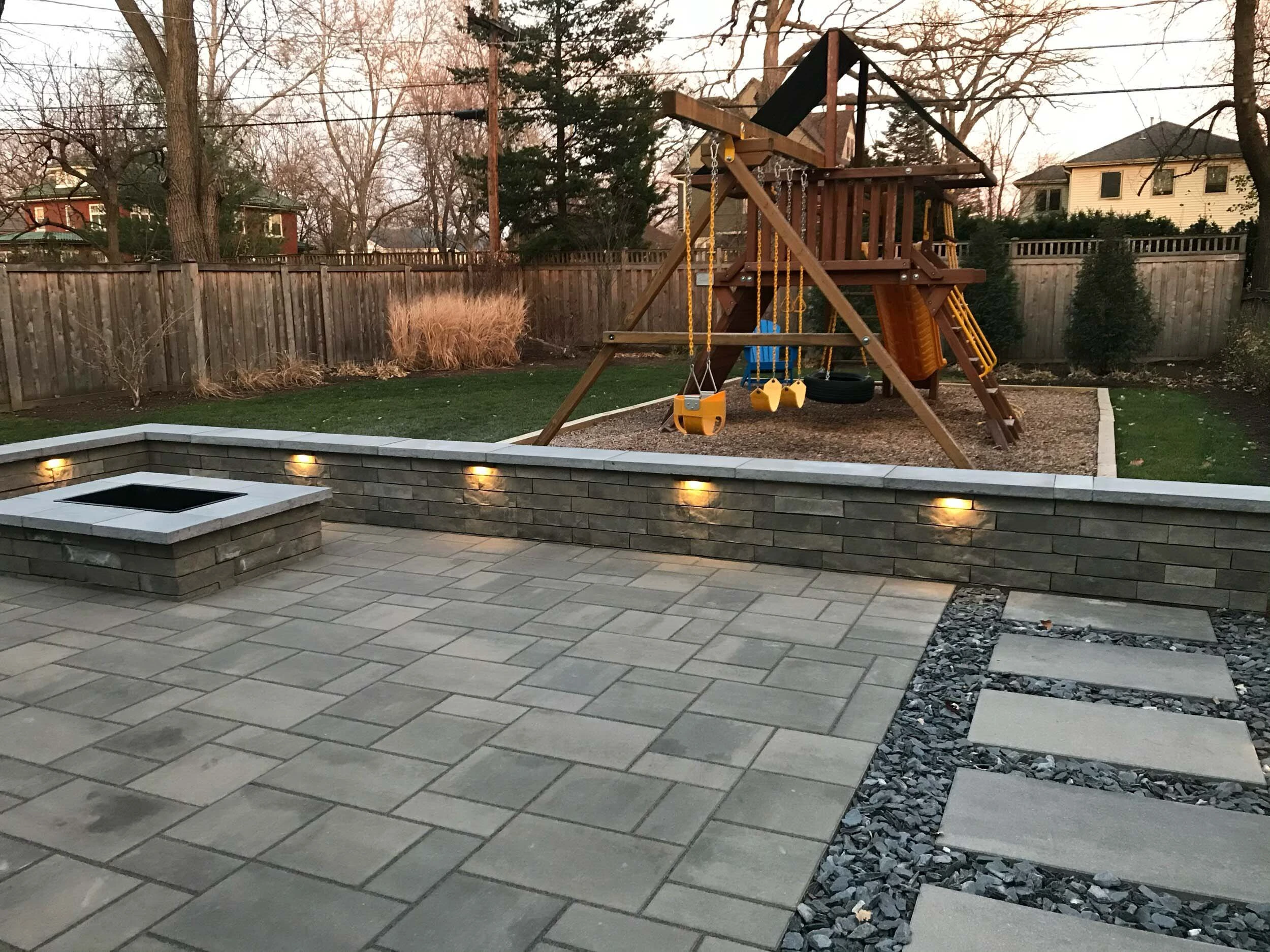
On the final Friday you walk a backyard that didn’t exist six weeks ago. A 720-square-foot herringbone paver field with a charcoal soldier border. A 38-foot retaining wall holding back a 4-foot grade change toward the Alcovy tributary. A curved seat wall with 2700K LED accent lighting under the cap. A gas firepit on a compacted base that matches the patio’s, threaded from the house meter under the patio through a sleeve you’ll never see. A flagstone walkway wrapping back to the driveway with path lights at 10-foot intervals.
If you signed April 3rd and the arc ran clean, reveal week is May 12th to May 16th — four days before the May 19th guest arrival, which is exactly the margin we target when a date is fixed. Sod edges get a week to knit. Polymeric sand has 48 hours past its second activation. LED is dialed. If weather or a permit queue pushed the schedule, we told you that by Week 3, not Week 6. The weekly communication is the delivery, not just the handoff.
The timeline above runs on an average Hamilton Mill, Sycamore Ridge, Chandler Ridge, Providence Club, Ivey Chase, or Auburn Park project of moderate complexity. A simpler scope compresses to 3.5 to 4 weeks; an integrated pool-and-kitchen build stretches to 10–14 weeks on a different crew. What doesn’t change is the base-compaction discipline, two-application polymeric sand, geogrid behind every wall over three feet, and the permit through 446 W. Crogan Street. Those are constants.
Hardscape Design & Construction across 20+ cities within 30 miles of Winder, GA
Six-week timelines, engineered retaining walls, 8-inch compacted open-graded base, and two-application polymeric sand — the same process on every Dacula, Hamilton Mill, and Gwinnett County hardscape we build.