
A 2019 ICPI field survey of failed paver installations across the Southeast found that 78% of premature settlement, edge blowout, and joint-sand washout failures traced back to just three base decisions made in the first four inches of soil — the same three decisions an Alpharetta Cecil-clay subgrade punishes harder than almost any lot in metro Atlanta.
Alpharetta does not give paver patios an easy life. The dominant subgrade under Windward, Country Club of the South, White Columns, and Hutchinson Farm is Cecil-series Piedmont red clay with moderately high shrink-swell behavior. Summer humidity sits between 60% and 75%, average rainfall totals 51 inches per year, and winter hands the slab roughly 20 freeze events annually. Water does not drain. It lingers in the top twelve inches of soil, pushes upward when it freezes, and contracts when the July sun bakes the yard dry. A patio engineered for dry Midwestern loam will start telegraphing failure to the surface within 36 months. A patio engineered for this corner of Fulton County will still be dead flat in 2055.
This post is the exact spec we write into every Alpharetta paver patio contract — and the reasoning behind each layer. If your crew skips any single item below, plan to lose eight to twelve years of service life.
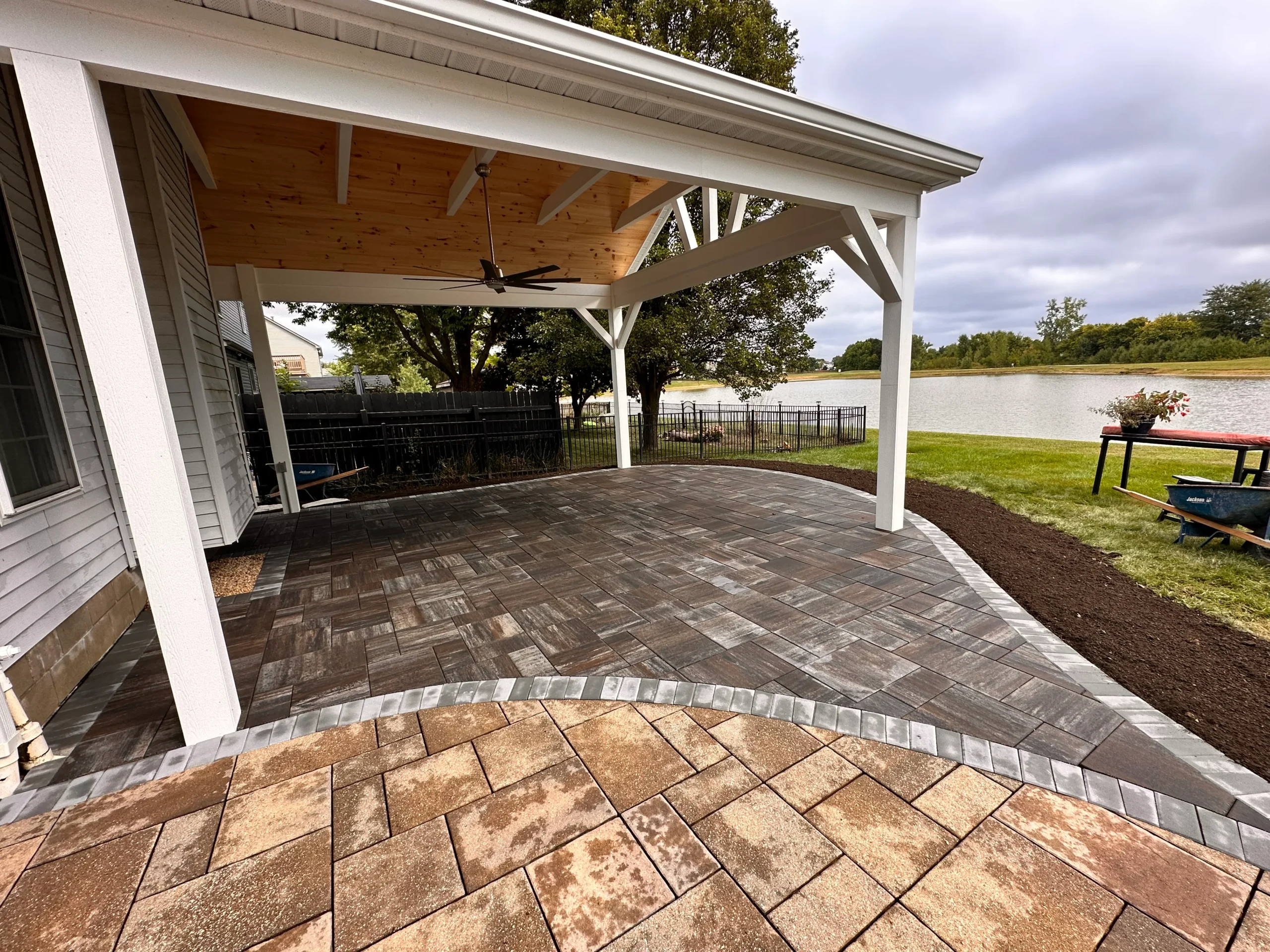
Why Cecil Clay Kills Paver Patios the Neighbor Installed Last Year
Cecil-series soil is the reason your neighbor’s patio has a dip near the grill by year three. It is a kaolinitic-to-mixed-clay Piedmont soil with a plasticity index high enough to expand roughly 4–7% in volume when saturated and contract a similar amount when it dries out. That seasonal breathing happens every single year in Zone 8a, and the pressure it exerts on anything laid directly on top of it is substantial.
Three failure modes dominate in Alpharetta. Heave — upward displacement during winter freeze-thaw, most visible along the cold northwest corner of a house. Differential settlement — the center of the patio sinking because the excavation floor was never proof-rolled. Edge migration — pavers creeping outward under lateral load because the restraint was nailed into clay that moved. The spec below treats each of these as an engineering problem, not a cosmetic one.
Excavation, Subgrade Prep, and the 6 oz Geotextile Layer Nobody Wants to Pay For
Minimum excavation depth for a residential pedestrian paver patio on Cecil clay: 10.5 inches below finished grade. That accounts for 8 inches of open-graded aggregate base, 1.25 inches of bedding sand, and the paver itself (usually 2.375 inches for standard 60mm units or 3.125 inches for a Techo-Bloc Blu 60). Driveways and patios carrying hot tubs or outdoor-kitchen footings move to a 12-inch base minimum.
Once you hit subgrade, do not skip the proof roll. We run a 10,000 lb-force vibratory plate across the excavated floor in two perpendicular directions. Any spot that deflects more than half an inch gets dug deeper, the soft clay pocket removed, and the void backfilled with #57 stone before the rest of the base goes down. On lots in Haynes Manor and Ashebrooke we routinely find isolated wet pockets two to three feet in diameter from old irrigation trenches — if you bury one, the patio above it will show a low spot by year five.
Alpharetta subgrade rule: If the proof-roll deflection exceeds 1/2 inch or if standing water appears within 20 minutes of excavation, stop. Remove an additional 4 inches, install non-woven 6 oz geotextile, and backfill with angular #57 stone to original excavation depth before continuing.
The single cheapest upgrade that buys the most lifespan is a non-woven 6 oz geotextile separator fabric — Mirafi 180N or an equivalent-grade SRW or US Fabrics product. It lays directly on the proof-rolled clay subgrade, extends 8 inches up each excavation wall, and costs roughly $0.18 per square foot wholesale. Most crews omit it to shave $150 off a 900 sq ft patio bid.
What the fabric actually does is prevent pumping — the slow upward migration of clay fines into the aggregate base every time the soil gets saturated and a footstep, chair leg, or patio table pushes water downward. Without the separator, the bottom two inches of your #57 base fills with clay fines inside ten years. At that point your “base” is effectively clay again, and the patio loses its drainage capacity. Every failing paver patio we demolish in Windward and Deerfield shows the same thing when we pull it apart: a band of gray-brown contaminated stone sitting on top of the Cecil layer, with zero separator between them.
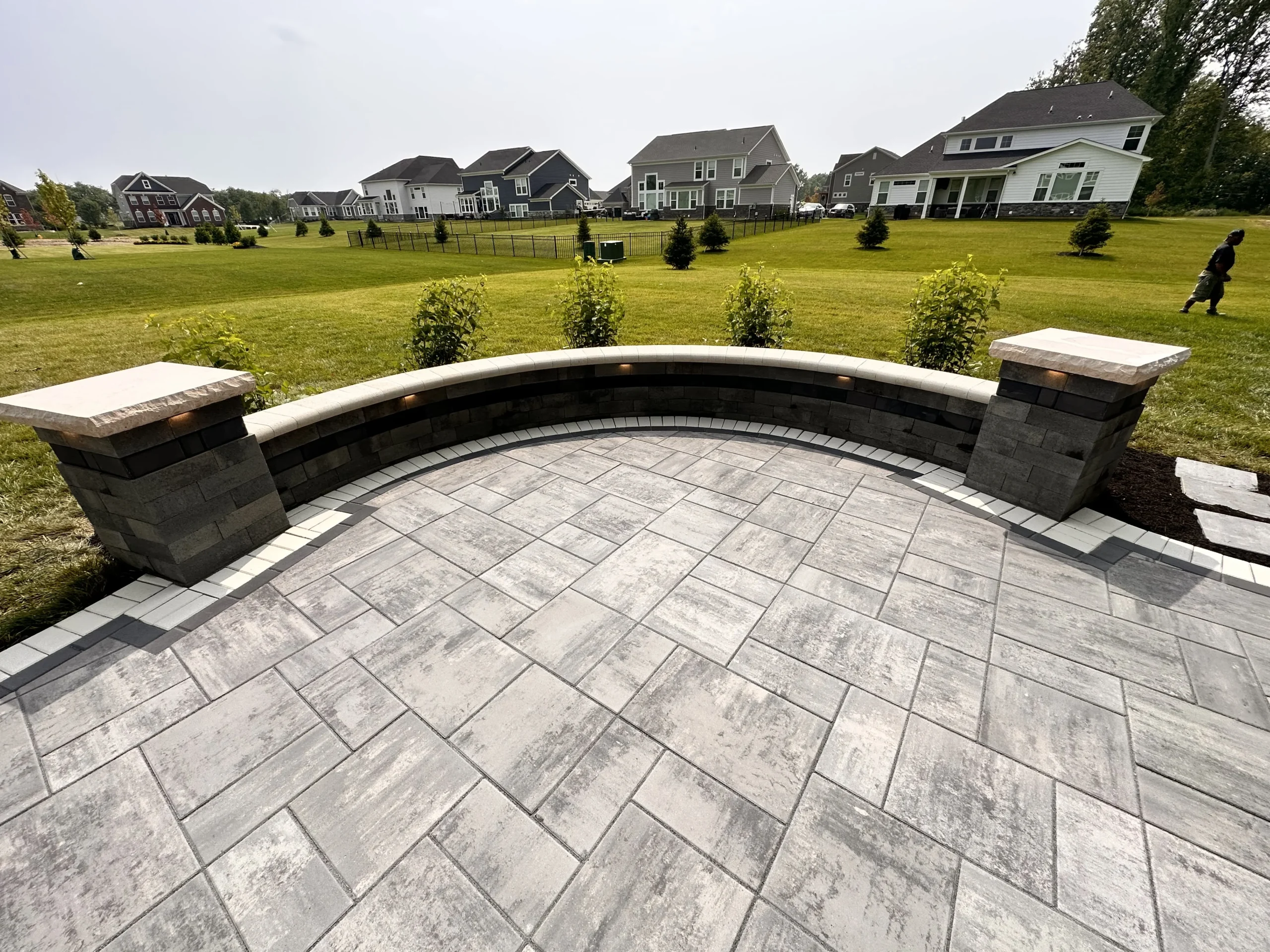
Open-Graded Base: Why #57 Stone Beats Crusher Run on Clay
This is the spec line most out-of-state crews argue with, and it is the one Alpharetta clay cares about most. Our base course is 8 inches of #57 open-graded aggregate, placed in two 4-inch lifts, each compacted separately. Not crusher run. Not ABC stone. Not GAB.
#57 is a 1-inch minus, angular, open-graded stone with roughly 40% void space by volume after compaction. Crusher run (dense-graded aggregate, sometimes called “pug”) compacts to near-zero voids and becomes effectively impermeable. On Piedmont clay with 51 inches of annual rainfall, the dense-graded base behaves like an upside-down bathtub — water sheets across the top, finds any crack in your polymeric joints, and saturates the bedding sand. Freeze-thaw then destroys the joint bond within three winters.
An open-graded #57 base does the opposite. Rain that enters the joints drops through the bedding layer, through the stone, and exits laterally along the excavation floor through a perforated drain tile or a daylighted outlet. The ICPI and ASCE-approved design, codified in the PICP Design Guidelines (2nd ed.), requires a CBR of 80 or higher after compaction. #57 hits that number cleanly. The trade-off is that you cannot screed bedding sand directly onto open-graded stone without a thin choker course — on fussier builds we add a 1-inch layer of #89 or fine-grade #8 between the base and the bedding sand to prevent sand migration.
Base compaction spec: Each 4-inch lift receives a minimum of three passes with a 10,000 lb-force vibratory plate compactor at 80–90 Hz. Moisture content of the stone should be at optimum (roughly 3–5% by weight for #57). Dry stone will not lock; saturated stone will pump fines if the separator is missing.
Bedding Sand: The 1-1/4 Inch Layer That Fails Silently
On top of the compacted base goes exactly 1.25 inches of ASTM C-33 compliant bedding sand, screeded flat. Not 1/2 inch. Not 2 inches. The ICPI tolerance is +/- 1/4 inch, and there is a reason.
Too thin (under 3/4 inch) and the bedding layer does not have enough mass to distribute point loads from a chair leg or a 400 lb planter — the paver telegraphs the stone below and cracks or tips. Too thick (over 1.5 inches) and the sand layer behaves like a fluid under repeated loading. The paver rocks imperceptibly, grinds the edges of its neighbors, and joint sand washes out within two pool seasons.
The sand spec itself matters. ASTM C-33 concrete sand is the only grade approved for bedding; masonry sand (ASTM C-144) is too fine, holds moisture, and pumps under load. In Alpharetta humidity — often 70%+ from May through September — a masonry-sand bedding layer will still be damp in November and will freeze into a frangible layer that shatters the first cold snap. Every time we remediate a failed patio in Cambridge Parks or Brookhollow and find mason sand in the bedding, the paver field looks like a skipping stone on a pond.
Edge Restraint on Clay: Why Plastic Alone Fails in Year Six
Edge restraint is the component most commonly value-engineered out of Alpharetta bids, and it is the component that ends lifespan earliest when it fails. The requirement is Pave-Tech PaveEdge Rigid or SRW PAVE EDGE, installed with 10-inch galvanized or stainless spikes at 12-inch on-center minimum — every 8 inches on radius curves and around pool-deck perimeters.
The failure pattern we see most often in 1990s-era Windward and Country Club of the South patios is straightforward: the original installer used a plastic L-edge nailed with 6-inch landscape spikes into clay subgrade. The clay heaves and contracts, the spikes work loose, the restraint migrates outward under summer thermal expansion, and by year six the perimeter pavers have drifted 3/8 inch out of alignment. Once that happens, joint sand washes out of the widening gaps and the field loses its interlock.
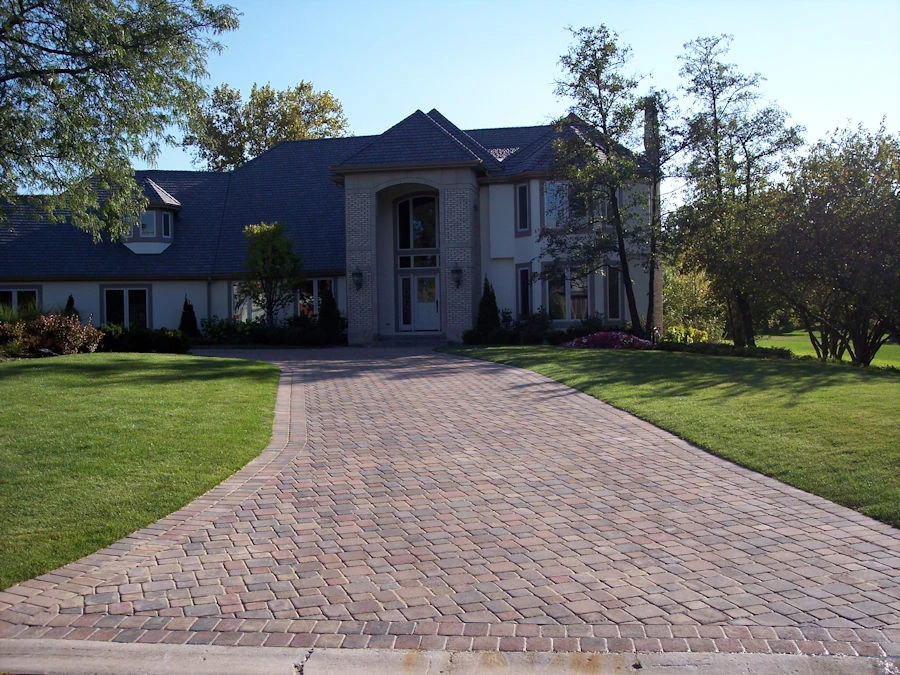
The correct install drives spikes through the restraint and into the compacted #57 base, not into the clay below. That is the reason the base extends 6 inches past the paver field in every drawing we stamp — the restraint needs something rigid to pin to. On pool-deck perimeters where the paver terminates against coping, we use a concrete haunch instead of a plastic restraint. Concrete haunch spec: 4 inches wide, 6 inches deep, 3,000 psi mix, keyed 2 inches into the subbase.
Polymeric Joint Sand: Gator Maxx G2 and the Right Activation Window
The visible layer — the joint material between each paver — is the one homeowners judge the patio by, and it is the one Alpharetta humidity is most likely to ruin during installation. Our spec is Alliance Gator Maxx G2 polymeric sand, installed per manufacturer’s Rapid Set method, in a temperature/humidity window that most crews do not respect.
Gator Maxx G2 activates with water, and the activation has to happen fast and clean. Ideal install window in Alpharetta: air temperature between 50°F and 85°F, relative humidity under 70%, and zero rain in the forecast for the following 24 hours. July afternoons on a south-facing patio in White Columns routinely hit 95°F surface temp with 75% humidity — the polymer flashes off before you can activate it, and the joint sets up chalky and brittle. We schedule polymeric sand installs for early morning (7–10 AM) in June, July, and August, and we have a hard “no install” rule when the ambient humidity at 9 AM is already above 80%. Losing a half day of labor beats losing the joint bond eight months later.
Activation technique matters as much as timing. Fine-mist the surface three times at 3-minute intervals, never flood. Flooding forces the polymer downward through the joint and creates a hollow void at the surface that cracks by the following spring. Done correctly, a Gator Maxx G2 joint in an Alpharetta backyard will stay intact, weed-free, and insect-resistant for 12–15 years before needing a refresh.
Humidity hard line: If relative humidity at the job site exceeds 80% at 9 AM or if rain is forecast within 24 hours, polymeric sand installation is postponed. Permission to proceed is the foreman’s call, not the homeowner’s.
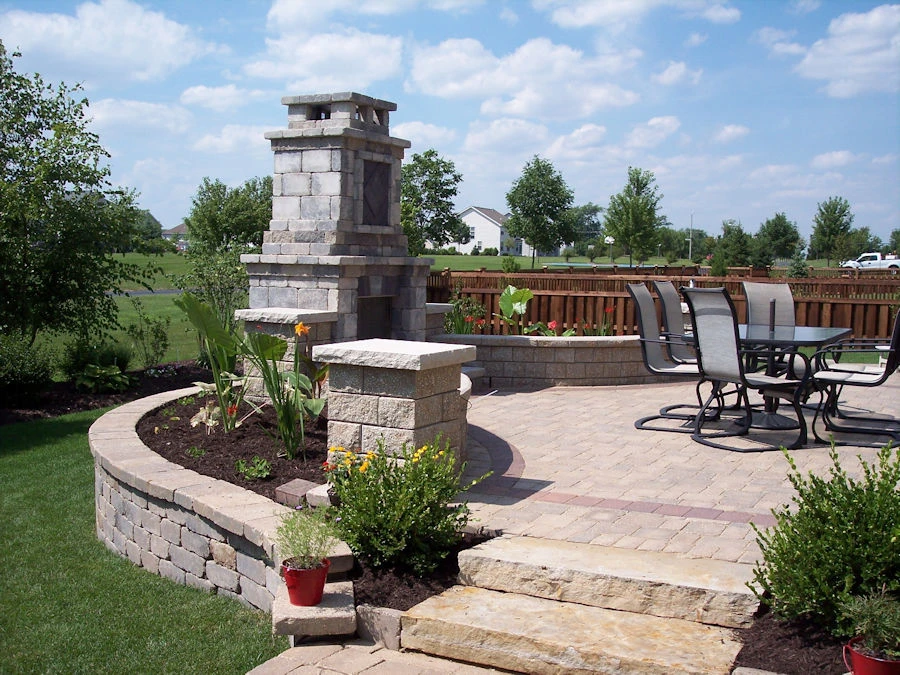
Permits, HOAs, and the Alpharetta Review Timeline You Should Plan For
A detail out-of-state buyers relocating for the Microsoft, CDW, and Avalon-corridor tech jobs often miss: Alpharetta issues its own permits through the City of Alpharetta Community Development office at 2 Park Plaza, not through Fulton County’s unincorporated permit desk. That is usually good news — the in-city turnaround on a residential paver patio permit is typically 7–10 business days, versus 14–21 for Fulton County unincorporated addresses along the Milton border.
Pavers installed as ground-level pedestrian patios without attached structures generally do not require a building permit, but most HOAs do. Windward and Country Club of the South both run architectural review boards with 3- to 4-week review windows, and Windward specifically requires a drainage plan showing runoff direction if the new patio exceeds 400 sq ft. We bake that review time into every Alpharetta contract, and we pre-stamp drainage plans in-house to avoid the back-and-forth that can stretch timelines to six weeks. If your lot sits in the Sawnee EMC service footprint along the northern Milton border rather than Georgia Power, the utility-mark turnaround also runs two to three days longer — call 811 early.
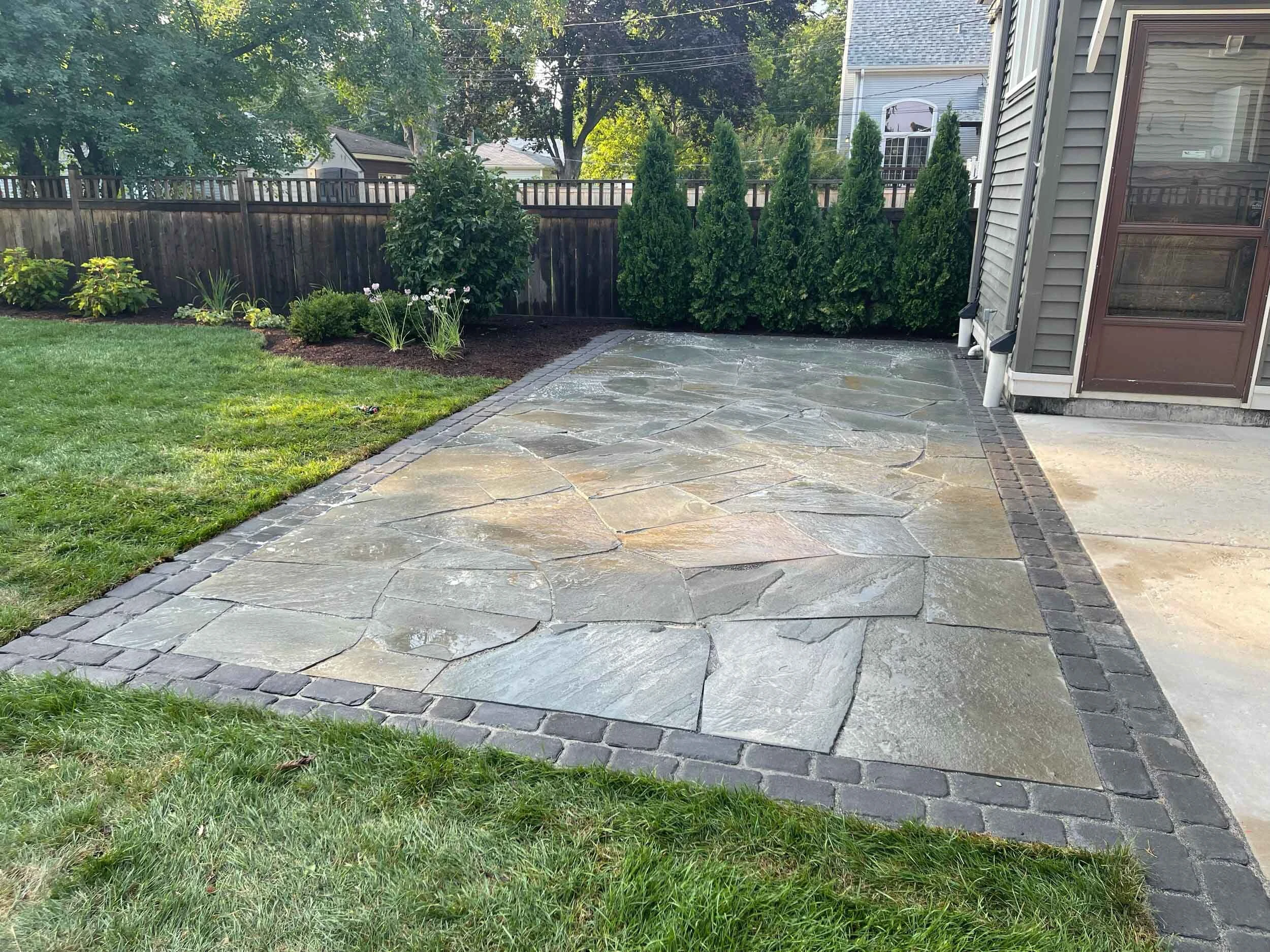
The topography across most of Alpharetta is gently rolling ridge-and-valley at roughly 1,100 ft elevation, and typical residential backyards show 3–6 ft of grade change corner to corner. Patios over 600 sq ft on a sloped lot require a documented surface drainage plan — 1.5% pitch minimum away from the house, daylighted outlet or French drain at the low corner, never into a neighbor’s yard without a recorded easement. Skip the drainage plan and the first 2-inch summer downpour will find the back of your house.
The 30-Year Math: What This Spec Costs vs. What Cutting It Costs
A 600 sq ft paver patio built to the full spec above — proper excavation, 6 oz separator, 8 inches of #57 in two compacted lifts, 1.25 inches of ASTM C-33 bedding, rigid edge restraint spiked into base, Gator Maxx G2 joints — runs roughly $22 to $32 per square foot installed in Alpharetta, depending on paver selection and site access. A value-engineered version using 4 inches of crusher run, no separator, mason sand bedding, plastic L-edge, and standard polymeric sand will run $14–$18 per square foot. The savings look attractive on the bid sheet.
The 30-year math is less attractive. Our remediation file on failed Alpharetta patios built 2005–2015 shows average remediation cost of $38–$52 per square foot — demo, haul-off, new base, new pavers — because we cannot reuse the original stone once it is contaminated with clay fines, and most homeowners want an upgraded paver style on the second go. Total lifecycle cost over 30 years is routinely 2.3x the original installed cost on the cut-corner builds. On the full-spec builds, we have never demolished one for base failure — only for aesthetic remodels when the homeowner changed their mind about style.
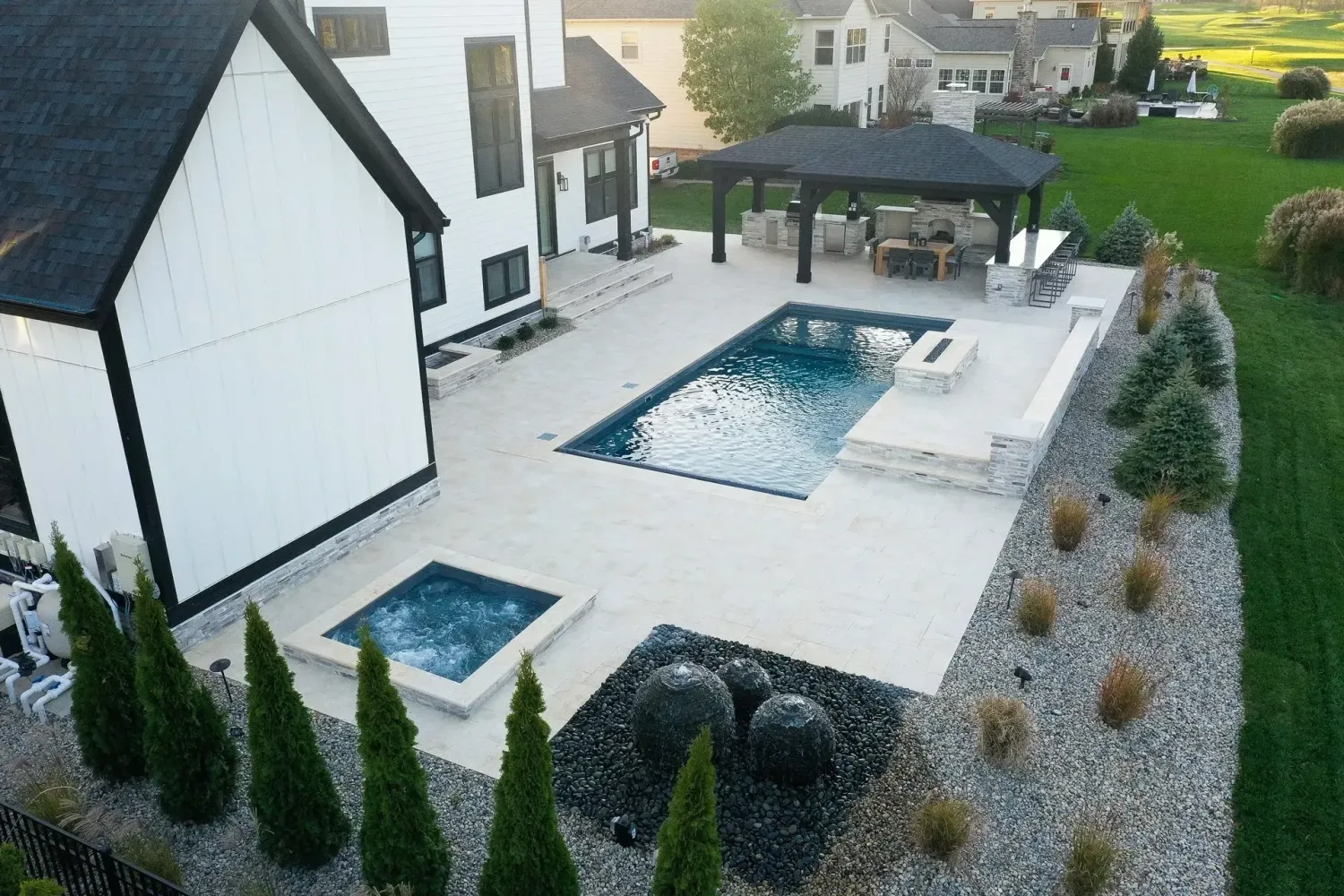
The difference between a 12-year patio and a 30-year patio in Alpharetta is not the paver you pick. It is the eight inches of compacted stone, the sheet of fabric, the grade of sand, and the polymer you cannot see from the patio furniture. Get those right and the surface on top lasts as long as the house.
Paver patios engineered for Cecil clay across 20+ cities within 30 miles of Winder, GA
Eight inches of #57, 6 oz separator, ASTM C-33 bedding, rigid edge restraint, Gator Maxx G2 joints — the only spec that survives Alpharetta humidity and Piedmont clay for 30 years.