
It’s a Saturday in late June on a five-acre estate off Freemanville Road. Twenty-two guests are due at 6:30. The hostess needs two grills running simultaneously, cold beer on tap, and enough counter space to plate four courses without anyone circling the island like an airport gate.
This is a real brief we see three to five times a season in Milton. The client isn’t asking for an outdoor kitchen. They’re asking for a fully commissioned hospitality station that can absorb 20 to 25 guests without the hostess disappearing into the house every fifteen minutes. The difference between those two things is about $60,000 in appliances, a dedicated gas line, and a layout decision that has to be made before excavation.
What follows is the exact specification we deliver — the appliances we specify by brand and model, the gas and electrical infrastructure required to feed them, the counter geometry that keeps 20 people moving, and the budget bands we build to. If you live in The Manor Golf Club, Atlanta National, Cogburn Estates, or one of the Crooked Creek estate sections, this is the scope your entertaining actually demands.
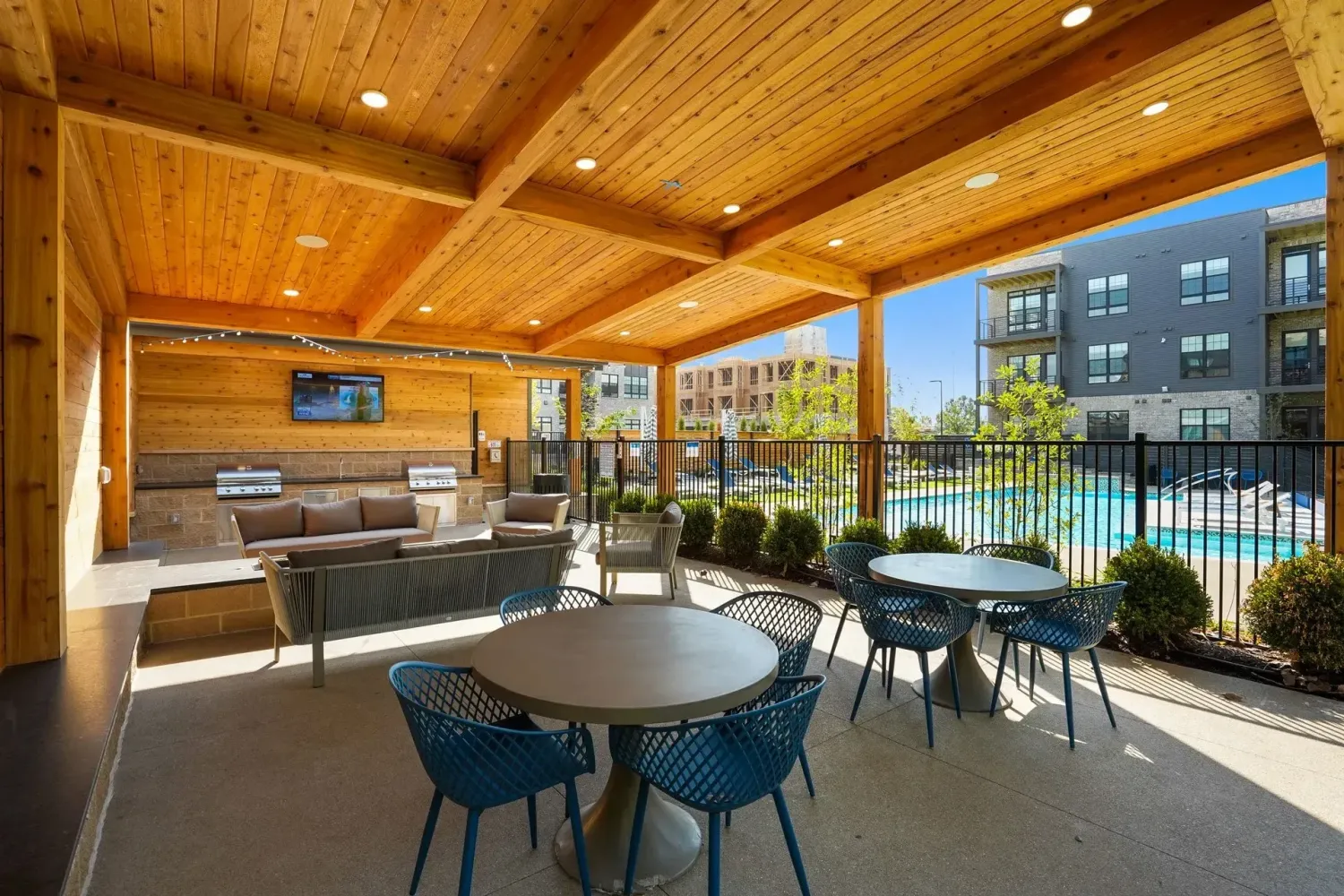
Why a Milton Estate Kitchen Is Not an Alpharetta Kitchen
A typical Alpharetta outdoor kitchen is built to feed six. A 36-inch grill, a small refrigerator, maybe a side burner. The host lights the grill, cooks for the family, and the appliance goes dark until next weekend. Scope is $28,000 to $45,000, and that’s appropriate for the lot size and the entertaining cadence.
Milton is a different animal. The city incorporated in 2006 specifically to preserve its rural-estate character, and AG-1 zoning mandates 1-to-3-acre minimum lots across most of the jurisdiction. What that does to entertaining is simple: guests arrive in twos and threes from Atlanta, Roswell, and Buckhead, they expect to spend five or six hours on the property, and the host is feeding them two meals and keeping drinks moving the entire time. A 36-inch grill doesn’t come close.
The median Milton estate-pool client we build for throws eight to twelve gatherings a year of 15 guests or more. Several clients in Cogburn Estates and along Hopewell Road cross 30 guests regularly for holidays and equestrian-community events. The kitchen has to match the calendar. You spec for the real load, not the fantasy brochure load.
That’s the first mental shift. The second is understanding that a 20-guest kitchen is not a scaled-up 6-guest kitchen. Different appliances, different layout, different gas and electrical spine. Trying to stretch a family-sized spec to estate capacity is where most of the $60,000-to-$85,000 “builder-grade outdoor kitchens” in north Milton end up unusable by year three.
What 20 guests actually consume: A typical 20-guest Milton cookout burns through roughly 22 pounds of protein, 14 pounds of sides, 3 gallons of beverages from the kegerator, and 40 pounds of ice across a four-hour window. Your appliances and storage have to be sized to that reality, not to a Sunday burger night.
The Core Appliance Package — What We Spec and Why
This is the exact package we deliver on 20-guest-capacity builds. Every line item has a reason, and every substitution has a tradeoff we’ll flag during design.
Primary Grilling: Dual Grills, Not One Bigger Grill
The instinct is to install a single 54-inch grill and call it done. Don’t. A single grill means one temperature zone at a time, and the moment you need to sear steaks at 650°F while holding chicken thighs at 325°F, the evening collapses. We spec two grills on every 20-guest build.
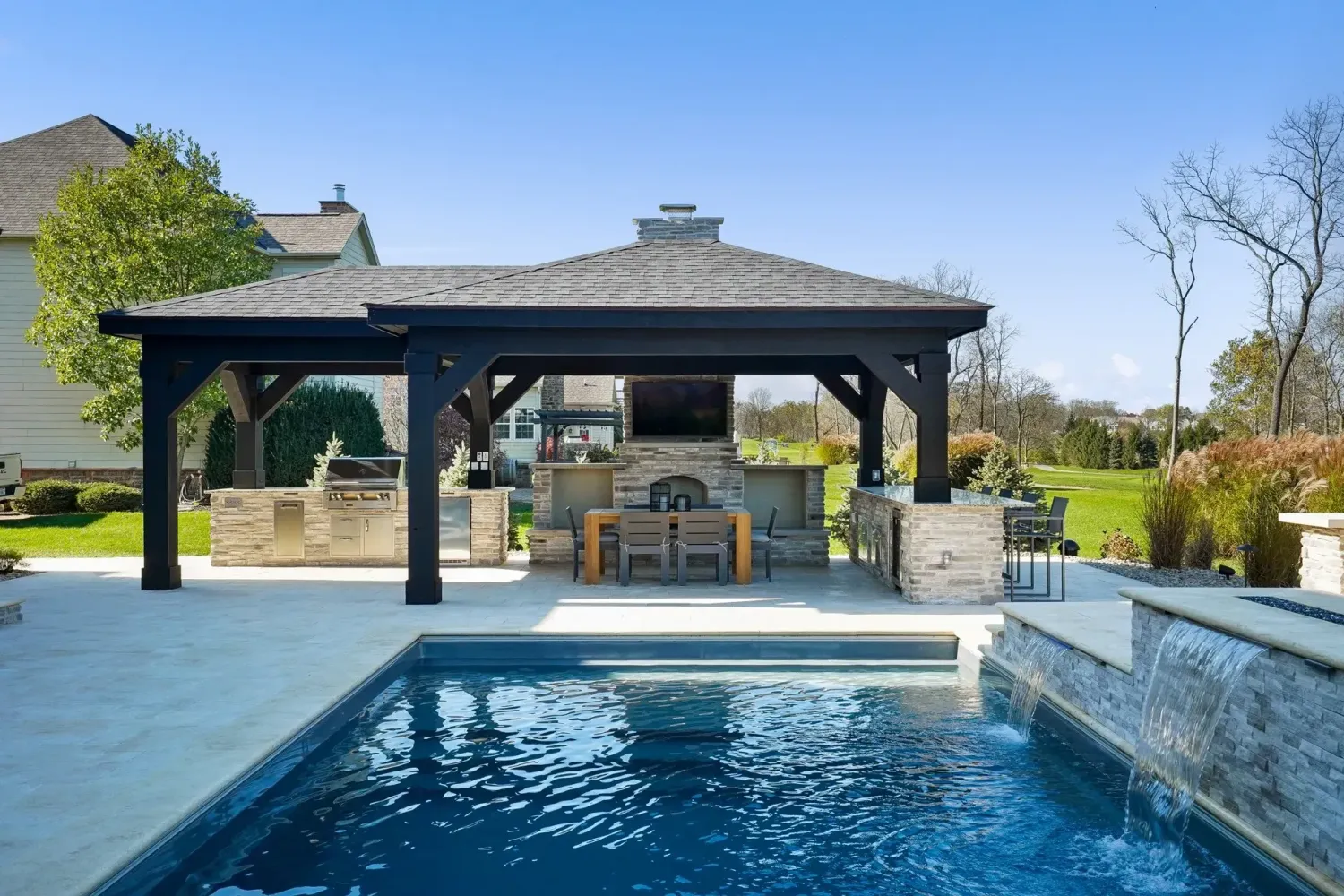
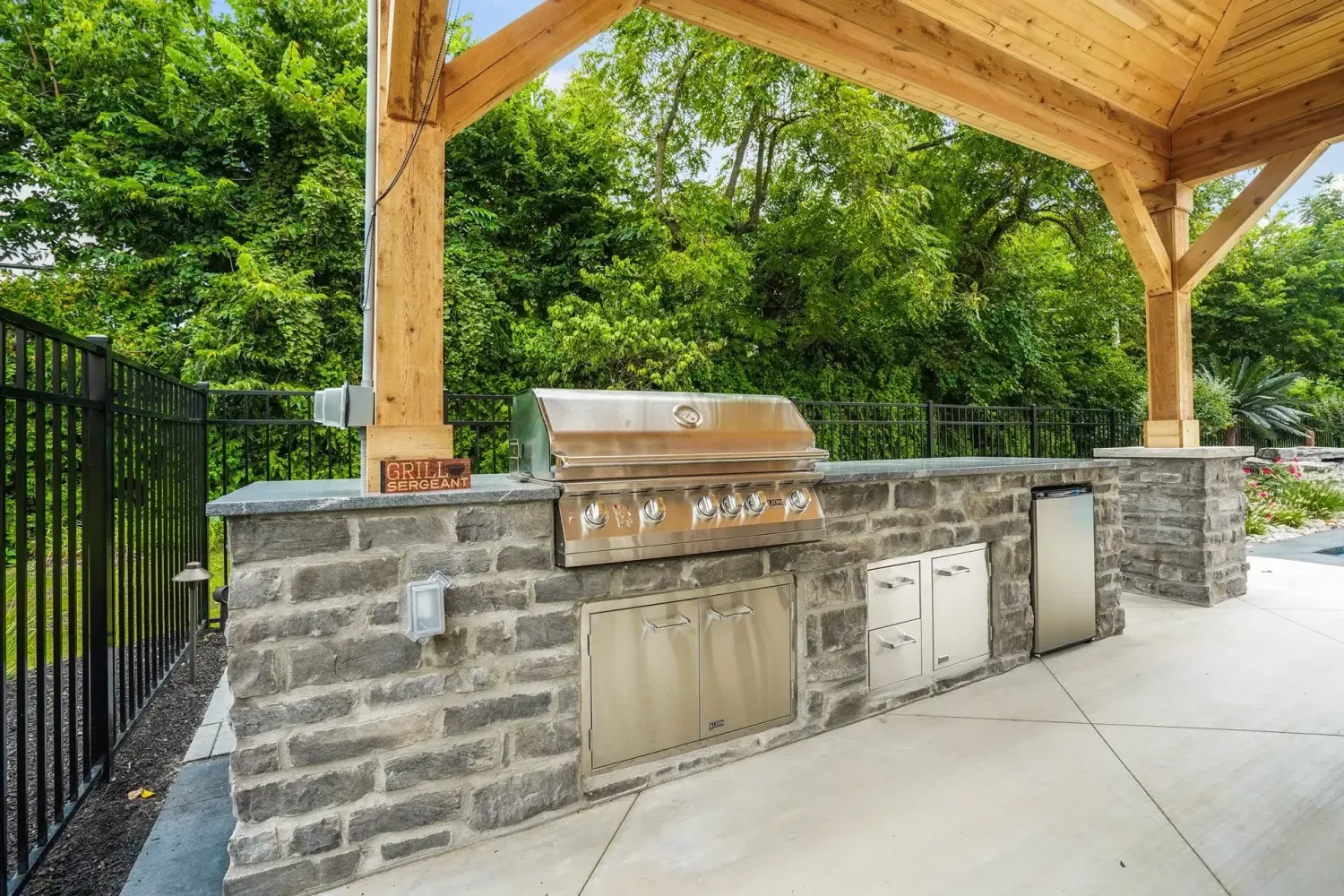
Our default configuration is a Bull Angus 42-inch stainless grill paired with a Lynx L30 Professional. The Bull handles direct high-heat searing, the Lynx runs indirect. Together they give you four independent temperature zones and around 1,300 square inches of cooking surface. For clients who want a single powerhouse instead, we substitute a DCS 54-inch Series 9 with four burners and a rotisserie — roughly the same cooking area, one ignition point to manage, but less temperature flexibility.
Either path, the number to hit is 1,200-plus square inches of grate. Anything less and you’re cooking in shifts, which means food quality degrades and the hostess is glued to the grill station for the full evening.
Overflow Cooking: 36-Inch Commercial Gas Cooktop + Big Green Egg XL
This is the spec that separates a real entertaining kitchen from a grill with a refrigerator next to it. When the grills are loaded, you still need surface heat for sauces, shrimp boils, paella, and sides. A 36-inch commercial gas cooktop — we typically spec a Wolf or Viking outdoor-rated unit — gives you six open burners and the ability to run a 20-quart stockpot without stealing grill real estate.
Next to it goes a Big Green Egg XL. The Egg is the smoker, the pizza oven (with a stone insert), and the low-and-slow station. Milton’s Zone 8a climate gives you twelve usable entertaining months if you’re willing to run the Egg in winter, and plenty of our clients do exactly that for holiday gatherings. Total grill-plus-cooktop-plus-Egg footprint runs about 11 linear feet of the counter.
Beverage: 24-Inch Kegerator, Ice Machine, and Dual Refrigeration
Beverages are where most kitchens choke at guest 15. One 24-inch refrigerator holds roughly 35 beer bottles and a few bottles of wine — enough for six people for two hours. Not enough for 22 people for five.
Our spec: a 24-inch dual-tap kegerator (typically a Kalamera or U-Line outdoor-rated), a separate 24-inch beverage fridge for wine and bottled water, and a dedicated 15-inch under-counter ice machine that produces 50 pounds per day. That last line is the one clients try to cut, and it’s the one we refuse to cut. Running in and out of the house for ice, twelve times a night, is the exact thing the kitchen is supposed to eliminate.
Kegerator math: A half-barrel keg pours 165 twelve-ounce beers. At 22 guests, that’s roughly 7.5 beers per guest — comfortable coverage for a five-hour gathering without running empty. A single keg lasts two to three of these events before it needs swap-out.
Prep and Cleanup: Full Sink and 24-Inch Dishwasher
A 15-inch bar sink is a decorative touch. A full outdoor kitchen at 20-guest capacity needs a double-bowl 33-inch sink with a pull-down sprayer and a 24-inch outdoor-rated dishwasher. The dishwasher cycles plates and glassware between courses so the counters stay clear. Without it, dirty dishes migrate indoors and the kitchen stops working as a self-contained venue.
Total appliance count on a properly specified 20-guest Milton kitchen: seven appliances, plus the Big Green Egg. Total appliance cost: $38,000 to $58,000, depending on tier. That’s before cabinetry, counters, gas, electrical, or labor.
Layout Geometry: The 14-Linear-Foot Counter and the 12-Seat Bar
With that appliance load you need, at minimum, 14 linear feet of primary counter running the cook line, plus a separate 10-to-12-foot bar-top counter facing the pool. We usually deliver this as an L-shape or a long straight run with the bar perpendicular.
The cook-line counter runs: grill 1 — landing zone — grill 2 — landing zone — cooktop — sink — dishwasher — cold storage. The rule is no two heat sources adjacent without a 24-inch landing zone between them. That landing zone is where food comes off the grill to rest before plating. Skip it and you end up plating on the grill lid, which ruins the flow.
The bar counter, facing the pool, seats 10 to 12 on high-back stools. This is where guests sit. Critical point: the bar should not face the cook line. Guests facing the cook line means the host is on display the entire night, which is the opposite of what a working estate kitchen does. The bar faces the pool, the cook line faces the bar from behind, and the host moves between them.
Counter material on every 20-guest build we do in Milton: 3cm leathered-finish granite or quartzite, fabricated in two or three slabs with tight mitered seams. Leathered finish hides water, grease, and fingerprint marks far better than polished, and it doesn’t reflect the direct sun you get on a south-facing Milton ridge.
The Gas and Electrical Spine Nobody Budgets For
Here is where the $85,000 kitchen turns into the $145,000 kitchen, and it’s the part homeowners never see coming. The infrastructure to feed this appliance package is not trivial.
Natural Gas: 1-Inch Main, Not 1/2-Inch
A standard residential gas run to a single 36-inch grill is 1/2-inch pipe at roughly 75,000 BTU capacity. That’s adequate for one appliance. Our 20-guest spec pulls 430,000 to 510,000 BTU at full burn — dual grills, cooktop, side burner, and the ability to ignite all of them during a peak service window.
That requires a 1-inch natural gas main pulled from the AGL meter to a manifold at the kitchen, with individual 3/4-inch branches to each appliance and an emergency shutoff at the kitchen entry. Budget $4,200 to $7,800 for the gas-fitter work, plus permit through City of Milton Community Development at 2006 Heritage Walk.
Some of our Milton clients along the Forsyth County border are on Sawnee EMC electric but still pull natural gas from AGL — worth confirming meter location during design so the trench run doesn’t blow the budget.
Electrical: Dedicated 50-Amp Sub-Panel
The kegerator, ice machine, beverage fridge, dishwasher, cooktop ignition, and in-counter task lighting together pull 38-to-44 amps at peak. Plus exterior lighting, ceiling fans under the pavilion, and the pool-equipment panel if it shares the run. You need a dedicated 50-amp sub-panel at the kitchen with its own GFCI-protected breaker bank, fed from the main service.
Budget $2,800 to $4,600 for the sub-panel and branch wiring, plus whatever trenching the utility run adds. If your pool equipment is sharing the circuit, account for an additional 30 amps on the sub.
Don’t skip the permit: Milton’s permit turnaround averages 10-14 business days for residential additions — faster than unincorporated Fulton because the city handles its own review. A 20-guest kitchen plus pavilion triggers structural review and gas permit as separate line items. Budget 3 weeks from plans-submitted to ground-broken.
Structural Shell: Pavilion, Not Pergola
At this appliance load you need an actual roof, not an open pergola. A 36-inch cooktop, two grills, and a Big Green Egg throw enough heat that an open lattice lets summer thunderstorms drench the cook line three times a month. Milton averages 53 inches of rain a year, most of it concentrated in 90-minute summer events.
The right shell is a 20-by-24-foot cedar or cypress pavilion with a standing-seam metal or cedar-shake roof, open on all four sides, with a ceiling fan over the cook line and a second fan over the bar. Post-and-beam construction on stone piers. Budget $38,000 to $72,000 for the pavilion shell alone, depending on roofing choice and ceiling finish.
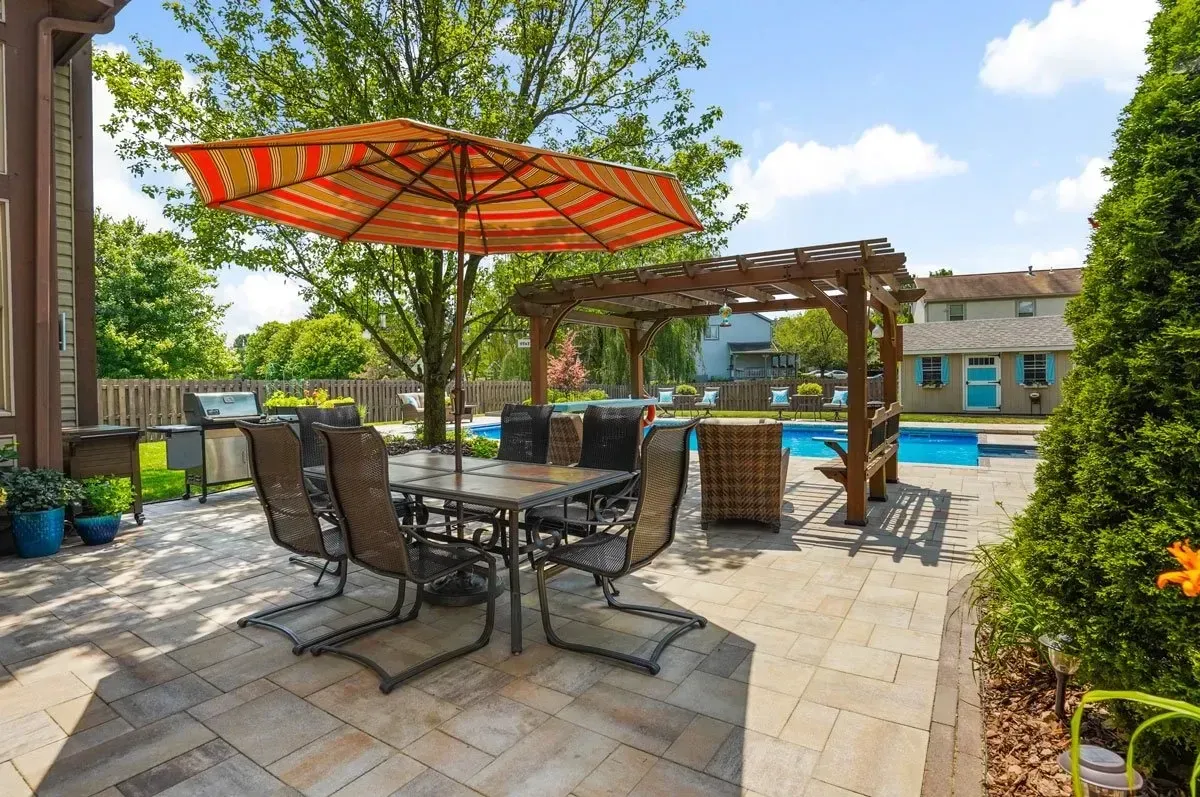
On estates in The Manor Golf Club, the pavilion also has to pass the architectural review committee, which adds 4-to-5 weeks to the timeline and usually requires exterior materials that match the primary residence. If you’re in The Manor, start the ARC submission before you finalize kitchen finishes — the committee will push back on anything too contemporary.
Site Conditions: Grade, Creek Buffers, and Saprolite
Milton’s rolling topography drops 6 to 14 feet across most estate lots, and creek corridors cross a surprising number of properties. Three things have to be checked before kitchen layout gets locked:
Creek-buffer setbacks. Milton enforces 25-to-75-foot setbacks from named tributaries — Cooper Sandy Creek, Chicken Creek, Lake Creek, and the Etowah River tributaries that cut across north Milton. Your kitchen pad, pavilion footings, and gas trench all count. On parcels backing to Chicken Creek floodplain, additional FEMA review may apply.
Grade and retaining. The kitchen should sit on a level pad at or within 18 inches of pool deck elevation. On a 10-foot-drop lot, that means a 4-to-6-foot stone retaining wall with proper drainage behind it. Budget $18,000 to $42,000 for the retaining scope on a typical sloped Milton estate lot.
Saprolite. Milton’s Cecil clay over weathered granite is friendly to excavate on ridges but occasionally hits saprolite shelves that require rock-saw work. If your pool dig hit saprolite, your footer dig probably will too. Budget a contingency of $3,500 to $9,000 for rock cutting on pavilion footings.
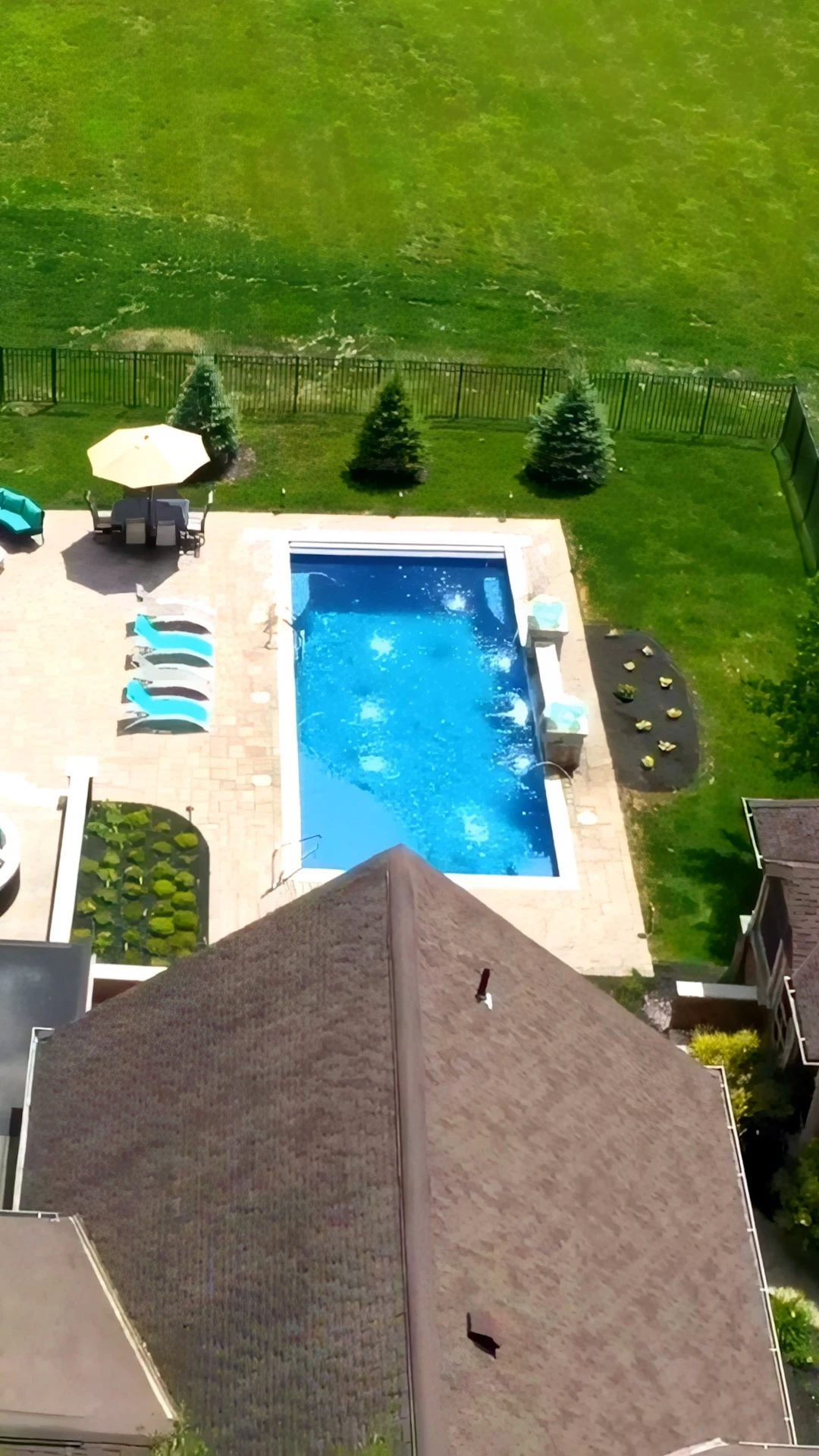
The Integrated Timeline — Why Kitchen and Pool Have to Share a Contract
If your pool is built by one contractor and your kitchen by another, three things happen, reliably. The grade doesn’t match between the pool deck and the kitchen pad. The gas trench is dug twice. And the electrical sub-panel gets sized for one load, then re-pulled for the other.
We build every 20-guest Milton scope as a single integrated project: pool excavation, retaining walls, kitchen pad, pavilion footings, gas, electrical, plumbing, and hardscape deck all on one schedule. It’s the only way the numbers stay honest.
A typical integrated Milton estate build runs 18 to 26 weeks from ground-break to first swim: 3 weeks for permits through City of Milton Community Development (plus ARC review in The Manor, Atlanta National, and Crooked Creek gated sections), 4 weeks pool excavation and shell, 3 weeks retaining and grading, 4 weeks pavilion framing and roofing, 3 weeks kitchen buildout, 2 weeks gas and electrical commissioning, and the balance in hardscape, plaster, and landscape.
Total Scope and What It Actually Costs
Here’s the honest budget for a 20-guest Milton outdoor kitchen, built correctly, at today’s prices:
- Appliance package: $38,000 to $58,000
- Cabinetry (stainless or marine-grade HDPE): $14,000 to $24,000
- Counters (leathered granite/quartzite, 3cm): $9,000 to $15,000
- Gas (1-inch main, manifold, permit): $4,200 to $7,800
- Electrical (50-amp sub, branch wiring, lighting): $4,600 to $8,200
- Plumbing (sink, dishwasher, ice-machine supply): $2,800 to $4,400
- Pavilion shell (20×24, cedar/cypress, metal or shake roof): $38,000 to $72,000
- Retaining and grading (on typical sloped lot): $18,000 to $42,000
- Labor, design, project management: $14,000 to $22,000
Total kitchen scope, as a line item on a larger estate-pool project: $85,000 on the entry end, $145,000 at full spec. That’s real money, and it buys you a venue that works for two decades of 20-guest entertaining without the hostess disappearing indoors every fifteen minutes.
Where we see clients overspend: Imported Italian cabinetry ($40K instead of $18K for equivalent US marine-grade), exotic stone counters that etch under acidic marinades, and designer pendant lighting that corrodes on year two. The money belongs in the appliances and the gas spine, not the finish layer.
Design Decisions to Make Before Excavation
Four choices have to be locked before anyone turns dirt:
1. Grill configuration. Dual 42-inch grills or single 54-inch. This decides your gas manifold layout and your cabinetry rough-in. Change it mid-build and you’re re-plumbing.
2. Kitchen orientation relative to pool. Cook line behind the bar, bar facing water. Sight lines from the primary residence windows matter here — most Milton estate homes have the kitchen view as a feature, so the pavilion roofline and kitchen mass have to be designed as part of the primary-residence view corridor.
3. Pavilion roof pitch and materials. Has to match the house, especially in The Manor, Atlanta National, and ARC-governed sections of Crooked Creek. Submit to ARC before design finalizes.
4. Gas-meter location and trench path. Confirm AGL meter location with a site walk. On deep lots off Birmingham Highway or Hopewell Road, a 200-foot gas trench adds $2,800 to $5,400 to the budget. Know this before quoting.
Get these four right and the rest of the build stays on schedule and on budget. Skip them and the project stretches from 22 weeks to 34 weeks, which is the story behind most of the half-finished outdoor kitchens sitting unused on Milton estates right now.
Outdoor kitchens and integrated estate pools across 20+ cities within 30 miles of Winder, GA
When your entertaining calendar runs 20-plus guests, your outdoor kitchen has to be specified, gas-sized, and structured for that load — not a six-guest kitchen with aspirations.