
A Windward homeowner called us in the first week of March. Her pool had held water for 29 summers. That winter it dropped four inches in ten days, and the hairline above the deep-end corner she had been ignoring for two years was finally wide enough to catch a fingernail. We pulled into the driveway on Chartwell Drive at 8:15 on a Tuesday and spent the next three hours doing what this post is about — figuring out what kind of crack she actually had, because the repair spread between the four possibilities runs from $1,800 to $14,800.
Windward is the reason this conversation keeps happening in Alpharetta. The subdivision broke ground in the late 1980s on the Fulton County ridge along Windward Parkway, and the bulk of its gunite pools were shot between 1993 and 1999. That cohort is now hitting the 30-year mark between 2023 and 2029, and the shell failures that were invisible at year 15 are finally wide enough to photograph. Country Club of the South, Hutchinson Farm, and the older phases of White Columns are running the same timeline a year or two behind.
Thirty years is not a death sentence for a gunite shell. A well-built 1990s Windward pool has another 20 to 40 years left in it if the cracks you’re seeing are cosmetic. It is also not trivial. If the crack you’re looking at is structural — running through the bond beam or tracking the deep-end corner at 45 degrees — you are looking at shotcrete repair, rebar exposure, and a plaster job on top of it. The entire point of a diagnostic visit is to tell the difference before anyone opens a checkbook.
The Four Crack Signatures We See on Windward Pools
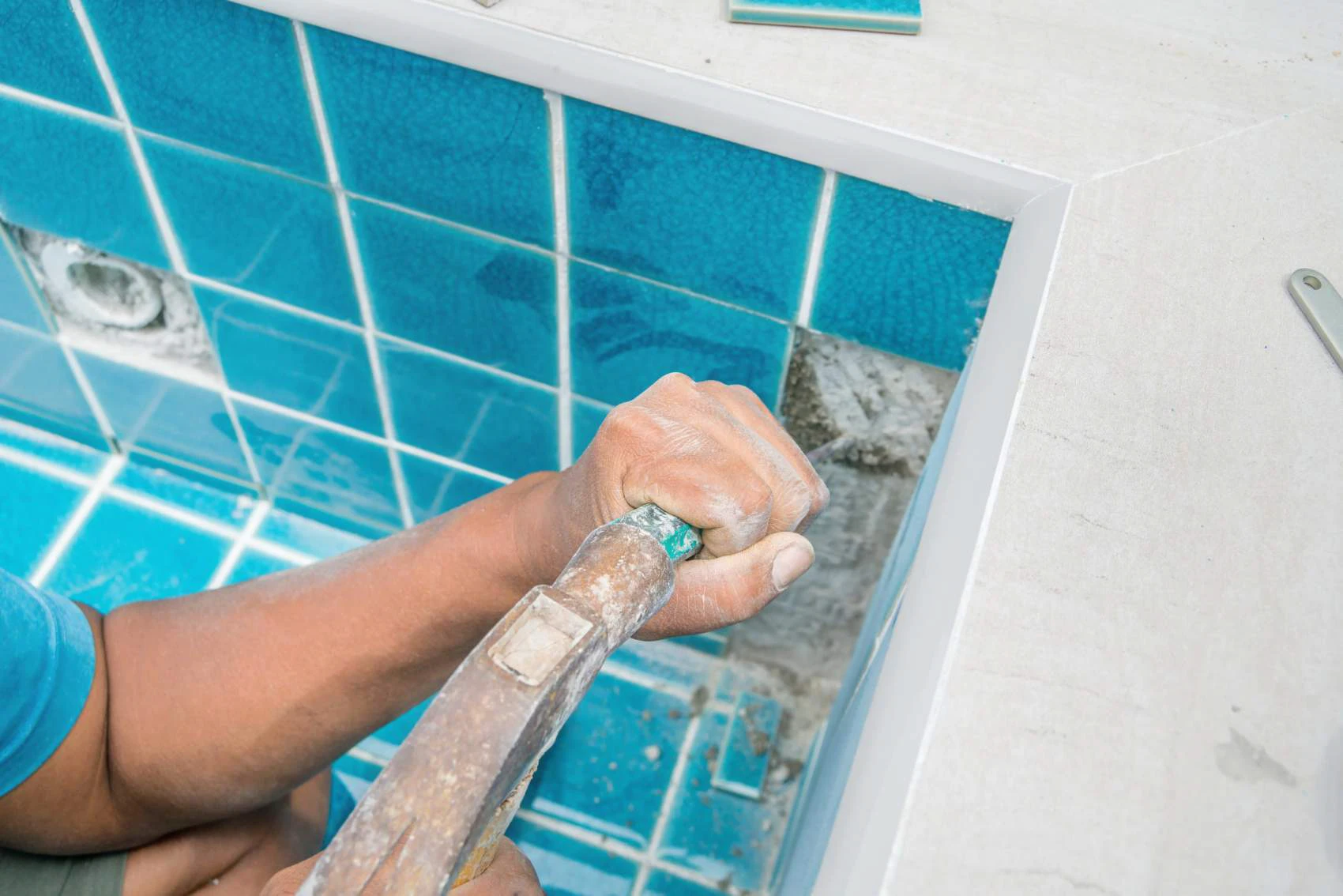
Between 2021 and early 2026 we pulled diagnostic notes on 84 Alpharetta pools built between 1991 and 2001. Eighty of them were in Windward, Country Club of the South, Hutchinson Farm, Haynes Manor, and Cambridge Parks. The crack signatures clustered into four repeatable categories, and the distribution is consistent enough that we now use it as the frame for the first walk-around.
The first signature is bond-beam-to-coping separation. A horizontal gap opens between the top of the gunite bond beam and the bottom of the travertine or stamped-concrete coping. It runs the full length of the straight walls and often widens at the corners. We see this on 45% of the 1990s Windward pools we diagnose. The cause is freeze-thaw — USDA Zone 8a hands Alpharetta roughly 20 freeze events a year, and Alpharetta’s ~1,100 ft elevation means the north-facing side of a pool gets one or two extra overnight cycles that the south-facing side never sees. Water pools in the gap under the coping, freezes, expands, walks the coping a millimeter at a time, and 30 years of that adds up.
The second signature is a structural crack at a deep-end corner. The crack tracks diagonally at roughly 45 degrees, usually starts 12 to 18 inches below the waterline, and extends down into the shell floor. On a rectangular pool these show up at the deep-end corner closest to the property’s downhill grade. Twenty-eight percent of the failures we diagnose fall into this bucket, and the cause is almost always differential settlement in the Piedmont clay the shell is sitting on.
The third signature is a skimmer-throat crack. These are short vertical or near-vertical cracks radiating from the skimmer housing into the surrounding shell. Eighteen percent of our Alpharetta diagnostics. The cause is thermal expansion of the PVC skimmer throat against the rigid gunite it was cast into — three decades of summer 94°F pool water against 45°F overnight winter air works the joint until it splits. Skimmer-throat cracks almost never indicate structural failure of the shell. They indicate the skimmer needs to come out and go back in.
The fourth signature is plaster-only crazing. These are the hairlines everyone panics about. They form a spider-web pattern across a broad area of the shell, they’re cosmetic, and they represent nine percent of the 1990s Windward cracks we see. A pool with crazing-only failure does not need shell work. It needs the plaster pulled and replaced. That’s a two-week job, not a six-week one, and it’s the cheapest path of the four.
The Three-Test Diagnostic We Run on Every Windward Pool
The walk-around tells us which signature we’re probably dealing with. The three tests tell us whether we’re right. We run the same protocol on every diagnostic in Alpharetta whether the pool is in Windward, Country Club of the South, or Cambridge Parks, because the soil, the climate, and the construction era are close enough that the method transfers cleanly.
Test one is the dye test. We fill the pool to normal operating level and close every return and skimmer except the one we’re testing. We drip phenol red or fluorescein into the water directly over the suspected crack and watch. If the dye walks into the crack, you have a through-shell leak. If the dye sits still and dissipates with pool circulation, the crack is surface-only. A dye test on a corner crack answers the single most important question in the entire diagnostic: is the shell open?
Test two is a pressure test on the suction and return lines. We pull the pump, cap the skimmer, and pressurize the plumbing loop to 25 PSI with a Hayward or Anderson Manufacturing test rig. A sound line holds pressure for 30 minutes. A compromised line drops measurably in under 10. Plumbing leaks and shell leaks feel identical to a homeowner watching the water drop, and this is the only way to separate them. On the March Chartwell Drive call, the pressure test flagged a return line under the deck — the shell was intact.
Test three is the visual shell walk. We drain the pool three inches below the waterline tile and walk every inch of the shell with a 0.5mm feeler gauge. Any crack that accepts the gauge is structural. Any crack that doesn’t is plaster-only. We also tap every section of shell with a dead-blow mallet and listen for the hollow sound that indicates delamination — plaster that has separated from the gunite beneath it. Delamination is its own failure mode, and it looks identical to crazing from the surface.
Diagnostic cost on a Windward pool: $425 flat. Includes dye test, suction and return pressure test, drained shell walk with feeler gauge, dead-blow delamination check, and written report with photos. Credited toward repair if you book with us within 60 days.
What Each Repair Actually Costs in Alpharetta
Repair pricing on 30-year Windward pools splits cleanly along the diagnostic lines above. The numbers below are what we quoted in Alpharetta in 2025 and early 2026. Materials moved four to six percent year over year; the ranges already account for that drift.
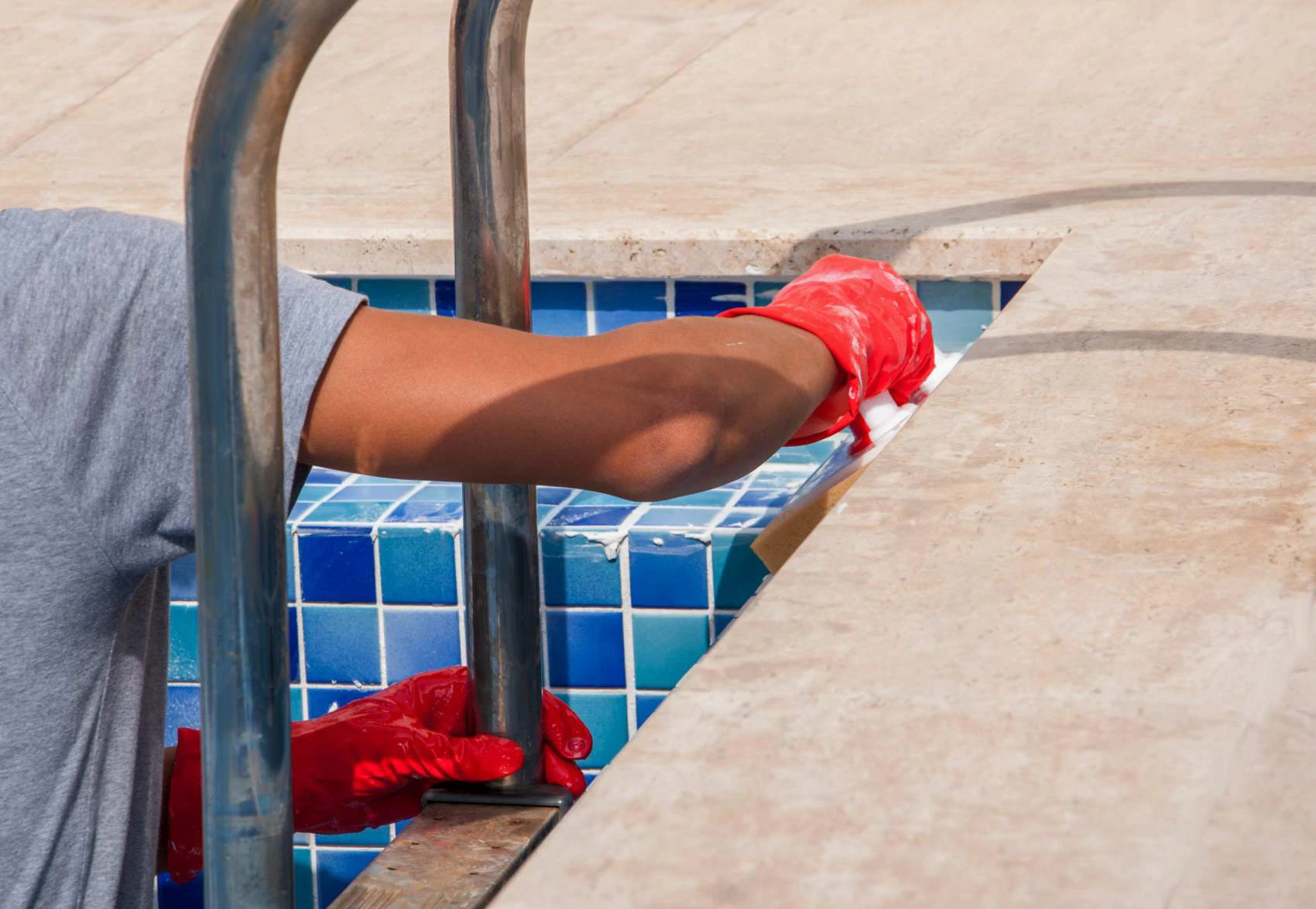
Bond-beam-to-coping separation, if the coping itself is still sound, is a two-day repair. We pull the caulk joint, clean the bond beam, install new Sika 1a polyurethane sealant on a closed-cell backer rod, and re-bed any coping stones that have lifted. Pricing runs $2,400 to $4,200 on a standard 32-by-16 rectangular shell. If the coping itself has cracked or spalled and needs replacement, add $3,800 to $7,500 for travertine or bluestone and another $1,200 for demolition and disposal.
Structural corner cracks are the expensive ones. We core out the crack to a V-profile an inch deep, expose any compromised rebar, treat it with a rust converter, add supplemental #3 rebar if the original bar is cut, and back-fill with Aquabond 7210 epoxy or a hot-shot gunite patch depending on the crack width. The shell then gets a new plaster coat because the repair is visible. Pricing runs $6,800 to $14,800 depending on crack length and whether we’re working one corner or two.
Skimmer-throat cracks are a $1,900 to $3,400 fix. The skimmer comes out, the throat gets rebuilt, a new Hayward SP1084 or Pentair 516112 goes in, and we re-plaster the six-inch ring around it. One day on site, one day for the plaster to pull, and the pool’s back in service by the weekend.
Plaster-only crazing is a full resurface. The old plaster gets chipped out, the shell is acid-etched, bond coat applied, and new plaster shot. White marcite runs $5,800 to $8,400 on a Windward-standard shell; PebbleTec or PebbleSheen runs $9,200 to $14,500 and lasts twice as long. A Windward homeowner in 2026 is almost always better off paying the pebble premium — the 20-year lifespan versus marcite’s 10 to 12 is what keeps you from doing this again at year 40.
Why Windward’s Soil and Grade Break Pools the Way They Do
Alpharetta sits on Cecil-series Piedmont red clay with pockets of Appling sandy loam in the older farm-conversion tracts north of Windward Parkway. Cecil clay has moderately high shrink-swell behavior — it expands when saturated and contracts when it dries. On a flat site with uniform moisture, that’s a manageable problem. Windward is not flat. The subdivision was graded across gently rolling ridge-and-valley topography, and the typical residential backyard runs a three-to-six-foot grade change from the back door to the rear property line.
What that means for a 1990s pool is that the downhill side of the shell has spent three decades sitting on soil that cycles through wet-and-dry at a different rate than the uphill side. The clay under the deep end stays wet longer because surface water runs toward it. The clay under the shallow end dries faster. Every season, for 30 years, the two sides of the shell move at slightly different rates, and that differential is what you’re reading when you see a corner crack at the deep-end outside wall.
The original builders of Windward were not wrong about this. The 1990s pool spec in north Fulton typically called for an eight-inch over-dig, a compacted gravel base, and a shell thickness of six inches at the walls and ten at the floor with #3 rebar on 12-inch centers. That’s a code-compliant build. What the spec didn’t account for is that three decades of clay cycling can exceed the stress tolerance of a code-minimum shell, especially on pools where the bond beam was poured thin.
When we rebuild cracked corners in Alpharetta, we add #4 rebar on 10-inch centers through the repair zone instead of replacing the #3 that was there. It’s a belt-and-suspenders correction, and it’s why our structural crack repairs in Windward carry a 10-year warranty.
Insurance, Permits, and the Alpharetta ARB Gauntlet
Two structural questions come up on almost every Windward diagnostic: is this covered by insurance, and do we need a permit. The answers are “sometimes” and “almost always,” respectively, and getting them wrong costs homeowners real money.
Standard HO-3 homeowner’s policies in Georgia cover pool structural damage from identifiable, sudden events — a tree root levered the shell, a vehicle drove through the deck, a plumbing failure from a covered peril flooded the excavation. They typically do not cover settlement cracks, freeze-thaw failures, or gradual wear. The distinction matters because the same corner crack can be either, and a good adjuster needs documentation to make the call.
When we run a diagnostic on a pool where insurance is in play, the written report notes the mechanism of failure and includes the dye-test and pressure-test results. If the crack tracks from a documented tree-root intrusion — which happens more than you’d think in Windward, where the original 1990s landscape plans planted willow oaks and tulip poplars 15 feet from pool shells — insurance frequently covers the full structural repair. If it’s clay settlement, it rarely does.
Permits in Alpharetta proper run through City of Alpharetta Community Development at 2 Park Plaza. The city pulls its own inspections and is noticeably faster than unincorporated Fulton County for pool-shell repair work — typically three to five business days for plan review on a structural repair, versus seven to ten for the county. Resurfaces don’t require a permit. Any work that exposes rebar does.
If your pool sits inside the Windward or Country Club of the South footprint, the ARB is its own timeline. Windward’s Architectural Review Board runs a three-to-four-week review on any visible exterior work, including new coping, deck repair, or anything that changes the pool’s visible profile. We build the ARB submission while the permit review is running so the two timelines overlap. On a Country Club of the South pool we finished in November, the ARB approved in 19 days; the city inspector signed off on the structural repair in four.
Alpharetta permit turnaround (our 2025 average): structural shell repair, 3–5 business days. Resurface-only, no permit required. Coping replacement inside Windward/CCS, add 3–4 weeks for ARB review — submit in parallel with permit application.
The Diagnostic Walk-Through on a Real Windward Pool
To make this concrete, here’s how the Chartwell Drive call actually ran. The homeowner had a 1996-built rectangular pool, 34 feet by 16 feet, 8-foot deep end, white marcite plaster, and travertine coping installed during a 2014 remodel. She called us because the water was dropping and there was a hairline crack she could finger-catch at the deep-end northwest corner.
The walk-around flagged two things immediately. The coping had a one-millimeter gap from the bond beam running the full north wall — classic freeze-thaw bond-beam-to-coping separation. The deep-end crack was diagonal, roughly 22 inches long, and tracked from just below the waterline down and outward at about 40 degrees. Both findings were present. The homeowner was convinced the corner crack was the source of the water loss because it was visible.
The dye test at the corner crack was negative — the dye dissipated without walking into the gap. The dye test at the bond beam joint was also negative. The pressure test on the return line tied to the northwest light niche dropped from 25 to 19 PSI in six minutes. That was the answer: the water was leaving through a compromised return line, not through either of the visible cracks.
The feeler-gauge check confirmed the corner crack was structural but not currently leaking — it had opened enough to accept a 0.3mm gauge but not a 0.5mm. The bond beam joint was a cosmetic/weatherproofing issue, not a leak path. The actual repair stack came out to: return-line replacement at $1,650, bond-beam caulk-and-backer-rod repair at $2,850, and preemptive corner-crack injection at $3,400. Total: $7,900. If we’d started by quoting a structural rebuild on the corner crack without running the tests, we would have charged her $11,000 and left the actual leak in the ground.
That diagnostic process is what separates a repair spec you can trust from a guess in a driveway. It’s also why the $425 diagnostic fee is the single best money a 30-year Windward homeowner spends — the spread between the right answer and the wrong one is larger than the diagnostic cost by a factor of 20.
When a 30-Year Windward Pool Is Worth Repairing vs. Replacing
The honest answer most pool companies don’t give: sometimes the math says rebuild. The threshold we use in Alpharetta is 60 percent of rebuild cost. If the total repair stack — shell work, plaster, coping, plumbing, and equipment pad updates that need to happen in the same window — exceeds 60 percent of what a new pool on the same footprint would cost, the money is better spent on a new build.
A new 34-by-16 gunite pool with travertine coping, a PebbleTec finish, a Pentair IntelliFlo3 variable-speed pump, and a Jandy salt system runs $85,000 to $115,000 in Alpharetta right now, including permitting and excavation. Sixty percent of the low end is $51,000. If your Windward pool is looking at a structural corner repair, a full resurface, new coping, and pump-and-filter replacement that together total $60,000, the conversation should shift.
Most 30-year Windward pools are not at that threshold. Most are looking at a single repair category plus a resurface — $12,000 to $25,000 in total — and repair wins every time. The pools that cross the threshold are almost always ones where a homeowner has deferred maintenance for a decade, not pools that are simply old. A well-maintained 1995 shell with a clean three-test diagnostic will outlast most of what gets built today, because the ’90s spec in Windward was actually good and the clay has already done its worst work.
The tech-corridor relocation buyers moving into Windward and Country Club of the South right now — the ones coming off Microsoft or CDW transfers — ask a version of this question on every first call. They just bought a house with a 30-year pool and want to know if they should tear it out. The answer, nine times out of ten, is no. Run the diagnostic. Make the targeted repair. Keep the pool that was built when gunite was shot thick and rebar was cheap, because the shell sitting in your backyard is often a better shell than a new one would be.
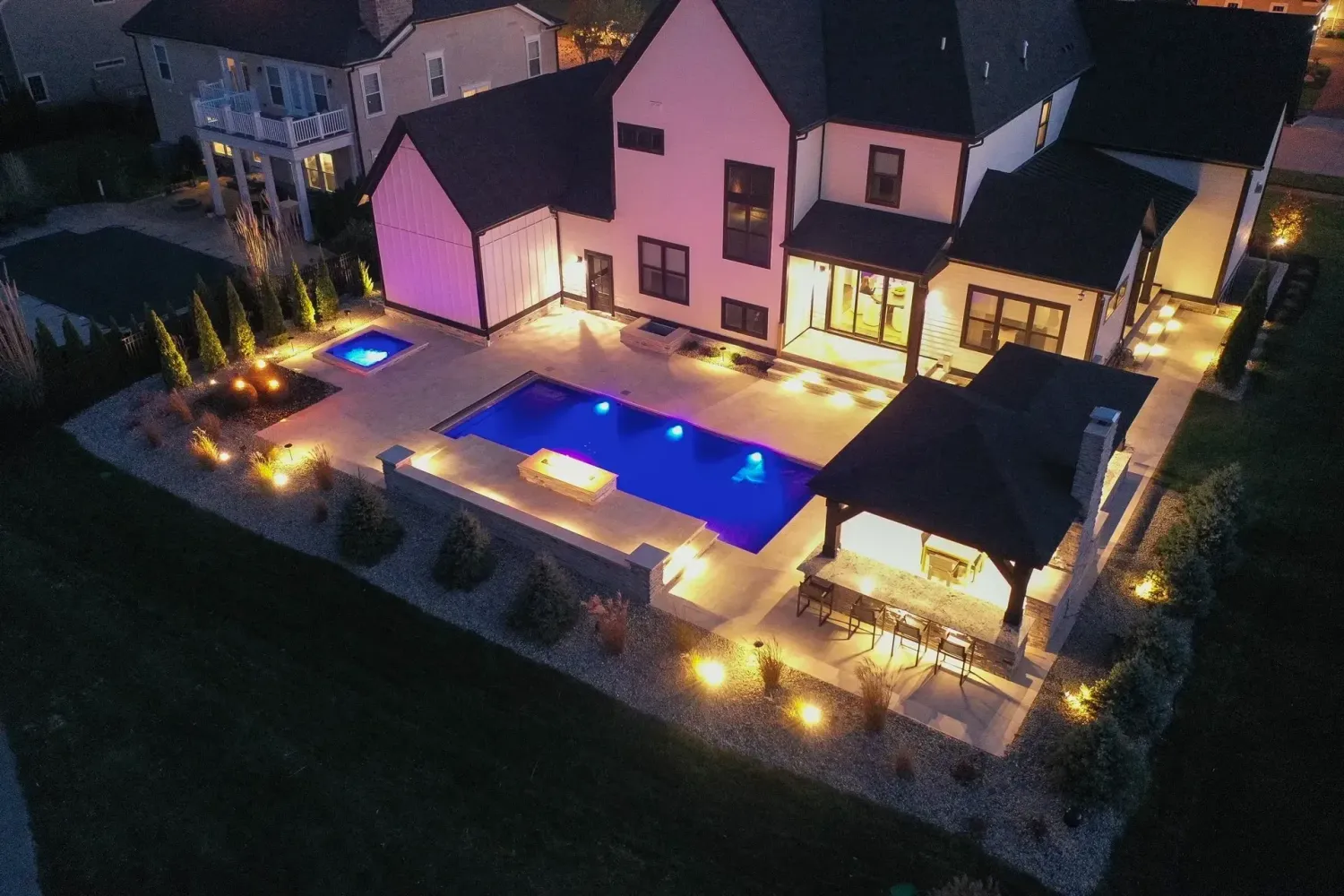
Pool crack diagnostics and structural repair across 20+ cities within 30 miles of Winder, GA
If your Alpharetta pool is running the 30-year timeline, the $425 three-test diagnostic tells you exactly what you’re dealing with before anyone pulls a permit or quotes a rebuild.