
Everyone installing fire features in Metro Atlanta suburbs defaults to natural gas or propane. In Milton, that default is usually the wrong call — and the reason sits quietly in your property deed, not in a catalog.
The conventional wisdom goes like this: gas is cleaner, gas is code-compliant, gas is what the HOA will approve. For a half-acre lot in Johns Creek or a zero-lot-line townhome in Dunwoody, that logic holds. Smoke drifts, neighbors complain, and you end up with a $6,500 fire feature collecting dust because the board flagged it after two Saturday nights.
Milton is a different animal. When AG-1 zoning requires a minimum lot size of one to three acres, when the nearest neighbor’s family room is 180 feet through a hardwood buffer, and when your property backs to a creek corridor or pasture rather than another patio — the calculus flips. Wood becomes not just viable, but the feature that makes the rest of the outdoor living space feel like it belongs here instead of feeling imported from Alpharetta.
This is a post about one specific design decision: when to choose a wood-burning fire pit over gas on a Milton estate lot, what the city code actually says, which HOAs will approve what, how we budget the install, and where wood-burning goes wrong when it’s treated as a cheaper gas alternative rather than its own discipline.
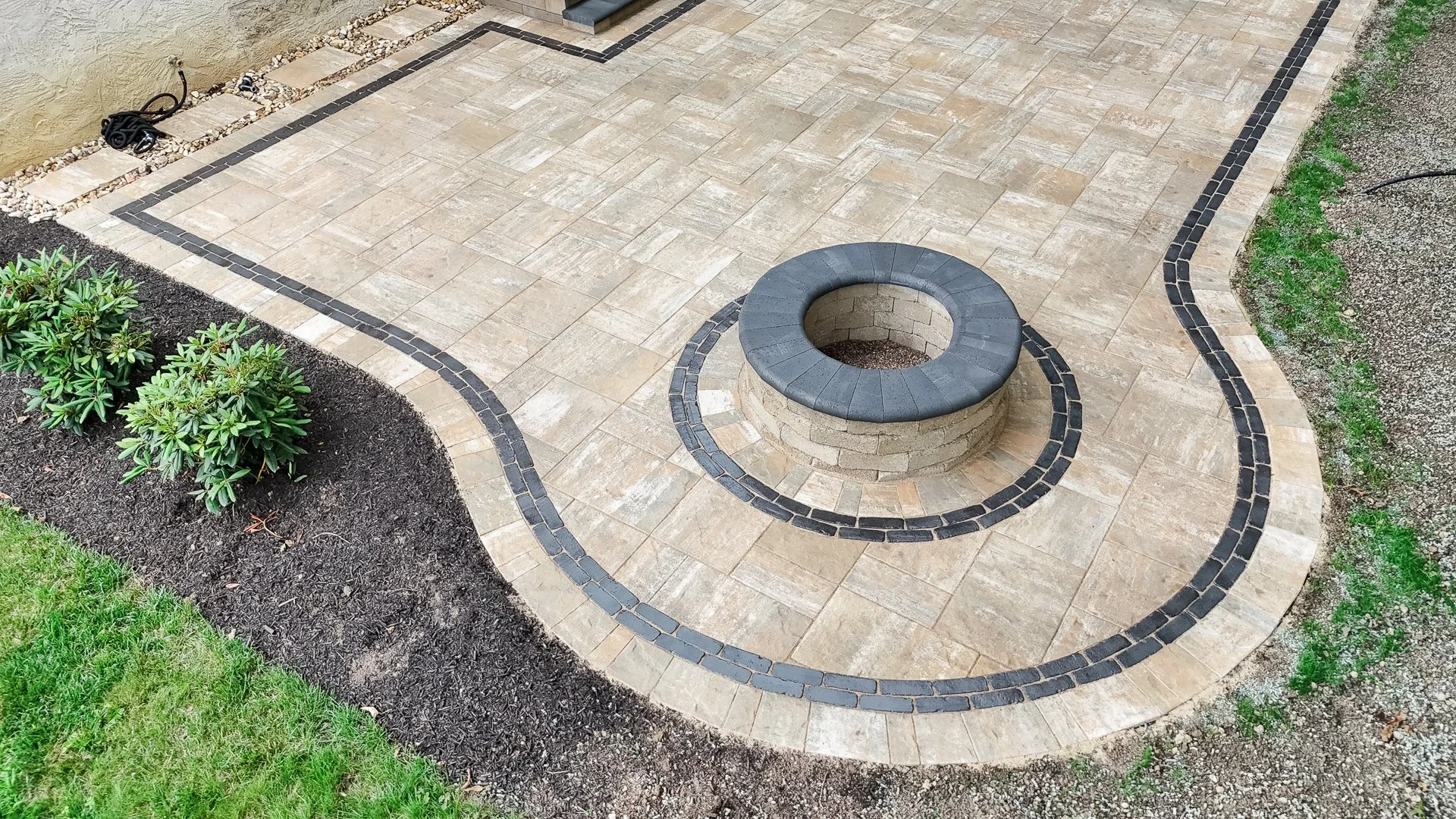
The Setback Math That Makes Milton Different
Fulton County and the City of Milton split in 2006 — Milton incorporated and pulled permitting out from under the county. If you are building a fire feature on a Milton address today, your permit runs through City of Milton Community Development at 2006 Heritage Walk, not Fulton. That matters for two reasons. First, turnaround is faster — we typically see 10 to 14 business days for a residential accessory structure permit that includes a fire feature. Second, the review is stricter on rural preservation, tree canopy, and creek buffers, because those are the things the city was chartered to protect.
The setback numbers you need to know, in plain English:
- 10 feet from any property line for an open-combustion fire pit
- 15 feet from any structure with a combustible wall or eave (your house, a pool pavilion, a detached garage)
- 5 feet of clear combustible-free zone around the fire pit itself — meaning no mulch, pine straw, wood decking, or low-limb branches inside that radius
- 25 to 75 feet from the centerline of a named creek or tributary, per the Metropolitan River Protection Act and Milton’s stream-buffer overlay
On a standard half-acre suburban lot, those numbers are a problem. A rectangular half-acre is roughly 120 by 180 feet. After you subtract the house footprint, the driveway, and the 10-foot line on each side, you are often left with a single placement option for a fire feature — and it’s usually the one spot where smoke drifts toward the neighbor’s screened porch.
On a Milton estate lot of 1.2 acres or more, the same setback numbers become trivial. You have 300 feet of placement range in nearly any direction. You can point the dominant downwind vector at your own tree line instead of the neighbor’s air-conditioning intake. That single geographic fact is what makes wood-burning fire features work here when they fail in more compact neighborhoods.
Milton code reference: Open-flame fire features (wood, gas, or gel) require a 10-ft property-line setback, 15-ft structure setback, and 5-ft combustible clearance radius. These apply regardless of fuel type. Check current ordinance with Milton Community Development before any install.
Why Wood Actually Wins on 1+ Acre Lots
Clients ask for gas because gas is what they saw in a showroom. Once they sit around a real wood fire on their own property, the decision usually reverses on the spot. There are three honest reasons for that.
The smell. Split white oak or hickory at a proper moisture content of 15 to 20 percent produces an aroma that no ceramic log set reproduces. It is the single sensory cue that makes a backyard feel like a Blue Ridge cabin instead of a suburban patio. On a Milton lot where the clients paid a premium specifically for rural character, ignoring that cue in favor of a cleaner burn is a design mistake.
The radiant heat profile. A 30-inch gas fire pit running at 60,000 BTU throws a useful heat radius of roughly four feet at shoulder height. The same footprint in wood, burning a stacked bed of seasoned oak, throws a useful radius closer to eight feet and holds it for three-plus hours without adjustment. On a 45-degree October night at 1,150 feet of elevation, that difference is the difference between guests moving their chairs closer every ten minutes versus staying in place.
The burn duration and ritual. A gas fire pit ends when someone remembers to turn it off. A wood fire pit has a natural arc — laying the bed, first flame, peak, the long low coal stage that’s the best part. Clients who entertain — and in Milton, most clients entertain — end up using a wood feature twice as often because the experience is structured rather than ambient.
What a Wood-Burning Installation Actually Costs in Milton
Published price ranges for wood-burning fire pits online are not Milton numbers. The online averages assume a DIY kit dropped on a lawn. A proper installation on an estate lot — one that survives 22 annual freeze events, holds up to a Cecil clay subgrade that swells and shrinks with moisture, and passes Milton’s inspection on the first visit — runs between $4,200 and $9,800.
Here is how that range breaks out across the installs we’ve delivered in Milton since the city tightened its review in 2023:
- $4,200 to $5,400 — Entry spec. 36-inch to 42-inch interior diameter, fire-rated steel insert (usually a 1/4-inch plate from a local fabricator, not a stamped import), dry-laid fieldstone ring with a mortared cap course, compacted crushed-stone base on 6 inches of #57 stone over filter fabric. Good for a couple on an 1.5-acre Potters Road lot who wants a weekend feature.
- $5,500 to $7,200 — Mid spec. 48-inch interior diameter, mortared ring with a 1,600°F firebrick liner, cast-in-place concrete footing 8 inches thick with #4 rebar on 12-inch centers, natural stone cap selected to match the house’s existing stone or masonry. Typical for Crooked Creek and Cogburn Estates clients who want a feature that reads as architectural.
- $7,300 to $9,800 — Estate spec. 54-inch to 60-inch ring with matching seat wall, integrated wood storage alcove in the hardscape, full drainage design that ties to the pool deck or patio, custom stone selection from a quarry with veining that matches the home’s stonework. This is the Manor Golf Club-scale build when the HOA allows it (and for wood specifically, it usually doesn’t — see the HOA section below).
What we do not do, and what you should walk away from if another contractor offers it: a fire pit set directly on a compacted clay subgrade with no footing, no drainage plane, and no fire-rated insert. That pit will heave within 18 months and the cap course will crack by the second winter. You end up paying the difference anyway, in demo and rebuild.
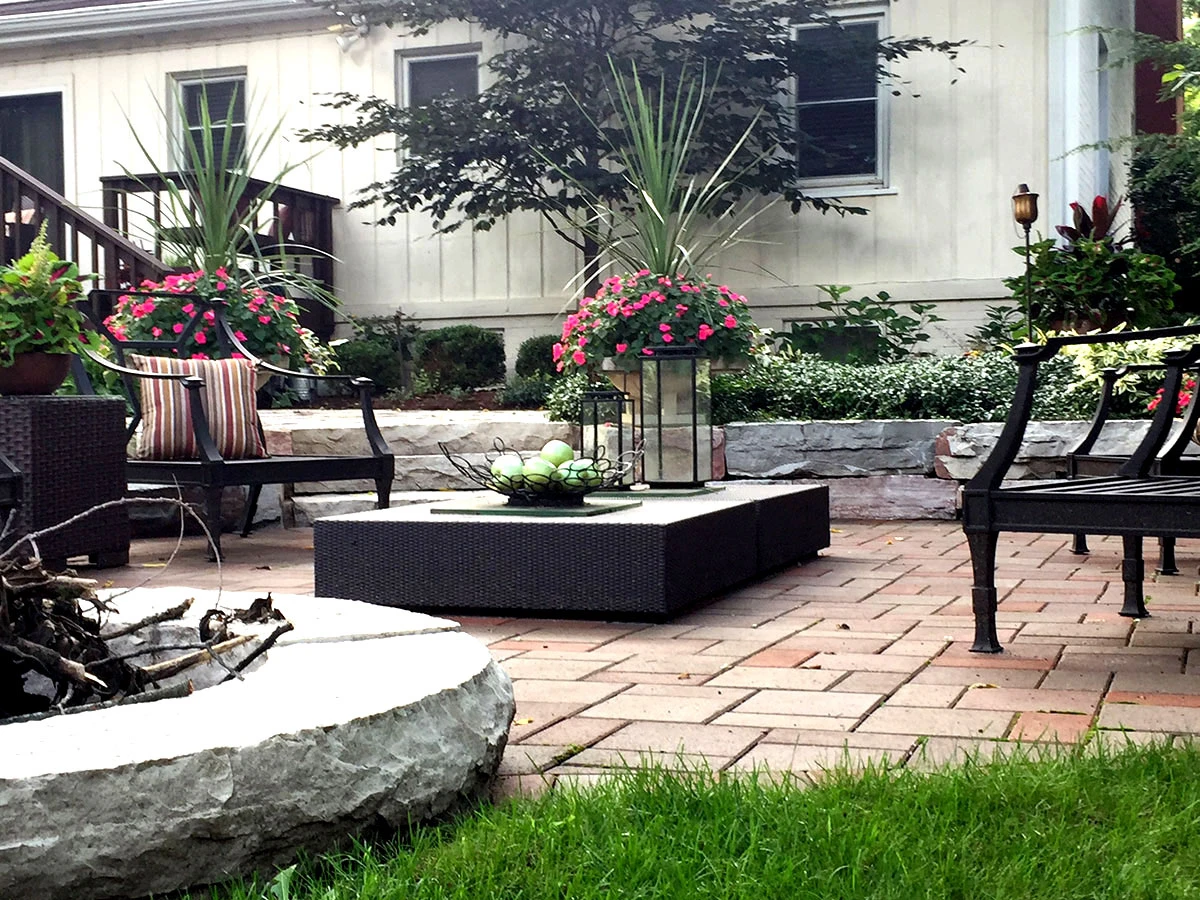
The HOA Map: Who Approves Wood, Who Doesn’t
This is the part most contractors get wrong and homeowners get stuck with. We have pulled enough Milton HOA architectural packages over the last five years to know the pattern:
- The Manor Golf Club — Wood-burning banned. The structural review committee reads wood-burning as a fire hazard and aesthetic inconsistency. Gas-only is the standing policy. Architectural review runs 4 to 5 weeks and requires full dimensioned drawings plus a stone sample board.
- Atlanta National (TPC) — Wood permitted with restrictions. Allowed if the feature is at least 40 feet from any property line and screened from the golf course view corridor. Chimney-style vertical features require additional committee review.
- Crooked Creek — Wood permitted. Straightforward approval for ground-level ring-style pits on lots over an acre. Submit a site plan with setback dimensions.
- White Columns — Wood permitted. Aesthetic review focuses on stone selection matching the home. No restriction on fuel type.
- Bethany Creek — Wood permitted. Minor restrictions on height of any chimney feature.
- Hopewell Plantation and unrestricted AG-1 parcels — Wood permitted. City code setbacks only. No HOA layer.
The short version: if your home is in Milton and not inside The Manor, you can almost certainly build wood-burning. If you are in The Manor, the design discussion shifts to a high-spec gas feature that reads like masonry rather than like an appliance — which is a different post, and a different budget.
Before you sign with any contractor: have them pull the current HOA architectural guidelines, not the version from three years ago. Several Milton HOAs updated their fire-feature language in 2024 after a single nuisance-smoke case in an adjacent ZIP.
A Real Milton Project: Crooked Creek, Oak-Lined 1.4-Acre Lot
Walking through one specific build makes the principles concrete. Last summer we installed a wood-burning fire feature on a 1.4-acre lot in Crooked Creek for a family that had been hosting backyard gatherings for six years with a portable steel pit that had finally rusted through.
The site: gentle east-to-west grade with an 8-foot drop across the rear yard, mature white oak canopy at the west property line, a seasonal swale 62 feet north of the proposed fire pit location draining toward Chicken Creek, and a detached screened pavilion 28 feet south. Existing pool deck was aged Belgard Mega-Arbel pavers — still sound but color-faded in patches. House stonework was a cream-and-gray Tennessee fieldstone.
Siting decision. Prevailing summer wind in this pocket of north Milton runs southwest to northeast. We sited the pit 38 feet east of the pavilion and 22 feet inside the property line, which gave us a 14-foot smoke corridor directed at the homeowner’s own tree line rather than the neighbor’s pool to the northeast. The 62-foot distance to the swale cleared the 25-foot stream-buffer setback with room to spare.
Build spec. 48-inch interior diameter with a 6-inch firebrick liner, 1/4-inch steel fire-rated insert fabricated by a Cumming metal shop we work with regularly, 8-inch cast-in-place concrete footing with #4 rebar on 12-inch centers, mortared ring of Tennessee fieldstone sourced to match the existing house stone, Georgia-quarried bluestone cap course. Adjacent 3-foot-wide Techo-Bloc Blu 60 paver apron on 6 inches of #57 stone base to give 5 feet of non-combustible clearance in every direction.
Wood management. The clients had an existing stand of white oak that a storm had taken down the previous spring. We worked with a local arborist to rent a splitter for a weekend, cut and stacked roughly two cords of seasoned split oak in a covered rack 18 feet from the pit, and handed off a simple moisture meter so they could verify 15-to-20 percent moisture content before burning. Onsite wood supply from estate timber is one of the quiet advantages of Milton’s larger parcels — you are typically not hauling bundled firewood from a gas station.
Permit path. Submitted to City of Milton Community Development on a Monday, received approval the following Wednesday — 9 business days. Inspection after install passed on first visit.
All-in cost. $7,150, which included the pit, the adjacent paver apron, and a small drainage upgrade we recommended after seeing how the existing deck shed water. Clients have used the pit weekly from October through March since install.
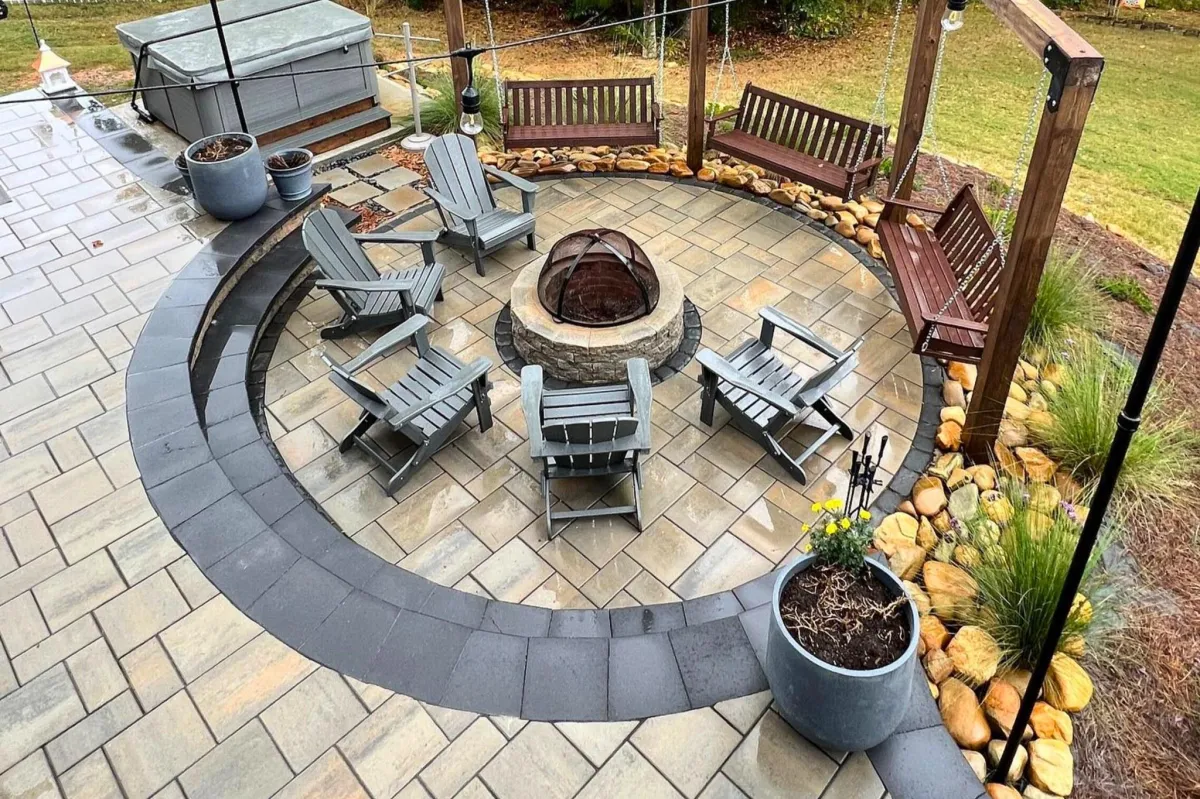
Ember Management, Ash Cleanup, and the Burn-Ban Issue
The honest drawbacks of wood are worth naming directly, because the contractors who only sell gas will name them for you anyway — usually with more alarm than the numbers support.
Embers. A wood fire throws embers. In a drought summer with a five-foot combustible-clear zone and a nearby pine straw bed, that matters. The design answer is not to ban wood — it is to extend the non-combustible apron to five feet minimum (we push to six on lots with heavy pine canopy), avoid any pine straw or bark mulch inside a 15-foot radius, and provide a hinged spark screen for use during higher-wind conditions. Georgia Forestry drought indices peak from late August through October; clients who burn during those windows keep the screen on by default.
Ash cleanup. A 48-inch pit used weekly produces roughly a gallon of ash every two to three weeks. The maintenance answer is an ash pan integrated into the fire-rated insert (we spec these on every mid-and-estate build), and a dedicated metal ash bucket with a tight lid stored outside the combustible zone. Ash retains heat for up to 72 hours — the number-one wood-fire mistake in Milton is dumping hot ash into a plastic leaf bag next to the house.
Burn bans. Fulton County, under EPD coordination, periodically issues open-burning restrictions during elevated air-quality alerts. These are typically advisory for residential recreational fires but become mandatory during declared Stage 1 smog alerts. We tell clients: subscribe to the EPD AirNow alert for the Atlanta metro region, and don’t burn during yellow-or-worse days. In practice this affects five to ten evenings per year, not a material limitation for a feature used primarily in cooler months.
Ash disposal rule: metal bucket with tight-fitting lid, stored on non-combustible surface, contents held for a minimum of 72 hours before disposal in a mineral-soil area or municipal ash collection. Never in a paper yard-waste bag.
Where Wood-Burning Fits in a Larger Milton Outdoor Build
Milton clients rarely install a fire pit in isolation. The signature project profile here is a full rear-yard program: custom pool, pool pavilion, outdoor kitchen, and a fire feature, phased or built in a single season depending on budget and permit sequencing. In that context, the decision to burn wood rather than gas shapes three upstream choices.
First, pavilion orientation. A wood pit puts smoke into the air column; you don’t want the prevailing wind carrying that smoke into an outdoor kitchen or under a pavilion roof. We orient the pavilion opening 90 degrees off the prevailing downwind vector from the pit, which on most north Milton lots means the pavilion faces southeast and the pit sits to its west.
Second, gas line planning. If wood is the primary feature but the clients want a secondary gas option — an in-counter burner at the outdoor kitchen, or a small gas torch at the pool corners — we run the natural gas line during the initial trench pass anyway. It adds roughly $800 to $1,400 at install time and saves a second utility disturbance later if the design evolves.
Third, drainage and grading. Wood features produce ash, and ash accelerates freeze-thaw damage on pavers if it washes onto joint sand. We design the pit area with a 2 percent grade away from the pavilion and pool deck, and upsize the joint sand to a polymeric product rated for freeze cycles. A small detail, but the difference between a deck that looks like Year One at Year Five, versus one that doesn’t.
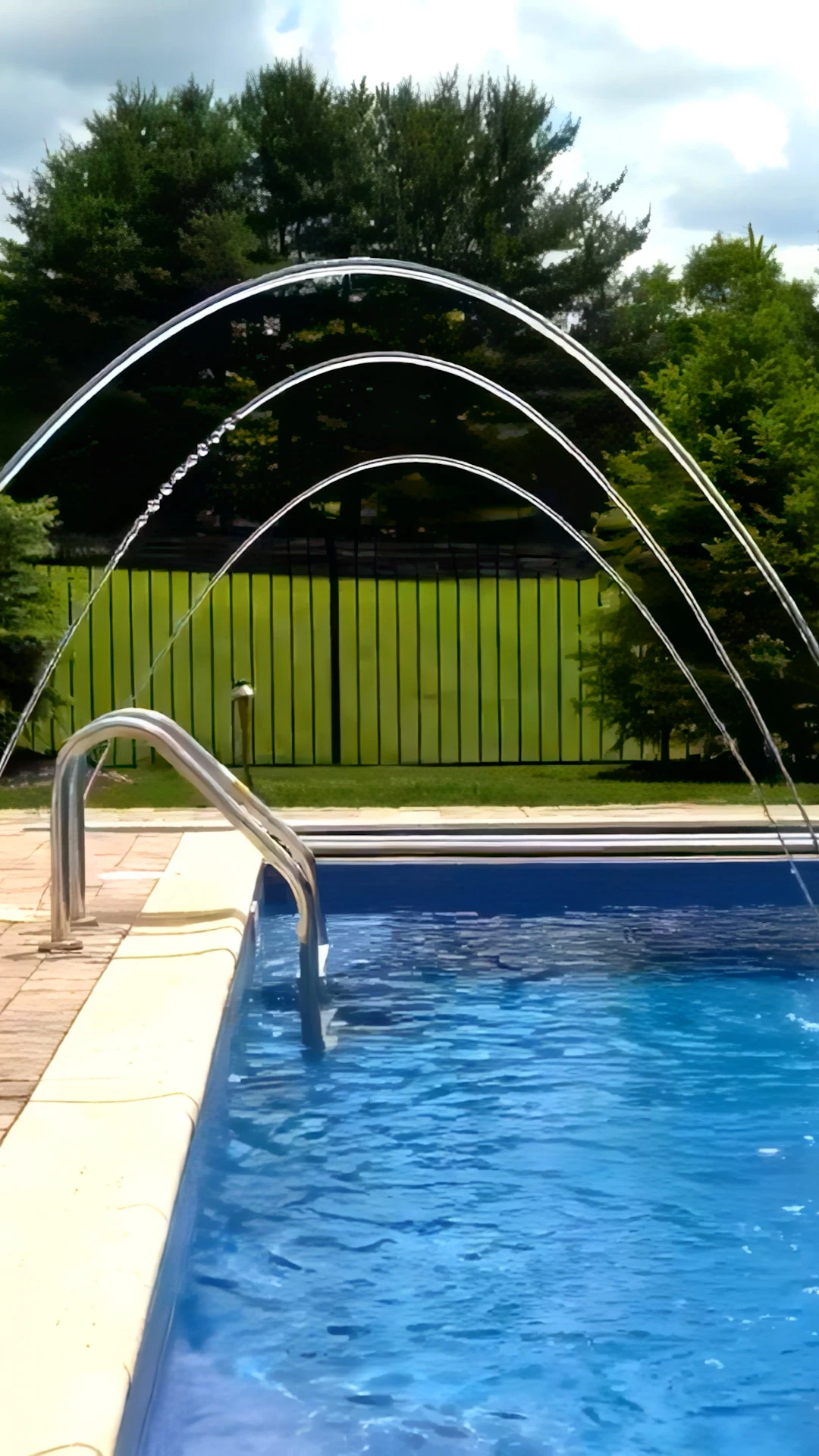
The clients who get this right are the ones who briefed their designer on the fire feature before they sited the pool. The ones who retrofit a fire pit into a finished rear yard are the ones who end up with the smoke drifting across the dinner table.
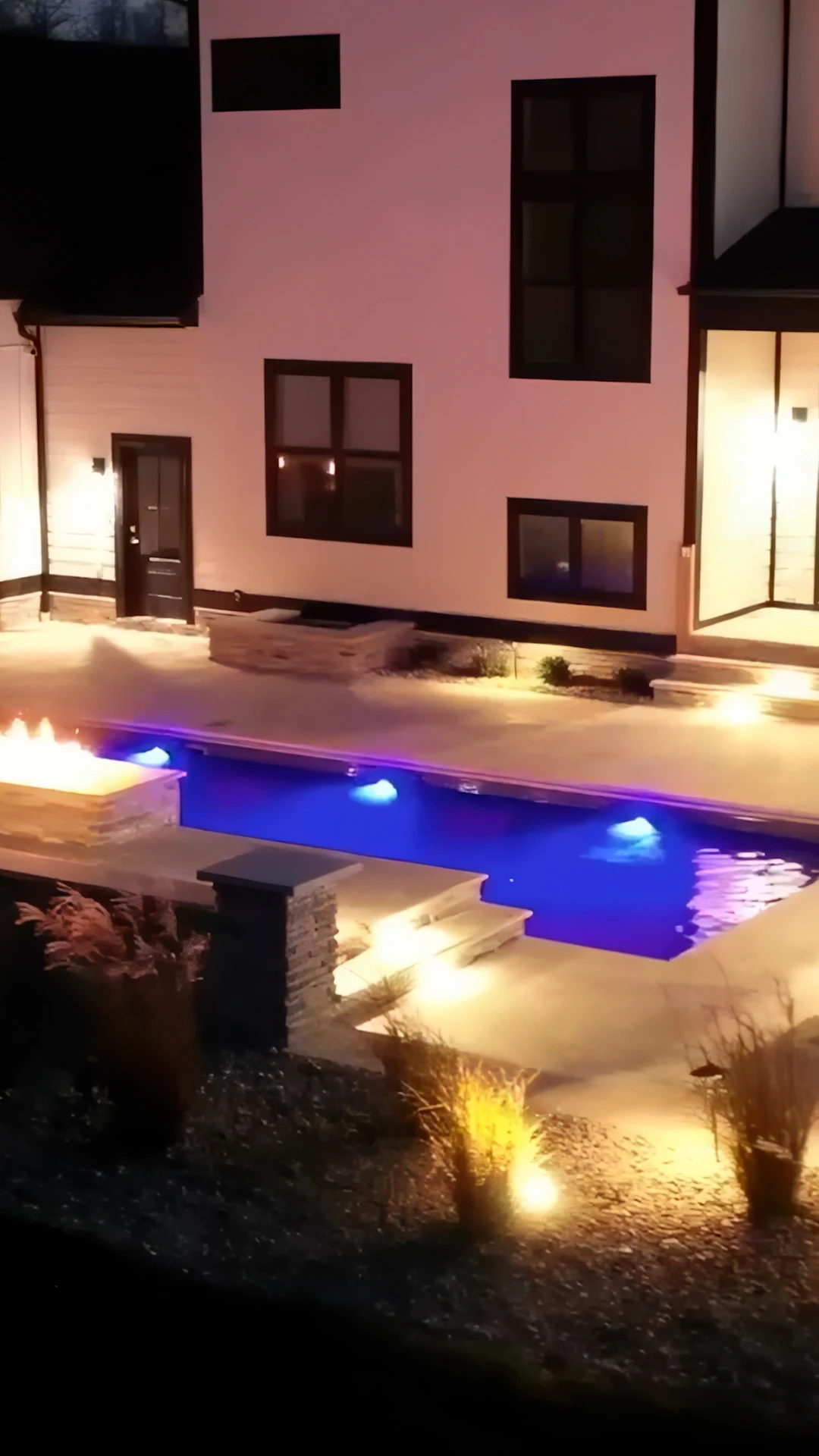
If you are planning a pool and fire feature together on a Milton estate lot — whether in the rolling Cooper Sandy Creek corridor off Freemanville Road, the Hopewell Plantation acreage along Hopewell Road, or the Birmingham Highway estate pockets — the time to decide wood versus gas is before the first stake goes in the ground. Not after the deck is cured.
Wood-burning fire features and full outdoor living programs across 20+ cities within 30 miles of Winder, GA
If your Milton estate lot deserves a fire feature designed around its acreage instead of a showroom default, we’ll walk the site with you and talk through setbacks, HOA language, and how the pit fits into the pool and hardscape plan.