
Midday in August, a bare foot on your pool deck is either comfortable or blistering. There is no middle ground, and the deck material is the entire difference. We have put infrared thermometers on both surfaces on the same Dacula afternoons, and the 20-degree gap shows up every single time.
Dacula sits in the uncomfortable slice of Georgia where summer afternoon highs typically run 92 to 96 degrees, and the city averages 15 days per year that break 95. On those days, ambient temperature is the least interesting number. What matters is the surface temperature under a 6-year-old’s feet when they sprint from pool to patio chair. That number is governed by material, color, and sealer — not by what the deck cost.
The travertine-versus-concrete decision is the single highest-stakes deck choice we see homeowners get wrong. Wrong in both directions. Some spend $28 per square foot on travertine when standard broom concrete would have served them fine. Others save $15 per square foot with stamped colored concrete and spend the next decade listening to their kids complain about hot feet. There is a right answer for each yard. It just is not the same answer.
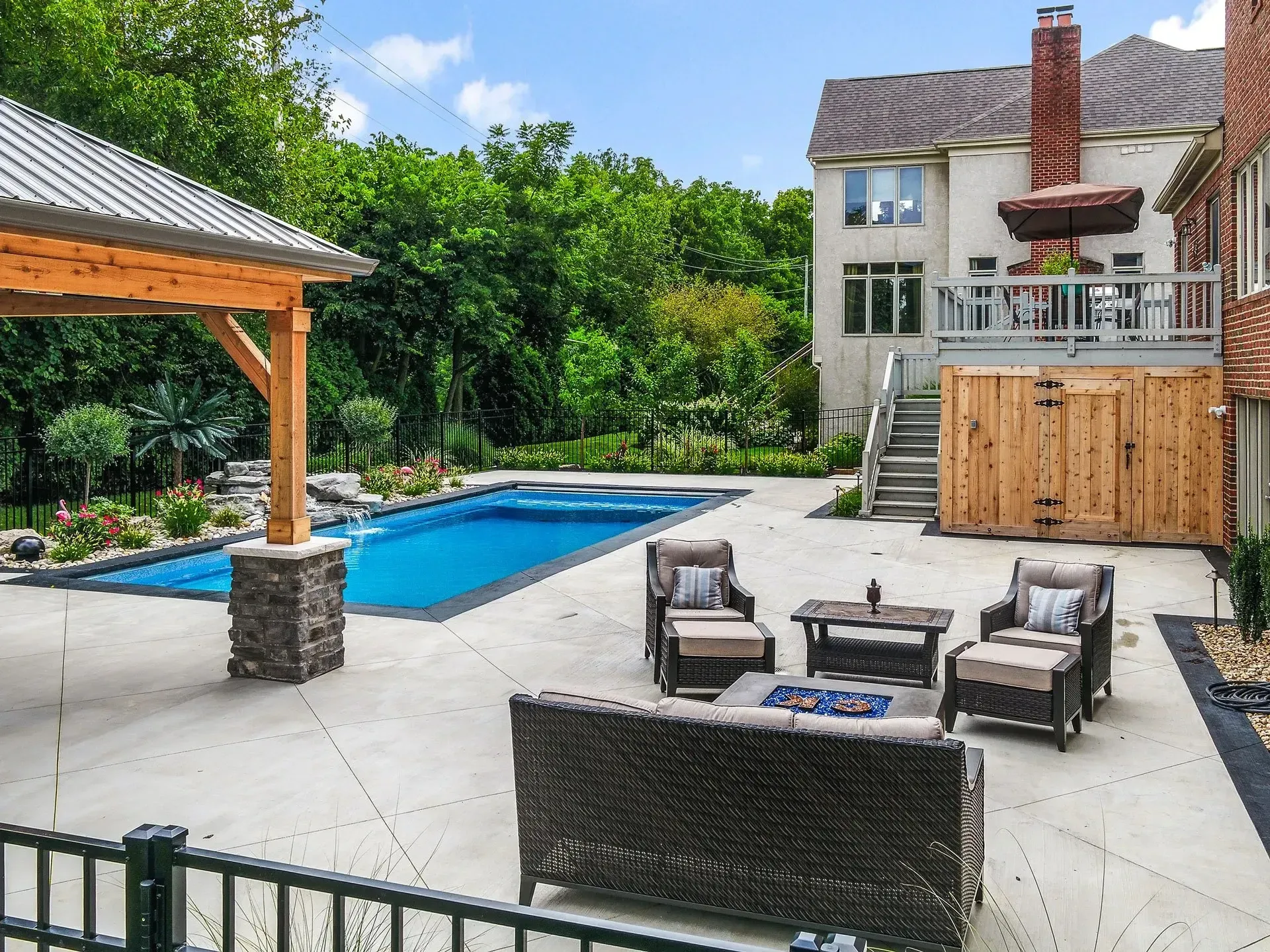
We build pool decks across Gwinnett County and throughout the Hamilton Mill, Sycamore Ridge, Chandler Ridge, and Providence Club neighborhoods. Over the last several years we have done enough of both surfaces side by side — occasionally on the exact same property, when the client wanted a tanning ledge apron in one material and a shaded patio in another — to have real numbers on heat, slip, cost, and ten-year wear. Below is what that data looks like when you line it up.
The Heat Test — What Actually Happens at 95°F Ambient
Heat gain on a pool deck is a function of three things: albedo (how much solar energy the surface reflects versus absorbs), thermal mass (how much heat the material can store before it starts radiating), and sealer. Color matters more than people think. Texture matters less than people think.
We run infrared surface readings on every new deck we pour or set, partly for quality control and partly because clients ask. On a representative 95°F Dacula afternoon — late July, full sun, no cloud cover, 2pm to 4pm window — here is what the three common pool deck surfaces show:
The stamped number surprises people. It should not. Stamped colored concrete carries three compounding disadvantages: it is pigmented darker, the integral color and release powder both reduce albedo, and the acrylic sealer that keeps the color looking good also acts as a thermal blanket. That extra 10 degrees over broom concrete is almost entirely the sealer. It is the single biggest surprise factor in our pre-build consultations — clients who chose stamped for the tan, earth-tone aesthetic did not realize they were also choosing the hottest surface on the market.
The 2-to-3 second burn threshold: Skin tolerance drops off sharply above roughly 130°F. At 138°F, children’s bare feet will register discomfort in 2 to 3 seconds. At 148°F, it is under 2 seconds and risks a genuine first-degree burn on sensitive skin. Travertine at 118°F sits comfortably inside the zone where a barefoot guest can stand still without shifting weight.
Worth noting: these numbers shift a bit with color selection inside each material category. A silver or walnut-toned travertine will run 4 to 6 degrees hotter than cream-tan. A whitewashed or acid-etched concrete will run 8 to 10 degrees cooler than standard broom gray. We give clients the full color palette with surface-temp deltas before they pick, because on the hottest week of the year those 6 degrees are the difference between a deck you use and a deck you avoid.
The Slip Test — Dry, Wet, and the Coefficient Nobody Tells You
Slip resistance on a pool deck is not optional. It is the single most important safety variable after fence compliance, and Gwinnett County inspectors do not test for it — which means the homeowner bears the full consequence of whatever the installer chose.
The industry uses a static coefficient of friction, or SCOF, measured by a tribometer. A reading of 0.50 is the generally accepted minimum for an exterior walking surface. A reading of 0.60 is what most safety consultants recommend for a wet environment like a pool deck. Below 0.50 you are in slip-and-fall territory.
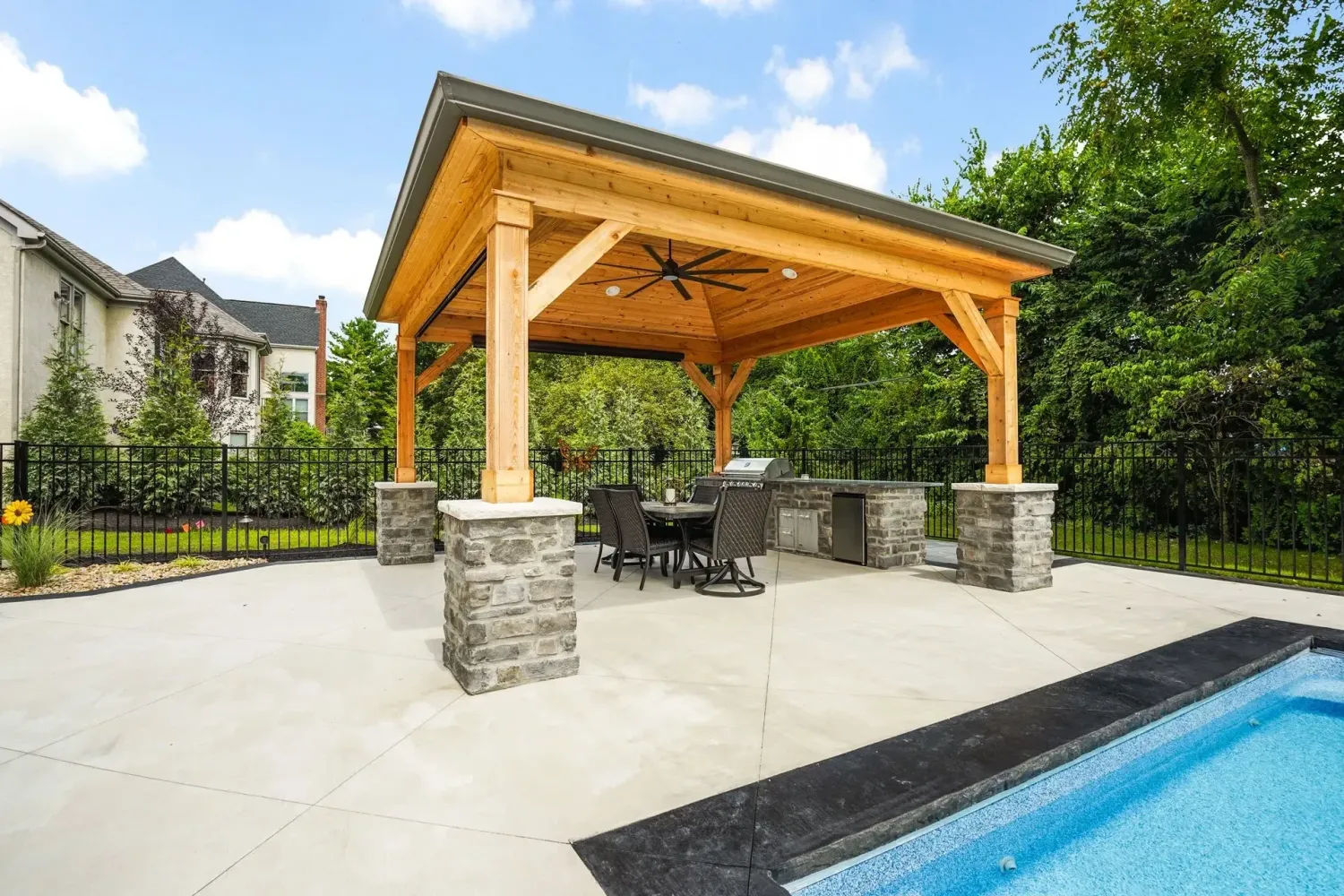
Dry numbers tell one story. Wet numbers — which is the story that matters on a pool deck — tell another. Here is how the common surfaces measure out:
This chart is the one that changes minds in our consultations. Stamped colored concrete — the surface clients most often walk in wanting — measures at 0.42 SCOF wet, below the 0.50 industry floor for exterior surfaces and well below the 0.60 pool-deck recommendation. It is not a defect. It is how stamped concrete works. The acrylic sealer that preserves the pattern and color is, by design, a smooth film. You can add slip additives to the sealer, and we do when stamped is the right aesthetic choice, but it never quite closes the gap to tumbled travertine or properly broomed gray concrete.
Honed travertine, on the other side, looks beautiful in a magazine spread but measures roughly even with stamped concrete wet. We only spec honed travertine in covered areas, on interior patios, or on steps that will see foot traffic but not splash. The 6-inch ring around the pool coping where water actively moves — that is tumbled travertine or it is nothing.
The Hardness Question — Scratch, Chip, and What Actually Dents
Travertine sits at Mohs hardness 3 to 4. For reference, granite is 6 to 7, limestone is 3 to 4 (travertine is technically a limestone variant), and concrete surface hardness ranges from Mohs 5 to 7 depending on the aggregate and finish. On paper, concrete wins the scratch test.
In practice, what actually damages a pool deck is not a scratch test. It is a 40-pound patio umbrella base dropped from waist height. It is a steel grill leg scraped six inches. It is a child’s plastic toy truck being dragged. And in that real-world test, travertine and concrete behave differently in ways that do not match the Mohs chart.
Travertine chips locally. A dropped object will put a divot in one specific stone, and that single stone can — in our repair practice — be pulled and replaced for a material cost in the neighborhood of $12 to $18 plus a service visit. The damage is contained and repairable. Concrete, by contrast, does not chip; it cracks. And the crack does not stop at the impact site. It propagates along existing microfractures and control joints, often running 18 inches to 3 feet from the point of impact. The crack is cosmetic, usually, not structural — but it is significantly harder to hide than a replaced travertine piece.
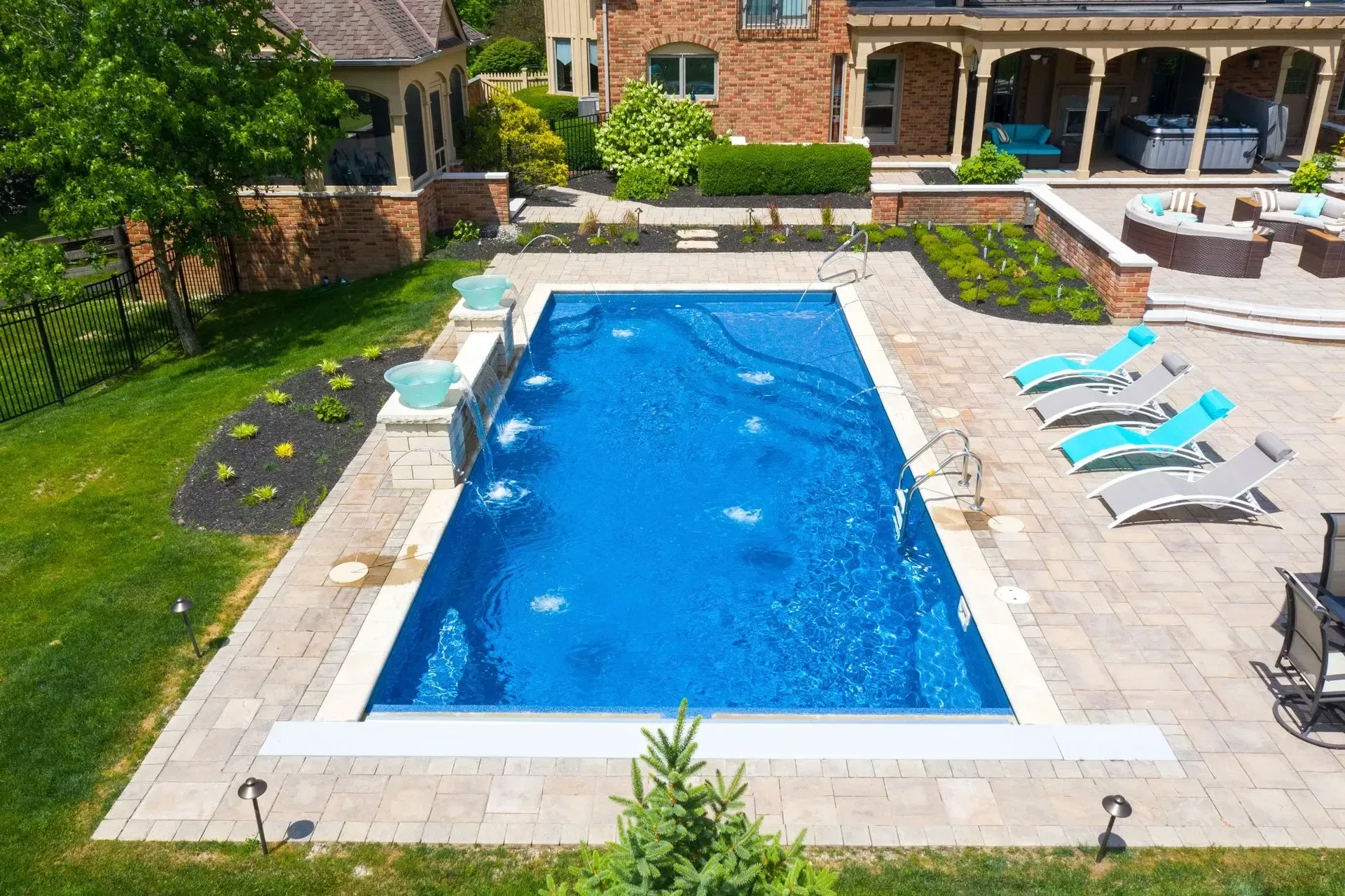
Travertine is softer than granite but harder than untreated limestone, and the freeze-thaw exposure in Dacula (USDA Zone 8a, roughly 20 freeze events per year) is where the hardness conversation becomes a durability conversation. Travertine is naturally porous. If water infiltrates a stone and then freezes, the stone can spall at the surface — little flakes popping off. This is why sealing travertine every 2 to 3 years is not optional in the Georgia Piedmont. The sealer bridges the pores and keeps the freeze-thaw out of the stone.
Concrete decks have their own freeze-thaw problem, but it manifests differently: hairline crazing, control joint edge flaking, and — in decks poured without adequate air entrainment — surface scaling after 5 to 8 winters. Concrete needs re-sealing every 5 to 7 years, less often than travertine, but the consequences of missing a sealing cycle are worse because concrete damage is harder to repair invisibly.
Gwinnett County freeze reality: Dacula averages about 20 freeze events per year. Every one of those events is a test of how well your deck was sealed the previous fall. This is why we write sealing cycles into our maintenance handoff document and flag them on the calendar.
The Real Cost Per Square Foot — Installed, Not Material-Only
The number clients ask for is material cost. The number that matters is installed cost. Here is where the three surfaces land, per square foot, installed, in Dacula and the surrounding Gwinnett zones as of the current build season:
On a typical 800 square foot Dacula pool deck, the difference between standard concrete and travertine is roughly $11,000 to $14,000. That is real money. The question is whether it is money well spent, and the answer depends on how you use the deck.
The case for travertine is strongest when: the deck sees heavy barefoot use, there are young kids in the household, the deck is in full sun for most of the afternoon, and the home is in a price bracket where deck aesthetics affect resale. In Hamilton Mill, for example, travertine is effectively the neighborhood standard on new pool builds — going cheaper on the deck is visible from the street and affects comps.
The case for concrete is strongest when: the deck is smaller (under 400 square feet), it sees more adult and less child use, the deck is shaded for part of the afternoon by the house or mature trees, or the homeowner is doing a staged project and wants to put savings toward the pool finish, water features, or outdoor kitchen. A well-broomed, well-sealed concrete deck is not a compromise. It is a legitimate choice.
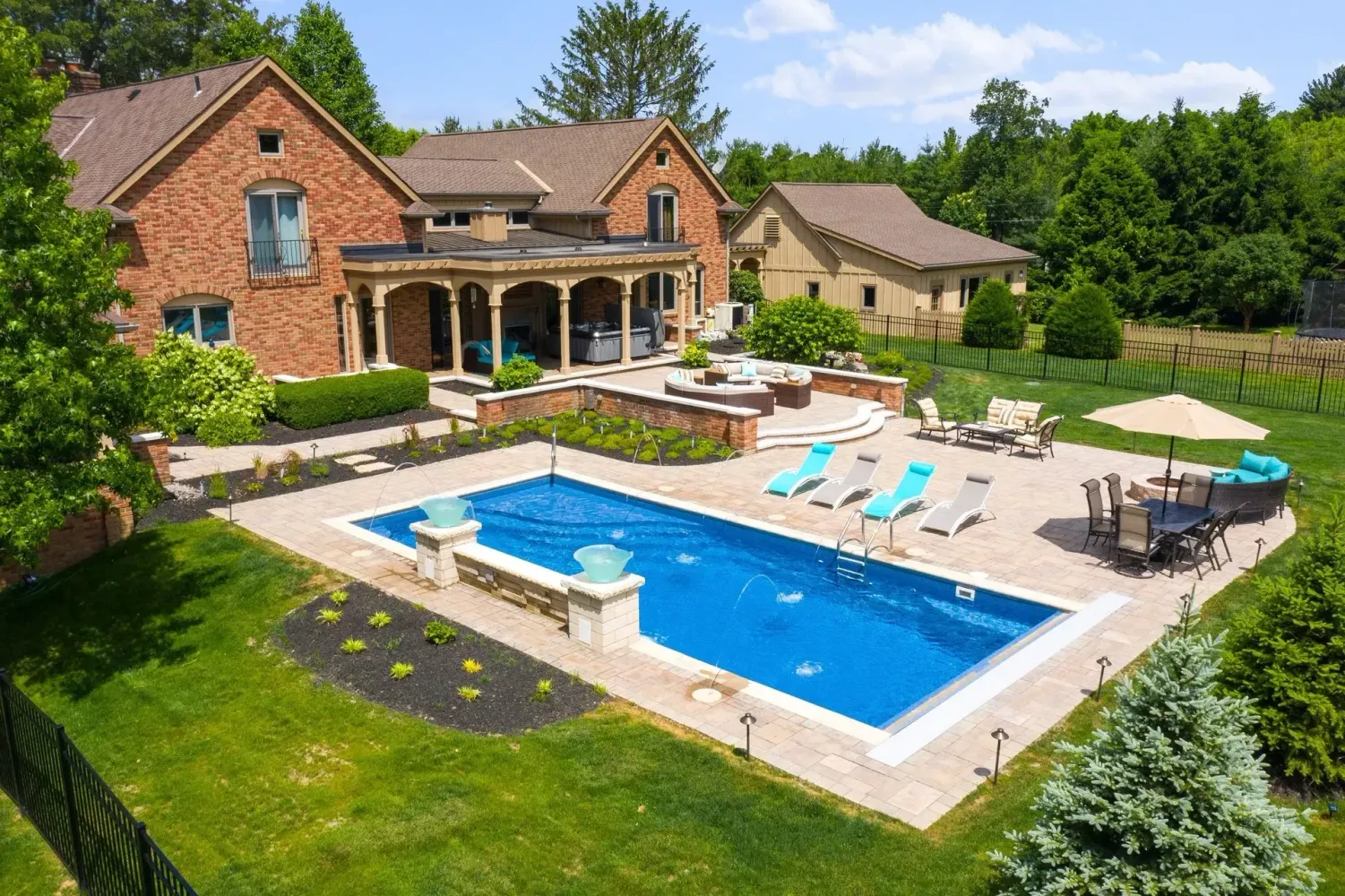
One additional cost factor: travertine carries a higher installation labor cost because every stone gets set individually, and the French pattern specifically requires a skilled mason to keep the layout tight. Concrete is placed once and floated. The labor gap is most of the price difference — travertine material alone runs roughly $7 to $10 per square foot delivered to Dacula; the rest of the $22 to $30 installed is labor, setting bed, and polymeric sand.
Maintenance Over a Decade — What Each Deck Actually Asks From You
Ten years is the honest horizon for comparing pool decks. Under ten years, nearly every surface looks decent. Past ten years, the choices separate.
Travertine maintenance over a decade looks like this: sealing every 2 to 3 years (three to four sealings in ten years), at a material cost of roughly $0.35 to $0.50 per square foot plus labor. On an 800-square-foot deck, that runs $350 to $600 per sealing event. Polymeric sand top-up every 4 to 5 years in the joints, minor cost. Occasional single-stone replacement if something gets dropped hard.
A cream-tan travertine deck that has been sealed on schedule will look nearly identical at year ten to year one. The stone itself does not fade — it is natural mineral, already what color it is going to be. The joints can narrow and the sealer can dull, both correctable.
Sealing cadence — worth writing on the calendar: Travertine every 2 to 3 years. Standard concrete every 5 to 7 years. Stamped colored concrete every 2 to 3 years (sealer also carries the color — miss a cycle and the color fades). Natural gray broom concrete is the lowest-maintenance surface on the market for sealing purposes.
Concrete maintenance over the same decade depends heavily on whether it is plain broom, stamped, or colored. Plain broom-gray concrete might need one resealing in ten years, sometimes two. It is the lowest-maintenance deck surface available, full stop. Stamped colored concrete asks for resealing every 2 to 3 years — same cadence as travertine — and if you miss a cycle, the color and pattern fade visibly. By year eight of neglected stamped concrete, you are typically looking at a full overlay or grind-and-reseal, which runs $6 to $10 per square foot.
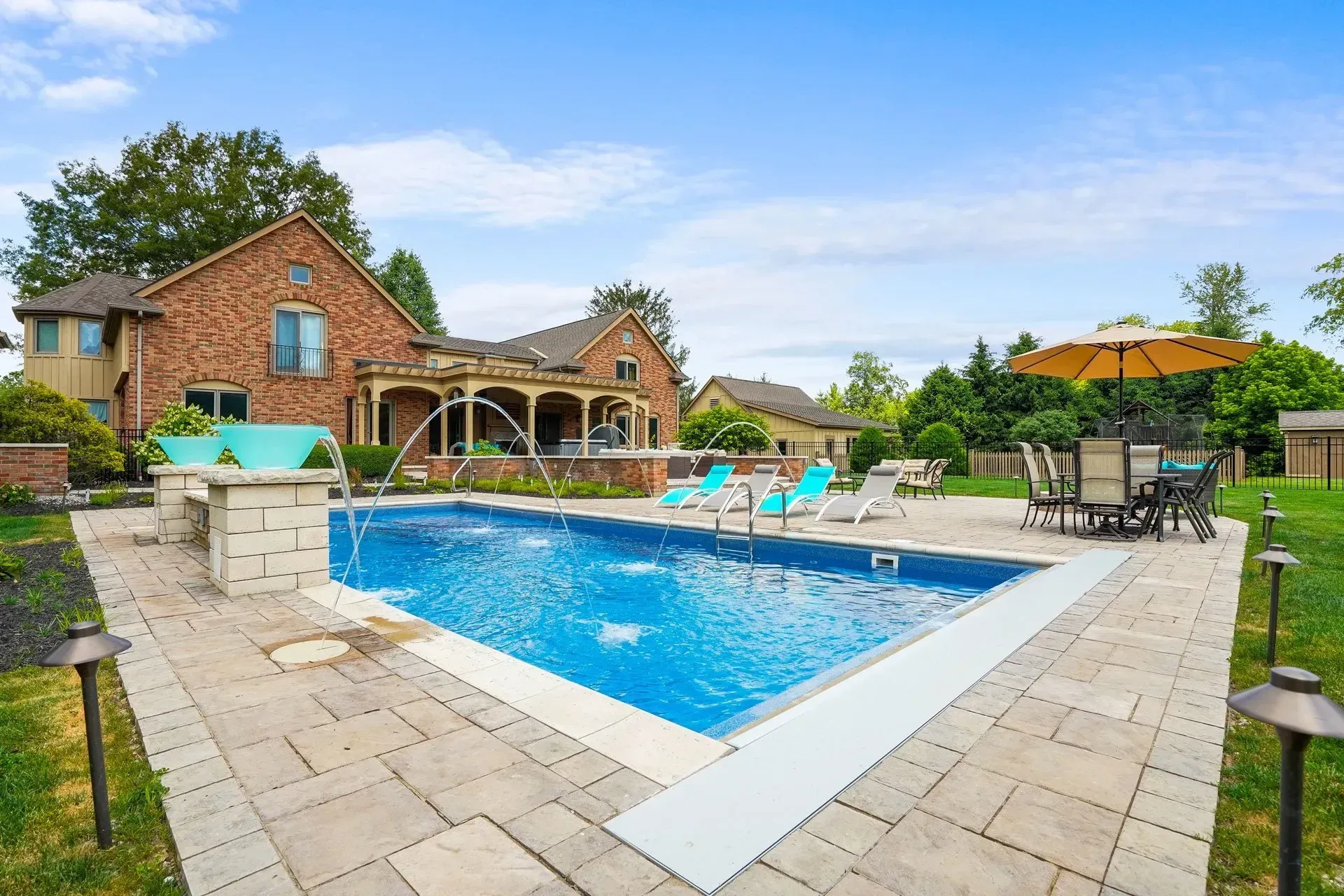
Here is the summary our clients actually use when they are deciding: if you want the lowest decade-total maintenance cost and effort, it is plain broom gray concrete, full stop. If you want the best long-term appearance and are willing to seal every 2 to 3 years, it is travertine. Stamped colored concrete is the highest-maintenance surface relative to its initial price point — it combines the resealing cadence of travertine with the heat and slip disadvantages of colored sealer.
Which Deck Is Right for Your Dacula Backyard — A Decision Framework
We do not pretend there is a single answer. Across the Hamilton Mill, Ivey Chase, Sycamore Ridge, and Auburn Park builds we have delivered, the material split is roughly 60 percent travertine, 25 percent broom concrete, and 15 percent stamped or specialty. That split is not accidental — it tracks closely with yard-specific factors.
Here is the framework we walk clients through at the consultation table:
Choose travertine if:
- Young children or grandchildren are regular barefoot users of the deck
- The deck is in full sun from roughly 11am through 5pm — no afternoon shade from the house or mature trees
- The deck exceeds 500 square feet (larger deck amortizes the material premium across more use)
- You live in a neighborhood where travertine is the comp standard (most of Hamilton Mill, much of Providence Club)
- You are willing to commit to the 2-to-3-year sealing cycle
Choose standard broom concrete if:
- The deck is under 400 square feet or is an apron-and-path rather than a full entertaining area
- The deck gets meaningful afternoon shade
- Primary users are adults who tend to wear sandals on the deck
- Budget is a real constraint and you would rather put the $11,000 savings into the pool finish (pebble over plaster, for example) or an outdoor kitchen phase
- You want the lowest-maintenance deck on the market
Consider stamped colored concrete only if:
- The deck is shaded most of the day (minimizes the heat penalty)
- The aesthetic genuinely matters to you and you understand the 0.42 SCOF wet figure
- You plan to add slip additive to the sealer at every resealing cycle
- You accept the 2-to-3-year resealing commitment to preserve the color
In the Dacula consultations where we have steered clients away from stamped colored concrete, the most common replacement we recommend is either a lightly integral-pigmented broom finish (gets some of the color warmth without the acrylic-film heat penalty) or a tumbled travertine in a silver-tan blend (keeps the earth-tone aesthetic and wins on both heat and slip). Neither is cheap. Both are defensible ten years out.
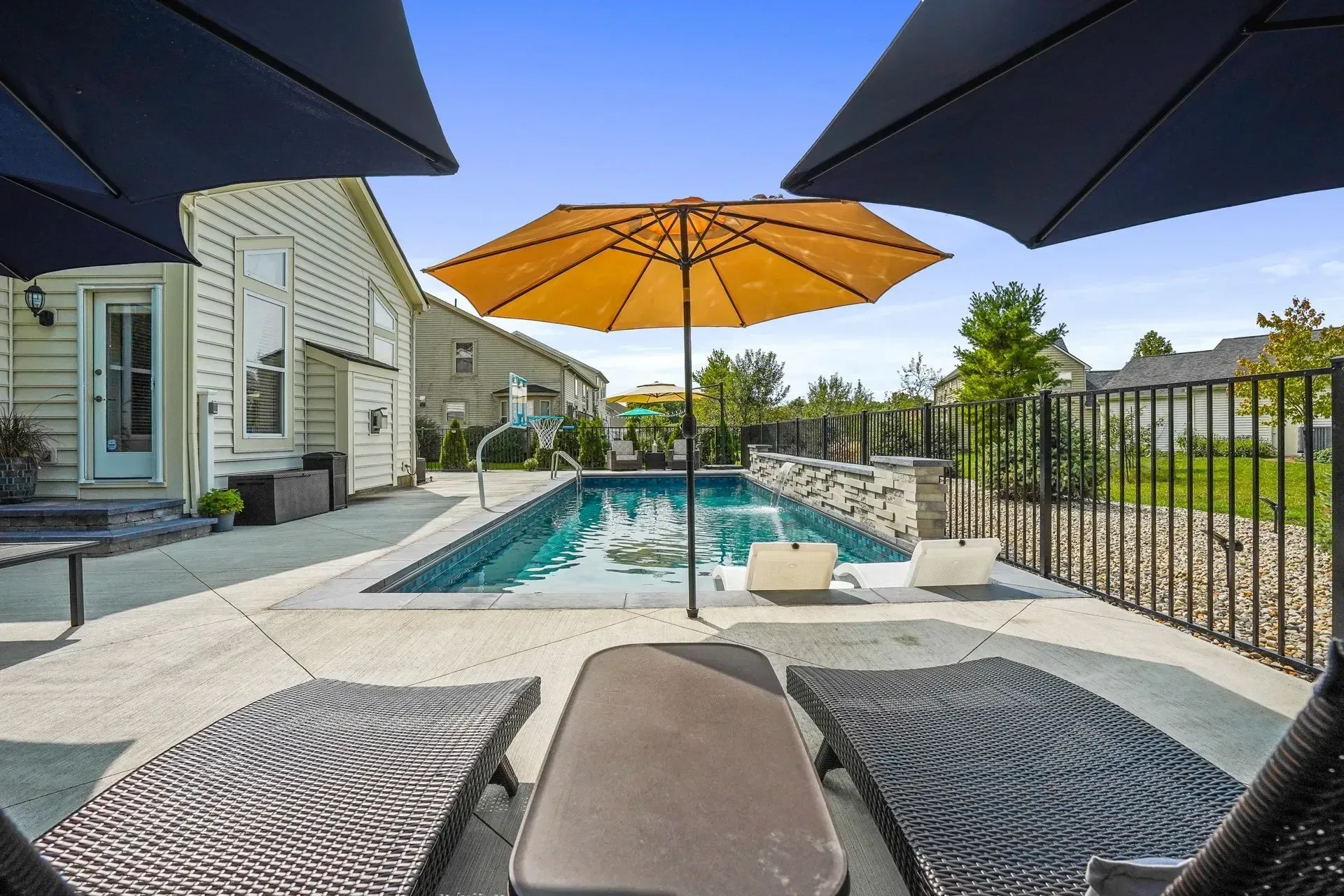
One last consideration specific to Dacula’s housing stock. The area’s heavy mix of 1995-to-2010 subdivisions with brick and stone veneer homes along Dacula Rd and Hog Mountain Rd tends to pull travertine toward cream-tan and silver-tan tones that match the masonry. Newer infill on the 1/3 to 1/2-acre lots west of Hamilton Mill Pkwy often goes with lighter travertines or gray-broom concrete accents. Both are specific to the home they serve.
When we quote a pool project in Dacula, the deck decision is the second-most-discussed line item after the pool finish itself. It should be. On surface area, the deck usually exceeds the pool by a factor of two or three. On summer-use comfort, the deck is where the conversation happens, the food gets served, and the kids land between swims. Getting that surface right — heat, slip, cost, maintenance, looks — is most of what separates a pool you love from a pool you tolerate.
Travertine and concrete, done correctly, are both legitimate answers in Dacula. The wrong answer is picking without the numbers.
Pool Deck Design & Construction across 20+ cities within 30 miles of Winder, GA
Whether your Dacula backyard is heading toward French-pattern travertine or a well-executed broom-finish concrete, the decision should be driven by heat, slip, and use — not by what looked good in a brochure.