
“What’s the difference between a sun shelf and a tanning ledge, and which one do we actually want?” That question gets asked on nearly every Forsyth County design consult — and the answer isn’t cosmetic. It’s a $3,200 to $11,200 decision that changes how your family uses the pool for the next twenty years.
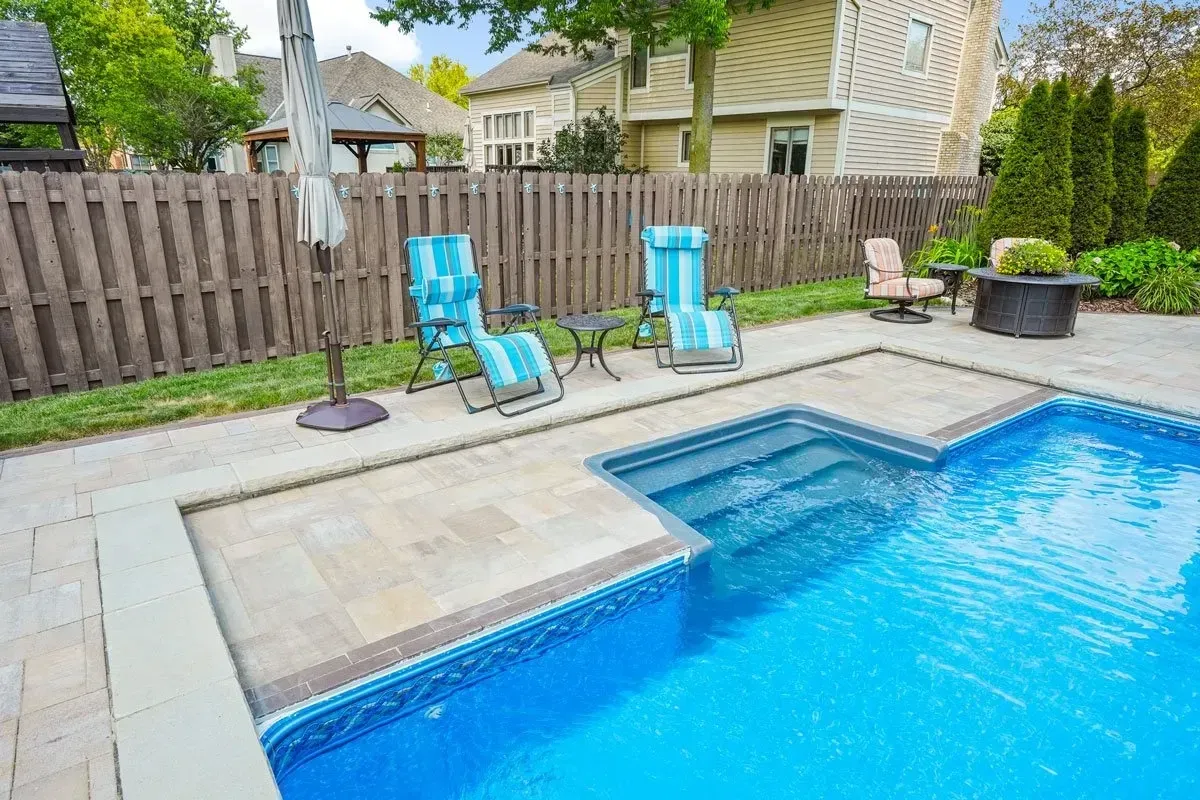
Start with the vocabulary, because the industry muddles it and every brochure spells it differently. A sun shelf is a wet deck submerged roughly 10 inches below waterline — just enough to cool a chaise lounge’s legs and submerge your calves while you read. A tanning ledge is deeper, typically 18 inches below waterline, and it’s built for bodies in the water rather than chairs on top of it. Different depth. Different hardware. Different price. Different life.
On paper that sounds like a distinction without meaning. On a south-Forsyth lot in Hampton Park, with three kids under ten and a pair of grandparents who visit every other weekend, the difference is the entire reason the pool works — or doesn’t.
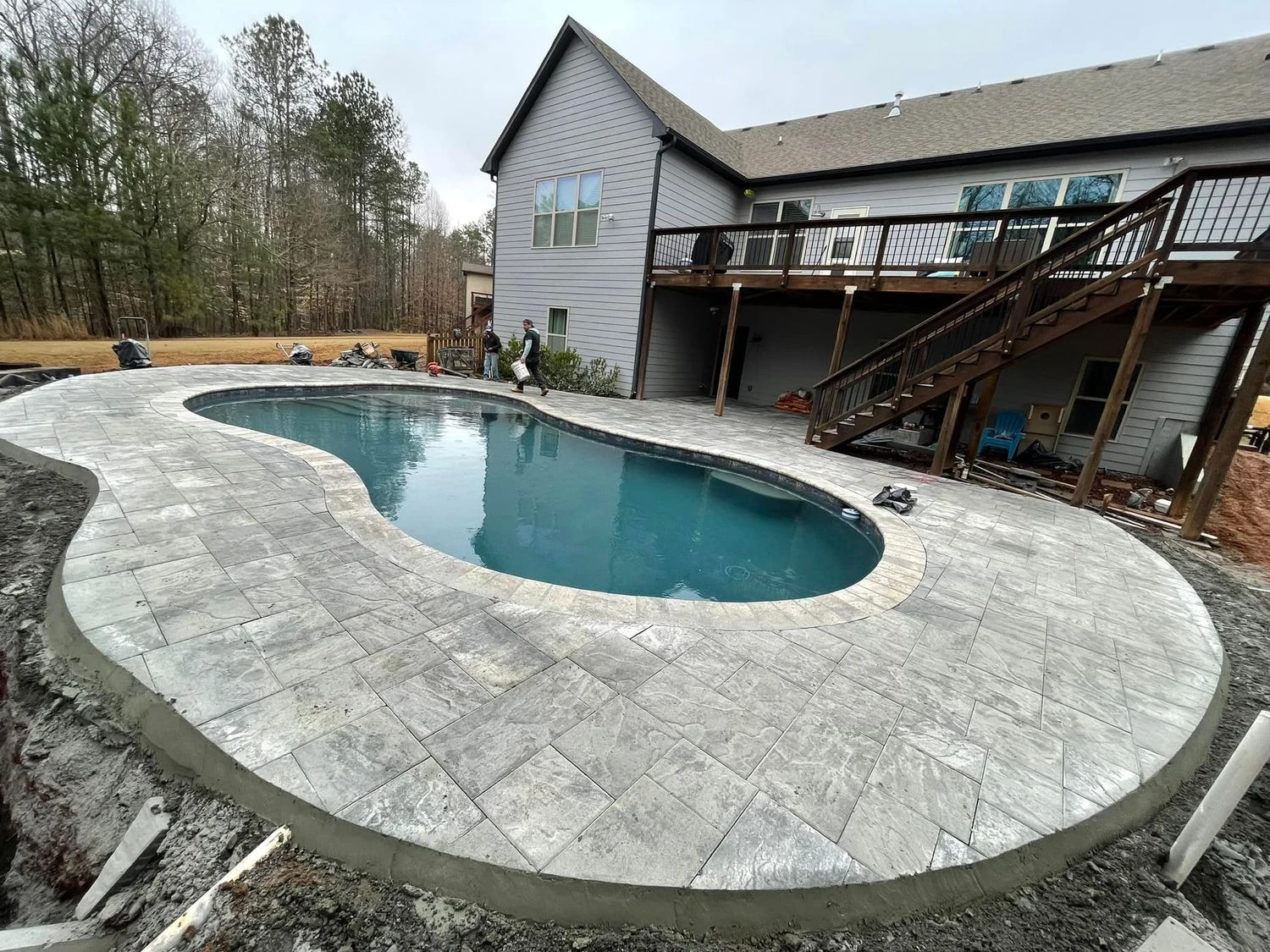
Why Forsyth County Owners Ask This Question More Than Anywhere Else
Forsyth County is the fastest-growing county in Georgia and has been for the past decade. Population sits near 260,000 across 247 square miles, the permit office approves over 200 residential pool permits a year, and the demographic leans young-family and dual-income. That combination produces a very specific design brief: the pool has to serve parents with toddlers, tweens who want to swim laps, adults who want to lounge with a drink, and grandparents who visit often and want to sit in the water without actually swimming.
A standard rectangle with steps in one corner handles exactly one of those use cases. The wet-deck feature — whichever version you pick — handles the other three. That’s why the question surfaces on nearly every consult from Coal Mountain down through Bethelview to Shiloh: the buyer has already figured out they need it. They just don’t know which one.
North Forsyth builds skew differently than south Forsyth builds. Up near 30028 and Coal Mountain, where lots run three to five acres and houses sit on rolling Piedmont foothills, owners are specifying more resort-grade features — deeper ledges, integrated fire bowls, travertine pavers. South Forsyth, in Hampton Park, St. Marlo, and the newer Bethelview subdivisions, leans family-functional. Same feature category, two different specs.
The Side-by-Side — What Each Feature Actually Is
Here’s the comparison every Forsyth homeowner needs before they sit down with a builder. These numbers are specific to our 2024 pricing on Pebble Tec Sheen interior finish — the non-slip textured aggregate we spec by default on every wet-deck surface — and they assume the ledge is integrated into a new gunite shell rather than retrofitted.
Sun Shelf — The Chaise Lounge Platform
A sun shelf is a 10-inch-deep submerged platform, typically 7 to 9 feet long and 5 to 6 feet wide, engineered to hold two in-water chaise lounges on stainless-steel risers. The depth is chosen so the chaise webbing sits just at waterline — your body is on the chair, the chair is in the pool, and the water is cooling the base of the furniture without submerging the seat.
Sun shelves usually include two or three bubbler jets — vertical plumes of water six to twelve inches high — set into the ledge floor. They’re decorative more than functional, but they signal “resort” more than any other feature. Price range, installed: $3,200 to $4,800 as a ledge adder on top of the base pool contract, depending on size, whether bubblers are included, and whether you want the optional umbrella sleeve cast into the concrete.
Sun shelves read luxury. They photograph well. They get staged with a white chaise and a fluted glass and end up on the listing if the house ever sells. What they don’t do is work as a play space for small kids — the water’s too shallow to really sit in, the chaise takes up most of the square footage, and a toddler can’t safely lounge there without a grown-up on the chair.
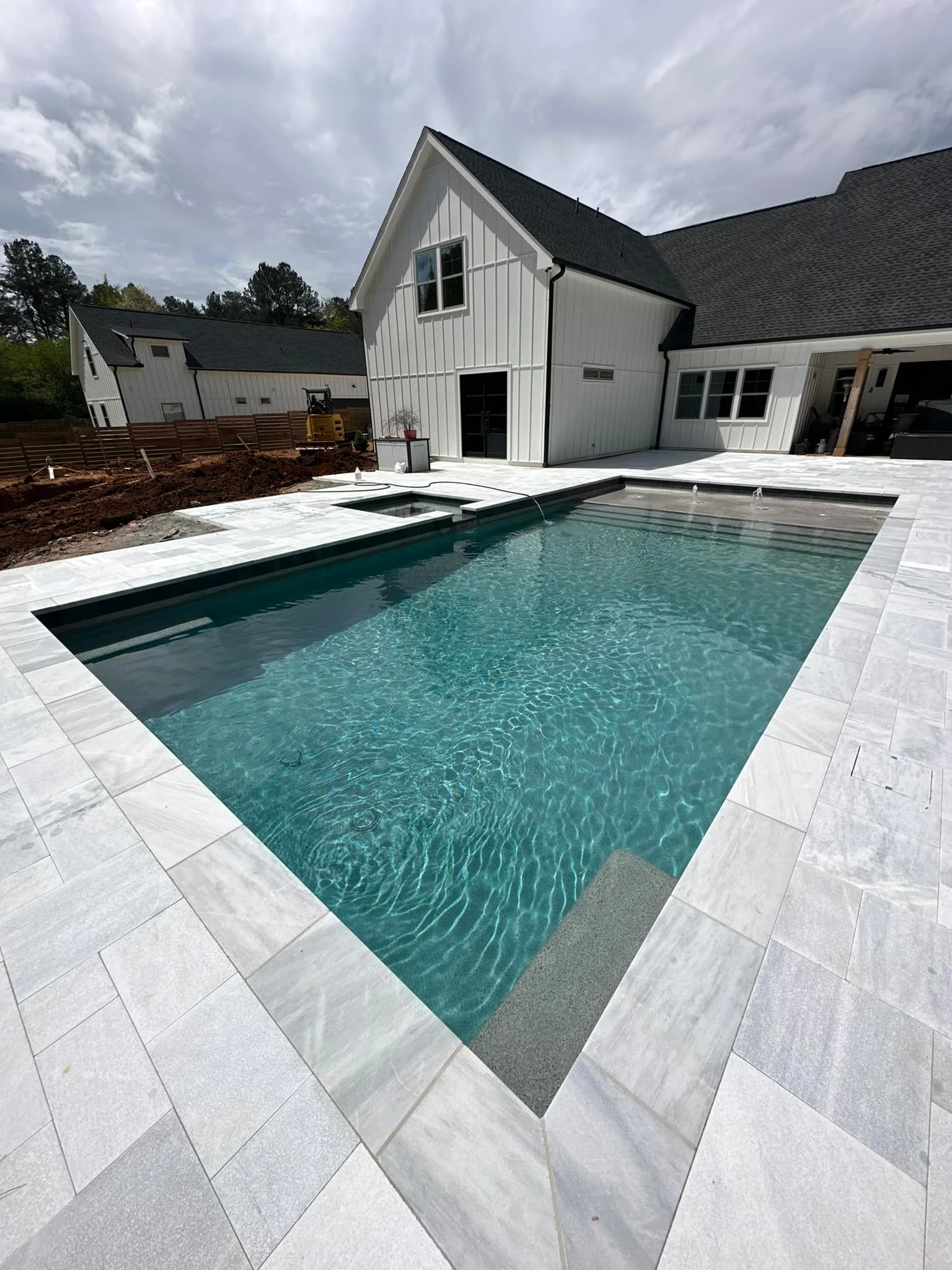
Tanning Ledge — The Family Play Deck
A tanning ledge is deeper and bigger. Minimum 18 inches below waterline, minimum 8 feet by 8 feet, often larger — we’ve built ledges up to 12 by 14 in bigger Hampton Park backyards. The depth matters: at 18 inches, an adult can sit cross-legged and the water covers the thighs; a toddler can stand with water at the chest; a dog can lie flat.
Tanning ledges typically get one or two umbrella sleeves cast into the structure during gunite — 2.5-inch brass sleeves set flush with the ledge floor, capped when not in use, that take a standard market umbrella pole. They may include bubblers, but more often they don’t; the ledge itself is the feature. Price range, installed: $6,800 to $9,400 as an adder, which reflects both the larger square footage (80+ square feet versus 45 for a sun shelf) and the additional rebar, plumbing, and finish labor.
Tanning ledges read family-functional. The kids park there with pool toys. The adults park in it with drinks and a magazine. The grandparents park in it to stay cool without having to swim. Three generations can share the same 10-foot rectangle of water, and that is not a small thing when you’re trying to justify a pool to a family council.
The 3-in-4 rule in Forsyth County: Of the permits Primetime Pools pulled across Forsyth County from 2022 through 2024, roughly three out of four family-build contracts specified a tanning ledge over a sun shelf. Luxury tier estate builds in St. Marlo and Hampton Park inverted the ratio — but those buyers often specified both, which is the next section.
The Integrated Option — When Forsyth Owners Specify Both
The pattern we’ve watched grow over the past three seasons in the luxury tier — St. Marlo Country Club, Hampton Park, Vickery Village — is the combined sun shelf + tanning ledge build. Two separate wet-deck features, at opposite ends of the pool or wrapped around one corner in an L-configuration, each tuned to a different user.
The 10-inch sun shelf takes two chaises on the shallow end, cast with a single umbrella sleeve and two bubbler jets. The 18-inch tanning ledge sits at the deep-end corner, wide enough for four adults to sit and two kids to stand, with dual umbrella sleeves and no bubblers — bubblers on a tanning ledge make conversation impossible, and the whole point of the deeper ledge is that it’s where people talk.
Combined adder, in our 2024 Forsyth pricing, runs $11,200 to $14,600 on top of the base pool. It adds roughly 120 to 140 square feet of wet-deck surface. On a 16×36 rectangle, that puts the actual swimming channel down to about 12 feet wide — which is plenty for laps, and the family gets two distinct lounge environments rather than one compromised one.
This spec used to be rare. Five years ago we’d build one or two a season. Last year we built eleven in Forsyth alone — eight of those south of GA-400 exit 14, concentrated in the newer Bethelview and Shiloh subdivisions.
The Spec Decisions That Get Missed — Depth, Finish, Plumbing, Sleeves
Beyond the sun-shelf-versus-tanning-ledge choice, four smaller specifications drive whether the feature works or becomes a design regret. This is where most Forsyth builders cut corners, because the homeowner doesn’t know to ask.
Depth tolerance. A sun shelf built at 8 inches instead of 10 is not a sun shelf — it’s a puddle. A tanning ledge built at 15 inches instead of 18 is not a tanning ledge — it’s a glorified step. Gunite shells settle, and if the contractor shoots the shell to nominal depth without accounting for a half-inch of plaster on top, you lose your spec. Always contract to finished-depth-from-waterline, not shell dimension.
Finish. Every wet-deck at Primetime gets Pebble Tec Sheen by default, not standard plaster. The fine-aggregate texture gives grip when the surface is wet — and wet-decks are wet by definition. Standard plaster ledges get slick within a season. Don’t accept a bid that quotes smooth plaster on the ledge.
Plumbing. If you’re running bubblers, the return line has to come off its own dedicated valve, not piggyback on the main return. Forsyth subdivisions on Sawnee EMC see summer voltage dips that can cause shared-return systems to hammer; a dedicated bubbler valve lets you isolate and throttle. Budget an extra $280 to $420 for the dedicated plumbing.
Sleeves. Umbrella sleeves must be cast during gunite, not drilled after plaster — drilling a 2.5-inch hole through 10 inches of cured shell voids structural warranty on most manufacturers. If the contractor forgot the sleeve, you either live without an umbrella or rip the ledge out. Confirm in writing, before gunite day, how many sleeves and where.
Matching the Feature to the House and the Lot
Forsyth’s lot inventory is a split market. North of Hwy 369, you’ve got rolling wooded acreage — half-acre to five-acre lots, wooded lines, walkout basements common, Cecil series clay on the flats and rockier soil toward Sawnee Mountain. South of Hwy 20, you’ve got denser subdivisions on flat graded lots, most built post-1995, quarter-acre to half-acre, with HOAs that regulate fence height and sometimes pool shape.
On the acreage lots north of Browns Bridge Road, the sun-shelf-plus-tanning-ledge combined build makes the most sense — you’ve got the footprint to run a 20×40 pool with wet-decks at both ends without feeling cramped. The home style tends to mountain-modern or lodge-style, and resort-grade sun shelves with travertine coping look native in that setting.
On the subdivision lots in south Forsyth, a 16×32 or 14×30 is more typical, and the tanning ledge alone is the right call. You don’t have the footprint for two features, and in a family-heavy neighborhood where the pool is genuinely for the kids, the deeper ledge earns its keep every afternoon. Save the sun shelf for the future renovation, if ever.
Walkout-basement lots — common in newer Forsyth subdivisions, particularly the stepped-topography builds around Ducktown and Shady Grove — change the math again. A raised pool shell with the tanning ledge cantilevered toward the house lets you keep the wet-deck at patio level while the swimming channel sits lower, which is a workaround that a lot of builders won’t propose but solves the walkout problem elegantly.
Getting It Past the Forsyth County Permit Office and the HOA
Forsyth County approves over 200 residential pool permits a year — high volume, which is actually good news, because the review team is experienced and the turnaround on a clean submittal runs 10 to 14 business days on average. A tanning ledge or sun shelf doesn’t trigger any additional structural review as long as it’s integrated into the main shell and doesn’t change the setback footprint.
Where it gets sticky is HOA approval, and Forsyth is one of the densest HOA markets in north Georgia — almost every subdivision built after 1998 has one. Hampton Park, St. Marlo, Vickery, Windermere, and the newer Bethelview developments all have ARB review on pool plans. Specify your wet-deck in the submission package, including the surface area and the depth, because some ARBs count the wet-deck square footage against the overall impervious-surface cap — and a large tanning ledge can push a tight lot over.
Residential pool code in Forsyth follows Georgia Department of Public Health pool rules for private pools, which means barrier fencing per DPH Rule 511-3-5, a self-closing self-latching gate, and door alarms on any house door that opens directly to the pool yard. None of this changes based on the wet-deck spec, but new homeowners frequently miss the door-alarm requirement and fail the final inspection on the first pass.
Permit-submission checklist for Forsyth County: survey with setbacks, pool plan at 1/4″ scale, barrier fence plan, electrical permit filed separately, and — if the wet-deck is over 50 square feet — surface-area calc included in the impervious-surface page. Primetime handles the full submission; our average Forsyth turnaround from submission to permit-in-hand is 11 business days.
The Construction Sequence and Why It’s Locked Before Day One
Once the wet-deck feature is specified, the sequence that actually builds it runs in a tight order that can’t be changed midstream. This is where Forsyth homeowners who try to upgrade from sun shelf to tanning ledge mid-project find out the choice had to be locked earlier than they realized.
Pre-dig: excavation depths differ — a tanning-ledge pool requires an additional 8 inches of over-dig on the ledge footprint to allow for the deeper gunite shell and the rebar cage. If we dig for a sun shelf and then you change your mind, we’re bringing the excavator back, which is a $1,400 to $2,100 change order and four extra days on the schedule.
Rebar: tanning ledge rebar is a heavier gauge on the outer edge because the ledge cantilevers further into the pool volume. Can’t swap rebar plans after the steel goes in.
Plumbing: bubbler lines and umbrella-sleeve anchors get stubbed during rough plumbing, before gunite. Once the shell is shot, adding bubblers or sleeves means cutting and patching, which reads like a repair rather than a design.
Gunite: shell depth, ledge depth, and sleeve positions are all locked the day the crew shoots. From gunite forward, the ledge is what it is.
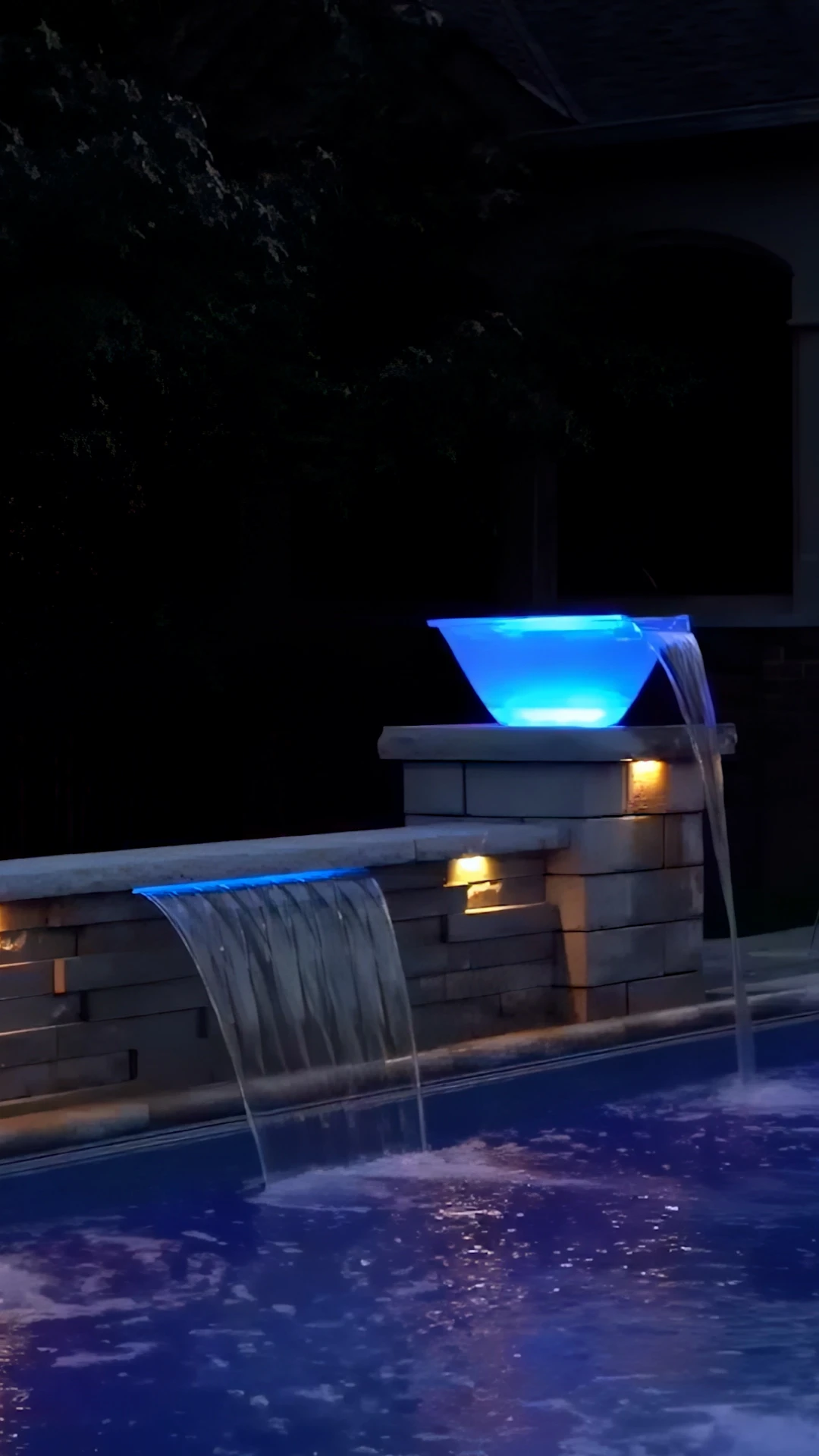
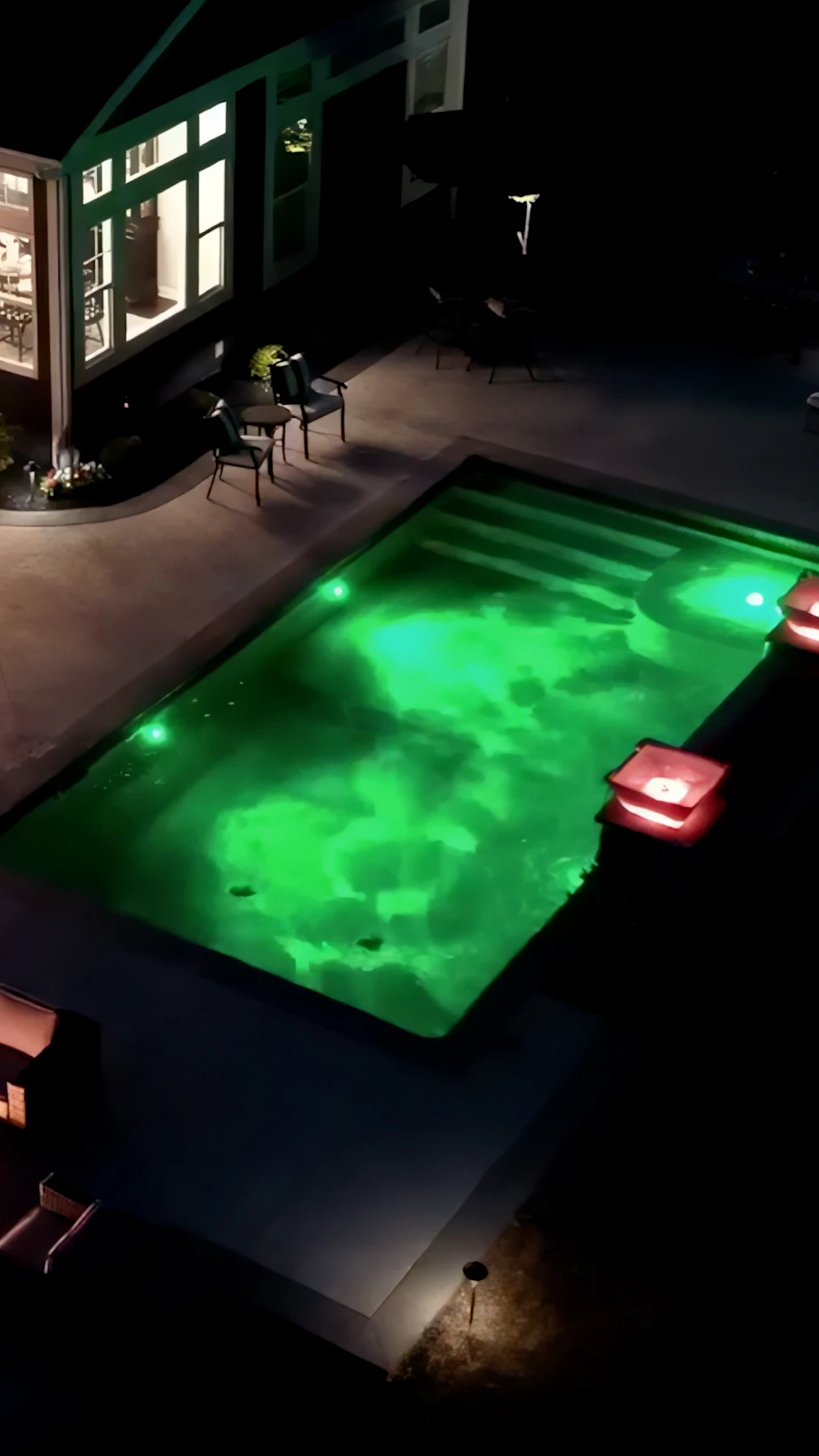
Plaster: the Pebble Tec Sheen finish is the last structural step that affects the ledge, and the finish installer needs the final depth confirmed before they start troweling. If you’re adding LED color-change lighting on the ledge — a growing request in south Forsyth’s luxury tier, with Pentair IntelliBrite 5G being our default spec — the niche has to be cored and rough-wired before plaster.
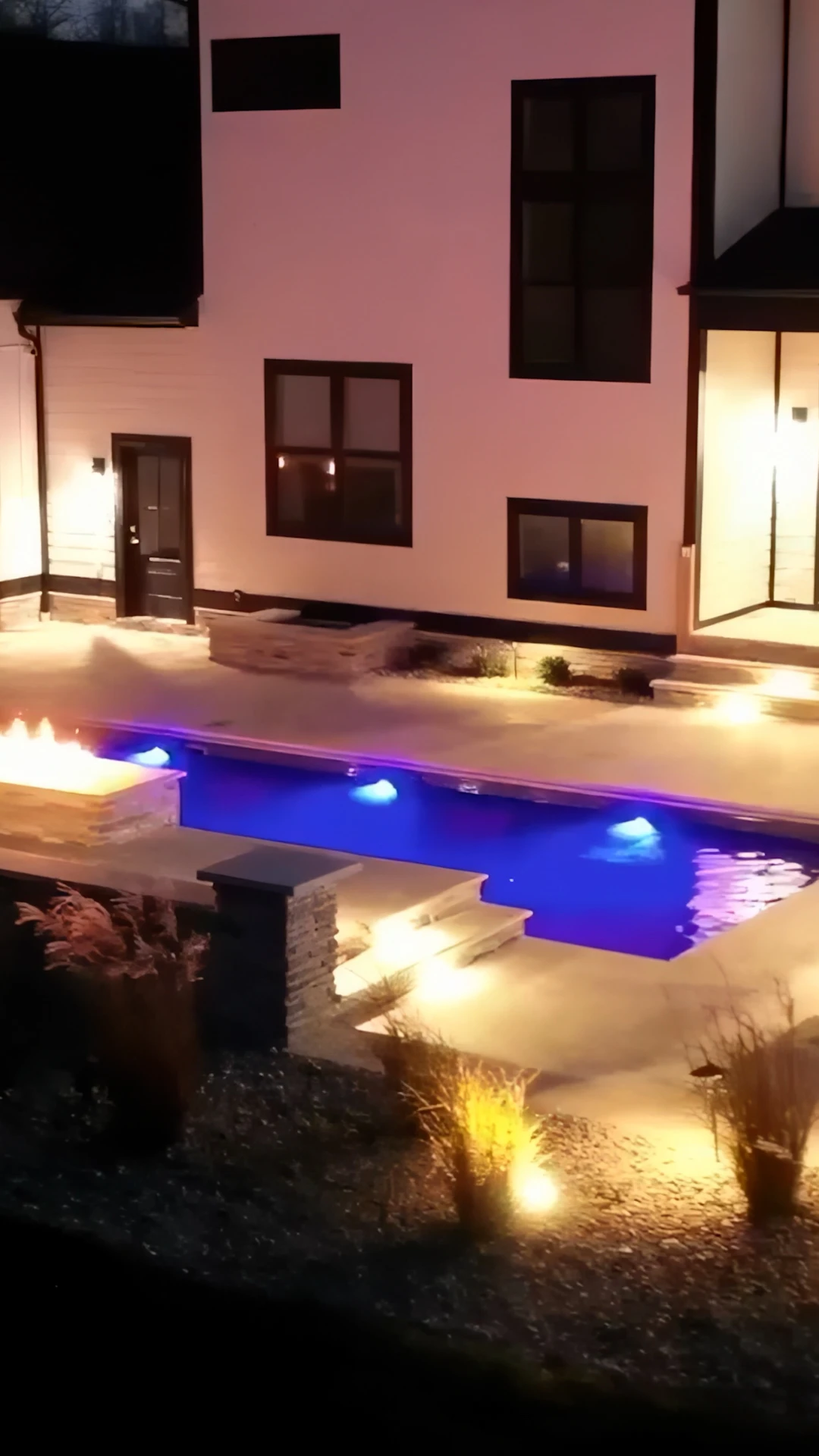
The overall build runs 14 to 19 weeks from permit-in-hand to fill day for a standard Forsyth family rectangle, and the wet-deck spec doesn’t change that timeline as long as it’s locked before excavation. It does add two to three days if bubbler plumbing and umbrella sleeves are both included. The longer builds — combined sun-shelf-plus-tanning-ledge on a walkout basement lot — can push 22 weeks, mostly because of the additional shell complexity and the extra coping linear footage.
A Forsyth-specific closing note on soil and shell behavior
Most Forsyth lots sit on Cecil series Piedmont clay, which is structurally excellent for pool shells — stiff, well-drained, predictable. The rockier soil on the north-county ridgelines near Coal Mountain can add excavation cost (rock hammering, $240 to $380 per hour) but doesn’t change the ledge spec. The one soil condition that does change the math is lots within 200 yards of Lake Lanier, where the water table sits high and a raised ledge is engineered differently — we add hydrostatic relief valves and extend the gunite key, which the ledge spec should reflect.
The vocabulary is small. The decision is large. Get the ledge spec right on paper, lock it before the dig, and the pool that shows up at the end of the summer is the pool you actually wanted — not the one the contractor assumed you wanted.
Custom pool construction across 20+ cities within 30 miles of Winder, GA
Specifying a sun shelf, a tanning ledge, or both for a Forsyth County family build starts with the same conversation — footprint, family, and depth. We design both every week across Cumming, Hampton Park, and the full Forsyth service footprint.