Three years ago, almost every outdoor kitchen base we poured in Forsyth County was stucco or stone veneer. Today, roughly 40% of new builds arrive with a Trex composite frame spec already written — and the homeowners asking for it know exactly why.
The problem nobody wants to say out loud is that the classic base materials don’t all age the same in Forsyth’s climate. Stucco cracks. Stone veneer holds up for decades but doubles the budget. And composite — the stuff most homeowners still associate with back-deck boards — has quietly become the sleeper option for outdoor kitchen skirts between Cumming, Coal Mountain, and the Lake Lanier south shore.
This isn’t a philosophical take. It’s a cost-per-year-of-service take. Forsyth County sees roughly 22 freeze events per year in USDA Zone 8a, with Lake Lanier pushing local humidity up five to eight points above the Atlanta average. Every substrate behaves differently when water freezes, expands, and thaws 22 times in six months. If you’ve budgeted for an outdoor kitchen anywhere from Bethelview to Shady Grove and you’re trying to decide what holds the grill up, this post is the one to read before you sign.
The Three Base Systems, Priced Honestly for Forsyth County
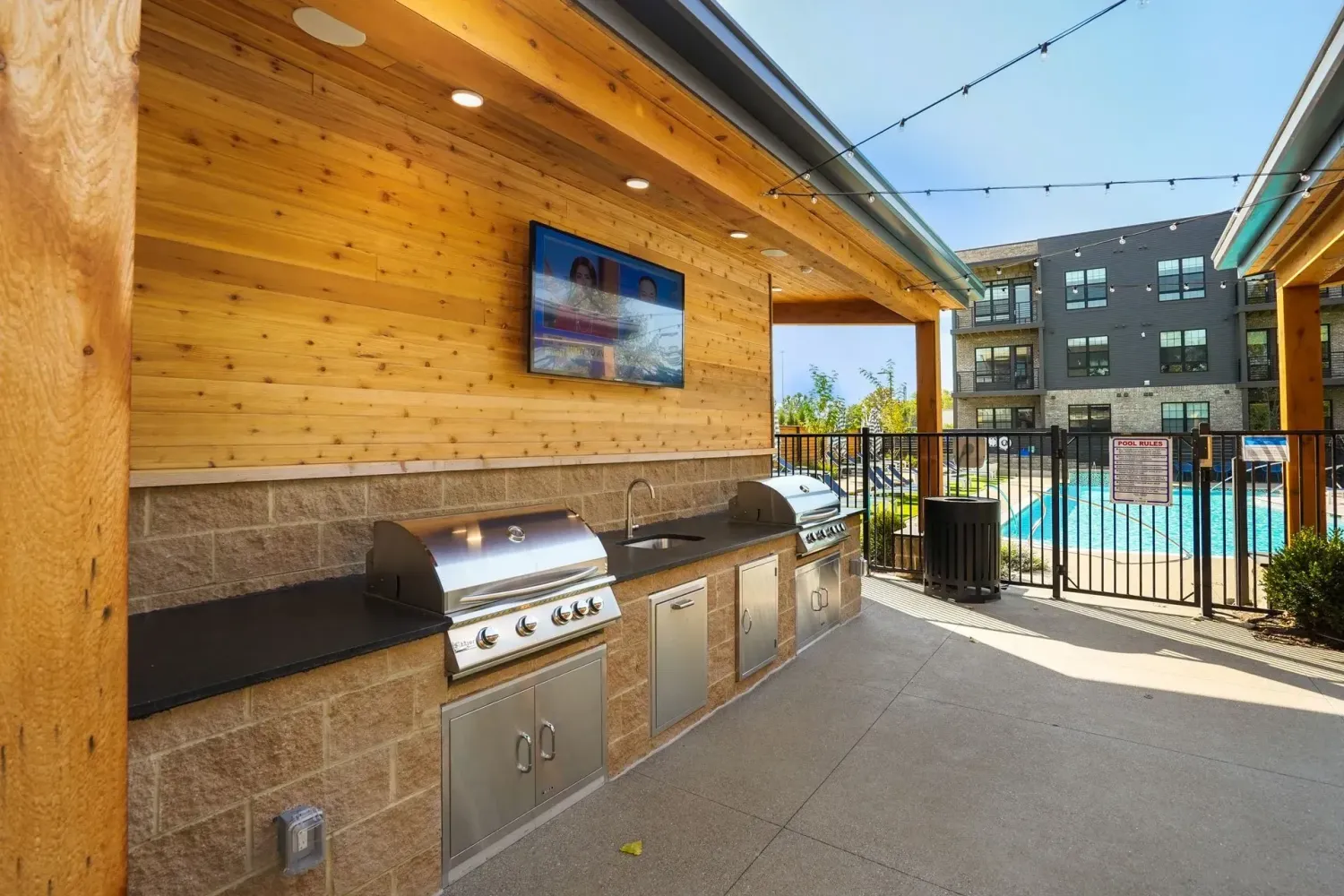
Every outdoor kitchen in Forsyth County rests on a structural box. That box holds the countertop, the grill cutout, the fridge knockout, the drawer stack, and — critically — the weight of granite that can run 22 pounds per square foot. What you wrap that structural box in is the decision. Here is what each of the three live options actually costs, installed, on a typical 12-to-16-linear-foot L-shaped kitchen:
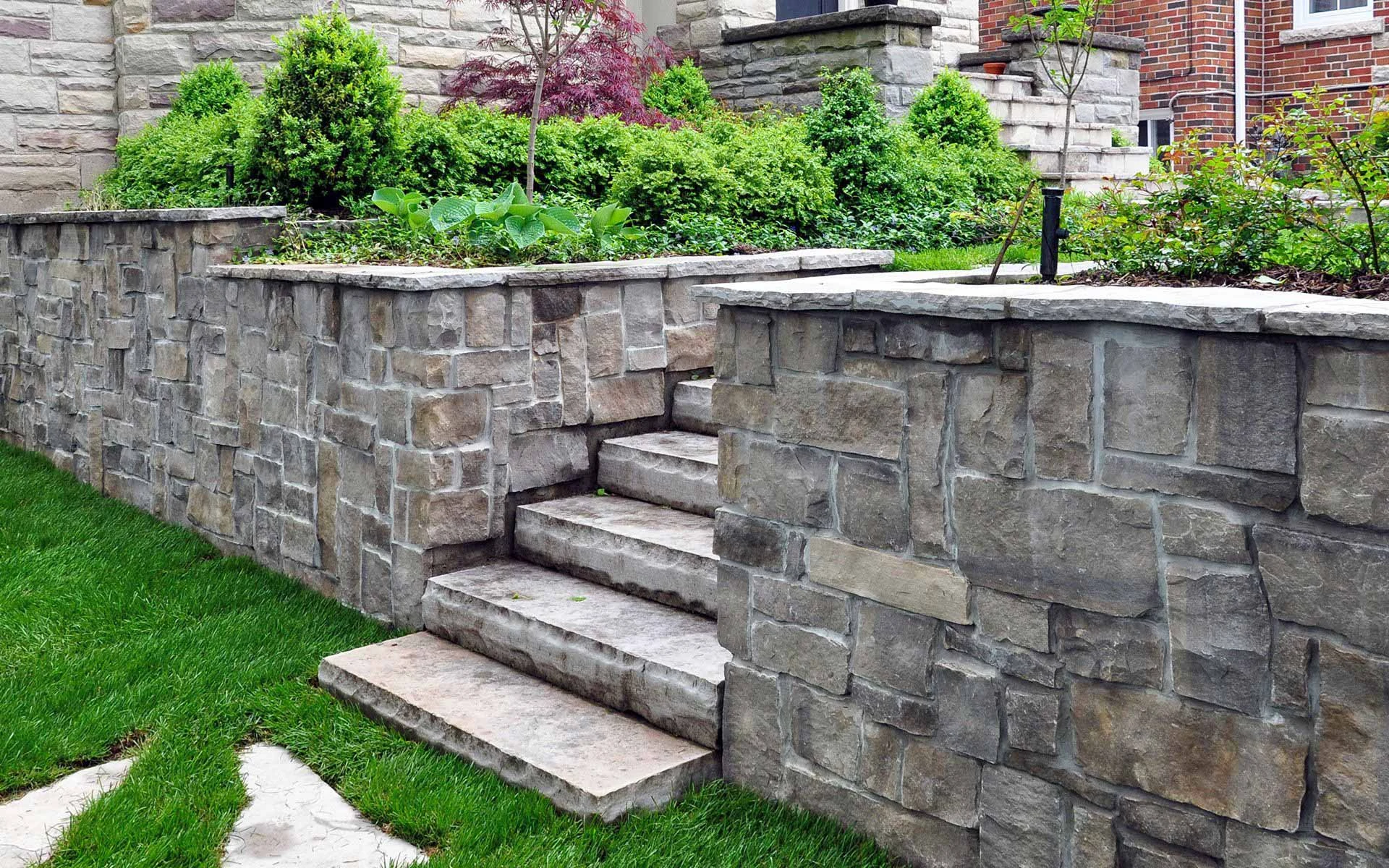
- Stone veneer over CMU or steel-stud frame — $58 to $88 per square foot of finished face. Adhered thin veneer (Eldorado Stone, Cultured Stone, or Techo-Bloc ledgestone) over a concrete-board scratch coat, with cementitious mortar. 40-plus-year service life if flashed right.
- Three-coat stucco over lath on CMU or wood frame — $34 to $52 per square foot. Scratch, brown, and finish coats with wire lath and weep screed. Looks clean on day one. Usually shows hairline cracks by year 4 or 5 in Forsyth’s freeze-thaw cycle.
- Trex / TimberTech / Deckorators composite skirt over treated-lumber frame — $24 to $38 per square foot. Pressure-treated Southern Yellow Pine frame, composite vertical cladding with hidden fasteners, aluminum or stainless flashing at grade. Zero-rot warranty on the boards themselves.
The gap between the cheapest option and the most expensive one is roughly $64 per finished square foot. On a mid-size kitchen with 120 square feet of exposed base face, that is an $7,600 swing before you touch the countertop, appliances, or gas run. In a county where the average new pool-and-kitchen package runs $145K to $220K, that swing is the difference between adding a pergola and not.
Forsyth County permit note: Outdoor kitchens with fixed gas lines require a mechanical permit through Forsyth County Planning & Community Development. Forsyth approves roughly 200 pool-related permits per year; kitchen-only permits typically clear in 5 to 9 business days if the gas riser diagram is submitted correctly the first time.
Why Stucco Struggles in 22 Freeze-Thaw Cycles
Stucco is a beautiful finish. It’s also the material we have replaced the most in Forsyth County over the past five years — and almost every failure traces back to the same cause: water got behind the finish coat.
Here’s the physics. Stucco is a cementitious plaster applied in three coats over a wire lath. The finish coat is roughly 1/8 inch thick. In Zone 8a, when liquid water migrates into that thin layer — through a hairline crack, a missing weep screed, or a countertop overhang that drips directly onto the face — and then the temperature drops below freezing, the water expands by 9%. That expansion blows out little cones of finish. By year 3 or 4, those cones connect into visible cracks. By year 7, the wire lath starts to show rust stains bleeding through.
We see this failure pattern most often on kitchens built at elevation on the north side of the county — Coal Mountain, the ridges near Sawnee Mountain Preserve, and the higher lots in Brookwood — where overnight temperatures run 4 to 7 degrees colder than the Hwy 400 corridor and the ridgeline wind adds another freeze-thaw cycle or two per year.
Stucco can work. But it has to be installed with a dedicated drainage plane (a ventilated rainscreen behind the lath), a properly sloped countertop overhang with a drip edge, and an elastomeric sealer reapplied every 5 to 7 years. Most homeowners never reapply the sealer. That’s the real problem — not the stucco itself, but the maintenance budget nobody wrote down.
Stone Veneer: The 40-Year Premium-Tier Benchmark
Stone veneer is the reason luxury estates on the north end of Forsyth County — the 3-to-5-acre parcels off Kelly Mill Road, Post Road, and Hwy 369 near Browns Bridge — still look exactly like their brochure photos 20 years later.
Modern thin-set veneer (Eldorado Stone, Cultured Stone, Techo-Bloc ledgestone) is roughly 1 to 2 inches thick, weighs about 13 pounds per square foot, and adheres to a properly prepared concrete-board substrate with Type S mortar. When it’s flashed correctly — weep screed at the base, kickout flashing at every horizontal termination, a drainage mat behind the scratch coat — the system stays dry. Dry stone veneer doesn’t fail.
We track our own warranty claims on kitchen bases we’ve built since 2012. Not a single stone-veneer kitchen has had a base failure. Stucco kitchens from the same era: roughly one in five has needed cosmetic repair within 10 years. That’s the number most homeowners don’t see until after they’ve signed a cheaper contract.
The downside is cost and labor. Stone veneer on a 120-square-foot base adds roughly $4,000 to $10,500 over the stucco option and takes 2 to 4 additional build days. In Shoal Creek or the Lake Lanier south-shore subdivisions where HOAs enforce architectural consistency, that’s usually money well-spent — the resale uplift on a true-stone outdoor kitchen in a 30041 zip code is measurable. Further north in unincorporated Ducktown or Shady Grove, where lots are bigger and HOAs are lighter, the math tilts differently.
Why Trex Composite Has 40% of the Forsyth New-Build Market
Three years ago, a Trex skirt on an outdoor kitchen sounded crazy. Today it’s arguably the smartest value-per-dollar decision in Forsyth County, and the data we track across our own pipeline shows why: composite skirts went from roughly 15% of our kitchen-base specs in 2022 to 40% of new builds in early 2026.
The argument for composite isn’t nostalgia for deck boards. It’s three concrete things:
- Zero rot, zero crack, zero freeze-thaw damage. Composite boards are wood-fiber-and-HDPE extrusions with a co-extruded cap layer. Water doesn’t penetrate the cap. Without water penetration, there is nothing for freezing temperatures to attack. A Trex skirt in Coal Mountain and a Trex skirt in the Big Creek valley weather the same way.
- Design flexibility that stone can’t touch. You can clad a kitchen in Trex Transcend Spiced Rum to match the pool deck, or in Trex Signature Planked Coastal to read like shiplap, or in Deckorators Vault Mesa to get a wire-brushed texture. Stone has maybe six palette choices in Forsyth’s common inventory. Composite has forty.
- DIY-friendly and easy to repair. If a single board gets dinged, a homeowner pulls the hidden fastener clip, swaps the plank, and re-clips it. Total repair: 15 minutes. Stone-veneer repair starts at a phone call to a mason.
The critical detail: composite is a cladding, not a structure. The frame under it still has to be engineered correctly. We build composite-clad kitchens on pressure-treated SYP frames rated for ground contact 0.40 PCF, lagged to a concrete footer, with full aluminum flashing across the top of the frame before any appliances are set. That flashing layer is what separates a 30-year kitchen from a 7-year kitchen. No amount of pretty cladding compensates for a frame that wicks water into the grill cutout.
HOA Acceptance, Resale Impact, and Which Material Your Neighbors Will Actually Approve
Forsyth County has the densest HOA coverage of any metro Atlanta county — almost every subdivision built since 1995 (and 85% of the housing stock in the county was built 1995 or later) has an architectural review committee with opinions about exterior materials. Before you pick a base, pull the HOA covenants.
Here is what we see in the field across Forsyth’s sub-markets:
- South Forsyth (30041, Atlanta commuter belt): Stone veneer is the default approved finish. Stucco gets approved if it matches the house. Composite approval rate is now near 85% in subdivisions built after 2018 — the HOAs have caught up.
- West/Cumming (30040): Mixed. Older subdivisions (pre-2005) often still require “natural stone or brick” language — read the bylaws. Composite approval is around 60%.
- North Forsyth (30028, Lake Lanier and Coal Mountain): Lightest HOA enforcement, largest lots. Any of the three materials will clear. This is where we see the most design experimentation — black-painted pavilion frames, Trex ground-to-countertop skirts, mixed-material bases with veneer on the face and composite on the returns.
Resale impact tracks HOA expectations. In south Forsyth, a true-stone veneer base reads as premium and supports appraisal comps. In north Forsyth, an appraiser is more likely to note the outdoor kitchen as a single line item regardless of cladding. If your horizon is “sell in 5 years,” spec the material your neighborhood expects. If you’re building a forever house on Hwy 369 near Lake Lanier, spec the material that makes you happy to walk outside.
The Honest Decision Framework
We’ve built kitchens with all three systems on every side of the county, from the Bethelview Road corridor to the Shiloh ridgeline. Here is the framework we use in our own consultation process:
Pick stone veneer if you’re in a 30041 subdivision with an active ARC, your home’s front elevation is masonry, the kitchen is visible from the street, or your resale horizon is under 7 years. Also pick it if you simply don’t want to think about the kitchen ever again — the 40-year life is real and the maintenance is near zero.
Pick Trex composite if you’re in north Forsyth, on acreage, your pool deck is already composite, you value design flexibility over resale comps, or your budget is tight and you’d rather put the saved $6K toward a built-in Kamado or a better grill. This is our fastest-growing specification and we do not discourage it — it has performed well in every Forsyth micro-climate we’ve tested it in.
Pick stucco only if the house itself is stucco and material continuity is the point, you accept a 5-to-7-year re-sealing schedule, and you’re building in a warmer micro-climate (south Forsyth, below 1,100 feet elevation, away from ridgelines). Outside those conditions, we’ll typically recommend one of the other two instead.
The quiet rule nobody tells you: The base material matters less than the flashing detail at the top of the frame. Every kitchen we’ve ever replaced failed at the countertop-to-frame joint first — water wicked down behind the grill cutout, rotted the frame, and took the cladding with it. A 16-gauge stainless flashing pan across the top of the frame, lapped under the counter, is the single most important detail in the entire build. Ask about it before you ask about anything else.
Between the three options, there is no wrong answer for every Forsyth lot. There is a right answer for your lot, your HOA, your resale timeline, and your maintenance appetite. The homeowners who end up unhappy are almost never unhappy with the material — they’re unhappy that nobody explained the trade-offs before the contract was signed. Our job, on every consultation we take across the 247 square miles of Forsyth County, is to put those trade-offs on the table in writing before the first cut of 2×6 goes into the frame.
Outdoor kitchen design & construction across 20+ cities within 30 miles of Winder, GA
From stone-veneer heirloom builds in south Forsyth to Trex-clad lakehouse kitchens off Browns Bridge Road, we engineer the frame, flashing, and cladding as one system — priced honestly, built to last the climate.