
Forsyth County dew points run 5–7°F higher than south-metro Atlanta thanks to Lake Lanier’s 38,000-acre evaporation footprint — and that single number is why stamped concrete decks in Cumming fail a half-decade before the national average.
We pour and set pool decks year-round in Forsyth County. After 30-plus builds scattered across Vickery, St. Marlo, Windermere, Polo Fields, and the new homes spilling out of Hampton Park, the pattern is painfully consistent: stamped concrete decks installed in 2015–2017 are now showing hairline map-cracking, sealer ghosting, and that milky-gray fade that screams “replace me.” Paver decks installed the same year still look showroom. The difference is not craftsmanship. The difference is physics — specifically, how moisture-saturated Piedmont air interacts with a monolithic slab versus a modular, jointed system.
This is the 15-year total-cost-of-ownership breakdown. The number that matters — the one most builders refuse to put on paper — lives at the bottom of this post.
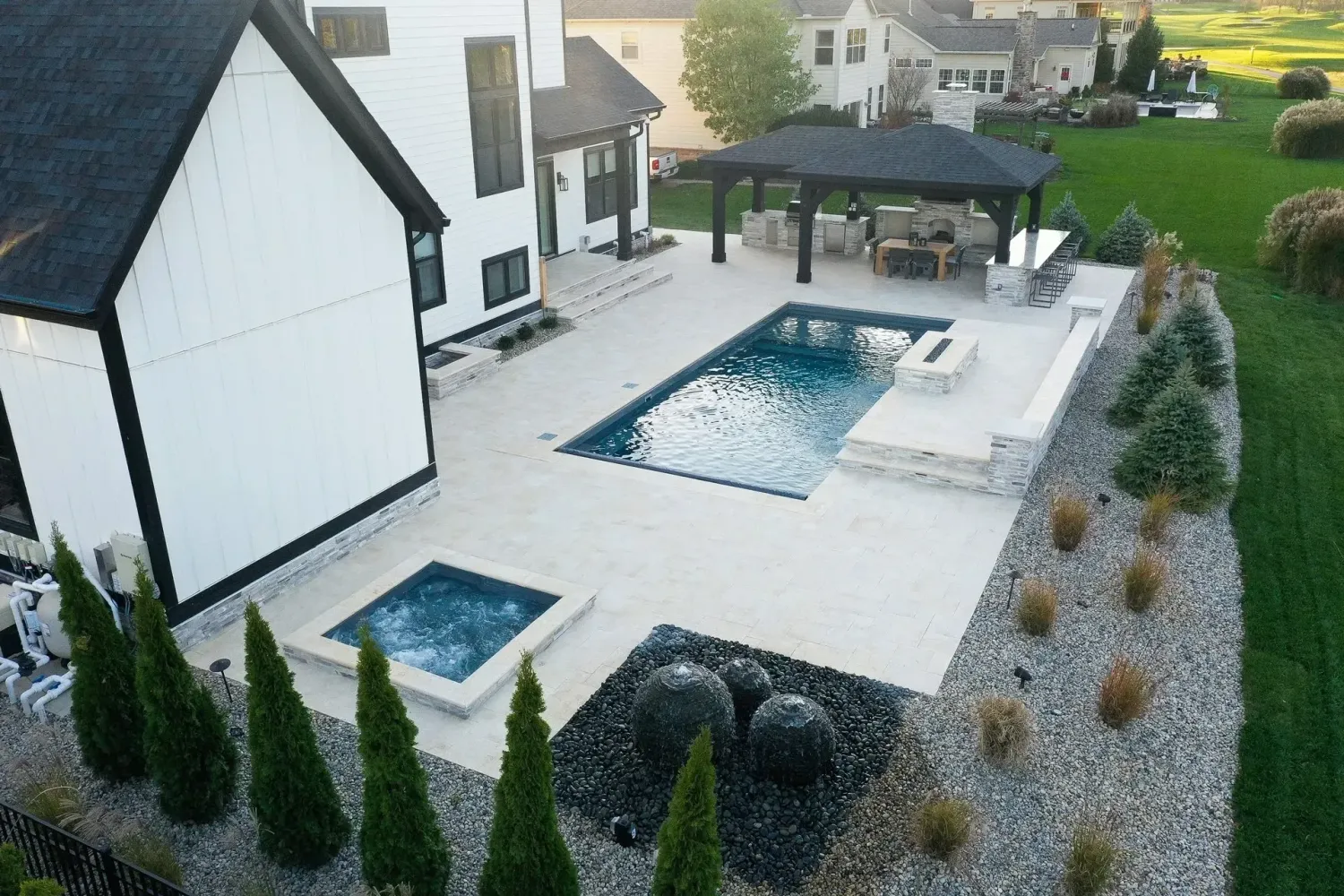
Why Lake Lanier Changes the Math North of GA-400
Cumming sits at roughly 1,275 ft elevation in the southern shadow of Sawnee Mountain, with Lake Lanier wrapping the northern and eastern edges of Forsyth County. That lake is not a postcard backdrop for concrete — it is a 38,000-acre humidity engine. From April through October, prevailing southerly winds lift moisture off Lanier and park it over south Forsyth, which is why your deck is wet at 6:30 AM in July even when the last rain was three days ago.
For poured, stamped, integrally-colored concrete, that sustained dew cycle is the worst possible environment. Water migrates into the capillary structure of the slab through every hairline in the sealer. In winter, Cumming averages 22 freeze events per year (USDA Zone 8a on the edge of 7b) — each one forcing trapped moisture to expand roughly 9% inside the slab. By year 7, the surface has experienced roughly 150 freeze-thaw cycles with moisture present. Stamped patterns amplify the problem: every joint and grout line is an entry point, and the decorative release agents bond less reliably than a broom-finish surface.
Pavers, by contrast, are factory-compressed at roughly 8,000 PSI — nearly double site-poured stamped concrete’s 4,000 PSI — and they move independently. The jointed system expands, contracts, and wicks moisture through polymeric sand rather than fighting it. A 2-inch Techo-Bloc or Belgard unit does not crack because it is not asked to act as one monolithic piece.
Cumming humidity reality: Dew point averages 71–74°F June through September near Lanier — higher than Snellville (66–69°F) or Marietta (65–68°F). That is the single variable that separates a 10-year deck from a 20-year deck in this zip code.
The Stamped Concrete Failure Curve in Forsyth County
Stamped concrete looks incredible at install. The color pops, the pattern reads crisp, the sealer is glossy. Here is what we see — with photo documentation from our own service calls — on Cumming-installed stamped decks over time:
Year 1–3: Cosmetically perfect. Sealer intact. Color vibrant. Homeowner is thrilled.
Year 4–5: First sealer re-application required. Most homeowners miss this window. Color begins to show uneven UV fade — especially the terracotta and slate-gray tones that dominate Forsyth subdivisions built between 2005 and 2015.
Year 6–8: Hairline map-cracking begins. Typically emerges first along control joints, then spiderwebs into field areas. Sealer has failed completely in high-traffic zones around the steps and coping transition. Efflorescence (that chalky white bloom) appears after heavy rain.
Year 9–12: Structural cracking — not just cosmetic. Lifting at cold joints where the deck meets the pool coping. Integrally-colored concrete cannot be “refinished” — the only honest option is an overlay (temporary fix, 4–6 year reset) or full tear-out and replacement.
That is an 8–12 year service life in Forsyth County. Mid-Georgia stamped decks further south routinely hit 14–16 years in the same climate zone on paper. The difference is Lanier moisture.
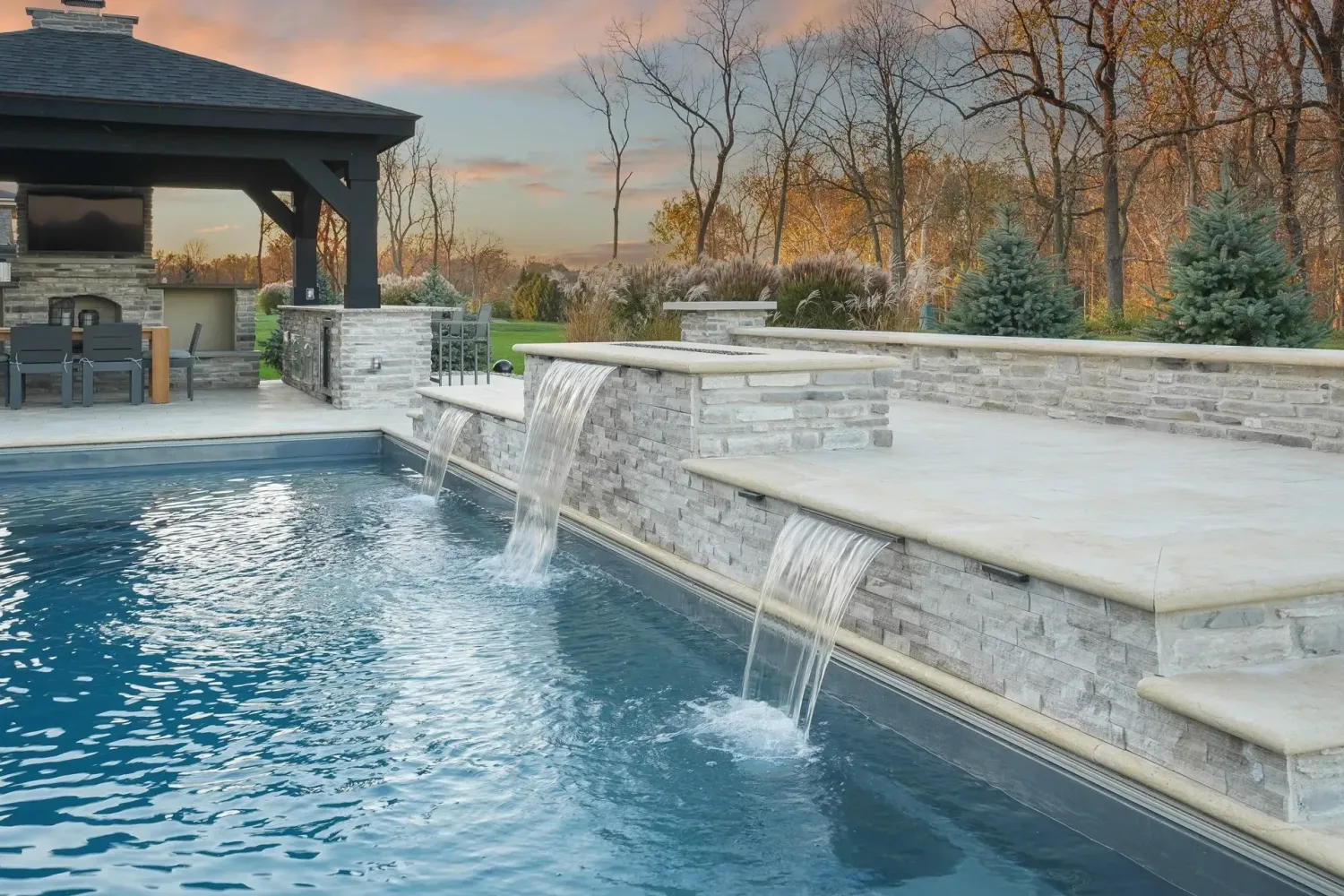
The Paver Deck Maintenance Rhythm That Buys You 20+ Years
Paver decks do not fail the same way. They loosen. That is a solvable problem — stamped concrete cracking is not. Here is the honest maintenance schedule for a Techo-Bloc Blu 60 or Belgard Dimensions paver deck in Cumming:
Year 4: First polymeric sand refresh. Roughly $1.40–$1.80/sqft. We recommend Techniseal NextGel or SEK Super Sand — both handle Lanier humidity. Budget an afternoon; no base disturbance.
Year 8: Second polymeric sand refresh plus optional penetrating sealer application if the homeowner prefers a consistent sheen. Sealer is cosmetic on pavers — not structural.
Year 14: Third sand refresh. Spot-lift any settled areas (typically 1–3% of deck surface near high-traffic zones or where tree roots have influenced the base). A competent crew re-levels in a day.
Year 20+: Deck still structurally sound. Individual pavers can be swapped out to refresh the look or accommodate additions (built-in grill, fire feature, pergola footing). You cannot do that with stamped.
The 15-Year Total Cost of Ownership: Put the Numbers on Paper
Here is where the conversation ends for most homeowners. We will use a 600 sqft pool deck as the benchmark — that is the average we install in Cumming (varies 450–850 sqft depending on pool size and setback from structure).
Stamped concrete — 15-year cost on 600 sqft:
- Initial install at $15/sqft average: $9,000
- Year 4 sealer re-application ($2.50/sqft): $1,500
- Year 7 sealer + minor crack repair: $1,800
- Year 10 full tear-out + replacement (no honest contractor will tell you to “overlay” a 10-year stamped deck): $10,200
- Year 14 sealer: $1,500
- 15-year total: $24,000 (~$40/sqft amortized)
Paver deck — 15-year cost on 600 sqft:
- Initial install at $29/sqft average: $17,400
- Year 4 polymeric sand refresh: $900
- Year 8 sand refresh + optional sealer: $1,800
- Year 14 sand refresh + minor re-lay: $1,500
- 15-year total: $21,600 (~$36/sqft amortized)
The math flips somewhere around year 11. Stamped loses its head start the first time you replace the slab. Paver wins by $2,400 over 15 years, and the paver deck is still structurally sound at year 15 — meaning the real delta over 20 years widens to $11–$19/sqft in paver’s favor once stamped requires its second full replacement.
The contractor tell: Builders who pitch stamped concrete at this elevation rarely mention the year-10 replacement. Ask any stamped-deck contractor in Forsyth County to put a 15-year maintenance schedule in writing. Note what happens.
Base Prep: Why Cumming’s Cecil-Series Clay Eats Stamped Decks
Forsyth County’s dominant soil is Cecil-series Piedmont clay — a high-shrink-swell profile that swells roughly 6–8% volumetrically with moisture saturation. Near Big Creek and through Cumming city center, the clay is hard-packed and drains slowly; in older Haw Creek farm parcels you occasionally hit pockets of Appling sandy loam, which behaves better. Neither is friendly to a 4-inch stamped slab.
When the clay swells in a wet spring, a monolithic stamped slab either lifts (hairline crack) or stays pinned by the pool shell (crack opens at a cold joint). There is no third option. Pavers ride on a compacted aggregate base that absorbs movement across the full deck without telegraphing it to the surface.
Our spec for any Cumming paver deck over Cecil clay:
- Base: 8-inch GAB (graded aggregate base) compacted in 4-inch lifts to 95% Proctor — double the typical 4-inch base contractors quote on low-bid jobs
- Bedding: 1-inch ASTM C33 concrete sand, screeded flat
- Geotextile: non-woven 4-oz fabric between subgrade and aggregate — prevents clay migration into the base over 20 years
- Slope: 1.5–2% away from the pool coping, away from the house foundation
- Edge restraint: steel spike-set PVC restraint every 8 inches (not the 12-inch spacing most spec sheets allow)
That base spec adds roughly $3–$5/sqft over a budget install. It is the reason our decks are still level at year 15.
Permits, HOAs, and the Forsyth County Review Process
Any pool + deck project in Cumming pulls through Forsyth County Department of Planning & Community Development at 110 E. Main St. Typical plan-review turn on a residential pool-deck combo runs 14–21 business days if the submittal is clean — longer if you are adding grade fill, retaining walls over 4 ft, or building inside a subdivision covenant.
If your home sits in one of the architectural-review subdivisions — St. Marlo, Polo Fields, Vickery, Windermere, Hampton Park, The Collection at Forsyth, Three Chimneys, Lake Windward — plan on an additional 2–3 week HOA turnaround. Most of these ARBs accept either stamped concrete or pavers but want color boards, sample units, and joint-pattern drawings. Pavers consistently pass review faster because they visually match existing neighborhood hardscape; stamped concrete gets more color-match questions.
Sawnee EMC handles electric service on the majority of Forsyth parcels. Any pool equipment pad upgrade requires a 240V dedicated run with a disconnect within sight of the pump — call in the meter release early; Sawnee turn times ran 5–9 business days last season.
Choosing Between Techo-Bloc Blu 60, Belgard Dimensions, and Travertine
Once you accept that paver is the correct call for Cumming, the next decision is unit. We specify three primary systems:
Techo-Bloc Blu 60 — large-format (15.75″ × 31.5″ × 2.375″) smooth-face paver. Contemporary aesthetic. $28–$34/sqft installed. Best for modern architecture in Vickery, Hampton Park, and newer St. Marlo builds. Color runs true over 15+ years thanks to Techo-Bloc’s through-body pigmentation.
Belgard Dimensions / Mega-Lafitt — mid-sized textured paver. Traditional-to-transitional aesthetic. $24–$30/sqft installed. Works across older Polo Fields, Mashburn Plantation, Sadie Farms neighborhoods. Good color stability; slightly coarser surface holds up to flip-flop traffic around the pool.
Travertine (unfilled, tumbled) — natural stone, 3cm thickness recommended for pool deck. $26–$32/sqft installed. Stays 20°F cooler underfoot than any concrete product — measurable difference on a 94°F Cumming afternoon. Requires annual penetrating sealer near Lanier because the open-pore structure holds moisture.
All three outperform stamped concrete on the 15-year TCO math. Our most-installed unit in Forsyth County right now is Techo-Bloc Blu 60 — it is the one the luxury-tract builders in Vickery and Hampton Park are specifying, and the one ARBs at St. Marlo approve fastest.
When stamped concrete still makes sense (honestly)
We install stamped concrete. We just do not install it on full pool decks in Cumming anymore. Where it still works:
- Driveways where the slab is not subjected to continuous pool-coping moisture cycling
- Covered patios under a roof — the UV and direct-rain exposure drops dramatically, extending service life to 15+ years
- Short-stay rentals or listings being prepared for sale within 5 years (the cosmetics carry the listing; the long-term failure is the next owner’s problem)
- Budget-constrained first-pool projects where the deck will realistically be replaced during a year-10 remodel
If you are building the pool you intend to swim in for 20 years — the one your kids will learn to dive in — paver is the only honest answer at 1,275 ft of elevation with Lake Lanier 4 miles north.
The 15-year verdict: Paver deck installed over engineered base at $24–$34/sqft delivers lower total cost of ownership than stamped concrete installed at $12–$18/sqft — by year 11 and widening every year after. This is not a sales pitch. It is arithmetic.
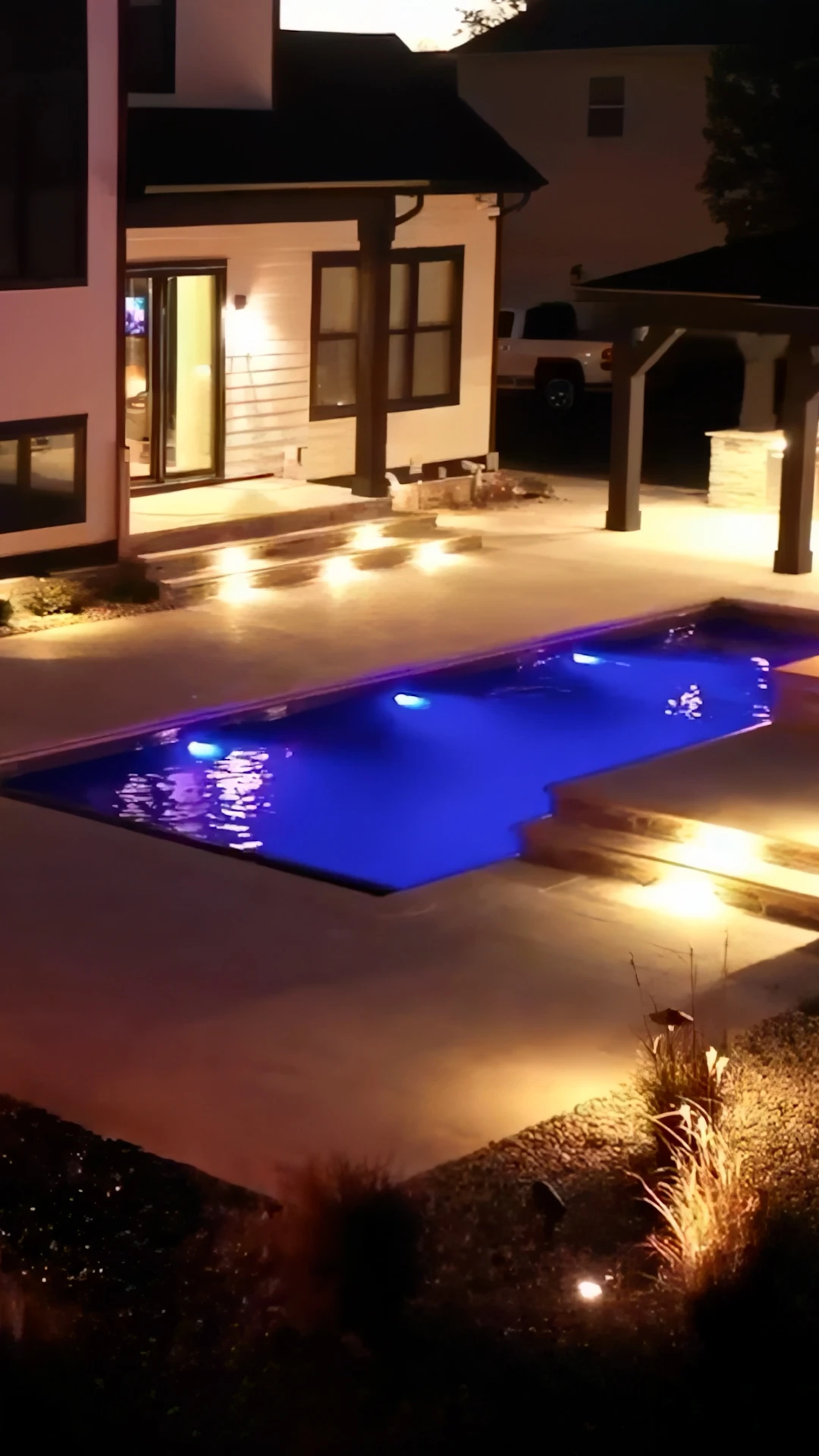
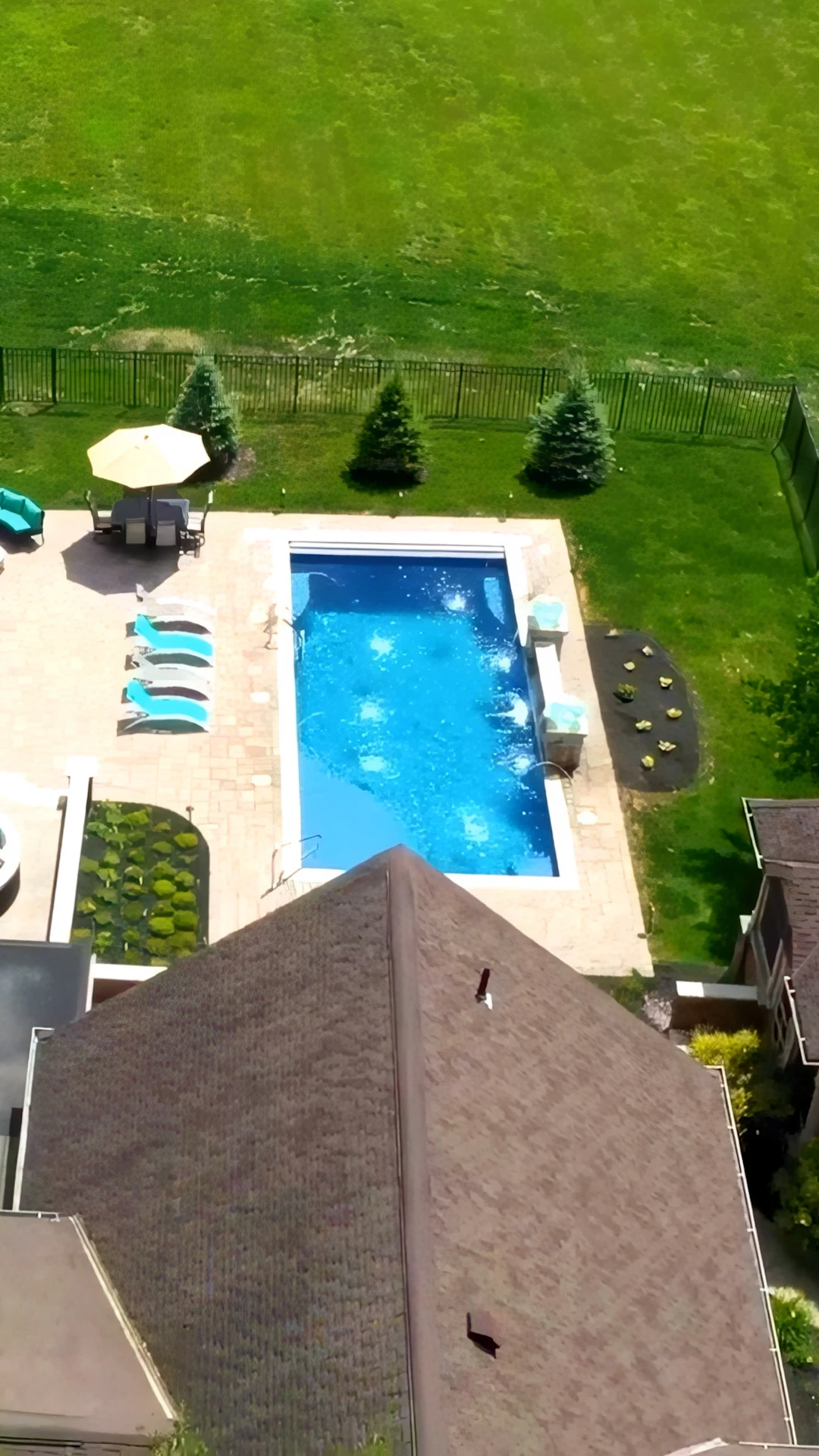
Custom Pool Construction across 20+ cities within 30 miles of Winder, GA
We spec pool decks for Cumming’s humidity, Cecil clay, and Lake Lanier dew points — not generic Atlanta averages. Every Forsyth County project gets the 15-year math in writing before a single paver is ordered.