
Every Marietta homeowner who asks us for a diving board has read the same internet article — the one that says diving boards are “basically banned.” They aren’t. A diving board is still perfectly legal in Cobb County on a residential pool. The catch is that legal, insurable, and financially smart are three very different conversations, and almost nobody separates them before signing a contract.
We get the question about twice a month, almost always from a family moving into an older East Cobb home where the previous owner pulled the board, or from a new-construction buyer in Atlanta Country Club who grew up with one and wants that same summer for their kids. The question is always framed as a simple yes or no. The honest answer is a decision tree — county code, HOA covenant, homeowner’s insurance carrier, and resale comp data — and the tree points in a direction most people don’t expect once you actually walk through it.
This piece walks the tree end to end, specific to pools being built inside the Marietta city limits and across unincorporated Cobb County. It covers what Cobb County Community Development actually requires at the permit desk on 1150 Powder Springs Street, what the two most common residential insurance carriers charge as a surcharge, what the big East Cobb HOAs quietly put into their covenants between 2014 and 2016, and how both features affect appraised value on a home listed anywhere from Burnt Hickory to Willeo Creek.
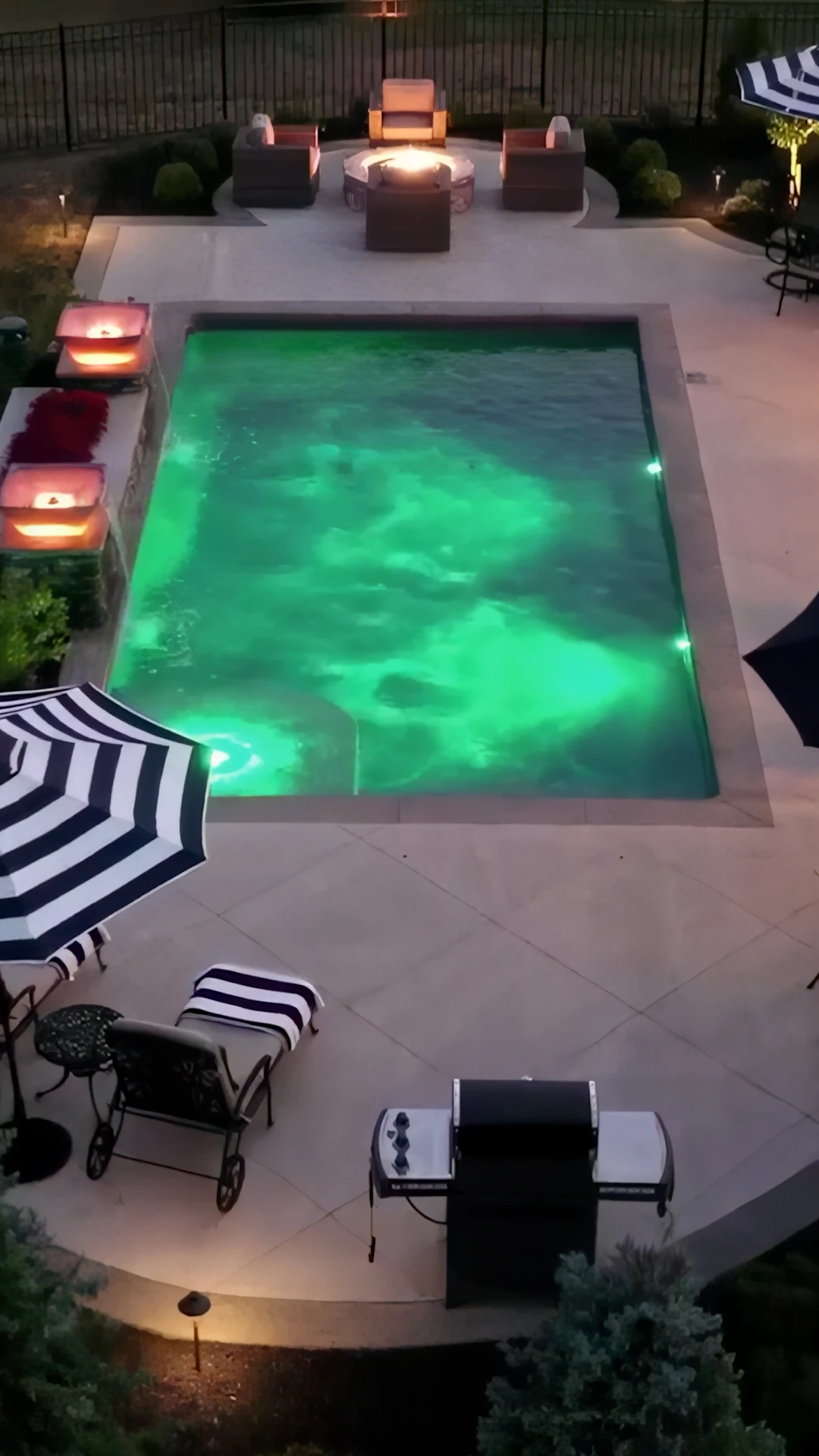
01 — Is a diving board still legal on a residential pool in Cobb County?
Yes. Cobb County Community Development — the permitting office at 1150 Powder Springs Street in downtown Marietta — issues residential pool permits under the adopted 2020 International Residential Code (IRC) Appendix V with the state of Georgia’s residential amendments. There is no blanket prohibition on diving boards for single-family residential pools in Cobb, inside or outside the Marietta city limits.
What the code does is define a minimum envelope. For a standard 1-meter residential springboard on a home pool, Cobb permit reviewers look for a deep end minimum of 8 feet 6 inches at the deepest point, a minimum distance of 16 feet from the tip of the board to the opposing wall, a minimum depth maintained for at least 10 feet forward of the plumb line, and a clear overhead envelope of 15 feet. Those are the numbers we build to on a permit drawing, and those are the numbers that survive a plans-review kickback.
For stand-up jump boards — the short stiff platform boards common in the 1980s — the envelope is similar but slightly shorter in the forward dimension. The depth number doesn’t change.
Minimum Cobb residential diving envelope: 8′-6″ deep point · 16 ft board-to-wall length · 10 ft minimum-depth runout · 15 ft overhead clearance. A pool that doesn’t hit all four can’t have a code-compliant board, no matter how much the owner wants one.
What this means in practice: most existing rectangular Marietta pools built after 1995 cannot legally add a board because they were built to an 8-foot-max deep end to save on excavation and gunite yardage. Adding a board requires breaking out the deep end and re-shooting, which is a $38K-$55K job before you’ve bought the board itself. Nearly every new pool we build in East Cobb tops out at 6 feet or 7 feet deep, because that’s what the family actually swims in 364 days a year.
02 — What about slides? Are residential pool slides still legal in Marietta?
Slides are easier. Cobb County does not regulate residential slide installation on a single-family pool the way it regulates diving envelopes. What the county inspectors look at is fencing, barrier code, drain compliance (Virginia Graeme Baker Act at the federal level), and setback from property lines. The slide itself is a consumer product.
The baseline legal residential slide in Cobb — and the one we install the most — is the Pentair RedWood at 6 feet tall, installed $8,000-$14,000 depending on deck prep and water supply tie-in. It requires a minimum water depth at the landing point of 36 inches (the manufacturer spec, not a county spec, but inspectors will reference it). Taller residential slides exist — the Interfab WildRide at 7 feet, the S.R. Smith Helix2 at 8 feet — and we’ve installed all of them. Each requires progressively more landing clearance and deck real estate.
The practical planning question on a Marietta slide install is not “can I have one” — you can — but “does my deck geometry support the footprint without rebuilding the coping line.” A Pentair RedWood at 6 feet needs roughly a 42-inch-wide mounting pad and a clear 12-foot runout in front of the ladder. On an older East Cobb pool with a pinched deck, retrofitting that means adding decking, which means moving landscape beds, which means an irrigation rework. A $10,500 slide becomes a $22,000 project very quickly.
03 — How much does a diving board actually add to my homeowner’s insurance?
This is where the math gets loud. Two of the most common homeowner carriers for Marietta addresses — State Farm and Allstate — both maintain “attractive nuisance” schedules on residential pool endorsements. Pulling current underwriting numbers from 10 permitted-and-insured Marietta pools we’ve built across 30062, 30066, and 30068 in the last three years:
- Pool with no board, no slide, standard 4-ft perimeter barrier: baseline endorsement, typically $180-$340/year on top of the base homeowner premium.
- Pool with a 6-ft residential slide (Pentair or S.R. Smith): baseline endorsement + roughly $40-$90/year surcharge, or sometimes no surcharge at all depending on carrier.
- Pool with a 1-meter springboard diving board: additional $380 to $680 per year on top of the baseline, per the endorsement rider. Some carriers apply a deductible uplift as well (a jump from a $2,500 to a $5,000 pool-liability deductible).
- Pool with a jump board plus slide plus tall perimeter features: we’ve seen quotes as high as $1,200/year in surcharges, and one carrier (USAA) declined to renew at all.
Over a 15-year pool ownership horizon, a diving board costs $5,700-$10,200 in pure insurance premium, not counting the up-front equipment cost, the diving envelope excavation cost, and any deductible exposure if the board is actually the proximate cause of a claim. We had one Chestnut Hill client in 2023 whose carrier non-renewed the policy after a minor neighbor-child injury unrelated to the pool — the board was simply enough of a nuisance flag to trigger a file review.
Insurance delta on a 15-year horizon: Slide adds roughly $600-$1,350 in cumulative surcharge. Diving board adds $5,700-$10,200. That’s before excavation cost of $38K-$55K to retrofit a diving envelope onto an existing shallow pool.
04 — Do Marietta HOAs restrict diving boards and slides by covenant?
This is the conversation that surprises people the most. Cobb County and the city of Marietta regulate the pool itself. The HOA regulates whether you can put accessories on it. The restrictions are often stricter than code, they are almost never in the original declaration, and they are enforceable even if a previous owner had the feature.
Between roughly 2014 and 2016, a wave of East Cobb HOAs amended their covenants to prohibit residential diving boards on all future installations. The amendment language usually reads as an architectural review committee discretion clause, which in practice means “no.” The neighborhoods where we’ve personally run into the restriction on a permit drawing include:
- Atlanta Country Club (amended 2015) — diving boards prohibited; slides require ARC approval and are often declined on sightline grounds from adjacent fairway lots.
- Indian Hills Country Club (amended 2014) — diving boards prohibited on all new construction and on any pool remodel that requires plan resubmittal.
- Chestnut Hill (amended 2016) — boards prohibited, slides under 6 feet permitted with ARC approval.
- Walton Woods — boards require ARC vote (effectively a denial in the last 8 years we’ve submitted).
- Seven Oaks — slides permitted, boards subject to ARC review.
Older non-HOA Marietta neighborhoods — particularly the 1960s-1980s ranch pockets inside the 120 Loop and the Burnt Hickory corridor — generally have no covenant restriction at all. You’re bound only by Cobb County code and your insurer. That’s where we do almost all of the new-build boards we install, which is to say about two a year across our entire Metro Atlanta service area.
05 — How much does each feature actually cost, board vs. slide vs. alternatives?
Straight equipment-and-install numbers, current to the last 18 months of Primetime invoices for Marietta and greater Cobb County installs:
Diving board, new-build scenario (deep end excavated to spec from day one):
- Equipment (Inter-Fab fiberglass 1-meter): $1,200-$2,400
- Mounting base and anchor: $600-$1,200
- Excavation upcharge for diving-envelope depth: $11,000-$16,000 additional gunite and excavation over a standard 6-ft pool
- Insurance present-value impact over 15 years: roughly $7,500
- All-in budget impact on a new pool: ~$20,000-$27,000
Diving board, retrofit on an existing pool with an 8-ft-max deep end:
- Demolition of existing deep end: $6,000-$9,000
- Re-excavation to 8′-6″ minimum: $4,000-$7,000
- Gunite re-shoot and re-plaster of deep section: $14,000-$20,000
- Deck rework and coping: $8,000-$12,000
- Board, base, insurance present value: ~$10,000
- All-in: $42,000-$58,000, and that’s without major tile or interior finish upgrades
Pentair RedWood 6-ft residential slide, new build or clean retrofit:
- Slide unit: $4,200-$5,800
- Mounting pad and plumbing tie-in: $1,500-$3,000
- Deck clearance adjustments if needed: $0-$5,000
- Insurance PV over 15 years: $0-$900
- All-in: $8,000-$14,000, clean
Budget-equivalent alternatives we build instead:
- Full-length 6-ft tanning ledge with bubblers and umbrella sleeve: $11,000-$18,000 — used 200+ days/year in Marietta’s USDA 7b/8a climate.
- Raised spa with spillover, stacked-stone cladding, 6-seat: $22,000-$32,000 — adds winter use during Marietta’s ~22 annual freeze events.
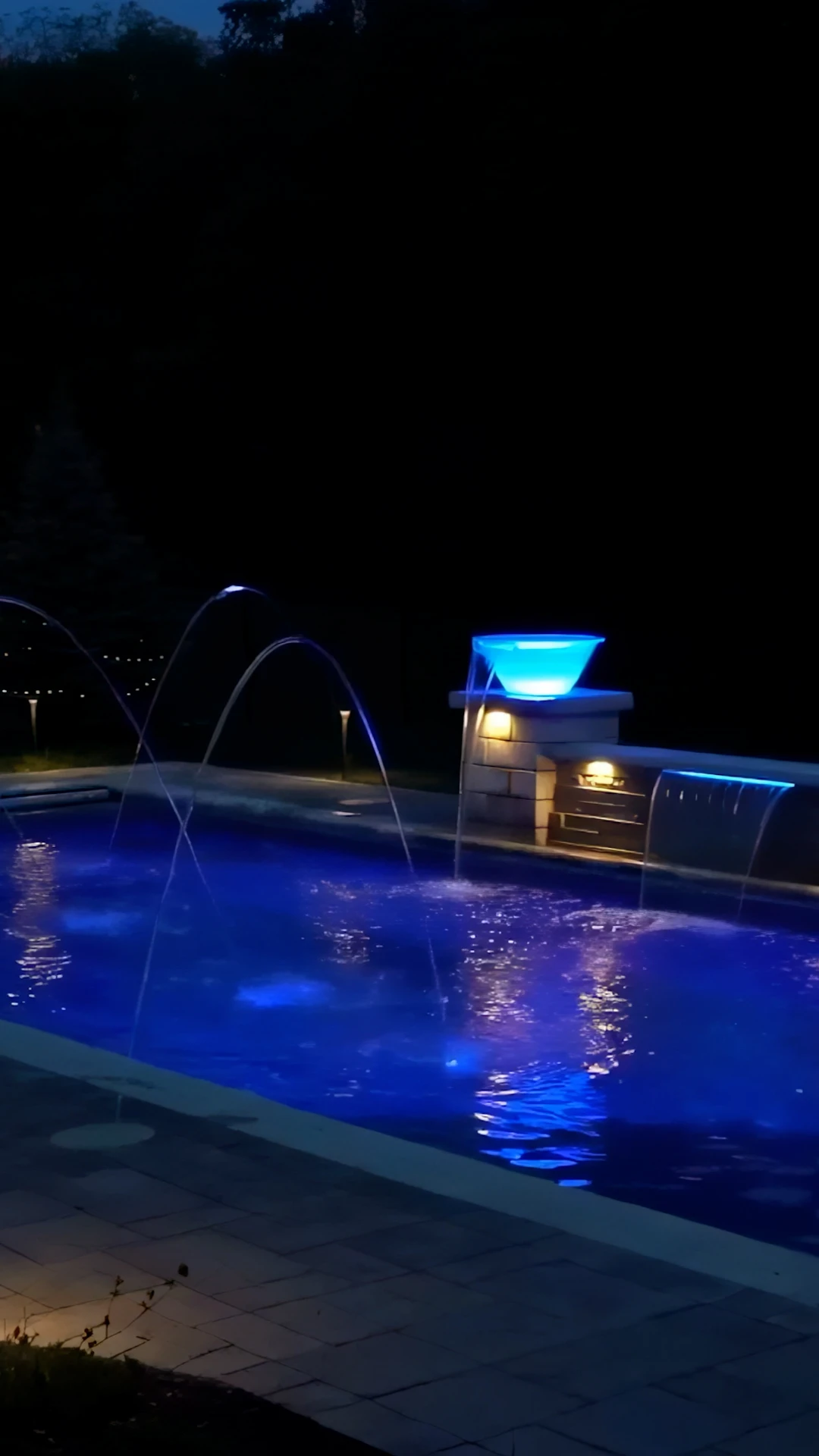
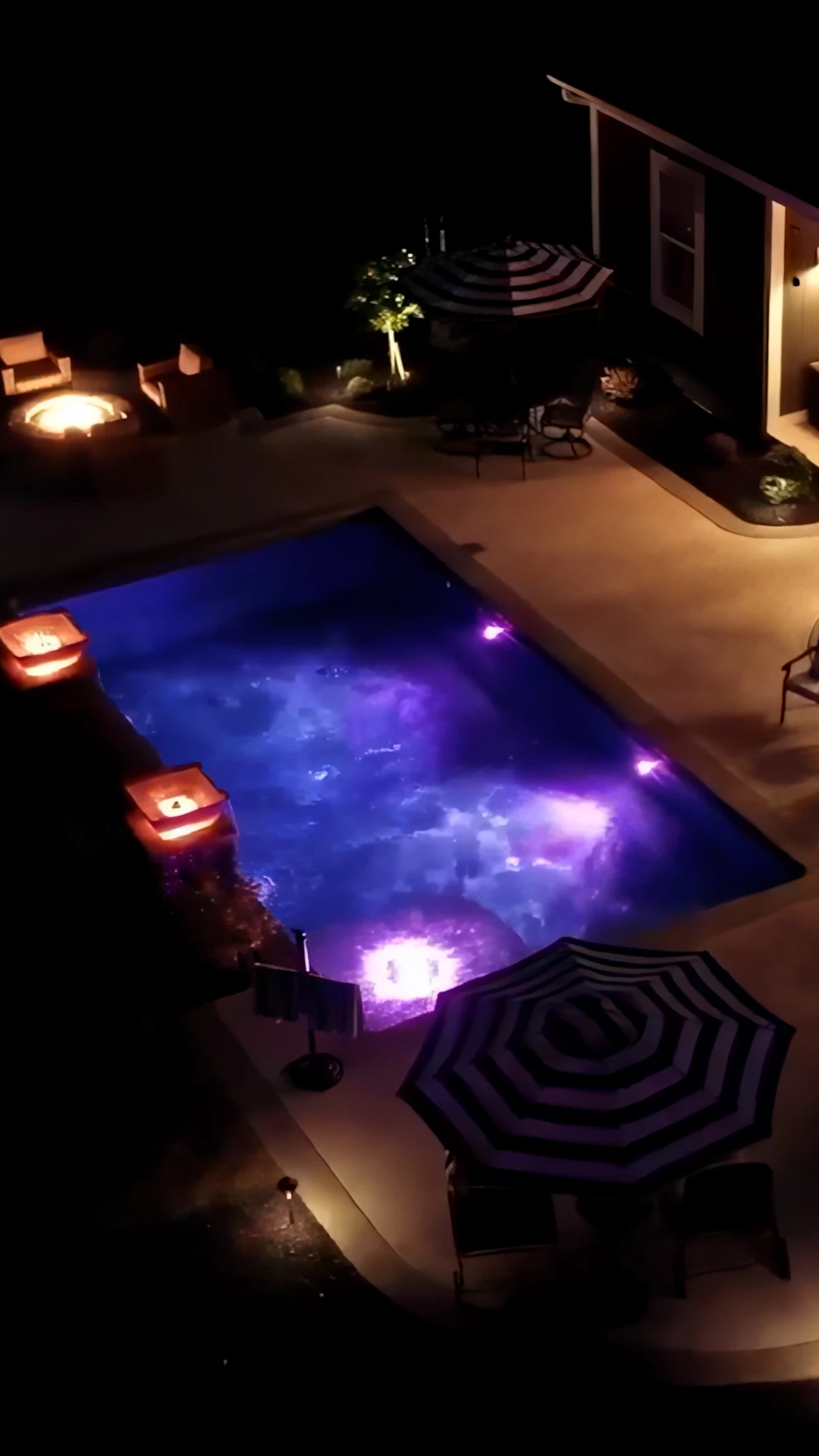
- Cast-stone scupper bowl plus sheer descent plus 4 laminar deck jets: $9,000-$16,000 — the water-feature trio we installed for the Sope Creek client shown above.
06 — Does a diving board or slide affect my home’s resale value in East Cobb?
This is the number that changes decisions, and it’s the number the slide-and-board salespeople don’t bring up. Pulling three years of Cobb County appraisal comparables on homes sold in the $850K-$2.4M band — which is the meat of the Atlanta Country Club, Indian Hills, and Burnt Hickory markets — the pattern is consistent:
- Home with no pool, pool-suitable backyard: baseline.
- Home with a clean, modern rectangular pool, no board, no slide: +$60K to +$120K over the dry-backyard comp, depending on deck quality and integration.
- Home with a pool and a modern compact slide (Pentair RedWood or equivalent): +$55K to +$115K — roughly a wash versus no-slide, sometimes slightly better on family-targeted listings.
- Home with a pool and a diving board: $15K to $40K lower sale price than the equivalent pool-without-board comp, consistent across 2023-2025 Cobb data.
The reason is structural. East Cobb’s buyer pool at that price point skews heavily toward families with children under 12 and empty-nesters transitioning into lock-and-leave luxury. Both groups read a deep end with a board as a risk signal. Children’s-insurance files are easier without a board. Empty-nesters don’t use a deep end at all.
The agents we work with at RE/MAX Around Atlanta and Keller Williams North Atlanta both tell the same story from the other side: a board is a negotiating point buyers use to push price, not a feature they pay a premium for. The slide is more neutral — sometimes positive on a family-targeted listing, mildly negative on an executive buyer. The diving board is almost always a drag on price.
07 — If I still want a board or slide in Marietta, how do we actually build it right?
We don’t refuse to build boards. We build two to three a year across our service area, and we build slides on roughly one in every eight pools. What we do is walk every client through the five-part decision before we draw the plan:
- HOA covenant check. Before we draw anything, we pull the declaration and any amendments from the association management company. Half the time this kills the question in 20 minutes.
- Cobb County plan-review pre-check. If the envelope numbers don’t work on the lot — setbacks, easements, sewer, or the rock depth at excavation — we find out before the contract, not after. The Piedmont Cecil-series red clay across Cobb is forgiving to excavate down to about 7 feet, but granite bedrock at variable 3-15 ft depth can blow a diving-envelope budget on certain Kennesaw-Mountain-adjacent lots.
- Insurance call. The client calls their carrier with the exact spec and gets the surcharge number in writing. We’ve had clients abandon the diving board between step 2 and step 3, once the real annual number landed.
- Resale horizon check. How long does the family plan to stay? If the answer is under 8 years, we’ll push hard toward a slide or a tanning ledge.
- Design integration. If the board survives the first four gates, we build it properly — correct envelope, correct coping reinforcement, correct deck setback, correct stand anchor. A board done right is safer than a board retrofit crammed onto an inadequate pool.
For slides, the process is shorter. The HOA check is usually a formality (most allow a compact residential slide). The code question is a non-issue. Insurance is a whisper. Design integration matters most — the ladder side needs to face away from the primary view from the house, the water supply line needs to be plumbed from the skimmer return and not the filter loop, and the landing point needs to match the 36-inch depth minimum with a small overage for splash.
One closing technical note for Marietta specifically. The city of Marietta runs its own municipal electric utility — Marietta Power — for residents inside the city limits. Everyone else in Cobb is served by Cobb EMC, not Georgia Power. Both utilities require permitted 240V service drops for pool equipment, but the two have different inspection lead times and different coordination paths. We sequence the meter-set and the equipment-pad rough-in around whichever utility applies to the parcel, because a slide pump and a diving-board deck light both need that service live before the final inspection. It’s a small detail that stretches the calendar by two to three weeks if handled wrong, and it’s the reason we ask for the utility provider on the first site visit.
Custom Pool Construction across 20+ cities within 30 miles of Winder, GA
Whether you’re weighing a diving envelope, a 6-foot slide, or the tanning-ledge-plus-spa alternative that most East Cobb families actually end up choosing, we engineer the plan around Cobb code, your HOA covenant, your carrier, and your resale horizon — in that order.