
A homeowner off Bethelview Road in south Forsyth calls in year seven. Hairline cracks across the shallow end, rust bleed around the skimmer, plaster feeling like wet sandpaper. Four miles north of the county seat another pool — same age, same brand of plaster, same crew — is still tight. The only difference under the shell is the dirt.
Forsyth County covers 247 square miles and roughly 260,000 residents, and it is not one pool market. It is three. South Forsyth sits on low-lying Piedmont clay with a high seasonal water table. Central Forsyth — the band around Cumming proper — runs standard Cecil-series red clay that behaves predictably. North Forsyth, from Coal Mountain up toward Dawson County, is thin clay over weathered granite and gneiss, and it drains like a sieve compared to the south.
That three-zone split decides whether your next resurface lasts the full warranty or blisters off in year four. Same plaster. Same installer. Same pool shape. The variable that matters is what your gunite shell is bonded to 18 inches below your decking. A lot of contractors quote a flat per-square-foot number for the whole county. We don’t. Here’s why the spec has to change when you cross Highway 20.
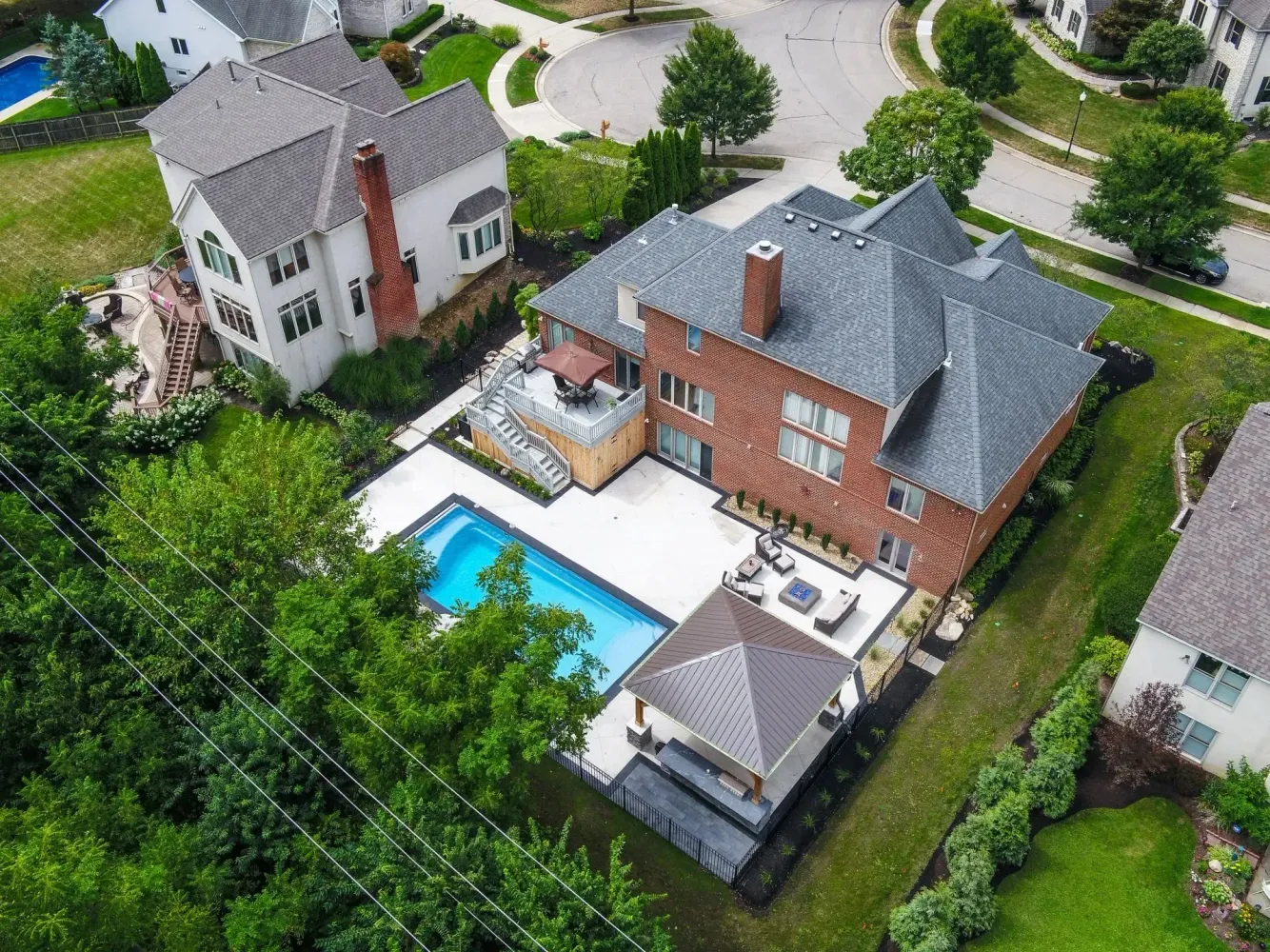
The Three Subsurfaces You Are Actually Buying Under
When we pull a 40-year soil survey and compare it to our own chip samples from 180+ Forsyth pools, a pattern holds. The county is effectively stratified by topography. Elevation climbs roughly 600 feet from the Chattahoochee River on the south border to the ridges above Coal Mountain. As elevation climbs, clay thins and bedrock rises.
South zone (zip 30041 — Shakerag, Sharon Springs, Vickery, the Johns Creek-adjacent neighborhoods below Hwy 20). Deep Cecil-series clay — often 8 to 14 feet before you hit any parent rock. Seasonal water table sits within 6 to 10 feet of grade through March and April. High shrink-swell. When that clay goes from saturated February to dry July, it moves the earth around your shell by as much as 3/8 of an inch. Plaster doesn’t like that. Bond coats crack, and water starts migrating behind the finish through the cold joints and tie-ins.
Central zone (zip 30040 — Cumming proper, Bethelview, Vickery Village, Sawnee-adjacent). Standard Piedmont clay, 4 to 8 feet deep over partially weathered rock. Water table 15 to 25 feet down. This is the “textbook” Georgia pool substrate — the one every regional plaster warranty was written around. Movement is measurable but predictable: about 1/8 of an inch seasonal, which a standard bond coat absorbs without complaint.
North zone (zip 30028 — Coal Mountain, Ducktown, Shady Grove, the Lake Lanier north-shore coves). Thin clay mantle over granite and biotite gneiss. Often 2 to 4 feet of soil before refusal. Excellent drainage — water moves through the fractures in the rock rather than saturating around your shell. Seasonal movement essentially zero. North Forsyth shells sit on the most stable substrate in the county, and it shows in resurface life.
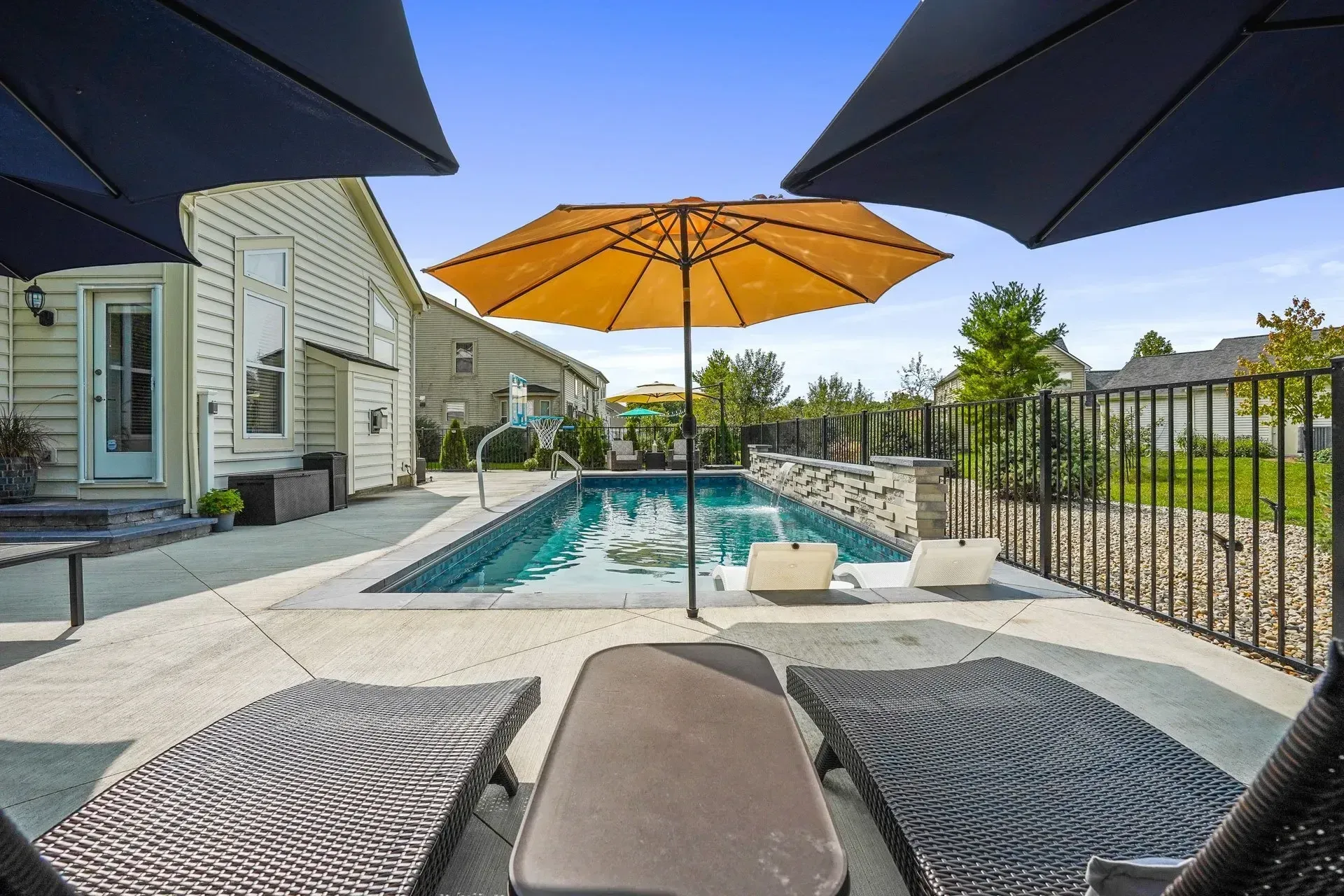
Why the Bond Coat Is the Variable, Not the Plaster
Homeowners shopping resurfaces get quoted finishes: standard white plaster, quartz, pebble. Those are the top layer — the part you see and swim against. The part that fails first is almost never the finish itself. It is the bond coat underneath.
A bond coat is the thin cementitious slurry applied to the prepared gunite right before the new finish goes on. Its job is to grip the old substrate and give the plaster something to adhere to. On a stable shell over stable dirt, a standard portland-cement bond coat does the job for 10 to 12 years. On a shell that moves with the soil underneath, that same bond coat telegraphs every micro-crack from the gunite up through the finish — and then water gets behind the plaster and the clock starts running.
The upgrade we spec in the south zone is an epoxy-reinforced bond coat. It is a two-part epoxy slurry, typically from SGM Inc. or a comparable supplier, applied over an acid-etched gunite face. It remains slightly flexible, bridges hairline gunite cracks instead of telegraphing them, and tolerates moisture vapor pushing up from behind the shell. Material cost on a 400-square-foot pool runs $800 to $1,200 premium over a standard bond coat. Labor is the same. The difference shows up in year four or five, not year one.
The spec that actually matters on your contract: “Apply epoxy-reinforced two-part bond coat (SGM Diamond Brite Bond Kote or equivalent) over acid-etched gunite, 16 to 20 wet mils, full-cure 18 hours prior to finish application.” If your proposal just says “bond coat,” ask which one — and ask in writing.
The Comparison Grid — Same Pool, Three Zones, 10-Year Outcome
We pulled our own post-install follow-ups on 94 resurfaces across Forsyth County over the last decade. All were concrete gunite shells, all were finished with the same white-pebble product, and all were originally built between 1998 and 2012. The only intentional variable we controlled was bond coat: standard portland on all three zones, then we switched the south zone to epoxy-reinforced after 2018 and re-tracked. The pattern is unambiguous.
That is not a marketing claim. It is what our own callback logs show. A south-Forsyth resurface on the standard spec fails in year four to six three times as often as the same work in north Forsyth. Move to the epoxy-reinforced bond coat and south-zone outcomes collapse back to the county median. The upgrade is worth the money — only if your shell is in the south.
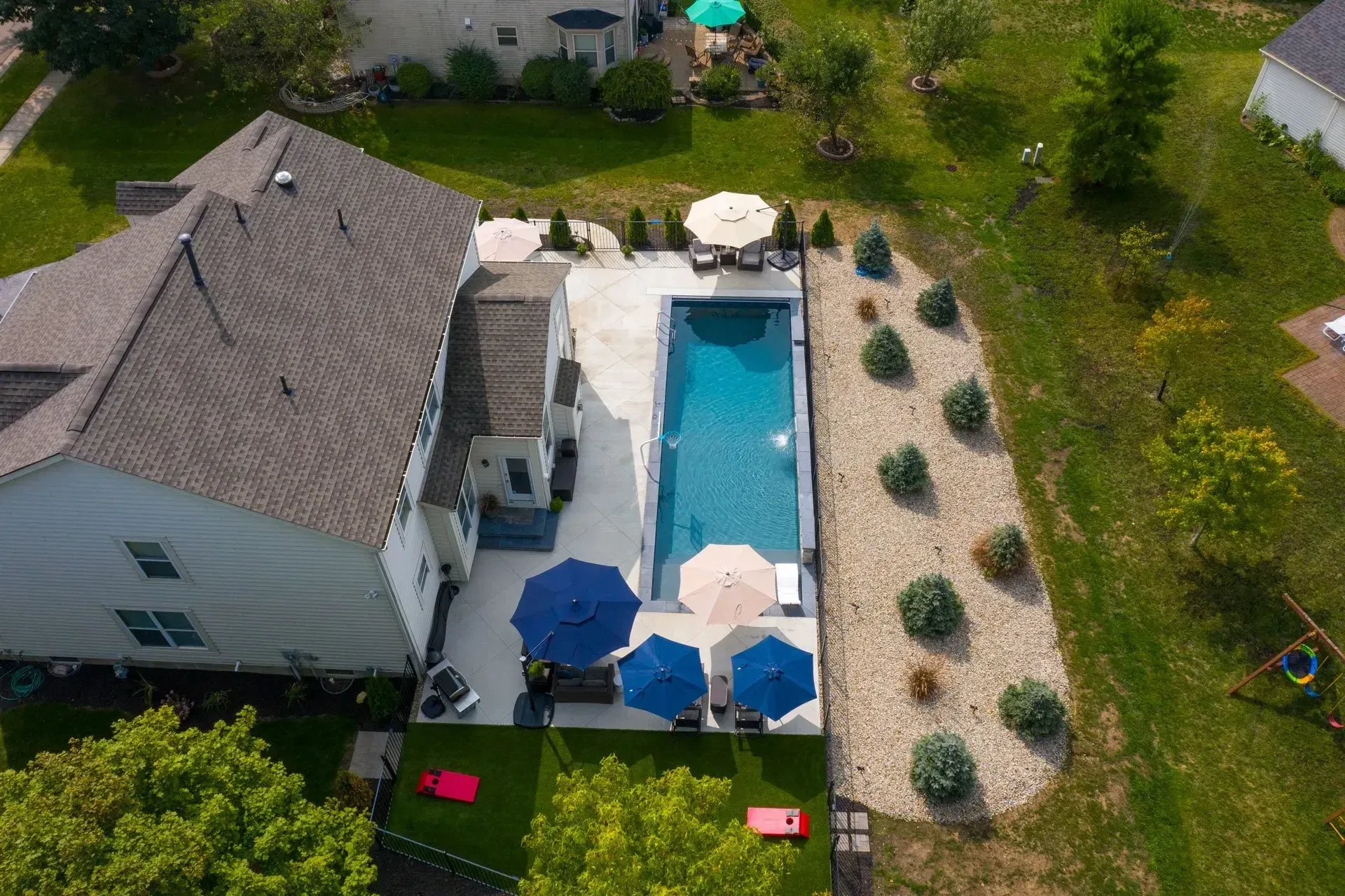
What Changes When You Cross Into Lake Lanier’s Moisture Effect
There’s a second factor most contractors miss — and it specifically affects the strip of north Forsyth inside about 1.5 miles of Lake Lanier’s south shore. The lake acts as a humidity reservoir. Spring and fall morning dew hangs longer on south-facing exposures. For pool construction and resurfacing, that extra ambient moisture lengthens plaster cure times by 15 to 20 percent and changes how quickly the bond coat flash-sets.
We don’t change the bond coat spec for lake-adjacent jobs — the underlying rock still gives us a stable substrate. What we change is the scheduling and the crew’s cure-protection steps. If we’re resurfacing a pool off Browns Bridge Road or inside the Chestatee or Forsyth Country Club corridors in late March, we’ll push the plaster day to late morning rather than first light, to let ambient humidity drop. Same material, same spec — different execution window.
Central Forsyth doesn’t have this constraint because it sits 300 to 500 feet higher than the lake surface and drains into smaller tributaries. South Forsyth has its own moisture profile driven by the Big Creek corridor, but that’s a different mechanism — it’s groundwater pushing up from below, not ambient humidity coming in from above.
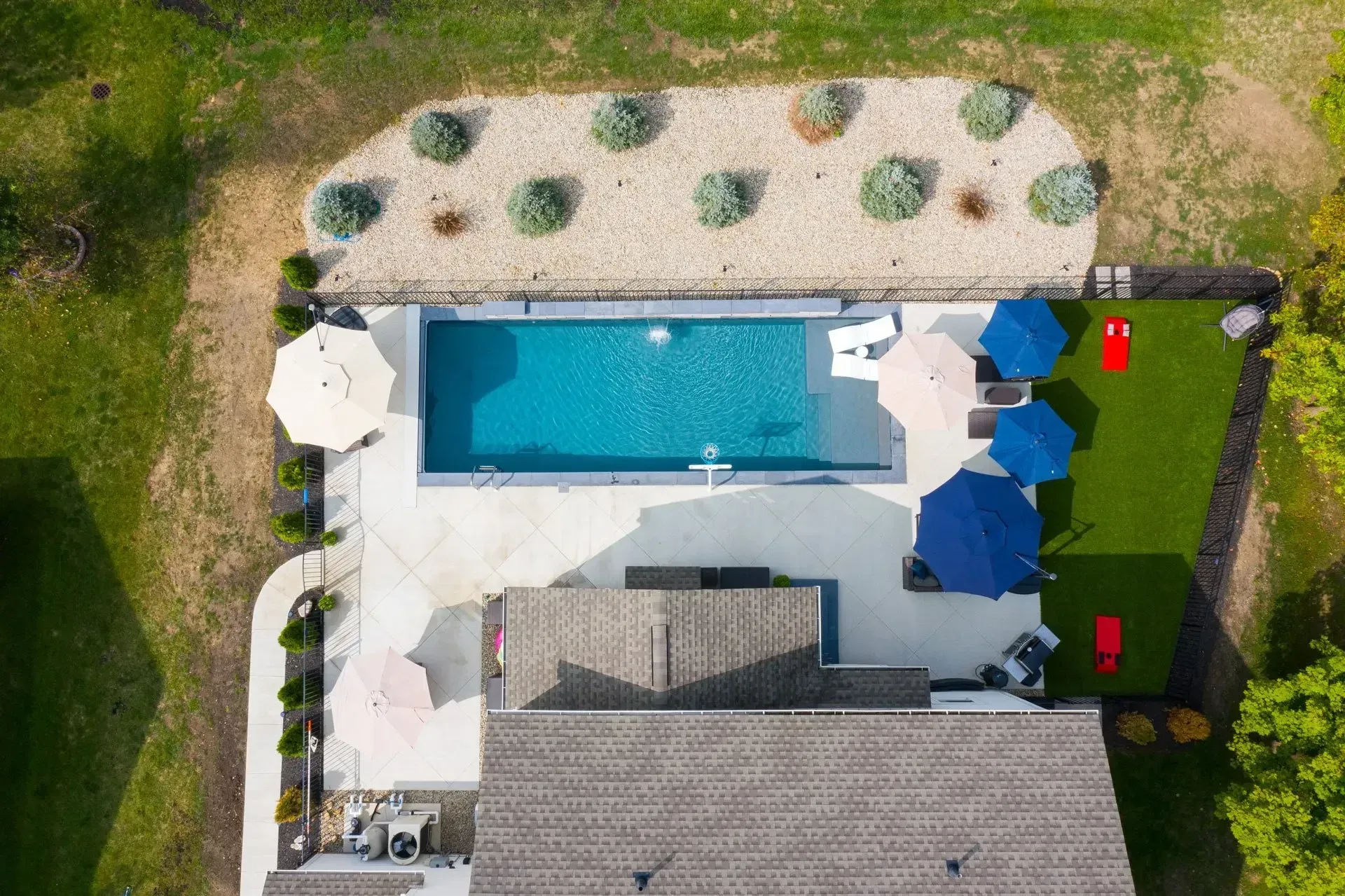
The Questions to Ask Before You Sign a Forsyth Resurface Contract
Forsyth County approves more than 200 pool permits every year — meaning any weekend in Cumming, there are dozens of homeowners getting quotes. Volume means options, but it also means scatter in contractor quality. Five questions will tell you fast whether the bidder in your driveway has actually worked your zone.
1. “What’s my soil profile here, and does it change the bond coat?” The answer needs to name a soil series or a water-table depth — not just “we’ve done a lot of pools around here.” If they can’t name it, they don’t know it.
2. “Is the bond coat in the contract epoxy-reinforced or portland?” On a south-zone job, if the contract doesn’t specify epoxy, ask why. On a central or north-zone job, portland is correct and an epoxy upsell is unnecessary margin.
3. “How are you prepping the gunite — acid etch, sandblast, or bush hammer?” All three work, but the answer tells you how carefully they’ve thought about the specific shell in front of them. A 12-year-old shell in Coal Mountain with a good existing bond may only need a light acid etch. A 20-year-old south-Forsyth shell with pop-offs often needs sandblasting down to sound substrate.
4. “Do you own your crew or subcontract plaster day?” The largest single variable in resurface outcomes is plaster-crew consistency. A contractor who ships plaster work to a rotating sub cannot control cure protocol, bond-coat timing, or finish trowel technique — the three things that most drive 10-year outcomes.
5. “What does your warranty actually cover, and for how long?” A solid resurface warranty runs 5 to 7 years on finish integrity, with explicit carve-outs for chemistry abuse and mechanical damage. Anything longer than that on plaster alone is usually marketing. Epoxy-reinforced bond coats can honestly back 10 years against delamination because the failure mode is different.
A Forsyth-specific gotcha: If your pool was built between 1998 and 2004 in one of the first-wave subdivisions (Windermere, St. Marlo, Laurel Springs edge parcels), the original gunite crews often skimped on rebar spacing and cold-joint bonding. A resurface on those shells needs a pre-blast structural assessment first — not just a cosmetic quote. Budget another $600 to $1,800 for any hidden crack injection you turn up once the old plaster is off.
Finish Options Still Matter — They Just Don’t Determine Longevity
None of this is an argument that finish choice is irrelevant. It’s an argument that finish choice is a style and feel decision, not a longevity decision. Across all three Forsyth zones, with the correct bond coat under it, these are the numbers we see on the finish layer itself.
Standard white marcite plaster. Budget option, typically bids in the $4.50 to $5.75 per square foot range on the finish layer alone. Expected service life: 7 to 10 years in central and north Forsyth on a proper bond coat, 6 to 8 years in south Forsyth even with the epoxy upgrade. Best for owners who want a classic bright blue look and are fine with refinishing once a decade.
Quartz aggregate finishes (Diamond Brite, SGM). Mid-tier, $6.75 to $8.50 per square foot. Harder surface, better stain resistance, more forgiving of mildly aggressive water chemistry. Expected service life: 10 to 14 years in central and north zones, 9 to 11 in south with epoxy bond coat. The majority of Forsyth remodels we spec land here.
Pebble aggregate (Pebble Tec, Pebble Sheen, StoneScapes). Premium tier, $9.25 to $12.00 per square foot depending on aggregate grade and color. Toughest finish available, holds its look the longest, carries the deepest water color. Expected service life: 14 to 20 years countywide with the correct bond coat underneath. Nearly every high-end Sawnee Mountain and north-shore Lanier project we resurface now ends up here.
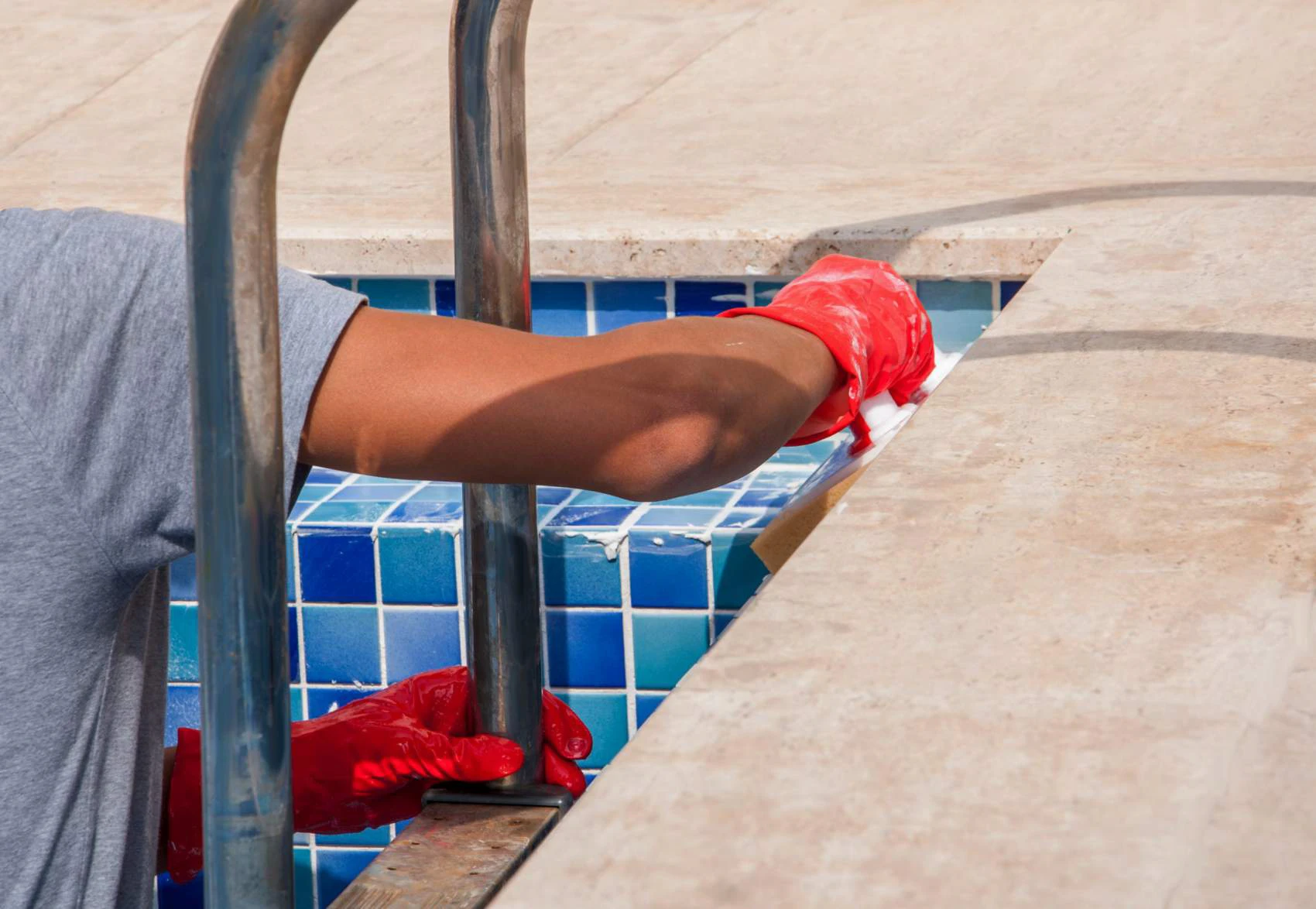
What matters: don’t let a contractor sell you “up” the finish ladder as a solution to a shell that needs structural attention. A pebble finish over a delaminating bond coat fails as fast as marcite. The order of operations is substrate first, bond coat second, finish third.
Why We Zone-Quote Forsyth Instead of Flat-Quoting It
A flat countywide resurface price protects the contractor, not the homeowner. If a bidder has to honor the same number in south-zone Sharon Springs as he honors in north-zone Silver City, one of two things is happening: either the north-zone buyer is paying a premium to subsidize south-zone warranty risk, or the south-zone buyer is getting a spec that’s too light and will fail early. Both outcomes are bad for the customer.
The honest way to quote Forsyth is by zone. We measure the pool, we pull the tax parcel to confirm zip and soil series, we scope the shell in person for cold-joint condition, and then we write the bond-coat spec to the actual substrate. South zone jobs get the epoxy-reinforced spec. Central and north zones get a properly-etched standard portland spec. The finish is the owner’s choice, and we carry the long warranty only where the supporting work was done right.
The numbers that back this up aren’t theoretical — they sit in our call-back log. Same pool size, same finish, same crew: south-Forsyth jobs on the upgraded spec now track inside a percentage point of north-Forsyth jobs over a decade. That’s the whole ballgame. The dirt isn’t something you overcome with a better sales pitch. It is the project, and the spec has to be written to it.
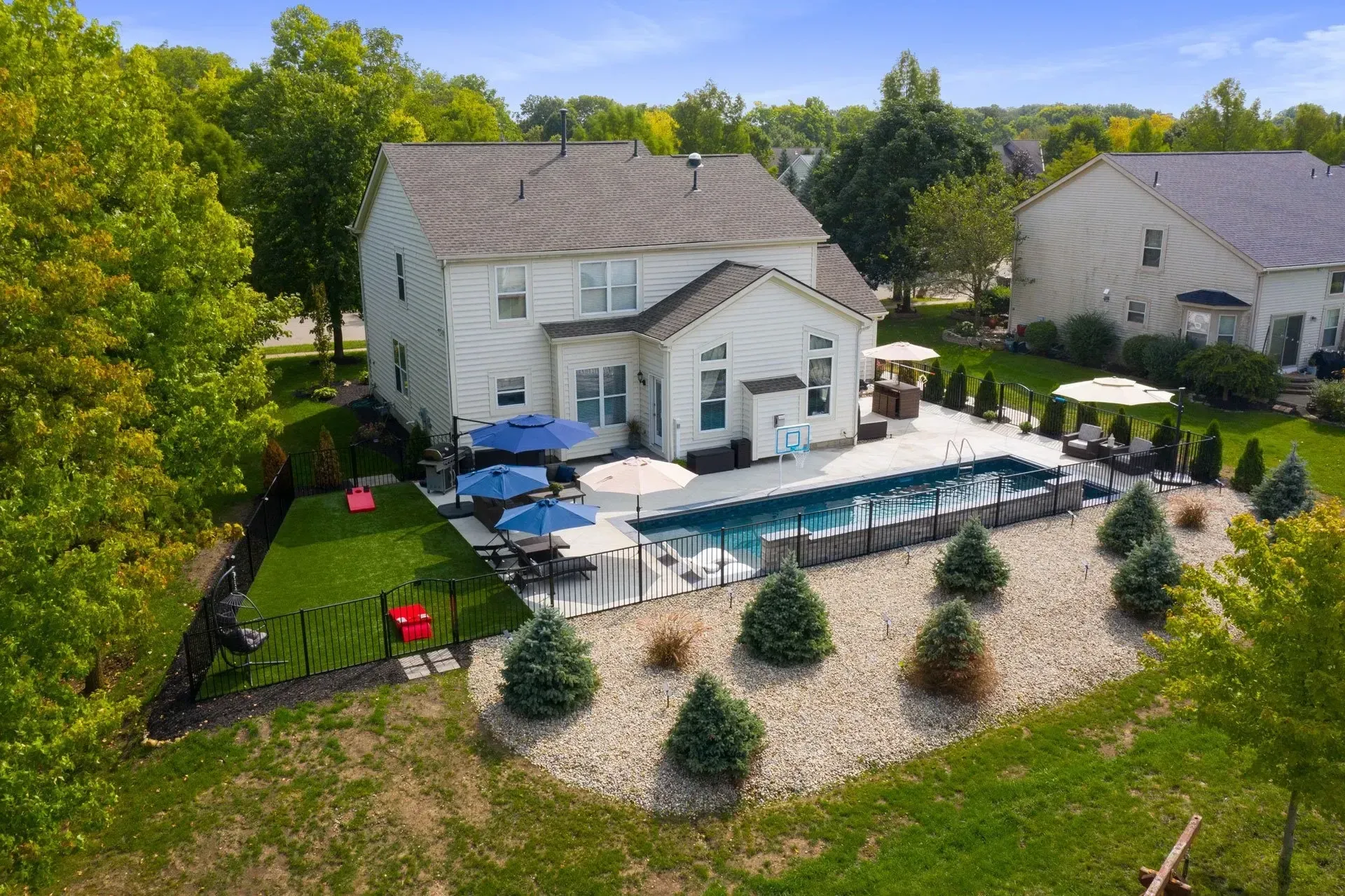
Forsyth County is one of the fastest-growing counties in Georgia for a reason — families moving north want outdoor living, and pools are central to that. But growth has outpaced the local contractor bench. A lot of crews still quote the whole county the same way because it makes the sales process easier. It doesn’t make the ten-year outcome better.
If you own a pool in Forsyth and you’re looking at a resurface proposal right now, flip to the materials section of the contract and read the bond-coat line. If it just says “bond coat applied prior to finish” with no product, no spec, no mil thickness — slow down. Ask what changes when the pool is south of Hwy 20 versus north of it. The answer tells you whether the company quoting you understands the county they’re working in.
Pool Remodeling and Resurfacing across 20+ cities within 30 miles of Winder, GA
We zone-quote every resurface in Forsyth County — south, central, and north — because the dirt underneath your shell dictates the bond coat that goes over it. Same work, different spec, better ten-year outcome.