
A homeowner in Sycamore Ridge asked us last month: “Is saltwater really easier, or is that a sales pitch?” Fair question. After ten years of building and servicing both systems across Dacula, the honest answer is neither one is universally better — but each wins clearly on specific criteria that matter to Gwinnett homeowners.
The debate gets muddied because salespeople, forum posts, and YouTube videos all push opinions instead of measured numbers. This post does the opposite. We break the comparison into six concrete criteria, put the data side-by-side in a grid, and then explain where each system actually wins — for a pool in Dacula, filled with Gwinnett County Water Resources supply, operating through a summer of 90-degree humidity and chemistry drift.
No pitch. Just the numbers we hand clients when they sit down at our kitchen-table consult and ask which system to pick.
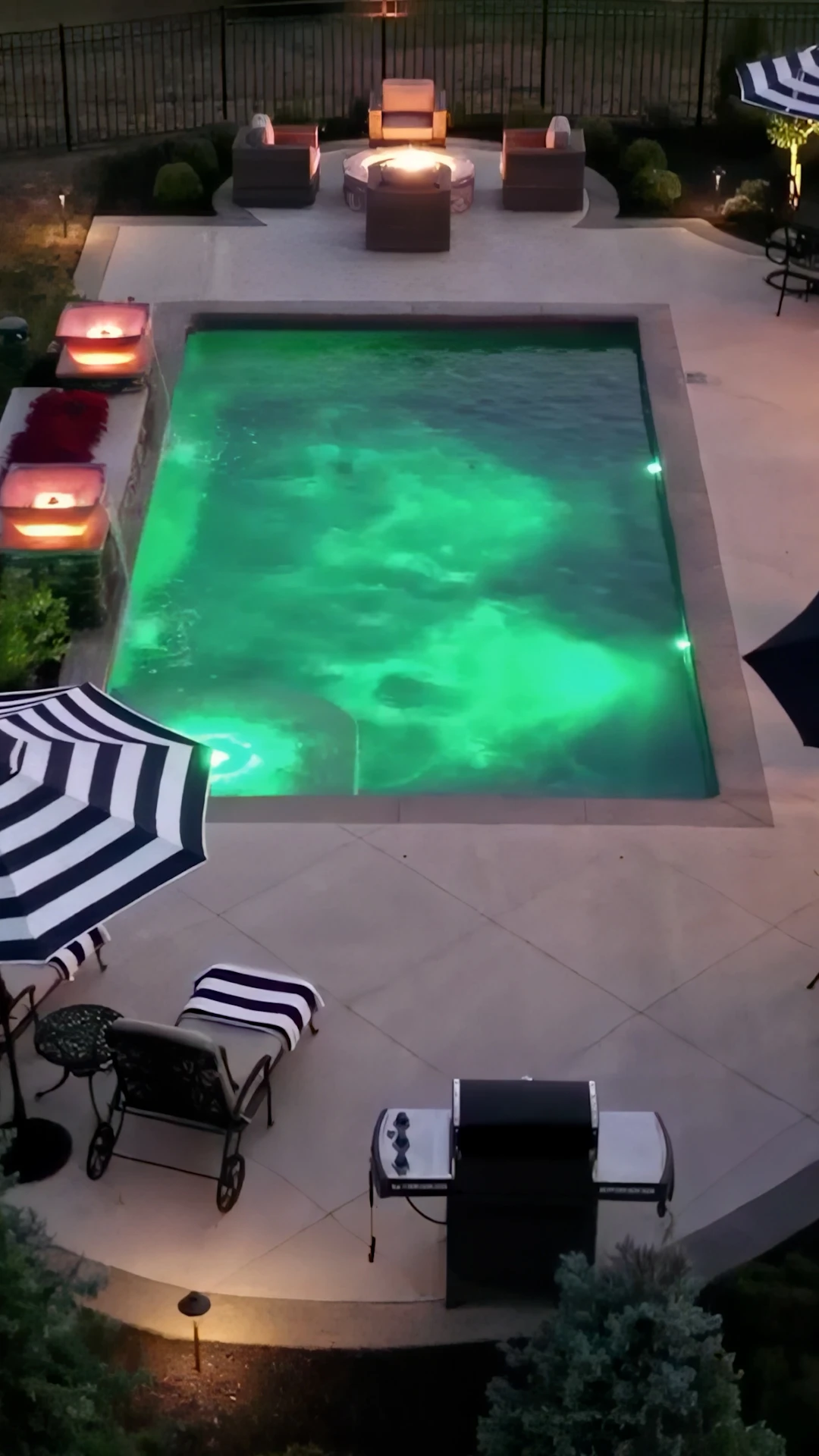
The Six Criteria That Actually Matter in Gwinnett
Before the grid, here is why we chose these six criteria. A lot of pool content compares things that don’t matter much in real life — like taste or feel — while skipping the numbers that determine whether the system is still pleasant to own in year seven.
Startup cost matters because saltwater adds equipment, and that equipment has a line item. Annual chemical cost matters because it compounds over a decade. Equipment lifespan matters because salt attacks metals that chlorine doesn’t touch, and replacement cells are their own recurring bill. Swimmer experience matters because you are going to be in this water two hundred times a summer. Water chemistry maintenance matters because summer humidity in Gwinnett drives real drift — you either manage it weekly or you let algae win. Resale impact matters because a Dacula home with a pool off Hamilton Mill Pkwy sits in a buyer pool where pool-aware shoppers ask the question.
Every row in the grid below reflects actual installed numbers from our Dacula and Gwinnett project files — not manufacturer marketing, not industry averages pulled from a generic Houston or Phoenix data set.
Read that grid carefully. Saltwater wins on annual cost, swimmer experience, and chemistry drift. Chlorine wins on startup cost and equipment lifespan. Resale barely moves the needle. That balanced split is exactly why the decision is personal — not categorical.
Startup Cost — Where the $2,000 Delta Actually Goes
On a Dacula custom build, the saltwater upcharge lands between $1,800 and $2,600 installed. That covers the chlorine generator itself (Hayward AquaRite or Pentair IntelliChlor IC40 are the two units we spec most often), the flow cell, the control board, and the labor to plumb it into the return line after the filter and heater.
The piece clients don’t always see on the proposal is the metallurgy. Saltwater pools require 316-grade stainless steel — not 304. The difference is a few percent molybdenum in the alloy, which is what buys corrosion resistance against chloride salts. We use 316 at the ladder, the handrail, the light niche, the pool cover anchors, and any underwater fastener. Any 304 component that ends up submerged in salt water will pit and bleed rust onto plaster inside two seasons. This is the single most common mistake we see when homeowners ask why their neighbor’s saltwater pool has brown streaks under the coping.
Spec sheet detail: 316 stainless contains roughly 2–3% molybdenum. 304 does not. In a 3,000 ppm salt pool, that molybdenum is what prevents chloride-induced pitting corrosion on ladders, rails, and niches. Any Dacula saltwater build that reuses 304 components from a chlorine pool will show problems within two years.
For anyone converting an existing chlorine pool to saltwater, the conversion cost is usually the generator plus any metallurgy swap-outs — call it $2,400 to $3,400 installed depending on what hardware needs replacing. Pool plaster, tile, coping, and plumbing all carry over fine.
Annual Chemical Cost — Why the Delta Compounds
This is the number that tips the economics over a decade. A chlorine pool in Dacula, running on tablets and shock, averages $450 to $750 a season once you add up the tabs, cal-hypo shock, muriatic acid, stabilizer, and algaecide. The range is wide because sun exposure and swim load push chlorine demand up fast — a pool that gets ten hours of July sun burns through tablets faster than a shaded pool at the bottom of a lot off Dacula Rd.
A saltwater pool running the same bather load costs $90 to $180 a season in chemicals. The cell is making chlorine from the salt in the water, so you aren’t buying it in bucket form. You still buy acid and stabilizer, and you add salt once or twice a season to keep ppm in range — but those are small line items.
Do the math over ten years. A chlorine pool averages $6,000 in chemical cost across a decade. A saltwater pool averages $1,400. That $4,600 delta is where saltwater earns back its startup premium — plus the salt cell replacement, which I’ll cover next.
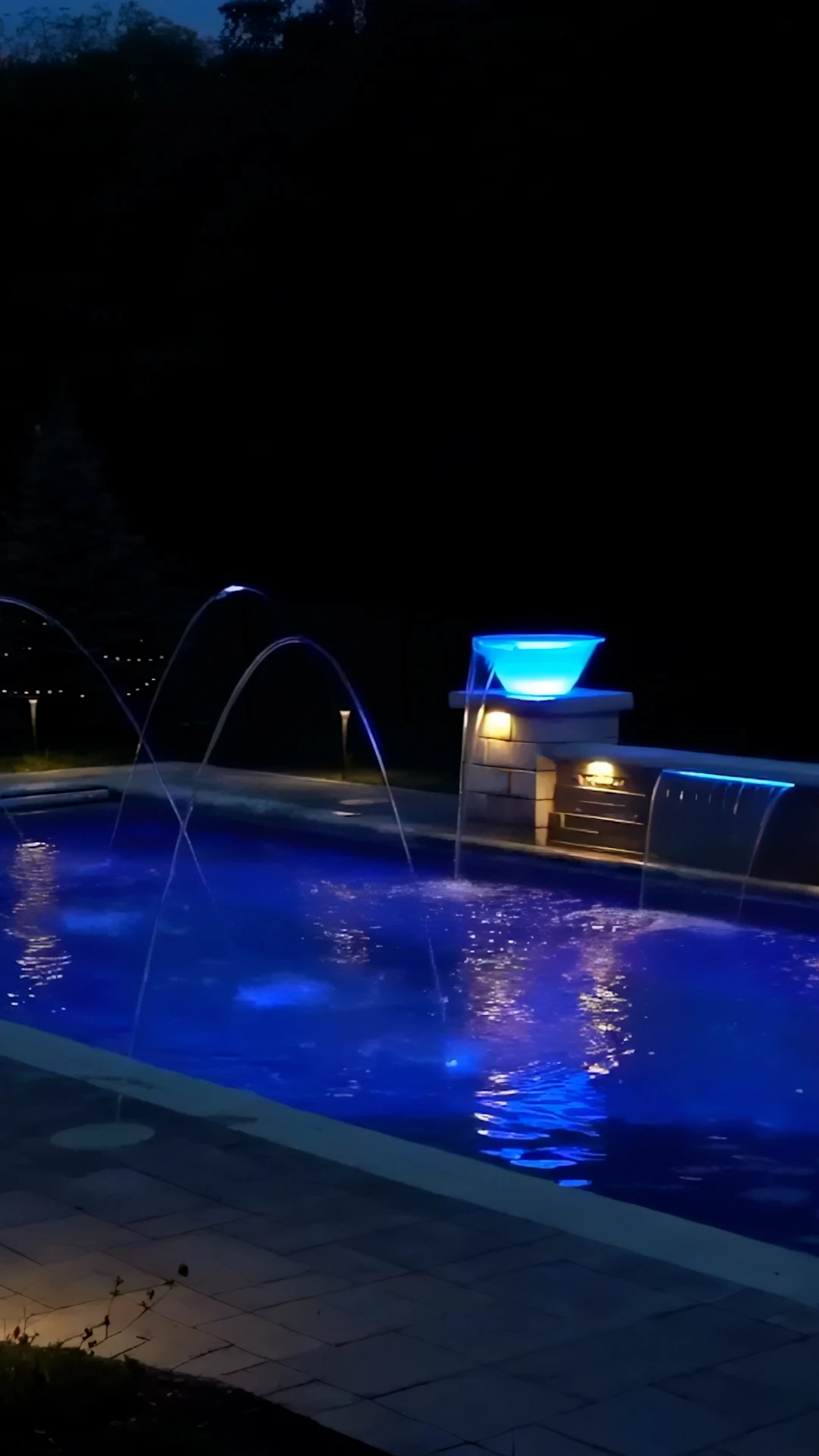
Equipment Lifespan — The Cell Is the Variable
Salt cells wear out. That’s not a flaw — it’s how the technology works. Inside the cell, electrolysis strips chlorine off sodium chloride ions, and the titanium plates coated with ruthenium oxide slowly lose their catalytic coating. On a well-maintained pool in Dacula, cells run 3 to 7 years. The two variables that push toward the 3-year end are high run-hours (pools set to 90%+ output all summer) and chemistry neglect — particularly low stabilizer, which makes the cell work harder to hold free chlorine.
Replacement cells run $650 to $1,200 depending on model. A Hayward TurboCell T-15 — the most common unit in Dacula — sits around $800 to $900 installed. A Pentair IC40 replacement is closer to $1,000 to $1,200. Neither of those is small. Over 20 years of ownership you’ll replace the cell three or four times.
Add that up: $2,400 to $4,800 in cell replacements across 20 years. Subtract that from the $9,200 chemical savings over the same 20 years, and the saltwater system still comes out ahead — but by less than the hype makes it sound. The honest number is that saltwater saves you roughly $4,000 to $7,000 over two decades of ownership after you bake in the generator upcharge and cell replacements.
On chlorine pools, the equipment story is simpler. A tablet feeder or liquid chlorinator has no sacrificial component — it’s a plastic housing with a dial. Fifteen-year feeder life is normal. 304 stainless ladders and handrails last the life of the plaster.
The stabilizer trap: Salt cells need cyanuric acid (stabilizer) held at 60–80 ppm to protect the chlorine they produce from UV destruction. Cells running below 50 ppm stabilizer burn out at year 3 instead of year 6. This is the single most common preventable cell-failure pattern we see in Gwinnett.
Swimmer Experience and Why Gwinnett’s Humidity Changes the Math
Here is where saltwater wins clearly. Water at 3,000–3,500 ppm salt reads soft on skin. There’s no harsh chlorine smell, no burning eyes, no dry hair-and-skin feeling after a long swim. Compare that to ocean water at 35,000 ppm — a salt pool is roughly one-tenth as salty as the Atlantic, which is why swimmers describe it as “silky” rather than “salty.” Most people can’t actually taste the salt in a well-run pool.
The chloramine smell people associate with public chlorine pools isn’t actually free chlorine — it’s combined chlorine, the byproduct that forms when chlorine reacts with sweat, urine, sunscreen, and organic matter. Saltwater pools still produce chloramines (because they still use chlorine to sanitize), but the consistent low-level output from a cell keeps combined chlorine lower than a tablet pool that cycles between over-chlorinated and under-chlorinated.
This is where Gwinnett’s climate matters. Summer humidity in Dacula drives evaporation, which concentrates pool chemistry through the week. Afternoon thunderstorms dilute it. The 90-degree humidity cycle between July and September produces what we call chemistry drift — a pool that was perfect Monday can be off-balance by Friday.
A salt cell with a properly sized chlorine output handles this drift passively — it just keeps producing chlorine at a steady rate. A tablet-fed chlorine pool requires active management during the drift cycle, which is why chlorine pools in Dacula need 15–20 minutes of weekly attention while saltwater pools need 5–10.
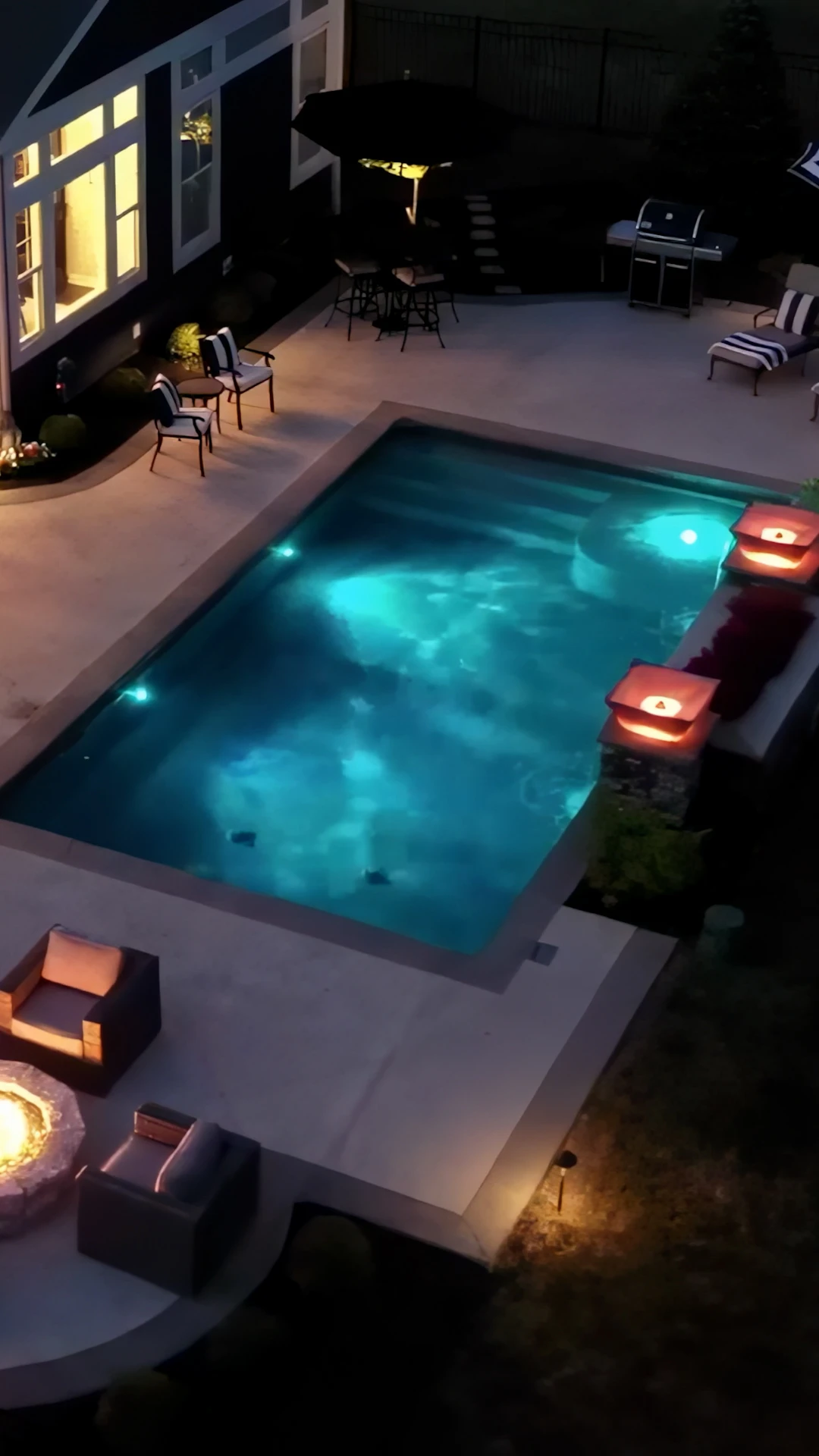
Water Chemistry Maintenance — Gwinnett Fill Water Sets the Baseline
Every Dacula pool starts with fill water from Gwinnett County Water Resources. That water tests at moderate hardness — typically 3 to 5 grains per gallon, which converts to about 50–85 ppm calcium carbonate. That’s soft to moderate for pool use, which is actually good news: it means the fill water won’t drive scale formation the way harder Atlanta-side water can.
What it does drive is a specific chemistry baseline. Your starting calcium hardness will come in under the 200–400 ppm pool ideal, so we add calcium chloride at commissioning to bring it into range. After that, weekly chemistry checks for either system should track:
- Free chlorine: 1–3 ppm (both systems)
- pH: 7.4–7.6 (both systems)
- Total alkalinity: 80–120 ppm (both systems)
- Calcium hardness: 200–400 ppm (both systems)
- Cyanuric acid (stabilizer): 30–50 ppm for chlorine, 60–80 ppm for saltwater
- Salt: 2,800–3,600 ppm (saltwater only)
The two places saltwater requires more attention than people expect: pH drifts up because electrolysis produces hydroxide ions, so you’ll add muriatic acid more often than on a chlorine pool. And the cell itself needs visual inspection every few months — calcium scale on the plates reduces efficiency and shortens cell life. A five-minute rinse with dilute muriatic acid every six months fixes it.
Resale Impact and What Dacula Buyers Actually Care About
We get asked this a lot by clients who are three to five years out from a potential move: does saltwater help or hurt resale? The honest answer is that it helps slightly — but nowhere near as much as people assume.
In the Dacula comp sets we track most closely — the Hamilton Mill Golf Club area, the Daniel Ridge corridor, Apalachee Ridge, and Sycamore Ridge — pool-aware buyers tend to prefer saltwater when given the choice between two otherwise-identical homes. The preference is driven by perception more than data: saltwater reads as modern and easier, chlorine reads as dated and harsh. Neither of those perceptions is entirely accurate, but perception is what drives offer prices.
That said, we have never seen a pool buyer reject a home specifically because it runs on chlorine. A well-maintained pool with a current service log — plaster in good condition, equipment under 10 years old, coping and tile clean — appraises the same regardless of sanitation type. The variable that actually moves pool resale isn’t salt vs. chlorine. It’s condition and documentation.
The one scenario where sanitation type does matter: if you’re considering a pool remodel in the next two years and you’d be converting from chlorine to saltwater anyway, do it now and enjoy the system while you own the home. If you’re selling in 12 months, don’t convert — the buyer won’t pay for the $2,500 upgrade.
The Alternatives Most Homeowners Don’t Know About
Saltwater vs. chlorine isn’t the only decision in 2026. A growing third category is UV-ozone hybrid sanitation — systems like the Del Ozone MDV series or Paramount Ultra UV that add a secondary sanitizer alongside a smaller chlorine residual. Installed cost runs $2,400 to $3,800 depending on pool size and plumbing complexity.
The benefit is a dramatic reduction in chlorine demand — often 50 to 75% less free chlorine required to keep the water sanitary. Swimmers notice the difference immediately: water feels softer than saltwater, no smell at all, and sensitive-skin clients who react to any chlorine level often tolerate UV-ozone hybrids without issue. The downside is one more piece of equipment in the pad, one more thing that can fail, and the UV bulbs or ozone generators need replacement every 1–2 years at $200 to $400 per change.
We spec UV-ozone most often for clients with known chlorine sensitivities, clients who are planning for very high bather loads (frequent entertaining, multiple kids with friends over), or clients who are already at the top of their build budget and want the best water quality available. It’s not the default, but it’s worth knowing the option exists before you assume the choice is binary.
System comparison summary:
Chlorine: Lowest startup, highest annual chemical cost, shortest weekly maintenance flexibility, longest equipment life.
Saltwater: Mid startup, lowest annual chemical cost, softest swimmer experience, requires 316 stainless hardware and cell replacement every 3–7 years.
UV-ozone hybrid: Highest startup, lowest chlorine exposure, best water feel, requires bulb/generator replacement every 1–2 years.
For most Dacula homeowners without specific chlorine sensitivities, the decision is still saltwater vs. chlorine. The UV-ozone option is a genuine third path — not a gimmick — but it carries the most ongoing complexity of the three.
Which One Should a Dacula Homeowner Pick?
Use this short decision tree. It isn’t sophisticated, but it matches the conversations we have at our consults.
Pick saltwater if: you plan to own the pool 7+ years, you dislike chlorine smell, you have kids or frequent swimmers in the water, you value weekly maintenance time, and you accept the $2,000 startup premium plus the occasional cell replacement.
Pick chlorine if: you are building on a tight budget, you already have a reliable pool service maintaining the water, you plan to sell within 3 years, or you are converting an older pool where 316 stainless retrofit costs push saltwater total into the $4,000+ range.
Consider UV-ozone hybrid if: any family member has a known chlorine sensitivity, you entertain heavily with high bather loads, or you are already at the top of your build budget and want the best water quality available.
None of these paths is wrong. The worst choice is picking blindly based on a neighbor’s recommendation or a forum thread — because your pool, your climate, your swim habits, and your ownership horizon aren’t the same as theirs. Run the grid against your own numbers. The right answer usually emerges in five minutes.
Saltwater and chlorine pool builds across 20+ cities within 30 miles of Winder, GA
Whether you’re building new, converting, or trying to decide which system fits your family, we walk through the same six-criteria grid at every consult — so the decision is yours, based on numbers that match your pool.