
It’s a Thursday evening in Windward. The homeowner is standing on a flat rectangle of travertine staring at a rectangular pool built in 2003 — sharp, clean, and completely missing the one feature the family actually uses nine months out of the year. A spa. The question he asks is the one we hear every week across North Fulton: can you cut the deck and add a raised spa without rebuilding the pool?
Short answer: yes. And in three weeks, not three months, if the pool was originally built with a bond beam stout enough to tie into. Across Alpharetta — Windward, Country Club of the South, Hutchinson Farm, Cambridge Parks — we see the same story on rotation. Pools built between 1995 and 2010 were designed around long summer swims, not shoulder-season soaking. Twenty years later, the kids are grown, the parents want heat therapy, and the yard is waiting for the feature it never got.
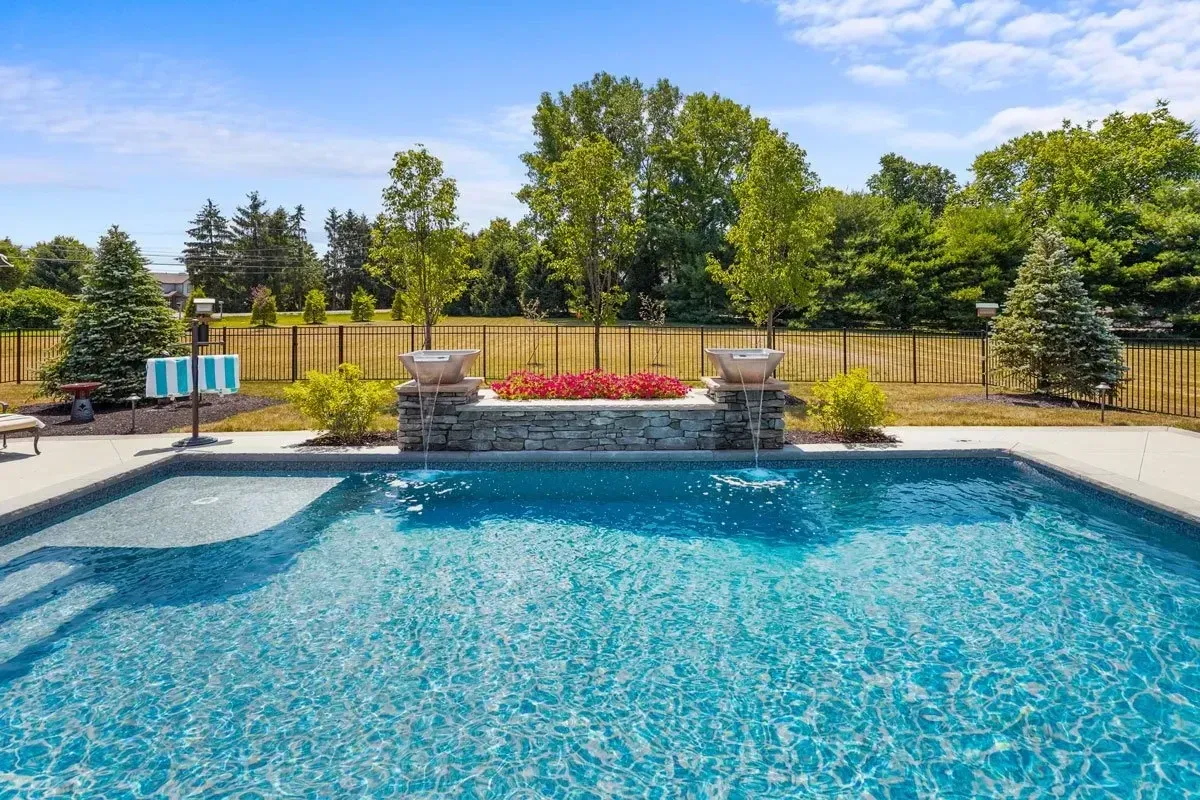
This post walks through the retrofit we do most often in zip codes 30004, 30005, 30009, and 30022: a raised spa built onto the existing pool’s shared wall, fed by a three-scupper spillover, heated by a dedicated high-BTU gas unit, and finished to match the original deck so it looks like it was there from day one. Week by week, with the specifics we’ve learned from the Piedmont clay under these yards.
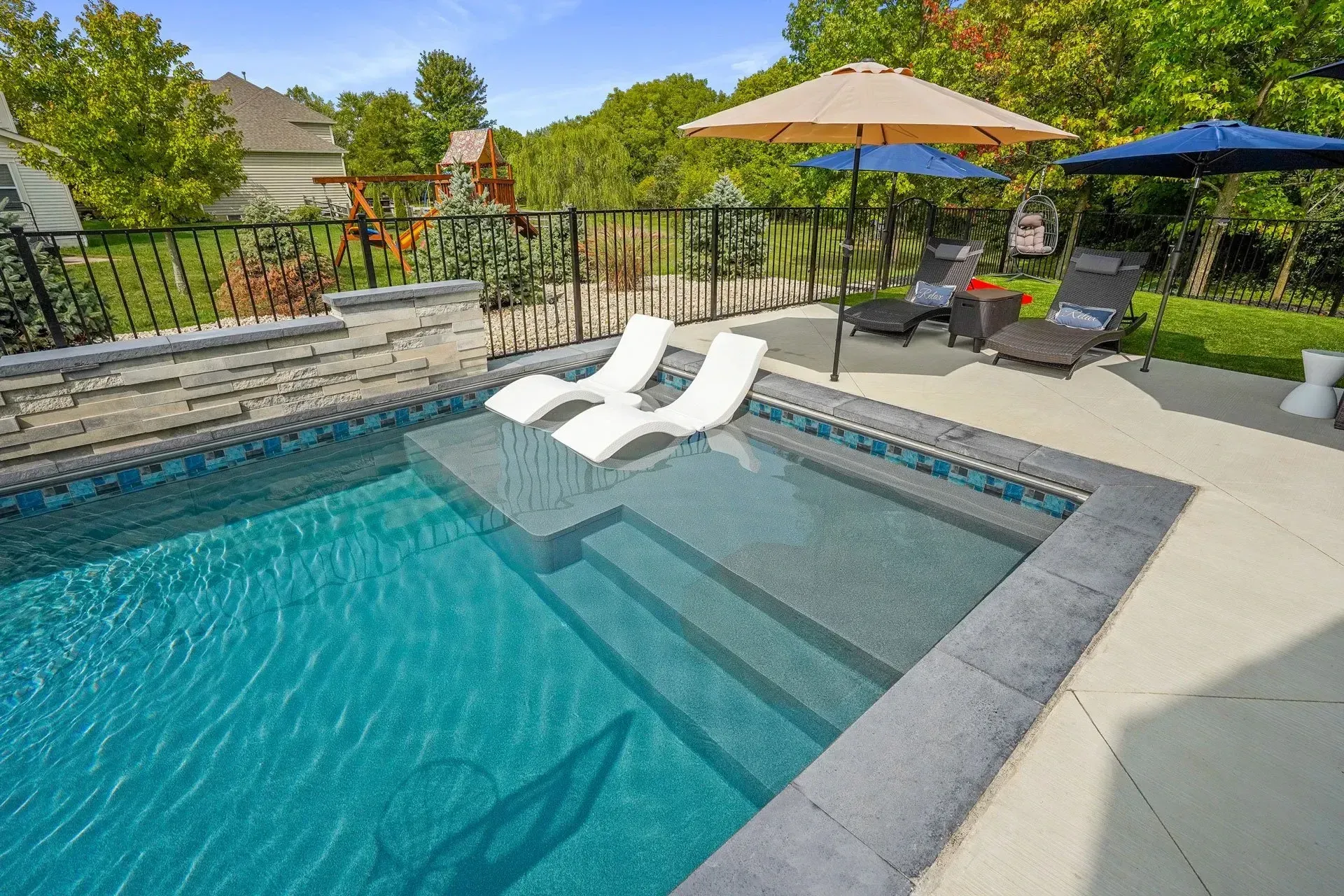
Why the Retrofit Works on Alpharetta Pools Built 1995–2010
The reason this remodel is so reliable in Alpharetta specifically is that the era of pool construction matters. Pools put in the ground in the late 1990s and early 2000s — the Windward and Country Club of the South build-out boom — were engineered for a different homeowner. They were rectangular, 16×32 or 18×36, with a 12-inch bond beam, #4 rebar on 10-inch centers, and a shotcrete shell in the 8-to-10-inch range. That structural spec is exactly what a raised spa needs to tie into.
When the pool shell was built right, we can dowel #4 rebar 8 inches deep into the existing bond beam on 12-inch centers using a two-part structural epoxy. The new spa shell, poured tight against that wall, becomes a shared-wall assembly. The spillover runs over the shared wall into the pool — elegant, self-cleaning, and it puts warm turnover through the pool whenever the spa heater is running.
Pools built before 1995 are a different conversation. Earlier North Fulton builds often used undersized bond beams and lighter rebar schedules that don’t take doweling cleanly. For those, we use an independent-wall spa with a ½-inch expansion joint and an overflow channel instead. Still works. Just a different detail.
Week One — Demo, Permit, Form, and Steel
Monday of week one starts with the saw. The City of Alpharetta issues residential spa permits through Community Development at 2 Park Plaza, and because Alpharetta is incorporated, in-city permits typically clear in five to seven business days — noticeably faster than unincorporated Fulton County’s queue. We submit the engineering letter the Friday before demo so the permit is in hand before the concrete saw comes off the truck.
The 8×10 travertine section adjacent to the pool gets cut, pried, and stacked. Every piece. We save and pallet the original coping and deck stone because the factory dye lot on 2003-era Turkish travertine is impossible to match at the supplier today — a lesson we learned the hard way on a Haynes Manor job in 2019. The intact pieces become the spa cap, so the new spa reads as original to the pool.
Under the deck, Alpharetta’s Cecil-series red clay sits roughly 6 to 18 inches below the original pool shell. This is the Piedmont signature — a moderately high shrink-swell soil that expands when wet and contracts when dry. We over-excavate four inches, compact a crushed-stone base, and install the spa forms on the stone, not the clay. The forms go up Wednesday. The steel cage goes in Thursday.
Rebar and bond-beam spec we use on every Alpharetta raised-spa tie-in: #4 rebar on 10-inch centers both directions in the spa floor, #4 horizontal hoops at 8-inch vertical spacing in the walls, two #5 bars in the bond beam, and #4 rebar dowels epoxied 8 inches into the existing pool bond beam on 12-inch centers using Simpson SET-XP two-part epoxy. This is the assembly that lets the spa behave structurally as one unit with the pool.
Friday we rough-in plumbing. Six jets at 2-inch PVC, one floor cleaner drain, two suction lines for hydraulic balance, a 3-inch spillover overflow return, and a separate 2-inch main drain. All schedule 40, all solvent-welded, all pressure-tested to 25 psi and held for 24 hours before we shoot concrete. If it can’t hold pressure on Friday night, we’re not shooting on Monday.
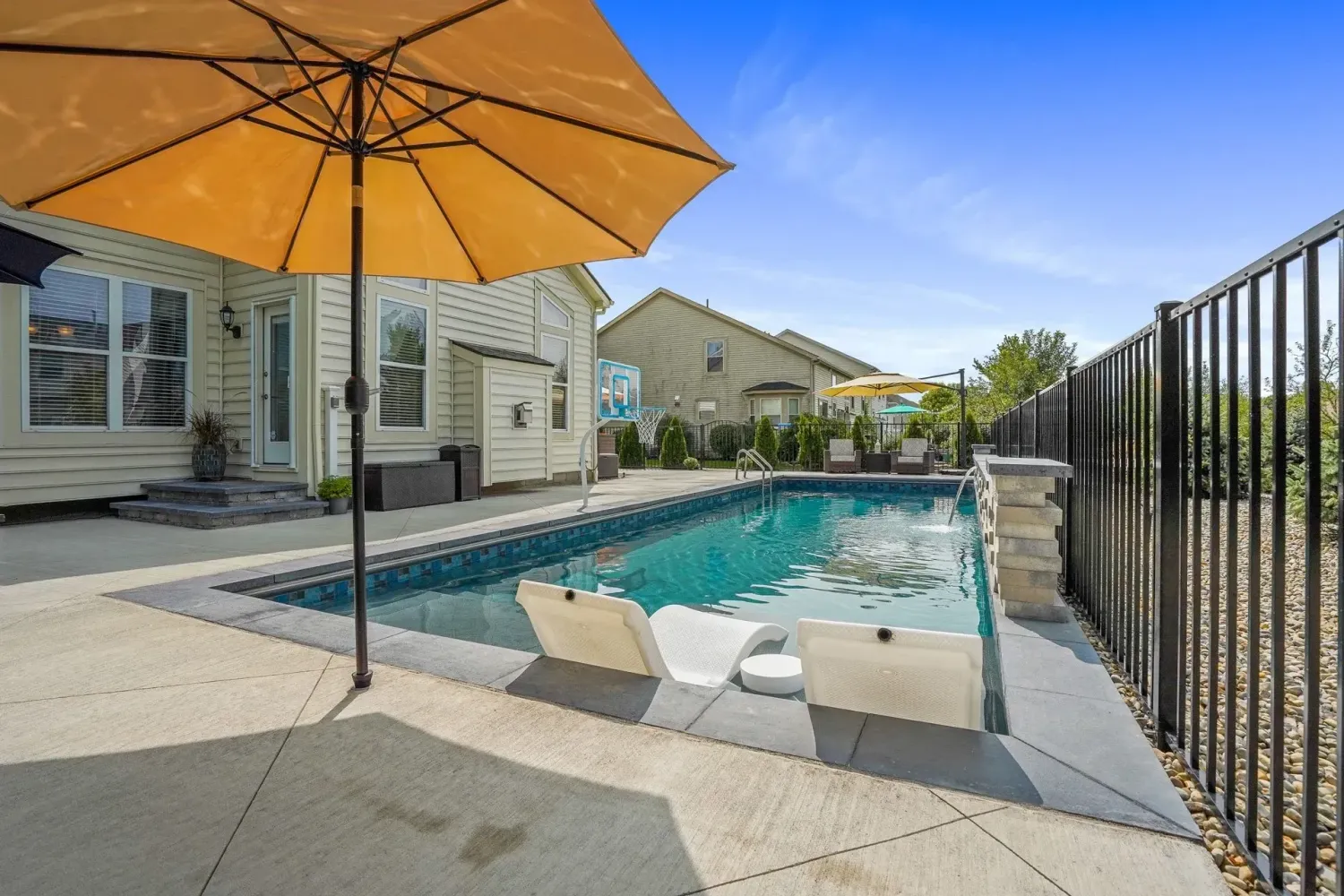
Week Two — Shoot, Cure, Tile, and the Travertine Cap
Monday of week two is shotcrete day. One truck, one crew, roughly 6 to 8 cubic yards for a 6×7 raised spa with a 16-inch-thick floor and 10-inch walls. We shoot wet-mix to a nominal 4,000 psi design strength, rod-screed the bench and dam wall, and steel-trowel the spillover edge to the exact elevation of the pool’s waterline tile. If the dam wall reads high, the spillover runs proud and splashes; if it reads low, the scuppers don’t throw water consistently. The target tolerance on dam-wall elevation is ±1/8 inch across the full 4-foot shared wall.
Tuesday through Thursday is cure. We wet-cure the shell twice daily — soaker hose over burlap — because Alpharetta’s summer humidity crashes to 40% on a breezy afternoon and early-age shrinkage cracks are a real risk on a tight spa shell. Thursday evening, the shell is ready for tile.
Friday is glass tile on the spillover face and waterline, travertine cap on the bench and bond beam, and the three scupper bowls mortared in at equal spacing across the 4-foot shared wall. The scupper geometry matters: 14-inch spacing between bowl centers, 1½-inch pipe diameter, with the lip of each bowl set exactly 3/4 inch above the dam-wall finish. That’s the geometry that gives you three clean arcs instead of a wet splatter. We adjust by dry-setting each scupper first and running the pump on the pool to eyeball the throw before final mortar.
The travertine cap gets coped to the same bullnose profile as the original pool coping, mitered at outside corners, and thinset-bonded with a polymer-modified mortar rated for submerged freeze-thaw. In USDA Zone 8a, Alpharetta takes roughly 20 freeze events per year — nowhere near as aggressive as Dahlonega or Dawson County, but enough to punish a cheap unmodified thinset over a five-year cycle.
Week Three — Equipment, Gas, Electrical, Plaster, and Startup
Monday of week three is equipment pad. The spa gets a dedicated heater — Pentair MasterTemp 400K BTU, natural gas — tapped off the home’s existing gas line with an independent shutoff at the meter. We almost never share a heater between pool and spa on a retrofit. A 400K BTU unit can bring a 500-gallon spa from 70°F to 102°F in about 28 minutes; sharing heat with the 25,000-gallon pool turns that number into hours.
The gas run is where Alpharetta’s utility landscape gets specific. Most of the city is on Atlanta Gas Light with 2 psi service to the meter, stepped down to 7-inch water column at the house. A 400K BTU heater needs roughly 400 CFH of gas at full fire — that usually means a ¾-inch black iron or CSST run up to the equipment pad, and for longer runs past 40 feet we upsize to 1-inch. We pull the residential gas permit separately from the spa permit and coordinate the inspector visit the same day as the electrical final.
Electrical is the other permit track. A dedicated 240V / 50A circuit feeds a Pentair IntelliFlo3 VSF pump for the spa jets, with a separate 120V line for the blower and the light. Everything bonded per NEC §680: equipotential bonding grid around the spa shell, #8 solid copper bond wire tied to the rebar cage during week one, and GFCI protection on all 120V circuits within 20 feet of the water. Alpharetta’s electrical inspector runs a tight tape on bonding — we leave the bond wire accessible at the pad until inspection passes.
On new-build Alpharetta projects along the Milton border, the electrical service sometimes sits with Sawnee EMC rather than Georgia Power. The inspection calendars don’t perfectly align. Sawnee tends to run a day or two longer on final service connects, which matters when you’re trying to fill a spa on the Friday of week three. We check the utility at the meter on day one so the schedule doesn’t surprise anyone.
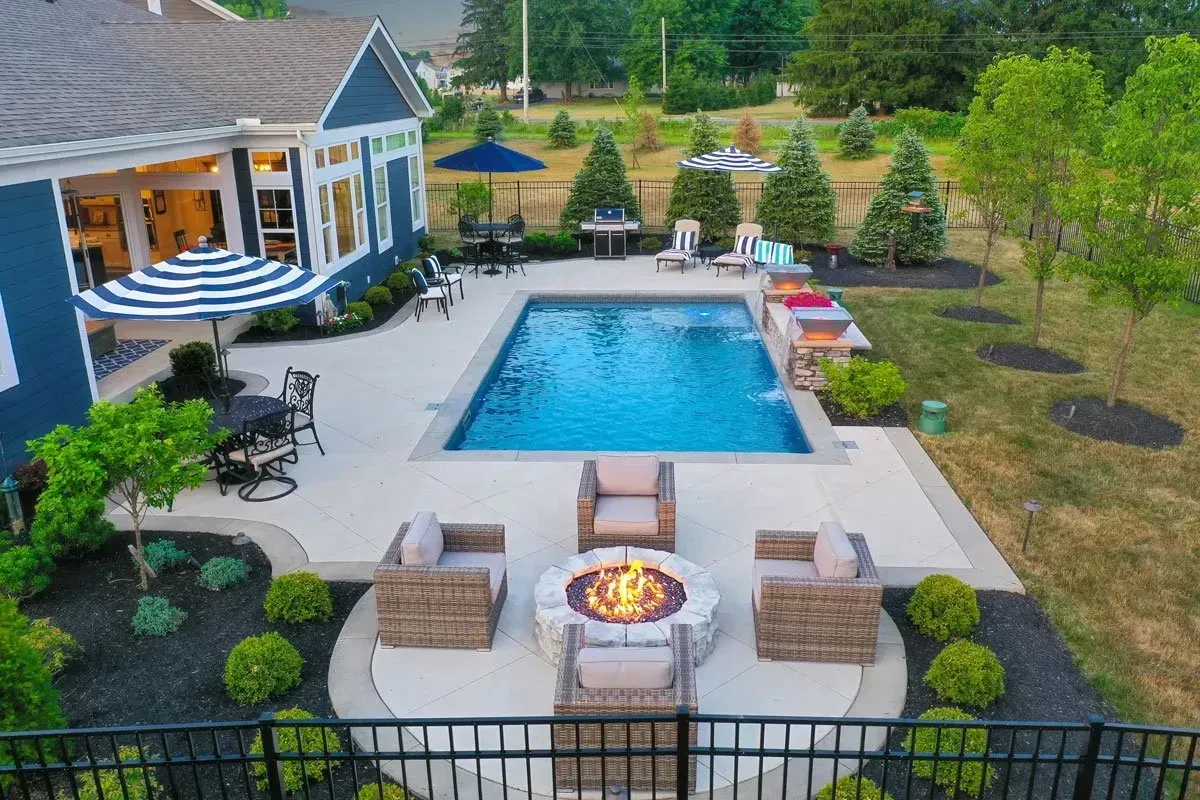
The Money Conversation — What $32K to $52K Actually Buys
The full raised-spa add sits between $32,000 and $52,000 depending on six variables. Worth naming each, because “it depends” without unpacking is a lazy answer.
- Size — 6×6 vs 7×8 spa footprint, jet count 6 vs 8 vs 10.
- Spillover style — three scuppers (simpler, cleaner), sheer-descent weir (dramatic, more tile), or full overflow wall (the most expensive).
- Finish — standard white plaster ($), mini-pebble ($$), glass bead like NPT StoneScapes or Jewelscapes ($$$).
- Gas line length — equipment pad 15 ft from the meter is a different number than 80 ft.
- Electrical distance — whether the existing pool panel has spare breaker capacity or needs a sub-panel.
- Deck restoration — whether the original travertine can be salvaged and re-laid, or whether we’re blending a new dye lot around the spa cap (this is where budgets drift).
Most Alpharetta projects land around $38K to $44K because the housing stock in Windward, Country Club of the South, and Hutchinson Farm tends to have enough existing gas and electrical capacity to avoid the expensive utility upgrades. New-build luxury infill near Avalon is different — smaller lots, tighter equipment pads, and sometimes a shared panel with the main house that needs a sub-panel added. That pushes the job to the top of the range.
What the 3-week schedule doesn’t include: HOA architectural review. Windward and Country Club of the South both run formal ARB approval on pool modifications with a 3-to-4-week window. We recommend submitting the ARB package — drawings, elevations, material samples, contractor insurance cert — the same day the city permit application goes in, so the two timelines run in parallel instead of sequentially.
Season math — six months becomes ten
The reason homeowners say yes to this retrofit, almost every time, comes down to a single number: how many weeks of the year the backyard gets used. A plain North Fulton pool — unheated, no spa — is a late-April to mid-October experience. Roughly 25 weeks of active use in an average Alpharetta climate year.
Add a raised spa with a dedicated 400K BTU heater and the usable window stretches to mid-March through early December. Winter evenings at 102°F are not just possible, they’re weirdly pleasant when the air temperature is in the 40s. The spa becomes the feature the family uses on Thanksgiving, on a quiet January Sunday, on a February date night. 25 weeks becomes 42 weeks.
The operating cost on the heater is the fair question. A 400K BTU Pentair MasterTemp running natural gas at roughly $1.20 per therm (Atlanta Gas Light’s fall 2025 residential blended rate in the 30004–30022 zip cluster) costs about $4.80 per hour at full fire. Bringing a 500-gallon spa up from 60°F to 102°F in winter takes roughly 35 minutes. Most of the time you’re holding temp, not heating from cold, so the real monthly cost for a typical 3-session-per-week user sits around $45 to $70 in January. That number surprises people in a good way.
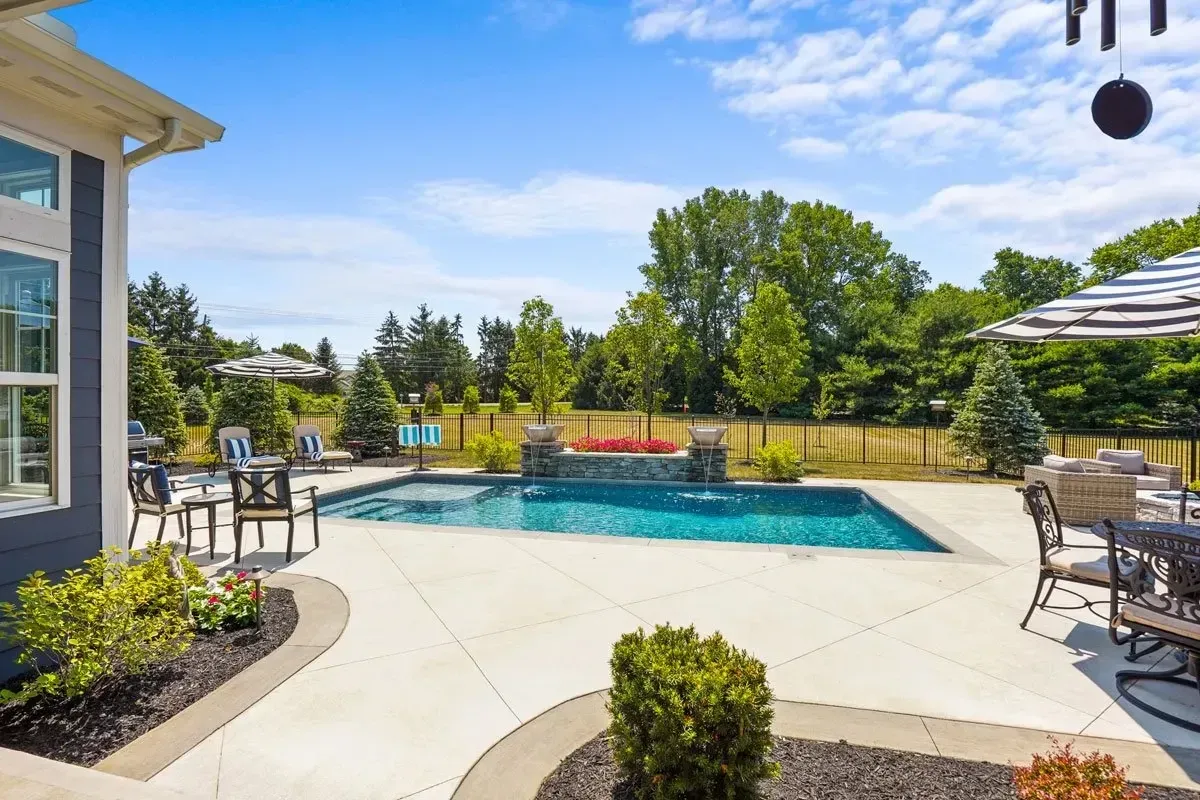
Materials, details, and the Piedmont clay problem
The single most common failure we see on raised-spa retrofits done by other builders in Alpharetta is a settlement crack on the back wall of the spa within 18 months of install. Almost always the same cause: the spa shell was poured directly on the Piedmont clay subgrade without over-excavation and crushed-stone replacement. Cecil and Appling soils expand and contract seasonally, and a 4,000-pound spa shell full of water is the perfect load to expose the problem.
The fix is in the sequence. We over-excavate 4 inches below the design grade, install a non-woven geotextile separator, and compact #57 crushed stone in two 2-inch lifts to 95% standard Proctor. The shell sits on engineered fill, not native clay. Adds about $800 to the job. Eliminates the settlement-crack class of failures entirely.
On finishes, we default to an exposed-aggregate plaster blend like NPT StoneScapes Mini Pebble for spa interiors in Alpharetta. White plaster is the cheapest option and looks clean for about three years, but the combination of high bather loads, high temperatures, and the subtle mineral content of North Fulton municipal water turns standard plaster chalky fast. Mini-pebble holds color and texture through year 10 with routine chemistry.
The spa cap is travertine for visual continuity with the existing pool coping, bullnose-profiled, thinset-set with a submerged-rated polymer-modified mortar. Cost delta is roughly $18 per square foot over stamped concrete, and it’s the single detail that makes the retrofit read as original rather than as an add-on. Cheap out here and every visitor notices.
The jet layout decision
Eight jets at two-per-wall is the default. Hip jets, low-back jets, mid-back jets, foot blasters on the opposite wall. We mock-up the layout in chalk on the form plywood before cage tie so the homeowner can sit in the empty form and check ergonomics. A spa that looks beautiful but sits wrong for the primary user is a $45K mistake.
The light spec
One Pentair Intellibrite 5G LED in the deep corner, wired on a separate 120V switch so the spa can be lit independently from the pool. Color-change, controllable via the same IntelliCenter app that runs the pool pump and heater. Most of our Alpharetta retrofit clients already have IntelliCenter from a prior equipment upgrade — the spa just drops into the existing app.
The Pre-Sign Checklist — Five Questions to Ask Before You Commit
If you’re sitting on a quote from any contractor — us or otherwise — for a raised-spa retrofit in Alpharetta, run this checklist before signing.
- Is the bond-beam tie-in detail in the contract? It should specify rebar size (#4), dowel depth (8 inches), spacing (12 inches on center), and epoxy product name.
- Is the subgrade preparation in writing? Over-excavation depth, crushed-stone type, compaction spec, geotextile layer.
- Is the heater oversized, not matched? A 250K BTU heater is too small for a retrofit spa in USDA Zone 8a. 400K BTU minimum.
- Is the travertine cap matched or compromised? Ask how they’ll handle the dye lot problem on 10-to-20-year-old deck stone.
- Does the schedule include both city permits and HOA ARB review? If the contractor says “we’ll figure out HOA later,” walk.
The three-week remodel only works when the contract answers every one of those questions on page one. Our Alpharetta retrofits close on time because the planning happens before the saw touches the travertine, not after.
Raised-spa retrofits across 20+ cities within 30 miles of Winder, GA
Three-week timelines, shared-wall engineering, dedicated 400K BTU heat, and travertine caps matched to your original deck — from Alpharetta to Dawsonville.