
The call came on a Thursday in late April from a homeowner off Bethelview Road in south Forsyth. Their paver patio — a beautiful Techo-Bloc Blu 60 install finished the previous spring — had white cloudy haze across every joint, and the sand they paid for was half gone. The culprit wasn’t installer error. It was the calendar.
They had their patio installed on a Saturday in mid-May. It rained Sunday morning. By Monday, every joint in the field was locked with a milky glue-like film, and the polymeric sand that was supposed to give them a decade of weed-free, ant-free, interlock-stable paver joints was halfway to the storm drain. That failure wasn’t a freak accident. In Forsyth County — across all 247 square miles of it, from the Coal Mountain foothills down to the Shiloh subdivisions — it happens to somewhere between 15% and 20% of all polymeric sand installs done between March and early June. And almost every single failure traces back to one variable the homeowner never thinks about and most contractors don’t explain: dew point.
This post is the version of the polymeric sand conversation we wish we could have with every homeowner who calls us about haze, wash-out, or ant trails through their two-year-old patio. It is not a generic guide. It is the Forsyth-specific argument for why the four-to-six-week window from late September through early November is the only time of year polymeric sand reliably performs the way the data sheet promises.
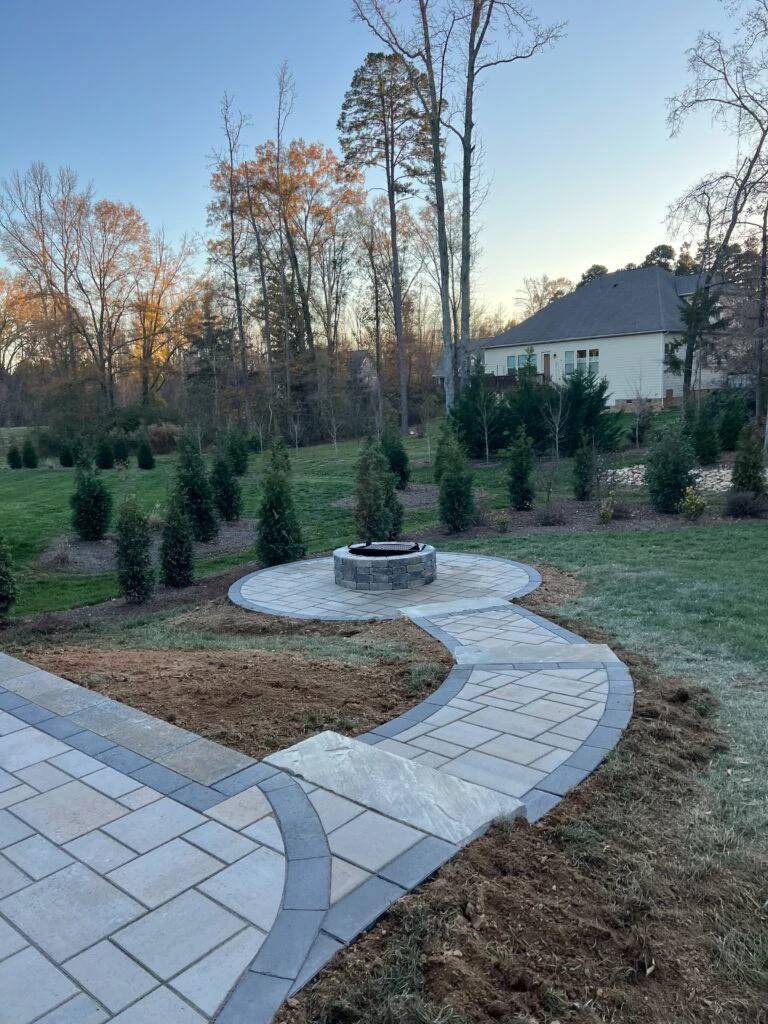
Why Forsyth Humidity Destroys Polymeric Sand — And What Polymeric Sand Actually Is
Polymeric sand is not regular joint sand. It’s a precision-graded silica sand blended with a proprietary polymer binder — typically a powdered acrylic or urethane derivative that activates with water. When you sweep it into paver joints, tamp the field, and mist it with a shower nozzle, the polymer softens, flows into void space, and cures into a semi-rigid matrix that resists wash-out, weed intrusion, insect excavation, and freeze-heave cycling.
The word “cures” is doing a lot of work in that paragraph. What most homeowners don’t realize is that the polymer cure is a controlled dehydration reaction. You add just enough water to trigger activation, then the joint has to dry — fully, completely, without interruption — for the polymer to set hard. If more water enters the joint before the cure finishes, the polymer re-softens, migrates upward, and either forms a white film on the paver face (that’s haze) or simply leaches out into a surface film that gets washed away on the next rain. Either way, the joint is compromised and the sand you paid for is gone.
Now plug in Forsyth County’s climate. We sit in USDA Zone 8a with an annual average of ~22 freeze events and roughly 52 inches of rainfall spread across the year, but the lion’s share of that rain falls in the March–June pop-up-thunderstorm season. Morning dew in May routinely soaks paver fields at relative humidity north of 85%, with dew points sitting in the low 60s. If a cured polymeric joint in Cumming gets misted by morning dew three mornings after install, that can still be enough moisture to re-activate an incompletely cured polymer. It’s an unforgiving chemistry, and our spring weather is the worst possible partner for it.
The dew-point threshold: Most polymeric sand manufacturers publish a minimum 24-hour no-rain window and a dew-point spread of at least 5°F below ambient air temperature for proper cure. In Forsyth County, that spread is reliably available roughly four months a year — late September through mid-November, and again briefly in February. Every other month, you’re gambling.
The Four-Week Forsyth Fall Window — 50–75°F, Sub-60% Humidity, Dry Nights
Here is the window we chase on every paver project across the county — whether it’s a tight side-yard patio in a Brookwood subdivision, a sweeping walkway-to-firepit build on a 3-acre estate near Coal Mountain, or a townhome courtyard in the 30041 zip south of GA-400 exit 13.
The window: late September through the first week of November. Daytime highs drift between 58°F and 75°F. Overnight lows settle in the 40s and low 50s. Relative humidity in the midday install hours drops reliably below 55%. Dew points in early October regularly hit the mid-40s. The Chattahoochee River corridor along Forsyth’s eastern edge — and the moisture plume off Lake Lanier’s south shore — still influence overnight dew, but the warm afternoon air has enough carrying capacity to burn dew off fully by 10 a.m., and that’s the hour we need the pavers dry before we start.
Compare that to spring. April and May in Forsyth average 68% relative humidity in the morning, with dew persisting until 11 a.m. on two out of every five install days. Afternoon pop-up storms arrive with less than two hours of radar warning. We have had polymeric jobs in the Bethelview corridor where we finished the misting step at 2 p.m., had blue sky overhead, and watched a storm cell come off Sawnee Mountain at 4:30 p.m. and dump 0.4 inches on the patio before the cure had hardened. That’s an 18% failure rate industry data that matches what our own install logs show — roughly 1 in 5 spring jobs need remediation on the front end.
The fall window is not just about humidity numbers. It’s also about what we call “stable sky.” Forsyth County’s position at the southern edge of the Blue Ridge foothills means late-September and October weather patterns are dominated by dry Canadian high-pressure systems pushing down through the Chattahoochee National Forest. Those systems bring three, four, sometimes six consecutive days of unbroken blue sky. That’s what polymeric sand needs, and that’s why we plan our fall schedule around these cold fronts the way a farmer plans harvest.
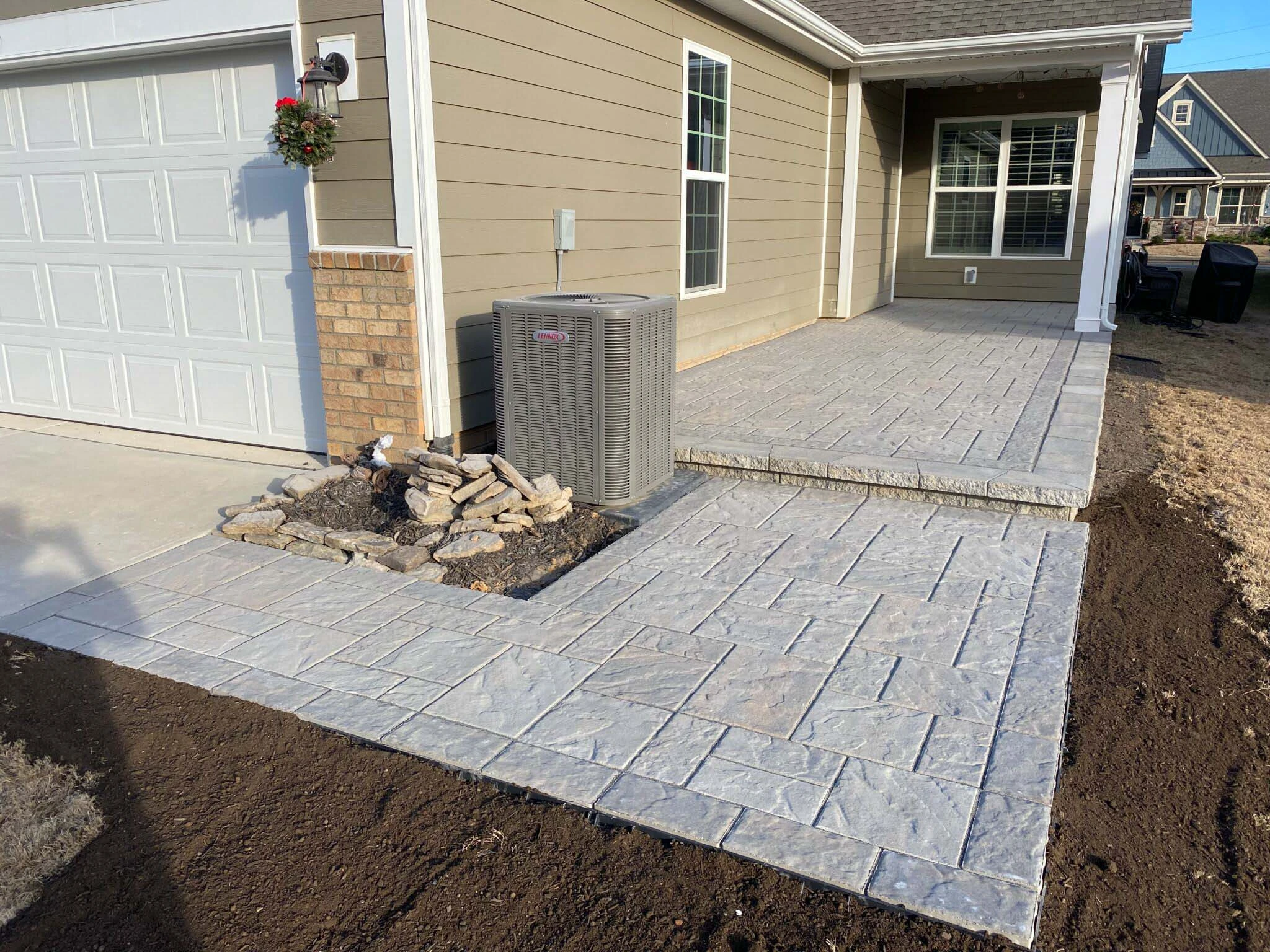
The Two-Application Protocol: Day 1, Day 3, Day 5
Even inside the fall window, one-pass polymeric sand installation leaves performance on the table. The protocol we run on every Forsyth County paver project — and the one we wish more of our competitors ran — is a three-visit sequence spread across five days. Here is the exact sequence, timed for the Forsyth fall climate.
Day 1 — Install Day
Pavers are laid, field is cut in, soldier course is locked. Surface is clean and bone dry, meaning no dew, no misting, no hose pressure within 4 hours of install. We confirm dryness with the back-of-hand test on five spots across the field, and we confirm forecast with a 72-hour lookahead on three separate weather models. Then we sweep in polymeric sand, vibrate with a plate compactor fitted with a urethane mat, blow the surface clean with a leaf blower, and mist in sections using a shower head attachment at low pressure. Total water per 100 sq ft is in the neighborhood of 2–3 gallons — enough to activate, not enough to flood. Job site is then fenced off. No foot traffic for 24 hours.
Day 3 — Compact + Top-Up
Forty-eight hours later, the polymer has reached what the chemists call “green strength” — firm but not fully rigid. On Day 3 we come back and walk the whole field with a joint-depth gauge. Anywhere joints have settled more than 1/8 inch — which is normal — we sweep in a top-up layer of polymeric, vibrate again (lightly, with the urethane mat), and re-mist only the topped-up sections. Most homeowners skip this step because most installers skip this step. It is the single most important visit in the whole sequence, because paver joints in a newly compacted field always drop a little, and joints that are top-level full last roughly 3x longer against wash-out than joints that finish below grade.
Day 5 — Final Wash and Inspection
At Day 5 the polymer has reached roughly 85% of full cure strength — manufacturer data sheets typically rate full cure at 7–10 days, but 85% is enough to survive a controlled wash. We come back with a garden hose at mid-pressure, no nozzle, and flood-rinse the whole surface to clear any surface polymer haze that made it onto the pavers. We walk every joint line one final time, flag any still-soft spots, and deliver the field clean. Full foot and furniture load at Day 7. Driveway-grade vehicle load at Day 14.
Why three visits, not one: A one-visit install depends on perfect joint depth, perfect polymer activation, and perfect weather — all at the same time. The Day 1 / Day 3 / Day 5 sequence builds in tolerance for the one variable you can’t control (joint settlement) and the two you only half-control (humidity and dew). It’s roughly $180–$320 more labor per 500 sq ft project — and it doubles the joint lifespan.
Gator Maxx G2 vs Techniseal HP NextGel — The Forsyth Climate Verdict
On every paver proposal we write in Forsyth County, the line item for polymeric sand specifies one of two products: Alliance Gator Maxx G2 or Techniseal HP NextGel. Both are premium polymer-modified joint sands. Both are rated for residential and light commercial load. Both will outperform big-box-store polymeric by a factor of three. But they behave differently in our climate, and the choice matters.
Gator Maxx G2
Gator Maxx G2 is the workhorse. Alliance specifies it for joint widths from 1/8 inch to 4 inches, and it accepts a wider installation window than NextGel. Its published minimum install temperature is 35°F, which matters in Forsyth because late-November and February installs sometimes drop into the 40s before noon. Gator’s polymer system tolerates joint settling better — meaning if a joint drops 3/32 inch between Day 1 and Day 3, the top-up application bonds back to the existing polymer cleanly. It also forgives slight dew exposure better than NextGel. For most of our Forsyth County residential projects — patios, walkways, firepit aprons — Gator Maxx G2 is the default specification. Current wholesale pricing lands around $37–$42 per 50 lb bag, enough for roughly 100 sq ft of 1/4-inch joints.
Techniseal HP NextGel
NextGel is the specialty product. Its polymer system cures harder and sets faster — Techniseal publishes a 15-minute haze clearance window versus Gator’s 10, but NextGel also reaches walkable strength in about half the time. Where it shines is pool decks, driveways, and any hardscape that will take concentrated water load. The joint hardness at full cure resists hose pressure and pressure-washer blast better than Gator. Where it punishes you: NextGel is less forgiving of sub-optimal weather. Its minimum install temperature is 50°F, it requires a stricter 24-hour no-rain window, and if you get dew in the first 12 hours, the recovery window is narrower. For a pool-deck paver install in Shady Grove or a driveway apron in the 30028 zip code, NextGel is the right specification. For a shaded side-yard patio that won’t see hose or pool splash, Gator Maxx G2 is the economical and equally durable pick.
The two brands are priced within $5 a bag of each other at wholesale. The decision is driven entirely by application and site exposure, not budget. When a Forsyth homeowner asks us which is better, the honest answer is: better at what? Gator is better for tolerance. NextGel is better for raw performance in demanding wet-use conditions. The fall install window is the single biggest variable either way — if we can’t install in the window, we push the job to February rather than cut corners with either product.
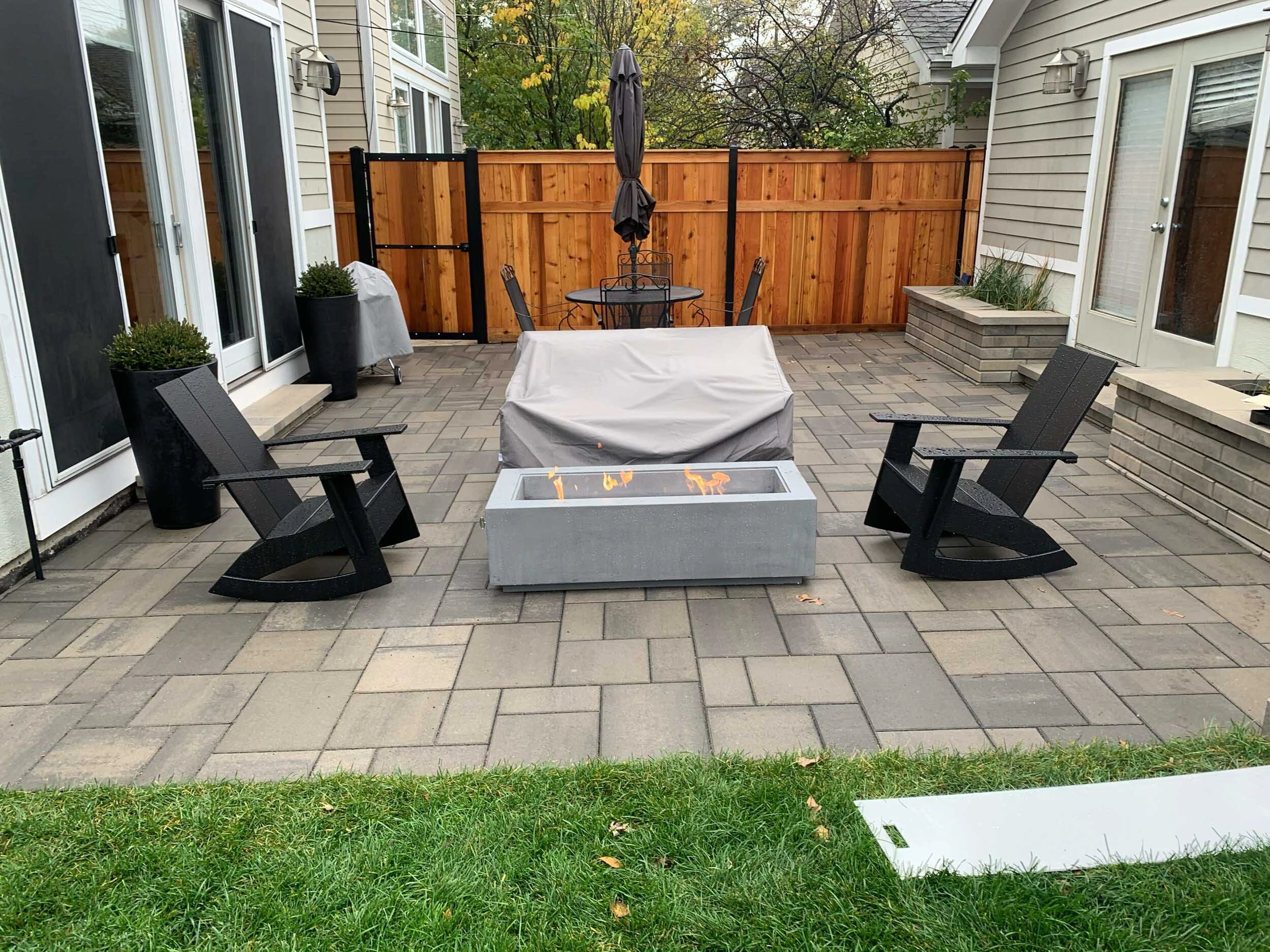
The Forsyth Sub-Market Reality: South Forsyth Commuter Homes vs. North Lake-Adjacent Estates
Forsyth County is not one market. It is two, maybe three, depending on how you draw the lines. The fall window is the same everywhere, but the projects we run change dramatically depending on which half of the county we’re working in, and that changes the polymeric sand strategy around the edges.
In south Forsyth — the corridor hugging GA-400 between exits 13 and 16, including Bethelview, Brookwood, Shiloh, and the tighter subdivisions near Post Road — we’re mostly working with 0.2-to-0.5-acre lots and homes built 1998–2015. The paver jobs trend medium: 300–600 sq ft patios, walkway-to-driveway connectors, pool decks on 14×28 vinyl-liner pools. Dew exposure in these neighborhoods is reliable but shorter-duration because the denser subdivision canopy creates warmer microclimates overnight. We can sometimes start misting by 9:30 a.m. in early October. Gator Maxx G2 is specified on probably 70% of south-Forsyth paver projects.
In north Forsyth — Coal Mountain, Ducktown, Shady Grove, the Hwy 369 / Browns Bridge corridor heading toward Lake Lanier — we’re working with 2-to-5-acre estate lots, Chattahoochee-adjacent properties, and homes with longer driveways, bigger pool decks, and genuine ridgeline topography. Lake Lanier’s moisture plume can push dew point up 3–5°F overnight on properties within a mile of the south shore, and the Sawnee Mountain Preserve fog on cooler October mornings lingers until 10:30 a.m. These projects get NextGel more often because the sites demand harder joints — driveway aprons that see vehicle traffic, pool decks that see hose and splash, firepit aprons that see foot traffic concentrated at the entry point. Day 5 in north Forsyth sometimes becomes Day 6 because we want a longer cure before the final wash.
Either sub-market, the fall calendar is the organizing reality. We typically open the Forsyth polymeric sand schedule the third week of September and close it by November 8th or 9th, depending on where the first real cold front pushes through. Beyond that, we push to February installs or wait until the following September. We will not install polymeric sand in July in this county. We have watched too many of our competitors’ July jobs come back as remediation calls at 18 months.
HOA and permit reality: Forsyth County permits north of 200 new-pool installs per year, and HOA density in south Forsyth means roughly 9 of every 10 subdivision homes need exterior-improvement approval before hardscape work begins. Approvals typically take 10–21 days. If you’re planning a fall polymeric install, start the HOA paperwork by early August. That timeline math is the actual bottleneck we see homeowners miss more often than the weather one.
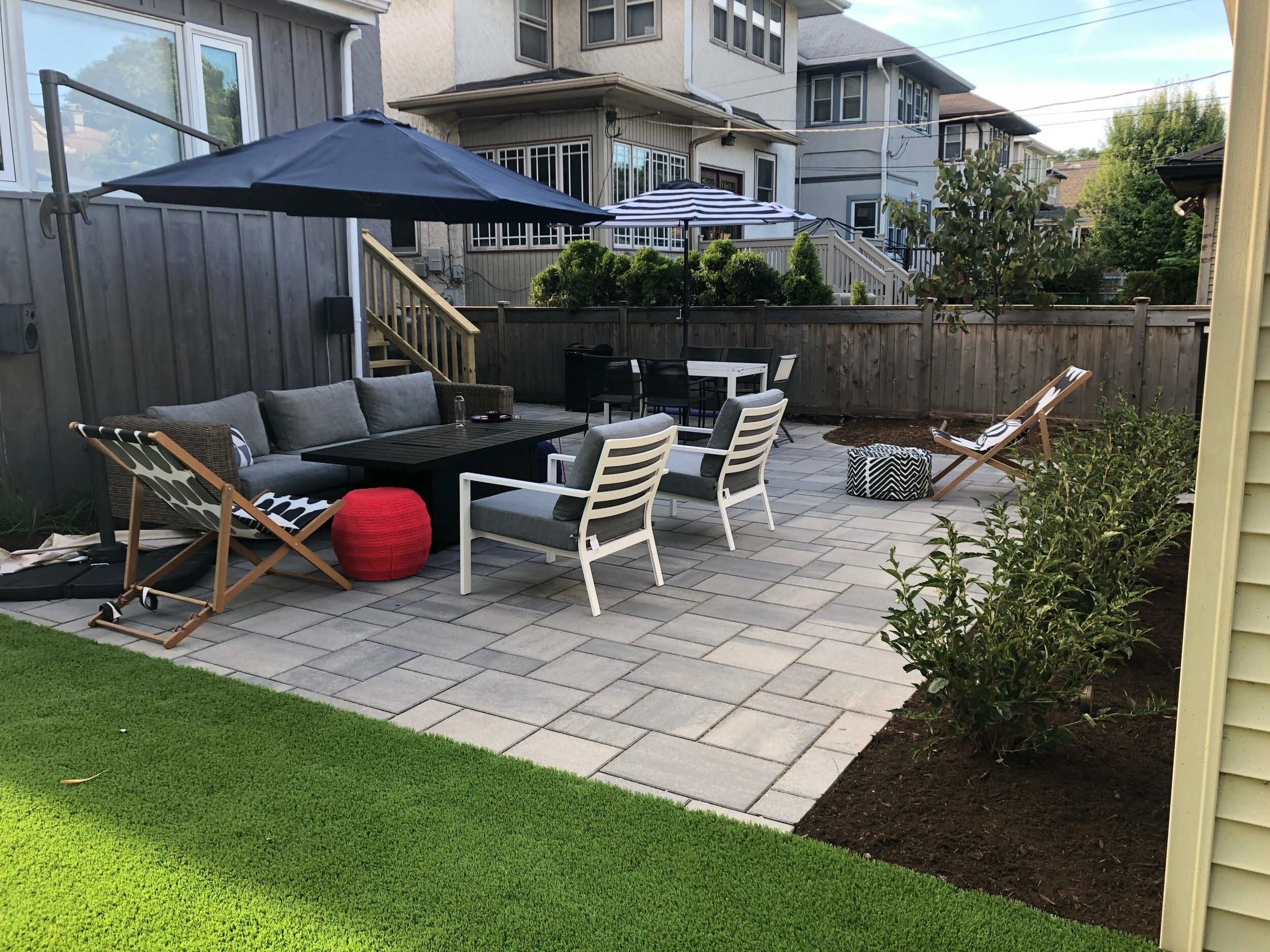
What to Do With This Information — A Homeowner’s Forsyth Fall Checklist
If you own pavers in Forsyth County and you’re reading this in spring, the honest answer is: don’t install polymeric sand yet. If your joints are soft, your sand is washing, or you’re planning a new patio install, build the calendar backwards from the fall window and use the spring and summer to get your ducks lined up.
Here is the calendar we give homeowners who call us between April and August:
- April–June: Design, measurement, material selection. Decide Gator Maxx G2 or Techniseal HP NextGel based on application. Submit HOA application.
- July–August: Base prep can happen anytime — geotextile fabric, 4–6 inches of compacted crusher run, 1 inch of bedding sand. Set your concrete header or aluminum restraint. Pavers can be laid. Joint sand gets paused.
- Late September: Three-day forecast check. First clear window with three-to-five consecutive dry days, dew burning off by 10 a.m., daytime highs 60°F–75°F. Schedule Day 1.
- Day 1 / Day 3 / Day 5: Install, top-up, final wash. Walk away at Day 7.
- Year-round maintenance: Seal coat (optional) at the 12-month mark if you want stain resistance. Joint-depth check every 24 months. Light top-up every 5–7 years if settlement shows.
The patio we built on Bethelview that prompted this post? We remediated it in October of that same year. Full joint evacuation with a vacuum setup, full re-installation of Gator Maxx G2 under the Day 1 / Day 3 / Day 5 protocol, crisp fall weather, no dew after 9:30 a.m. the whole install week. Two years later, the joints are still hard, still full, still weed-free. The difference was not product. It was not installer. It was calendar.
In Forsyth County, in this climate, on this clay, under this sky — the polymeric sand conversation is ultimately a calendar conversation. Get the calendar right and the product does what the data sheet says. Get the calendar wrong and nothing saves you.
Paver patios, walkways and pool decks across Forsyth County and 20+ cities within 30 miles of Winder, GA
Planning a fall install window this year? Start the conversation now — our September through early November schedule fills fast, and the Day 1 / Day 3 / Day 5 polymeric protocol is built into every paver project we quote.