
Dawsonville has the fastest pergola rot test in our service area — 30 freeze events a year, 55 inches of rainfall, and a hardwood canopy that keeps overhead timber wet for days. Pick the wrong material and your pergola is failing before your pool warranty expires.
Here is what nobody building a pergola in Dawsonville tells the homeowner writing the check. The same 12′×14′ structure that lasts 22 years in dry Cherokee County will be structurally compromised in Dawsonville in nine. The culprit is not storm damage, installer skill, or the stain. It is the sum of three things every property on GA-400 north of Cumming shares: the tree canopy, the elevation, and the freeze count.
Dawsonville sits at roughly 1,270 feet of elevation — the highest city in the Primetime Pools service area. That matters because every 400 vertical feet above the Piedmont adds three to five freeze events per winter. The official NOAA average here is close to 30 freeze-thaw cycles annually, compared with around 20 in Dacula and Snellville. Each cycle drives moisture deeper into the end-grain of a timber post, cracks the paint film, and widens the check lines that fungal hyphae ride into.
Add 55 inches of annual rainfall — mostly in mountain-pattern afternoon thunderstorms — and an oak-hickory canopy that shades two-thirds of residential lots in Foxcreek, Riverbend, and Kensington Ridge, and you have the worst possible climate for untreated timber overhead. This post breaks down the 20-year total cost of ownership for three materials pool owners actually consider: standard cedar, Western Red Cedar, and modern aluminum louvered systems from StruXure and Renson.
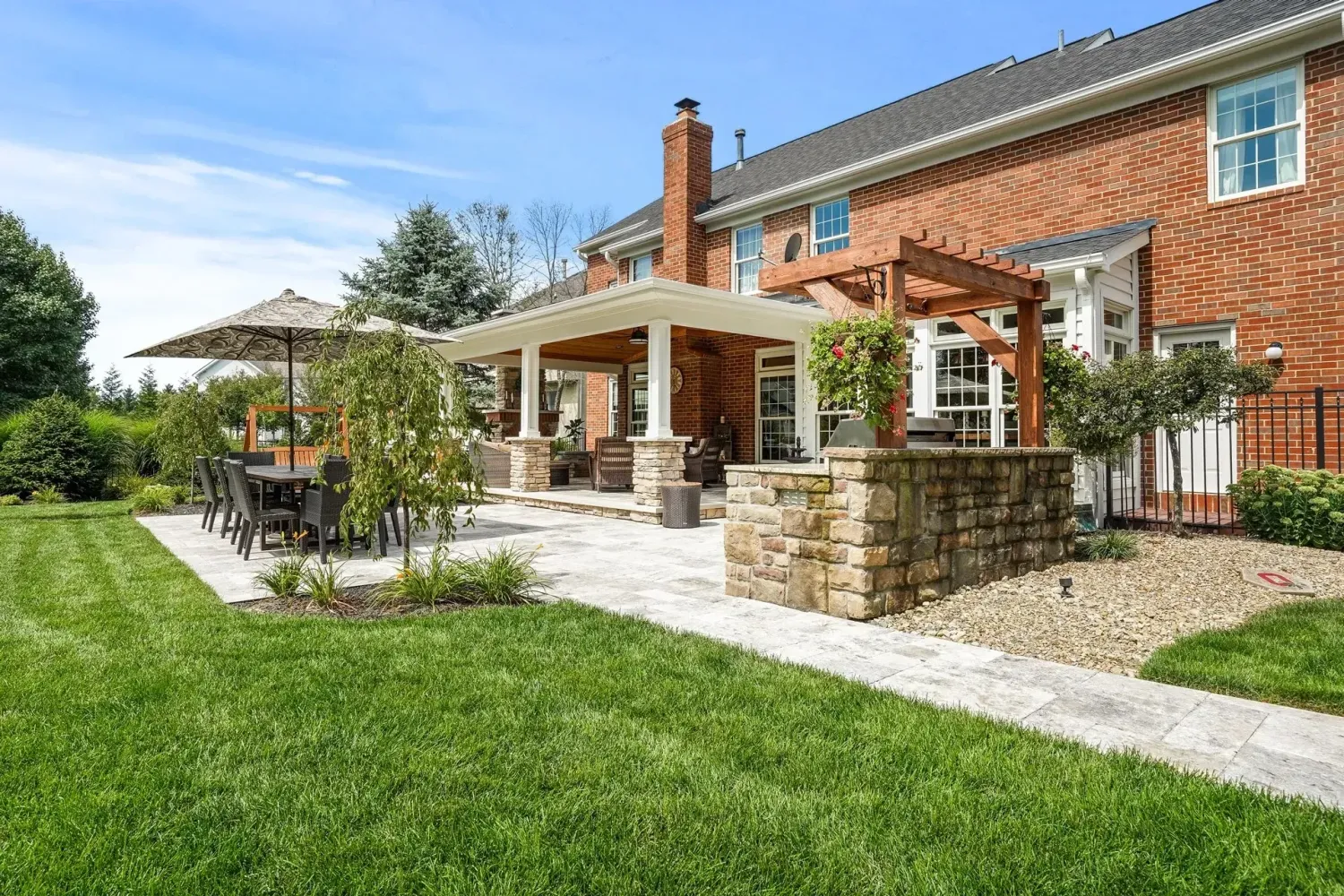
Why Dawsonville Is the Rot Capital of Our Service Area
The ground tells the story. Drive a pool excavator five feet down in Dacula and you hit Cecil clay — dense, wet, predictable. Drive the same bucket down in the Etowah River Club or Mountain Laurel neighborhoods of Dawsonville and by three feet you are fighting saprolite and weathered granite. Our crews have hit hard rock at 28 inches on more than one excavation off Dawson Forest Road, and we now budget an $8 to $14 per cubic yard rock premium into every quote north of Hwy 53.
That rocky subsoil is actually good news for pergola footings — drainage is superior to clay-heavy Gwinnett lots. But the microclimate above the ground is brutal on overhead timber. Three compounding factors:
- Canopy coverage. Oak, hickory, and tulip poplar dominate Dawson County. Their leaf litter traps on top of a pergola canopy, holds water for 48+ hours, and acts like a compost starter culture on any cellulose surface below.
- Dew retention. At 1,270 feet, dew points lag the valley by two hours. Timber surfaces stay wet into late morning for roughly 180 days a year.
- Freeze-thaw count. Every freeze event pushes trapped moisture into a micro-expansion inside wood fiber. Thirty cycles a year, times twenty years, equals 600 expansion events the fasteners and joints have to survive.
Compare that to a pergola installed on a west-facing Cumming lot with no tree cover. Same lumber, same stain, same installer — different rot timeline. The Cumming pergola at year 15 looks like the Dawsonville pergola at year 9.
Field benchmark: Our crew retrofitted three 2010-vintage cedar pergolas in Foxcreek between 2022 and 2025. All three had load-bearing post rot at the base within 11 years. None had reached year 15.
Material #1 — Standard Cedar: The 8-12 Year Clock
"Cedar" on the big-box shelf is almost always Eastern White Cedar or Northern White Cedar — lighter, softer, cheaper. It arrives kiln-dried to 15-18% moisture, retails at $7 to $11 per square foot installed for a 12′×14′ pergola, and looks great the day it goes up. In Dawsonville’s climate, it lasts 8 to 12 years before structural intervention is required.
The failure points are predictable. Posts rot at the concrete interface first — water wicks up into the end-grain where the post meets the footing or saddle. Rafter tails go next, because that is where canopy leaf litter sits longest. By year 10 the cross-beam connections are loose enough that a strong thunderstorm off Amicalola can twist the frame out of square.
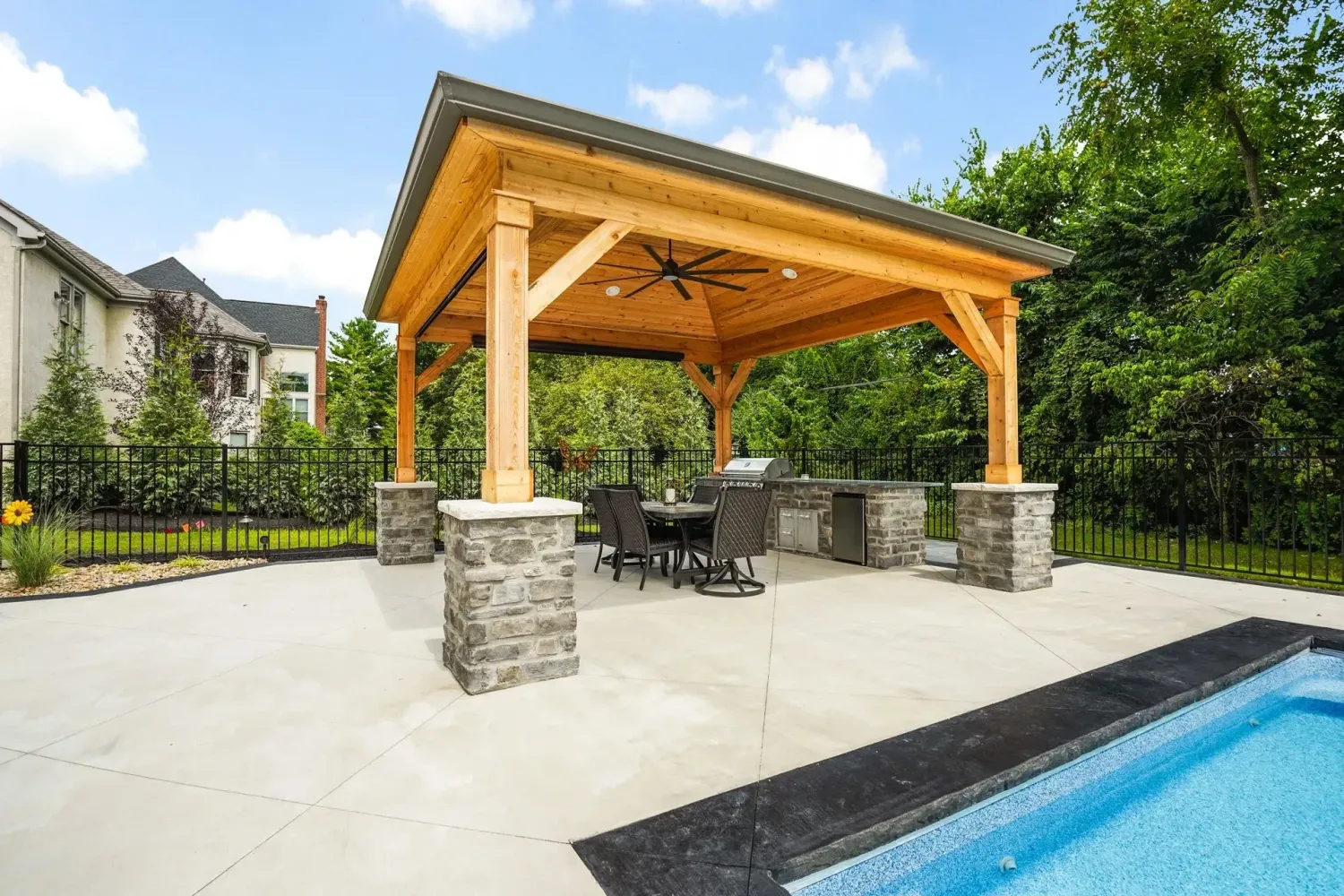
The math gets ugly fast. A standard cedar pergola needs a full strip-and-restain every 18 to 24 months to hit the high end of its lifespan. Call that $1,400 to $1,900 per cycle with a professional crew in Dawsonville — a premium over metro-Atlanta labor because crews have to truck up GA-400 and most installers charge a travel line item past exit 17.
Over a 20-year horizon, a standard cedar pergola in Kensington Ridge or Applewood will require one full replacement around year 10, plus continuous maintenance. Total 20-year cost: roughly $4,200 purchase + $15,000 maintenance and replacement = $19,200.
Material #2 — Western Red Cedar: The 15-20 Year Premium
Western Red Cedar (WRC) is a different species from a different ecosystem — Pacific Northwest old-growth territory, though most modern supply is second-growth from British Columbia. It carries natural thujaplicins, the fungicidal oils that give the wood its pink-red color and pepper smell. Those oils are the reason a WRC shake roof in the San Juans hits 40 years; they are also the reason a WRC pergola in Dawsonville doubles the lifespan of standard cedar.
Expect $12 to $16 per square foot installed for a true #2-Clear-and-better WRC 12′×14′ pergola in Etowah River Club or Big Canoe. The lumber arrives at 12-14% moisture, checks less, and accepts stain more evenly. Built with stainless fasteners and copper post saddles, a WRC pergola under Dawsonville’s canopy will deliver 15 to 20 years of useful life before major structural work.
Spec that matters: Insist on Clear Vertical Grain (CVG) Western Red Cedar for posts and cross beams. Knotty "Architect Knotty" grade is fine for decorative rafters but will crack at fastener points within seven years.
WRC still needs maintenance. Plan on a 30-month reseal cycle with a penetrating oil finish like Penofin or Messmer’s UV Plus. That is a $900 to $1,300 service call in Dawsonville. Over 20 years: one purchase at $2,500 for the material + labor to $7,500 installed, plus roughly 7 reseal cycles at $1,100 average = $15,700 total.
WRC beats standard cedar on 20-year cost. It does not win on year-one price. The homeowner who is writing a check in year one and doesn’t plan to own the home past year 12 often defaults to standard cedar — and pays the total-cost penalty only if they stay.
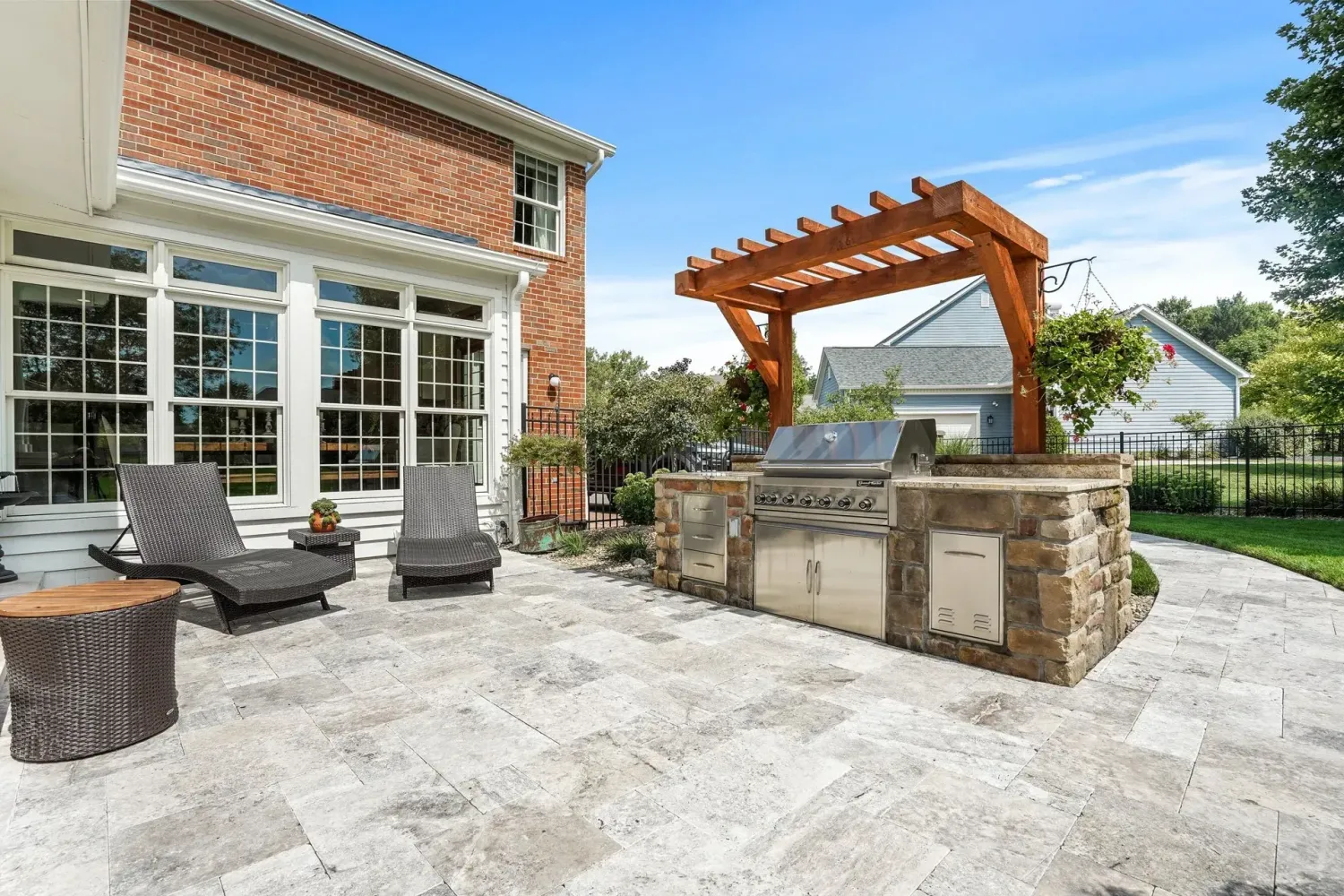
Material #3 — Aluminum Louvered: The 40-Year Play
The third category is what has actually changed the pergola conversation in Dawsonville over the last five years: motorized aluminum louvered systems. The two category leaders are StruXure (U.S., based in Covington, GA) and Renson (Belgium). Both offer bladed roofs that open and close on command — rain sensors trigger automatic closure, wind sensors trigger safety mode, and the louvers open for solar gain on a cool October afternoon.
The structural frame is extruded 6063-T5 aluminum with a powder-coat finish rated for 20+ years of color retention. There is no cellulose in the structure. No wood fiber for fungus to colonize. No end-grain for water to wick into. The published lifespan is 40+ years with zero maintenance beyond occasional powder-coat touch-up and a louver motor service every 10 to 15 years.
The catch is the check. Installed cost in Dawsonville runs $24 to $36 per square foot for a 12′×14′ StruXure Pergola X or Renson Camargue. That is $4,000 to $6,000 for the footprint alone, plus $3,000 to $7,000 for the motorized louver system and optional integrations — LED perimeter lighting, screens, heaters, speakers. A loaded unit lands north of $18,000.
For Amicalola EMC service territory, the electrical tie-in is straightforward — aluminum pergolas take a dedicated 20-amp circuit for motors and lighting, pulled from the house panel by a licensed electrician and coordinated with the Dawson County permit office at 25 Justice Way. Expect $600 to $1,200 for the circuit run if the panel is in the basement and the pergola sits 40 feet from the foundation.
The 20-Year Total Cost of Ownership — Side by Side
Here is the arithmetic for a 12′×14′ (168 square foot) pergola in Dawsonville, averaged across Foxcreek, Riverbend, and Chestatee lots we have bid in the last 24 months. All numbers are in 2026 dollars and assume realistic maintenance, not ideal maintenance.
- Standard Cedar — Year-1 install: $1,500. Maintenance over 20 years: ~$12,000. One full replacement at year 10: $1,700. Total: $19,200. Lifespan without major rebuild: 8-12 years.
- Western Red Cedar — Year-1 install: $2,400. Maintenance over 20 years: ~$7,700. No full replacement required if built correctly. Total: $15,700. Lifespan: 15-20 years.
- Aluminum Louvered (StruXure/Renson) — Year-1 install: $4,000 frame + $4,500 louver system = $8,500 base. Optional upgrades (lighting, screens): $3,000. Motor service at year 12: $800. Total: $12,300-$16,000. Lifespan: 40+ years.
The break-even line is year 18. By year 18 the aluminum pergola is running cheaper per year than either timber option, and by year 25 it is dramatically cheaper. The WRC finishes a close second; standard cedar loses the 20-year race by a wide margin in every Dawsonville microclimate we have modeled.
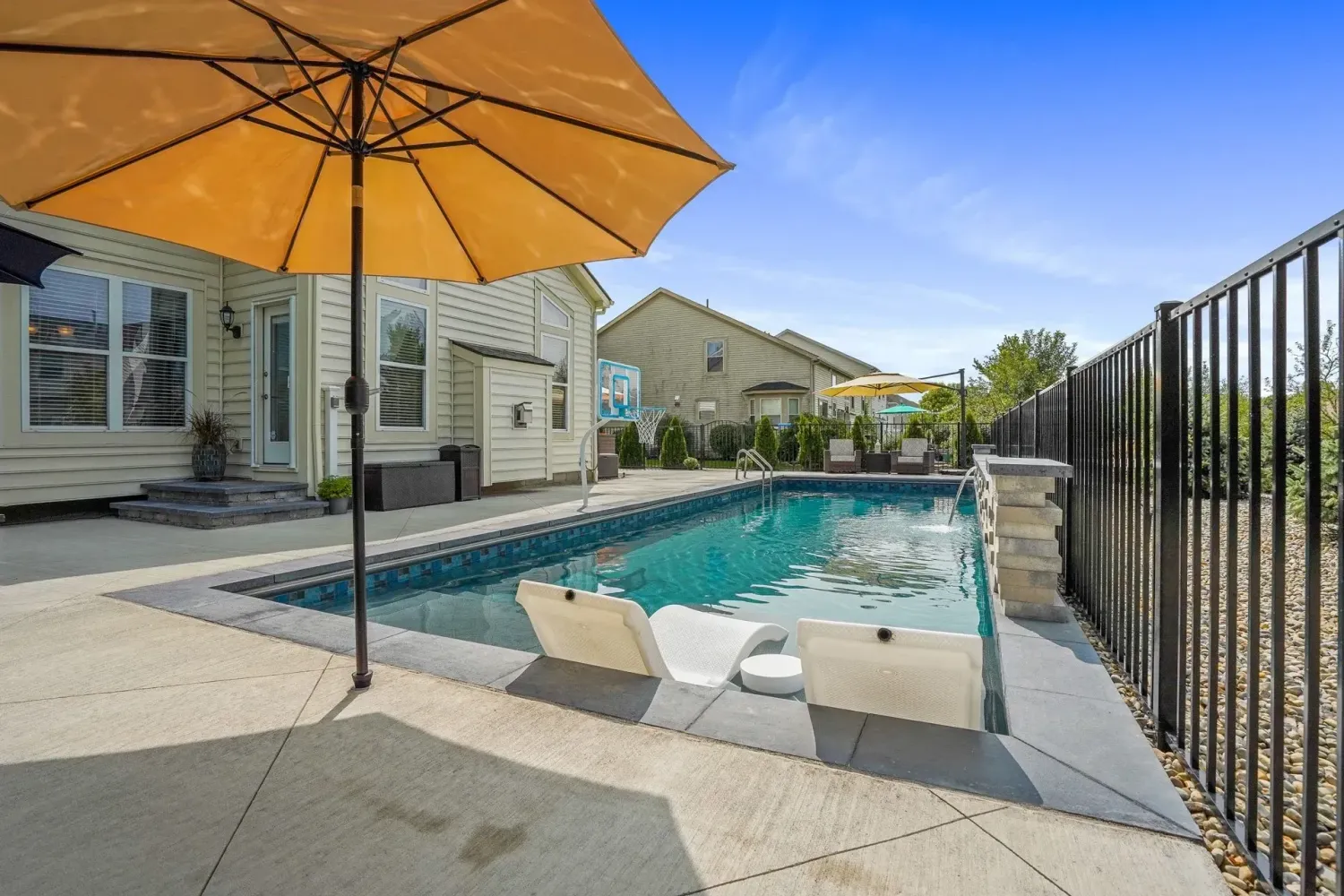
The honest answer depends on the decade of the homeowner. Someone planning a 20-year stay in Mountain Laurel or Chestatee should price WRC and aluminum louvered and almost never standard cedar. Someone flipping a house before year five should buy cedar, stain it well, and let the next owner worry about it. Someone who wants the lowest lifetime cost and the least maintenance should buy aluminum — period.
What Dawson County Requires (And What It Doesn’t)
Pergolas in Dawson County fall under the residential accessory structure section of the adopted 2018 International Residential Code, as enforced by the Dawson County Department of Planning & Development at 25 Justice Way. The key thresholds:
- Over 120 square feet — building permit required. A 12′×14′ pergola (168 sq ft) always triggers a permit.
- Attached to the house — requires a load-path engineering note and usually a structural connection detail at the ledger. Dawson County Planning is stricter than many Gwinnett jurisdictions on ledger flashing.
- Electrical — any motorized pergola or lighting integration requires a separate electrical permit coordinated with Amicalola EMC for service capacity confirmation.
- Setback — typically 10 feet from side property lines, 25 feet from rear, though subdivision covenants in Etowah River Club and Big Canoe often override with stricter numbers.
The permit fee schedule runs $85 to $240 for a freestanding pergola as of early 2026. Inspections are single-visit for a simple pergola, two-visit (rough and final) for anything with motors or integrated electrical. Turnaround from application to approved permit is typically 8 to 14 business days in Dawson County — faster than Forsyth, slower than Hall.
HOA watch: Big Canoe Architectural Review requires submitted material samples for exterior structures and has denied aluminum louvered pergolas on aesthetic grounds in the past. Pull covenants before quoting.
How We Specify Pergolas on Dawsonville Pool Projects
When Primetime Pools is building a pool in Dawsonville and the homeowner wants a pergola tied to the deck, we default-spec WRC for under-$20,000 budgets and aluminum louvered for budgets above $18,000. We rarely recommend standard cedar unless the homeowner is explicit about a short ownership horizon or a tight budget.
For attached pool pergolas, we coordinate the post footings with the deck structural layout during the pool dig. That saves $1,500 to $3,000 in later labor because the excavator is already on-site, the rock premium is already budgeted, and we can tie footings into the pool shell’s bond beam if structurally appropriate. Pergola footings in Dawsonville’s saprolite-rich subsoil usually hit bearing capacity at 36 inches instead of the 42 inches typical in Gwinnett clay — a small win that compounds across four footings.
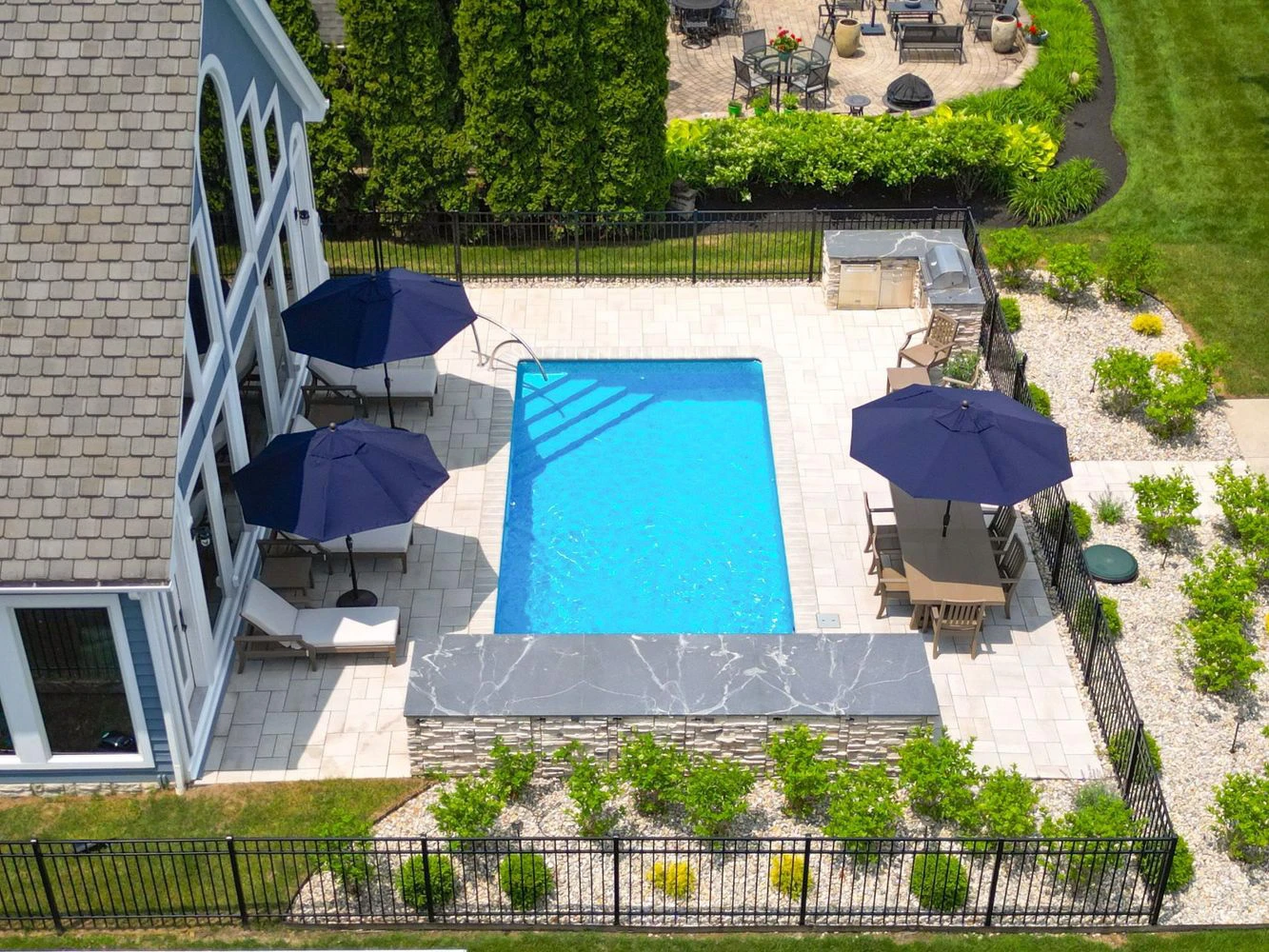
For the motorized aluminum systems, we become a bottleneck if the homeowner orders during the summer-demand spike. StruXure lead times from the Covington factory run 10 to 16 weeks in peak season; Renson’s North American distribution is closer to 12 to 20 weeks with more variance. If you want aluminum louvered on a pool that’s opening Memorial Day weekend, specification needs to be locked by early February.
A last note on fasteners, because this is what separates a pergola that hits its rated lifespan from one that dies early. Every pergola we build in Dawsonville — cedar, WRC, or aluminum — uses 316 stainless fasteners, not galvanized, not 304 stainless. Three-one-six is the marine-grade alloy that resists the tannin acid leaching from oak leaf litter that sits on top of timber in heavy canopy lots. Galvanized streaks the wood black within three winters. That single line-item spec adds $180 to the material cost and doubles the joint lifespan.
Pergola design and construction across 20+ cities within 30 miles of Snellville, GA
If your Dawsonville property sits under a hardwood canopy at 1,200+ feet of elevation, the material you pick will decide whether you rebuild once or never. We’ll walk the site, price WRC and aluminum louvered side-by-side, and show you the 20-year math before you commit.