
A Sycamore Ridge homeowner called us out on a Tuesday in late June. He had laid 840 square feet of Belgard pavers himself the previous fall, swept in a single bag of big-box polymeric sand, misted it down, and called it done. Nine months later the joints were channeling out like little creek beds after the first real summer thunderstorm rolled through off Hog Mountain Rd. He stood there holding a Ziploc bag of wet sand swept up out of the gutter and asked the question every Dacula homeowner eventually asks: why did it fail in under a year?
It failed because he did the application once. That was the whole story. The pavers were level. The base was properly compacted. The product was real polymeric sand — not dollar-store jointing sand. The homeowner followed the bag instructions and still watched his joints wash out during the first 2-inch rain event of summer. One application is not a mistake of effort. It is a mistake of physics.
Polymeric sand settles. It always settles. The activation water pulls the grains tight together during cure, and that tightening leaves a 1/8-inch to 1/4-inch divot in every joint across the patio. That divot is where water pools, where the polymer binder gets weakened by UV cycling, and where the first storm starts carving the joint sideways. The fix is not a better brand of sand — it is a second application 48 hours after the first, same product, half the volume, filling the settlement void before the first storm ever gets to it. Every patio we finish in Dacula gets two applications.
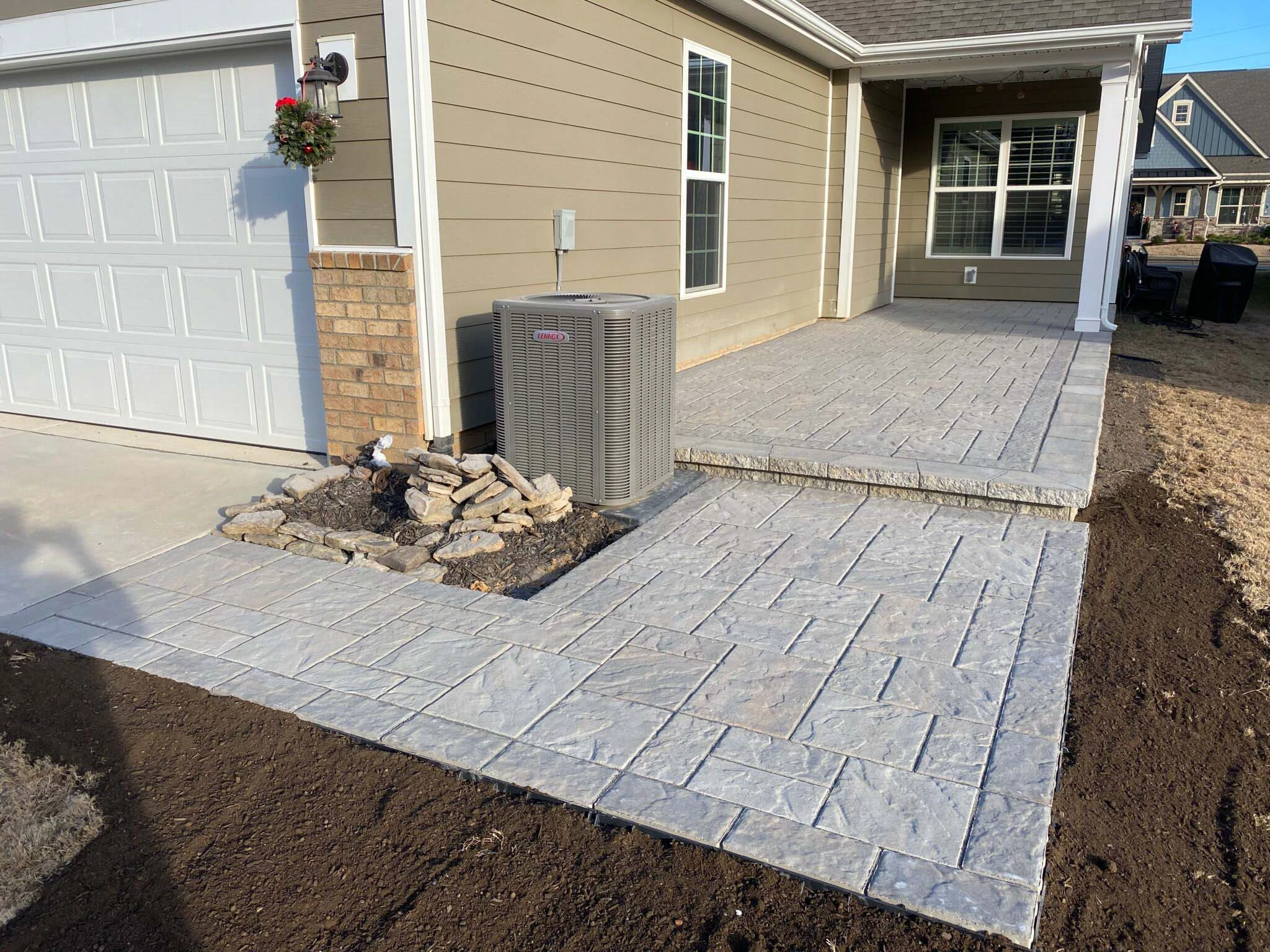
What Polymeric Sand Actually Is (And What It Isn’t)
Polymeric sand is not sand with glue in it. It is a blended system, and understanding that system is what separates a joint that lasts twelve years from one that fails in nine months.
A 50-pound bag of Techniseal HP NextGel — the product we specify on roughly 70% of our Dacula paver projects — contains two ingredients. The first is graded silica sand, making up 80 to 90 percent of the bag: a screened blend of coarse, medium, and fine grains that pack together with minimal void space when vibrated. The second is a polymer binder — acrylic copolymer in Techniseal, polyurethane hybrid in Alliance G2, modified acrylic in Sakrete PermaSand — making up 10 to 20 percent by weight. That binder cures into a flexible, waterproof, joint-stabilizing film when activated correctly.
Those components do nothing sitting in the bag. The sand is inert. The polymer is dry powder with zero structural value until water triggers it. What turns the mixture into a joint material that locks pavers in place is a sequence of physical events: grains get packed tight by vibration, the polymer gets distributed around those grains by water penetration, and the polymer cures over 24 to 72 hours into a matrix that binds grains to each other and to paver edges. The finished joint flexes with thermal cycling, sheds water rather than absorbing it, and resists the washout, weed growth, and ant colonization that kills traditional jointing sand in under two seasons.
That is design intent. Reality diverges the instant the installer skips a step. The three errors we see on Dacula properties — incomplete vibration-fill, over-activation, and the one-and-done mindset — each produce a predictable failure. The first leaves air pockets. The second floods the polymer out before it cures. The third guarantees a settlement void that water exploits the first time a summer thunderhead parks over Gwinnett County.
Brand reality check: Techniseal HP NextGel runs $35–$45 per 50-pound bag at the contractor counter. Sakrete PermaSand runs $25–$35 at big-box retail. Alliance G2 runs $40–$50 through landscape supply. Techniseal and Alliance cost more because polymer content is higher, sand gradation is tighter, and cure is more predictable in the 75–95°F window that defines Dacula from mid-May through mid-September.
Coverage: one bag of HP NextGel covers ~90 square feet of joints at a 3/16-inch joint width — the standard for a residential patio using Techo-Bloc or Belgard hardscape lines. Narrower 1/8-inch joints stretch coverage to 110 square feet per bag; wider 3/8-inch joints on tumbled Roman-style pavers cut it to 65. For a 400-square-foot patio at standard joints, budget five to six bags for the first application and two to three for the second. The second application is half the volume because you are only filling the settlement void.
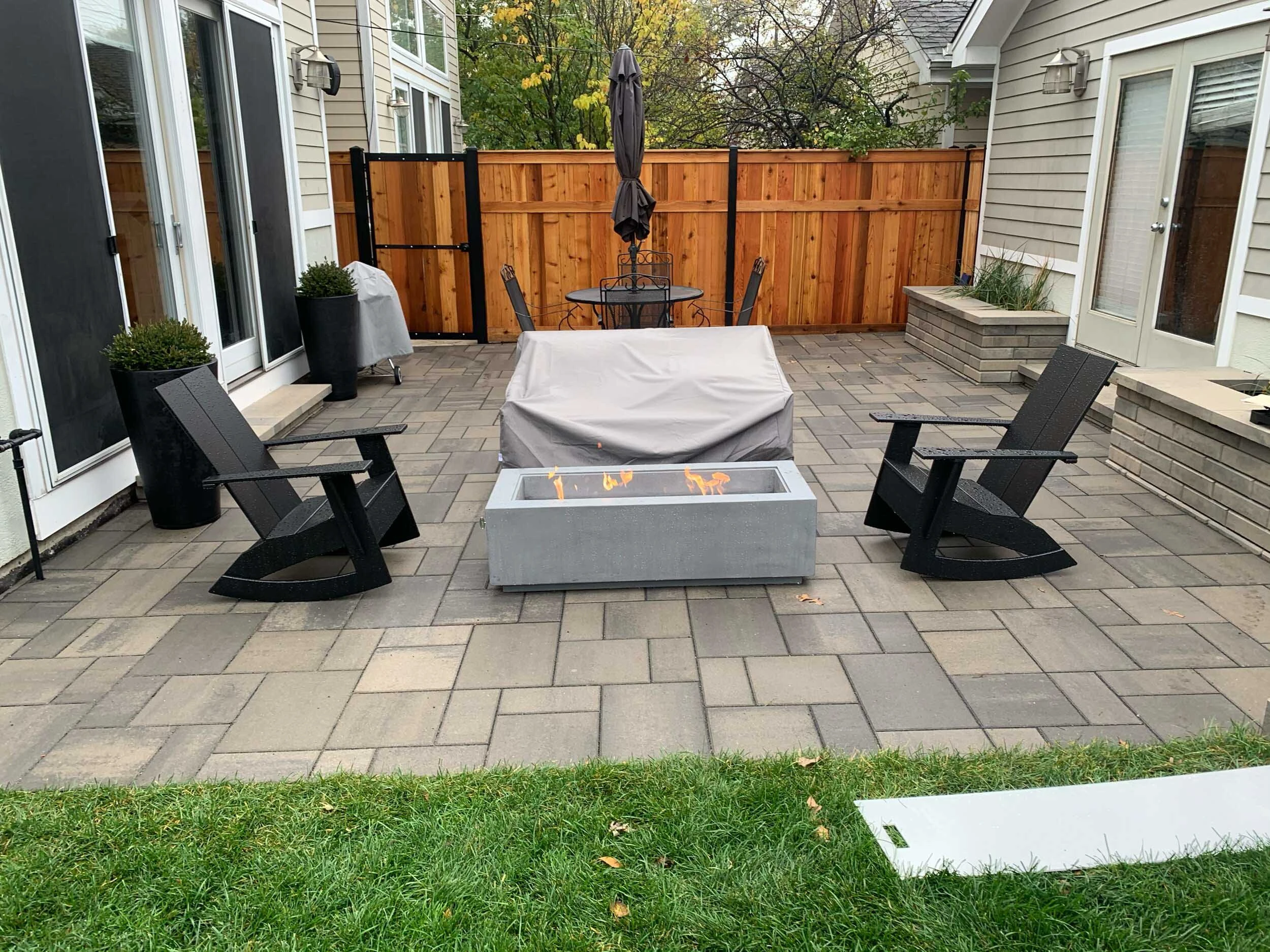
The First Application — Dry Sweep, Vibrate, Clear, Activate
The first application is the foundation pass. Everything on day one determines whether the second pass has something solid to fill against. Skip a step and the second pass compounds the problem instead of fixing it. Here is the sequence we run on every paver patio, driveway apron, and pool deck joint we finish in Dacula.
Step one: confirm the surface is bone dry. Any moisture on the paver face or in the joint triggers localized polymer activation before compaction, creating hard lumps that block the vibration pass. We will not start within 24 hours of a rain event unless the pavers have had direct afternoon sun for at least four consecutive hours.
Step two: pour sand and sweep diagonally. Diagonal sweeps across the paver pattern drop sand into joints more efficiently than sweeping parallel to the joint lines. Stiff bristles drop sand in; soft bristles drag it across the surface. We sweep northeast-to-southwest, then northwest-to-southeast, for even joint fill regardless of pattern orientation.
Step three: vibration-fill with a plate compactor. This is the step DIY installations skip, and it is the step that makes or breaks the application. A plate compactor fitted with a polyurethane pad (never bare steel — that scars the paver face) runs across the whole patio in overlapping passes. We see a 1/2-inch to 5/8-inch drop in joint height during this pass. Everything that drops is void space you no longer have.
Step four: re-sweep fresh sand and compact again. After the first vibration pass, joints look noticeably lower. Pour fresh sand, sweep, vibrate again. Two cycles on a typical patio gets joints to within 1/8 inch of the paver top surface — the target depth for activation.
Step five: sweep paver faces completely clear. Every grain of sand on the paver face at activation time becomes a permanently bonded streak of polymer film. Sweep, blow off with a leaf blower on low setting (high setting blows sand out of the joints you just packed), and inspect corners, coping stones, and edge restraints. Skipping this step creates the dusty, hazy appearance homeowners mistake for “cheap pavers” six months later.
Step six: activate with water in two spray passes. The bag instructions say “mist with water until saturated.” That is wrong. Correct technique is two separate passes with a fine-spray nozzle, applying 1 to 2 gallons per 10 square feet total, with a 60- to 90-second rest between passes. First pass wets the top layer and triggers surface polymer. Rest. Second pass penetrates deeper and triggers the polymer throughout the full joint depth. Dump all the water in one go and the surface polymer activates first, forms a crust, and traps unactivated powder below. That crust cracks within weeks.
Step seven: no foot traffic for 24 hours, no water for 48. Foot traffic displaces unactivated polymer. Rain during cure dilutes the polymer before it crosslinks. If a thunderstorm is in the forecast within 24 hours of activation, we tarp the patio — and we have walked off jobs rather than activate sand with a 60% afternoon rain probability on the radar.
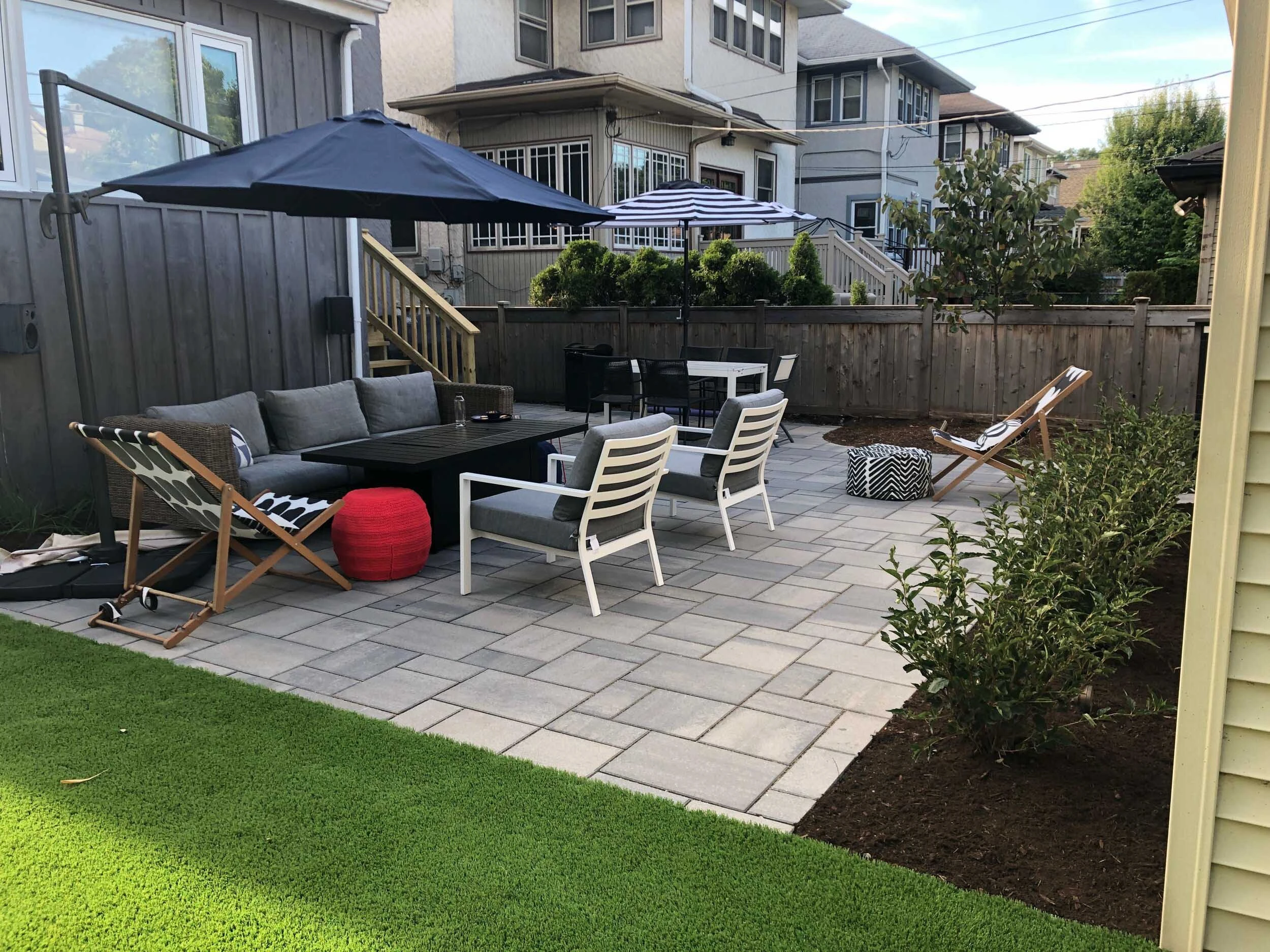
Why the Second Application Is Non-Negotiable — The Settlement Void
Here is the fact the bag instructions never mention: polymeric sand loses volume during cure. The mechanism is straightforward once you understand what the polymer is doing.
When activation water hits the sand, the polymer binder dissolves into a liquid adhesive that coats every silica grain in the joint. As that adhesive cures — first by surface tension pulling grains together, then by polymer-chain crosslinking — the joint matrix tightens. Grains end up slightly closer than they were when dry. The joint gets denser. Because the sand cannot push the pavers apart (edge restraint holds them in place), densification shows up as a drop in the joint surface. Typical drop: 1/8 inch on narrow joints, up to 1/4 inch on 3/8-inch tumbled paver joints.
That settlement void is where a one-application patio fails. Every joint now has a trough running along it. When rain hits the patio, water drains off the paver faces into those troughs, and the troughs channel water like gutters. Over a few storm cycles, fine sediment deposits and organic debris accumulates. Over more cycles, water carries out the finest grains of polymeric sand — the ones that did not fully bond. By the end of the first summer the joints are 3/8-inch below the paver face; by the second summer, 1/2-inch below, and paver edges start rocking under foot traffic from lost lateral support.
This was the Sycamore Ridge pattern exactly. Base was right. Pavers were level. Sand was a real polymeric product. The single failure was the absence of a second application. That patio needed a complete joint rebuild — rake out all remaining sand, refill fresh, two applications 48 hours apart. Not a repair job. A redo.
The second-application schedule is simple. Forty-eight hours after first activation, return. Inspect every joint — you will see a visible dip along the entire joint surface, which confirms the first pass worked. Pour fresh polymeric sand. Sweep diagonally. Vibration-compact with the plate compactor on a polyurethane pad — yes, even on the cured first layer, so the second-application sand seats against the cured layer without air gaps. Sweep the surface clear. Activate with the same two-pass water protocol. Wait 24 hours to walk, 48 to wet.
Temperature window — why summer afternoons shut a job down: polymeric sand cures correctly between 50°F and 95°F substrate temperature. A dark charcoal paver in a Dacula July afternoon can hit 125°F. At that temperature, activation water flash-evaporates before reaching the polymer — the top 1/8 inch cures, the bottom 7/8 inch stays dry powder. We work morning-only from Memorial Day through Labor Day, starting at 7 AM and finishing activation by 11 AM.
The second application is also a quality-control checkpoint. On the return visit we inspect the cured first pass for three failure modes: polymer haze (milky film on paver faces, indicating over-activation), joint erosion (visible washout at low points, indicating under-activation or drainage issues), and hairline joint cracking (indicating foot traffic during cure or rapid temperature swing). Any finding gets addressed before the second pass. We have refused to run pass two until polymer haze was rinsed off with a pH-neutral cleaner — skipping that locks haze in permanently under the new cure.
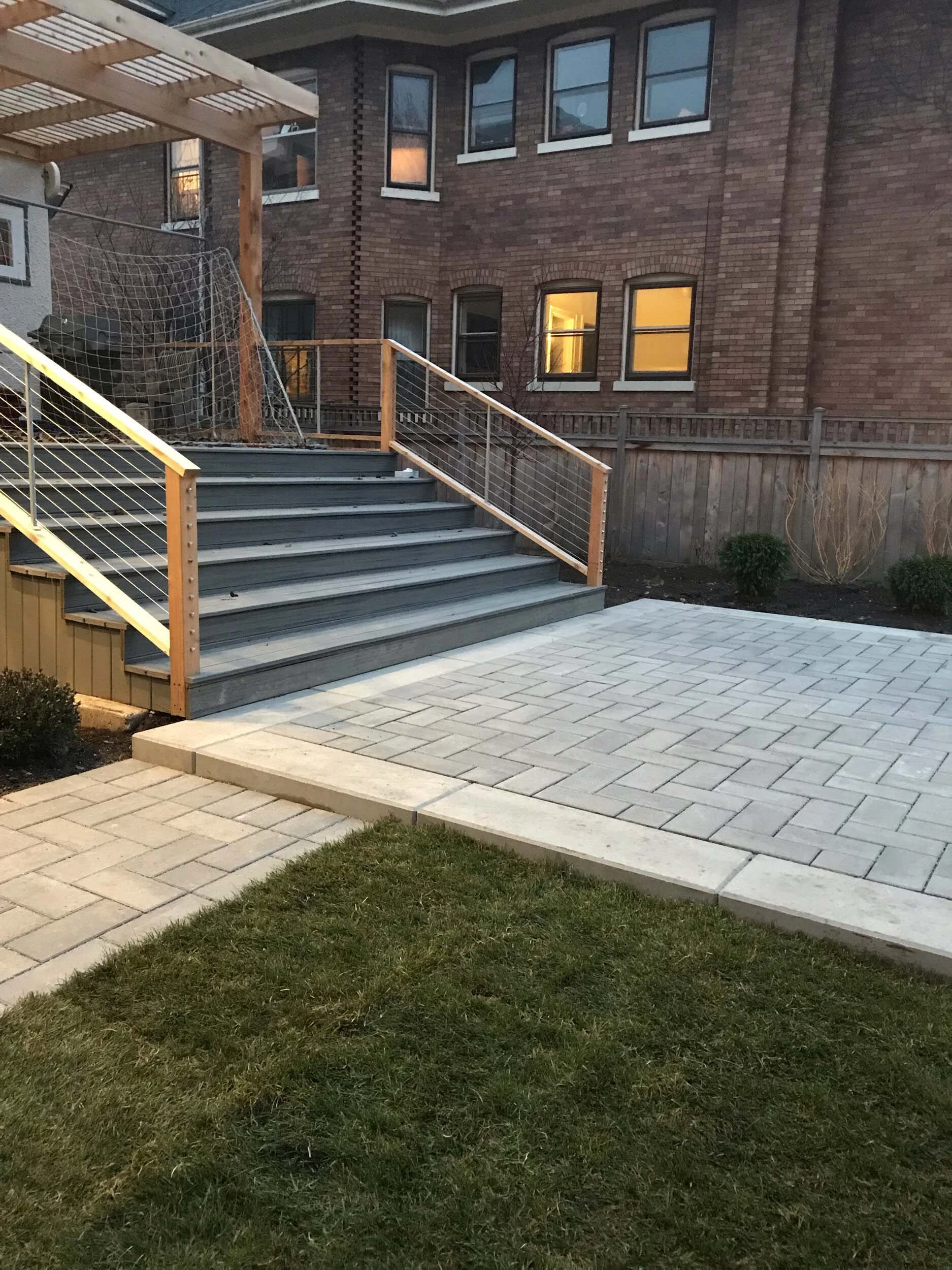
Failure Modes, Gwinnett Weather Windows, and When to Walk a Job
After roughly 200 paver projects across Dacula, Hamilton Mill, and the rest of our Gwinnett County service area, field failures fall into four categories. Every one traces to a decision made during installation — not to the product.
Polymer haze. A milky film that shows up on the paver face within 24 hours of activation. Caused by failure to sweep the surface clear before water, over-application of water during activation, or activation in direct sun above 95°F substrate temperature. Techniseal HP NextGel contains a haze-inhibitor additive, but even HP NextGel will haze if you dump five gallons on a surface that wanted one. Prevention is the real remediation — once haze is cured into the paver face, complete removal is rare.
Joint erosion. Sand washing out during the first major rain after activation. Almost always the result of under-activation — not enough water during cure, which left polymer unactivated in pockets throughout the joint. Unactivated polymer is dry powder with no structural value. When the first storm hits, water flushes that powder and the loose sand around it out of the joint. This is also the strongest argument for two applications: a second, properly-activated pass fills whatever the first missed and creates a backup structural layer.
Joint cracking. Hairline cracks running down the joint center, visible within the first week. Sources: mixing old sand with fresh, foot traffic during the 24-hour cure window, or extreme temperature swings during cure. Dacula’s June-through-September range can swing 35°F between 6 AM and 3 PM. That swing during cure stresses the polymer before it finishes crosslinking.
Ant colonies. The common complaint from Dacula homeowners with older paver installations is Argentine ant activity in the joints. Ants cannot tunnel through properly cured polymeric sand — the polymer film binds grains at every contact point. But they will exploit any under-cured joint, any settlement void, or any joint laid with regular mason’s sand. Every ant-infested patio we have renovated in Hamilton Mill or Providence Club started as a single-application polymeric job or a regular-sand job.
Gwinnett weather dictates the schedule. Dacula sits in USDA Zone 8a with summer highs routinely breaking 95°F and dew points above 70°F through stretches of June and July. Polymeric cure wants 50–95°F substrate, which in practice means:
- March through mid-May: the ideal window — highs 65–82°F, low humidity, minimal pop-up storms. Full-day work. ~40% of our annual paver volume.
- Mid-May through mid-September: morning-only. Start 7 AM, finish activation by 11 AM, let cure happen with polymer already locked. Afternoon thunderstorm risk is too high to gamble.
- Mid-September through November: second ideal window. Cooling temps, lower humidity, stable cures. Full-day work resumes. ~35% of annual volume.
- December through February: possible above 50°F substrate, but the 20 annual freeze events in Zone 8a rule out any install where overnight lows dip below 40°F within 72 hours of activation.
The deeper point: polymeric sand is the best jointing technology for pavers in our climate, but it rewards discipline and punishes shortcuts. The specs, the temperature windows, the water volumes, the two-application schedule — these are not suggestions. They are the conditions under which the polymer chemistry actually works. A Dacula homeowner spending $8,000 on a paver patio should not be surprised that correct jointing adds a second day to the schedule and costs an extra three or four bags. That is what separates a twelve-year patio from a nine-month failure.
If you are in Hamilton Mill, Sycamore Ridge, Chandler Ridge, Providence Club, Ivey Chase, Auburn Park, or anywhere else inside 30019 — or inside our 30-mile service radius from Winder — and you are planning a paver project, ask your contractor two questions before signing. First: what polymeric sand brand, and why. Second: does the bid include a second application 48 hours after the first. If the answer to the second question is no, the bid is incomplete.
Paver installation and jointing across 20+ cities within 30 miles of Winder, GA
We specify the polymeric sand brand, the two-application schedule, and the weather window in every paver contract we issue — because that is what it takes to build a joint that survives a Gwinnett County summer.