
Plaster on an estate-scale pool lasts 8 to 12 years before it starts telegraphing failure — so the Milton pools built between 1998 and 2005 are now sitting 7 to 15 years past service life, and the owners are finally paying attention.
That’s the number we keep coming back to on Freemanville Rd, on Hopewell, along the back roads feeding into Crooked Creek and The Manor. Pools poured during Milton’s first wave of large-lot development — before the city even incorporated in 2006 — are now leaking calcium into the skimmer baskets, showing aggregate blow-outs around the sun shelves, and turning that distinct rust-orange at the tile line that tells you the marcite is done. Roughly 800 to 1,400 square feet of wetted surface on these estate builds. Which means the resurface decision is not a $6,000 subdivision project. It’s an $18,000 to $26,000 capital decision, and the finish you pick on a 20-year-old Milton pool will either carry you to 2050 or put you back in the same chair in 2036.
This post is about that decision. Specifically, why Pebble Sheen — the polished, exposed-aggregate finish from Pebble Technology International — has become the default specification on Milton estate resurfaces, how it compares material-by-material against StoneScapes Mini Pebbles and traditional plaster, and what a 6-to-9-day resurface actually looks like on a 2-acre AG-1 lot where the pool equipment pad is 180 feet from the nearest driveway turnaround.
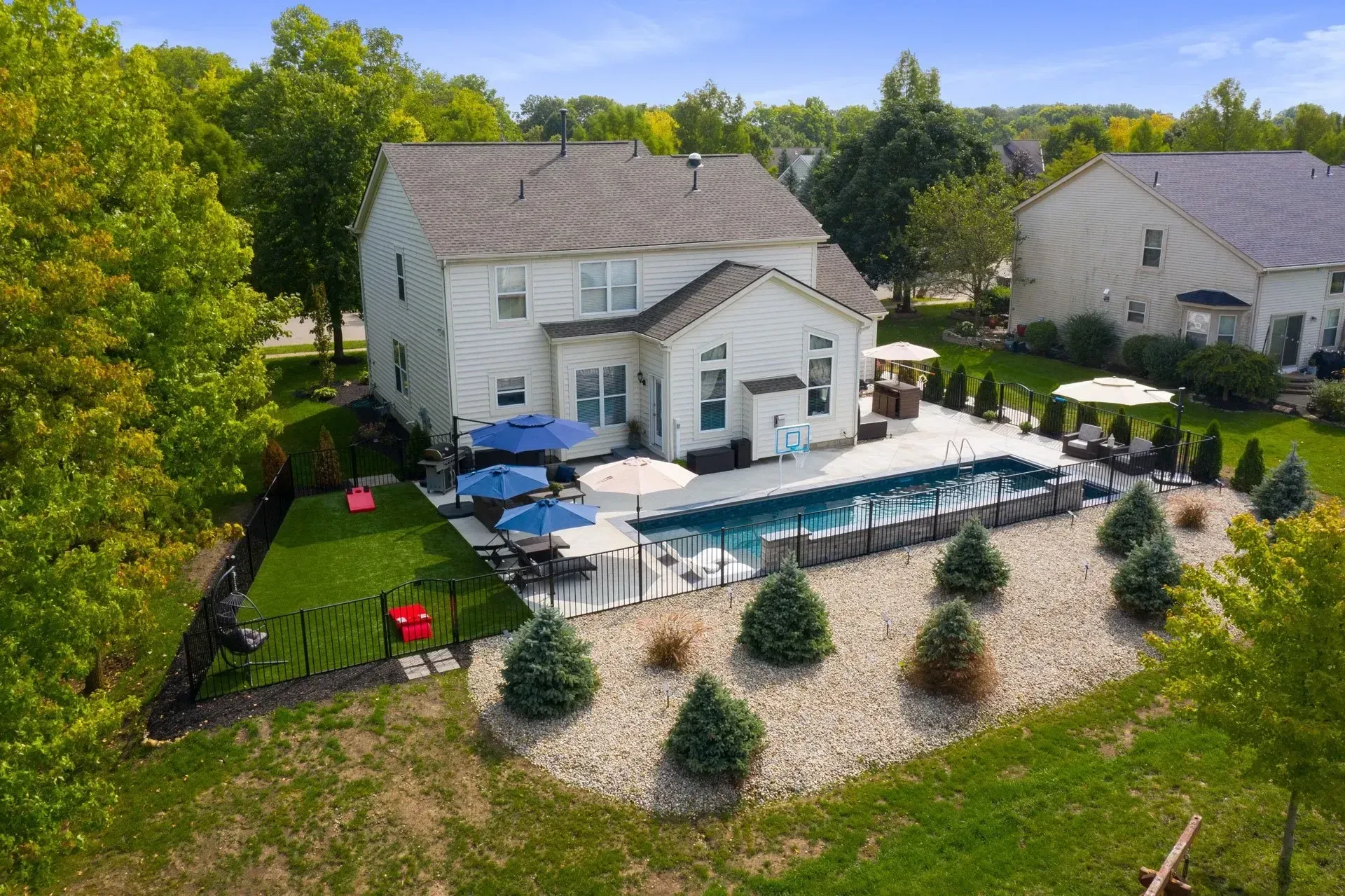
Why 2005-Era Milton Pools All Hit the Wall at the Same Time
Marcite — standard white plaster with a marble-dust binder — was the almost-universal interior finish on Georgia pools built before 2006. It’s cheap at the front end ($4 to $6 per square foot installed in 2005 dollars), bright white, easy to troweled over a cove. The catch: rated service life of 8 to 12 years under disciplined chemistry, and closer to 7 years under the kind of “balance it when the water turns green” maintenance most residential pools actually get.
Milton’s 1998–2005 build wave — Crooked Creek fill-in, the early phases of The Manor Golf Club, Cogburn Estates expansion, the custom homes going up along Bethany Bend and Hopewell Rd — put hundreds of marcite pools in the ground in a concentrated window. Those pools are now all coming due at the same time. We bid three Manor resurfaces in a single month last summer. The signs were identical across all three: mottled grey staining, aggregate exposure at the step treads, hollow-sounding spots when we tapped the bond beam with a coping hammer, and that calcium crust riding above the waterline tile.
The first question every owner asks is “can we patch it?” The answer on a 20-year marcite coat is almost always no. Patching a quarter-sized pop-off is maintenance. When the whole interior sounds hollow in thirty different places, you’re not patching — you’re renting time until the next failure. The right move is to chip it out to the gunite shell and start over.
Pebble Sheen — The Material, Not the Marketing
Pebble Sheen is made by Pebble Technology International (PTI) out of Scottsdale. It’s the polished cousin of standard Pebble Tec — same exposed-aggregate base (natural stone pebbles suspended in a cement matrix), but the pebbles are smaller (roughly 3/16″) and the surface is polished smooth after the acid wash cure. You get the durability and color depth of aggregate without the rough barefoot feel that kept first-generation Pebble Tec out of some projects.
Why it matters on a Milton estate pool:
- Service life: 22 to 28 years with disciplined weekly chemistry, roughly double traditional plaster
- Abrasion resistance: exposed quartz and granite aggregate — the binder erodes around stone that doesn’t move
- Chemistry tolerance: handles pH swings better than marcite; aggregate doesn’t etch the way lime-based plaster does
- Color depth: the pebbles are the color, not a pigment in the cement — so a 15-year-old Pebble Sheen pool still reads the same color as the day it cured
- Hydraulics: polished surface reduces surface friction against recirculation, meaning the pump runs slightly lower head pressure over the pool’s life
Installed pricing on Pebble Sheen in the Milton market runs $18 to $26 per square foot in 2026 dollars. On an 1,000 sqft wetted-surface estate pool — call it a 20×40 rectangle with a 7-foot tanning ledge and a spa spillover — that’s a resurface budget of $18,000 to $26,000 all-in, including chip-out, bond-coat, acid wash, water, startup chemistry, and the daily tending window. No pool equipment included. No coping. Just the interior.
Pebble Sheen vs. standard Pebble Tec: Same aggregate family, same service life. Pebble Sheen uses smaller stones (roughly 3/16″ vs. 3/8″) and receives an additional polishing pass after the acid wash. Expect a $2 to $4 per square foot premium over standard Pebble Tec for the polished finish.
StoneScapes Mini Pebbles — The Alternative Worth Pricing
StoneScapes is the competing aggregate system from SGM (the same manufacturer behind Diamond Brite). Their Mini Pebbles line is the closest direct comparable to Pebble Sheen — similar stone sizes, similar polished presentation, a broader color range that reaches into the warm gold and tan ranges Milton estates with stone coping and Tennessee fieldstone hardscape tend to favor.
Installed pricing on StoneScapes Mini Pebbles runs $16 to $22 per square foot in the Milton market — roughly $2 per square foot under Pebble Sheen. On a 1,000 sqft pool, that’s a $2,000 to $4,000 delta.
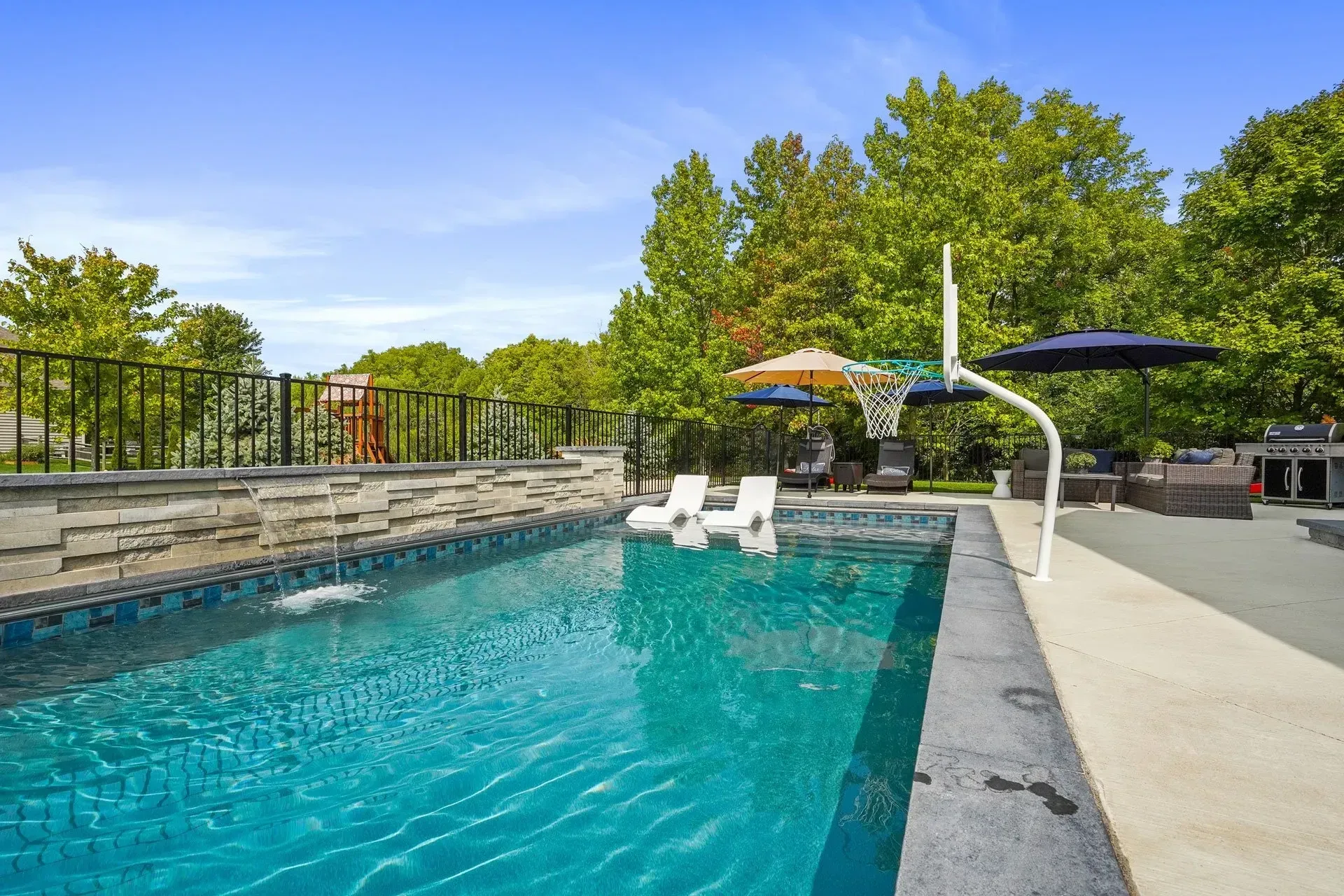
The real difference is not price, though. It’s the color library. Pebble Sheen leans blue-green-grey in the catalog — Aqua Blue, Caribbean Blue, Tropical Breeze, Emerald Bay. Those colors read luminous against white travertine or cream limestone coping — the default Milton estate palette for pools built in the last decade. StoneScapes Mini Pebbles offers the full blue range plus warmer options: Caribbean Sand, French Gray, Onyx. If a pool is coped in buff Tennessee fieldstone or aged brick, the warmer StoneScapes palette often reads more cohesive.
On service life, the two systems are close — both rated into the low-20s if chemistry stays in range. On Milton estates with expected 15+ year owner tenure, we default to Pebble Sheen because PTI’s aggregate sourcing has been consistent for longer and the warranty process is cleaner when something does go wrong. For owners planning to list inside five years, StoneScapes Mini Pebbles is the better value play.
Traditional Plaster — When It Still Makes Sense (Rarely)
For the sake of the comparison: traditional white or tinted plaster still runs $4.50 to $7.50 per square foot installed. On a 1,000 sqft pool, that’s $4,500 to $7,500 — roughly a third of the Pebble Sheen budget.
The math looks tempting until you run it against service life. Plaster at 10 years means you’re resurfacing twice before Pebble Sheen resurfaces once. Two plaster jobs at $6,000 = $12,000 plus two drain-refill cycles, two chemistry resets, two full-season disruptions. A single Pebble Sheen job at $22,000 carries you 25 years. On that 25-year horizon you’re spending $15,000+ on plaster (three resurfaces) vs. a single Pebble Sheen install — and you’ve still got 2½ years of an aging plaster pool left to deal with at the end.
Plaster still wins in two scenarios on Milton estates: flip-prep (owner selling inside two years and just needs the pool to photograph), or a historic pool where the interior texture itself is part of the period integrity (rare — you’d see this on Crabapple-area Victorian-era estates with original bathing pools, which exist but are a small universe).
Tile, Coping & Bond-Beam Work — The Hidden Line Items
A resurface quote that lists only the interior finish is an incomplete quote. On a 20-year-old Milton pool, three adjacent systems need to be inspected before the chip-out crew shows up, because re-doing them during the drained window saves 50% vs. coming back after the pool is refilled.
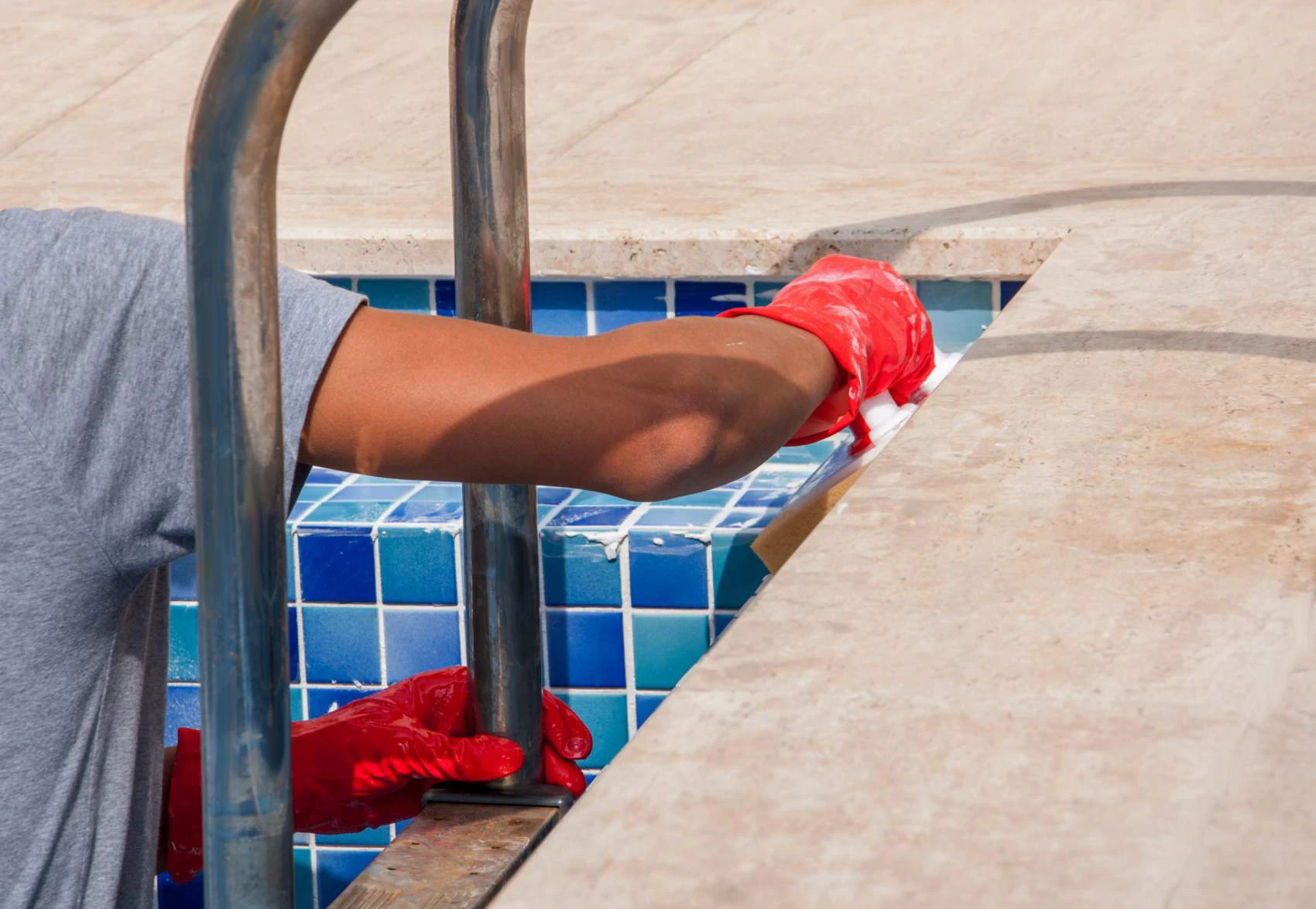
Waterline tile. Most 2005-era Milton pools were built with 6×6 glazed ceramic tile at the waterline. Twenty years of calcium, hard-water staining, and the occasional freeze event — Milton sees roughly 22 freeze days a year at its ~1,150 ft elevation, a touch more than Snellville or Grayson — and the glaze is almost always pitted. Replacing the tile band while the pool is drained runs $45 to $90 per linear foot, depending on what you’re upgrading to. Most estate owners move up to 1×1 glass mosaic (Oceanside, Lightstreams) or travertine-accented waterline bands in this cycle. It’s an upgrade the re-sale photos reward.
Coping. If the coping is poured concrete and the joints are still tight, you leave it alone. If it’s bluestone or travertine with any spalling or loose units, you re-set during the drained window — another $55 to $125 per linear foot for replacement coping in natural stone. On a 100-foot perimeter, that’s $5,500 to $12,500 if a full re-set is needed.
Bond beam. The top 12 inches of the gunite shell — where the coping sits and the waterline tile attaches. On pools drained after 20 years, you almost always find some bond-beam cracking. Minor hairlines get parged over during the finish prep. Structural cracks get hydraulic-cement injected and carbon-fiber stapled. Budget $800 to $3,500 depending on what the chip-out reveals.
Always bid the resurface as a package: interior + tile + coping inspection + bond-beam contingency. A $22,000 interior-only quote becomes a $32,000 all-in quote once the pool is drained — and owners who weren’t prepared for that conversation are the ones who end up disappointed in the finished product.
The 6-to-9-Day Milton Resurface Timeline (And Why It’s Not Shorter)
A subdivision resurface in Lawrenceville or Dacula can run 4 to 5 days start to finish. Milton estate resurfaces run 6 to 9 days of daily tending. The extra days are not labor padding — they’re site, access, and polish time.
Day 1: Drain, chip-out, haul. Drain the pool to the designated gray-water point (usually a wooded low spot, never into Cooper Sandy Creek or Chicken Creek — Milton creek buffers are strict, 25 to 75 feet off named tributaries, and violations land you in front of City of Milton Community Development at 2006 Heritage Walk). Pneumatic chip hammers take down the old marcite. On estates where the pool deck is 180+ feet from the closest driveway turnaround, we set a mini-dumpster with a track-skid — not a rolled-in wheelbarrow. That’s extra setup time but the deck doesn’t get damaged.
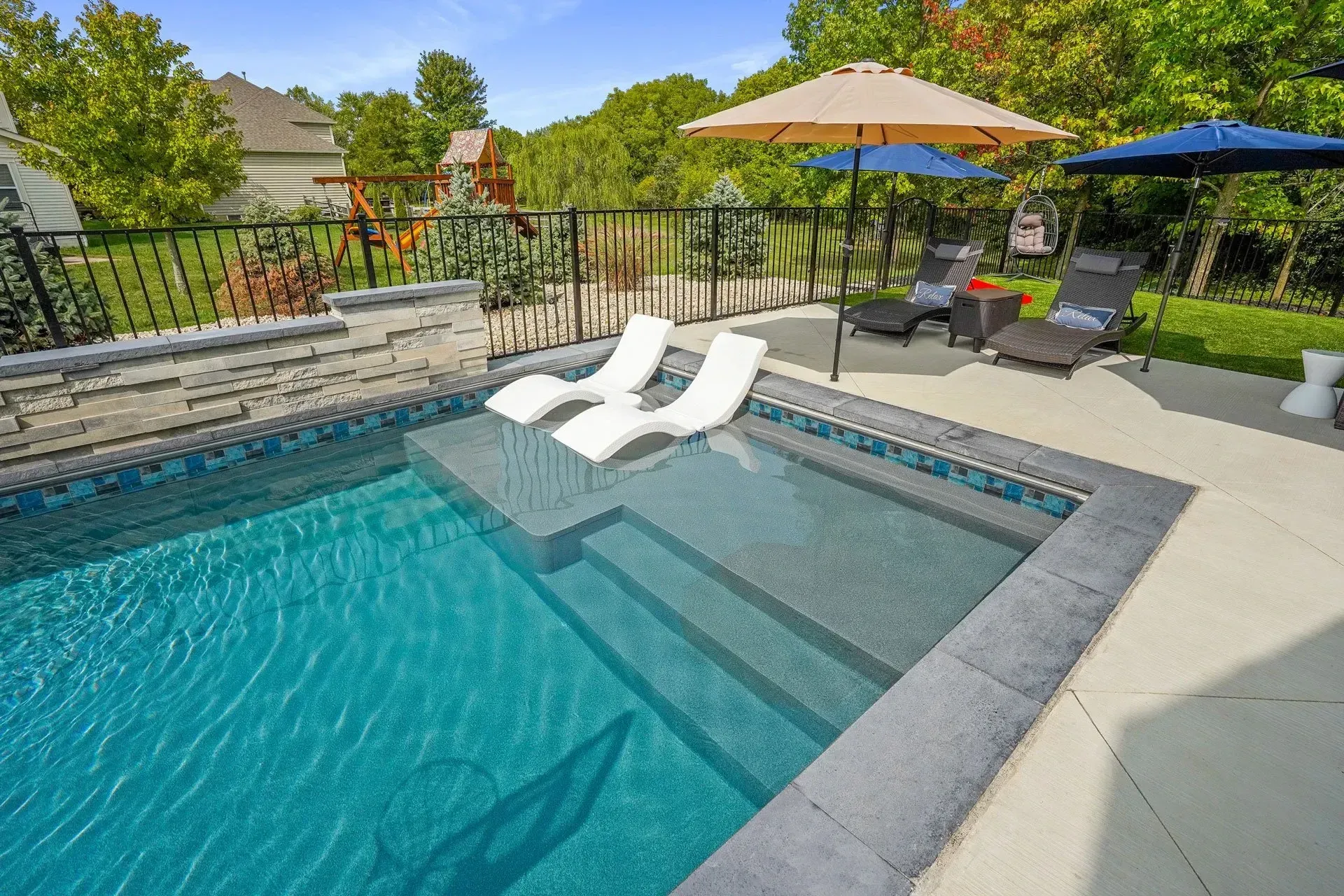
Day 2: Bond-beam inspection, tile removal, prep. This is the day the scope firms up. Whatever the original quote assumed about the bond beam, the chip-out tells the truth. Tile comes off if it’s being replaced. Any hydraulic penetrations (returns, main drains, lights) get new gaskets and faceplate prep.
Day 3: Bond coat, tile set. A cement-based bond coat goes over the gunite shell to receive the finish. New waterline tile gets set the same day. Coping work if it’s happening.
Day 4: Interior finish application. Pebble Sheen goes on in a continuous pour — start-to-finish, typically 5 to 7 hours for an 1,000 sqft pool with a 3-to-4-man crew. No cold joints. This is why you can’t split the application across days.
Day 5: Acid wash. Roughly 18 to 24 hours after the finish is applied, the surface gets an acid wash to expose the aggregate. Diluted muriatic, rinsed and neutralized, brushed and vacuumed. This is the step that reveals the color. Done poorly, you get patchy exposure and the pool reads blotchy. Done right, the aggregate is uniform edge-to-edge.
Days 6-9: Fill, chemistry, brush-in. The pool refills from the estate’s well or municipal supply (big estates often have 1.5-inch dedicated service). Then the startup chemistry begins — the 28-day window where the new finish is curing and water chemistry is in a volatile phase. Daily brushing to keep dust from setting into the finish. Daily pH and alkalinity adjustments. Chlorine stays low until day 3 to 4. It’s not glamorous work, but a botched startup on a $22,000 finish is the difference between a 25-year interior and a 12-year interior.
On estate lots with grade changes of 6 to 14 feet between the house pad and the pool deck — typical across Milton’s rolling hill terrain north of Bethany Bend and into the Cogburn Estates corridor — the refill itself can take 18 to 30 hours because the well pump wasn’t sized for a pool fill. Budget two extra days for slow fills.
Permits, HOAs, and The Manor’s 4-to-5-Week Review
Milton’s 2006 incorporation means permits for pool resurfacing go through City of Milton Community Development at 2006 Heritage Walk, not Fulton County. That’s a double-edged distinction: Milton’s turnaround is faster (10 to 14 business days for a straightforward resurface permit), but the preservation review is stricter on estate parcels inside the AG-1 equestrian preservation zones.
A straight interior resurface — no coping change, no bond-beam structural work, no new penetrations — typically qualifies as a maintenance permit and moves through in under two weeks. Add coping replacement and you’re in a full remodeling permit, which runs 2 to 3 weeks. Add any hardscape work (deck expansion, retaining wall repair around the pool) and you’re into site plan territory.
The Manor Golf Club’s architectural review committee is the other time variable. ARC review on any exterior-visible change at The Manor runs 4 to 5 weeks through a structural review committee, and the committee meets on a monthly cadence. Miss the submittal deadline and you’ve added 30 days to the project timeline. The fix: submit the ARC application the week the owner signs the contract, not the week the crew is supposed to mobilize. We’ve learned that one the hard way.
Crooked Creek, Atlanta National, White Columns (the Milton side), and Hopewell Plantation all have ARC boards of varying intensity. None are as structured as The Manor’s, but all require at minimum a 7-to-14-day design review before permit submission. Budget the time up front. Don’t let HOA review become a surprise.
The 25-Year Math — Why Milton Long-Horizon Owners Default to Pebble Sheen
Run the numbers against a 25-year hold — which describes the actual tenure for most of the original owners in The Manor, Crooked Creek, and the estate parcels along Freemanville and Hopewell.
Plaster path: $6,000 now, $7,500 in 12 years (2038), $9,500 in 24 years (2050). Total: $23,000 across three resurfaces, plus three drain-refill cycles, three HOA/ARC submissions, three startup chemistry windows, three summers disrupted. Plus the pool still reads as “plaster-white” throughout — it never gets the color depth of aggregate.
StoneScapes Mini Pebbles path: $19,000 now, one resurface in year 23 at 2049 dollars (call it $34,000 with inflation). Total: ~$53,000 across two resurfaces. One disruption in year 23.
Pebble Sheen path: $22,000 now, no second resurface inside the 25-year window (finish is rated 22-28 years; on disciplined chemistry most pools ride to 28). Total: $22,000 with zero re-do inside the horizon.
Pebble Sheen is the lowest lifetime cost on any horizon longer than 15 years. It’s the most aesthetically consistent finish across the hold window. And on Milton estate pools where the pool itself is 7% to 12% of total estate value, the finish decision is one of the highest-leverage choices in the entire property — outranked only by the initial gunite and the landscaping at the pool perimeter.
The short version: On Milton estates with expected tenure of 15+ years, Pebble Sheen pays for itself against plaster by year 14 and against every re-do after that is pure margin. Below 10-year tenure, StoneScapes Mini Pebbles is the value play. Plaster is almost never the right call on an estate-scale pool unless the goal is flip-prep.
What We Recommend on a First Call to a Milton Pool Owner
Three questions we ask before we write anything down:
- How long do you plan to own the home? This decides plaster vs. aggregate. Anything over 12 years, aggregate wins.
- What’s the coping, deck, and hardscape palette? Travertine/limestone/white → Pebble Sheen’s blue-green catalog reads best. Tennessee fieldstone, buff, warm tones → StoneScapes Mini Pebbles’ warmer colors integrate better.
- When did the pool last get drained? Twenty-plus years on a single interior plus never-drained tells us to plan for bond-beam surprises and hydraulic penetration re-work.
From there we schedule a site walk. On Milton estates with any grade change, we want to see the pool empty before we quote. The conversation the empty pool starts is always more honest than the conversation the full pool allows.
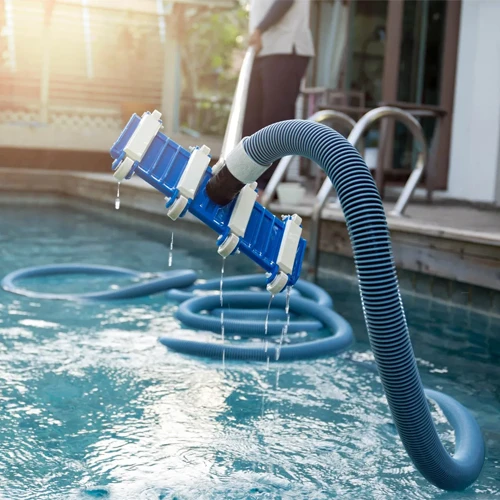
A 20-year-old Milton pool is not a maintenance decision. It’s a 25-year capital decision disguised as maintenance. Done right — with Pebble Sheen on the interior, glass mosaic at the waterline, and a bond-beam inspection before the finish crew shows up — it’s the last resurface those owners will ever write a check for.
Estate pool resurfacing and remodeling across 20+ cities within 30 miles of Winder, GA
From Pebble Sheen on 20-year Milton estate pools to full remodels across Crooked Creek, The Manor, and Cogburn Estates — we specialize in the long-horizon resurface decisions.