
A homeowner on the 14th fairway inside The Manor Golf Club called us after their first pool contractor got rejected by the architectural review board — twice. The coping didn’t match. The equipment pad was visible from a neighbor’s rear terrace. The fence was 2 inches too tall. The project sat frozen for 14 weeks. This is how we rebuilt the submittal and got approved on the first pass.
When you build a pool inside a gated, Paul Tesori-designed community in Milton, GA, the pool is the easy part. The approval is the project. The Manor Golf Club’s Architectural Review Board (ARB) runs one of the strictest review cycles in North Fulton — a 4-5 week turnaround anchored by a structural review committee that reads engineering drawings the way most builders read a spec sheet. A rejection doesn’t just add a week. It resets the clock, costs you the pre-season pour window, and in some cases pushes a full build into the following calendar year.
Milton became its own city in 2006, carved out of northernmost Fulton County, and the rural-preservation DNA shows up in everything — AG-1 zoning with 1 to 3-acre minimums, equestrian overlays, creek-buffer setbacks, and architectural review committees that protect property values by protecting visual cohesion. The Manor, sitting off Birmingham Highway with estate lots pushing 2 to 5 acres, takes that posture seriously. This post is the playbook — written from inside a project we completed this past spring — for what an approvable Manor-tier pool submittal actually contains, how the review cycle flows, and where 38% of first-pass submittals quietly fail.
Why The Manor’s Review Is Different From Every Other North Fulton HOA
Most HOAs in Alpharetta, Roswell, and Johns Creek run what we’d call a courtesy review — a 10-to-14-day administrative look at color, setback, and fence height. A site-plan PDF, a paint chip, maybe a pool renderer export from a contractor’s design software. If the checklist is satisfied, approval lands in your inbox.
The Manor is a different animal. The ARB at The Manor Golf Club operates more like a small-town design-review commission than a neighborhood committee. There’s an architect on the panel. There’s a landscape architect. And there’s a structural review committee that specifically reads the engineering drawings before anything gets stamped. A pool submittal at The Manor doesn’t sit in an email inbox — it goes on an agenda, gets discussed, and comes back with written conditions.
The reason is financial. Homes inside The Manor range from $1.8M to $6M+. A poorly-executed backyard — the wrong coping, a fence that breaks the sightline from the 7th tee, an equipment pad visible from a neighboring terrace — can measurably depress resale values across adjacent lots. The ARB is protecting a portfolio, not a checklist.
First-pass rejection rate at The Manor ARB: ~38% of pool submittals receive conditional rejection on first review. The most common reasons — in order — are coping color mismatch, fence detail inconsistency with the existing Manor palette, and visible equipment-pad placement. A resubmit adds 3 to 5 weeks.
The Submittal Package — What Actually Goes Through The Gate
We’ve built pools in Crooked Creek, White Columns, Atlanta National (TPC), Bethany Creek, Cogburn Estates, and The Manor. The Manor submittal is roughly 3x the volume of a typical North Fulton HOA package. Here’s what we deliver, top to bottom, for a Manor-tier pool approval:
- Site plan with setbacks — scaled to 1″ = 20′, showing pool, spa, decking, equipment pad, fence line, septic field, creek buffers, and distance-to-property-line dimensions on every side.
- 3D rendering — minimum two views, one from the street-facing approach and one from the interior of the home looking out. Flat CAD elevations aren’t accepted.
- Full landscape plan — species-level planting schedule with a minimum of 5 native species (the ARB enforces this, and substitutions must be pre-approved).
- Material samples — physical samples (not photos) of coping, deck surface, pool veneer, and waterline tile. Delivered to the ARB office, not mailed in.
- PE-stamped structural drawings — required for any retaining wall over 4 ft, any pool with a cantilevered deck, and any beam-set pool within 10 ft of a slope greater than 2:1.
- Fence details — full shop drawings, not a product brochure. Must match the approved Manor palette: black iron pickets with stone pier posts matching the existing community fence cap stone.
- Equipment pad plan — showing screening (evergreen hedge or stone enclosure), drainage, electrical service location, and — critically — a sightline diagram proving invisibility from neighboring lots and any adjacent cart paths.
- Drainage and grading plan — especially if the lot sits on one of Milton’s more dramatic grade changes (6 to 14 ft drops are common on estate lots here).
A proper Manor submittal runs 40 to 60 pages. A generic contractor package — the kind that flies through a Forsyth County subdivision HOA — usually runs 8 to 12 pages. That’s the disconnect that produces the 38% rejection rate.
The Milton Permitting Layer That Sits Underneath The ARB
Here’s the wrinkle most homeowners — and a surprising number of contractors — miss. The Manor’s ARB approval is not a permit. It’s a private condition precedent. You still have to pull the actual building permit through City of Milton Community Development, located at 2006 Heritage Walk in Milton, and Milton’s review is separate, parallel, and not coordinated with the ARB.
Milton’s city-level review covers the code side: pool barrier compliance with IRC Appendix V, electrical service and GFCI per NEC, drainage and erosion control (critical on lots near Cooper Sandy Creek, Chicken Creek, and Lake Creek), and — importantly — creek-buffer setbacks of 25 to 75 feet from any named tributary. A pool that clears the ARB can still hit a brick wall at Milton Community Development if it sits inside a state-mandated stream buffer.
The good news: because Milton became its own city in 2006, permits don’t route through the larger Fulton County queue. Turnaround from Milton Community Development is typically 10 to 14 business days for residential pools, compared to 3 to 6 weeks at some larger metro jurisdictions. The trade-off is that Milton’s preservation review is noticeably stricter — especially on lots in the Crabapple overlay or on parcels adjacent to Providence Park.
Parallel-path strategy we use on every Manor build: ARB submittal goes in on Day 1. Milton permit package goes in on Day 3-5, once we’ve confirmed there are no site-plan changes coming back from the ARB. This buys us 2-3 weeks on the timeline. If the ARB requests revisions, we pause the Milton submittal to avoid a permit-desk resubmit fee.
The Five Failure Points That Cause First-Pass Rejection
We’ve either built or reviewed more than two dozen Manor-area pool submittals at this point. Five issues recur — and they’re the same five every time.
1. Coping color mismatch.
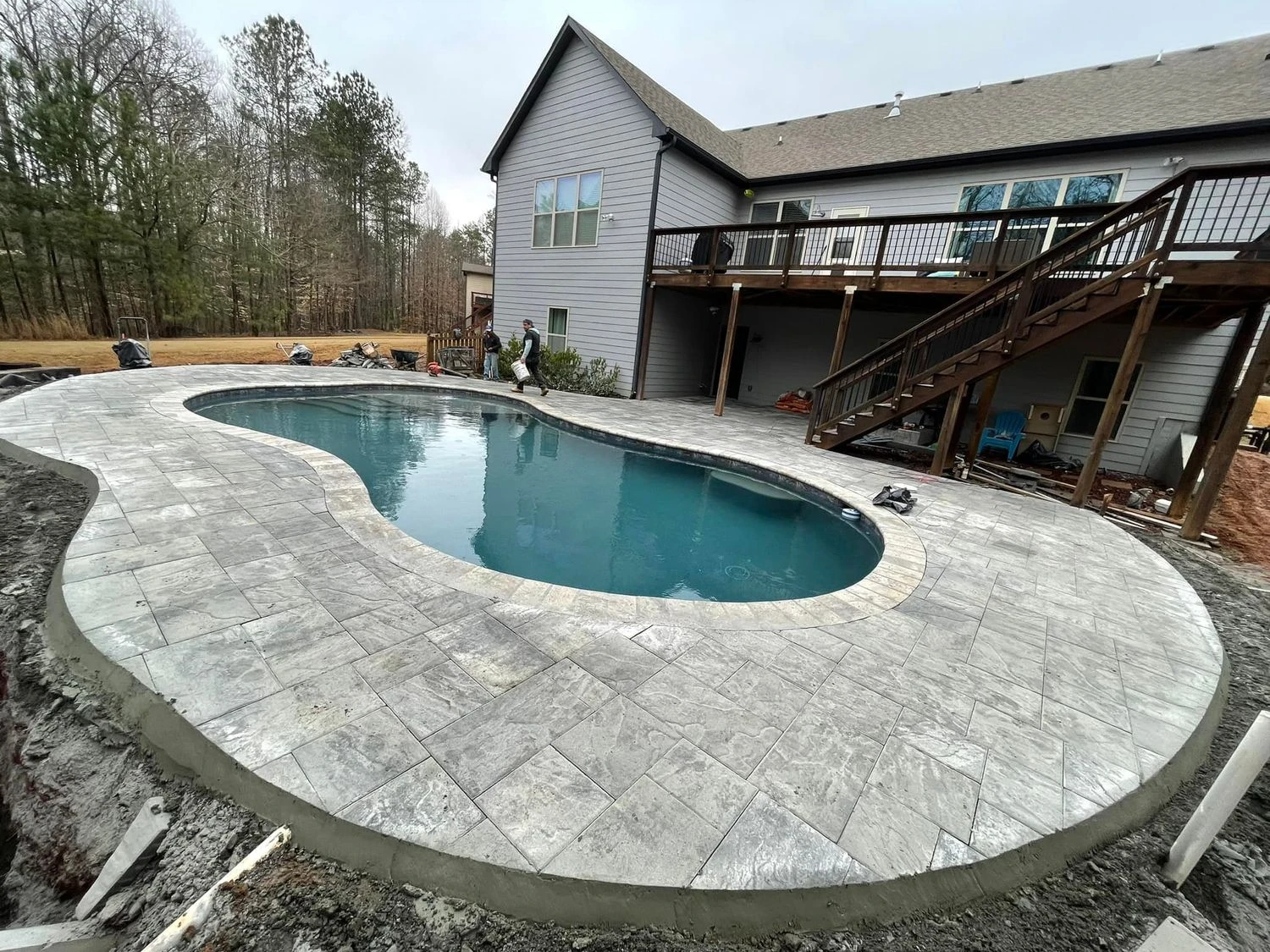
The ARB maintains a color-and-material palette that reflects what’s already built inside The Manor. Full-white coping doesn’t pass. Ultra-dark charcoal coping doesn’t pass. The approved range runs from warm limestone (Silver Travertine, Ivory Travertine) through honed bluestone and French-pattern flagstone. When homeowners show up with a sample they liked on a Destin, Florida pool, the ARB politely sends it back.
2. Fence height and picket profile.
Pool fencing inside The Manor must match the existing community fence language: 54-inch black iron pickets with spacing that meets IRC pool-barrier code, mounted on cast stone pier posts matching the community’s limestone cap. A standard big-box aluminum fence fails instantly. We’ve seen homeowners lose 4 weeks chasing the wrong fence detail.
3. Equipment pad visibility.
The ARB requires a sightline diagram. If the pad is visible from a neighboring lot’s rear terrace — even a second-story window — it’s rejected. The fix is either a masonry screen wall (matching veneer) or a deep evergreen hedge (clumping Green Giants or similar at minimum 6 ft planting height).
4. Planting plan without native minimum.
The 5-species native minimum is strictly enforced. Nandina, Bradford pear, and privet don’t count. Approved natives include inkberry, yaupon holly, little bluestem, switchgrass, oakleaf hydrangea, Virginia sweetspire, black-eyed Susan, and dwarf fothergilla. Document the species and nursery source.
5. Structural drawings on retaining walls over 4 ft.
Any retaining wall over 4 feet in height — and most Manor pool builds have at least one, given the rolling topography here — requires PE-stamped drawings showing wall design, footing depth, drainage stone, weep detail, and backfill spec. A wall drawing pulled from a block manufacturer’s literature doesn’t satisfy the structural review committee.
The Soils and Topography Problem — Cecil Clay Over Saprolite
Milton sits at roughly 1,150 ft of elevation with rolling hills — more dramatic than Alpharetta or Johns Creek, with 6 to 14 ft of grade change across a typical estate lot. The soil profile is Cecil clay over weathered granite residuum (saprolite). In practice, this changes the structural side of a Manor pool build in three ways.
First, excavation runs into saprolite shelves. Somewhere between 6 and 11 feet of depth — especially on ridgeline lots in Cogburn Estates and the high-ground sections of The Manor — you hit partially-weathered granite that won’t dig with a standard excavator bucket. We’ve had to bring in a hydraulic hammer attachment on roughly 1 in 4 Milton builds. Budget a $4,200 to $7,800 contingency on any north Milton lot above 1,100 ft elevation.
Second, the Cecil clay above the saprolite is expansive. It swells when wet, shrinks when dry. A pool shell sitting on undisturbed Cecil clay needs specific backfill and drainage detailing — typically washed #57 stone to 18 inches below the beam, with a perimeter drain tied to daylight. Skipping this detail is how pool decks end up cracking two winters later.
Third, the 22 annual freeze events in USDA Zone 8a — which includes all of Milton — mean freeze-thaw cycling on concrete decks sitting over expansive clay. Coping bed depth, expansion joint placement, and deck drainage all have to be designed for cycling, not just for a static pour.
Timeline — What A Manor Pool Project Actually Looks Like, Week By Week
Here’s the realistic timeline on a Manor-tier build, from signed design agreement to first swim:
- Weeks 1-3 — Design and engineering. Site survey, 3D rendering, landscape plan with native species schedule, material-sample curation, PE-stamped structural drawings for any retaining walls, fence shop drawings, equipment pad sightline analysis, drainage plan.
- Week 4 — ARB submittal. Physical package delivered to the ARB office at The Manor, with material samples hand-delivered.
- Weeks 5-9 — ARB review cycle. The ARB meets on a set monthly cadence; your package gets reviewed at the next scheduled meeting. Written conditions come back within 5 business days of the meeting.
- Weeks 6-8 — Parallel Milton permit submittal. Filed with City of Milton Community Development at 2006 Heritage Walk once the ARB package is stable.
- Weeks 9-10 — ARB revisions (if any). Minor condition revisions (common) get resubmitted within a week.
- Weeks 10-12 — Final approvals in hand, pre-construction meeting, layout, utility locates.
- Weeks 13-16 — Excavation, steel, plumbing, gunite. Saprolite hammering adds 2-4 days if encountered.
- Weeks 17-22 — Tile, coping, deck, equipment pad, fence, landscape.
- Week 23 — Startup, water chemistry, final ARB walkthrough, final Milton inspection.
Total: 22-24 weeks from contract to first swim on a Manor-tier build, assuming a first-pass ARB approval. Add 4-6 weeks on a conditional rejection and resubmit.
Budget — Where A Manor Build Actually Lands
A Manor-tier pool at The Manor Golf Club or in Cogburn Estates, King Estates, or Hopewell Plantation generally lands in a specific budget band. These numbers reflect builds completed in Milton between 2024 and 2026:
- Base gunite pool (16×36, 5-7 ft depth, tile waterline, standard coping, salt chlorination): $165,000 – $210,000
- Pool + integrated spa (8-person, full stone veneer, spillover): +$45,000 – $75,000
- Full decking with travertine or bluestone, bubbler deck, perimeter drain: +$55,000 – $95,000
- Fencing (black iron with stone pier posts, 180-280 linear ft): +$24,000 – $42,000
- Retaining walls (PE-stamped, matching veneer, 60-140 ft): +$38,000 – $90,000
- Landscape plan execution with native species, irrigation, lighting: +$28,000 – $60,000
- Covered pavilion or outdoor kitchen integration (common on Manor estate lots): +$75,000 – $180,000
A fully-appointed Manor build — pool + spa + deck + fence + retaining + landscape + pavilion — lands in the $325,000 to $595,000 range. A pool-only build with high-quality finish runs $210,000 to $280,000.
These numbers are higher than a comparable Alpharetta or Johns Creek build. The delta is a combination of (a) ARB-grade material upgrades, (b) PE engineering and submittal prep, (c) saprolite contingency, (d) larger deck and fence runs driven by larger estate lots, and (e) more complex landscape plans driven by the native-species requirement.
What We’d Change About Our First Manor Submittal — And What You Should Do Differently
Looking back at the first Manor submittal we ever put together — years ago now — the package was technically complete but visually under-communicated. Flat plan drawings, one 3D view, material samples in a padded envelope. We passed on second review.
The package we deliver today is built for a room full of architects to read quickly. That shift is the difference between first-pass approval and a 5-week delay. Here’s what we’d tell any homeowner starting a pool project inside The Manor:
- Get your builder to drive to The Manor before design starts. Walk three to five existing pools inside the community. Photograph coping, veneer, fence details, and equipment pad screening. The ARB palette is literal — they want what’s already there.
- Budget for 3D rendering. Not a screenshot from design software. A proper architectural rendering with accurate lighting, material textures, and two distinct viewpoints. This is roughly $2,800 to $4,500 done right.
- Commission the PE drawings early. Structural engineering is typically $3,500-$7,200 on a Manor build with retaining. If you wait until the ARB asks for it, you add 2-3 weeks.
- Hand-deliver material samples. Not shipped. Not photographed. Physically delivered to the ARB office, in a labeled sample tray, matched to the drawing callouts.
- Document the native plant schedule with nursery sources. The ARB has, in at least one case we know of, called the nursery to verify species availability. Name the supplier, name the cultivar, confirm the stock.
- Build in a 6-week buffer past the ARB’s stated timeline. The 4-5 week review window is a stated timeline, not a guaranteed one. Monthly meeting cadences, committee schedules, and conditional rejections all compress your real delivery window.
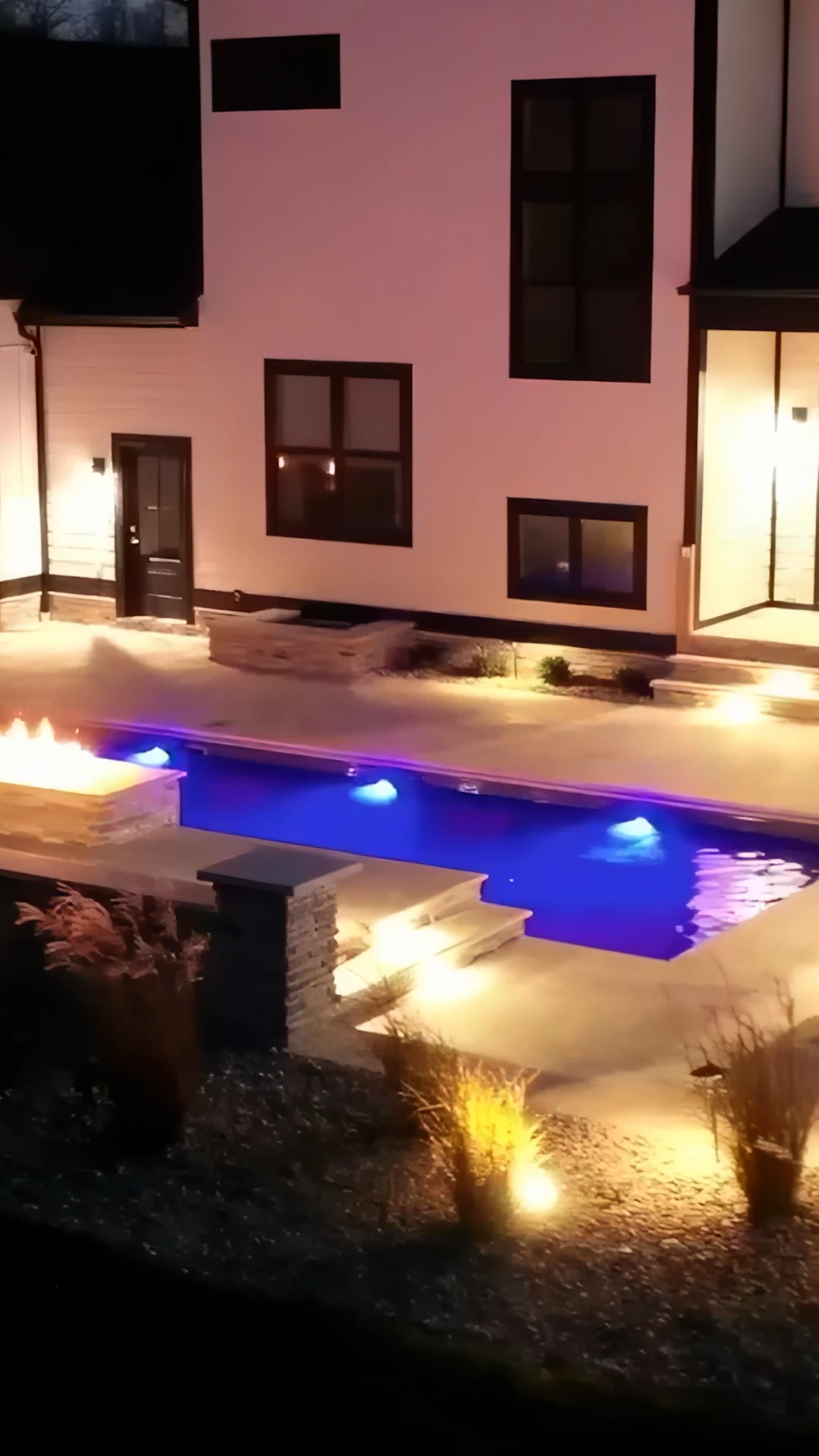
One more thing worth naming: equestrian preservation overlays. Several Manor-adjacent lots sit inside Milton’s AG-1 zoning with 1 to 3-acre minimums and equestrian easements. If your lot backs up to an equestrian parcel or crosses into the Freemanville Road or Hopewell Road preservation corridor, the ARB will also look at how pool lighting affects the adjacent pasture and how fence placement interacts with existing equestrian fencing. This isn’t a hypothetical — it’s come up on a build we completed near Chukkar Farm.
When Primetime Pools Gets The Call — And When We Don’t
We’re honest about where we fit. A Manor build is not a weekend project. It’s a 5-to-6-month engagement that starts with design, moves through an institutional-grade review cycle, and ends with a pool that has to still look right 15 years from now when the next owner shows up to a resale walkthrough.
If you’re building inside The Manor Golf Club, or on an estate lot in Cogburn Estates, King Estates, White Columns, Crooked Creek, Atlanta National, Bethany Creek, Hopewell Plantation, or on one of the larger Freemanville or Hopewell Road parcels — this post is the playbook. The submittal components, the failure points, the Milton permitting path, the soil and topography work, the budget band, and the timeline are all built from projects we’ve actually delivered.
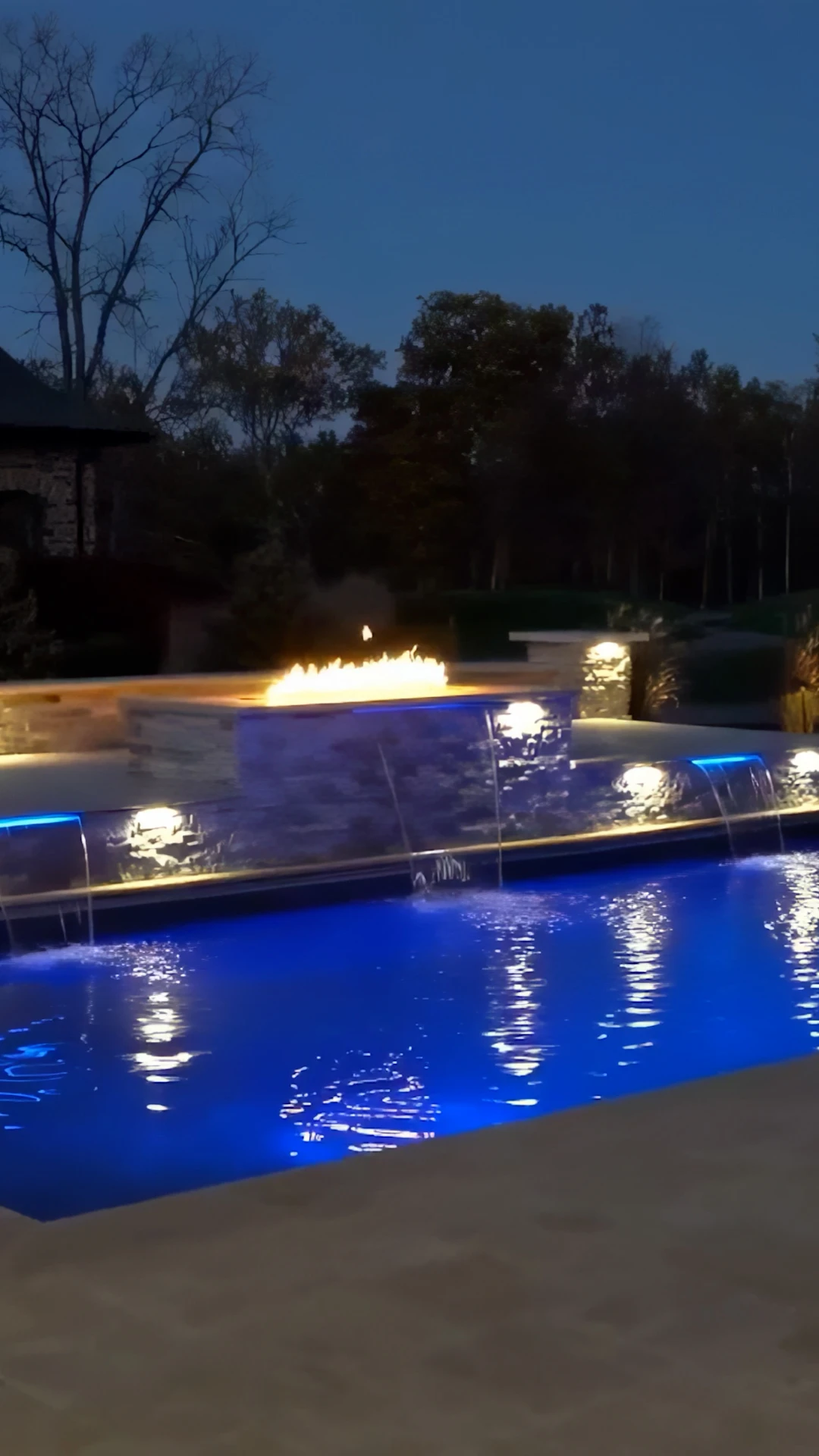
If you’re in the concept phase and trying to decide whether to pursue a pool build inside The Manor, the single most useful step is a pre-design site visit. We walk the lot, shoot a rough topography pass, pull the plat and setbacks, photograph three to five approved Manor pools nearby, and come back with a realistic budget band and timeline — before you spend a dollar on design. That conversation usually saves a homeowner $8,000 to $14,000 in re-design fees that happen when the first concept has to be scrapped mid-ARB.
Custom Pool Construction across 20+ cities within 30 miles of Winder, GA
From The Manor Golf Club’s architectural review cycle to Cogburn Estates’ equestrian overlays, Primetime Pools GA builds submittal-grade pool packages that clear Milton’s strictest boards on the first pass.