
Q: Why do half of Forsyth County backyards end up with a circular firepit instead of the sleek 72-inch linear gas trough the homeowner originally sketched on a napkin? A: Because Sawnee EMC doesn’t deliver natural gas — and nobody tells you that until the engineering drawings land.
That single utility fact reshapes nearly every fire feature decision made inside the 247 square miles of Forsyth County. From the new construction estates off Kelly Mill Road to the lake-adjacent lots in Ducktown and the south-county subdivisions clustered around GA-400 exits 13 through 18, the question isn’t really trough versus firepit. The question is whether you have a natural-gas meter on the side of your house, and if you don’t, whether you’re willing to build your hardscape around a propane tank.
Primetime Pools has installed fire features across every zip code in the county — 30028 up north, 30040 around Cumming proper, and 30041 down in the Atlanta-commuter sub-market. What follows is the unvarnished comparison homeowners don’t get at the sales table: what a linear trough actually costs, why propane changes the math, and when a circular firepit is the smarter spend.
Forsyth is not a monolithic market. The same linear trough drawing that sails through an architectural review in a new Post Road estate neighborhood will get rejected in a 1998 subdivision off Bethelview Road where the covenants still ban permanent gas appliances on the rear patio. The soil under your feet is Cecil clay everywhere, but the grade changes dramatically between the south-county commuter zones and the rocky ridgelines up near Coal Mountain. And Forsyth’s position as the fastest-growing county in Georgia for the past decade — now pushing 260,000 residents across 247 square miles — means the permit office is busier, the HOAs are stricter, and the supply chain for specialty fire-feature components is actually better than it is in smaller counties nearby. All of those variables feed the trough-versus-firepit decision.
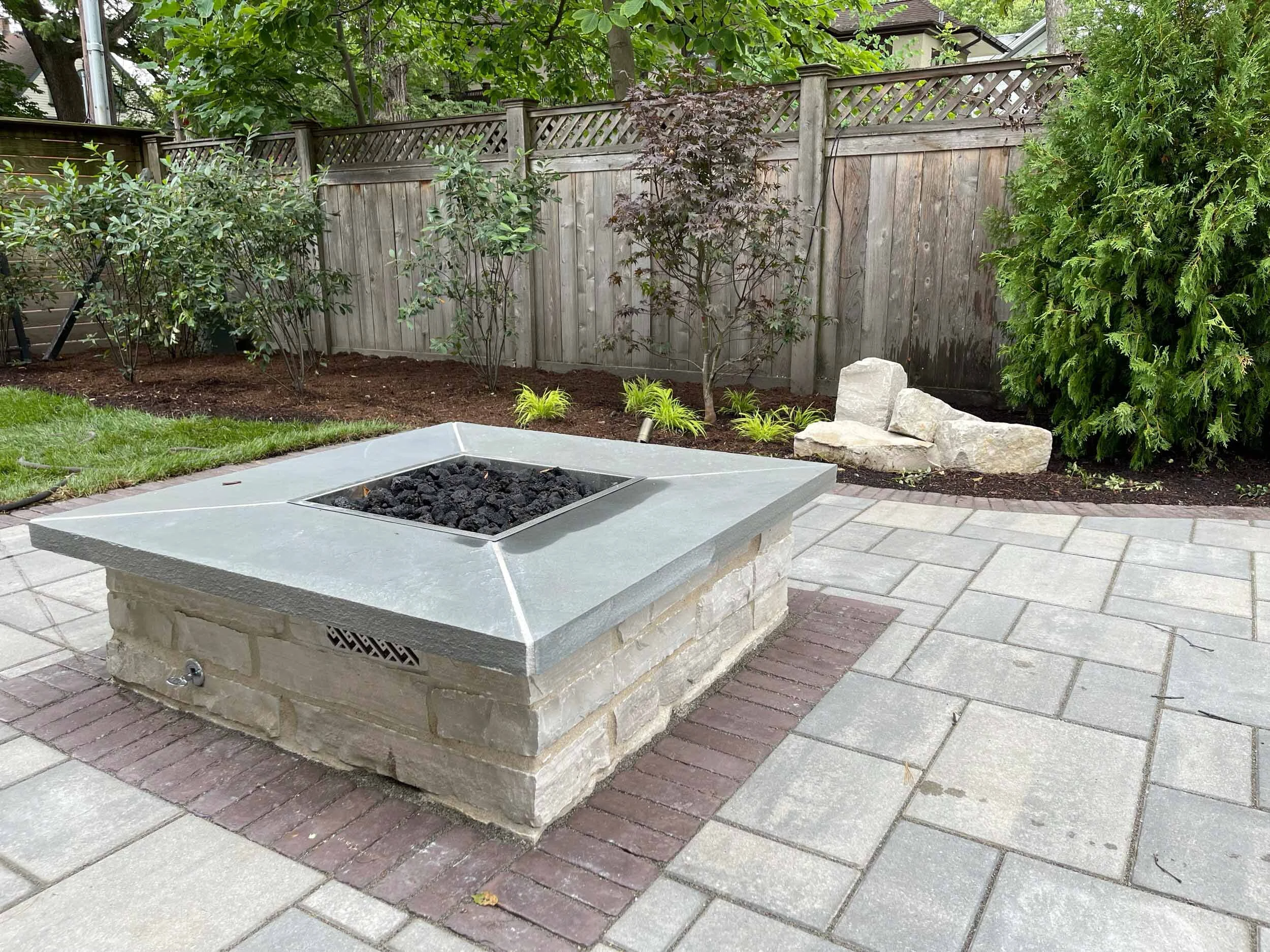
Why the Sawnee EMC Service Map Rewrites Your Fire Feature Plan
Sawnee EMC is the electric cooperative that serves the overwhelming majority of Forsyth County — roughly 95% of rooftops across Coal Mountain, Shady Grove, Bethelview, Shiloh, Brookwood, Big Creek, and Shoal Creek all pull their kilowatts from a Sawnee substation. That is a good thing for your AC bill. It is an inconvenient thing for your outdoor fire plans. Sawnee EMC is an electric cooperative, not a gas utility. It does not run natural-gas lines, does not maintain a distribution grid for methane, and does not install or inspect anything combustible.
If you want natural gas in Forsyth County, you need service from Atlanta Gas Light (the regulated distributor) plus a retail marketer like Gas South, Infinite Energy, or Georgia Natural Gas to bill you. And AGL’s actual physical pipe network is patchy across the county. Inside the city of Cumming and along the main trunks near Hwy 9, Bethelview Road, and the south-county subdivisions closest to Fulton, natural gas is typically available. Push north of Hwy 369 (Browns Bridge Rd) toward Coal Mountain and the Lake Lanier north shore, and the gas main often stops at a distance that makes an extension uneconomical.
What “uneconomical” looks like: AGL’s residential main extension fees in Forsyth currently run $18 to $42 per linear foot depending on terrain, road-bore requirements, and whether you’re the first or the fifth customer on a new run. A 600-foot extension up a wooded Ducktown driveway can easily exceed $12,000 before you’ve burned a single BTU. That cost kills more linear-trough dreams in this county than any other factor.
The fast test: Walk to your gas meter (the round dial on the side of the house). If there isn’t one, you’re on propane or all-electric, and a linear natural-gas trough is off the table without an AGL extension. If there is one, photograph the regulator size — a standard residential regulator handles most trough burners, but a 72-inch unit drawing 85,000 to 125,000 BTU may require an upsized meter at an additional $400–$650.
Linear Gas Trough: The $7,400–$11,200 Question
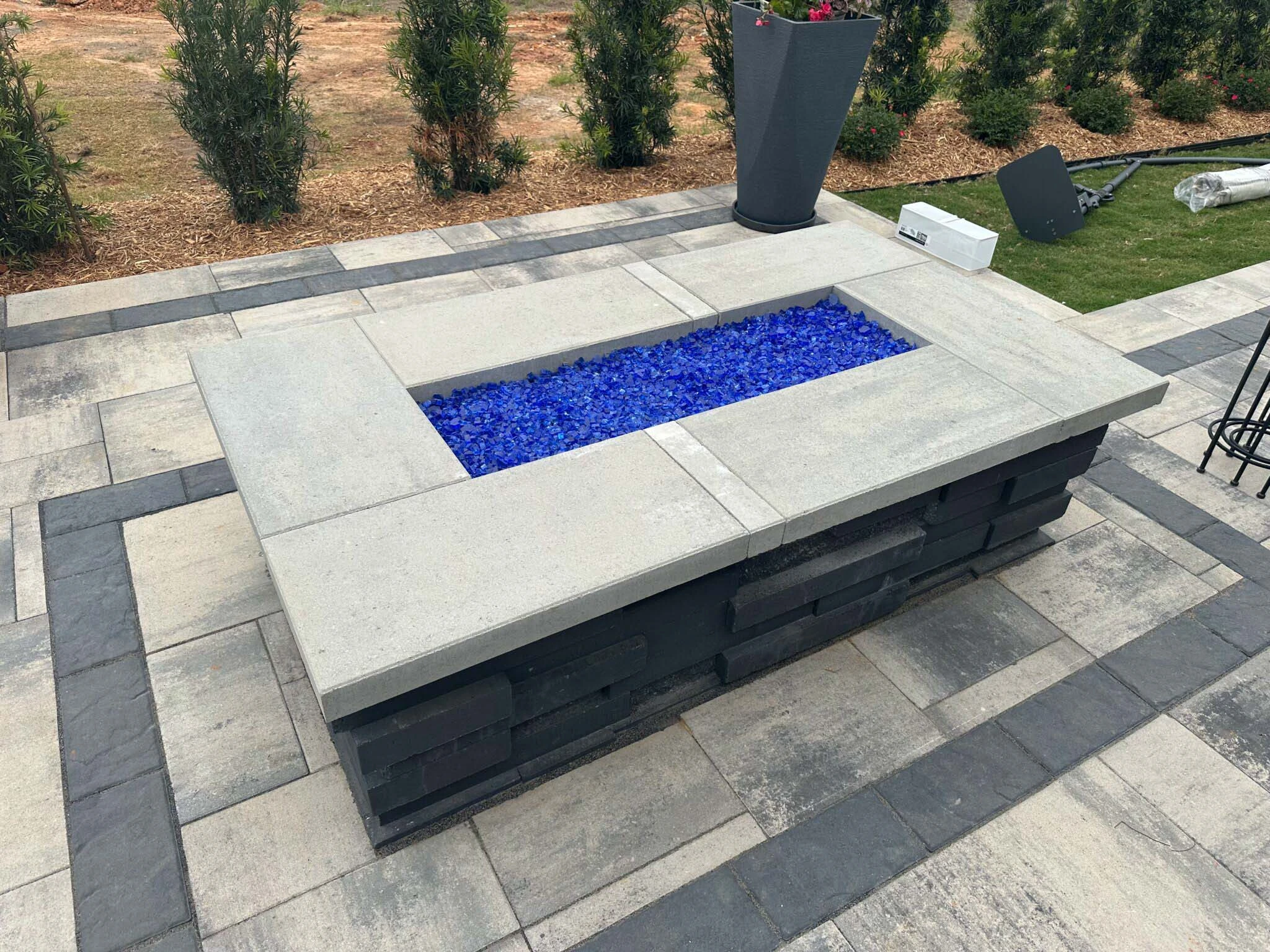
A linear trough is a long, narrow firepit — typically 48, 60, 72, or 84 inches — with a hidden stainless burner that produces a clean, horizontal ribbon of flame across crushed tempered glass or decorative lava. In a Forsyth County build, the 72-inch format is the most-requested size because it reads at scale against the larger patios that north-Atlanta lots support.
Here’s what the trough actually costs, itemized the way our estimating team hands it to homeowners:
- 72-inch stainless burner pan and control box: $1,850–$2,400 (CSA-certified; Warming Trends or HPC are the two brands we install most)
- Trough enclosure (split-face stone veneer, concrete cap, firebrick interior): $2,600–$4,100 depending on cap thickness and stone choice
- Gas plumbing, permitted tie-in, manual shutoff valve, test and inspection: $900–$1,800
- Tempered fire glass or decorative lava fill: $220–$540
- Electronic ignition upgrade (optional but recommended for year-round use): $850–$1,650
- Permit, engineering letter, Forsyth County mechanical inspection: $280–$460
All in: $7,400 to $11,200. That assumes your gas stub is within about 25 feet of the feature location. Every additional foot of trenched gas line — especially across a finished lawn or through a rock shelf in north Forsyth — adds $18–$35 per foot.
Two cost levers move that range more than anything else. First, cap thickness. A 2.5-inch concrete cap is the industry standard; a 4-inch thermally finished bluestone cap with a bullnose edge adds $800–$1,200 but is the detail that elevates the feature from “kit” to “custom.” Second, burner brand. Warming Trends crossfire burners produce the tall, dancing flame pattern that sells the feature in the showroom — and they cost roughly 40% more than a straight stainless pan burner. If you’re spending $9,000 on the feature, skimping $600 on the burner is the wrong place to save.
Operating costs on natural gas are modest. A 72-inch trough on NG with moderate evening use runs roughly $18 to $28 per month on the gas bill during active months — a rounding error next to the installed cost. That is the real argument for natural gas over propane: not the installation savings, but the decade of cheap, invisible operating cost that lets the feature actually get used.
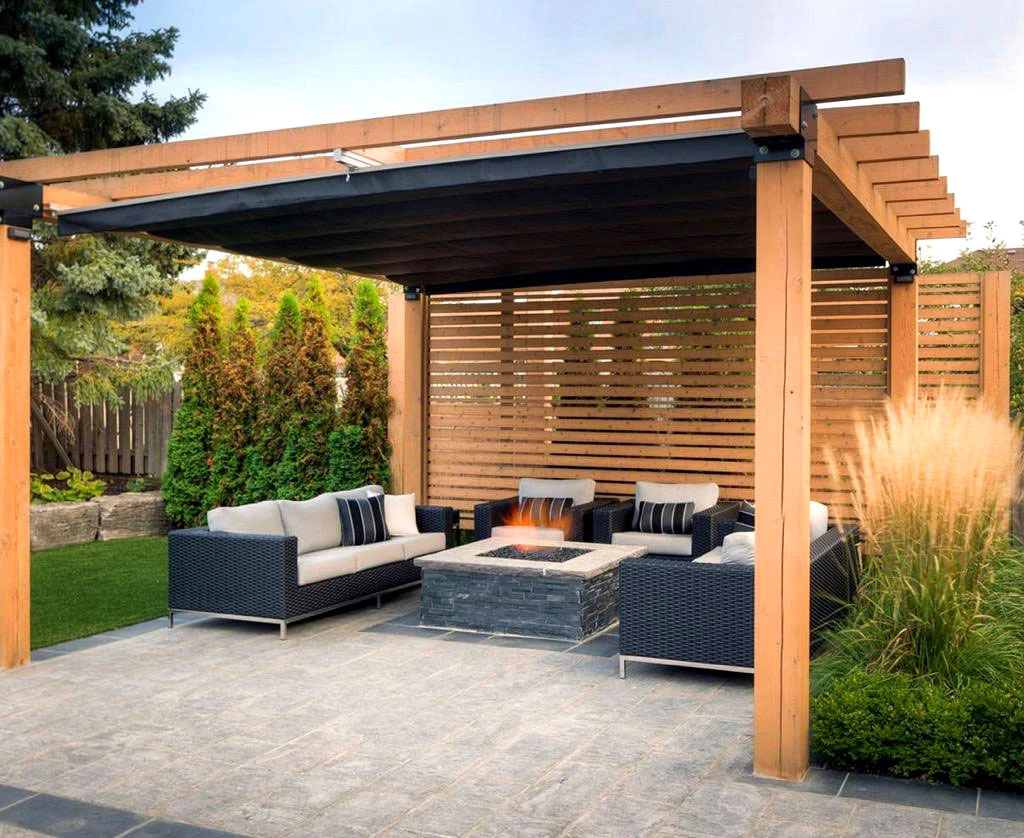
Traditional Circular Firepit: The $3,400–$5,800 Answer
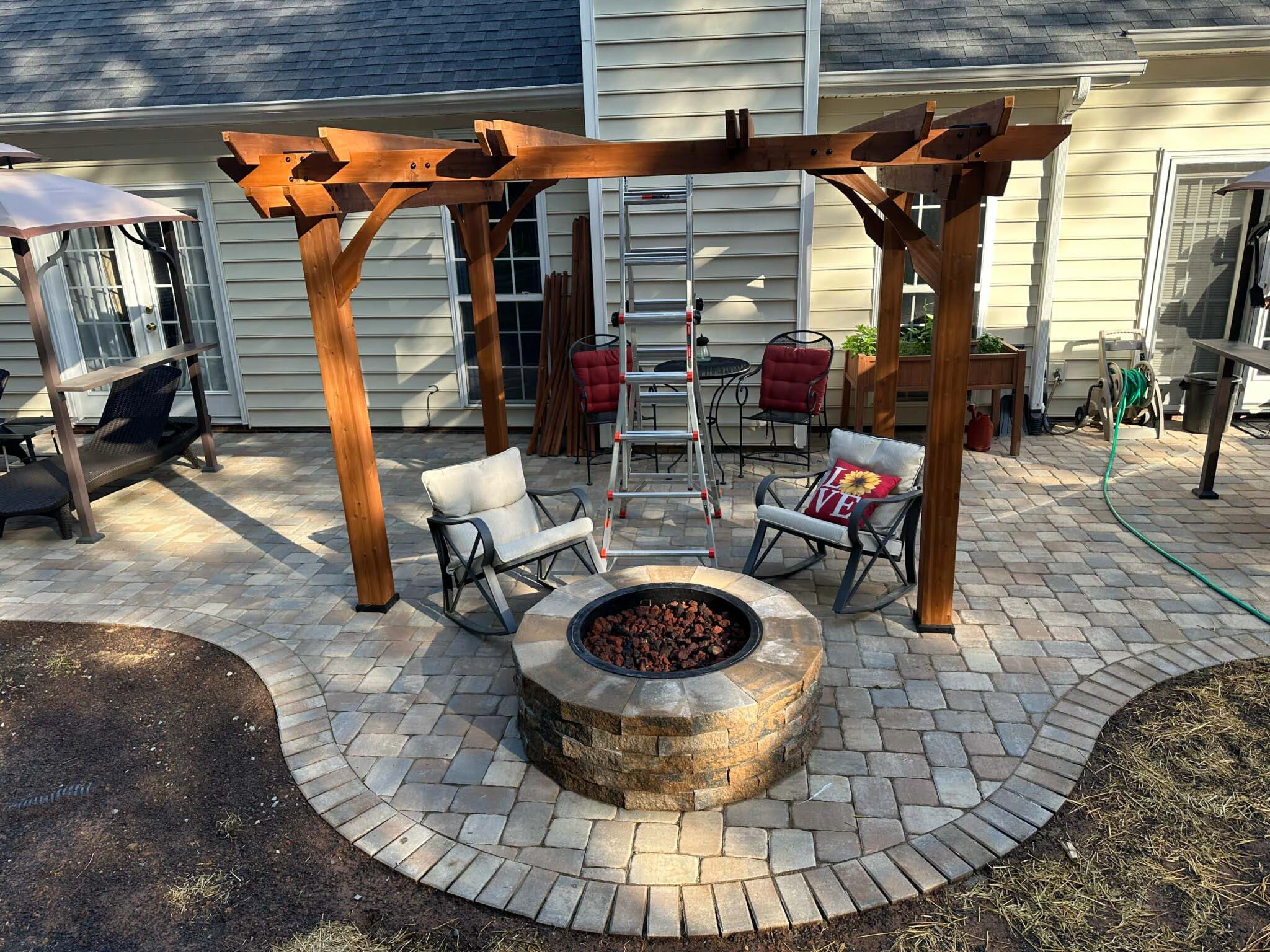
A traditional circular firepit is the hardscape workhorse. Three to four feet in diameter, stone or concrete-paver veneer, capped with either steel insert (wood-burning) or a round stainless pan (gas). On the same Forsyth County patio, a fully built circular firepit comes in at roughly one-third to one-half of what the trough costs — and it gets you 85% of the lifestyle benefit.
- Wood-burning circular kit (36–42-inch, stacked-stone or precast kit): $1,200–$2,200
- Gas circular (24-inch stainless pan, lava rock, manual key valve): $2,100–$3,400
- Installation, excavation, paver field integration, drainage: $1,400–$2,200
- Permit if gas-fed (wood-burning typically exempt in unincorporated Forsyth): $180–$320
Total installed: $3,400 to $5,800 for wood-burning, $4,800 to $7,200 for gas. The savings over a linear trough often get rolled right back into the patio — more square footage, better paver, a seat wall, a pergola. That trade has built more backyards in Bethelview than any other single design decision.
The circular firepit also has one advantage that doesn’t show up in a spec sheet: it ages well. A stacked-stone ledgestone ring develops character over a decade. The soot line inside the bowl, the slight weathering on the coping cap, the patina on a steel insert — these are the details that make a ten-year-old firepit look lived-in rather than dated. A linear trough with a cobalt fire-glass media, by contrast, is aggressively of-its-era. If design trends move away from contemporary minimalism in 2030, a high-contrast trough starts to read as a timestamp. The circular firepit is closer to a timeless purchase.
Kit versus custom is the other fork in the circular decision tree. Forsyth’s supply distributors — primarily Atlanta Landscape Materials and the Techo-Bloc authorized yards near Hwy 20 — stock prefabricated firepit kits from Belgard, Unilock, and Techo-Bloc that install in a single day and run $1,200 to $2,200 for the ring plus cap. A custom build in the same footprint using hand-selected Tennessee fieldstone or imported Pennsylvania bluestone runs $3,500 to $6,000 for the masonry alone. For most Forsyth homeowners, the kit is the correct answer — it looks 90% as good at 40% of the cost, and the time savings on install often matter more than the aesthetic refinement.
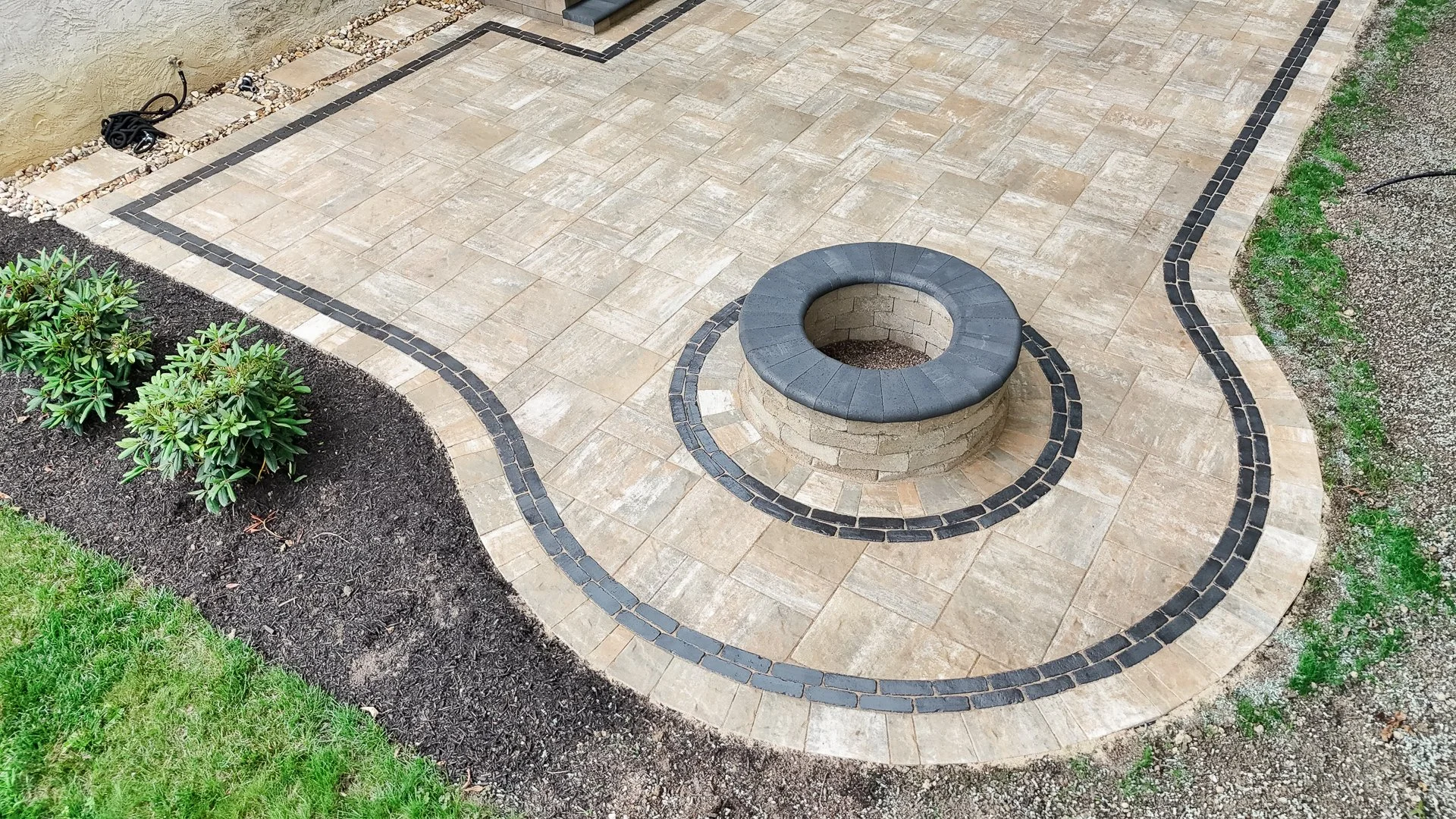
The Propane Math: Why $480 Every 60 Hours Is the Hidden Cost
For Forsyth County homeowners without AGL access — which, realistically, includes a healthy slice of Coal Mountain, Ducktown, and the northern shoulder of the county — propane is the workaround. And propane changes the operating cost conversation in a way nobody explains until the bill arrives.
A 72-inch linear trough running at a typical mid-high flame setting consumes around 3.5 to 4.5 gallons of propane per hour. A standard 120-gallon above-ground residential propane tank — the kind you’ll see behind the larger Shiloh and Shoal Creek homes — holds roughly 96 usable gallons after the 80% fill rule. At current Forsyth County propane pricing of $4.80 to $5.40 per gallon on an auto-fill contract, that tank costs about $480 to refill.
At 4 gallons per hour, you get roughly 24 hours of flame per tank. At 2 hours per weekend evening (a generous real-world assumption), that is 12 weekends per tank — a refill every three months in the active season. Annualize it and you’re looking at $1,400 to $1,900 per year in propane for a trough used regularly. A wood-burning circular firepit, by contrast, runs on $80–$140 of oak per season in Forsyth, with wood available from every rural road stand between Hwy 20 and Hwy 369.
Tank siting matters: Forsyth County fire code requires a minimum 10-foot setback between a 120-gallon above-ground propane tank and any structure, and a 10-foot setback from any ignition source — including the firepit itself. We’ve had to redesign more than one patio layout in Brookwood because the homeowner didn’t know the tank couldn’t live six feet behind the fire feature.
Where the Trough Actually Wins on Heat and Aesthetics
Cost aside, the linear trough is the superior fire feature on two specific measures, and they matter in Forsyth County more than in most of metro Atlanta.
Heat distribution. A 72-inch ribbon of flame at 85,000 BTU spreads warmth across a six-to-eight-person seating arc. A round 24-inch gas pan at 65,000 BTU concentrates heat in a column that is great for the two people directly across from it and indifferent to the four people on the flanks. In a county that logs 22 freeze events per year on average and delivers real shoulder-season cold from late October through early April, the trough extends your usable outdoor season by roughly 8 to 10 weeks per year for a family that actually uses it.
Aesthetic integration. The trough is a horizontal architectural element. It reads as part of the patio’s geometry — an extension of a seat wall, the base of a pergola post line, the focal edge of a pool coping. In the larger new-construction estates off Post Road and Kelly Mill Road, where architects are designing 900-square-foot patios to scale against 5,000-square-foot homes, a circular firepit can look like a thrown-in afterthought. The trough ties the composition together.
When the Firepit Is the Right Call in Forsyth County
For the majority of Forsyth builds — especially in the tighter subdivisions around south-county 30041, and in any home without existing AGL service — the circular firepit is the right spend. Here is the decision frame we walk homeowners through:
Firepit wins when:
- You don’t have natural-gas service and an AGL extension exceeds $3,500
- Your patio is under 450 square feet — the trough’s horizontal footprint overwhelms the space
- You use the feature fewer than 30 evenings per year (operating cost never catches up)
- You prefer wood smoke and the ritual of building a fire — which a lot of Forsyth homeowners do, especially in the more rural north half
- Your HOA restricts permanent gas lines in the rear yard (some south-Forsyth HOAs do)
Trough wins when:
- You have existing natural gas at the house with a capable regulator
- Your patio is 600+ square feet and reads “big” against the home
- You use the feature 50+ evenings per year, especially in shoulder-season months
- You host 6+ people on the regular and want the heat spread to match
- Your exterior design leans contemporary — clean lines, flat cap stone, limited curves
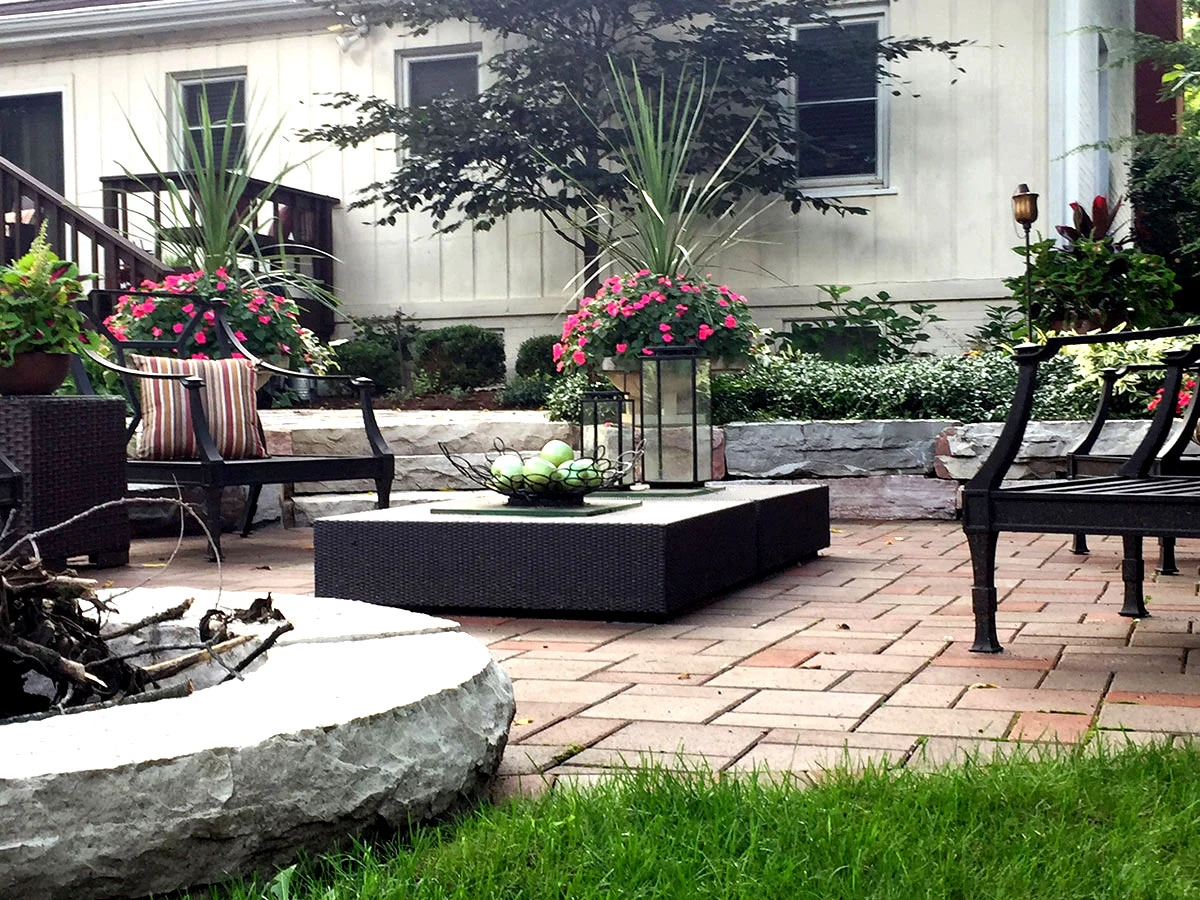
Forsyth County Permits, HOAs, and the Inspection Reality
Forsyth County’s Department of Planning & Community Development — based in Cumming off Tribble Gap Road — approves roughly 200+ pool permits per year and another couple hundred standalone hardscape permits that involve fire features. What they care about on a fire feature application:
Gas feeds require a plumbing permit and a pressure test. Electrical ignition requires a low-voltage electrical permit. Structural elements over 30 inches tall that sit near a property line may require a setback review. Wood-burning firepits in unincorporated Forsyth generally do not require a permit if they’re portable or prefabricated kits under a certain volume, but permanent masonry firepits do.
Turnaround is reasonable by metro-Atlanta standards — typically 10 to 14 business days for a hardscape fire feature permit if the drawings are clean. Compared to Fulton or DeKalb, Forsyth’s review team is relatively fast. That said, the volume they’re processing means incomplete applications get pushed to the back of the queue, and a resubmission can add three weeks.
HOAs are the other filter. Forsyth has one of the densest HOA footprints in the state — a legacy of the 85% of housing stock built since 1995 under master-planned development rules. South-county subdivisions along Bethelview and Post Road commonly restrict:
- Permanent above-ground propane tanks (must be buried or screened)
- Fire features visible from the street
- Masonry heights over 36 inches on the rear setback line
- Certain stone veneer colors on exterior fire features
The north-county estates on 3- to 5-acre lots — the ones scattered around Coal Mountain, Shoal Creek, and the area between Hwy 369 and the Dawson County line — tend to have looser or no HOA constraints, which is one reason we see more ambitious custom fire features up there. When we’re designing a 96-inch trough with a matching fireplace wall and integrated bar top, it’s almost always on a north-county lot where the architectural review is just the homeowner and their spouse.
One permit detail worth knowing: if the fire feature is part of a pool project, it folds into the pool permit and doesn’t require a separate application. That matters because Forsyth processes about 200+ pool permits per year and the fire feature add-on is effectively free review time. If you’re planning both a pool and a fire feature, build them together — same drawings, same inspector, same schedule. Homeowners who run those projects a year apart end up paying for two rounds of permit fees and two rounds of deck and grading coordination.
The Soil and Drainage Factor Both Features Share
One build detail cuts across both trough and firepit installations in this county: drainage under the feature. Forsyth’s Cecil series Piedmont clay holds water. In the northern reaches, closer to Coal Mountain, you add rockier inclusions and a ridgeline grade that pushes runoff horizontally. Along the south shore of Lake Lanier — the entire southern face of the county — the moisture effect from the lake adds another humidity load on hardscape.
What this means mechanically: a fire feature installed on compacted clay without a dedicated drainage bed will heave and crack within three to five years. The solution is the same regardless of which feature you choose — a minimum 4-inch layer of compacted #57 stone beneath the unit, a woven geotextile separator between the subgrade and the stone, and a perimeter French drain if the feature sits at a grade break.
Gas troughs are more sensitive to this than firepits. The trough’s burner pan is a precision stainless fabrication. If the enclosure heaves even half an inch differentially, the pan can warp and the flame pattern develops hot spots. A circular firepit with a replaceable steel insert tolerates minor movement. It’s not that troughs are fragile — they’re just engineered to tighter tolerances, which is also why they cost more.
How to Run the Decision in Your Own Backyard
Here is the 10-minute test we ask Forsyth homeowners to run before we write an estimate. The result tells us — and them — which feature they should actually build.
Step 1. Confirm your gas utility. Look at the side of the house. Natural-gas meter? You’re probably AGL-eligible. No meter? Call AGL’s new-service line and get a tap quote for your address. If the extension is under $2,500, trough is back in play. If it’s over $5,000, the math usually tips to propane or circular.
Step 2. Measure your patio honestly. Pull a tape. Under 400 square feet, the trough will crowd the space. 400–650 square feet, either works. Over 650 square feet, the trough earns its scale.
Step 3. Count your actual evenings. Not aspirational evenings — actual. If you’re honest and the number is under 25, the circular firepit is the better spend. Over 50 and you have gas access, the trough returns the investment in comfort and heat.
Step 4. Check your HOA. Read the architectural review page of the covenants. Two phone calls — one to the HOA manager, one to the county permit office at Tribble Gap Road — will tell you what’s allowed at your exact address inside of a week.
Step 5. Price both, side by side. Any competent Forsyth hardscape builder should be able to deliver an itemized quote for trough and firepit on the same plan. Read the two columns. The right answer usually announces itself.
The shortcut for most Forsyth buyers: If you’re in zip code 30041 on AGL service with a patio over 600 square feet — build the trough. If you’re in zip code 30028 on propane with a patio under 500 square feet — build the firepit. The gray zone in the middle is where a good builder earns the fee.
The goal isn’t to talk you into the bigger invoice. The goal is to match the feature to the way you actually use the backyard and to the utility reality of your specific corner of Forsyth County. Every week we build both — and every week we walk at least one homeowner away from the trough and toward the circular firepit, because the numbers told them to. The feature that serves you best is the one that lines up with your gas service, your patio scale, and your evening habits. Start there.
A last note for the homeowners still deciding: it is legitimate to build the simpler feature now and plan for an upgrade later. Several Forsyth homeowners we’ve worked with installed a wood-burning circular firepit at the time of their initial patio build, then came back three to five years later — once the AGL main had extended into their subdivision as new construction pushed north — and replaced the circular ring with a linear trough on the same concrete pad. The re-use of the existing hardscape saved roughly $2,800 on the second build. If you’re on the fence and AGL service is “maybe in a few years,” the staged-build approach is often the lowest-regret path.
And if natural gas never reaches your lot, that is a perfectly fine answer too. A wood-burning firepit built in stacked Tennessee fieldstone on a 600-square-foot Techo-Bloc paver patio in the foothills of Sawnee Mountain — with your family around it on a October evening, 500 feet from a black-sky view of Lake Lanier — is one of the most honest outdoor rooms you can build in Georgia. Nobody ever regretted that choice, and nobody ever sat next to that fire and wished it was linear.
Fire pit & linear trough design across 20+ cities within 30 miles of Winder, GA
From the AGL-served subdivisions in south-county 30041 to the propane-powered estates north of Hwy 369, Primetime Pools builds the fire feature that fits your utility, your patio, and your actual Forsyth County backyard.