
Your chlorine vanishes within 36 hours of shocking. The waterline grows a green film you can still rub off with a thumbnail. Your tester reads within spec, your pump is healthy, and the pool still looks slightly “off” by Friday afternoon. The problem isn’t the chemistry you’re adding — it’s the water you started with. If your backyard sits anywhere inside Forsyth County, you’re almost certainly filling from Lake Lanier, and Lanier water doesn’t behave like Atlanta city water.
A lot of Cumming homeowners assume a fill is a fill. Turn the hose on, walk away, come back in eight hours, balance it, move on. That logic works fine in Decatur or Tucker where the tap pulls from Chattahoochee intake downstream of heavy treatment. It stops working the second you cross into the Lake Lanier watershed, which covers nearly every subdivision from Vickery to St. Marlo to the newer builds along Post Road. The lake is a living body of water. It carries phosphate, silica, and a seasonal biological load your tap delivers right into your pool.
This post is the forensic walkthrough. We’ll show you exactly what’s sitting in your fill water, how it feeds algae even when your chlorine reads normal, why the annual “Chem-Out” reset costs what it costs, and the precise moment when a full drain-and-refill beats another week of chasing symptoms with shock.
We service pools in all of it — from the tight clay lots near downtown Cumming at 110 E. Main Street off the Forsyth County square, out through the golf-course communities at St. Marlo and Polo Fields, and up to the newer luxury builds along GA-400 exits 14 through 17. Every single one of those backyards fills from Lanier. Every single one has been handed the same invisible chemistry problem. The differentiator is whether anyone has named it out loud.
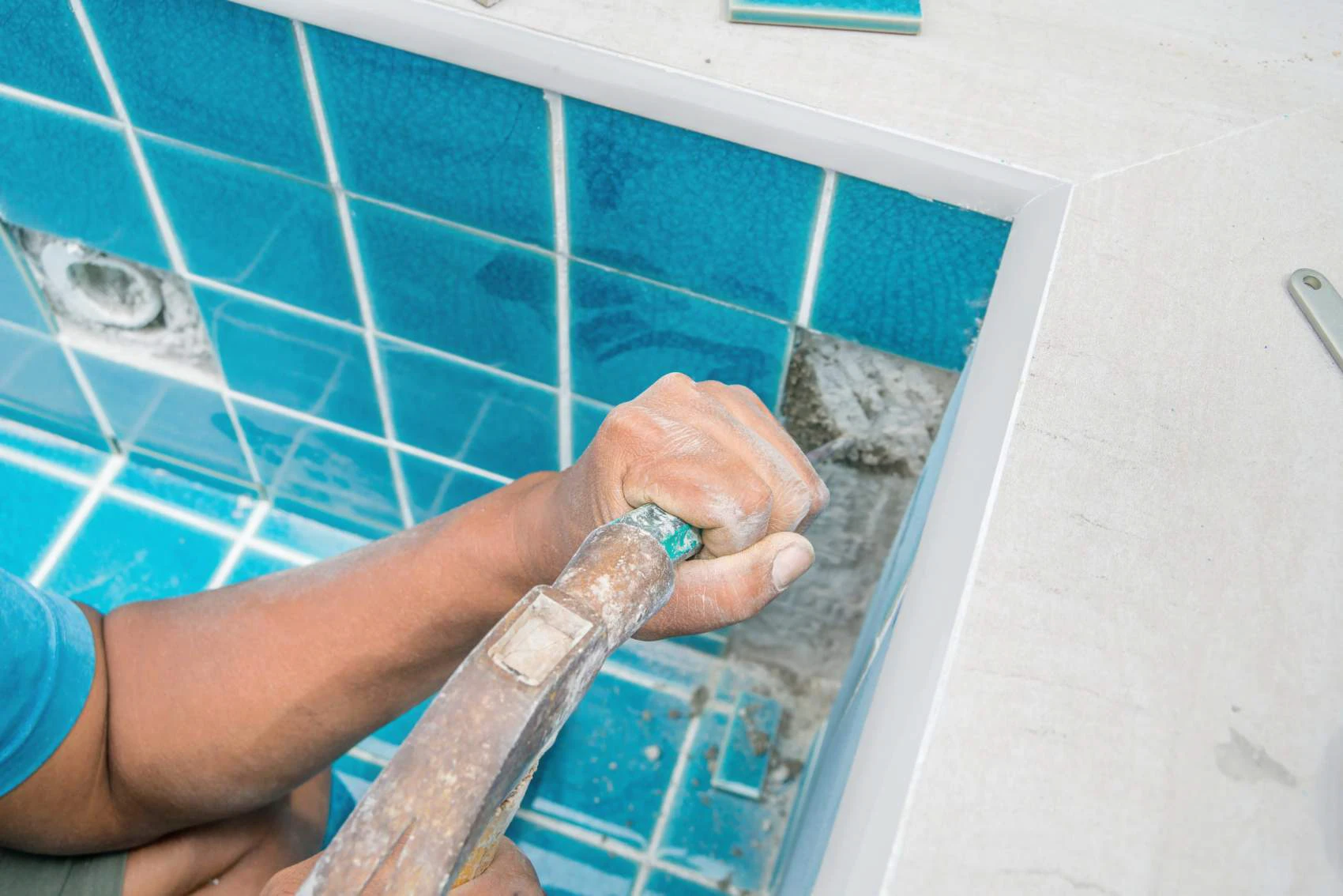
What Lake Lanier Actually Delivers Through Your Garden Hose
Lake Lanier is the primary drinking water source for Forsyth County and a big chunk of North Fulton. The Forsyth County Water & Sewer intake pulls raw water off the lake, treats it to federal potable standards, and sends it to your house. Potable and pool-balanced are not the same thing. Treatment removes bacteria and visible turbidity. It does not remove phosphate or silica, and it isn’t designed to. Those two numbers are the ones that matter inside 18,000 gallons of unfiltered backyard water.
Lab work on Forsyth County tap samples has shown phosphate running 1.2 to 1.8 ppm with silica between 18 and 24 ppm. Atlanta city water, pulling from a different point downstream, typically measures around 0.4 ppm phosphate. That gap is four-fold on the low end and more than four-fold on the high end. You are filling a pool with roughly four times the algae food a Dacula or Stone Mountain homeowner starts with.
Phosphate is plant fertilizer. In a pool, it feeds three things your eyes will eventually see — green algae on the plaster, yellow-mustard algae on shaded walls, and a pale film on waterline tile that shrugs off your scrub brush. Silica is the other half of the story. At those levels, it contributes to stubborn scale on heater elements, salt cell plates, and the grout between tiles. The two together turn a routine summer into a summer of constant correction.
There’s a seasonal layer on top of the raw numbers. Lake Lanier runs a predictable annual cycle — cooler months see the lake stratify and algae blooms die back at the surface, which means the water entering your tap in February through April is relatively cleaner. Summer flips it. Warmer surface water, longer daylight, and the nutrient load from a half-million acres of watershed runoff push phosphate and biological content upward precisely when you’re topping off evaporation losses the hardest. Your fill water in July is measurably worse than your fill water in March, and it lands in your pool at the exact moment you’re running highest demand on the chlorine.
Lanier vs. Atlanta City Water — the raw number: Forsyth tap phosphate runs 1.2–1.8 ppm; typical Atlanta city water reads near 0.4 ppm. Silica on Lanier fill runs 18–24 ppm — enough to feed scale on a Pentair MasterTemp 400 heat exchanger within one season if untreated.
The Drift You Can’t Test For On A Saturday Morning
Here’s why your chemistry keeps drifting. Your Taylor K-2006 test kit reads free chlorine, combined chlorine, pH, alkalinity, calcium hardness, and cyanuric acid. It does not read phosphate. It does not read silica. Plenty of Cumming homeowners have never sent a water sample to a lab and have no reason to suspect the fill. They see chlorine at 2.0 ppm, pH at 7.4, alkalinity at 90, and log it as a clean sample.
The drift shows up three to five days later. Chlorine demand creeps up — you dose your usual amount of cal-hypo on Monday and by Thursday your free chlorine is down to 0.5. Not zero, but below the threshold where algae can gain a foothold. The algae never goes visible because you shock again Friday and reset the cycle. You think you’re running a healthy pool. What you’re actually running is a phosphate feedlot where the chlorine is working overtime every single week to kill bloom before it becomes visible.
That treadmill is expensive. The chlorine you’re using on a Forsyth pool to maintain the same sanitation level a Snellville pool holds with less effort is real money. Between April opening and October closing, the delta on a 18,000-gallon pool runs $140–$220 in extra cal-hypo or liquid chlorine alone. Add the stabilizer burn-off, the algaecide you start reaching for in July, the metal sequestrant for the manganese traces, and the spend climbs fast.

The Annual Chem-Out Reset — What $220–$380 Actually Buys You
A proper Chem-Out reset is the single most useful service call a Forsyth pool owner writes every year. It is not a water test. It is not a chlorine shock. It is a full-spectrum sequencing correction done once each spring or once each fall, and it resets your pool to the chemistry profile the water should have had on day one of fill.
Here’s what goes into a real reset on a 20,000-gallon plaster pool. First the sample goes to the Taylor Technologies lab through our local distributor — not the 6-way test strip you keep in the skimmer lid. Lab work returns phosphate, silica, copper, iron, manganese, nitrate, and total dissolved solids on one sheet. The strips in your kit touch none of those except the big four.
From the lab sheet we build the dose. A 20,000-gallon Lanier-filled pool with 900 ppb phosphate coming out of winter typically needs 40 oz of Orenda PR-10000 phosphate remover dosed over 48 hours with the pump running continuously, followed by a manual vacuum to waste the next morning to pull the precipitate out. Phosphate remover works by binding phosphate into a precipitate the filter catches — it doesn’t evaporate, it doesn’t burn off with chlorine. If you dose it and skip the vacuum, you’ve just relocated the problem to your DE grids.
Silica gets handled differently. There is no chemistry that pulls dissolved silica out of pool water economically. The only lever is dilution — you partial-drain and refill, accepting that the new water will bring new silica, but you’re knocking the existing load down by whatever percentage of water you swapped. On a pool sitting at 85 ppm silica after three seasons, a 40% drain-and-refill drops you to around 55 ppm and buys you another full season before scale becomes visible on the salt cell.
Reset cost breakdown on a 20,000-gallon Cumming pool: lab test $45–65, Orenda PR-10000 40 oz at $95, sequestrant (CuLator PowerPak) $35, vacuum-to-waste labor 1.5 hours at $110/hr, final balance and startup $40. Total $220–$380 depending on starting condition.
The Phosphate Remover Dosing Schedule That Actually Holds
The schedule we run on maintenance clients in Vickery, Hampton Park, and the Polo Fields subdivisions looks like this. Initial reset in late March when pool temp first crosses 60°F — that’s when algae metabolism wakes up and phosphate goes from “stored food” to “active problem.” Maintenance dose in early June when the first full summer use cycle kicks in and evaporative top-offs start reintroducing phosphate from the hose. Final dose in late September after heavy tree pollen and mid-summer rain have pushed the number back up.
Each maintenance dose is smaller than the reset — typically 12 to 16 oz of PR-10000 rather than 40 oz. The pool is already inside a tolerable range; you’re holding the line, not rebuilding it. The key is the lab test two weeks after each dose to confirm phosphate has dropped below 300 ppb. Below 300 ppb is the threshold where routine chlorine handles the bacterial and algal load without help.
This is where Cumming clients who try to DIY this program tend to get burned. They buy a bottle of Natural Chemistry PhosFree at Leslie’s, dose it once in April, never retest, and assume the problem is solved. It isn’t. Phosphate is a continuous-input problem as long as you’re adding hose water, and Lanier keeps the input side hot. A dose-and-forget strategy fails by mid-July every single year.
One more cadence detail that matters specifically in Forsyth County — heavy summer rain events. Cumming pulls roughly 52 inches of rain a year, and the worst concentrations come in July and August as Gulf moisture rides up the Piedmont. A single 2-inch afternoon storm on a pool sitting at the top of a 3–8 foot backyard grade pushes a significant phosphate spike into the water from the surrounding lawn and mulch beds. We tell maintenance clients to bump their monthly phosphate strip check to a rain-event check during July and August. If you got 2+ inches in the last 48 hours, test. If phosphate has crossed 400 ppb from a reading of under 200 ppb a week earlier, you don’t need another bottle of shock — you need a maintenance dose of phosphate remover.
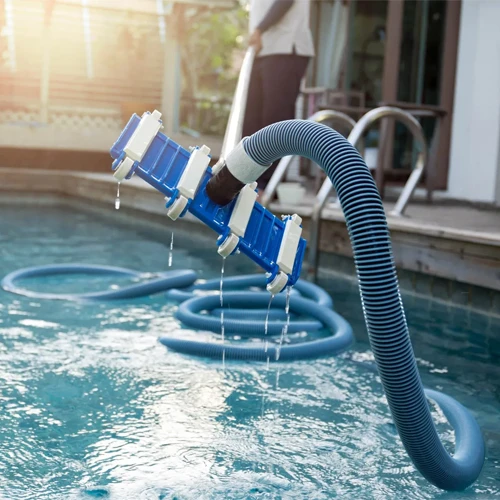
When A Full Drain-And-Refill Beats Every Chemical Approach
There is a point where no chemistry will fix what the water has become, and the right answer is the expensive answer — drain it and start over. The four conditions that tell us a pool in Forsyth County has crossed that line:
- Total dissolved solids above 2,500 ppm. At that level, dissolved minerals interfere with every sanitizer you add. Pools that haven’t been drained in 5+ years routinely show 3,000–4,000 ppm on Lanier fill.
- Cyanuric acid above 100 ppm with no path down except dilution. Stabilizer accumulates year after year and throttles chlorine effectiveness past 80 ppm.
- Calcium hardness above 500 ppm. Lanier calcium isn’t unusually high, but four seasons of evaporation with aggressive cal-hypo dosing concentrates it fast.
- Persistent mustard or black algae that has survived two full shock cycles and a brush-down. The cysts live in the plaster pores at that point, and only draining below the algae line and acid-washing the interior kills them.
A full drain-and-refill on a 20,000-gallon pool in Cumming runs $650–$1,100 all-in. That includes pump-out (roughly 8 hours via submersible through a 2″ discharge), interior hand-clean or spot acid-wash, refill through two garden hoses over 22–28 hours, and full startup chemistry including the initial Orenda reset on the fresh water. Compare that to three years of escalating chemistry fighting a losing battle and the refill wins on cost alone.
Timing matters. We run drains in October after pool season closes, not in July during peak. A plaster pool sitting empty in 93°F July sun risks plaster damage from rapid drying and, in rare cases, pool shell float if the water table is high — which happens in backyards near Big Creek and the South Forsyth drainage tributaries. October drains give 48 hours of cool dry weather to finish interior work, refill while temps are in the 60s, and bring the pool up to balance before winterization in late November.
The testing cadence that keeps a Lanier-fed pool boring — the way a pool is supposed to be — looks nothing like the strip-in-the-skimmer routine most homeowners inherit. Weekly, a homeowner runs the Taylor K-2006 full kit for free chlorine, combined chlorine, pH, total alkalinity, calcium hardness, and cyanuric acid. Monthly, add phosphate (Hach strips work fine for monitoring crossings over 500 ppb) and TDS from a pocket digital reader. Quarterly, send a sample to the lab for silica, metals, and nitrate — once in April, once in July, once in October. Three lab tests per year run $135–195, which is less than the cost of one unplanned algae bloom and out-of-cycle shock-and-drain.
The Build-Side Decisions That Make Lanier Water Easier To Live With
If you’re planning a new pool in Forsyth County, or you’re renovating an existing shell, there are three decisions at the build stage that cut Lanier’s chemistry tax for the next 15 years.
Salt system sized one tier up. Standard sizing rule is 1.2x pool volume on salt cell capacity. For a Lanier-fed pool we spec 1.5x. A 20,000-gallon pool that would run a Pentair IntelliChlor IC40 under normal sizing gets the IC60 instead. Reason: silica fouls cell plates faster. Oversized cells reverse-polarity clean more effectively and stretch replacement interval from 3 years to 5.
Pebble interior over plaster. White plaster pits faster under phosphate-fed algae cycles. A Pebble Tec or Pebble Sheen interior at the $6,800–$9,400 upgrade over standard white plaster on a 20,000-gallon pool adds 8–10 years of service life and makes scale less visible between service calls. On Lanier water that’s not cosmetic — it’s a warranty calculation.
Automatic water leveler with a softener bypass. The leveler sits inline with the fill plumbing. A small-capacity softener loop upstream of the leveler drops calcium hardness on inbound water before it ever enters the pool. Not common in Georgia builds, but we spec it on every Cumming new-build over $180,000 because the math holds.
One HOA-specific note for the high-end Cumming subdivisions. St. Marlo and Polo Fields both run architectural review boards with 2–3 week turnarounds on pool plans, and both have started flagging cell and heater equipment visibility in recent submissions. If you’re adding an oversized IC60 cell or a softener loop at the build stage, the equipment pad grows by 2–3 square feet, and that extra footprint needs to be noted in the landscape-screening plan. Budget another 1 to 2 weeks on the front end if you want these anti-Lanier upgrades without a resubmission loop.
Seven Signals Your Cumming Pool Is Already On The Drift
How to tell, in rough order of early-to-late, whether you’ve crossed into the Lanier chemistry drift:
- Chlorine demand climbing week over week despite identical dosing — a 20,000-gallon pool that held 3 ppm free chlorine on 2 lbs/week of cal-hypo in year one now needs 3 lbs/week to hold the same number.
- A green-gray cast on the waterline that returns within 72 hours of a scrub.
- Salt cell amperage drifting down by 10–15% with no other change — silica fouling on the plates.
- Heater cycling longer than expected to hit setpoint — scale insulating the heat exchanger.
- Stabilizer creeping upward even though you haven’t added conditioner — trichlor tabs delivering small daily adds that accumulate.
- A fresh-filled pool going cloudy within 24 hours of first balance.
- Persistent algae spots in the same corners each July — typically the shaded north-facing walls where UV chlorine regeneration is weakest.
Three or more of those signals and you’re past the DIY phase. The cost of letting it run another season is a shorter salt cell life, a tired heater, and a plaster interior that will need renovation a year earlier than it should. The cost of calling it in is one Chem-Out reset and a half-day drain if the TDS has climbed too high.
The bottom line for any Cumming homeowner reading this — your fill water is the variable nobody warned you about, and it’s the one driving every frustrating chemistry conversation you’ve had with your pool store. The fix isn’t more chlorine. It’s a lab test, a dosing schedule, and the discipline to do both on a calendar, not on a crisis. Do that and the pool goes boring in the best possible way. Skip it and you’ll spend the next five years fighting water that was never in balance on the day you filled it.
Pool repair and chemistry resets across 20+ cities within 30 miles of Winder, GA
Lake Lanier fill water brings real challenges to every Forsyth County pool. We run the lab work, run the reset, and keep your chemistry out of the weekly panic zone.