
We quit putting 500-watt incandescent bulbs into new pools in Dacula two full seasons ago, and we are never going back. The technology is over. The energy math is a wipeout, the failure rate is absurd, the light is dim and yellow, and every homeowner who has ever stood at a control pad trying to “change the mood” on an incandescent pool has already felt what we are about to explain. This post is the engineering breakdown — watt by watt, lumen by lumen, dollar by dollar — of why a new incandescent install in Gwinnett County in 2026 is a mistake, and why even retrofitting an existing pool is a one-afternoon job now that niche-compatible LEDs exist.
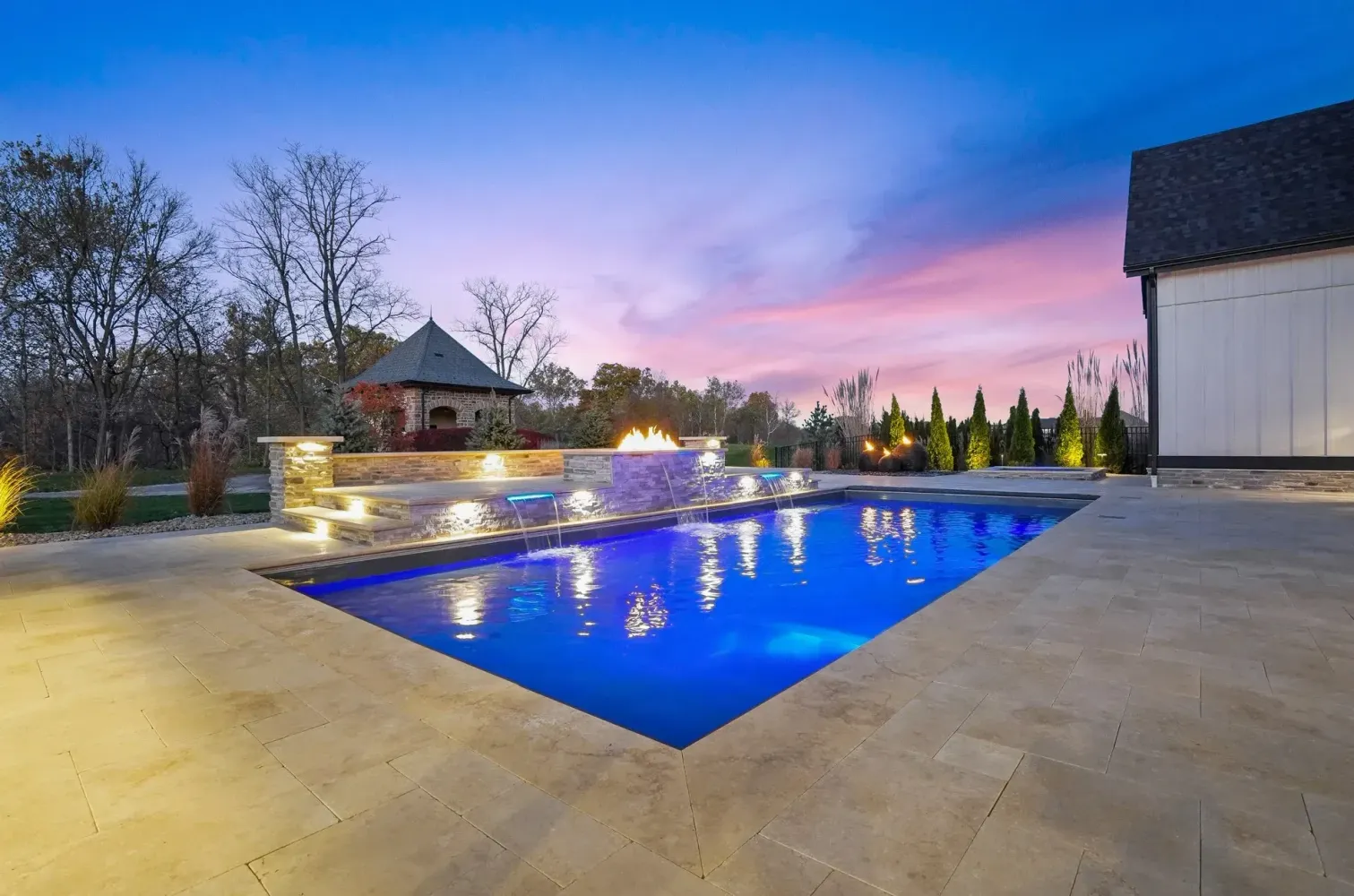
If you are building a new pool in Hamilton Mill, Sycamore Ridge, Providence Club, or any of the other 1995-to-present subdivisions that make up Dacula’s 30019 housing stock, the lighting decision is already made for you by physics and by price. The three LED fixtures we specify — Pentair IntelliBrite 5G, Hayward ColorLogic, and Jandy Nicheless — each produce more usable light than a 500-watt incandescent while drawing roughly one-tenth the power, last ten to fifteen times as long, and give you a color palette that an incandescent bulb physically cannot produce no matter what you do to the housing. The only argument for incandescent in 2026 is “it is what the existing fixture takes,” and even that argument collapses the moment you price a retrofit LED that drops into the existing niche without a diver.
The Energy Math That Ends the Conversation
Start with the number that matters most to a homeowner, because it is the one they will feel in their Georgia Power bill every month for the next twenty years. A standard 500-watt incandescent pool fixture, run four hours per evening across a 150-night swim season in Dacula’s USDA Zone 8a climate, draws 300 kilowatt-hours per year. At Georgia Power’s current residential rate of $0.13 per kilowatt-hour, that is $39 a year to light a single pool. A Pentair IntelliBrite 5G, drawing 56 watts for the same 600 annual hours of runtime, uses 33.6 kilowatt-hours and costs $4.40 a year to run.
The annual difference is $34.60, which sounds small. Stretched across a 20-year ownership window — which is a realistic horizon for the custom concrete pools we build in Hamilton Mill and Chandler Ridge — that delta is $692 in raw electricity, not counting rate increases, which Georgia Power has compounded at roughly 3 to 4 percent annually for the last decade. Assume even modest inflation on the utility rate and the 20-year energy cost of running incandescent versus LED lands closer to $900 per fixture. In a pool with two lights, call it $1,600 to $1,800 over the ownership window purely in electricity.
Then layer in bulb life. A 500-watt incandescent pool bulb is rated at roughly 2,000 hours. On a 600-hour-per-year use pattern, that is a 3-year bulb — and we see many of them burn out at 18 to 24 months in Dacula pools because the thermal cycling from our humid summers and our 20-or-so annual freeze events stresses the filament every time the pool warms up and cools down. Over 20 years, you are looking at 7 to 10 bulb replacements per fixture. The bulb itself is only $40 to $60. The labor is the expensive part: $120 to $180 per swap, because someone is pulling an underwater light, unsealing the fixture, replacing the bulb, re-gasketing, and re-sealing the housing. Seven swaps at the low end equals $840. Ten swaps at the high end equals $1,800.
20-year cost of running an incandescent pool light in Dacula: $900 in electricity + $840 to $1,800 in bulb replacement labor = $1,740 to $2,700 per fixture, not counting any structural failure of the niche.
20-year cost of running a Pentair IntelliBrite 5G LED: ~$100 in electricity, zero bulb replacements (the LED assembly is rated for 30,000+ hours), one potential fixture-level service call if something fails. Call it $250 all-in.
The Pentair IntelliBrite 5G fixture itself costs $620 to $780 installed. The Hayward ColorLogic costs $540 to $720. The Jandy Nicheless LED costs $580 to $740. A new-construction incandescent fixture — complete with niche, conduit, and transformer — costs $280 to $420, so yes, you save roughly $300 to $400 on day one by going incandescent. You then spend $1,400 to $2,300 more over the life of the pool to do it. That is the end of the conversation, and it is why the industry-wide shift away from incandescent is not marketing — it is arithmetic.
The one caveat worth naming: these numbers assume the pool is actually being lit for its intended use. A pool that never gets used after sunset — and some Dacula backyards absolutely fit that description — has a much smaller energy bill regardless. But if you are building a custom pool for $80,000 to $150,000 and you never plan to swim at night, you have a different problem than lighting choice.
The Three Fixtures We Actually Specify
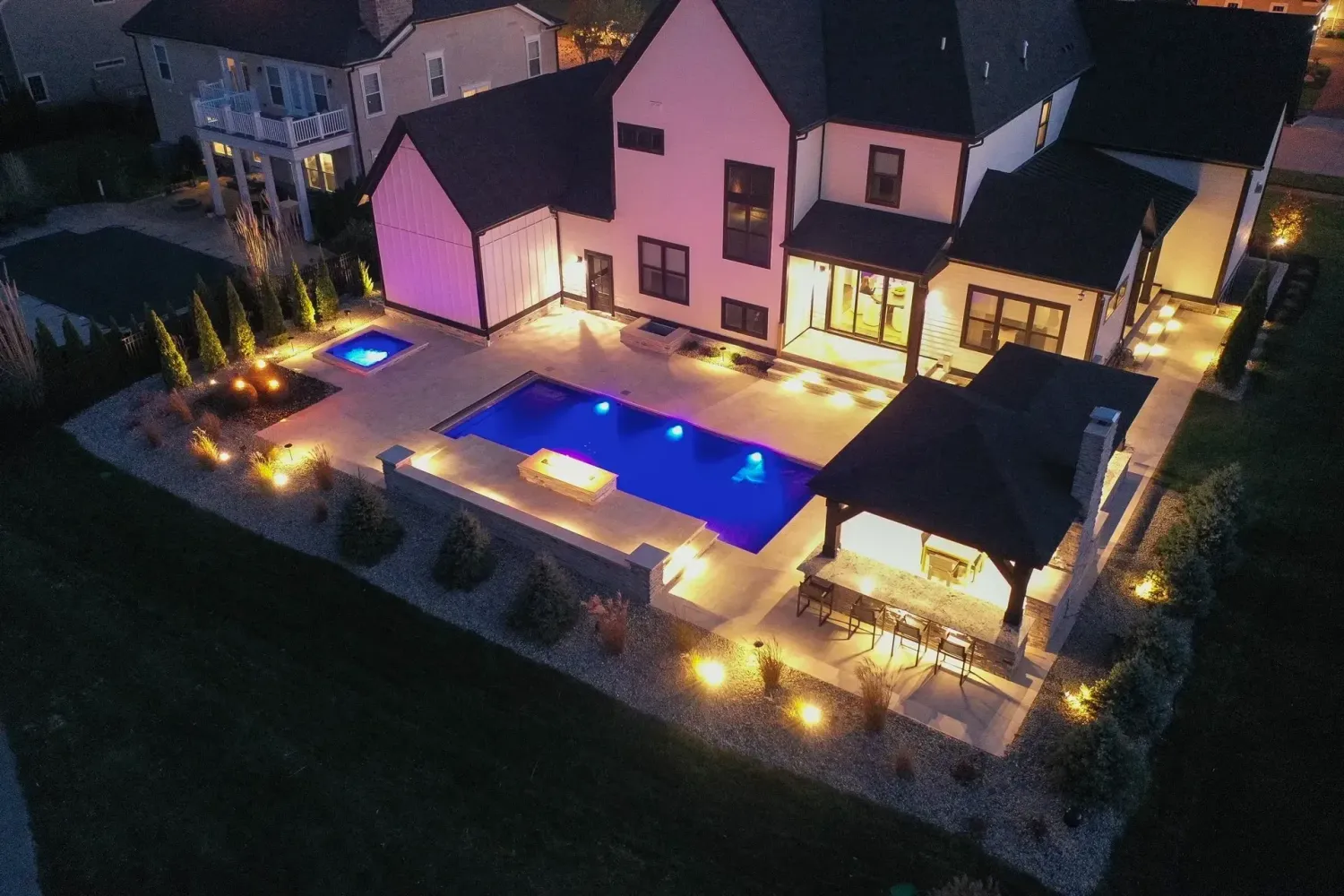
We do not install bargain-bin or unbranded LED pool lights. The pool fixture is a wet-niche, 120-volt, permanently submerged piece of equipment that has to hold a watertight seal across 20-plus years of thermal cycling in a chlorinated or saltwater environment. The seal matters more than the light output. That is why we only put three brands into the ground in Dacula, and why each one earns its place for specific reasons.
Pentair IntelliBrite 5G — Our Default Specification
The IntelliBrite 5G is the fixture we spec by default on new pools unless there is a specific reason to choose differently. It draws 56 watts, produces between 4,000 and 5,500 lumens depending on the color mode and driver tune, and offers 5 fixed colors plus 7 preset color-changing show modes. Installed cost lands between $620 and $780 for a single fixture, including niche, wire, and transformer tap.
What earns the default slot: the IntelliBrite integrates natively with Pentair’s IntelliConnect automation controller, which is already installed on the majority of new builds we do because the rest of our pool equipment — the variable-speed pump, the salt cell, the heater, the chemistry controller — is usually Pentair. A homeowner standing on the deck with their phone can switch between blue water, cycling party mode, a static green for game day, or warm white for dinner without leaving the patio. The color integration also syncs with landscape lighting if the surrounding property is wired into the same control plane, which is where the “resort lighting” look actually comes from.
Hayward ColorLogic — The Expanded Palette Choice
If the rest of the pool equipment is Hayward — and in Dacula, about 35 percent of what we install is Hayward because of pricing and dealer support — the ColorLogic is the matching LED. It draws 49 watts, outputs 4,200 to 5,000 lumens, and offers 10 fixed colors (vs. Pentair’s 5), which is what some homeowners fixate on when they see the side-by-side demo. The installed cost is $540 to $720, slightly cheaper than the IntelliBrite.
The reason we do not default to ColorLogic despite the lower price and broader palette: the OmniLogic automation integration is solid but slightly less mature than Pentair’s IntelliConnect when it comes to coordinating landscape scenes outside the pool itself. For a pool-only lighting install, ColorLogic is arguably the better value. For a full backyard scene-controlled setup with landscape fixtures around a pergola and firepit, the IntelliBrite ecosystem is smoother.
Jandy Nicheless LED — The Retrofit-Friendly Specialist
The Jandy Nicheless is a different animal. It does not sit in a traditional deep-wall niche — it mounts flush to the pool wall with a shallow recess, which makes it dramatically easier to install in gunite pools where the niche was never formed during shell construction, and it makes it equally easy to retrofit into certain older pool builds where the existing niche is corroded or leaking. It draws 49 watts, offers 5 solid colors plus 7 show modes, and costs $580 to $740 installed.
The Jandy is also the fixture we recommend on smaller spas and water features attached to larger pool builds, where the full-depth niche of an IntelliBrite or ColorLogic is overkill and the flush mount reads as cleaner visually. It ties into the Jandy iAquaLink automation if the rest of the equipment is Jandy, though we see iAquaLink less often in Dacula than the other two systems.
Spec sheet summary for Dacula new builds:
— Pentair IntelliBrite 5G: 56W · 4,000–5,500 lumens · 5 colors + 7 shows · $620–$780 installed
— Hayward ColorLogic: 49W · 4,200–5,000 lumens · 10 colors · $540–$720 installed
— Jandy Nicheless LED: 49W · 5 colors + 7 shows · $580–$740 installed · flush-mount
For reference: A 500W incandescent produces 8,500 lumens of warm white light only, runs 2–3 years before bulb replacement, and costs $40–$60 per bulb plus $120–$180 labor to swap.
Retrofitting an Existing Dacula Pool Without Draining It
The most common question we get when we start talking about LED upgrades with an existing pool owner — especially in the Hamilton Mill and Auburn Park homes that were built between 1995 and 2010 with first-generation incandescent lighting — is whether the pool has to be drained to do the swap. It does not. For existing pools, we use the Pentair MicroBrite LED retrofit, which runs $280 to $420 installed and drops into the existing incandescent niche without disturbing the shell or the bonding ring.
The MicroBrite is a smaller LED assembly designed specifically to replace an incandescent bulb-and-lens assembly in a pre-existing fixture housing. It produces slightly less light than a full IntelliBrite 5G — roughly 2,400 to 3,200 lumens — but still outperforms the 8,500-lumen incandescent it replaces in real-world water penetration because the LED light is tuned to wavelengths that travel better through chlorinated water than the broad warm-white of a filament bulb. It also adds color capability to a fixture that never had it.
The process takes about 90 minutes of labor. We pull the light out of the niche from the deck side (the pool does not get drained below the niche — we isolate the fixture above the wet housing), cut power at the transformer, swap the gasket, install the MicroBrite, re-seal the housing, and re-insert. The homeowner typically does not have to be home for the work once we have deck access. For a two-light pool, the retrofit labor runs about 3 hours total.
The practical math for a retrofit: $280 to $420 per fixture, installed. If you are looking at a 3-year-old incandescent bulb nearing end of life, the bulb-only replacement is $160 to $240 installed. So for roughly $120 more than a bulb swap you have already been paying for, you get 10+ years of service instead of 2–3, plus color-changing capability, plus the ~$35/year electricity savings. This is the single easiest upgrade we perform on legacy Dacula pools and it is also the most-appreciated afterward.
The one condition that kills the retrofit path is when the existing incandescent niche is corroded or has a failed ground-bonding wire. That is not a rare finding on pools built in the mid-1990s, especially in the Hamilton Mill original phases where some niches are now 25+ years old. If we pull the existing fixture and find conductor corrosion, the retrofit stops and we are looking at a full niche replacement, which does require either a drain-down or a specialized liner-side work procedure. We flag that possibility before we start so a homeowner is not surprised.
Why Color Capability Is Not a Gimmick — And What It Actually Buys You
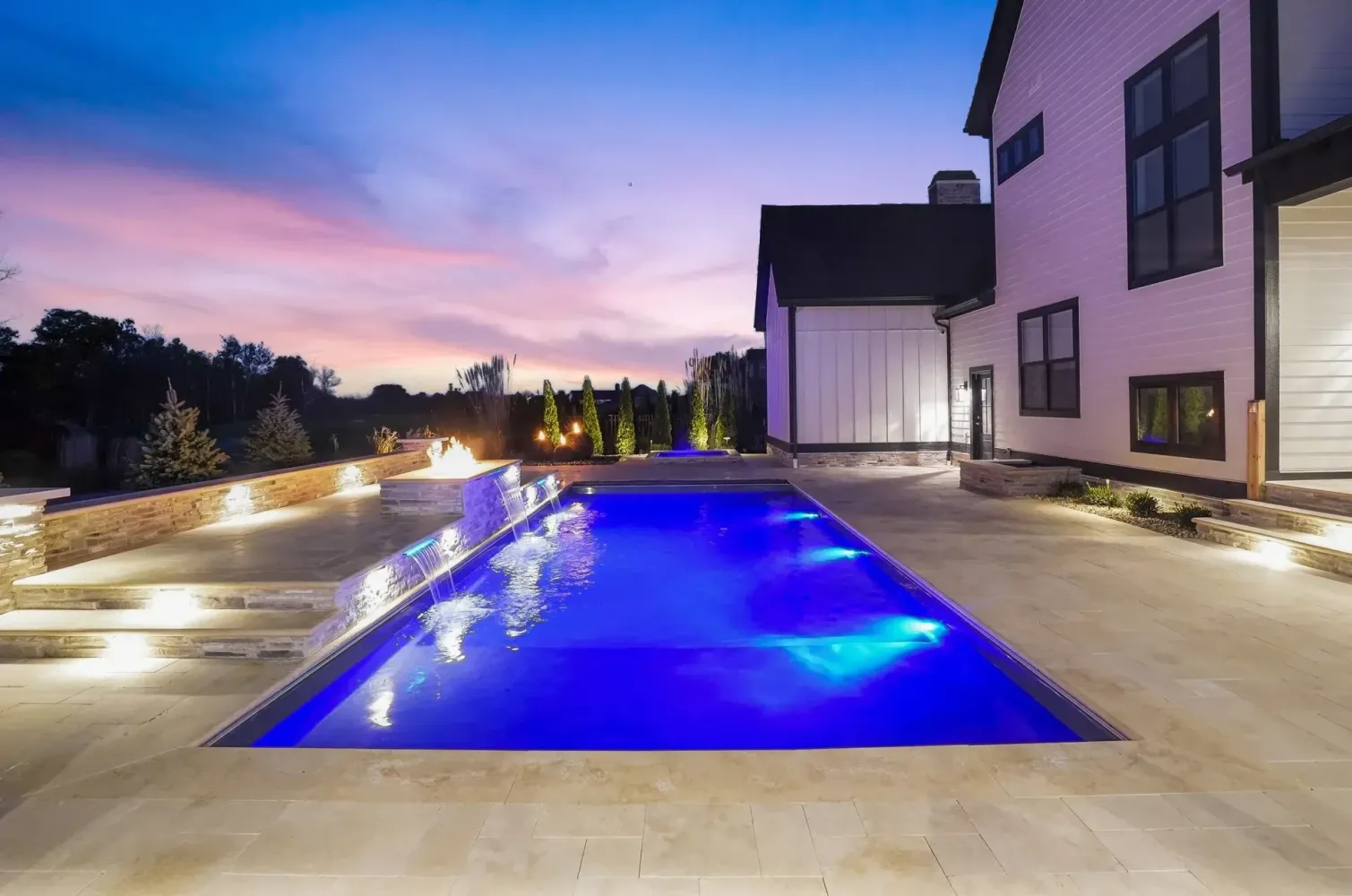
The color-changing feature of LED pool lighting is often dismissed as a novelty. “We do not need a disco light — we just want to see the bottom of the pool at night.” That dismissal is understandable, but it misses the functional reason LED color capability matters in Dacula backyards: it lets a pool serve different moods without rewiring, refixturing, or replacing anything, and it integrates with automation scenes in ways that incandescent cannot.
A representative week in a Dacula household with a two-fixture LED-lit pool looks like this. Wednesday night, the family is eating on the patio — the pool is set to a warm white at reduced intensity, because anything blue-tinted competes with the dinner lighting and feels out of place. Friday night, the homeowner is hosting friends — the pool cycles through a slow color show that matches the mood without being aggressive. Saturday morning, the pool is not lit at all because the sun is doing the work. Saturday evening, the neighborhood kids are in the pool — bright cool-white illumination for safety and visibility, no color at all. Sunday night during the football season, a static red or green tied to the team of choice.
An incandescent fixture gives you one answer to all five of those scenarios: warm yellow-white, always on. An IntelliBrite or ColorLogic gives you 10 to 16 preset scenes, each triggerable from a wall controller, phone app, or programmed automation schedule. The scenes are not a gimmick when they are tied to how the pool is actually used across a week.
The deeper technical reason the color matters: LEDs produce light at specific narrow-band wavelengths, which means a “cool white” LED is genuinely cool — color temperature in the 5,000K to 6,500K range — while an incandescent filament is chemically locked at roughly 2,700K to 3,000K, the warm yellow of a traditional household bulb. For reading a book poolside or showing off travertine coping, the cool-white LED renders materials accurately and makes water look clear. The warm incandescent makes everything look slightly amber, including the water itself, which is why mid-1990s pools in Hamilton Mill often photograph with a yellow tint at night even when the water is perfectly clean.
Integrating with automation is where LED becomes force-multiplying. A Pentair IntelliCenter or Hayward OmniHub can link the pool’s LED scenes to landscape lighting around a pergola, firepit, or outdoor kitchen — the entire backyard shifts mood together on one button press. That is the “resort lighting” effect people photograph when they see custom backyards in Gwinnett and assume it must be expensive custom work. It is not. It is a $600 fixture, an $800 controller, and a one-afternoon programming session. The wiring has been in the ground since the pool was built.
Scene capability by fixture:
— IntelliBrite 5G: 12 total scenes (5 colors + 7 shows), programmable via IntelliConnect or IntelliCenter
— ColorLogic: 10 colors + 6 shows = 16 scenes, OmniLogic-integrated
— Jandy Nicheless: 12 total scenes, iAquaLink-integrated
— Incandescent 500W: 1 scene (warm white, always)
One last note on color, specific to Dacula’s water chemistry. The Piedmont groundwater that feeds most wells and fills most pools in the 30019 ZIP code is moderately hard — calcium carbonate levels tend to run 180 to 250 ppm from municipal taps and higher from private wells, which is common across Gwinnett County. That hardness does not affect LED performance, but it does change how light reflects off pool walls. Pebble Tec finishes and darker plaster bases read very differently under LED cool-white than under incandescent warm-white. In several Hamilton Mill pools we have upgraded, the homeowner’s first reaction after the LED retrofit was that the pool “looks cleaner” — not because the water chemistry changed, but because the light rendering shifted from amber warm to neutral cool, which reads as cleaner to the eye. That is a secondary benefit of LED that does not show up on any spec sheet.
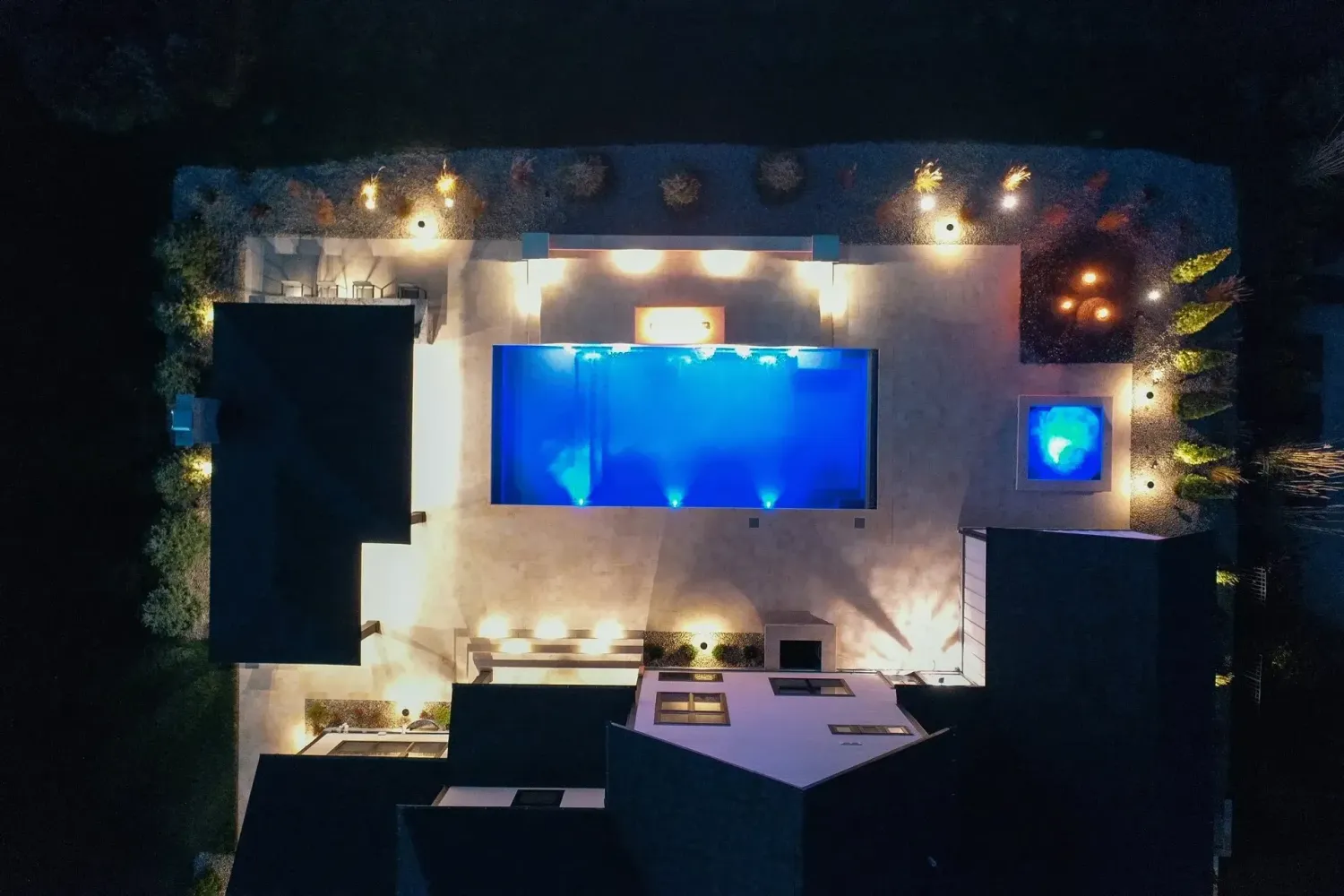
LED pool lighting and full pool builds across 20+ cities within 30 miles of Winder, GA
New-build LED specification, existing-pool MicroBrite retrofits, and full automation integration for Pentair, Hayward, and Jandy equipment — across Gwinnett and the surrounding counties.