
Q: “Why does our stamped-concrete deck in West Cobb feel like a skillet by 2 p.m.?” A: Because at 92°F ambient on a full-sun lot, dark stamped concrete hits 141°F surface temperature — a number that exceeds the 118°F barefoot-tolerance threshold by 23 degrees and ends the pool afternoon in tears.
Marietta’s full-sun pool decks are a specific physics problem. West Cobb yards carved out of old pasture, new Atlanta Country Club infills with south-facing orientations, and the open Walton Woods and Brookstone lots all share one thing: no shade. Kennesaw Mountain breaks wind on the north side of the city, but it does nothing for solar load. On a July afternoon in 30064, we have measured the same backyard deliver four completely different surface temperatures — at the same moment, on the same slab orientation, in the same shade conditions — based purely on which paver the homeowner chose three years earlier.
This guide is the result of surface-temp readings we have logged across Marietta pool-deck projects over the last six cooling seasons. Infrared thermometer, 92°F ambient, 2 p.m. reading, deck oriented full south, no cloud cover, no wet footprints. Same protocol every time. The numbers below are the ones that matter when a six-year-old makes the dash from chaise to water.
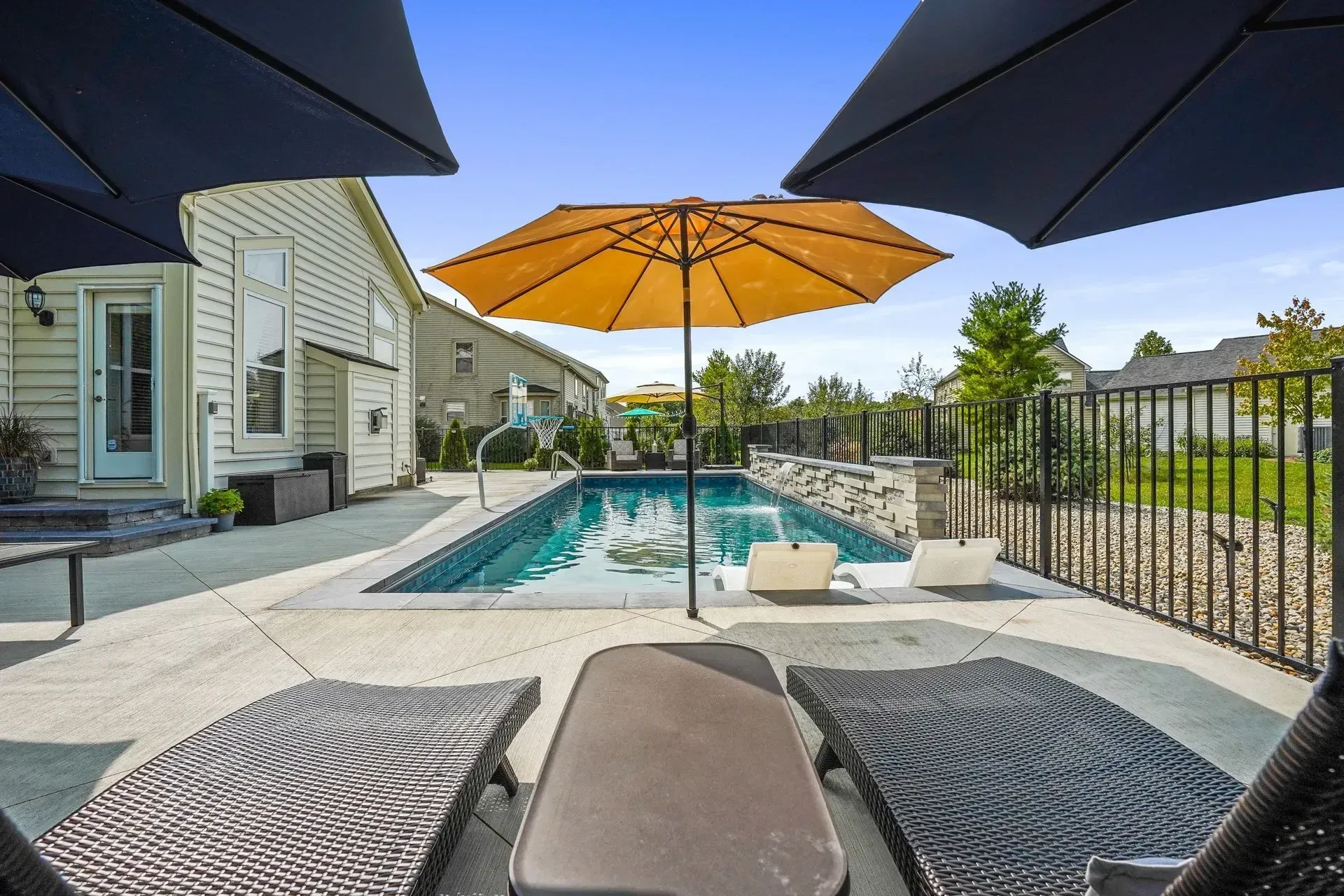
The 118°F Barefoot Threshold (And Why It Matters in Marietta)
Human skin starts to register real pain at roughly 118°F on contact. Kids pull back faster than adults. A barefoot dash across a deck at 125°F will still happen — kids do it — but the feet come up red, and the “can I get in the pool, please” becomes “I want to go inside now.” At 140°F and above, contact burns are a medical reality within 3 to 5 seconds. This is the number that determines whether your pool deck works in August or sits unused.
Marietta’s climate makes this worse than Snellville or Lawrenceville in one specific way: elevation. At 1,118 feet, Marietta sits higher than most of Gwinnett County, which means stronger direct solar flux on clear summer afternoons. Combine that with the open West Cobb building envelopes — new subdivisions cleared of the mature canopy that still shades East Cobb’s older neighborhoods like Indian Hills and Sope Creek — and you get surface-temp readings that routinely exceed anything we measure further east.
The Test We Ran: Infrared thermometer (Fluke 62 MAX+), 92°F ambient, 2 p.m. solar noon window, full-south exposure, dry deck surface, no shade. Readings taken one inch above the paver surface, averaged across 5 spots per deck.
Techo-Bloc Blu 60 in Light Gray: 106°F
This is the cool paver in our Marietta rotation. Techo-Bloc’s Blu 60 line uses their HD2 surface technology and a light-reflective gray color family that pushes a huge portion of the solar spectrum back into the sky instead of absorbing it. At 92°F ambient on a full-sun Walton Woods deck, we measured 106°F surface — a 14°F gap under the barefoot threshold.
What makes Blu 60 specifically work in Marietta: the 60mm thickness handles the thermal cycling of our 22 annual freeze events without the surface fractures you get on thinner imported tile. The smooth-face texture doesn’t pool standing water, which matters on our 52-inch annual rainfall. Installed cost in Marietta: $22 to $28 per square foot including base prep, which is roughly double what a broom-finish concrete pour runs — but it is the paver we default to when the client says “my kids are under ten.”
One caveat. Blu 60 in darker colors — Onyx Black, Shale Gray — completely blows up the advantage. We have measured Onyx Black Blu 60 at 128°F on the same afternoon, same yard, same moment as Light Gray Blu 60 at 106°F. The color family is doing most of the work, and the HD2 tech is doing the rest.
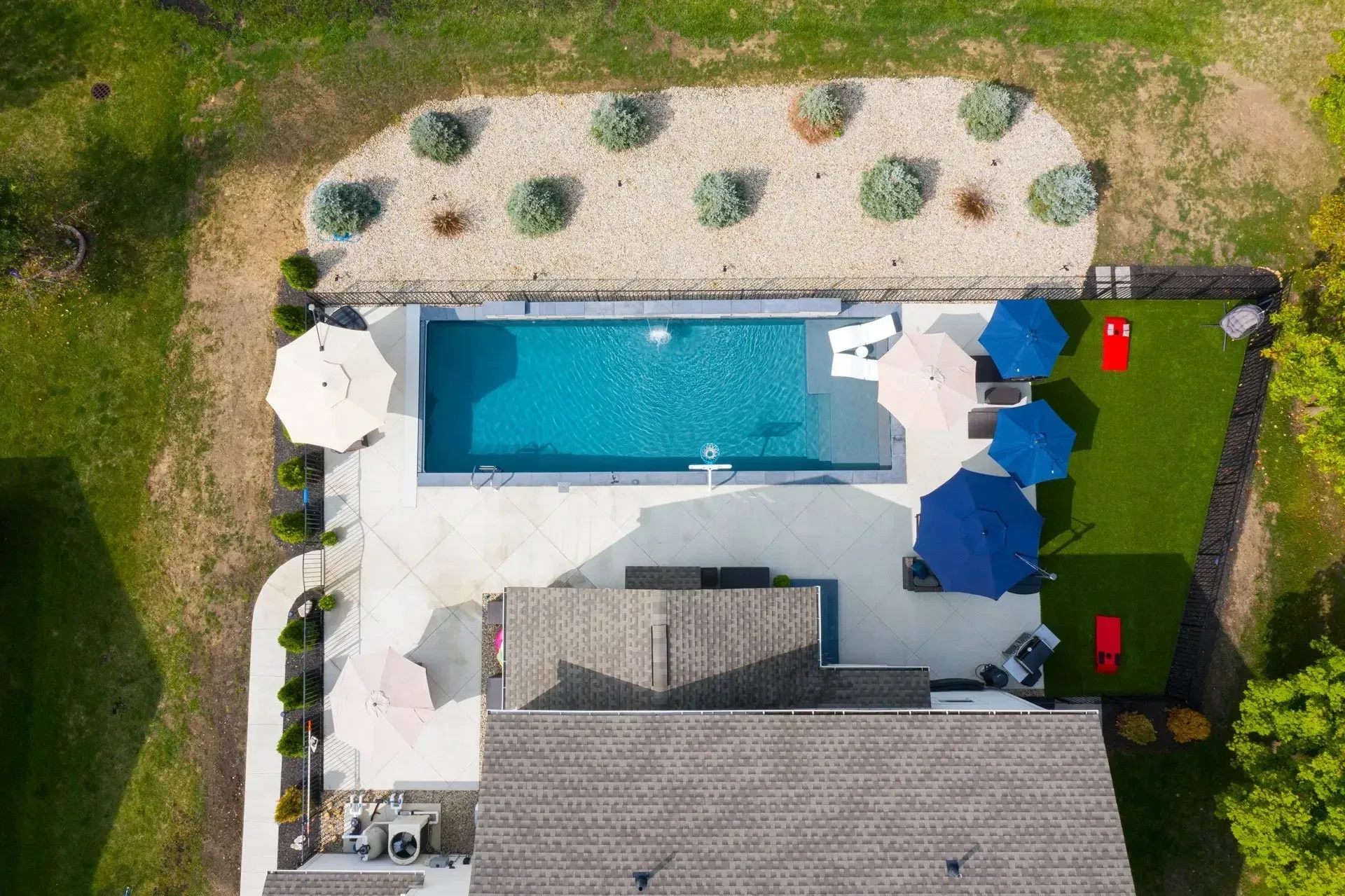
Cambridge Ledgestone in Champagne: 109°F
Cambridge Pavingstones is the second brand we specify for heat-sensitive Marietta jobs. Their Ledgestone XL in the Champagne color family — a warm near-white with light tan speckling — measured 109°F at 92°F ambient on an Indian Hills install last July. Three degrees warmer than the Techo-Bloc Blu 60 Light Gray, still comfortably below the 118°F barefoot threshold, and aesthetically better suited to the traditional brick architecture common in Marietta Country Club and Atlanta Country Club.
Cambridge uses what they call ArmorTec color-lock technology — a factory-applied surface treatment that locks pigment into the top 3mm of the paver and resists UV fade. On a 1,118-foot-elevation Marietta lot with direct summer sun from 10 a.m. to 7 p.m., fade resistance is not a luxury feature; it is the difference between a deck that looks right in year eight and one that looks patchy in year three. Installed cost in Marietta: $24 to $30 per square foot.
The visual trade-off: Champagne shows dirt faster than gray. Oak pollen in April and poplar fluff in May settle on Champagne and turn it yellow-green until the next rain. East Cobb’s mature canopy — the 40-year oaks and poplars that still stand in Sope Creek and Willeo Creek — makes this a real maintenance call. Not a dealbreaker; just a thing to know before signing.
Light Travertine Chiseled: 101°F
Natural travertine is the coolest paver we install in Marietta, full stop. Ivory chiseled-edge travertine from Turkish or Mexican quarries reads 101°F at 92°F ambient — a 17°F cushion under the barefoot threshold, cooler than any manufactured paver on the market. The reason is porosity: travertine’s natural pits and tunnels act like a passive evaporative cooling system, drawing moisture from the sub-base and from the pool water splash zone.
Two caveats, and they are big ones. First, freeze-thaw. Marietta’s 22 annual freeze events are exactly in the failure window for Turkish travertine; we have seen imported travertine spall at the pit edges after five to seven winters on unsealed installs. Any travertine deck we do in Cobb County gets a penetrating sealer at install and a re-seal on a three-year cycle. Skip the sealer and you will be patching pits by year six.
Second, cost. Travertine runs $26 to $38 per square foot installed in Marietta depending on the grade and the border detail. For an 800-square-foot pool deck, that is a $21,000 to $30,000 deck line item — roughly twice what broom-finish concrete costs. Worth it on a full-sun Atlanta Country Club build where the clients plan to live there 20 years. Not worth it on a rental.
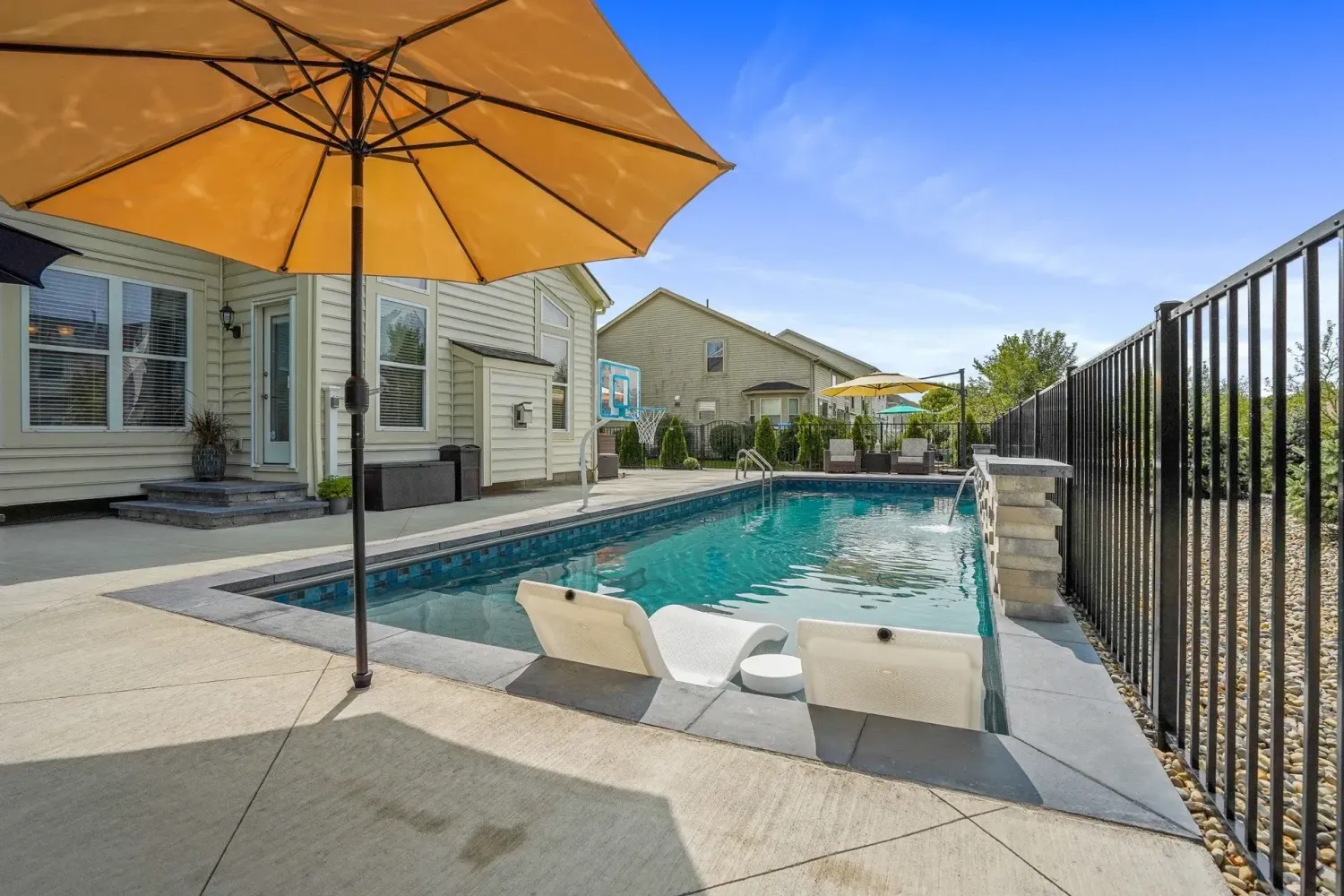
Stamped Concrete Dark: 141°F (The One to Avoid)
Stamped concrete in dark tones — slate gray, charcoal, terra-cotta, any integral-color pour on the dark half of the chart — is the worst pool deck surface we measure in Marietta. 141°F at 92°F ambient, full south, 2 p.m. That is 23 degrees above the barefoot threshold and solidly in the three-to-five-second contact-burn window.
Why it is so bad: dark integral color in concrete absorbs across the full solar spectrum, and the stamped texture has almost zero surface area reflection compared to a smooth poured finish. The sealer coat that most stamped-concrete installations use adds another absorption layer and traps heat at the surface rather than letting it bleed back into the slab mass.
We inherit stamped-concrete decks on Marietta remodel jobs all the time. Homeowner spent $14 per square foot in 2012 thinking they were getting a paver look at a concrete price; now the deck is unused from June through September because the kids will not walk on it. The realistic fix is a full tear-out and a paver overlay — not a color-change topcoat, which only drops surface temp by 6 to 8 degrees at best.
If your Burnt Hickory or Chestnut Hill home already has a dark stamped-concrete deck and you want to understand the remediation options before committing, our pool remodeling team has done this exact job a dozen times across Cobb County in the last three years.
Broom-Finish Concrete: 124°F (The Honest Middle)
Plain broom-finish concrete in standard light gray pour reads 124°F at 92°F ambient on a full-sun Marietta deck. Six degrees above the barefoot threshold. Kids can cross it — uncomfortably — but will not sit on it, and a barefoot adult notices immediately. It is not a disaster surface like dark stamped, but it is not comfortable either.
Installed cost in Marietta: $8 to $14 per square foot including base prep, expansion joints, and a basic sealer. Broom-finish is the honest budget deck — roughly one-third the price of a mid-grade paver and one-quarter the price of travertine. For clients who need to stage cost across the pool build, we often do broom-finish on the back-of-pool equipment-pad walking zone and pavers in the primary lounge area, which gives the homeowner the heat-resistant surface where feet actually go.
Two things drop broom-finish temperature meaningfully. A lighter-gray cement choice (ask for white portland blend or a 15% fly-ash substitution) takes the surface down to about 118°F — right at threshold. A reflective-white sealer takes it to 112°F. Both require disclosure up front with the client because they change the look.
Herringbone Paver Layouts and Soldier Courses: Pattern Matters
Pattern choice is not a cosmetic decision. A 45-degree herringbone laid with a light-gray field and a contrasting onyx soldier course measures 3 to 4 degrees hotter than a running-bond layout of the same paver, because the tighter joint density at the diagonal cuts reduces surface-area reflection and increases heat retention in the sand joints.
On a Marietta pool deck, we default to running bond or 90-degree herringbone for heat reasons, and we reserve the striking 45-degree herringbone for entry walkways and front-yard installations where barefoot performance does not matter. The onyx soldier-course detail that looks spectacular at the front door on an Indian Hills modern farmhouse — see the gray-and-onyx entry installs we have done in East Cobb — is exactly the detail we avoid on the south-facing pool side of the same house.
If you are working with a traditional tan-paver aesthetic common in Atlanta Country Club remodels, a sandstone-blend field with a matching tan soldier course reads about 114°F on a full-sun deck — well under threshold. The visual warmth of a tan or cream deck is what drives most selections in the high-end Marietta market; the heat trade-off against a pure light-gray Blu 60 is roughly 8 degrees, still comfortable, still barefoot-safe.

Patio Zoning: Combining Surfaces for Marietta Entertaining Decks
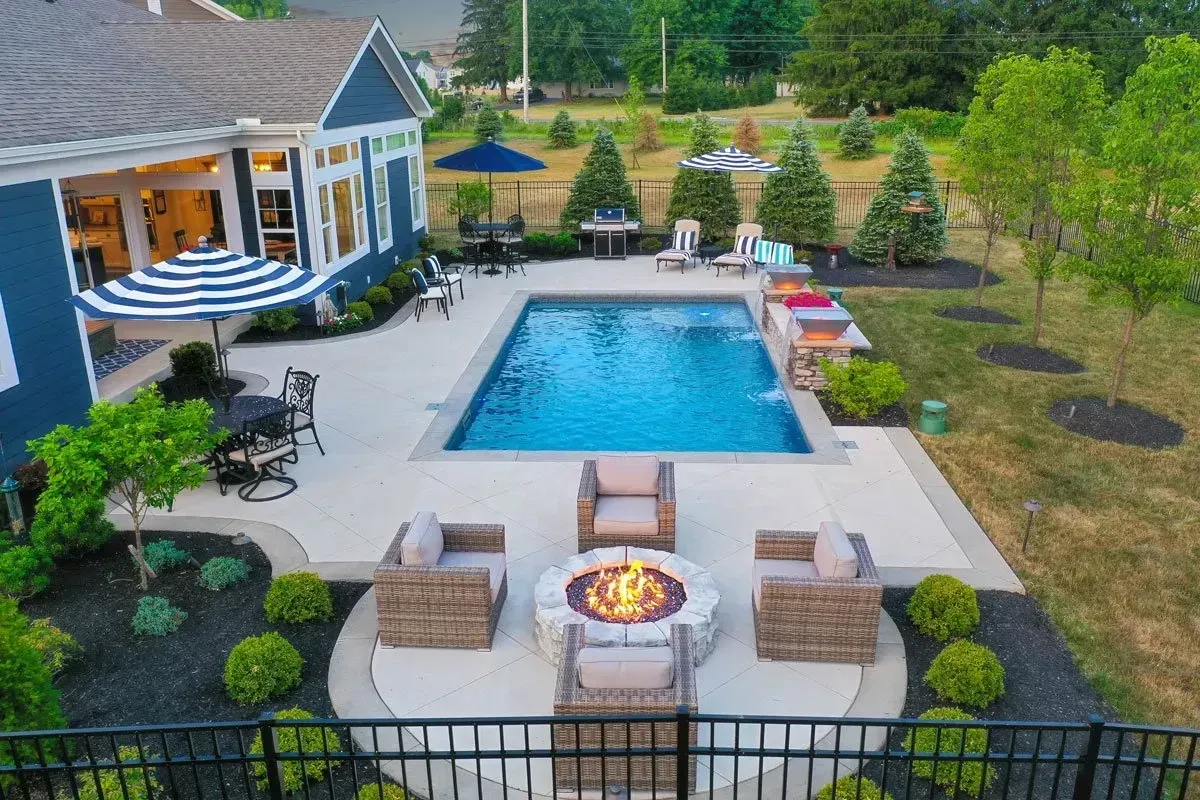
The best heat-resistant Marietta pool decks are not a single material. They are zoned. The immediate pool surround — the 4-to-6-foot band that takes wet foot traffic all day — gets the coolest paver we can justify for the budget. The secondary lounge band — where chaises and umbrellas live — can step up a color or a texture because shade does most of the work. The fire-pit or dining pad — always set back from the water — can be the warmest of the three zones because it is typically in use in the evening when solar load has dropped.
A typical Brookstone or Seven Oaks entertaining deck we build now looks like this: Techo-Bloc Blu 60 Light Gray in the immediate pool band (106°F), Cambridge Ledgestone Champagne in the lounge zone (109°F), and a tan sandstone-blend modular paver with a seat-wall around the fire feature (114°F in direct sun, irrelevant at 7 p.m. when the fire pit is lit). The transition between zones uses a contrasting soldier course to make the change intentional rather than sloppy.
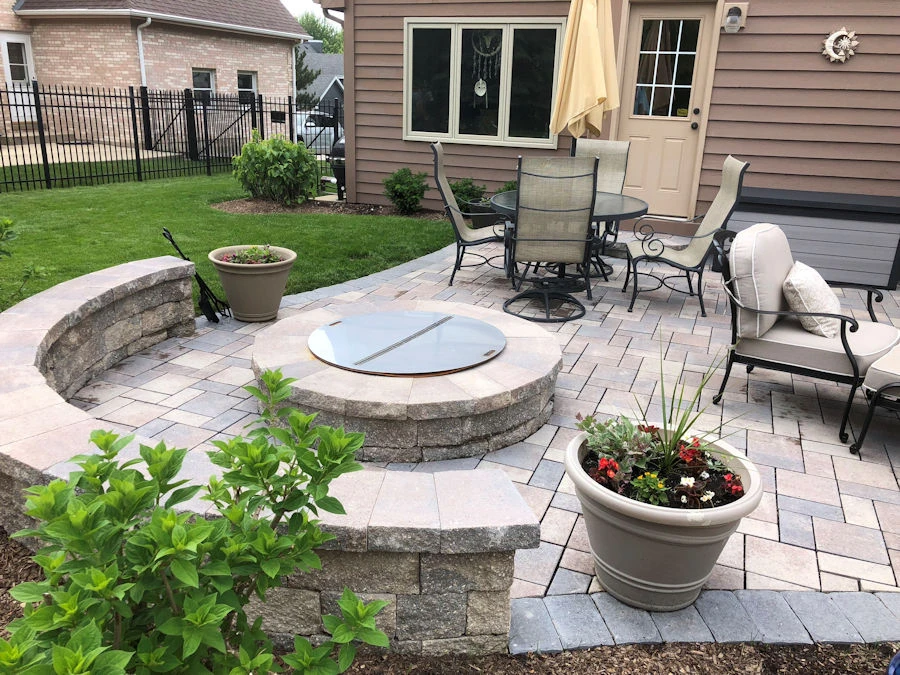
The Cobb County permit office at 1150 Powder Springs Street treats all three zones as a single pool-deck permit for plan-review purposes, which means the material spec has to be submitted as part of the deck drawings. We include surface-temp data in the permit package for full-sun Marietta jobs now — the reviewers have seen enough failing stamped-concrete decks in the inspection records that they appreciate the disclosure.
The Marietta Decision Framework
If you are choosing pavers for a full-sun Marietta pool deck in West Cobb, Walton Woods, Marietta Country Club, or an open-lot subdivision with no mature canopy, the decision tree is short. Techo-Bloc Blu 60 Light Gray or Cambridge Ledgestone Champagne are the two manufactured options that stay under the 118°F barefoot threshold; pick the one that matches your home’s palette. If budget allows and you plan to stay long-term, light travertine chiseled is the coolest surface on the market at 101°F and is worth the $26 to $38 per square foot on an Atlanta Country Club or Indian Hills build.
If your lot has mature East Cobb oak canopy in Sope Creek, Willeo Creek, or older parts of Indian Hills, you get a built-in 6-to-10-degree cushion from filtered sun, which widens your material options meaningfully. Tan-blend sandstone pavers, a warmer travertine, or even a lighter-gray Blu 60 in a Shale Gray color family — all viable where direct solar load is broken by canopy. Just verify the canopy actually shades the pool surround at 2 p.m. in July, not just at 10 a.m., because tree shadows move.
If you have an existing dark stamped-concrete deck and it is unused from June through September, the fix is a tear-out and paver overlay. A sealer-color refresh buys you 6 to 8 degrees and is not enough; a skim-coat overlay system is better but still rarely drops below threshold on a full-sun install. Committing to a proper paver replacement is the honest answer.
Cobb EMC vs. Georgia Power: Most of Marietta outside the incorporated city limits runs on Cobb EMC 240V residential service, distinct from Georgia Power elsewhere in Metro Atlanta. If your pool deck includes integrated paver lighting or an outdoor kitchen load, the electrical subcontractor needs to be familiar with Cobb EMC’s connection spec — not every Metro Atlanta pool electrician is.
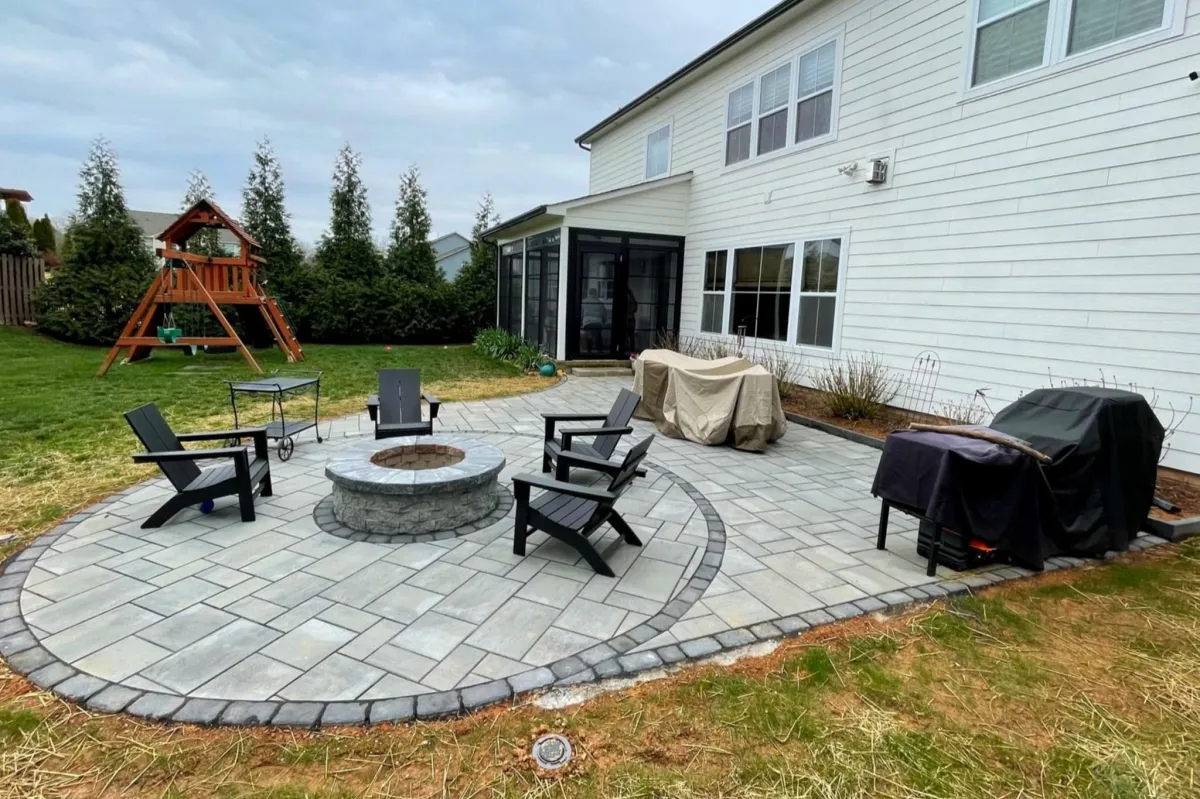
One final Marietta detail worth naming. The Piedmont red clay under most of Cobb County drains poorly compared to the sandy-loam pockets in eastern Marietta neighborhoods near the Chattahoochee. Any paver deck installation needs 6 to 8 inches of compacted crusher run sub-base with a geotextile separator above the native clay, full stop. Thinner base prep is how pavers heave in our winter freeze cycles and how the sand joints wash out in a 52-inch rainfall year. The deck surface choice matters — but so does what is underneath.
Heat-resistant pool deck design across 20+ cities within 30 miles of Winder, GA
From the full-sun Walton Woods and Brookstone builds to the canopied lots in Indian Hills and Sope Creek, we match the paver to the yard’s specific solar load — not a template spec sheet.