
Across 180+ North-Georgia hardscape projects we’ve priced, Dawsonville jobs land roughly 12% above Atlanta-metro averages — not because labor is more expensive, but because the rock starts 2 to 6 feet down.
Homeowners off GA-400 call us with a Pinterest board and a budget, and within ten minutes we’ve usually established two things. One, the $30,000 patio they saw in Alpharetta is going to cost closer to $34,000 in Dawson County — because mountain-origin residuum doesn’t excavate like Piedmont clay. Two, the scope they’re describing actually spans three different tiers, and until we separate those tiers nothing useful can be said about price.
This piece does what most hardscape content refuses to do: it names real dollar figures at four real scope levels, and it tells you where the money actually goes at each step up. Numbers reflect active 2026 Dawsonville pricing across our service area — Foxcreek, Riverbend, Etowah River Club, Applewood, Chestatee, and the neighborhoods north of Hwy 53. Permit references apply to the Dawson County Dept. of Planning & Development at 25 Justice Way.
A quick note on why we structure hardscape the way we do. After 180-plus installs in North Georgia, we’ve learned that scope creep isn’t a character flaw — it’s a design language problem. Homeowners see a completed $95,000 Tier 3 outdoor room on Instagram, compare it to the $28,000 Tier 1 pad their brother-in-law built in Cumming, and assume the $67,000 gap is pavilion plus kitchen. It isn’t. It’s pavilion, plus kitchen, plus retaining work, plus permit, plus engineered drainage, plus panel upgrade, plus eight to ten smaller decisions that each move $1,500 to $6,000. When every one of those line items is named up front, “sticker shock” becomes “sequence planning.” That’s the entire point of tier language.
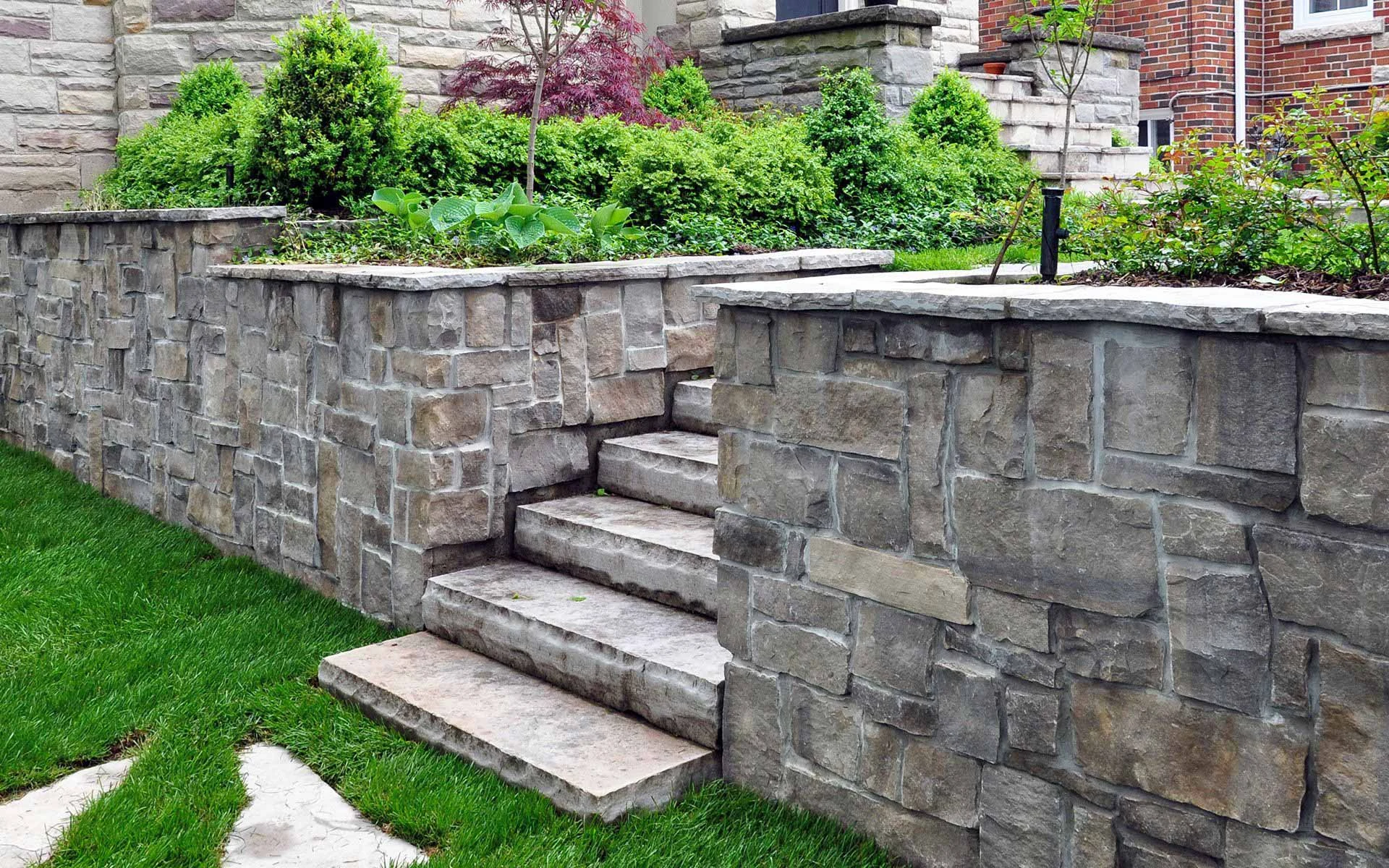
Tier 1 — $22,000 to $38,000: The Starter Patio Done Correctly
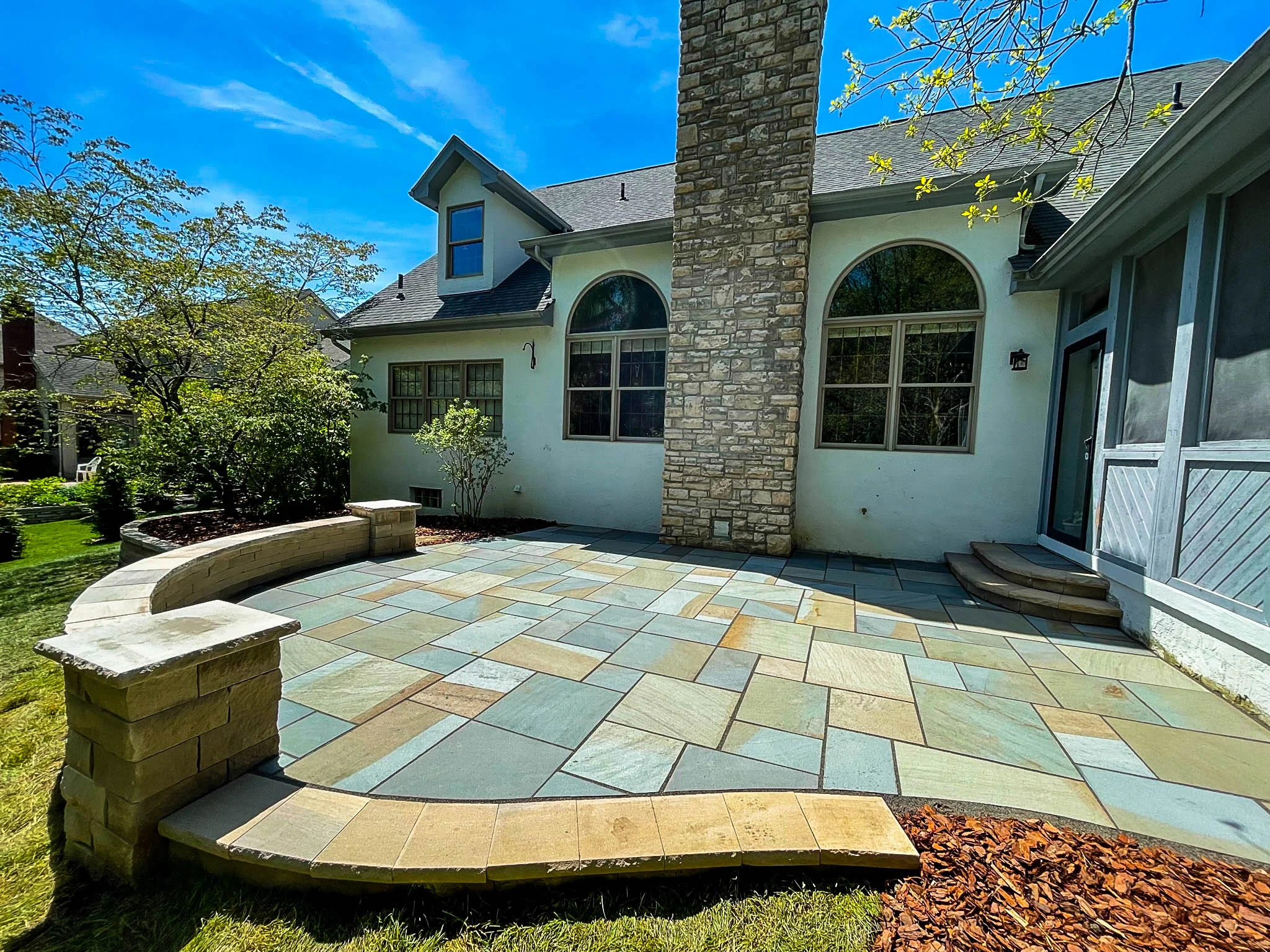
Tier 1 covers most first-time hardscape clients in Dawsonville. It’s a 400 sqft paver patio with a fire ring, a simple step-down to grade, and a modest planting border. If a contractor quotes you under $22,000 for this scope in 30534, something is being skipped — usually the base.
Here’s where the Dawsonville premium enters. A standard Atlanta-metro base for this patio runs $28 per square foot installed. In Dawsonville we often hit saprolite — weathered granite that mimics soil until your excavator bucket bounces off it — within the first 18 inches of cut. That adds rock-hammer time at roughly $8 to $14 per cubic yard above the metro baseline, plus the haul premium for trucking broken residuum back down to a North Gwinnett disposal yard.
What you get at this tier, done right:
- Excavation to 8 inches below finish grade, with geotextile separation fabric installed before any base material.
- Six inches of compacted GAB (graded aggregate base) in 2-inch lifts, plate-compacted at each lift.
- One inch of bedding sand screeded level, a concrete paver field in Holland or Rectangle shape, polymeric sand joints, and a 6-inch buried soldier course for perimeter containment.
- A pre-engineered steel fire ring seated on a permeable fire-rated pad. Not a fire pit — those start at Tier 2.
Tier 1 real-world reference: A 412 sqft patio we built in Applewood last summer priced at $31,640 — $28,100 for the patio itself, $2,200 for the fire ring and pad, and $1,340 for minor grading and a 40-linear-foot liriope border. No permit required under Dawson County’s 200 sqft+ ground-disturbance threshold because the pad was detached from the house.
Three things Tier 1 does not include, and that honest quotes call out explicitly: overhead cover, any wall taller than a 6-inch mow strip, and drainage work beyond sheet-flow off the pad. If your lot has a negative slope toward the foundation — common in Applewood and the older Foxcreek sections — a Tier 1 pad needs either a French drain spur on the upslope side (add $1,800 to $3,400) or a grade adjustment that occasionally bumps the job into Tier 2 territory regardless of square footage.
We’ve also seen Tier 1 quotes come in at $16,000 from out-of-area installers. Without exception, the missing $6,000 to $15,000 shows up within 18 to 30 months as heaving pavers, sinking corners near the downspouts, or polymeric sand joints that never cured because nobody plate-compacted the final lift. On granitic substrate the margin for shortcut is smaller than on clay — when weathered rock settles unevenly under a patio, the pavers tell on you immediately.
The design time on a Tier 1 patio is deceptively cheap because the form factor is simple, but there are still three choices that determine whether the finished pad feels like a porch extension or a standalone destination. First is orientation relative to the house — a pad that runs parallel to the rear wall reads as an extension; a pad rotated 15 to 30 degrees off axis reads as a separate outdoor room. Second is transition to lawn — a flush edge with paver curb looks intentional; a raised edge without a transition course looks like an afterthought. Third is the sightline from the main living room. A patio you can see from the kitchen gets used. A patio hidden around a corner of the house sits unused half the season, regardless of tier.
Tier 2 — $38,000 to $68,000: Multi-Level, Seat Wall, and the First Real Feature
This is the sweet spot for Dawsonville’s 1/2-acre to 2-acre lots with grade change. Riverbend and Etowah River Club parcels routinely drop 6 to 14 feet from rear sill to property line, which means a flat Tier 1 patio wastes the lot. Tier 2 embraces the grade instead of fighting it.
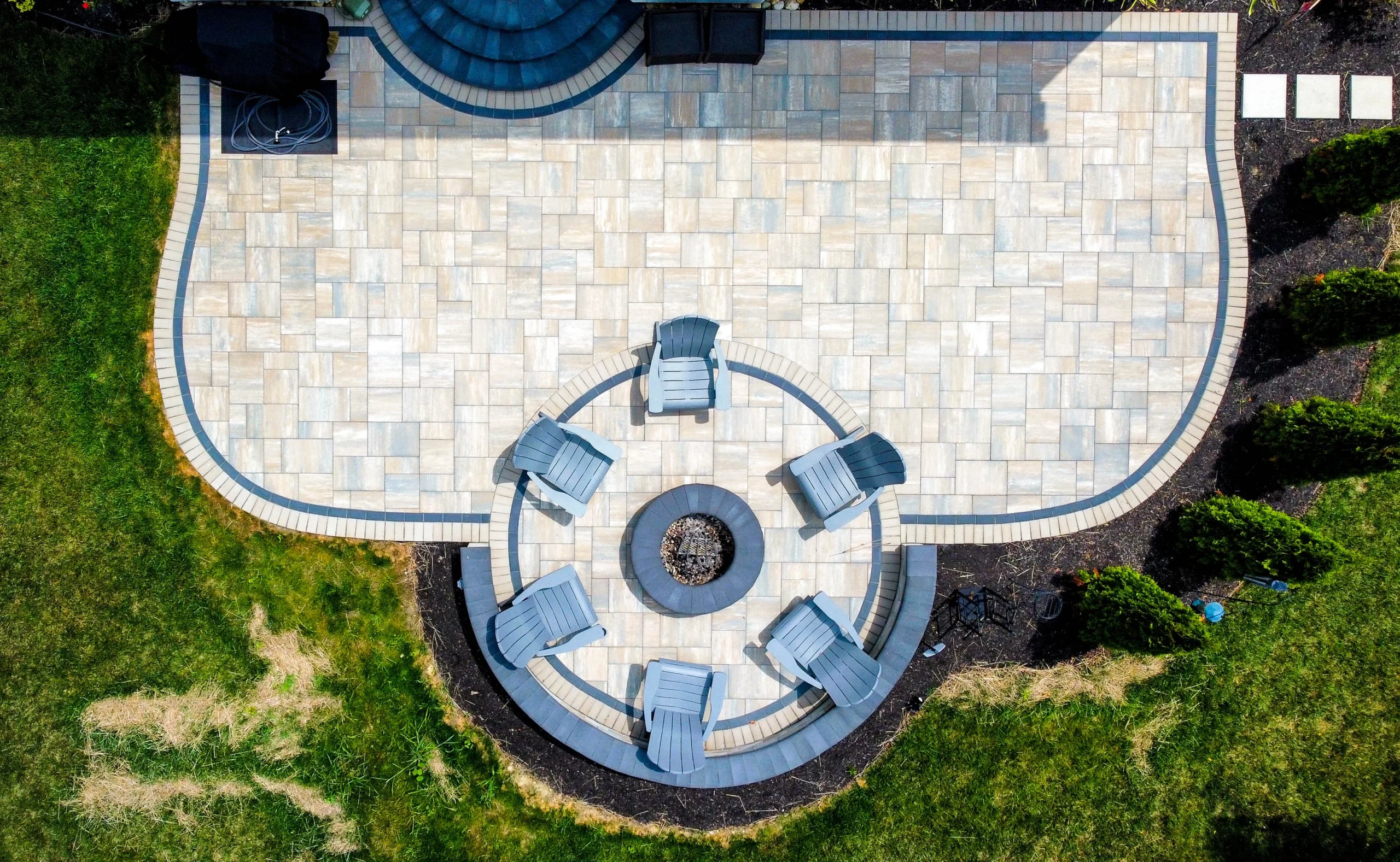
Scope at this tier typically includes a 700 sqft upper terrace connected to a 300 sqft lower terrace by 3 to 5 broad steps, a 28-to-42-linear-foot seat wall with cap stones, one real fire feature (gas-fed pit or a masonry wood burner), and LED integration at step risers and wall caps.
Pricing variables that move Tier 2 from the floor of $38K to the ceiling of $68K:
- Paver selection. Standard concrete pavers add nothing. Large-format slab pavers (Techo-Bloc Blu 80, Belgard Dimensions) add $6 to $11 per square foot. True travertine or bluestone adds $14 to $22 per square foot.
- Seat wall anatomy. A dry-stacked retaining-block seat wall runs $78 to $110 per linear foot. A full mortared wall with cantilevered bluestone caps runs $165 to $240 per linear foot.
- Fire feature. A 36-inch gas fire pit with lava rock plumbed to a buried 40-gallon propane tank runs $4,800 to $7,200. A pre-built outdoor wood-burning fireplace starts at $11,500 delivered.
- Rock exposure. On Dawsonville’s steepest lots we’ll sometimes blast two to four shots to seat a retaining footing. That adds $2,400 to $5,000 depending on proximity to neighboring structures and the Amicalola EMC service drop.
Tier 2 is also where drainage stops being optional and starts being a line item. A 1,000 sqft combined patio on a North Georgia foothill lot generates about 625 gallons of runoff in a typical 1-inch rain event. Upper terrace water has to go somewhere — either tied into the existing downspout network, daylighted to a swale, or captured in a dry well. On properties near the Etowah River drainage, the Dawson County permit reviewer will ask where that water ends up if you’re within 50 feet of a blueline stream. Expect $1,400 to $3,900 in drainage work at this tier, spread across 4-inch SDR-35 piping, one or two pop-up emitters, and a 24×36-inch dry well if soil perc rates demand it.
The final Tier 2 decision that matters most is whether to install conduit for future features — a second gas stub, a hot-tub 240V line, or a low-voltage home run to an eventual pool equipment pad. Running an extra 60 feet of buried conduit during the patio dig costs roughly $380. Retrofitting through cured 6-inch GAB plus pavers costs $2,800 to $4,400 and breaks your warranty on the polymeric sand.
One pattern we see across Tier 2 builds in the Mountain Laurel and Kensington Ridge neighborhoods: homeowners regret under-sizing the seat wall about twice as often as they regret over-sizing it. A 34-foot seat wall seats 10 to 12 adults comfortably. A 22-foot wall seats 6, which means half your family is standing at every gathering. The per-foot difference on a Techo-Bloc Raffinato seat wall is about $95, so the delta to go from 22 to 34 feet is roughly $1,140 — small money in the context of a $52,000 build.
Tier 3 — $68,000 to $105,000: The Outdoor Room Takes Shape
Tier 3 is an outdoor room, not a patio with features. The defining addition is a roof — a pavilion, a pergola with louvered panels, or a structural extension off the house. Dawsonville’s climate makes this tier more valuable than it is on the southern side of our service area. At roughly 1,270 feet of elevation, Dawsonville sees about 30 freeze events per year versus 20 in Dacula, and summer thunderstorms roll off the Blue Ridge more frequently than metro weather apps predict.
A roof buys you usable shoulder seasons. From mid-October through early April, a covered hardscape with radiant heat runs 20 to 30 degrees warmer than an uncovered equivalent.
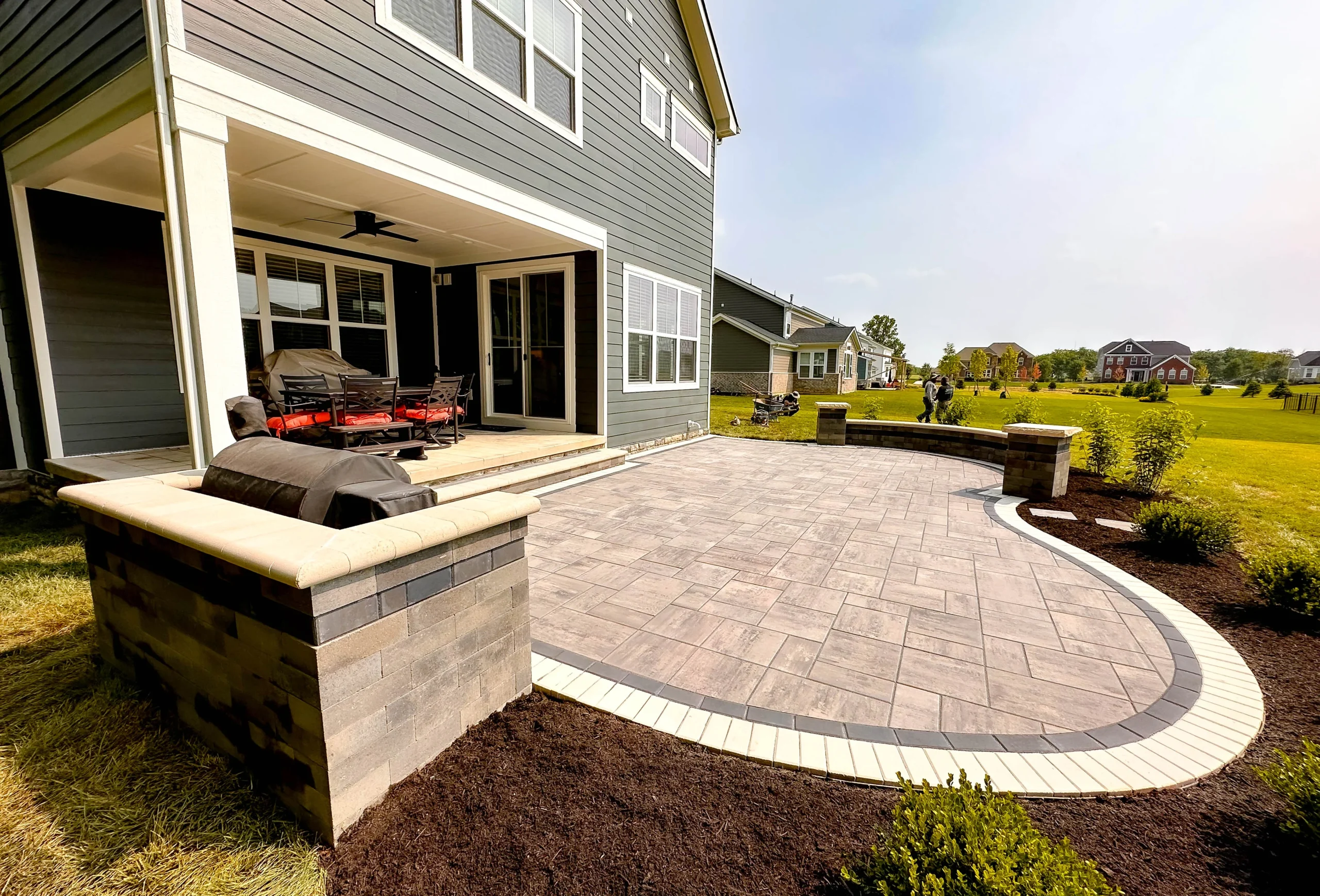
What’s included at this tier:
- Everything in Tier 2, scaled up by roughly 25 percent in footprint.
- A 14-by-18-foot cedar or engineered-lumber pavilion on four posts, with standing-seam metal or architectural shingle roof, plus full electrical rough-in for two ceiling fans, two pendant light zones, and a 20-amp appliance circuit.
- An outdoor kitchen rough-in — not the kitchen itself, but the gas line, water line, and drain stubbed up through the slab at the future counter location. Adding appliances later is a $14,000 to $22,000 add; doing the plumbing during the pour costs a fraction of retrofit.
- Structural permit from Dawson County Planning & Development — required any time you add a roof to an attached or freestanding structure. Allow 3 to 5 weeks for review.
Dollar drivers that move Tier 3 from $68K toward $105K are almost always the pavilion itself (a 20-by-24 timber-frame structure with cedar shake can run $45,000 on its own) and the kitchen rough-in’s counter material. Granite slabs are baseline; Dekton, concrete, or outdoor-rated porcelain slabs add $3,800 to $9,200 to the job.
Permit timing note: If you want a pavilion finished by Memorial Day in Dawsonville, your structural permit needs to be in hand by mid-February. Planning review plus footing inspection plus framing inspection stacks to about 10 weeks before the roof goes on.
Tier 3 also introduces the first real inspection chain. You’ll see a building inspector on footings, framing, rough electrical, and final. Each inspection requires a 48-hour lead and sits on a first-come basis at the Dawson County Planning counter. Miss a slot and the crew moves to the next job — that’s where we see Tier 3 builds slip two to three weeks in the middle of the schedule, not because of rain but because of an inspection that wasn’t booked Friday for a Monday pour.
One more Tier 3 variable that matters in Dawsonville specifically: utility service for the pavilion. Many lots in Kensington Ridge, Mountain Laurel, and the older Chestatee sections sit far from the main panel. An Amicalola EMC service drop upgrade — if your existing 200-amp panel is already loaded — runs $1,900 to $4,800 and adds roughly three weeks to the timeline. This is rarely quoted in the initial contract unless the installer has walked the electrical load with you. Ask the question before signing.
Roof choice at Tier 3 is also a climate decision, not a style decision. Dawsonville gets roughly 55 inches of rainfall per year, concentrated in summer thunderstorms that can drop 1.5 inches in 30 minutes. A standing-seam metal roof sheds that water cleanly and quietly; a shingle roof dampens the drumming but loses 3 to 5 years of service life in this climate compared to lower-elevation installs. We typically recommend 26-gauge Galvalume in a matte charcoal or bronze finish — runs $11 to $14 per square foot installed, lasts 40-plus years, and does not turn the pavilion into a drum when the late-July storms roll off Amicalola.
Tier 4 — $105,000 to $145,000: Pool-Adjacent Integration
Tier 4 is what happens when the hardscape is designed to serve a pool — whether the pool exists, is under construction, or is scheduled for year two. This is the tier where the rockier subsoil around Dawsonville stops being a footnote and starts driving design decisions.
On a recent Foxcreek project, our excavator hit competent weathered granite at 4 feet, 3 inches — exactly where the skimmer throats and return lines needed to run. We spent 11 hours with a rock hammer to carve trenches for schedule-40 plumbing. That single step added $3,850 to the job, which a flat-lot Dacula pool would never see.
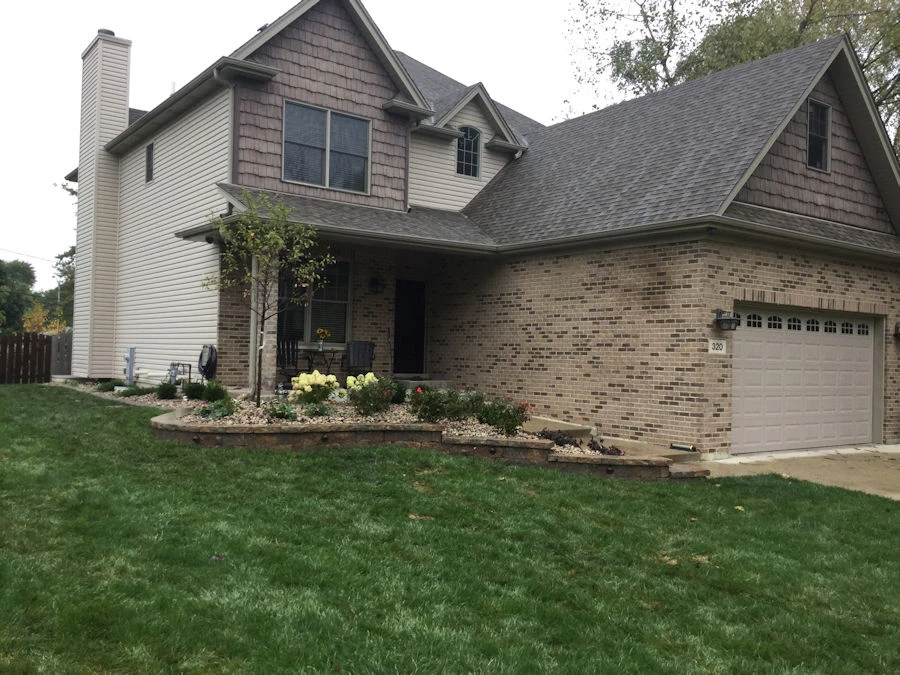
What Tier 4 actually covers — and does not cover:
- Covers: full Tier 3 outdoor room, plus integrated pool coping and deck (minimum 1,200 sqft), engineered retaining walls where the pool shell requires them, pool equipment pad with acoustic screening, sub-deck drainage tied to the nearest storm easement, and landscape lighting across 14 to 22 fixtures.
- Does not cover: the pool shell itself. That’s a separate $85,000 to $165,000 line on a Dawsonville build, quoted under our custom pool construction contract.
- Does cover, uniquely: the planning work to sequence hardscape and pool without rework. On a pool-adjacent project we set pavilion footings, retaining walls, and primary electrical before the shotcrete truck arrives. Doing this out of order adds $8,000 to $18,000 in rework.
Ceiling drivers at Tier 4 are almost always retaining wall engineering and the pool deck surface. An engineered SRW retaining wall requiring a stamped design (typically when a single lift exceeds 4 feet or when surcharge from the pool deck is in play) adds $4,500 to $11,000 just for design and inspection. Upgraded pool deck materials — travertine, porcelain plank, or the cool-to-touch Belgard Mirage series — range from $18 to $34 per square foot installed, on top of substrate.
The other Tier 4 cost curve is the equipment pad itself. Pool equipment — pump, filter, heater, automation panel, chlorinator — wants to live close to the pool for plumbing efficiency and far enough from the patio that the 62-dB pump hum doesn’t invade your conversation. On Dawsonville’s sloped lots we often trench a dedicated equipment bay into a downhill retaining terrace, run acoustic cedar screening on three sides, and pour a 6-by-10-foot slab with a 4-inch drainage sump. That bay, done right, adds $3,200 to $6,800. It also adds years of pump life because the equipment stays dry and the bearings aren’t corroding in standing water.
One Tier 4 scenario that’s unique to the Dawsonville service area: fiber access and smart-pool integration. Most newer subdivisions north of Hwy 53 pulled fiber in 2021 to 2024, which means you can actually run a hard-wired Jandy iAquaLink or Pentair IntelliCenter to the pool equipment pad instead of relying on spotty Wi-Fi. Conduit for that run costs $420 at install and changes how you use the pool for the next 15 years.
Tier 4 is also where sequencing with the pool builder becomes the single most expensive decision on the job. If your pool is being built by a different contractor, the handoff between their deck specification and your hardscape scope needs to be in writing before either crew mobilizes. We’ve seen jobs where the pool builder specified a 24-inch overhang coping while the hardscape crew poured a cantilever-edge paver field — the two materials met at the water line with a 1.5-inch gap nobody had accounted for. Closing that gap with a custom-cut bullnose added $2,400 and three days to the schedule. The fix is a joint site walk with both crews and the homeowner before the first excavator shows up.
The Dawsonville Premium — and How to Mitigate It
The 12% mountain-origin premium over Atlanta-metro pricing is not arbitrary. It decomposes as follows for a typical Tier 2 or Tier 3 job:
- Rock hammer and blast budget: 4 to 6 percent of job cost, depending on how much of the excavation hits weathered granite versus saprolite you can still rip with a standard bucket.
- Haul distance: 2 to 3 percent. Dawsonville’s nearest commercial fill and disposal yards sit 20 to 30 minutes farther than North Gwinnett equivalents. On a job that moves 40 cubic yards of spoil, that’s real money.
- Equipment staging: 1 to 2 percent. GA-400 makes equipment trucking faster than most of our service area, but the last-mile access on lots off Hwy 9 or Hwy 136 often requires a smaller machine than we’d ideally use.
- Permit and inspection travel: 1 to 2 percent. Round-tripping to 25 Justice Way for plan drops, inspections, and CO walks adds real hours.
Three ways to reduce the premium on your Dawsonville project:
- Design around the grade, not against it. Multi-level layouts often move less total earth than a single flat pad on a sloped lot, because the flat pad requires a taller retaining wall upslope and more fill downslope.
- Bundle the pool plumbing rough-in. If a pool is within 18 months of your hardscape, running conduit and pressure-tested plumbing during the patio dig eliminates the worst-case rock-hammer step later.
- Schedule for late fall to early spring. Dawsonville’s 30 freeze events are concentrated in a 90-day window, but the ground almost never freezes hard enough to stop excavation, and crew availability and material lead times are the shortest they’ll be all year.
If your bid letter doesn’t include a line item for rock-hammer contingency, unsuitable material exceedance, or geotechnical surcharge — and you’re building anywhere between Amicalola Falls and the North Georgia Premium Outlets — you’re looking at a bid from a contractor who has never worked up here. That’s not a judgment. It’s a cost signal. Find out how they plan to handle a 6-foot stretch of competent granite before the contract is signed, not after the excavator arrives.
The other piece most Dawsonville homeowners miss: contractor mobilization. A crew that’s based in Lawrenceville or Marietta is looking at a 55-to-75-minute one-way drive to your job, plus fuel on heavy trucks. A reputable builder will either build that cost transparently into the per-day rate or absorb it by sequencing Dawsonville work into multi-week stretches rather than day-trip visits. You want to see one of those two approaches. You do not want the approach where the crew shows up at 10:30am because of GA-400 traffic and leaves at 2:45pm to beat the return trip.
A final practical note on materials. Techo-Bloc, Belgard, Pavestone, and Oldcastle all stock the high-moving SKUs at Northeast Georgia yards, but specialty colors, imported travertine, and custom caps can add 2 to 6 weeks of lead time. When we plan a Dawsonville build we place long-lead orders before the excavator shows up, not after. That single scheduling choice has saved more Tier 3 and Tier 4 jobs from Memorial-Day-miss than anything else we do.
Primetime builds across all four tiers throughout Dawson County, and we publish a written scope-of-work with tier-specific allowances before any contract moves forward. The Dawsonville Pool Room has been serving plate lunches since 1963 — long enough to know that the people who keep coming back are the ones who price honestly the first time. The same principle applies to the crew you hire for the pad behind your house.
Hardscape Design & Construction across 20+ cities within 30 miles of Winder, GA
From $22,000 starter patios in Applewood to $145,000 pool-adjacent outdoor rooms in Foxcreek, Primetime prices every Dawsonville tier with a written scope and a named rock contingency before the excavator rolls.