
Forsyth County approves north of 200 pool-and-hardscape permits a year across a 247-square-mile footprint — and the average project spend swings from $22,000 up to $125,000 depending on which zip code the driveway ends in. That spread isn’t marketing fluff. It tracks soil, lot size, HOA rules, and what the buyer next door to you paid for their backyard last summer.
Forsyth is not one market. South Forsyth — the 30041 corridor feeding McFarland Parkway, Sharon Road, and the Halcyon-Avalon commuter axis — builds outdoor living to a different spec than Coal Mountain or Shady Grove eleven miles north. The lots are smaller, the HOAs are tighter, and the neighbor-comparison pressure is real. Central Forsyth around Cumming proper sits in the middle — older housing stock mixed with new pockets near Vickery and Bethelview. North Forsyth (30028) spreads across 3-to-5-acre estates, rockier Piedmont soil, and fewer HOAs, but larger square footage means the check still gets written.
This post breaks down what each zone actually spends on hardscape — patios, retaining walls, outdoor kitchens, firepits, pool decks, drainage — plus what each zone buyer prioritizes and what resale pays back. Numbers come from our 2024–2025 project files and permit data pulled from the Forsyth County Department of Planning & Community Development. If you’re budgeting a project anywhere between Sawnee Mountain and the Chattahoochee, this is the cheat sheet.
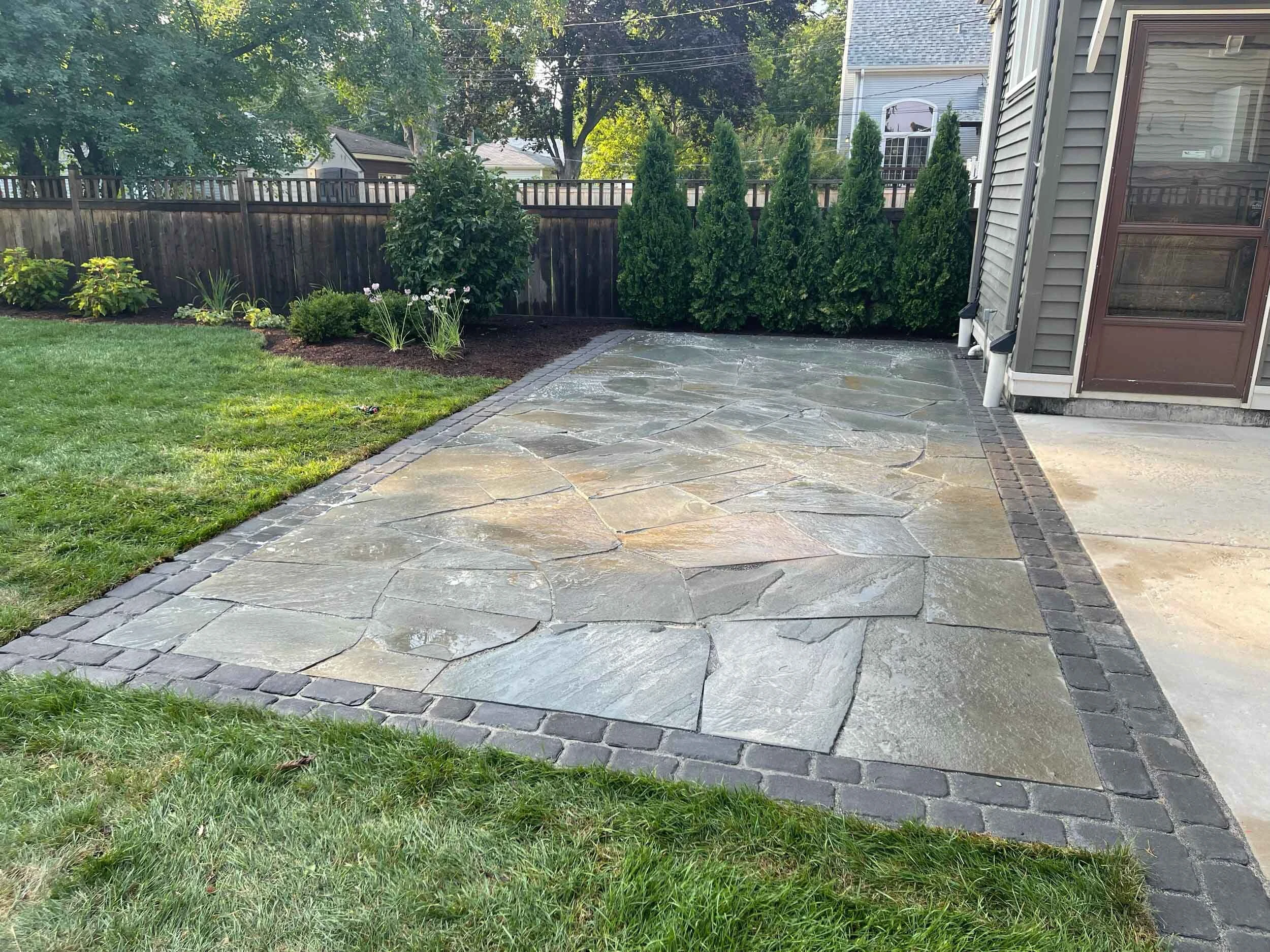
01 — South Forsyth (30041): The $48K–$125K Tier
South Forsyth is where Atlanta commuters park their careers at GA-400 exit 13 and drive home to a subdivision with a pool gate survey attached to the deed. The hardscape spend here is not about acreage — it’s about finish level, because neighbors are 15 feet away and everybody sees what you’re doing.
Our average project in 30041 runs $48,000 to $125,000 for hardscape (pool excluded). The high end happens when a homeowner in a Halcyon, Vickery, or Polo Fields kind of neighborhood combines a large travertine pool deck, a raised outdoor kitchen with a built-in Blaze or DCS grill, a gas fire feature, and an aluminum privacy screen or pergola over the dining area. The low end still touches $48K because lot constraints drive design complexity — not simplicity.
Why the premium? Three reasons. Permit turnaround in 30041 runs 3 to 5 weeks right now because of volume. HOA architectural review adds another 2 to 6 weeks — communities like Vickery and Seven Oaks require sample boards for paver color, coping, and wall stone before approval. And the subdivision setback rules (often 10 feet from side lot lines, 20 feet from rear) mean your 1,000 square feet of patio has to be a surgical layout, not a loose one.
South Forsyth HOA reality check: 71% of the neighborhoods we work in across 30041 require a site plan, materials board, and sometimes a drainage calculation before a single shovel goes in the ground. Budget 4–8 weeks for ARC approval on top of county permitting.
What south Forsyth buyers prioritize — in order, based on what they actually pay for: (1) pool deck and coping in travertine or high-end concrete paver (not standard utility pavers); (2) a covered outdoor living structure, usually a pergola or pavilion; (3) outdoor kitchen with built-in grill, counter space, and either a drink fridge or Green Egg insert; (4) gas fire feature tied to a gas line, not a portable LP bowl; (5) integrated LED lighting on step risers, wall caps, and accent trees.
What they skip: fencing the back lot with privacy plantings (neighbors are too close, doesn’t work), extensive lawn irrigation changes (HOA already landscaped it), and oversized driveways (already constrained by the plat).
02 — Central Forsyth (30040): The $32K–$88K Tier
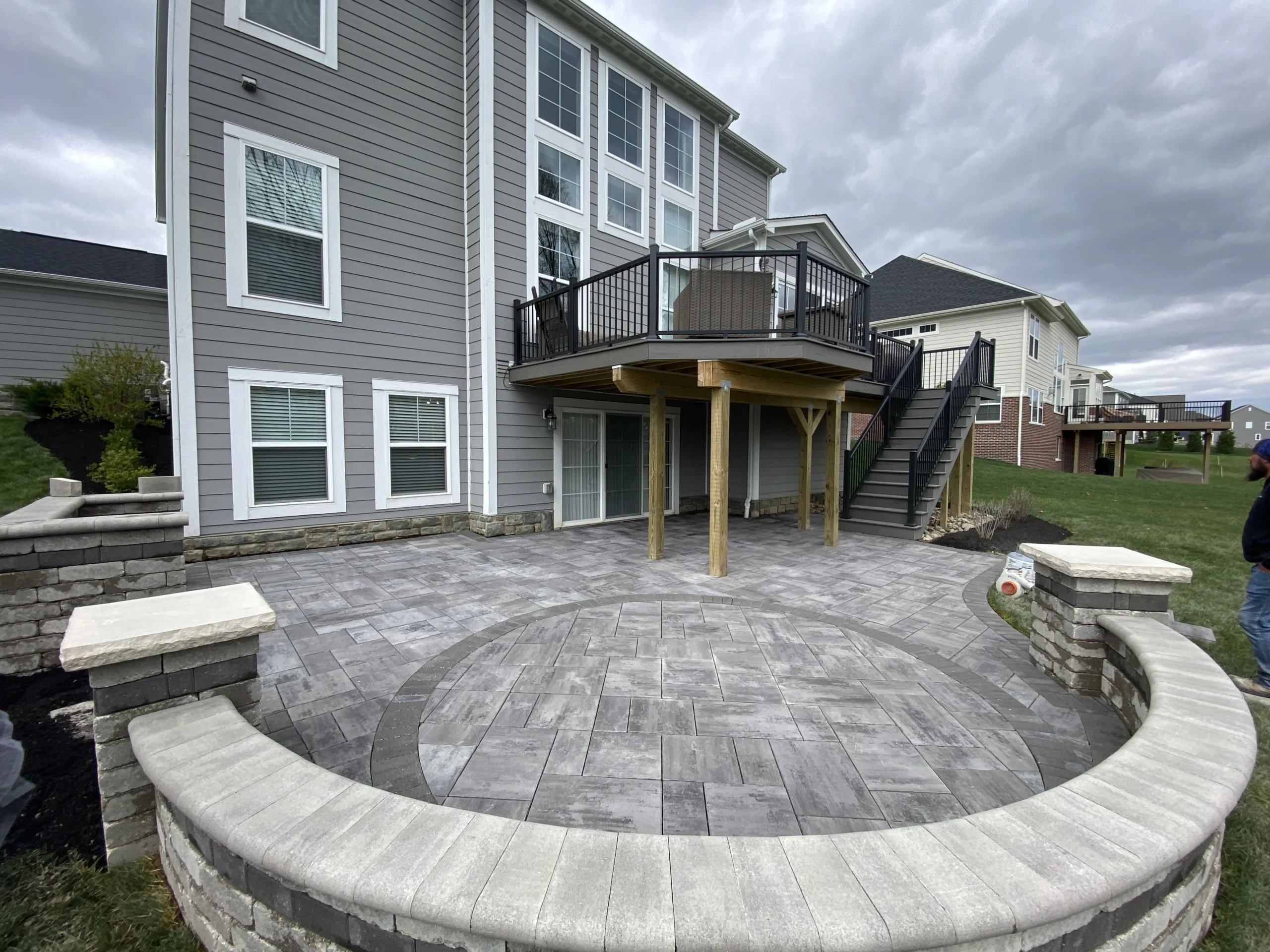
Central Forsyth — 30040 — is the Cumming-proper zip covering neighborhoods like Bethelview, Shiloh, Polo Fields edges, and the corridor along Hwy 9 toward Sawnee Mountain Preserve. Lots tend to run 0.5 to 1.5 acres, housing stock is split between 1998–2008 builds and newer infill, and HOAs are present but less aggressive than the south end.
Average hardscape spend in 30040: $32,000 to $88,000. That’s the widest range in the county because 30040 covers the most variable lot profile. A Bethelview patio rebuild with 650 square feet of tumbled paver and a simple seat wall lands at $32K–$38K. A larger Post Road project with a retaining wall, lower-terrace patio, integrated steps, outdoor kitchen rough-in, and a paver driveway extension lands near $82K.
The soil here is classic Cecil series Piedmont clay. Heavy shrink-swell in summer drought, soggy bearing capacity in February. That matters for base depth. We spec a minimum 8-inch compacted open-graded base in 30040, compacted in 2-inch lifts with a non-woven geotextile separator. On new-construction lots where a builder’s 4-inch concrete slab just cracked, we often have to over-excavate 12 inches before we can even start the base — that demo-and-prep line is where budget overruns happen if the contractor didn’t scope it right.
Central Forsyth buyers prioritize value-per-square-foot over showpiece finishes. The calls we get from 30040: “I want something that lasts 30 years without redoing it, looks good, and doesn’t break six figures.” That’s a different brief than 30041. We steer those projects toward Techo-Bloc Blu Grande or Unilock Richcliff in the paver field, standard Eldorado or Techo-Bloc Mini-Creta for seat walls, and gas-ready firepit kits rather than full custom masonry fireplaces.
Permit turnaround for Central Forsyth: 2 to 4 weeks in most subdivisions. Faster than 30041 because many 30040 neighborhoods don’t require ARC review on hardscape below a certain square footage threshold — usually 500 or 750 sq ft. Always check your covenants before scoping the design around that line.
03 — North Forsyth (30028): The $22K–$65K Tier (But More Square Footage)
North Forsyth runs from roughly Hwy 369 (Browns Bridge Road) north to the Dawson County line — Coal Mountain, Shady Grove, Ducktown, Brookwood, and the unincorporated stretches that wrap the top of Lake Lanier’s south shore. Lots here start at 1 acre and go to 5+. Many of the homes are 2005-and-newer custom builds on properties where the owner kept 4 of the 5 acres wooded and developed 1 acre of usable backyard.
Hardscape spend: $22,000 to $65,000. That’s the lowest per-project dollar figure in the county, but it’s misleading — because 30028 buyers are often putting in 1,400 to 2,200 square feet of patio versus 30041’s 600 to 1,000 sq ft. The per-square-foot spend drops, total square footage climbs, and the visual impact of what gets built is frequently bigger than the south-end projects even though the check is smaller.
The square-foot math: South Forsyth hardscape averages $62–$85 per finished square foot including base, pavers, coping, seat walls, and lighting. North Forsyth averages $32–$48 per square foot. Same contractor. Same materials grade for the mid-tier. Different labor choreography because the site is wide open instead of surgical.
North Forsyth soil is different too. Toward Coal Mountain and along the ridgelines you hit granite outcrops and a much rockier profile than the Cecil clay that dominates south of Hwy 20. That can cut both ways. Rocky substrate means better natural drainage and often a shallower base prep (5–6 inches of crushed stone instead of 8). But if a ledge runs through your patio footprint, you’re either jackhammering or redesigning — and jackhammering adds $2,400 to $6,000 per day depending on machine size.
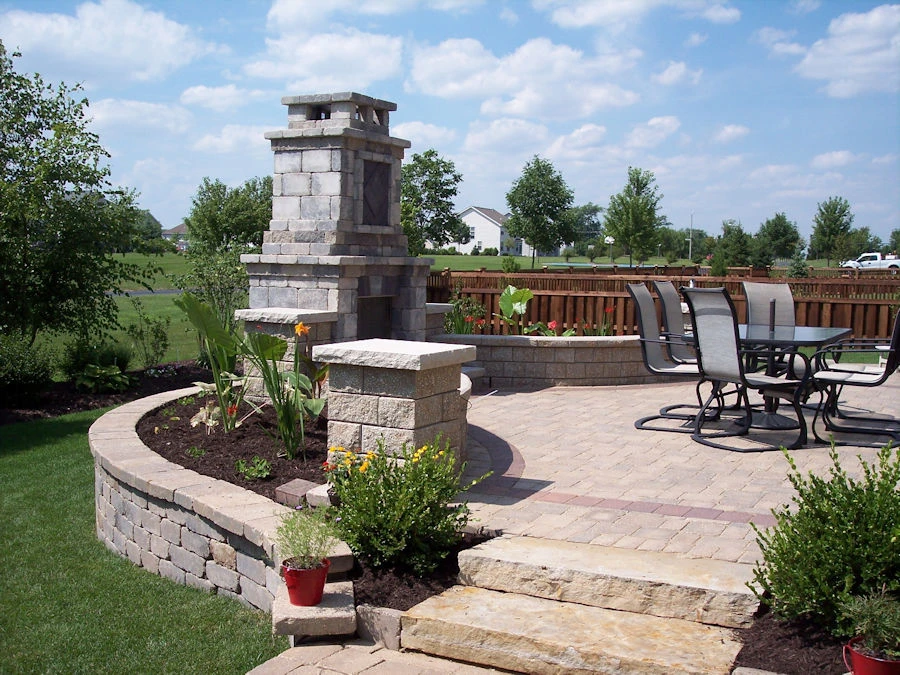
What 30028 buyers prioritize: (1) size and sweep — a big, open, attached-to-house patio is the first purchase; (2) a detached firepit or fireplace area on a second pad, connected by walkway; (3) retaining walls to handle the rolling-foothills grade most north-end lots sit on; (4) drainage — more than any other zone, because more square footage plus clay pockets between granite means water has to go somewhere; (5) outdoor kitchen as optional add-on, not centerpiece.
What they tend to skip or defer: full pavilion structures (Lake Lanier seasonal use means less demand for year-round coverage), high-end travertine (budget goes to square footage instead), and aluminum privacy screens (they already have 2 acres of woods on three sides).
04 — Resale ROI: What Each Zone Actually Pays Back
Hardscape ROI in Forsyth County varies by zone more than most homeowners expect. We track this through appraisal conversations with four local appraisers and through listing-comparison data on homes that sold in 2024 and 2025 where we did the hardscape within 5 years of sale.
South Forsyth (30041) recovery: 63% average ROI on hardscape investment. That sounds low relative to kitchen or bathroom remodels, but it’s the highest in the county because south-end buyers expect outdoor living to already be built. A 30041 house without a finished patio and outdoor space sits 11 days longer on market on average. The hardscape doesn’t just “add value” — it prevents a sale-price discount that would be bigger than what you spent.
Central Forsyth (30040) recovery: 68% average ROI. Highest in the county. The reason is that 30040 buyers are typically moving up from a starter home in Gwinnett or moving down from a larger Halcyon or Milton estate — both groups are hardscape-aware and will pay for quality without the price-ceiling issue that caps the top of 30041 and 30028.
North Forsyth (30028) recovery: 58% average ROI. Lowest of the three. Not because the work is less valuable — but because the buyer pool for a $850K–$1.5M estate with a huge backyard patio is narrower. When the right buyer shows up, they pay for it. When they don’t, the hardscape might get appraised as utility square footage instead of lifestyle square footage.
05 — How We Build the Estimate: The 4-Step Scope for Any Forsyth Zone
Regardless of zone, our scoping process follows the same four-step sequence. The numbers change by zip code. The method does not.
Step 1 — Site diagnostic. Before any number gets written, we walk the site and measure five things: existing grade and drainage direction, soil sample at the proposed patio footprint (auger down 18 inches to check for rock, clay pockets, or fill), property line setback verification, tree protection radius (Forsyth County ordinance requires protection of specimen trees over 24 inches DBH), and utility locate for gas, water, and electrical stubs. This takes 60–90 minutes on site and costs nothing — it’s the foundation for every number in the proposal.
Step 2 — Zone-adjusted base spec. The base depth, geotextile separator, and compaction lift count are written per-zone based on the soil profile. 30041 and 30040 get the full 8-inch compacted open-graded base with 2-inch lifts and non-woven geotextile separator. 30028 gets the same spec unless we hit granite in the auger — then we engineer a site-specific base that might be 5 inches of dense-graded aggregate over a compacted subgrade.
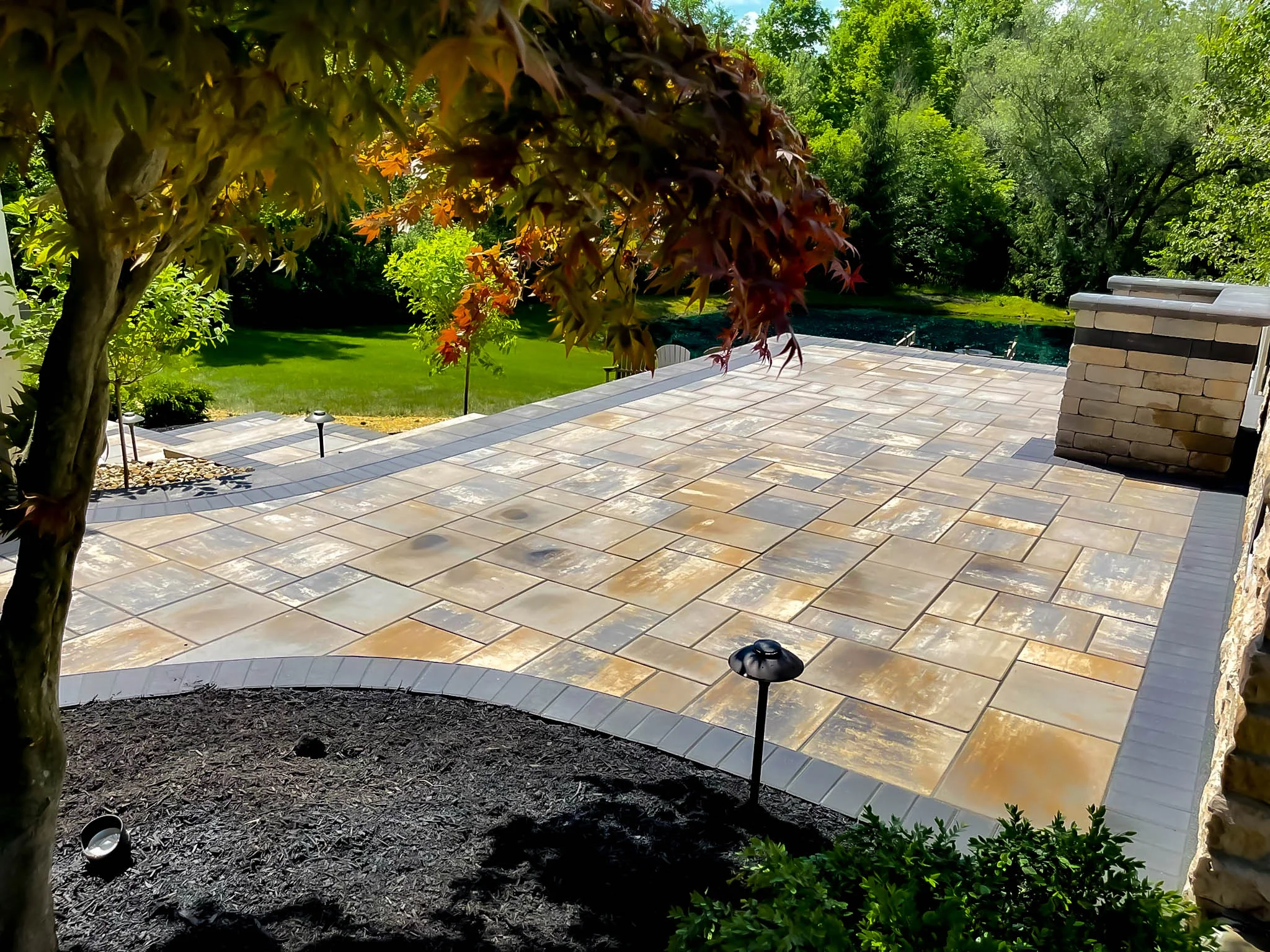
Step 3 — Material and finish tier selection. We present three tiers per project: Standard (Belgard Bergerac or equivalent utility paver, standard seat wall block, simple firepit kit), Upgrade (Techo-Bloc Blu Grande or Unilock Richcliff paver, Techo-Bloc Mini-Creta seat wall with matching cap, gas-plumbed firepit with remote ignition), and Premium (Techo-Bloc Borealis or Blu 60 paver, full-dimensional stone veneer wall with cut cap, custom mason-built fireplace with chimney flue). Price differentials between tiers typically run 18–26% per tier.
Step 4 — Drainage and long-term spec lock. Every proposal includes a drainage plan — catch basin locations, 4-inch perforated SDR-35 pipe runs, daylight discharge points, and any pop-up emitter locations. In 30041 where lots are tight, we often spec two sub-surface catch basins minimum tied to a single 60-foot run to daylight. Skipping this is how patios heave in year 3.
The drainage budget line item you shouldn’t cut: Drainage runs $1,200 to $4,800 on a typical Forsyth hardscape project. On the Cecil clay soils that dominate 30041 and most of 30040, it’s not optional. The number one failure mode we see on 5-year-old DIY or low-bid projects in Forsyth is water migration under the patio causing differential settlement in year 3–4. Pay the $3K now.
The final contract spells out every base depth, geotextile layer, paver brand and SKU, joint filler type (polymeric sand, and which brand), sealer (if any), and warranty language. If any of those are left vague, you’re buying a different project than you think you are.
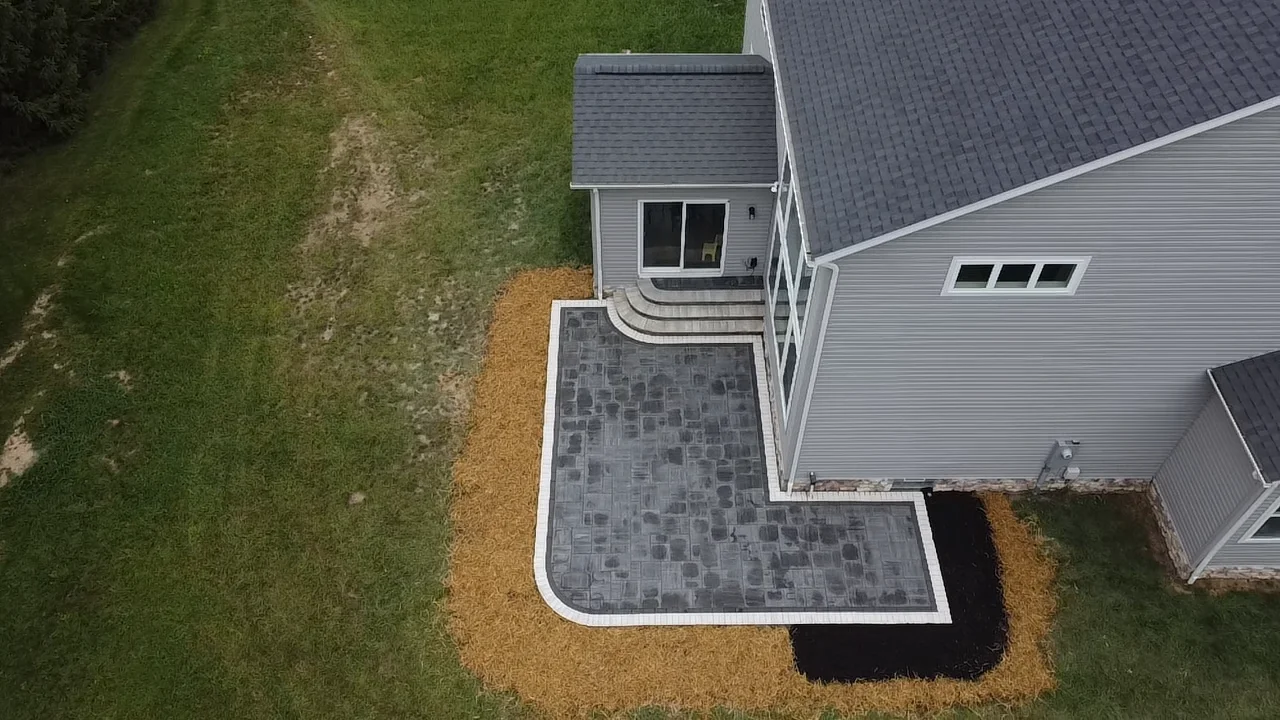
What This Means If You’re Starting Now
If you live in 30041, start with the HOA materials board before the contractor scope. You’ll save two weeks and about $800 in redesign fees. If you live in 30040, decide your square-foot target first — the zone’s price range is wide enough that a 400 sq ft swing in size can move your total by $18K. If you live in 30028, get a soil probe done before the estimate — a granite ledge under your intended firepit location is not a surprise you want after the first invoice.
No matter which zone, do not accept a proposal that doesn’t name the paver brand, base depth, geotextile layer, and drainage runs explicitly. A missing line item is not a saved dollar — it’s a deferred one, with interest.
Hardscape design and construction across 20+ cities within 30 miles of Winder, GA
Whether you’re in a Halcyon subdivision in south Forsyth, a Bethelview infill lot, or a 3-acre Coal Mountain estate — we build the base, the drainage, and the finish to the same spec. The zone changes. The engineering does not.