
Pull the last 48 hardscape estimates we’ve priced inside Forsyth County and a pattern snaps into focus: the same 600-square-foot paver patio quoted in Windermere lands at a number roughly 2.3x higher than the same project quoted in an older Cumming ranch neighborhood ten minutes south. Not because one crew charges more — because buyers in each zone demand different scope.
Forsyth County isn’t one market. It’s three. And the reason most homeowners get blindsided by their first hardscape estimate is that they’re shopping with a budget pulled from Houzz averages while their neighborhood is pricing itself out of that average entirely. Below is the breakdown — drawn from real Primetime Pools GA bids, not industry surveys — of what the north tier, mid tier, and south tier of Forsyth County actually spend on hardscape, what they prioritize, and what the resale math looks like by zone.
If you’re weighing a project anywhere from Bethelview Road to Lake Lanier, the tier you live in should shape your budget before you ever call a contractor. Here’s how.
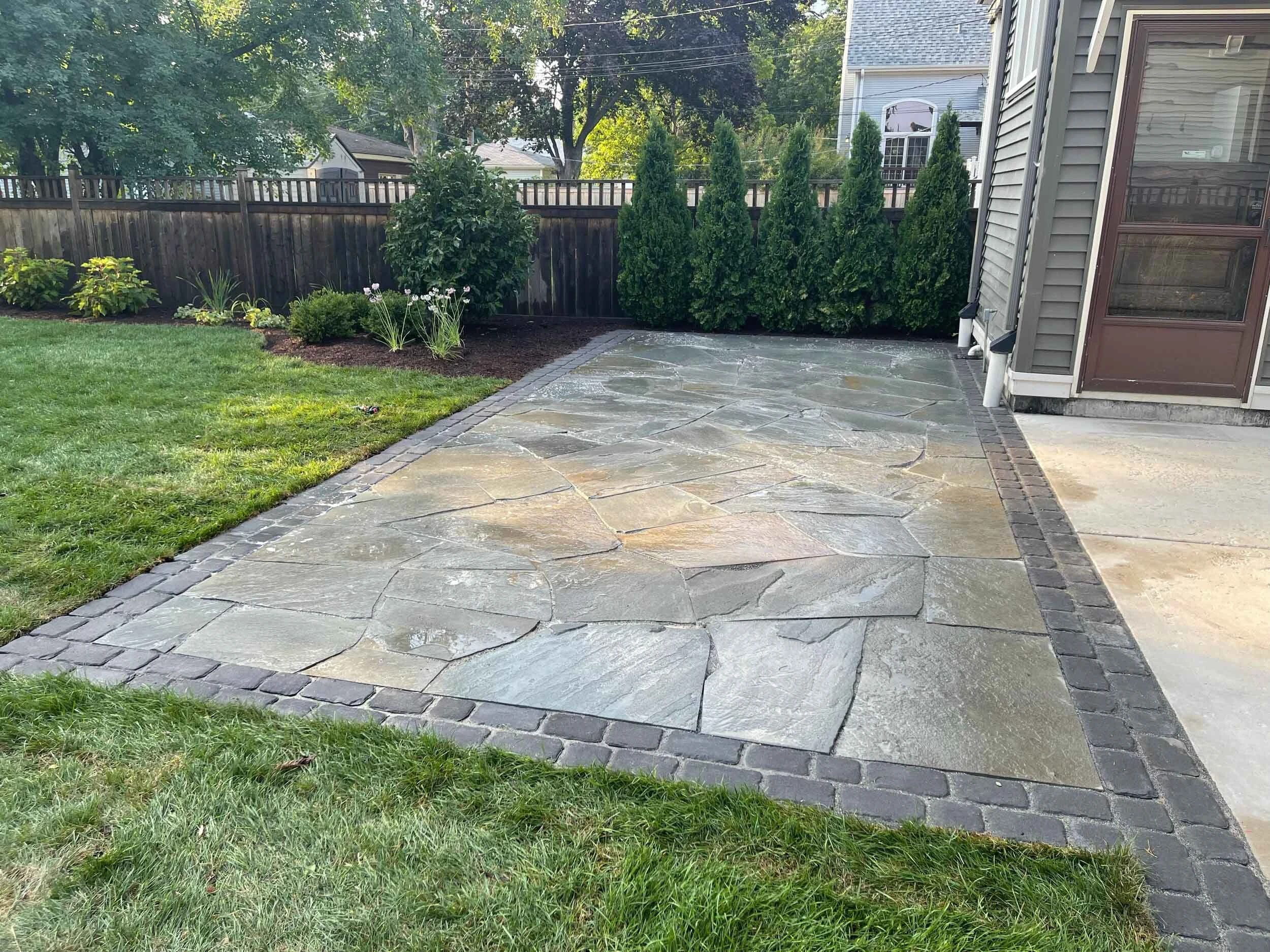
The Three Forsyth Zones — and Why the Same Patio Costs Three Different Numbers
For pricing purposes we split Forsyth County by a combination of median household income, housing stock age, and HOA architectural review posture. It lines up roughly but not perfectly with geography.
North Tier — the premium bracket. Windermere, St. Marlo, Polo Fields, Vickery, and parts of Lake Windward. Golf-course communities, 2015-onward new builds, lots averaging 0.6–1.4 acres, HOA architectural review boards with 2–3 week plan turnarounds. Typical hardscape project spend: $85,000 to $145,000.
Mid Tier — the Hampton Park bracket. Hampton Park, Three Chimneys, Haw Creek, The Collection at Forsyth corridor, Mashburn Plantation. Early-2000s to 2015 subdivisions, half-acre lots, established HOAs with less aggressive architectural oversight. Typical spend: $45,000 to $78,000.
South Tier — the older-Cumming bracket. Ranch homes and split-levels off Bethelview Rd, Post Rd, older sections near the original Cumming city center, rural parcels east of Hwy 9. Housing stock skewing 1980s–1999, lots more variable, little to no HOA. Typical spend: $22,000 to $44,000.
Same county. Same red clay Cecil-series soil underneath. Same permit desk at 110 E. Main St. Three entirely different scopes of work being built on top of it.
North Tier: Windermere, St. Marlo, Polo Fields — $85K to $145K
A Windermere hardscape bid is rarely about the patio. It’s about the outdoor room — covered pergola with integrated lighting, linear gas fireplace, dimensional stone seat walls, outdoor kitchen rough-in with a 6-burner Lynx or DCS grill head, and a paver field that runs 1,100 to 1,600 square feet of premium material. The house backs up to fairway or greenway, so sightlines matter. The HOA architectural review board matters more.
What drives the top of the range isn’t usually material — it’s hidden site work. Many Windermere and Polo Fields lots have 4–8 ft grade drops from the rear slider to the property line, feeding into South Forsyth drainage tributaries. Resolving that with tiered retaining walls, engineered drainage, and foundation plantings adds $18K–$35K before a single paver ships.
The other north-tier premium: plan review. St. Marlo’s architectural review board wants stamped drawings, material spec sheets, and a site plan before the HOA signs off. Plan turnaround runs 2–3 weeks on average. Contractors who don’t know how to package that documentation either lose the project or eat the revision cycles. Either gets built into the price.
Buyers in this tier prioritize three things, in order: designer continuity with the home’s architecture, entertaining capacity for 30+ guests, and subtle luxury — no contractor signage, no obvious upsell finishes. “I want it to look like it was built with the house” is a line we hear on almost every north-tier consult.
North-tier materials bracket we quote most often: Techo-Bloc Blu 80 (premium porcelain-veneer paver, $28–$34/sq ft installed), Belgard Mirage porcelain, Pennsylvania bluestone full-range, and Unilock Rivercrest for retaining. All four carry lifetime structural warranties and have the dimensional consistency HOA review boards look for.
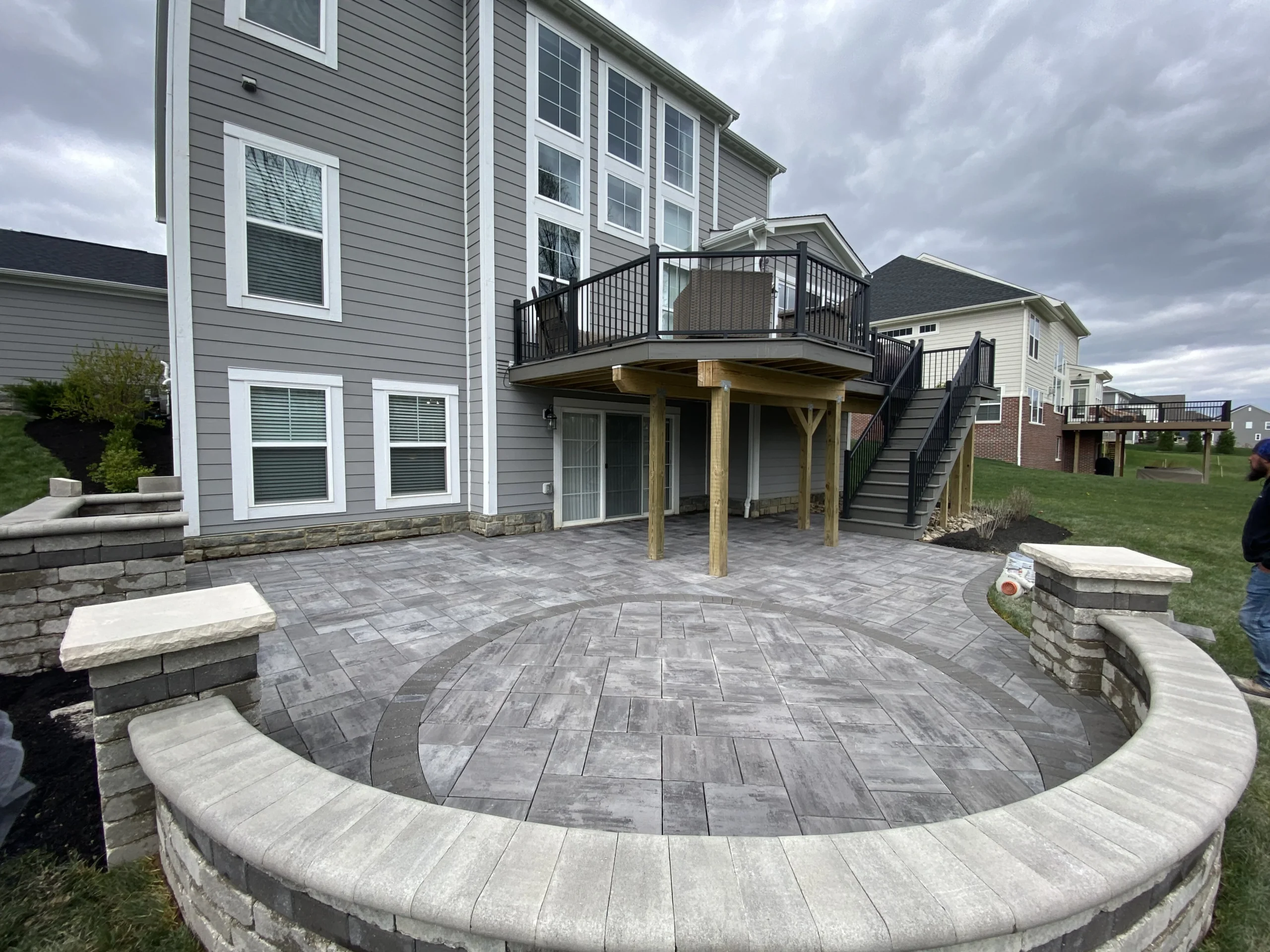
Mid Tier: Hampton Park, Haw Creek, Three Chimneys — $45K to $78K
The mid tier is where Forsyth’s hardscape market actually lives by volume. Hampton Park and Haw Creek buyers are skewed 35–52, dual-income, with one or two kids. They’ve owned the home 4–9 years, the initial builder-grade concrete slab is cracking at the control joints, and they want to convert that slab into something that looks like the Pinterest board their neighbor just finished.
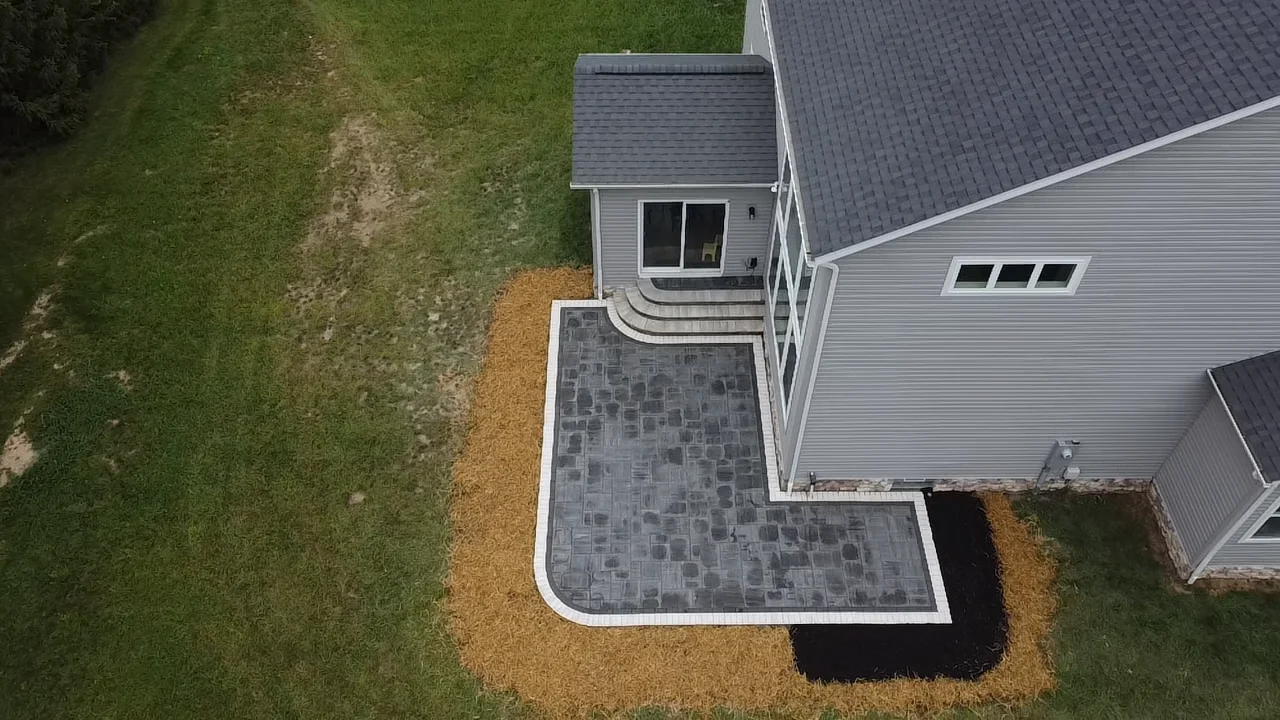
Typical mid-tier scope: 600–900 sq ft of paver patio, a built-in gas firepit, a pergola kit (Trex Pergola or custom cedar), and light landscape lighting tied into the existing panel. Outdoor kitchens show up in maybe 1 of 4 mid-tier builds. Full covered structures with roof are rare at this budget.
Where north-tier buyers prioritize continuity, mid-tier buyers prioritize differentiation. The patio is supposed to feel like a destination — a meaningful shift from the rest of the yard. We see a lot of two-tone paver fields (primary field plus soldier-course border contrast), raised seat walls with cap lighting, and feature elements like cantilevered stone mantels on the firepit.
The material spec here usually lands on Techo-Bloc Blu Grande, Belgard Catalina Slate, or Unilock Beacon Hill Flagstone — premium residential but not commercial-grade. Installed costs typically run $19–$23 per square foot for the paver field, with the seat walls, firepit, and pergola adding discrete line items on top.
The resale numbers bear this out. Mid-tier Forsyth hardscape comes back at 71% of project cost at sale — meaningfully higher than either the north or south tier. A $62K Hampton Park build recovers roughly $44K at resale. A $125K Windermere build, by contrast, only recovers about $77K. The appraiser’s toolkit doesn’t reward ultra-premium outdoor spend the way the buyer’s wish list does.
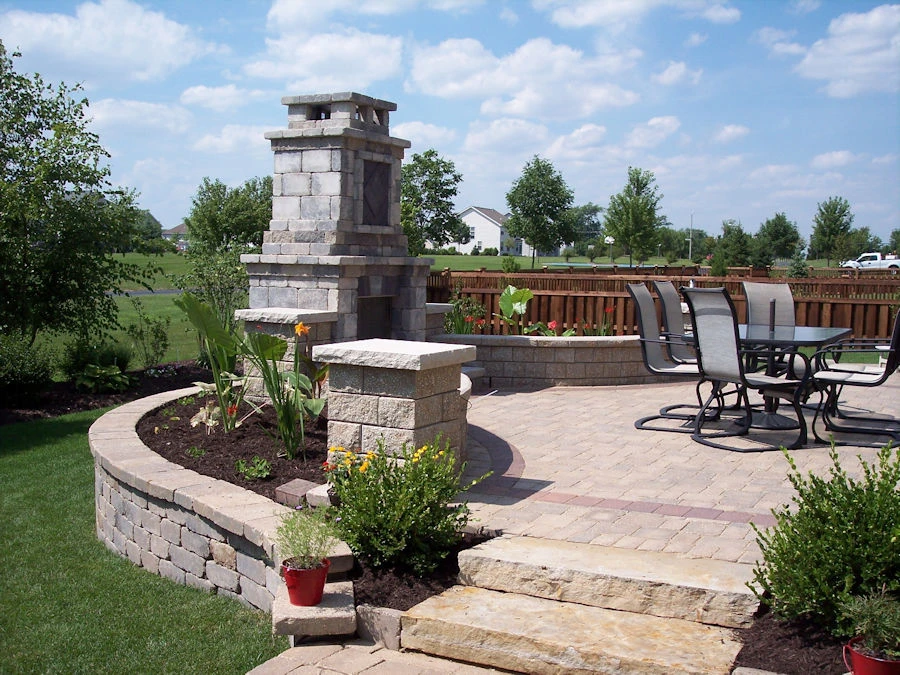
South Tier: Older Cumming, Bethelview, Post Road Corridor — $22K to $44K
South-tier Cumming is where the honest craftsmanship conversation starts. Lot sizes run a wider spread — some half-acre, some four acres of unimproved rural land. House styles range from 1987 brick ranch to 2005 traditional. HOAs are rare. Budgets are tighter but not small — a $35K hardscape inside a $450K home is a meaningful percentage investment.
Typical scope: 350–550 sq ft of paver patio, occasionally with a small seat wall, occasionally with a gas or wood firepit, landscape lighting rare. We see a lot of “just do the patio and save for the rest later” phasing, which we support — as long as the first phase is engineered so future phases don’t require rework.
The material bracket at this tier is Belgard Holland Stone, Pavestone, or Cambridge Cobble — all solid residential pavers with 20+ year track records. Installed costs run $13–$17 per square foot for the paver field. The ratio of site prep to finish material shifts sharply here: because the older south-tier lots often have settled soil, buried debris, or failed prior drainage, base prep eats 25–35% of the total budget vs. 15–20% in the newer north-tier subdivisions.
South-tier resale ROI lands at roughly 58% of project cost. The cap here is the home’s appraisal ceiling, not the quality of the hardscape. A $38K patio on a $425K home recovers about $22K at sale — less by percentage than the mid tier, more by percentage than the overbuilt luxury tier.
South-tier base-prep red flag: If your estimate shows less than a 6-inch compacted open-graded aggregate base under a south-Forsyth paver patio — especially on older Post Road or Bethelview parcels where the soil has been disturbed — ask for it in writing. The hard-packed Cecil clay in this corridor doesn’t forgive shortcuts. A 4-inch base fails at year 4 or 5 with visible settlement at the control joints.
What Each Zone Actually Prioritizes — the Conversation Pattern
After running enough consults in each tier, the first-call conversation has a distinct rhythm per zone. It helps homeowners to know where their priorities are going to diverge from the next tier up or down.
North tier consult (Windermere, St. Marlo, Polo Fields)
First 10 minutes: questions about HOA submittal experience, prior projects inside the subdivision, and material-sourcing relationships. Buyers in this tier want to know you’ve worked inside St. Marlo or Polo Fields before — the ARB prefers contractors with documented precedent. Very little initial conversation about price. Very detailed conversation about continuity with the home’s existing stone or brick.
Mid tier consult (Hampton Park, Haw Creek, Three Chimneys)
First 10 minutes: pictures on the phone. “This is the Pinterest picture. Can we do this?” Followed by detailed questions about timeline, warranty, and what happens if a paver cracks in year 7. Price discussion is direct but collaborative — “we can flex to $62K if the firepit has to wait to phase 2.” This is the tier where the customer becomes the best project manager.
South tier consult (older Cumming, Bethelview corridor)
First 10 minutes: questions about why their existing concrete slab cracked, whether the new patio will crack the same way, and what exactly the base prep looks like. Tactile, practical. Price discussion starts early and never leaves the table — not because the buyer is cheap but because they’re skeptical of anything they can’t physically inspect. Sawnee EMC electrical tie-ins for lighting come up more often here than in the newer subdivisions where the main panel was sized for outdoor loads at build time.
Material Sourcing Differences Between Zones
One nuance that rarely surfaces in national cost guides but matters locally: where the material gets ordered from shifts the math.
North-tier projects typically source premium material from Gwinnett Block and Hardscape in Buford or Pike Nurseries yard inventory in Alpharetta for specialty natural stone. Lead times run 3–8 weeks on porcelain pavers, bluestone full-range slabs, and imported Techo-Bloc Mista lines. Delivery is scheduled around tight HOA crane/boom windows and neighborhood construction curfews. Freight adds 4–7% to material cost.
Mid-tier projects source from the Belgard dealer network or Unilock’s Atlanta warehouse at Jimmy Carter Blvd. Lead times run 1–3 weeks on standard lines. Material is pulled from in-stock color runs, which is why we sometimes ask mid-tier buyers to be flexible on exact color blend — the exact one from the brochure may be back-ordered 5 weeks, while a 90%-match is sitting on the pallet.
South-tier projects often draw from Home Depot Pro or Lowe’s pro-contractor desk for the value-engineered lines. This isn’t a knock — Belgard Holland Stone and Pavestone sold through Home Depot carry the same manufacturer warranty as the dealer-network equivalents. Lead times are often 48 hours. The total delivered cost is 6–12% lower than dealer-network sourcing.
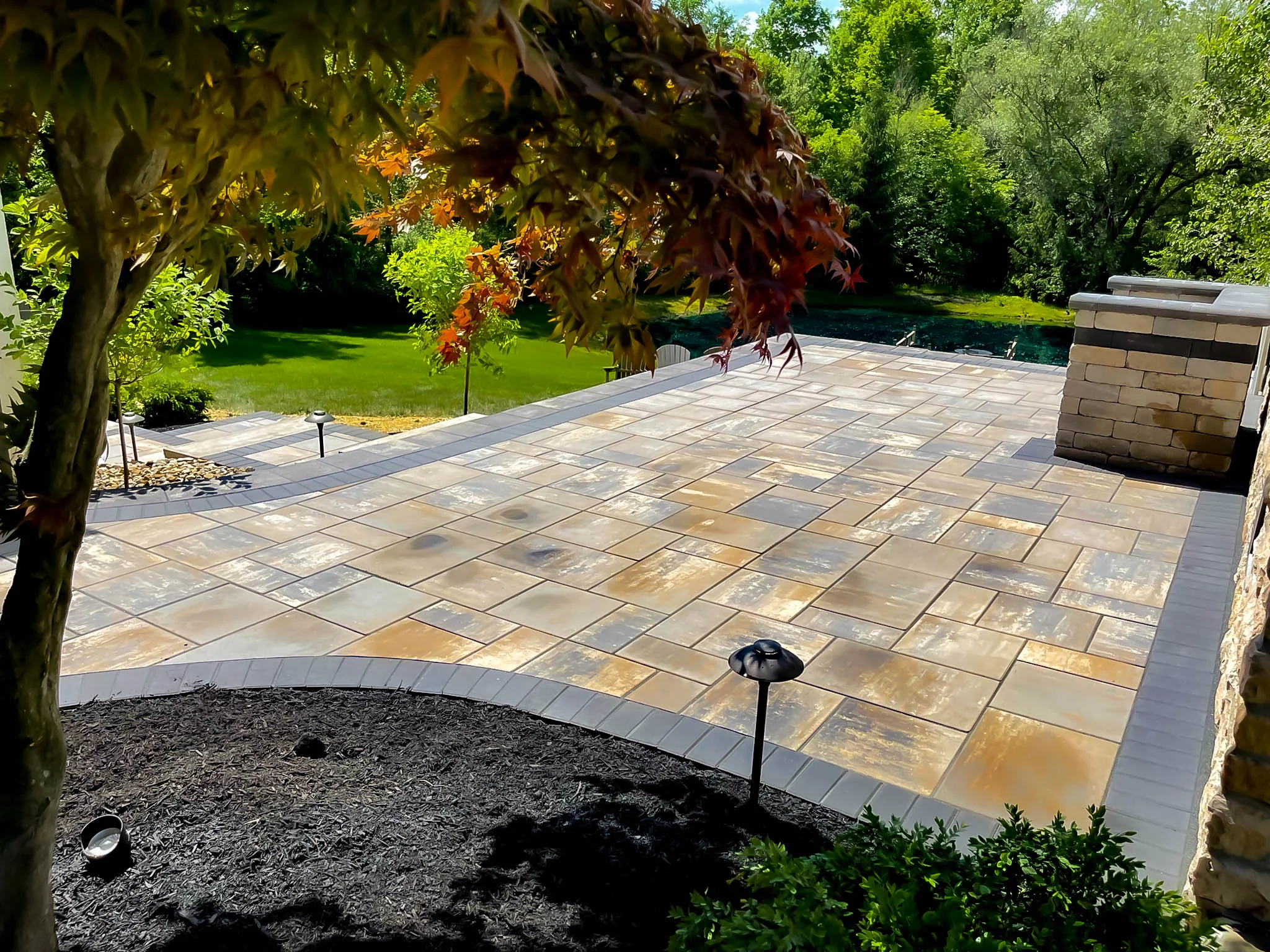
Resale ROI by Zone: Why the Mid Tier Wins
Of every number in this post, the ROI spread is the one homeowners find most counterintuitive. The intuition is “spend more, recover more.” The math doesn’t support it.
Based on Forsyth County Tax Assessor comp pulls and our own post-project appraisal data across 50+ post-sale follow-ups, the recovery percentages break out like this:
- North tier: 62% recovery at sale. A $110K hardscape recovers roughly $68K when the home changes hands. The ceiling is appraisal comp-set — there are only so many Windermere comps, and the outdoor spend diverges from the median faster than the indoor spend.
- Mid tier: 71% recovery. A $62K build recovers about $44K. This is the best hardscape ROI bracket in Forsyth County, and it’s why we recommend mid-tier scope even to buyers who could afford north-tier scope in borderline neighborhoods.
- South tier: 58% recovery. A $35K build recovers about $20K. The ceiling here is the home’s own appraisal, not hardscape-specific. In a $420K home, anything beyond $40K of outdoor investment is diminishing-returns territory.
The other variable that skews ROI: time horizon. If you plan to sell within 3 years, the recovery numbers above roughly hold. If you plan to stay 10+ years, the enjoyment ROI dwarfs the resale ROI and this whole framework inverts. Most of our mid-tier buyers are planning to stay 8–15 years. That’s the sweet spot where the 71% recovery plus a decade of use outperforms the alternatives.
One local factor we always flag in ROI conversations: Cumming’s 260,000 county population and Atlanta-metro relocation inflow (Forsyth remains the fastest-growing county in Georgia by percentage) means newer buyers in 2024–2026 are paying more for outdoor infrastructure than even 2021 buyers did. If your project finishes in 2026, the 3-year resale ROI may end up exceeding the historical percentages above by 4–8 points.
Site Factors That Override Zone Pricing
These aren’t price-adders — they’re price-multipliers. Any one of them can move a project from mid-tier cost into north-tier cost even in a Hampton Park backyard.
Grade drops steeper than 6 feet across the build zone. South Forsyth drainage tributaries mean a lot of rear-yard pitches. Once the grade drop exceeds 6 feet, you’re into engineered retaining territory, which requires stamped drawings from the Forsyth County Dept. of Planning & Community Development for any wall over 4 ft. Add $12K–$28K.
Lake Lanier proximity humidity. Lots within 2 miles of the Lanier shoreline sit in a higher-humidity microclimate than the rest of the county. It drives slightly faster paver efflorescence the first two seasons and affects sealer schedule. Not a cost-adder, but a maintenance consideration that changes the sealing line-item.
Sawnee EMC 240V service requirements for integrated lighting. Homes in the older south-tier sections often have 100-amp service with the main panel already maxed. Adding outdoor landscape lighting and a potential future pool tie-in requires a panel upgrade and Sawnee EMC service call. Add $3,500–$8,500 depending on meter-base condition.
HOA architectural review revisions. St. Marlo, Polo Fields, Vickery, and Windermere all have active ARBs with documented material and color restrictions. Projects that go through 2+ revision cycles burn contractor calendar time that gets priced into the final bid. Add $2,500–$6,000 on the front end.
How to Budget Your Project Before You Ever Call a Contractor
If you’re in the research phase, the sharpest thing you can do is figure out which tier you’re actually pricing into. A 20-minute exercise with your home’s zip code, your subdivision name, and a quick look at Zillow’s median sale price inside your community will get you there.
Then pressure-test the budget against the three levers that drive tier:
- Total paver square footage — decide honestly what you’ll use. Most backyards overbuild footprint and underbuild verticality (walls, pergolas, features). A smaller patio with richer features outperforms a huge flat paver field on every metric — enjoyment, resale, and monthly maintenance.
- Feature count — firepit, outdoor kitchen, pergola, water feature, and outdoor fireplace are the big five. Mid-tier projects typically have 1–2. North-tier typically has 3–5. South-tier typically has 0–1. Pick the count first, then scope each.
- Material bracket — this is where the biggest inflation happens. Upgrading from Belgard Holland Stone (south-tier value) to Techo-Bloc Blu 80 (north-tier premium) on the same 600 sq ft patio adds $10K–$13K of material alone. Sometimes worth it. Often not.
Once you have those three variables, a competent local contractor can land within ±8% of the final project cost on the first consult. If the estimate comes back 25% higher than expected, one of your three assumptions was off — usually the square footage or the material bracket. Go back to the levers before you shop the price.
And one last thing worth naming: the Forsyth County permit itself. Any hardscape over 1,000 sq ft or any wall over 4 ft requires a permit from the Forsyth County Dept. of Planning & Community Development at 110 E. Main St., Cumming. Permit fees run $145–$420 depending on scope. Contractors who build without pulling one are leaving you holding the liability at resale when the survey flags the unpermitted work. Always confirm the permit is in your address’s name and closed out before final payment.
One more budgeting lens worth mentioning before you start shopping: phasing. Roughly 40% of south-tier and 22% of mid-tier Cumming projects we’ve built in the last 18 months were phased builds — patio this year, firepit and lighting next year, pergola the year after. Phasing works, but only if the engineering for phase one anticipates phases two and three. That means running conduit for future lighting, over-sizing the base past the initial patio boundary so a future extension doesn’t require cutting, and framing the paver field with a soldier course that later phases can butt into cleanly. Not phase-ready engineering adds 15–25% to phase-two costs later. Phase-ready engineering adds about 3–5% to phase one up front. Always the better math.
The last piece of the puzzle is zip-code specific. If you’re in zip 30040, you’re probably in the south-tier Bethelview or older-Cumming corridor — expect the $22K–$44K bracket with base-prep complexity. If you’re in zip 30041, you could be in any of the three tiers depending on which subdivision; subdivisions in the Windermere, Vickery, and St. Marlo corridors skew north-tier while Hampton Park and Haw Creek sit squarely in the mid tier. Cross-reference your specific subdivision against the tier breakdown above and you’ll land inside ±10% of your eventual project cost before a contractor ever visits. That’s as precise as Forsyth County hardscape pricing gets in the research phase — and it’s precise enough to shop confidently.
Hardscape design and construction across 20+ cities within 30 miles of Winder, GA
Whether your project lives in north-tier Windermere, mid-tier Hampton Park, or the older Cumming corridor, scope your build against the right pricing bracket from day one — and we’ll engineer it to last three decades in Forsyth County’s Cecil-series soil.