
Nearly every fire feature we install in Cumming burns natural gas or propane — and it’s not because homeowners don’t like the smell of oak smoke. It’s because 95% of Cumming HOAs quietly forbid wood-burning fire pits, and the ones that allow wood attach a premium to your homeowner’s policy that nobody tells you about at the sales table.
Here’s the contrarian read most builders will not put in writing: on paper, wood looks cheaper. A simple stacked-stone wood pit runs $1,200 to $2,800 installed. A plumbed gas pit with a code-legal burner, key valve, and lava media starts closer to $3,400 and tops out around $5,800 for a full masonry surround. Looks like a slam-dunk — until you read your covenants, call your carrier, and pull a permit.
Then wood quietly becomes the more expensive feature. Your insurance premium climbs. Your HOA architectural review board rejects the sketch. The Forsyth County fire marshal asks for a site plan with setbacks. Three weeks pass. Four. By the time the approval arrives, the gas neighbor down the street is already on his second bourbon out by the flame.
This post is the one I wish every Cumming homeowner read before they called us. We’ll walk the process the way we walk it with clients — numbered, in order, with the dollar figures attached.
01 — Start With the HOA Covenants, Not the Pinterest Board
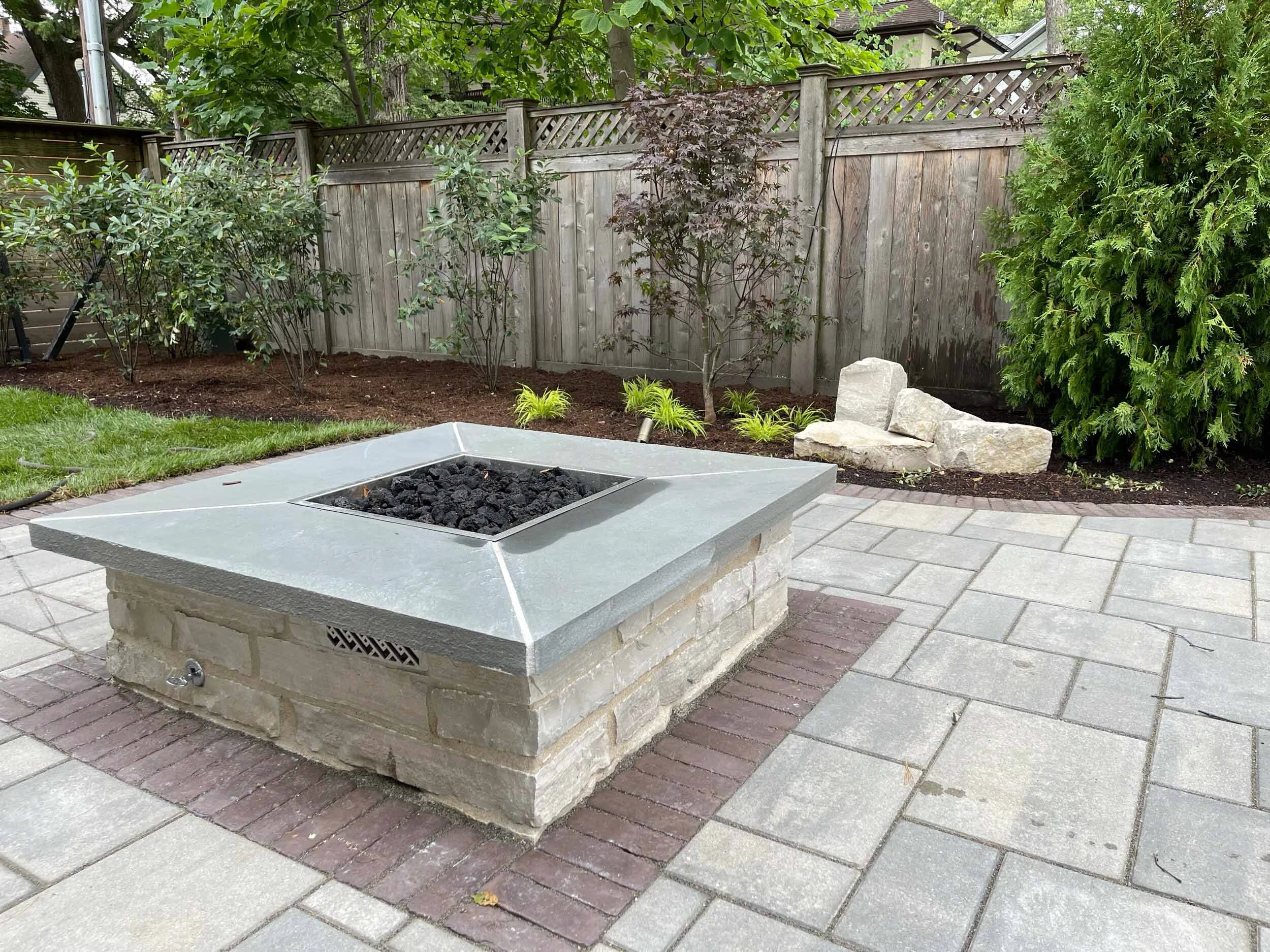
Before you talk to a builder, pull your covenants. In Cumming’s larger subdivisions — St. Marlo, Polo Fields, Vickery, Windermere, Hampton Park, Lake Windward — the architectural review board has a binder specifically for exterior modifications. Nine times out of ten, the binder says the same three things about fire features.
- No open wood combustion within property setbacks.
- No feature visible from the street or from a neighboring lot without screening.
- Submission required with elevations, material samples, and a gas-line sign-off from a licensed plumber.
That third item is the quiet killer. Boards do not want to approve a wood pit because the liability falls on the association if a stray ember lights a neighbor’s cedar fence. A plumbed gas feature with a documented shut-off and a 240V GFCI ignition on a dedicated circuit is a closed case — the board approves it in one meeting and moves on.
In the golf-course subdivisions along Bethelview Rd and off GA-400 Exit 14, we’ve seen turnaround as fast as 9 business days for a gas submission and as long as 7 weeks for a wood submission that eventually got denied. Same board. Same homeowner. Different fuel.
HOA approval timeline, Cumming-area subdivisions: gas fire feature — 7 to 10 business days average. Wood-burning submission — 3 to 7 weeks, denied 65% of the time in covenant-heavy communities.
02 — Call Your Insurance Carrier Before You Call a Builder
This is the step 90% of homeowners skip, and it’s the one that rearranges the math. A wood-burning fire pit is, for underwriting purposes, the same liability class as a backyard fire ring at a campsite. Carriers price that risk. On a typical Cumming policy insuring a $650,000 home, adding a wood pit to the declarations adds between $180 and $380 per year in premium depending on setback distance to structures and whether you keep a certificated extinguisher on-site.
Gas, plumbed to a code-compliant manifold with an emergency shut-off, is generally treated as an appliance rather than an open-combustion feature. Carriers across Georgia — State Farm, Allstate, Travelers, USAA — bump the premium by $0 to $40 per year for a permitted gas pit. A few don’t notice it at all if you’re already insuring an outdoor kitchen.
Over a 10-year ownership window, the wood pit’s $180–$380 annual delta compounds to $1,800 to $3,800 in extra premium. That gap alone closes most of the initial install-cost advantage wood seemed to have.
03 — Permits: Why Gas Pulls Clean and Wood Gets Hung Up
Permits go through the Forsyth County Department of Planning & Community Development at 110 E. Main St. in Cumming. The counter is reasonable. The inspectors are reasonable. But the two types of fire features walk two very different paths.
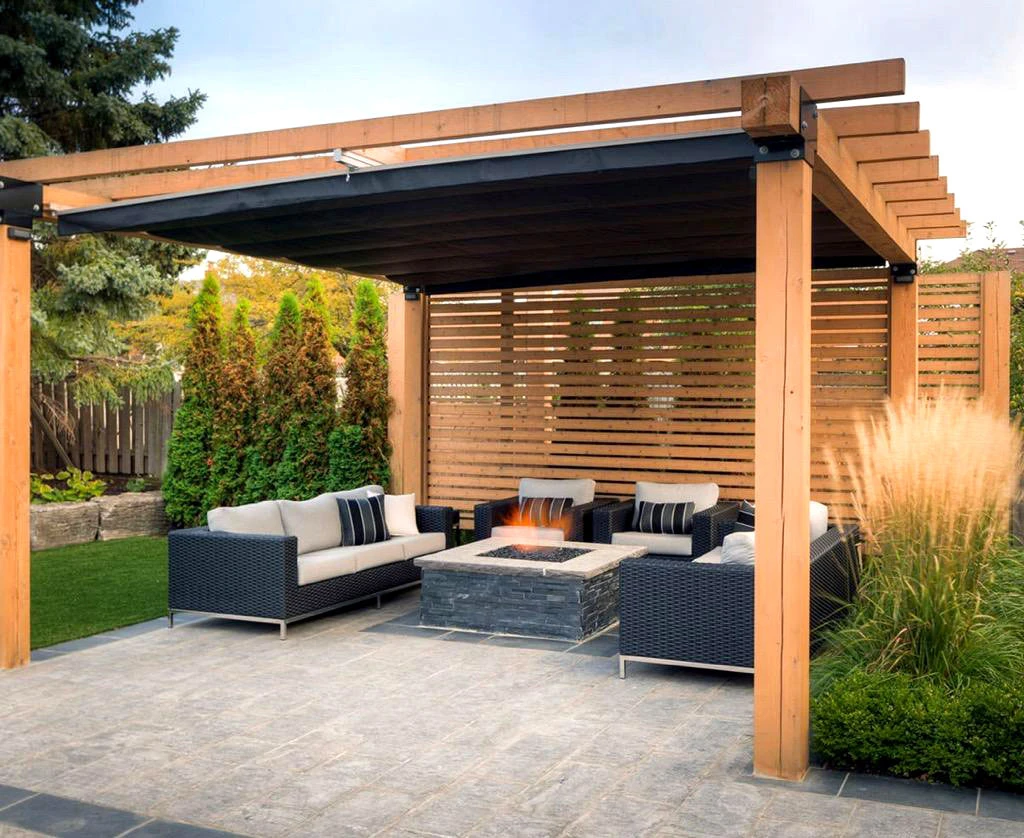
Gas: A plumbed gas feature is reviewed as a gas appliance installation. We submit a single-page plot plan showing the feature location, setback distances, the gas line run from the meter, and the shut-off valve location. The reviewer cross-checks setbacks against the International Fuel Gas Code provisions Forsyth has adopted. Approval turnaround runs 7 to 10 business days. Rough and final inspections are short — the rough is a pressure test on the line, the final is a visual of the burner, valve, and surround.
Wood: Open-combustion wood pits trigger a fire marshal review layered on top of the standard planning review. The marshal looks at setbacks to structures, overhanging vegetation, prevailing wind from the Sawnee Mountain ridge to the west, and whether the backyard drops toward a drainage tributary that could carry embers. On a lot with a 3–8 ft grade drop — common in South Forsyth subdivisions between Post Rd and McFarland Pkwy — the marshal often requires an engineered ember-screen or a non-combustible perimeter before approving. That adds 3 to 4 weeks and sometimes triggers a redesign.
We’ve had gas permits issued on a Thursday and broken ground the following Monday. We’ve also had wood permits that took so long the homeowner dropped wood and came back asking us to repipe the same pad for gas, losing the $600 we’d already spent on the wood submission fees and redesign.
04 — The Install: What Gas Actually Costs in Cumming Dirt
Once permits are in hand, the install cost comes down to four variables: distance from the gas meter, surround material, burner spec, and whether the pad sits on native Cecil series Piedmont clay or on a prepared base. Cumming dirt is heavy red clay on the ridge lots and packs hard near Big Creek and the old city center. It’s an excellent bearing surface for a fire pit — but it doesn’t drain. That drives the base design.
Here’s how the install budget actually breaks down on a typical mid-range Cumming project:
- Gas line trench and run from meter to pit, 30–60 ft average: $680 to $1,200
- Burner kit (Warming Trends CROSSFIRE or HPC Match Lit, 24″–30″ ring): $520 to $980
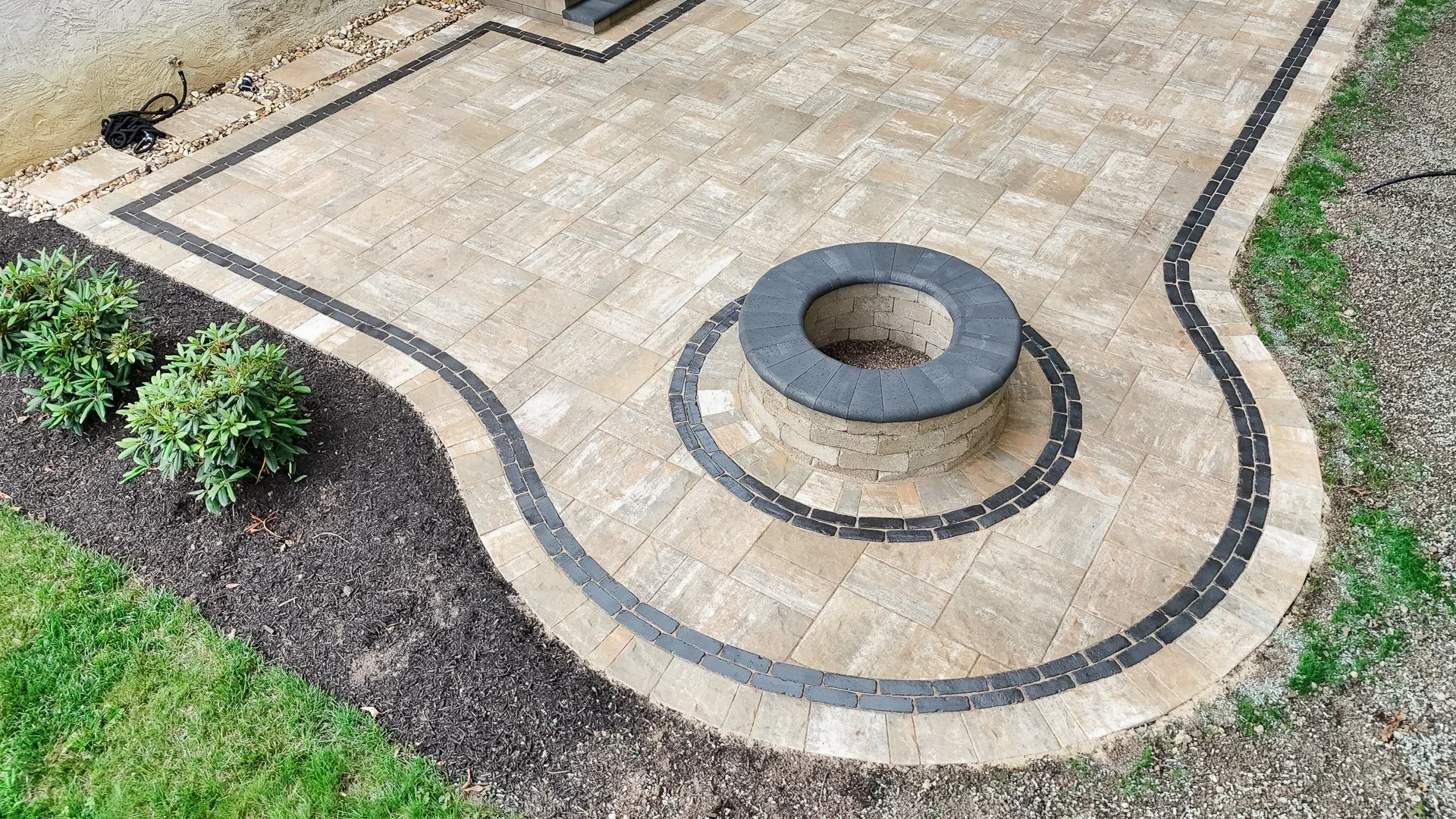
- Masonry surround (cast stone, Techo-Bloc Mini Creta, or full stone veneer): $900 to $2,200
- Key valve, shut-off, and penetration hardware: $240 to $380
- Base prep (6″ compacted crusher run over clay, with French drain if the lot sheds water toward the pit): $380 to $820
- Permit, plan, and inspection fees: $220 to $340
Total on a clean, close-to-meter Cumming install: $3,400 to $5,800. On a feature that sits 120 ft from the meter, or needs a conversion from propane to natural gas because the neighborhood has recently been brought onto service, add $900 to $1,500.
05 — Why Sawnee EMC and Lake Lanier Matter to Your Fire Feature
Two local utilities shape the install in ways homeowners from Atlanta proper don’t always expect. First, electric. Cumming sits in Sawnee EMC territory — one of the largest member-owned cooperatives in Georgia. Most Cumming subdivisions built after 2005 carry underground 200-amp service with capacity to add a dedicated 20-amp circuit to an outdoor feature. If your pit has an automated ignition, an electronic valve, or integrated low-voltage landscape lighting in the surround, we run a dedicated circuit from the panel. Sawnee EMC doesn’t require a service upgrade for this on most homes — but on older 1990s Mashburn Plantation or Haw Creek builds, we’ve had to add a subpanel because the main was at capacity. Budget for that possibility on anything built before 1998.
Second, Lake Lanier. The lake forms the northern and eastern edge of Forsyth County, and it pushes up ambient humidity in Cumming’s backyards by roughly 6 to 9 percentage points compared to Dacula or Grayson. That moisture matters for two reasons: lava rock media absorbs and retains water, which causes spalling when you ignite a soaked burner (we’ve seen granite stones pop like popcorn), and steel burner rings corrode faster. We default to 316-grade stainless rings on every Cumming install and spec ceramic-glass media with a cover on every pit we turn over. Lava is cheaper; ceramic lasts.
Cumming climate note: USDA Zone 8a with roughly 22 freeze events per year and ~52 inches of annual rainfall. Lake Lanier’s proximity drives higher humidity than the Gwinnett line, which shortens carbon-steel burner lifespan by 30 to 40 percent. Spec stainless or don’t bother.
06 — The Case for Wood Anyway (and Where It Actually Wins)
I would be lying to you if I said gas wins every scenario. Wood has legitimate ground in three specific Cumming contexts, and we install wood when the case is real.
First, outside HOA jurisdiction. If you’re on a larger acreage lot off Hwy 20 or out toward Dawson County — the Sadie Farms and Three Chimneys pockets, the rural-zoned parcels east of Fowler Park — no covenant restricts you, and insurance underwriters treat outbuildings and pits differently on rural policies. Wood becomes a fair choice.
Second, when the feature is genuinely a cooking pit. If you actually cook over hardwood — offset smokers, Argentinian-style grills, seasoned oak cooking fires — gas can’t replicate that heat profile or that flavor. For cooks, we build code-compliant wood cooking pits with a 6-foot non-combustible radius and a cast-iron ember screen.
Third, when the build is for a vacation property with no occupants for most of the year. Gas features need a pilot assembly inspection annually and a valve exercise quarterly to keep the ignition reliable. Wood sits dormant without degrading. If the fire pit is at a lake-side Cumming second home used six weekends a year, wood may be the lower-hassle fuel.
But in your typical Hampton Park or Windermere 2008-built subdivision home, on a quarter-acre lot with a covenant binder thicker than the closing packet, gas is the answer. The HOA, the carrier, and the permit counter are all pulling in the same direction.
07 — The 10-Year Math: Total Cost of Ownership, Wood vs Gas in Cumming
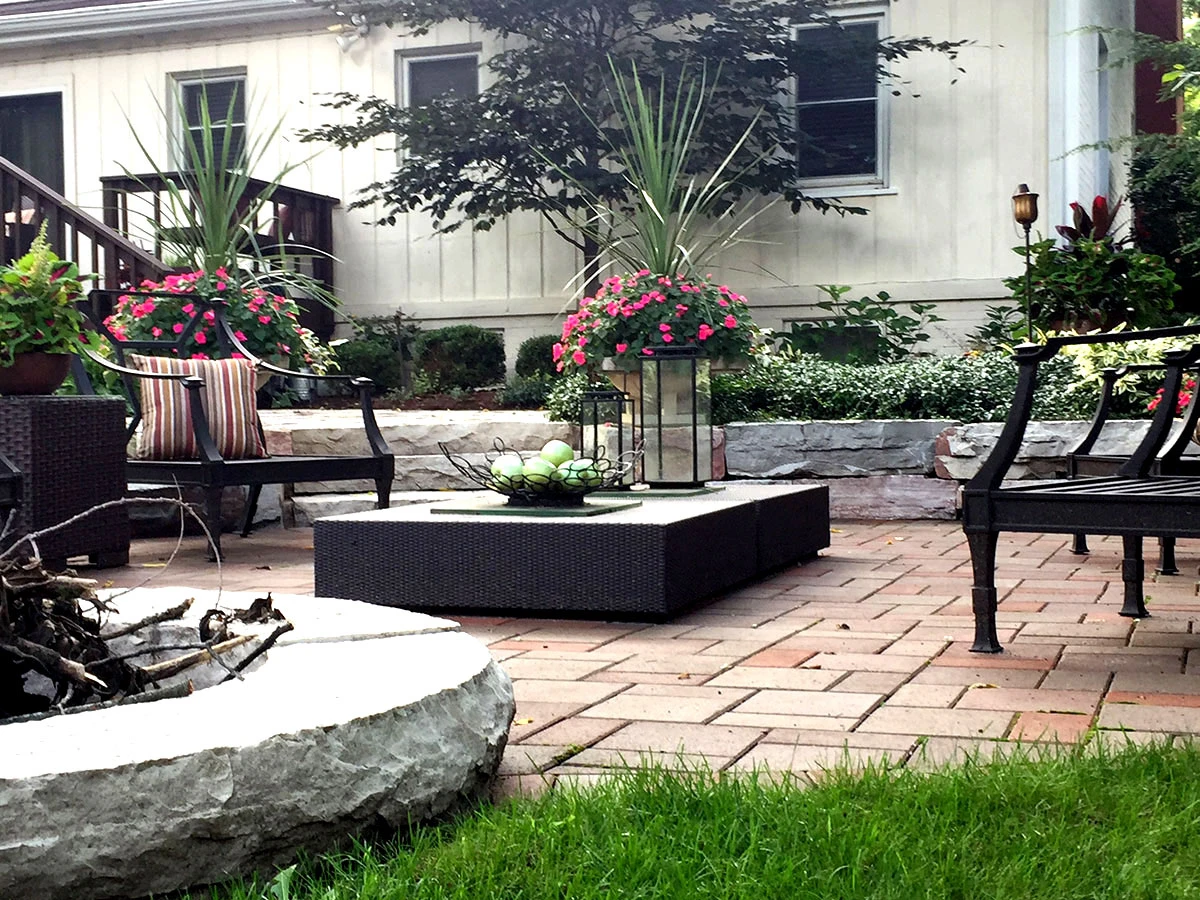
Here’s the number most builders won’t run for you. We did it on a representative St. Marlo project last spring — same backyard, same surround, wood vs gas priced apples to apples over a 10-year hold.
Wood install, 10-year TCO:
- Install: $2,400
- Insurance premium delta: $280/yr × 10 = $2,800
- Ember screen, grate, and replacement hardware: $340
- HOA plan resubmission fee (denied twice): $180
- Firewood at $320/cord × 2 cords/yr × 10 = $6,400
- 10-year total: $12,120
Gas install, 10-year TCO:
- Install: $4,600
- Insurance premium delta: $20/yr × 10 = $200
- Natural gas usage (4 hours/week, 30 weeks/yr): $40/yr × 10 = $400
- Annual pilot/valve service: $120/yr × 10 = $1,200
- Burner ring replacement at year 8: $480
- 10-year total: $6,880
Gas wins the 10-year by $5,240. And that’s before you price in the time cost — pulling wood from a shed, seasoning it, cleaning ash, transporting cords from a Hwy 9 seller. At the scale of the average Cumming owner’s leisure time, that gap widens.
The only scenario where wood catches up is a rural lot with free-on-property fallen oak and no insurance delta, and even there the math lands within a few hundred dollars either way over a decade. It’s never decisive for wood in a covenant-restricted neighborhood.
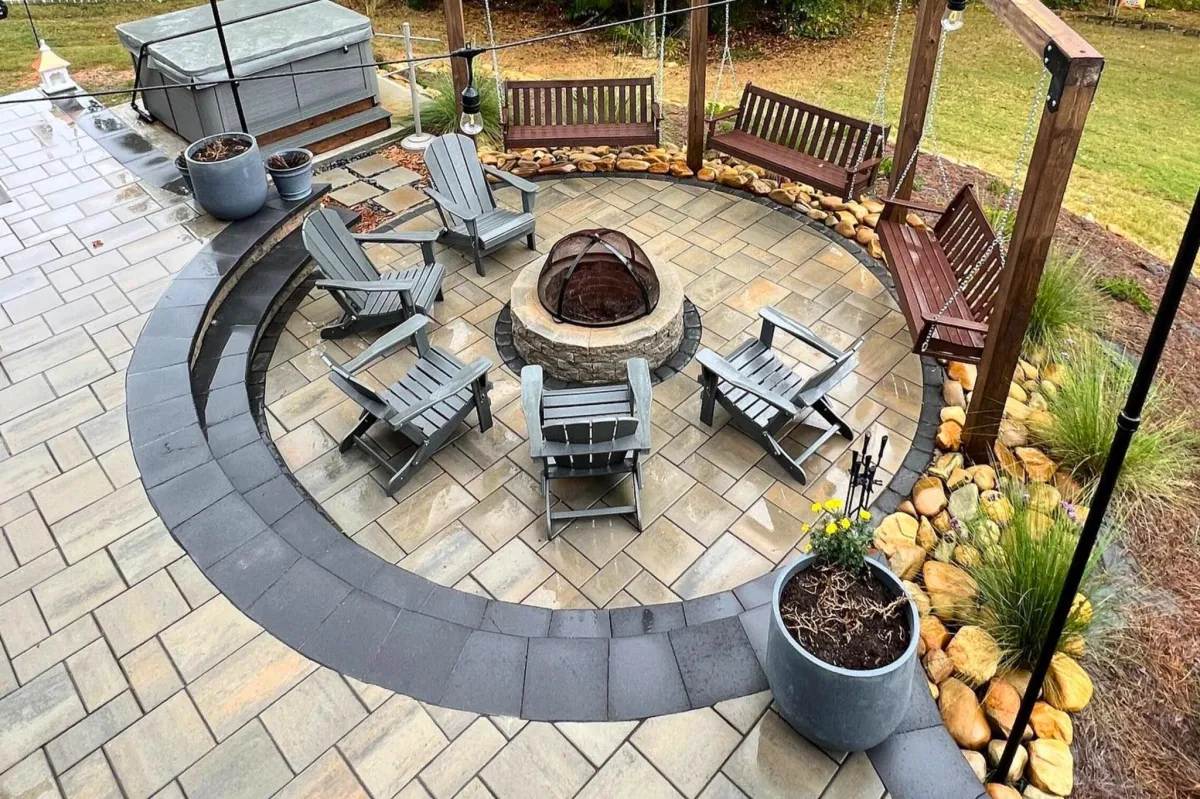
One more Cumming-specific note worth carrying home. The influx of Atlanta-metro relocation buyers over the last four years has reshaped the HOA boards in the newer-tier 2018-and-up subdivisions. Those boards are, on average, more restrictive than the older 1998–2005 neighborhoods. If you’re building in The Collection at Forsyth-adjacent developments or the newer tracts off McFarland Pkwy, expect your architectural review packet to run 4 to 6 pages and require material samples physically mailed to the board — not emailed. Budget two weeks just for the review window, and lock in your gas-line sign-off from a Georgia-licensed master plumber before you submit.
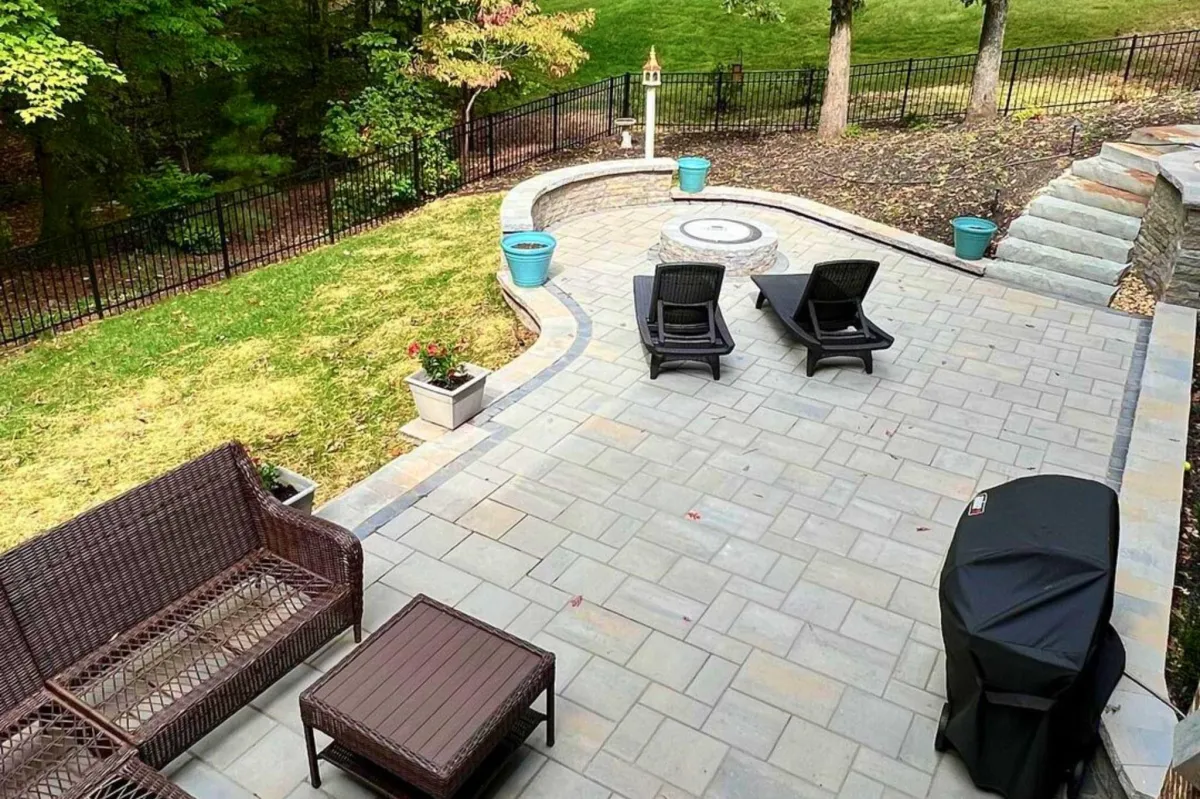
Here’s the bottom line for anyone weighing fuel choice in Cumming right now. Walk through the four gates in order: pull the covenants, call the carrier, call Forsyth County planning, then price the 10-year TCO. If any one of those gates opens cleanly for wood, wood is on the table. If all four push you toward gas — and they will, in virtually every HOA-governed subdivision in the county — stop fighting the math. Build the feature the neighborhood, the policy, and the fire marshal are all already waving through.
That’s not a compromise. That’s a fire feature you’ll actually get to use the weekend after the inspector signs off, instead of the autumn after next.
Gas fire features designed for HOA approval across 20+ cities within 30 miles of Winder, GA
We handle the architectural review packet, the Forsyth County permit, and the plumber sign-off — so your feature breaks ground on schedule and passes insurance underwriting the first time.