
The Vickery homeowner had three bids on the kitchen island. Four on the pool. Two on the pavilion. Two on the firepit surround. One separate electrician for the lighting plan. The total of the lowest numbers came to $185,000 — and none of them talked to each other. We priced the same scope as a single integrated contract at $168,000, saved four weeks on the schedule, and issued one warranty. This is the case study.
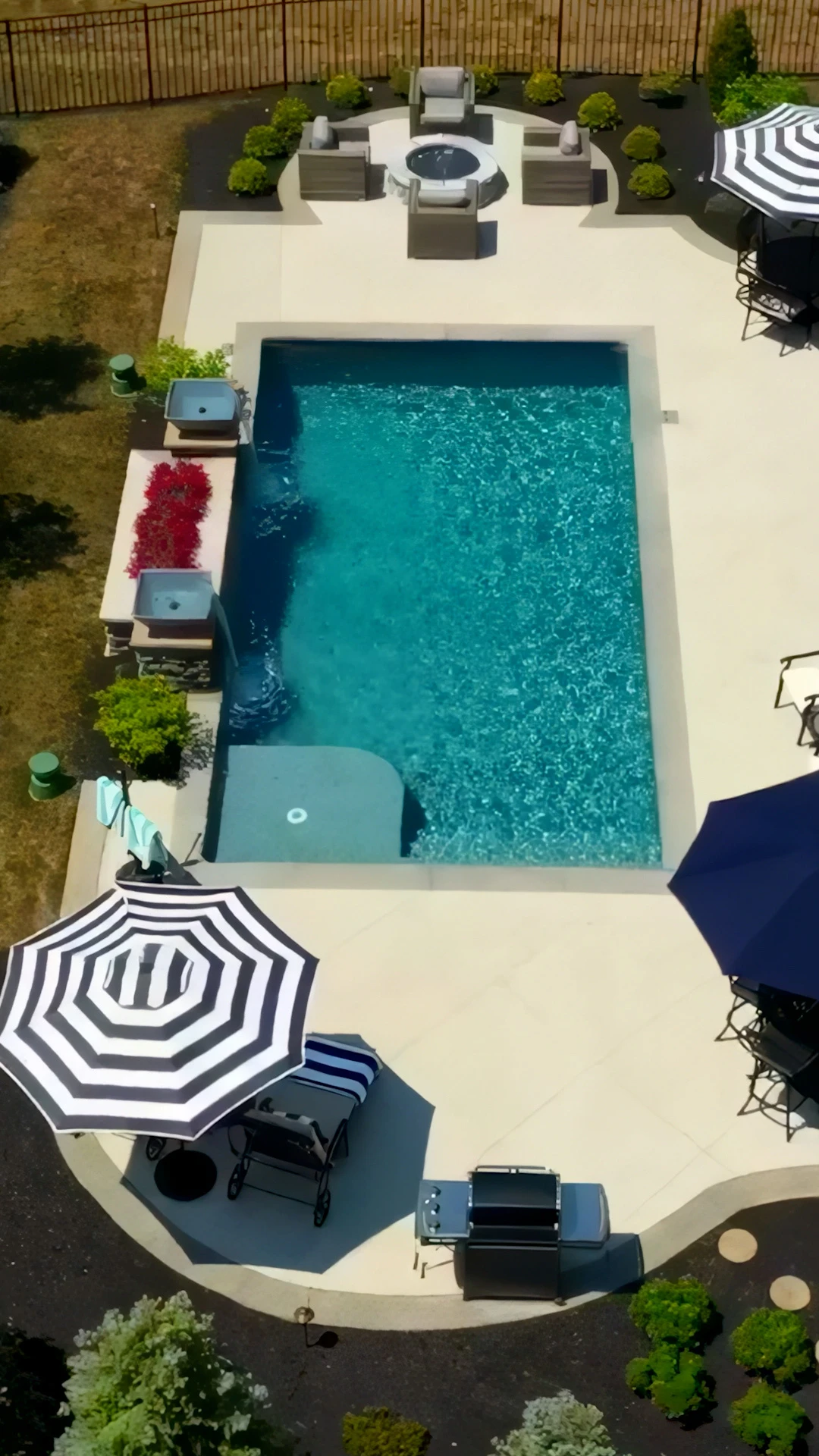
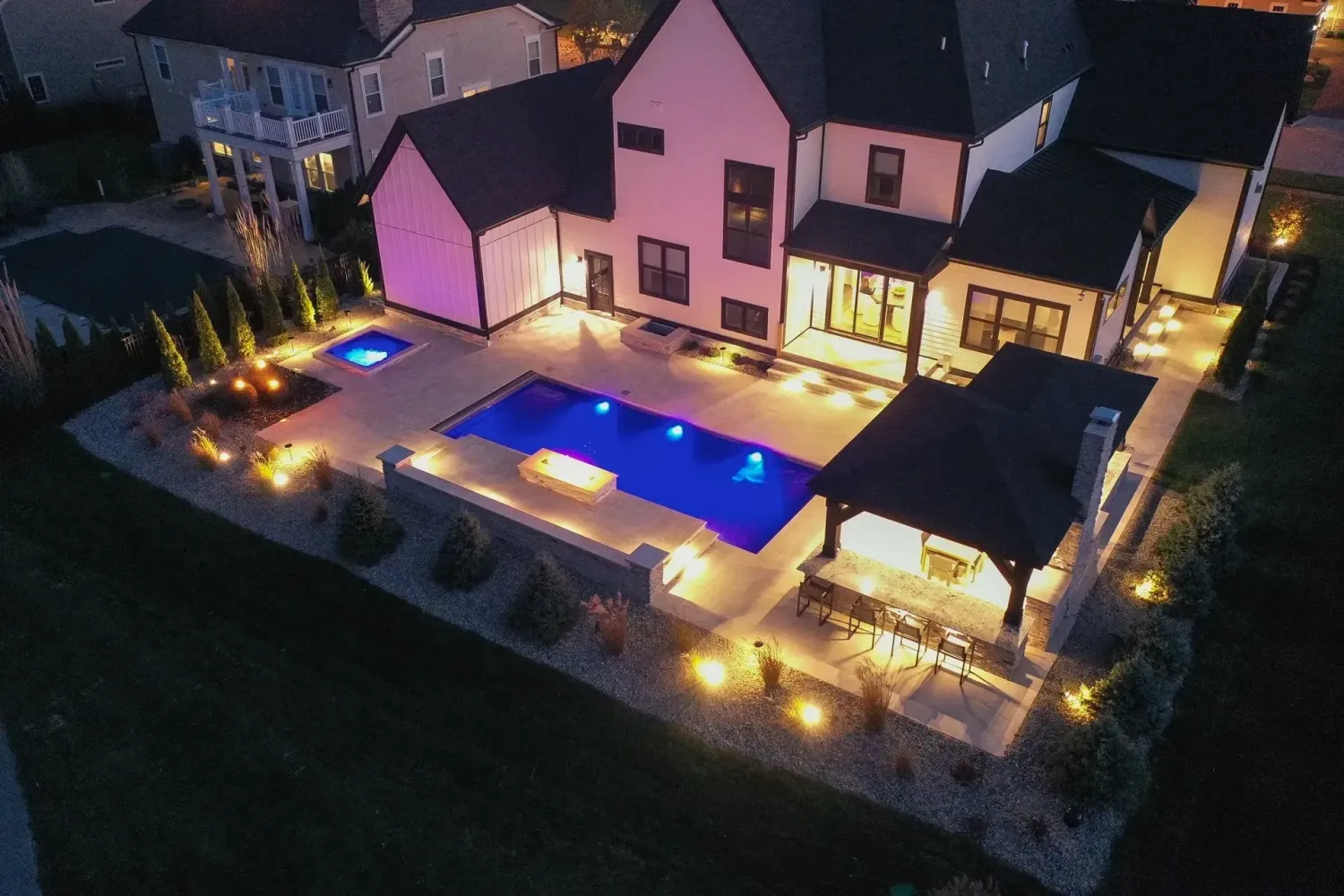
The house sits on a 1.1-acre lot in the Vickery neighborhood off Post Road — the south-Forsyth, new-urbanist enclave built out between 2005 and 2018, where 90% of homes are under two decades old and backyards lean long and narrow. The clients had lived there nine years, had two kids in the Forsyth County Schools system, and wanted one renovation to do it all: a 36-by-16 rectangular pool, an 18-by-22 pavilion with a full outdoor kitchen, a gas firepit seating circle, a gas-fireplace conversation cluster under the pavilion, and a full low-voltage lighting package across pool, pavilion, trees, and pathways.
They had done their homework. Five separate contractors had walked the site. Each one priced their piece aggressively. On paper it looked like the smart, competitive play — hire the cheapest pool builder, the cheapest pavilion framer, the cheapest kitchen fabricator, let them fight it out, save money. In practice, we’ve watched this approach generate some of the worst project outcomes we see in Forsyth County. So we sat the homeowner down, walked through the numbers on their own table, and showed them where the multi-trade model leaks cash and time. They hired us as a single GC on a $168K fixed-price integrated contract. What follows is what they gained — and what you’d give up if you went the other direction.
The Five-Bid Stack That Started the Conversation
When the homeowner emailed us their spreadsheet, it was organized, color-coded, and completely typical of how south-Forsyth buyers approach a backyard build. We see five-to-seven bid stacks almost every week from the 30041 zip corridor — Vickery, Seven Oaks, St. Ives, James Creek — because these buyers are mostly executive-level Atlanta commuters who procurement-think for a living. They run backyard projects the same way they run vendor sourcing at work.
Here is what was on their spreadsheet:
- Pool (36×16 rectangle, gunite, travertine coping, PebbleTec): $92,000 — lowest of four bids.
- Pavilion (18×22, stained timber, standing-seam metal roof): $41,000 — lowest of two.
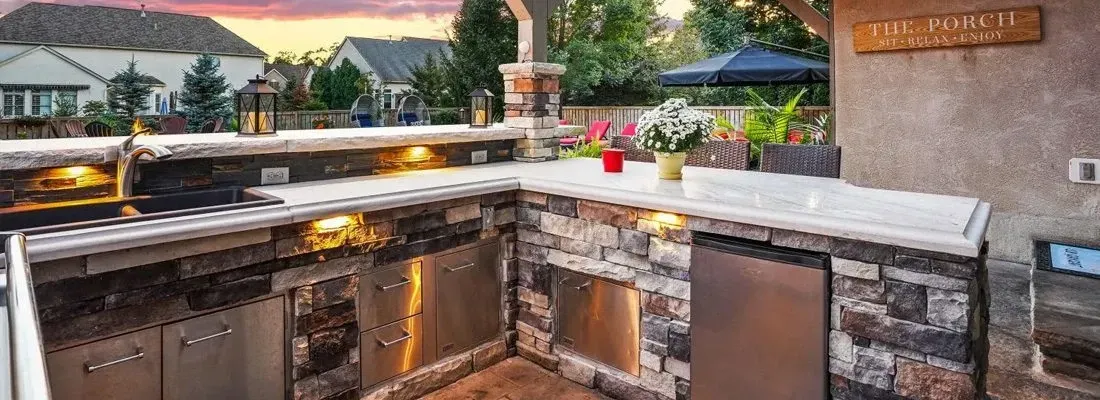
- Outdoor kitchen (L-shape, gas grill, side burner, sink, fridge, veneered island): $28,500 — lowest of three.
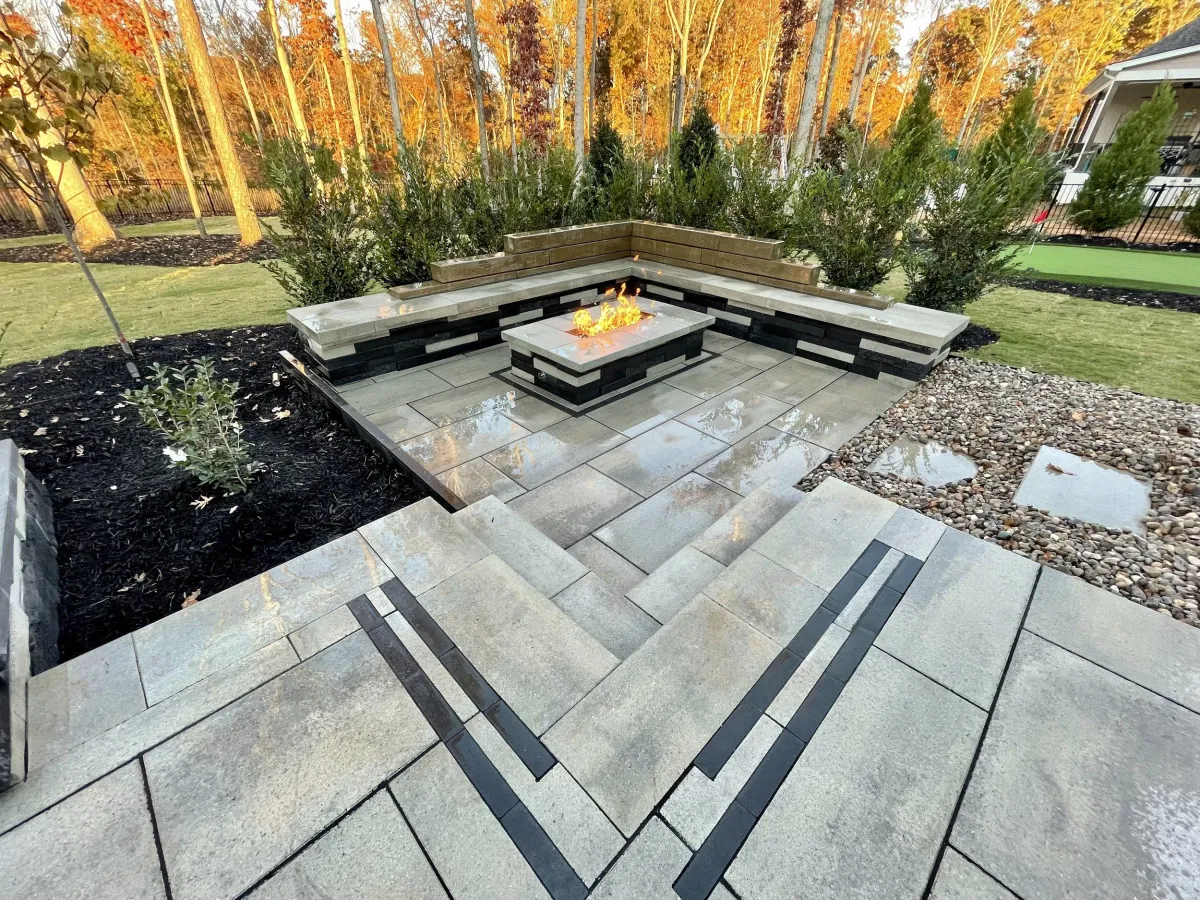
- Firepit circle (12-ft gas ring, flagstone surround, six-seat radius): $11,200 — lowest of two.
- Landscape lighting (pool, pavilion, tree uplights, path lights, transformer): $12,300 — from their one electrician bid.
Total: $185,000 of the cheapest valid bids. They were proud of the number. We understood why. But three hours of walking their backyard with a tape measure and a laser grade rod surfaced the problems.
Where the Multi-Trade Model Actually Leaks Money
Multi-trade looks cheap on paper because each bidder is pricing their scope in isolation. They’re not pricing the interfaces — the places where one trade’s work meets another trade’s work. Those interfaces are where 15–20% of the real budget lives. When five contractors each price a clean-edge scope, every one of them leaves the interface as someone else’s problem. Until the homeowner becomes the someone else.
On the Vickery project, the interface list looked like this:
- The pavilion footings had to clear the pool shell by 3 feet minimum — but the pool builder wanted to pour the shell first, and the pavilion framer wanted to set posts first. Neither wanted to re-schedule.
- The outdoor kitchen needed gas, water, and a 240V circuit running under the deck slab — which meant the kitchen had to be engineered before the pool deck was formed. The kitchen fabricator wasn’t scheduled to bid rough-ins until after the pool was complete.
- The gas firepit needed a 1-inch buried line from the house meter — and so did the pavilion fireplace and the kitchen grill. Three separate gas permits, three separate trench inspections, three separate sign-offs — or one combined line sized correctly from the start.
- The landscape lighting transformer needed a weatherproof feed from the house sub-panel — which had to be routed through the pool equipment pad. If the pool electrician didn’t know the lighting load existed, the feed was undersized.
- The pool coping, the pavilion flagstone, the kitchen countertop, and the firepit hearth were all stone surfaces. Four separate fabricators meant four slightly different travertine tones, four different edge profiles, and four delivery windows.
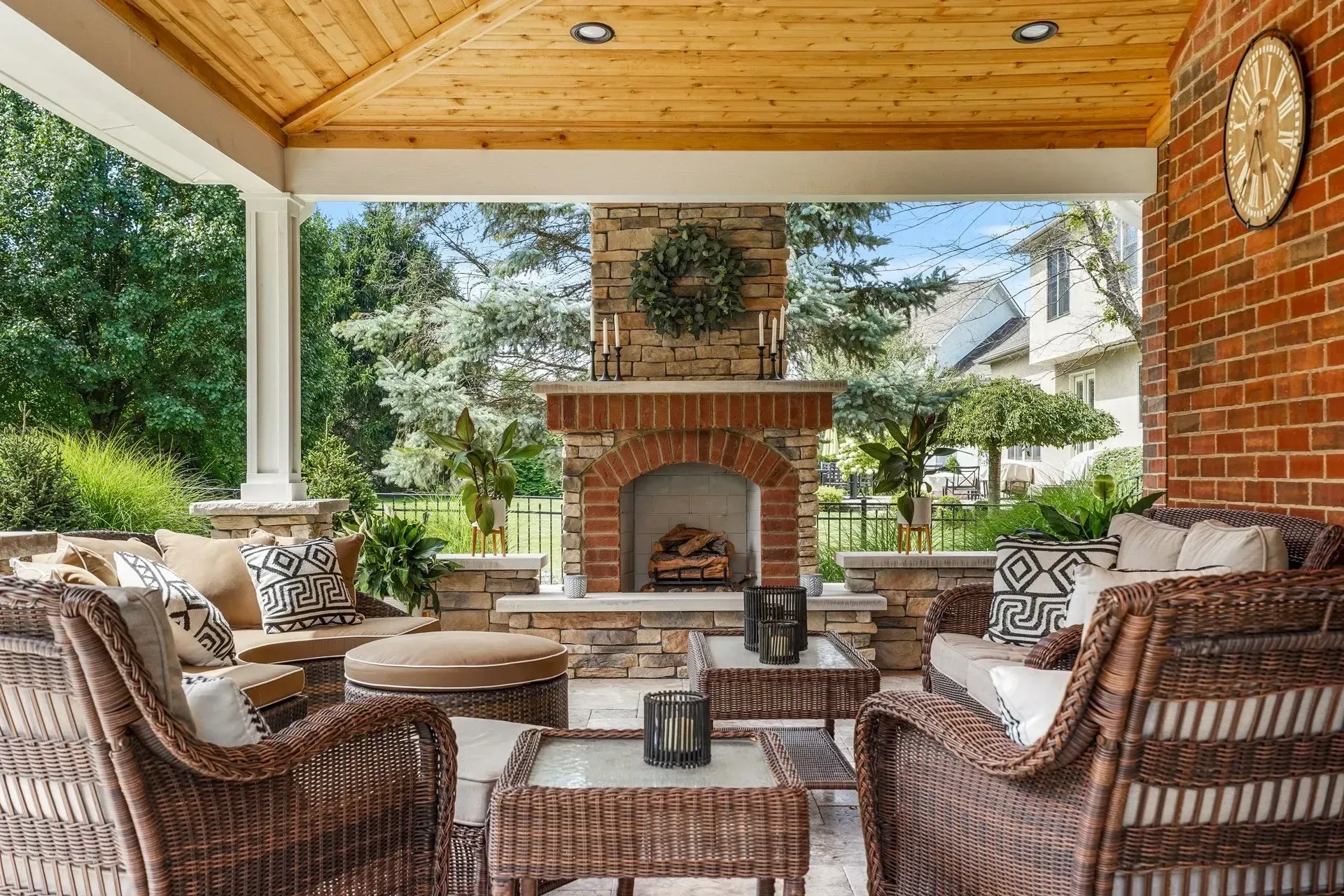
When we wrote the single-GC estimate, every one of those interfaces collapsed into one decision made once. One travertine supplier, one pallet delivered, one color match across coping, hearth, and kitchen island. One gas line sized for the total load with one permit. One electrical rough-in with the lighting transformer, kitchen circuits, and pool bonding planned together. One survey, one excavation mobilization, one concrete pour window.
That single-point coordination is where the $17,000 savings came from — 9% off the multi-trade total. Not because we cut quality. Because we stopped paying five trades to each estimate 10% contingency for the other trades’ mistakes, and because we only mobilized excavators, saws, and stone trucks once instead of four times.
Single-GC vs five-trade on the Vickery build: integrated contract $168,000 vs cheapest-five-bids $185,000. Savings: $17,000 / 9.2%. Schedule: 11 weeks vs 15 weeks. Warranties: one vs five.
The Four Weeks of Schedule Nobody Mentions
The money savings gets the attention. The time savings is bigger in terms of lived experience, and it’s the thing homeowners never believe until they’ve been through it.
Forsyth County’s permit office is one of the busiest in Georgia — we pull between 110 and 180 pool permits a year through that office alone, and the county approves well over 200 pool permits annually across all builders. Permit turnaround runs 10 to 18 business days depending on season. On a multi-trade project, you submit five permits, one at a time, in sequence. The pool permit gets approved. Then the pavilion bidder pulls their structural permit. Then the gas permit. Then the electrical. Each one gated by the inspection of the previous one.
On the Vickery build, we pulled all five permits as parallel submissions on day one. The pool structural, the pavilion structural, the combined gas line, the combined electrical (with the lighting transformer included as a sub-circuit), and the mechanical for the kitchen appliances. Every one reviewed in the same 14-day window. Every inspection scheduled into a consolidated four-inspection visit cycle rather than 11 separate inspector trips.
That parallel-permit approach saved exactly four weeks on the critical path. Not our guess — their framer quoted 18 weeks when he bid standalone, and we delivered the whole project in 11. Week one to week 11, first excavation cut to final sign-off.
What One Warranty Actually Means When Something Fails
Fast-forward two summers. It is August, temperatures have hit 96, the Forsyth afternoon thunderstorms are rolling in across Sawnee Mountain, and the homeowner notices the gas firepit is spitting intermittent flame and the pavilion chandelier is flickering when the pool heater kicks on.
On a multi-trade project, that homeowner is about to spend three weeks arguing with five contractors. The gas guy says the pool electrician undersized the feed. The pool electrician says the lighting transformer installer overloaded the circuit. The lighting installer says the firepit fabricator’s ignition module is defective. The firepit guy says the gas line pressure is wrong. Nobody’s lying. Everyone has a rational position. But the homeowner is stuck in the middle being the systems integrator on their own backyard — eating phone calls, scheduling five separate diagnostic visits, paying trip charges to four different companies, and watching the summer pool season slip away while the trades negotiate who owns the repair.
On our single-GC contract, the homeowner sent one text to one project manager. We diagnosed it in one visit (the gas regulator on the firepit had drifted out of spec — standard two-year service item), replaced it under a single integrated warranty, re-calibrated the lighting transformer load at the same time, and charged zero dollars. Three-hour turnaround on a Saturday morning. No argument over scope boundaries, because there were no scope boundaries.
The Vickery clients told us afterward that the one-warranty experience was worth more to them than the $17K they saved on the build — because the first time something breaks, the homeowner who’s been through it a third time understands what single accountability actually costs to replace in retrospect.
The Unified Design Decision You Can’t Make in a Multi-Trade Build
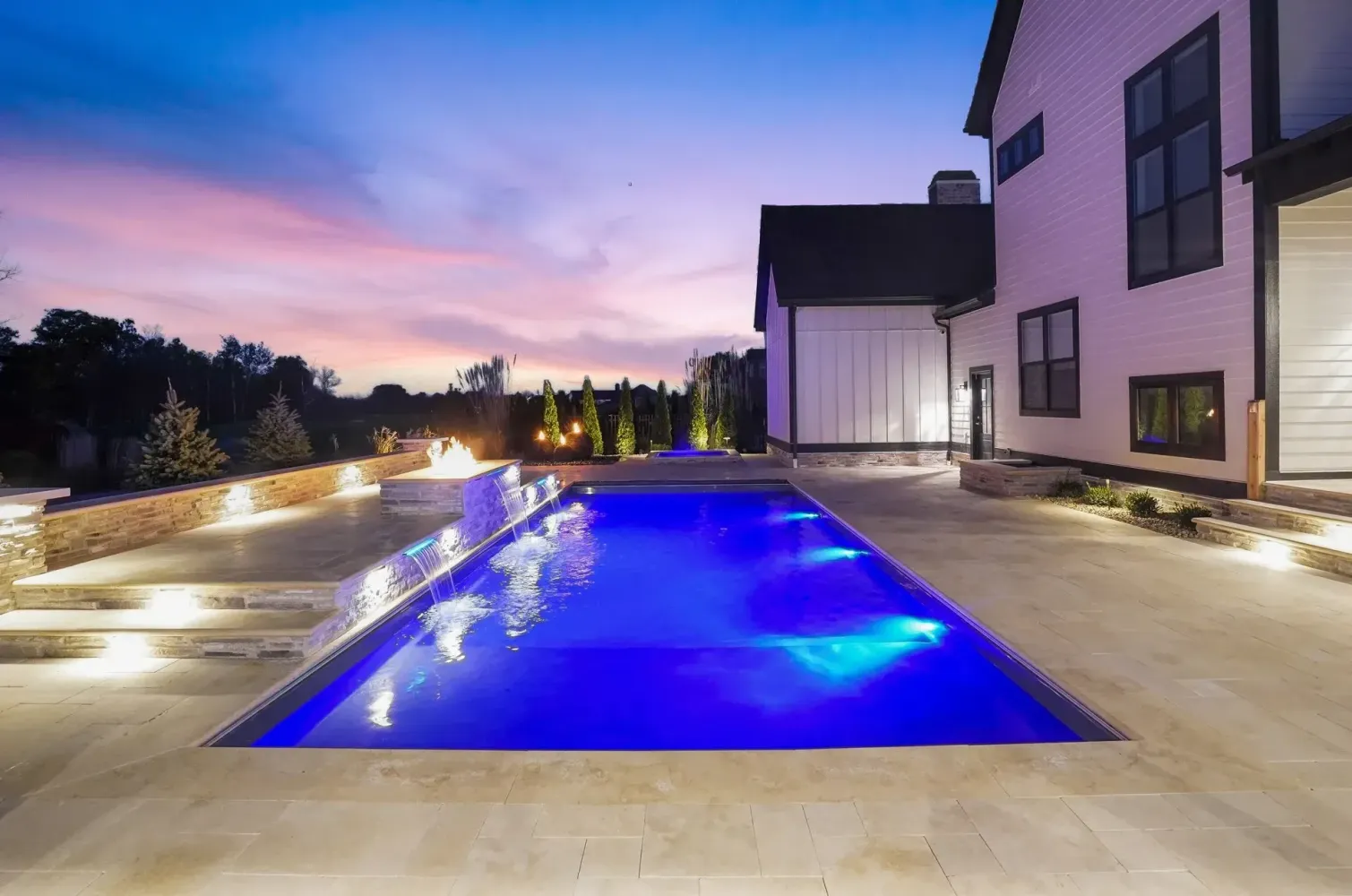
The Vickery pavilion, pool, kitchen island, firepit surround, and all hearth surfaces are a single travertine — Ivory Vein Cut from a single quarry run, 2.5 cm thickness, all pulled from pallets delivered on one truck in week four of the build. Every stone edge on the project — pool coping, kitchen countertop, firepit hearth, pavilion steps — shares the same chiseled drop-face profile.
That visual unity is structurally impossible with five independent contractors. Each fabricator has their own preferred travertine supplier, their own preferred thickness, their own edge router. Even if each of them tries to match each other’s photos, you end up with four slightly different stone tones — one warmer, one whiter, one veinier — and three different edge profiles that read as “almost the same” from across the yard. That almost-the-same is the visual signature of a stitched-together multi-trade backyard, and once you’ve noticed it, you cannot un-notice it.
The lighting plan is the same story. The Vickery project uses FX Luminaire fixtures throughout — the same warm 2700K color temperature on the pool scuppers, the pavilion up-cans, the tree washers, the kitchen under-counter strips, and the pathway fixtures. Every fixture is on a central DMX controller with four scenes: dinner, swim, entertain, late-night. On a multi-trade project, the pool electrician buys whatever fixtures the pool supplier offers, the pavilion framer buys big-box recessed cans, and the landscape lighting installer sources from a third catalog. Three color temperatures, three control systems, three remotes on the kitchen counter.
The Full Single-GC Workflow, Start to Finish
Here is exactly how the 11-week Vickery build ran. If you’re in a Forsyth HOA — and almost every Forsyth neighborhood has one — this sequencing matters because you’ll need HOA architectural review at the same time you need county permits.
Week 0: Design lock and HOA packet
One set of drawings covering pool, pavilion, kitchen, firepit, fireplace, lighting, grading, drainage, and landscape. Submitted to both the Vickery HOA architectural review committee and the Forsyth County building department in parallel. HOA approvals in Forsyth average 10–14 days; the county runs a tick longer. Submitting the same packet to both simultaneously aligns the gates.
Weeks 1–2: Layout, excavation, rough plumbing, rough electrical
One excavator mobilization. The pool dig, the pavilion footing dig, the firepit footing dig, the trenching for gas, the trenching for low-voltage lighting conduit, and the trenching for the transformer feed — all cut in a single two-day excavation push. The Cecil-clay soil across most of Vickery digs cleanly when dry but turns to sludge within 90 minutes of a rain event, so scheduling the cuts between storm fronts is a single-GC coordination move that a five-trade project cannot execute.
Weeks 3–4: Structural pours and framing
Gunite pool shell shot on a Tuesday. Pavilion post footings poured on Wednesday from the same concrete truck’s second load. Firepit footing poured from the same truck’s tail. One mobilization, one pump rental, three structural pours integrated. The pavilion timber frame raised Thursday–Friday once the footings cured.
Weeks 5–7: Hardscape fit-out
Travertine coping, pool deck, pavilion floor, firepit hearth, and kitchen island veneer all set during a single three-week stone phase by one crew. The stone was pre-ordered during week 2, delivered mid-week 5, and laid continuously across all five surfaces. This is the phase where multi-trade projects lose their worst weeks — waiting for one fabricator’s stone while another one’s already on-site and idle.
Weeks 8–9: Kitchen installation and fire elements
Kitchen appliances — the Lynx 42-inch grill, side burner, sink, fridge, and cabinet doors — installed as one package on Monday. The gas ring for the firepit and the gas log set for the pavilion fireplace lit and pressure-tested the same week. Stucco, stain, and sealant all run by the single hardscape crew.
Weeks 10–11: Pool finish, lighting commissioning, landscape
PebbleTec interior applied, pool filled (Sawnee EMC well-water budget: ~$180 for the 21,000-gallon fill), lighting transformer energized, DMX scenes programmed, landscape beds installed around the pavilion perimeter. Final walk-through, punch list (three items), close.
When the Multi-Trade Model Still Wins
We are not pretending single-GC is the right answer for every project. On smaller scopes — a standalone pool remodel in the $40,000 to $60,000 range, or a pavilion-only add-on, or a lighting retrofit on an existing yard — the coordination overhead of a GC is real money, and hiring individual trades can genuinely save you 8–12%.
Here’s our honest guidance for Forsyth County homeowners deciding between the two:
Hire a single GC when: your scope crosses three or more trades, your total budget is above $100K, you have an HOA that requires a unified submission, your lot has grade or drainage complexity, you want the hardscape to read as one material story, or you care more about the first-call warranty experience than shaving 8%.
Go multi-trade when: your scope is one or two trades, your budget is under $75K, you’re comfortable being the integrator yourself, you have flexibility on timeline (can tolerate six extra weeks), or you have an existing trusted trade relationship and only need to add one adjacent scope.
The gray zone is the $75,000 to $100,000 project. That’s where we tell homeowners to price it both ways. Get three individual trade bids; get two GC bids. Compare the real numbers — the actual real numbers, including the value of your own time — and make the call with complete information. Two out of three times, the GC wins on that bracket. One out of three, the multi-trade route wins on budget and the homeowner happily plays integrator. Either outcome is fine. The worst outcome is splitting the difference: hiring a lowest-bid pool builder and expecting them to coordinate the other trades informally, which is the everyone-loses middle ground.
The Forsyth-Specific Math You Should Run Before You Sign Anything
Three variables drive the single-GC math specifically for Forsyth County, and they’re different from Cherokee, Hall, or Fulton. Run these before you commit to either approach:
1. Permit parallelism. Forsyth approves 200+ pool permits a year through a busy but competent office. Submitting four permits in parallel saves 20–30 business days vs sequential submittals. Value that at roughly $1,500 per week in carrying costs if you’ve already moved out of the backyard for the season — call it $9,000 of soft-dollar value on a 6-week schedule swing.
2. HOA alignment. Neighborhoods like Vickery, Seven Oaks, St. Ives, Hampton Park, Windermere, and the Lake Lanier shore communities all have ARC committees that require a single unified design submission. A multi-trade project forces you to aggregate five trades’ drawings into a packet the HOA wasn’t designed to review. We see 3–4 extra HOA review cycles on multi-trade submissions vs one round on single-GC packets — which is another 4–6 weeks.
3. Soil and grade interaction. Forsyth’s Cecil series Piedmont clay runs through most of the county south of Hwy 20, with rockier conditions as you move toward Coal Mountain and along the Sawnee ridgelines. Pool excavation and pavilion footing excavation share the same soil report, the same dewatering plan, and the same slope-stabilization calcs. Running those once for the whole project costs $1,200–$1,800. Running them four times as separate trade engagements costs $4,800–$7,200 and produces inconsistent recommendations that nobody reconciles.
The Forsyth coordination math: Permit parallelism saves ~$9K in carrying cost. HOA alignment saves 4–6 weeks on ARC review. Unified soil report saves $3,600–$5,400. Before direct savings, single-GC already gives Forsyth homeowners $12K–$15K of indirect value.
The Vickery homeowner still has the spreadsheet. They keep it as a reminder — not of the number they almost signed, but of the 11 weeks and one warranty call they got instead of 17 weeks and five contractors. If you’re sitting somewhere in Cumming, south Forsyth, Big Creek, or the Lake Lanier shore with a stack of three-to-five bids on your kitchen table, bring them to us. We’ll price the integrated version honestly. If the multi-trade route still wins for your scope, we’ll tell you so and hand the bids back. More often than not, the conversation ends with one contract, one schedule, and one phone number to call when a regulator drifts out of spec three summers from now.
Integrated hardscape design & construction across 20+ cities within 30 miles of Winder, GA
One design, one schedule, one warranty — whether your project is a Vickery full-integration build or a single-element add-on in a Lake Lanier shore neighborhood.