
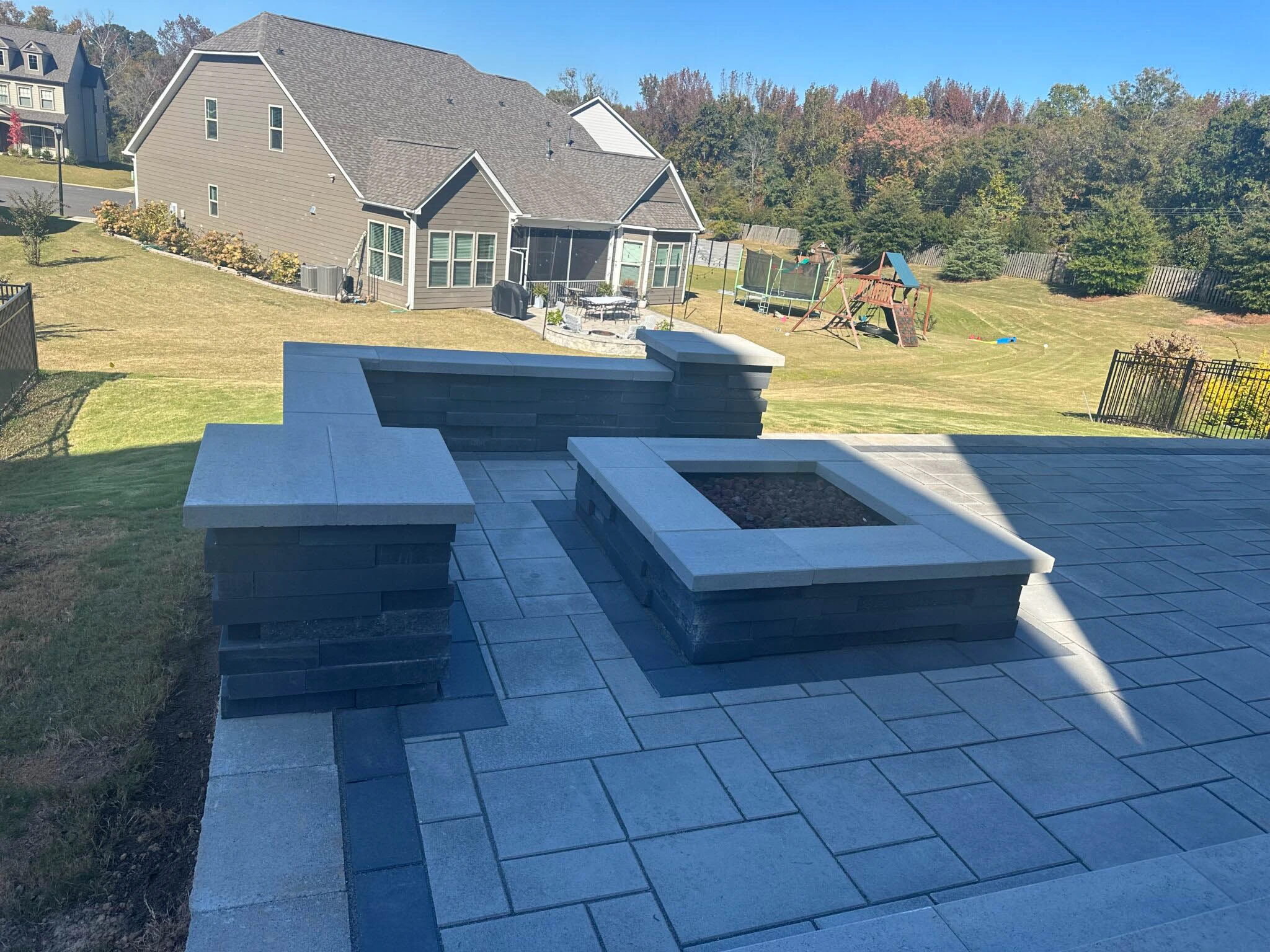
A fire pit on a Milton equestrian estate is not a fire pit on a subdivision lot. The horse in the paddock 80 feet away does not know your gas line is code-compliant. She knows there is fire upwind — and she reacts to that before you finish lighting the burner.
That reaction is the whole reason this post exists. On every AG-1 zoned parcel we build in Milton — whether it is a 3-acre hobby farm off Freemanville Road or a 12-acre working stable near The Manor Golf Club — the hardest conversation is never about pavers, burner BTUs, or fireplace veneer. It is about where to put the fire relative to the barn, the hay, the fenced paddock, and the prevailing summer wind. Get that wrong and the most expensive outdoor room in the Northeast Atlanta market becomes a liability your insurance carrier will eventually ask about.
Milton’s rural preservation zoning, equestrian density, and rolling topography combine to create placement constraints that most fire feature contractors have never worked around. A 42-inch gas fire pit approved without incident in Johns Creek can trigger a redesign request from Milton Community Development if it sits 70 feet from a hay loft. This post walks through the exact setbacks, wind-rose logic, and layout sequence we use on horse-adjacent builds — the mistakes we see after we are called in to fix them, and the placement system that has kept every Primetime install horse-safe through multiple summers.
The Six Mistakes We See on Milton Horse-Adjacent Fire Feature Builds
We do not get called to review fire feature placement on working estates until something has already gone wrong. Either an insurance inspection flagged the setback, the horses spooked during the first burn, or the architectural review committee at The Manor Golf Club sent a revision letter. Every one of those calls traces back to one of six errors. If you are designing a fire pit, outdoor fireplace, or masonry hearth on a Milton property with a stable, barn, hay storage, or fenced paddock, these are the failure patterns worth memorizing before a shovel moves.
Mistake 1: Treating the Barn Like Any Other Accessory Structure
Most homeowners — and honestly, most landscape contractors outside Fulton County’s agricultural corridor — look up “accessory structure setback” in the International Fire Code and stop reading. A typical detached garage in suburban Alpharetta needs 10 feet of clearance from an open-flame gas appliance. A stable in Milton is not a detached garage.
Fulton County’s agricultural fire code, as enforced through Milton Community Development at 2006 Heritage Walk, treats a horse barn as a combined structural and life-safety risk. The wood framing dries out every summer. The bedding is kiln-dried pine shavings — it ignites at a flash point below many patio materials. And the occupants cannot evacuate themselves. Our working number on every Milton estate build is 100 feet minimum from any open-flame fire feature to the nearest exterior wall of a stable. That is roughly double what code would allow on a non-agricultural lot, and we consider it a starting point, not a ceiling.
Stable setback standard we build to: 100 ft minimum from open-flame fire pit or fireplace to stable exterior wall. 150 ft if the stable has an attached tack room with leather or oiled wood. Non-negotiable on every AG-1 parcel.
Mistake 2: Underestimating How Far Hay Embers Travel
Hay storage is the single most flammable material on a Milton horse property. Loose hay in a loft or stacked round bales in a pole barn behave like kindling with surface area multiplied a thousand times over. A 6mm ember lofted by a 12-mph summer wind — well within the range we record at the Alpharetta NWS station in July and August — can travel 150 feet before losing ignition energy.
We will not site a wood-burning fire pit within 150 feet of a hay barn or loft on any Milton property. For gas fire features, the ember risk is lower but not zero — radiant heat and flue ash still travel — so we hold 100 feet. If the hay storage is uphill of the proposed fire location, add another 25 feet. Embers rise and drift farther on upslope thermals than they do on flat terrain, and Milton’s rolling topography gives us grade changes of 6 to 14 feet across most estate lots.
Mistake 3: Placing Fire Features on the Upwind Side of Paddocks
Prevailing summer winds in Milton come from the southwest — we pulled 10 years of hourly wind data from the Alpharetta weather station to confirm that before we built our first equestrian installation. In July and August, the dominant wind vector is 210 to 240 degrees, blowing from the pastures toward the house on most typical estate lots where the residence sits northeast of the paddocks.
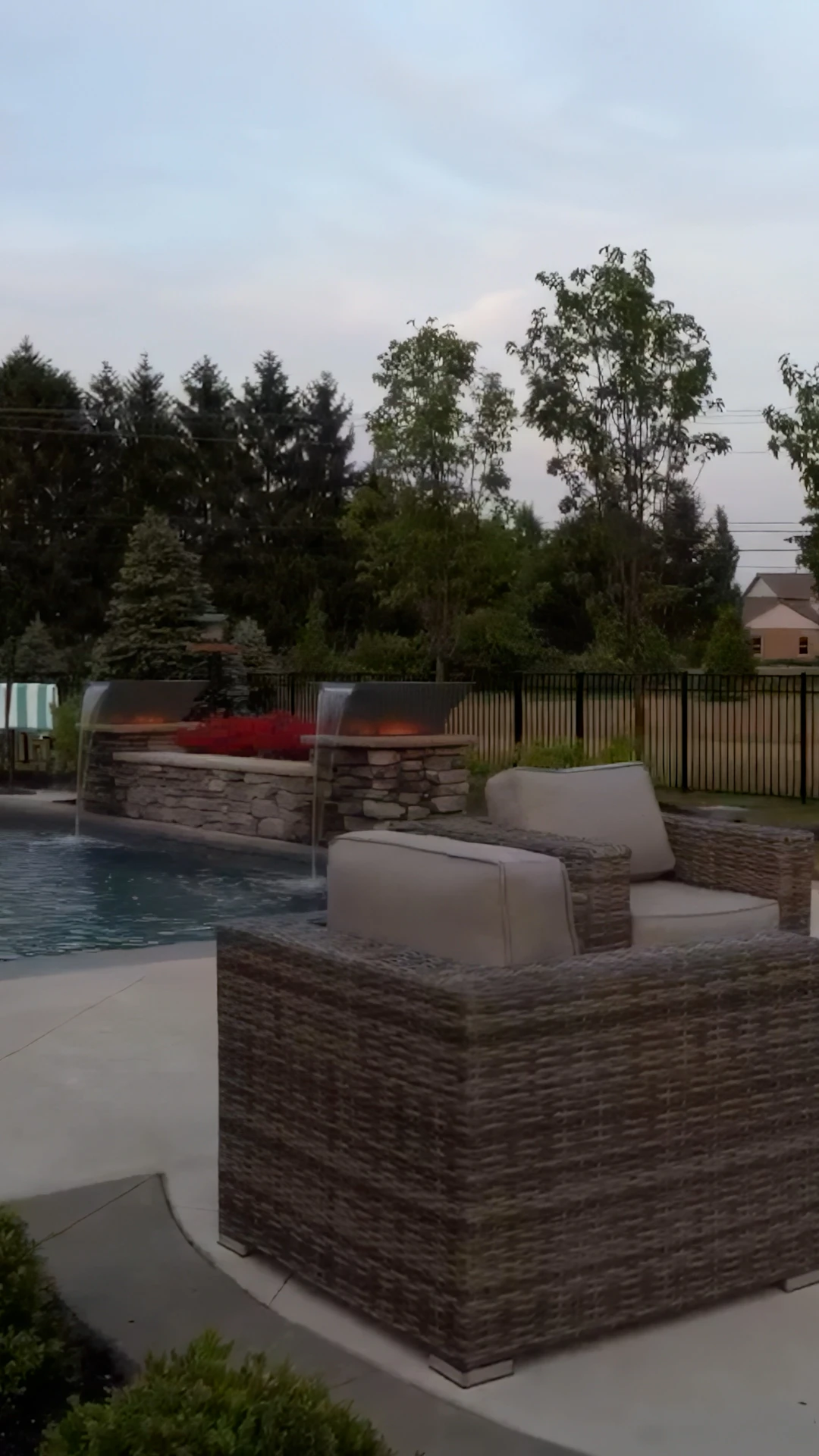
What that means on the ground: if you put your fire feature southwest of the paddock, every ember, every spark, every wisp of smoke moves toward the horses. Some horses tolerate smoke. Many do not. Even a tolerant gelding will stop grazing and move to the far fence if smoke rolls into the paddock — which means your $180,000 outdoor living room is actively stressing the animals you built it to enjoy. Flip the layout. Put the fire on the northeast side of the house, downwind of the paddock. The smoke blows across the golf course, the woodlot, or the pond — never back through the pasture.
Mistake 4: Ignoring Horse Flight Distance
A horse in an open paddock needs room to move away from a perceived threat. Trainers call that flight distance, and on Milton estates the practical number is 75 feet of buffer between any fenced paddock line and an active fire feature. That is not a code requirement. It is a behavior requirement — and the one most landscape architects miss because it does not show up on a plat.
Inside 75 feet, a startled horse at a gallop hits the fence before she has decided where to go next. That is how animals cage themselves into panic loops that end in pulled tendons or a destroyed gate. Outside 75 feet, the horse has space to process, move laterally, and settle. If your paddock footprint is tight against the house — common on Crooked Creek parcels subdivided before Milton’s incorporation — the fire feature belongs on the opposite side of the residence, not tucked in beside the pool deck between the house and the paddock.
Mistake 5: Skipping the Creek-Buffer Check
Milton’s 25-75 ft creek-buffer setbacks apply to named tributaries — Cooper Sandy Creek, Chicken Creek, Lake Creek, and the Etowah River feeder streams that run through most large AG-1 parcels. Fire features count as impervious or semi-impervious improvements under the stream protection ordinance, and the buffer is measured from the top of the bank, not the waterline.
We have seen fire pits sited 40 feet from Chicken Creek on a Bethany Bend property require full demolition and rebuild after a post-construction stream buffer inspection. The fix cost more than the original install. On any Milton parcel with a named tributary, the layout sequence is: identify the bank, measure 75 feet, draw the exclusion line, then design the outdoor room — not the other way around.
Mistake 6: Running Gas Lines Through Paddock Soil
If the fire feature is fed by a 3/4-inch natural gas line from a tap at the residence, that line has to reach the pit somehow. On Milton estates where the main house and the fire location are separated by a paddock, the temptation is to trench straight across. Do not. Horse hooves can compact trench backfill into a channel that bridges the gas line, creating a freeze-thaw shear risk by the second winter.
Trench around the paddock, not through it — or run the line inside a 2-inch Schedule 80 sleeve under the paddock with 36 inches of cover. Either adds $1,800 to $4,200 to the install compared to a direct trench. It is the cheapest insurance on the entire project.
How We Survey a Milton Horse-Adjacent Property Before Designing the Fire Feature
Every Milton equestrian estate build at Primetime starts with a pre-design site walk that is specific to horse-adjacent properties. We do not do this on a Snellville subdivision lot. We do it every time on any AG-1 parcel with an active or planned stable.
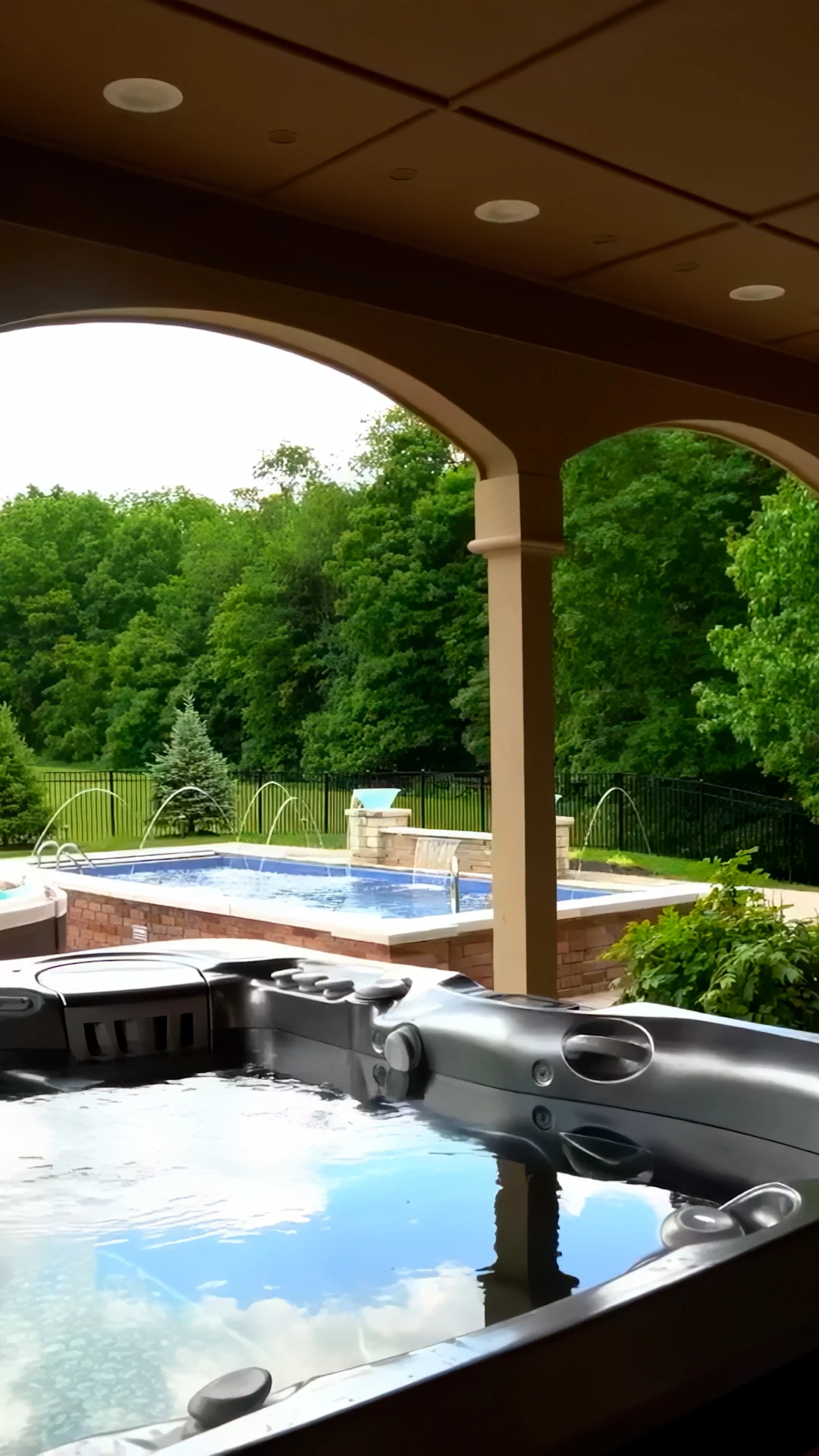
The walk covers six data points, in order:
- Stable footprint and hay storage location — GPS’d to the foot, with exterior wall heights and ridge orientation noted.
- Paddock fencing — including temporary electric fences, which shift seasonally.
- Creek and tributary buffers — confirmed against Fulton County GIS layers, then flagged on the ground.
- Prevailing wind direction — cross-referenced against the 10-year Alpharetta station data and verified with a ribbon-on-pole test on the day of the walk.
- Grade change — we shoot elevations at the proposed fire location, the stable, the hay barn, and any upwind ridgeline. Upslope fire risk is significantly higher than flat-terrain risk.
- Utility routing — gas, electric, and data lines, plus the existing driveway and equipment access path.
Only after those six are on paper do we open the design software. Every fire feature layout on a horse-adjacent build is a subtraction exercise — we eliminate the exclusion zones first, then work with what is left.
Setback Numbers We Build To on Every Milton Equestrian Estate
These are working numbers — field-tested, insurance-reviewed, and in some cases stricter than code. We publish them because we want the homeowner to understand why a fire feature cannot go where they initially imagined, and why the redesign is not arbitrary.
Stable (exterior wall): 100 ft minimum · 150 ft for stables with attached tack rooms or oil-finished wood interiors.
Hay storage: 150 ft for wood-burning fire pits · 100 ft for enclosed gas fire features with spark arrestors.
Fenced paddock line: 75 ft flight-distance buffer · 90 ft if paddock is upwind of fire location.
Named creek/tributary (top of bank): 75 ft per Milton stream protection ordinance.
Adjacent property line: 25 ft for gas · 40 ft for wood-burning per Fulton agricultural fire code.
Residence (rear wall, open-flame feature): 10 ft minimum · 15 ft recommended for smoke management on covered porches.
Add them up on a typical 3-acre AG-1 lot with a centrally placed barn and two paddocks, and the remaining eligible fire location shrinks to roughly 18% of the parcel. That is why so many Milton estate fire features end up on the far side of the residence from the paddock — it is often the only spot that clears every buffer.
Wind-Rose Logic: Why Summer and Winter Placement Are Not the Same
Prevailing summer wind in Milton is southwest. Prevailing winter wind shifts to the northwest — cold fronts rolling down from the Blue Ridge foothills move through the Etowah drainage. That matters because horses are outside in the paddock 10 to 12 hours a day in summer and only 4 to 6 hours a day in winter. The wind vector that matters most is the summer vector, not the winter one.
But the fire feature gets used more in winter. October through March, a wood-burning fireplace on an estate patio might run 60 nights at 3 hours per burn. That is 180 hours of active smoke production during a season when the wind is arriving from the northwest — which means smoke plumes behave differently than they will in July.
The placement decision has to solve both. Our rule: site the fire feature so that neither the dominant summer vector (210-240 degrees) nor the dominant winter vector (300-330 degrees) carries smoke directly toward the stable, paddock, or hay storage. On most Milton estate parcels, that means the fire location sits on the east or northeast corner of the outdoor room — not the south, not the west.
How Milton Architectural Review Changes the Timeline
If the property is inside The Manor Golf Club, Crooked Creek, Atlanta National, or White Columns, architectural review adds 4 to 5 weeks to the project timeline. The Manor’s structural review committee reviews any hardscape installation over 400 square feet, any fire feature with a permanent gas connection, and any masonry structure over 4 feet tall. The committee meets monthly and requires drawings stamped by a licensed landscape architect, not just contractor-prepared plans.
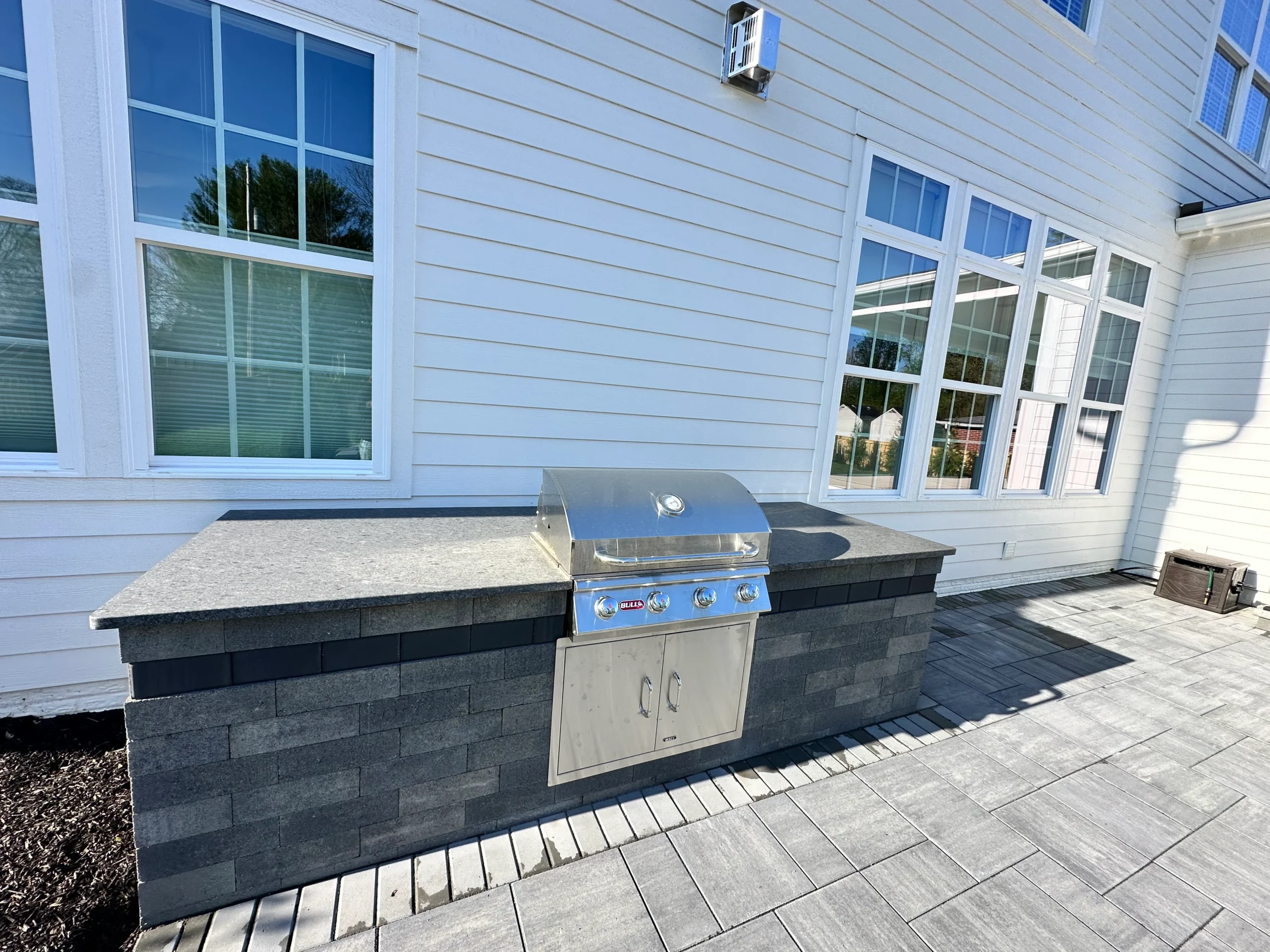
Outside those communities, the Milton Community Development permit cycle runs 10 to 14 business days for residential fire feature submittals — faster than Fulton County’s central permit office, which runs 21 to 28 days on comparable work. The tradeoff is stricter preservation review on AG-1 parcels, especially near the Crabapple historic crossroads district. If your project sits in the Crabapple preservation overlay, expect an additional site visit from a Milton preservation officer before the permit clears.
A Placement Sequence That Works on Every Milton Horse-Adjacent Build
Here is the exact order we follow on every Milton equestrian estate project. It is the sequence that has kept every installation safe, code-compliant, and unanimously approved by architectural review on the first submittal.
- Map the exclusion zones first. Stable buffer, hay buffer, paddock buffer, creek buffer, property line. Draw them before you draw anything else.
- Overlay the wind rose. Eliminate any remaining zones that sit upwind of the stable or paddock during summer or winter prevailing conditions.
- Shoot elevations. Identify the grade breaks. Prefer downhill-of-residence locations — embers and smoke behave more predictably on falling terrain.
- Walk the view lines. The best fire feature location is the one you can see from the kitchen and the primary bedroom. That matters for daily use — but it does not override any of steps 1 through 3.
- Confirm gas line routing. Plan the trench path around paddocks, not through them. Budget for sleeving where crossings are unavoidable.
- Draft the design. Only now — after five passes of subtraction — do we render the fire feature itself, the veneer, the hearth, the seating.
- Submit to Milton Community Development (and architectural review if applicable). Include the wind-rose analysis and setback diagram in the drawing set. Reviewers notice. Approvals clear faster.
What you end up with is a fire feature that sits exactly where physics, regulation, and horse behavior allow it to sit — not where the homeowner originally pointed. That conversation is easier if you have it at the design kickoff, before anyone is emotionally attached to a location that a paddock or a creek has already disqualified.
Materials and Brands We Spec for Milton Estate Fire Features
Once placement is solved, material selection is relatively straightforward. For wood-burning fireplaces on estate patios, we spec Isokern modular masonry fireboxes with integral spark arrestors — the DM 36 and DM 46 sizes cover most estate-scale designs. For gas fire pits, we default to Warming Trends crossfire burners (CFB240K or CFB290K depending on pan size) with stainless lava media. Both are overbuilt for residential use, and both carry the kind of 20-year warranty that holds up on a property changing hands in the $1.2M to $6M+ Milton estate market.
Veneer selection usually follows the residence — Tennessee fieldstone on traditional estates, dry-stack Pennsylvania bluestone on modern farmhouse builds, stucco-over-block on Mediterranean-influenced homes in King Estates. The one material we avoid on any Milton horse-adjacent build is anything that sheds aggregate — loose-fill gravel surrounds, for example. A spooked horse that breaks fence, a broken line of gravel across a pasture, and a colic call to the vet at 2 AM is a preventable sequence.
The Design Conversation That Saves Every Milton Project
If you read nothing else, read this. On every Milton equestrian estate build where we have successfully integrated a fire feature, the homeowner had one conversation with us before any design work began. That conversation covered three questions:
- Where are the horses now, and where will they be in five years if the boarding plan changes?
- What is the absolute minimum acceptable distance between any fire and any animal — not what code says, what your gut says?
- Which matters more on a still summer night: the view of the fire from the house, or the fact that the horses are grazing peacefully 200 feet away?
Every homeowner answers question three the same way. Once we have that answer on the table, every placement decision downstream becomes easy. The fire goes where it does not stress the horses. Everything else is a problem of layout, material, and lighting — and we solve those problems every day.
Milton’s rural character, equestrian preservation zoning, and creek-laced topography make it one of the most demanding environments in the Northeast Atlanta market for fire feature design. It is also one of the most rewarding when the placement is right. A well-sited fire pit on an estate with horses visible in the paddock at dusk is the exact outdoor room that the Milton lifestyle was zoned to preserve — which is why we take the setbacks, the wind analysis, and the architectural review process as seriously as we do.
Fire pits and fireplaces across 20+ cities within 30 miles of Winder, GA
We design fire features that respect stable setbacks, paddock buffers, creek overlays, and prevailing wind patterns — on Milton estates and every other equestrian-zoned parcel across Northeast Atlanta.