
There’s a specific Marietta hardscape failure pattern we see every spring, and it almost never traces back to bad block, bad pavers, or a lazy install crew. It traces back to a missing piece of paper filed — or not filed — at 1150 Powder Springs Street. The wall or patio isn’t the problem. The permit is.
Roughly 35% of residential hardscape contractors working Cobb County skip the drainage permit Cobb County Community Development requires whenever a project disturbs more than 1,000 square feet of ground. That’s a number we’ve pieced together from the permit tech desk, from engineers we share work with, and from the homeowner complaints that land on our phone every May after the first serious thunderstorm rolls through East Cobb. The homeowner paid in good faith. The contractor told them “we don’t need a permit for a patio.” Six months later a neighbor’s basement takes water, code enforcement knocks, and the fine sheet comes out.
This post is specifically about that miss. Not a general hardscape primer, not a materials guide — the drainage permit trap that turns a clean Marietta install into a $1,500 violation plus forced remediation. If you live in Indian Hills, Atlanta Country Club, Burnt Hickory, or anywhere else in Cobb where the lot has a grade change, read this before you sign a hardscape contract.
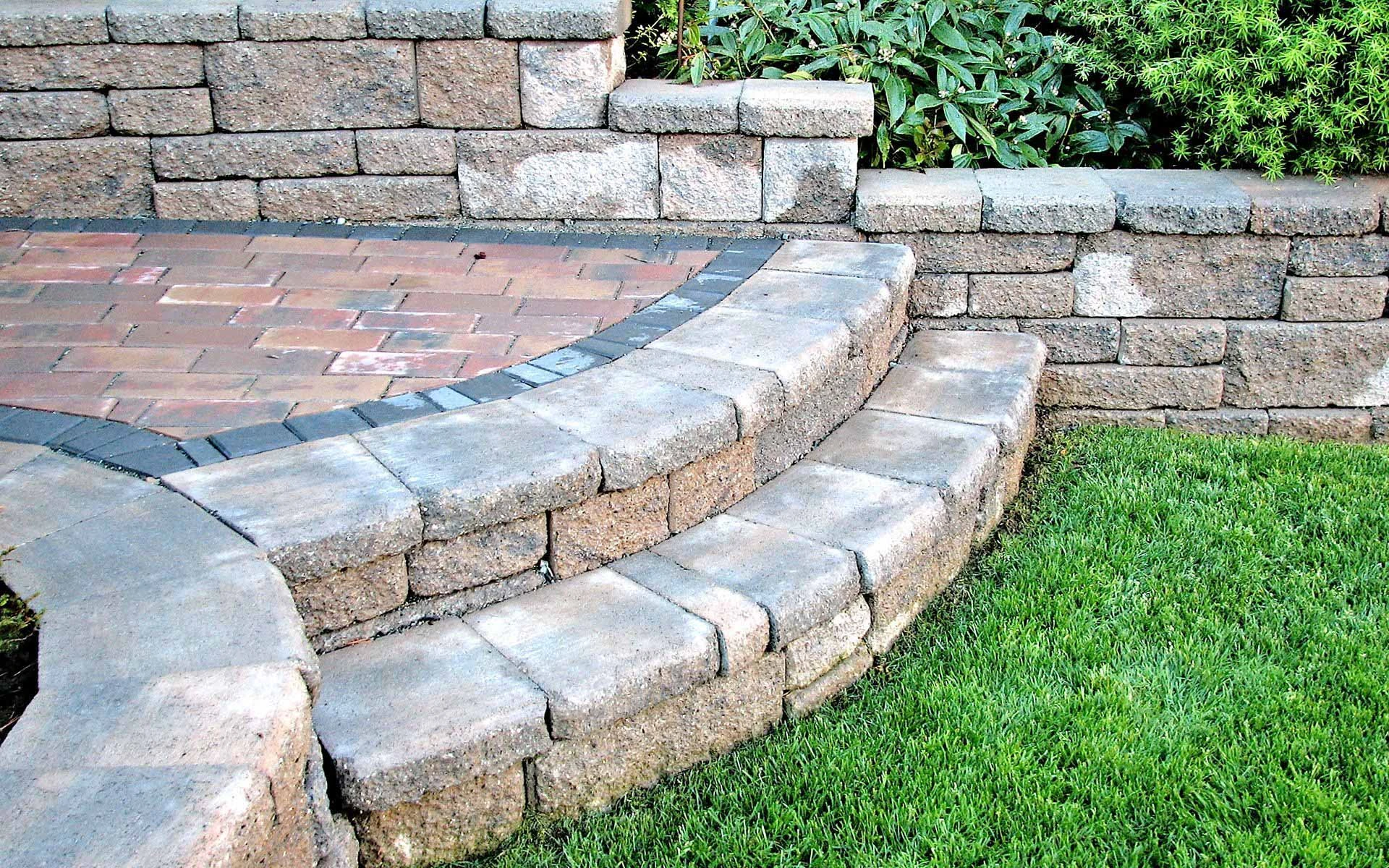
The 1,000-Square-Foot Rule Nobody Mentions at the Estimate
Cobb County’s land-disturbance threshold is where this whole thing starts. Any residential project that disturbs more than 1,000 square feet of ground — and that includes clearing, grading, stockpiling spoil, or setting a paver base — requires a drainage-and-grading review through Cobb County Community Development. A 20×30 patio alone is only 600 sqft, so it squeaks under. Add a 40-foot retaining wall with a 3-foot working bench behind it, a staging area for the pallets, and the soil you dig out and pile to the side during excavation, and you blow past 1,000 sqft before the first base course goes down.
Most Marietta contractors measure the finished surface. The county measures the land disturbance footprint, which is a completely different number. We’ve watched crews get surprised by this on an East Cobb ranch in the 30068 zip — the homeowner thought they had a simple 14×20 paver job. Once you counted the spoil pile, the material staging pad, and the bench cut behind the low seat wall, it was 1,270 sqft disturbed. That’s permit territory. The contractor had not filed.
Cobb County drainage permit cost: $220 filing fee through Cobb County Community Development (1150 Powder Springs St., Marietta). Standard review cycle is 3 business days when the drainage plan is clean. Engineering review adds 5–10 days for walls 5+ ft or any project inside a flood hazard overlay.
The permit itself is not expensive. Three days of review and a small fee is the whole cost of doing this right. What makes it expensive is skipping it. Cobb’s post-construction violation for unpermitted land disturbance runs $750 to $1,500, and that’s the per-occurrence fine — it does not include the forced remediation order that usually comes stapled to it. The remediation is where homeowners actually bleed money.
The Forensic Case — Walton Woods, Fall 2024
Let me walk through a real failure case we inherited. Names changed, neighborhood and numbers are real. A homeowner in the Walton Woods area off Lower Roswell Road hired a contractor in August 2024 to build a raised travertine patio off the rear French doors, with a tumbled block retaining wall skirting the high side. The finished pad was about 22×28, raised roughly 18 inches above grade to meet the door threshold. Total land disturbance: around 1,420 sqft once you counted the bench cut, the spoil staging, and the gravel drop zone.
No permit was pulled. The contractor told the homeowner the county “doesn’t care about patios.” Work finished in September. By the second week of November, after two heavy Piedmont rain events dumped 2.5 inches each, the downhill neighbor’s crawlspace was taking water for the first time in 19 years of ownership.
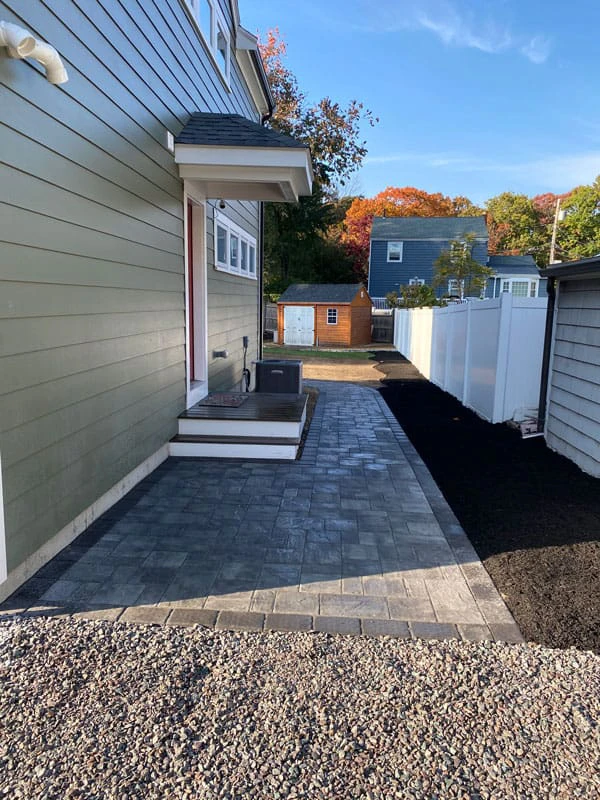
Here’s what went wrong engineering-wise. The raised pad’s block retaining wall had no weep holes, no drain board, and no subsurface French drain tied to daylight. The finish grade on the uphill side had been raised to meet the new patio, which changed the historic sheet flow pattern on the lot. Instead of the water fanning out across the yard the way it had since the 1980s, it now ran along the base of the new wall, through the narrow gap between houses, and directly onto the neighbor’s grade.
The neighbor filed with Cobb Code Enforcement. An inspector came out in December. The finding:
- Unpermitted land disturbance exceeding 1,000 sqft — violation 1
- Alteration of stormwater conveyance without approved drainage plan — violation 2
- Retaining wall over 30 inches without engineered drainage detail — violation 3
Total fine assessed: $1,350. Forced remediation order: homeowner had 90 days to submit a stamped drainage plan from a licensed Georgia P.E. and execute corrective work or face daily accruing fines. We got the call in late January to quote the remediation.
Remediation estimate: demo a 14-foot section of the new block wall, install a 4-inch perforated PVC drain along the back of the remaining wall bedded in #57 stone and filter fabric, re-tie the wall with weep spacing at every 6 linear feet per Cobb engineering, daylight the drain to a pop-up emitter set away from the property line, regrade the disturbed zone, replace the lost travertine field pavers. All-in cost: $8,900. Plus the $1,350 fine. Plus $1,450 to the P.E. for the drainage plan. Plus the $220 retroactive permit fee. $11,920 total damage on an original hardscape that cost $23,500 to build. The homeowner paid roughly 50% of the original project value again just to keep the install legal.
What Cobb Actually Reviews in the Drainage Plan
The drainage permit review is not a rubber stamp. When we submit for a Marietta hardscape project over the disturbance threshold, the plans package includes a site-scale grading plan, existing contour lines from survey, proposed contour lines after construction, calculated runoff pre- and post-project, and a narrative of where the water goes. Cobb’s reviewer checks for:
- No net increase in runoff directed to neighboring property lines. This is the line that kills sloppy submittals. If your new patio increases impervious surface by 400 sqft and that additional runoff fans toward a single neighbor, the plan fails.
- Positive drainage away from the home foundation — minimum 2% slope for the first 10 feet per Georgia residential code, usually enforced stricter on Cobb’s Piedmont lots.
- Retaining wall subsurface detail — drain board behind the wall face, perforated pipe at the wall base wrapped in filter fabric, daylight outlet, weep holes spaced per the wall manufacturer’s spec (Techo-Bloc calls for weep every 4–6 feet on Mini-Creta runs over 30 inches).
- Engineered stamp for walls 5+ feet tall. This is non-negotiable in Cobb. Any retaining wall over 5 feet — measured from the bottom of the footing to the top of the cap — requires a licensed Georgia professional engineer’s stamp on the structural calculations and the drainage detail. No exceptions in 30062, 30066, or 30068.
- No discharge onto the right-of-way along Roswell Road, Johnson Ferry Road, Lower Roswell, or any other county maintained surface. The water has to disappear somewhere on-lot or via an approved easement.
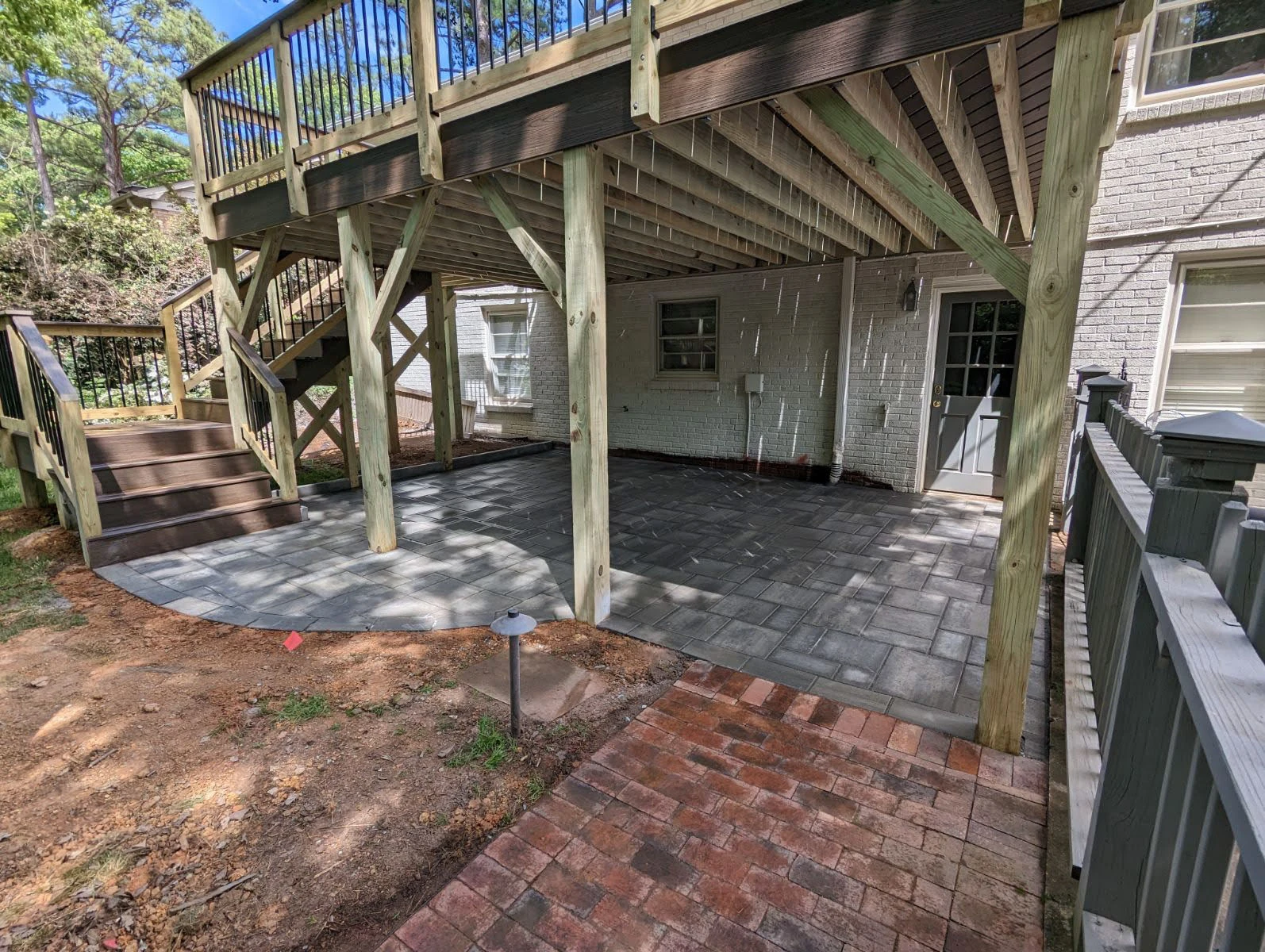
Why the Cobb Soil Profile Makes This Worse Than Fulton or Gwinnett
Marietta sits on classic Piedmont Cecil-series soil. Cecil clay doesn’t percolate the way sandy loam does — rainfall sheets across the surface before it has a chance to infiltrate, which is why Cobb lots with a 3-6 ft grade change show such dramatic runoff behavior. East Cobb has a few sandy-loam pockets around Sope Creek and Willeo Creek corridors that drain better, but the majority of the Marietta inventory — Indian Hills, Marietta Country Club, Burnt Hickory, Brookstone — sits on heavier clay that moves water like a conveyor belt.
Then add bedrock. Granite bedrock sits at variable depth across the city — typically 3 to 15 feet down, but we’ve hit it at 28 inches on a Kennesaw Mountain foothill lot in 30064. Once your subsurface drain run hits rock, you can’t just trench deeper. You re-route, you surface-manage, you sometimes pump. None of that is allowed to be improvised in the field on an unpermitted job, because none of it appeared on a reviewed plan.
Climate stacks another variable. Marietta averages 52 inches of rainfall per year and the rain comes in concentrated bursts — summer thunderstorm events routinely drop 1.5 to 3 inches in under 90 minutes. A drainage system that looks fine in a 1-inch rain can fail catastrophically in a 2.5-inch event. The county reviewer knows this. The permit process forces the contractor to design for the 10-year and 25-year storm, not the average afternoon.
Kennesaw Mountain wind factor: Properties on the Kennesaw Mountain side of north Marietta see different wind-driven rain patterns than the rest of the county. Mountainside lots toward the 1,808 ft peak can see 20–30% higher rain intrusion on the windward face, which means the uphill side of a hardscape wall on those lots absorbs more water than a flat East Cobb property would.
What a Permitted Marietta Hardscape Actually Looks Like
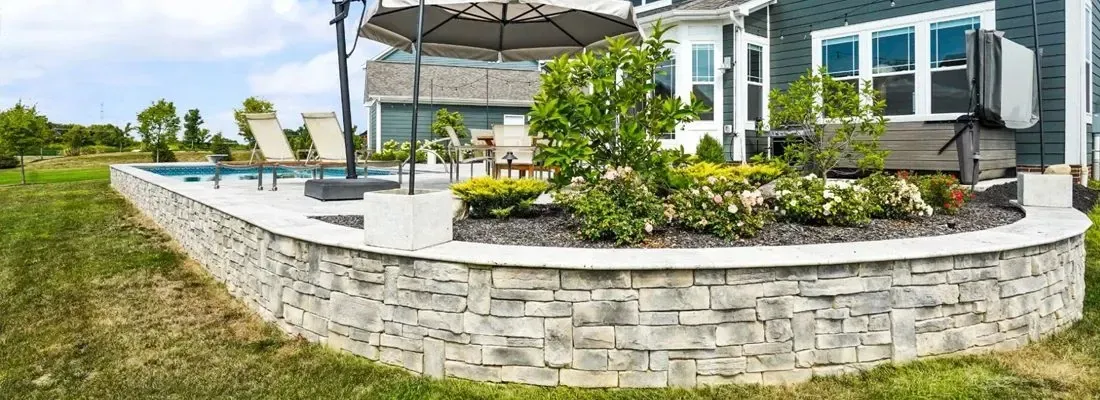
Here is the same kind of project — a raised patio with a block retaining wall edge — done through the permit cycle the way it should be. This is the Atlanta Country Club build we finished in spring 2025. Same size pad roughly, same wall height, same soil type. Different outcome.
We measured the true disturbance at 1,340 sqft during design. That triggered the drainage permit. We pulled a topographic survey, our drainage engineer stamped a plan showing pre- and post-construction runoff, and the permit cleared Cobb’s review in 4 business days. Wall detail: 4-inch Schedule 40 perforated pipe bedded in #57 washed stone with non-woven geotextile filter fabric behind the full run, weep holes drilled at every fourth block on the wall face, daylight outlet at the low corner of the yard with a pop-up emitter set 8 feet off the property line. Finish grade behind the wall was adjusted to shed uphill water laterally into a shallow swale instead of piling against the wall face.
Cost difference versus skipping the permit? About $1,900 added to the line-item for the engineered drainage detail and the P.E. stamp. On a $34,000 project, that’s roughly 5.6%. Five-and-a-half percent to avoid the $11,920 scenario above is the easiest math in the hardscape business.
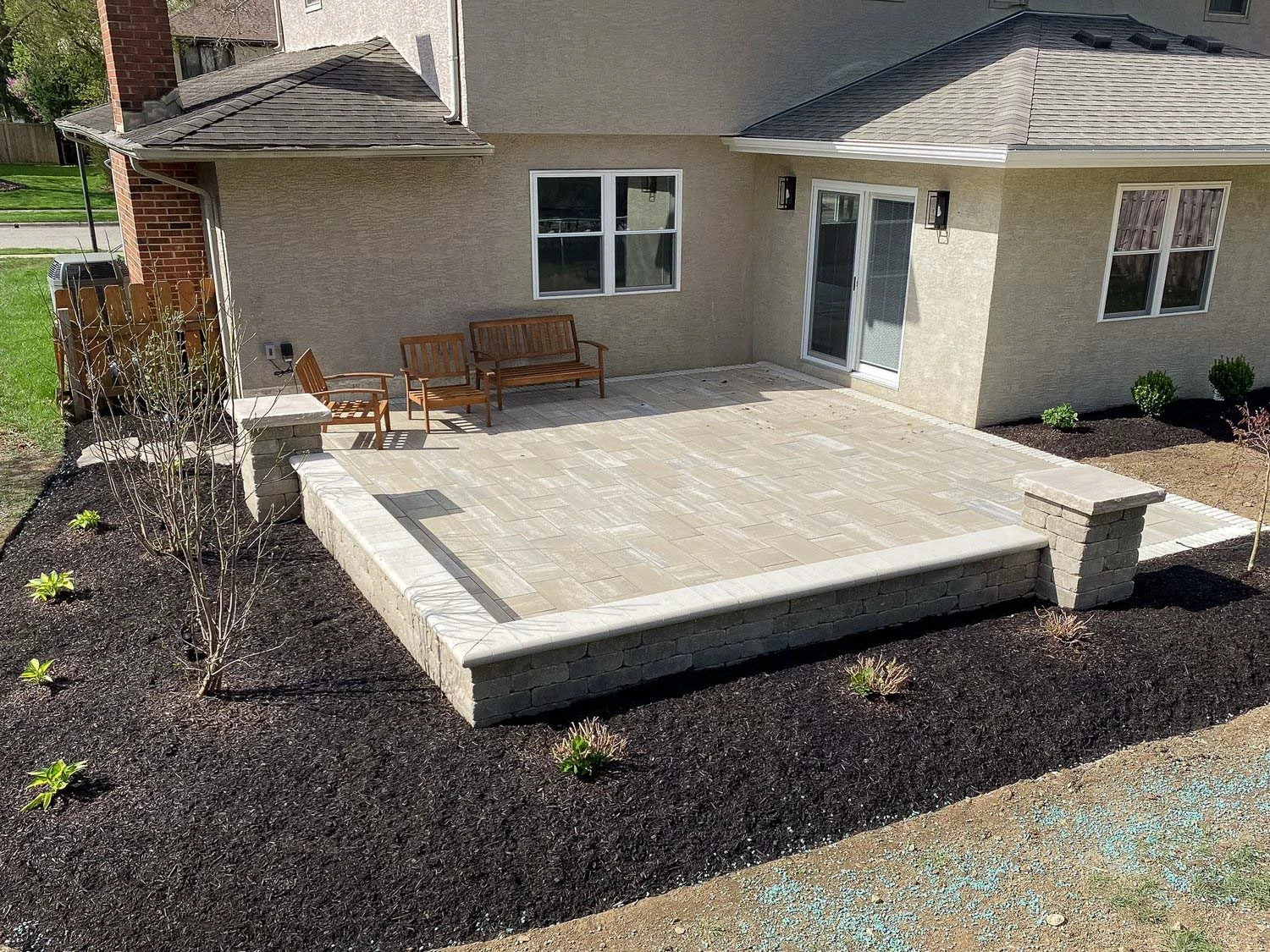
The homeowner never thought about the permit after we pulled it. That’s how it should feel. The paperwork is supposed to disappear behind a clean install and a wall that holds water back the way it was designed to. They got their travertine French-pattern pad, the block skirt sits level three growing seasons later, and there’s a pop-up emitter somewhere in a planting bed quietly doing its job during every storm.
How to Spot the Permit Skip Before You Sign — and the Checklist That Stops It
Red flags in the contractor interview
If you’re interviewing a hardscape contractor in Cobb right now, these are the signals that tell you the drainage permit is about to be skipped:
- “We don’t need a permit for a patio.” This is the single most common line. Patios alone usually don’t trigger. Patios with retaining walls, raised pads, or grade changes almost always do.
- No drainage plan in the proposal. A clean Marietta hardscape proposal over $15,000 should include a line for “drainage design and stormwater management” or name the engineered detail. If it’s silent on water, something’s missing.
- No mention of land disturbance square footage. The contractor should be thinking in disturbance terms, not just finished-surface terms. If they’ve never mentioned the 1,000 sqft rule by the time you sign, they don’t know the rule.
- No P.E. relationship named for 5+ ft walls. If the wall on the plan is anywhere near 5 feet and the contractor can’t name the Georgia P.E. who’s going to stamp it, walk.
- Cash discount for “fewer headaches.” A discount in exchange for no permit is a discount in exchange for future $11,000 risk on the homeowner. You’d be surprised how often this gets floated, especially in the HOA-heavy subdivisions like Atlanta Country Club and Indian Hills where homeowners are already managing covenant paperwork and just want the yard done.
- Timeline that doesn’t include review. A proper Cobb hardscape project includes 3–10 business days of drainage review time baked into the schedule. If the contractor is promising “start Monday” on a 1,200+ sqft disturbance project, the permit is not in the plan.
One more nuance that catches Marietta homeowners specifically: the utility boundary. If you live inside the incorporated city limits, your electric is Marietta Power and your gas and water are on city accounts. If you live in unincorporated Cobb, you’re on Cobb EMC for electric. This doesn’t change the drainage permit process — that’s still Cobb County Community Development either way — but it does change who marks utilities for the 811 locate call before any digging starts. Get the locate wrong, cut a Cobb EMC 240V service line, and your $220 drainage permit problem turns into a separate utility restoration bill.
The Clean-Permit Checklist for Any Marietta Hardscape Over $15K
If you want to keep this simple, here’s the exact list to work through with any hardscape contractor bidding your Cobb project. Hand them this list at the walk-through. Watch how they respond.
- Ask for a measured land-disturbance number, not just a finished-surface square footage. If it’s over 1,000 sqft, confirm a drainage permit is being pulled from Cobb County Community Development at 1150 Powder Springs St.
- Ask to see the drainage plan before excavation. Even a simple engineered detail on a site sketch is better than nothing on paper.
- For any retaining wall over 30 inches, confirm weep spacing, drain board, and subsurface perforated pipe are specified in writing.
- For any wall 5+ feet, confirm the name and license number of the Georgia P.E. stamping the structural and drainage calcs.
- Confirm the post-construction grade will not discharge concentrated runoff onto a neighboring property. This is the single clause that stops code enforcement from knocking.
- Budget 3 to 10 business days of review time into the project schedule. If the contractor refuses the timeline, you have your answer.
- Keep the permit number. If you sell the house in 2030, the buyer’s inspector will ask. So will the neighbor’s attorney, if it ever comes to that.
Where to verify: Cobb County Community Development, 1150 Powder Springs St., Marietta, GA 30064. Residential permit tech desk handles drainage and grading submittals. Ask for the drainage reviewer on duty if you want to confirm a specific project’s permit status before construction starts.
Hardscape in Marietta doesn’t fail because Cobb soil is hard, Cecil clay is stubborn, or Piedmont storms are violent. It fails because a $220 piece of paper got skipped to save three days on a calendar, and then the first 2.5-inch rain event does what it always does. Get the permit. Get the drainage detail engineered. Keep the paperwork. Everything else about the build — the materials, the pattern, the pavers, the block, the curves — is the easy part.
Hardscape Design & Construction across 20+ cities within 30 miles of Winder, GA
Every Marietta project we build runs through Cobb County Community Development review when the land disturbance exceeds the threshold. No cash-discount permit skips, no “we don’t need one” conversations — just clean paperwork and drainage details that hold up under a 2.5-inch Piedmont rain event.