
The homeowner on Freemanville Road had three acres, a view straight down to Cooper Sandy Creek, and a pool design already sketched by another builder. The design was unbuildable. Nobody had pulled a stream survey. The proposed shell sat 18 feet inside the required 50-foot perennial-stream buffer, and the permit package had been sitting in the City of Milton Community Development queue for five weeks waiting on a correction that wasn’t coming.
That is the opening problem on a majority of creek-buffer lots in Milton — not soil, not slope, not budget, but a design drawn before anyone mapped where the water actually was. Cooper Sandy Creek, Chicken Creek, Lake Creek, and the scatter of Etowah River tributary branches threading through north Milton are not decorative. They are regulated watercourses, and a pool shell sitting inside their setback costs three to eight weeks of redesign plus a fresh permit cycle. On a $325,000 build, that is real money and a summer gone.
This post is the engineering playbook we run for creek-buffer lots inside Milton city limits — specifically the 25 / 50 / 75-foot buffer regime that governs most AG-1 and residential-estate parcels along the named tributaries. If your address is in 30004, 30075, or 30076, and you can walk from your back door down to flowing water, these are the mechanics that decide whether your pool gets built this year.
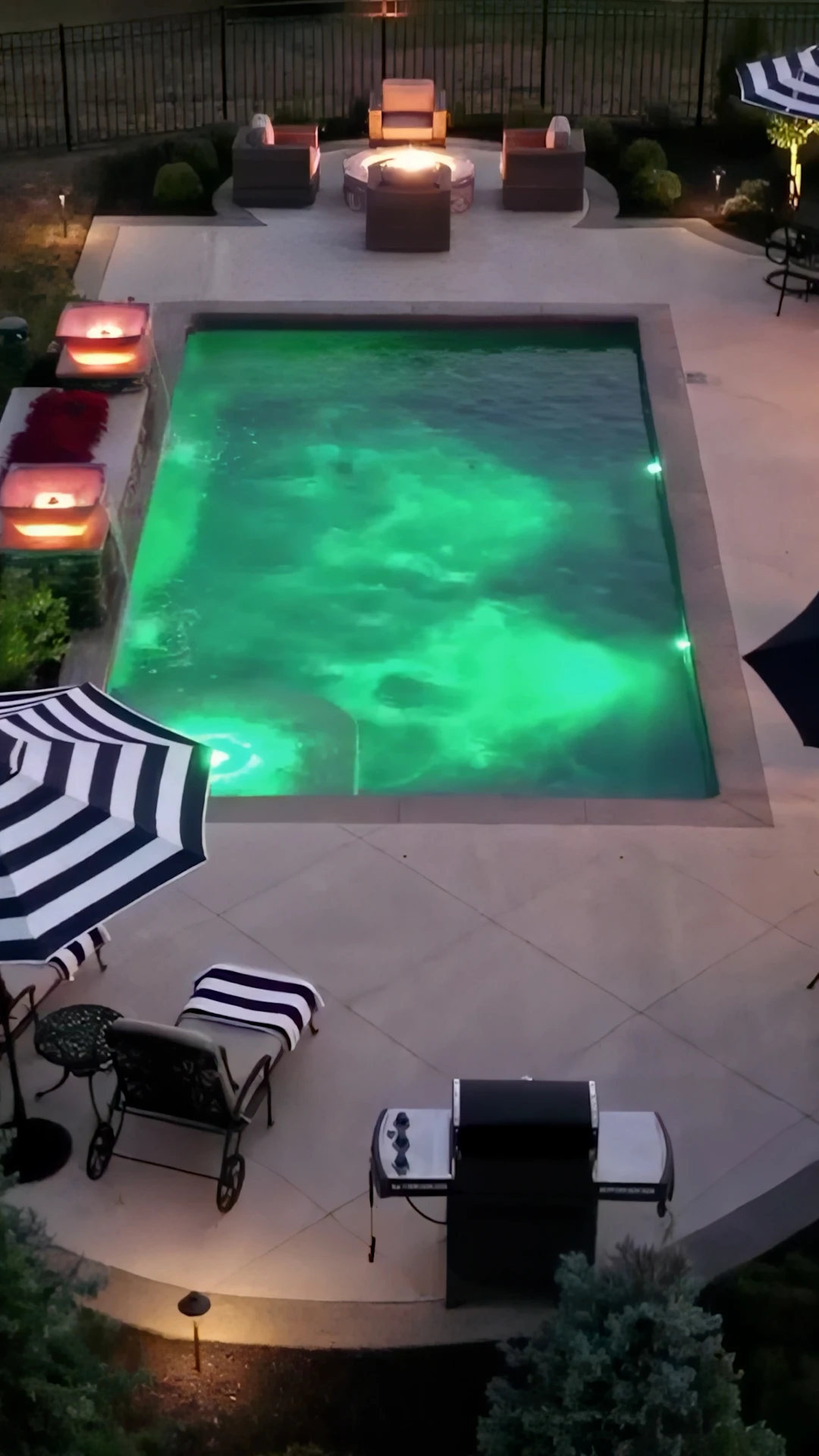
Why Milton’s Buffer Rules Hit Harder Than Fulton County’s
Milton incorporated as a separate city in 2006. That single fact is the root of every permit workflow on these lots. Your pool application no longer goes to unincorporated Fulton County — it goes through City of Milton Community Development at 2006 Heritage Walk, and Milton’s code includes stream and wetland buffer language that is stricter than the Fulton baseline in several practical ways.
The headline number most homeowners repeat is 25 feet. That is correct only for intermittent streams — the ones that run seasonally and don’t carry flow year-round. Perennial streams carry a 50-foot impervious-surface setback, which expands to 75 feet on any reach classified as a state water or where Milton’s supplemental language applies. And when a parcel shows up on the National Wetlands Inventory as wetland-adjacent, another 25-foot wetland buffer layers on top. Stack the numbers and a pool shell on the wrong side of a creek can need 100 feet of horizontal clearance before the first shovel moves.
The second reason Milton hits harder: the review itself. Permits in Milton typically clear in 10 to 14 business days, which is faster than unincorporated Fulton. That speed comes from a staff that actually reads your site plan. An incomplete or buffer-violating submission doesn’t sit in a pile — it gets flagged, returned, and re-queued. There is no drifting through on a sloppy package.
The three buffers most Milton homeowners miss: 25 ft from intermittent streams, 50 ft from perennial streams, and an additional 25 ft wetland buffer on NWI-documented parcels. Pool shells, coping, decking, and equipment pads all count as impervious surface.
Stream Survey First, Design Second — Or the Project Fails
The single most common failure mode on creek-buffer lots is this: a homeowner signs with a builder who draws the pool first, then tries to verify buffers later. That sequence will blow up the project. Milton Community Development requires a wetland and stream survey stamped by a licensed Professional Engineer or PLS submitted with the pool permit package. The survey has to show the top-of-bank location of every watercourse within 200 feet of the proposed disturbance, and each watercourse has to be classified — intermittent, perennial, or state waters.
On The Manor Golf Club lots that back to the Chicken Creek drainage, we’ve seen surveys flag flow paths a homeowner didn’t even know existed — a seasonal swale running across the back corner of a 2.3-acre lot, pulling a 25-foot buffer across what the client thought was the ideal pool location. Find that on paper in week one and you redesign once. Find it after the shell is marked out and you’re paying for a second survey, a second set of drawings, and a permit resubmittal.
What the PE-stamped survey actually costs and returns
Budget $2,400 to $4,800 for a stream and wetland survey on a typical Milton creek-buffer parcel, more if the parcel exceeds five acres or shows multiple flow paths. That feels steep until you price the alternative. A redesign after permit rejection costs a minimum of 3 to 8 weeks of calendar time plus $3,500 to $9,000 in revised engineering, grading, and plan-set fees. The survey is the cheap version of the same work.
We won’t sign a design contract on a creek-adjacent parcel without the survey in hand. It is not optional on our side. Clients sometimes push back — they want to see a pool layout first and decide whether to proceed. The honest answer is that any pool layout drawn before the survey is a guess, and guesses on these lots cost the client a summer.
The 6-to-14-Foot Grade Drop Problem
Alpharetta is flat by comparison. Milton is rolling hills — 1,150 feet of elevation with serious grade changes across estate lots. On Crooked Creek, Cogburn Estates, King Estates, and Hopewell Plantation parcels we’ve built on, a 6 to 14 foot drop between the house pad and the proposed pool location is routine. Stack that against a 50-foot creek buffer running across the lower third of the property and you have the central engineering problem of Milton pool construction: how to fit a 40-by-20 shell, 8 feet of structural deck, and an equipment pad into the usable envelope between the house and the buffer line.
The answer is almost always terracing. A single-grade pool pad in a Milton creek-buffer lot is uncommon. What we build instead is a shell set on a cut-and-fill platform with segmental retaining walls stepping the grade — typically one upslope wall carrying 3 to 6 feet of cut, and one downslope wall carrying 2 to 4 feet of fill before the buffer line. That geometry lets the shell sit at the homeowner’s finished-floor elevation minus 18 inches instead of at whatever the raw topo gives.
Retaining wall engineering on these lots is not optional and not generic. Anything over four feet of retained height requires a PE-stamped wall design, and Milton plan review reads them. We spec Keystone Compac III or Allan Block Classic for walls under six feet, and poured CMU with grouted verticals and a geogrid-reinforced backfill zone for anything higher. The wall sits outside the creek buffer; the shell sits further outside still.
Soil — Cecil Clay, Saprolite Shelves, and Why Over-Excavation Matters
Milton soil is Cecil series — a clay-heavy residuum over weathered granite. On ridgelines you have thin residuum over saprolite and then rock. In creek bottoms the topsoil is thicker, the clay is wetter, and the water table sits closer to the surface. Neither condition is hostile, but both require excavation decisions that differ from what a subdivision pool builder makes on a flat Alpharetta lot with consistent fill.
The decision point is the saprolite shelf. On roughly one in three creek-buffer Milton excavations we hit decomposed granite somewhere between 4 and 7 feet below grade — soft enough to dig with a mini-ex, hard enough to require the excavator to work it in lifts rather than in a single pass. Unplanned rock on a fixed-bid contract is how pool builds go $15K to $40K over budget. We write a rock/saprolite allowance into every Milton contract, typically $8,000 to $18,000, with a unit-price provision for anything beyond the allowance.
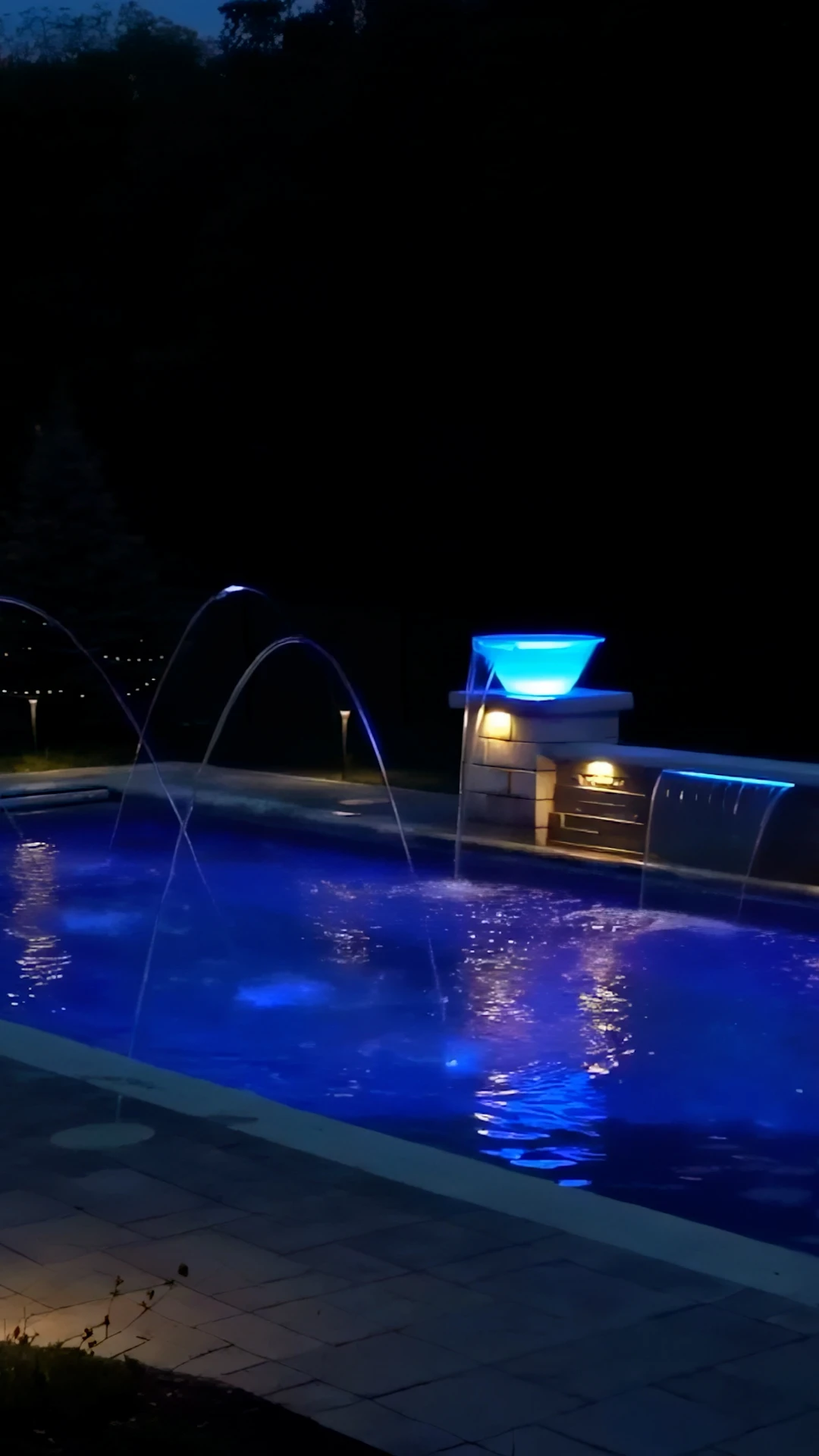
The clay matters for a different reason: drainage. Cecil clay holds water. A shell excavated into wet clay, backfilled without proper structural fill, and decked with travertine or paver bands on top will heave through freeze-thaw cycles. Milton averages 22 freeze events per year — not as many as the North Georgia mountains, but enough to punish a deck built on clay backfill that wasn’t compacted to spec.
Our standard spec on these lots: over-excavate 12 inches beyond the shell footprint, install a geotextile separator, backfill with #57 open-graded crushed stone in 6-inch lifts, and compact each lift to 95% modified Proctor. On deck subgrade, we specify 8 inches of #57 under pavers or 6 inches under travertine, with a 4-inch perforated drain line tied to daylight or a dry well. On a creek-buffer lot, that drain line cannot discharge inside the buffer. It gets routed to a compliant outfall, which is another detail the stream survey informs.
Equipment Pad, Electrical, and Keeping Impervious Surface Outside the Line
The pool shell is the obvious impervious surface. The one most homeowners don’t think about is the equipment pad. A typical Milton build runs a Pentair IntelliFlo3 VSF variable-speed pump, a Pentair MasterTemp 400 heater, a salt cell, and a filter tank on a concrete pad measuring roughly 4 by 8 feet. That pad counts as impervious surface. Put it in the buffer and your permit dies.
On creek-adjacent lots we almost always relocate the equipment pad uphill toward the house, even when that means running a longer suction and return line. The hydraulic penalty of 40 extra feet of 2-inch PVC is trivial with a properly sized VSF pump. The compliance penalty of a pad inside the buffer is the whole project.
Electrical gets the same treatment. NEC §680 governs pool bonding and GFCI circuits, and the bonding grid around the shell has to extend three feet past the water’s edge. On a buffered lot, we route the sub-panel and disconnect to a location that serves the pad without trenching inside the buffer line. Milton’s electrical inspection is separate from pool structural inspection, and both have to sign off before plaster.
What gets counted as impervious in Milton’s stream buffer: the pool shell, coping, decking (including permeable pavers in most cases), equipment pad, auto-cover vault, and any built-up spa or water feature. Lawn, planting beds, and gravel paths typically don’t count — confirm each case with Community Development.
Preservation Review, HOA Architecture Boards, and The Manor’s Four-Week Window
Milton’s equestrian preservation ordinance sets 1 to 3+ acre minimum lots in AG-1 zoning, and that rural-character mandate runs through the city’s approach to architectural review. Add a private HOA layer on top and you stack two approval cycles before your permit ever reaches Community Development.
The Manor Golf Club review — Paul Tesori’s course, private membership — runs a structural review committee with a typical turnaround of 4 to 5 weeks. Atlanta National (TPC), White Columns where it extends north from Alpharetta, Crooked Creek, and Bethany Creek each have their own ARB cycles ranging from 2 to 6 weeks. Crabapple historic district parcels fall under Milton’s historic preservation overlay, which adds a separate review for any exterior work visible from the right-of-way.
The practical sequencing on a creek-buffer lot inside one of these communities:
- Week 1–2: stream and wetland survey commissioned, top-of-bank and buffer lines added to the parcel base map.
- Week 2–3: preliminary pool and hardscape layout drawn against the verified buffer envelope.
- Week 3–7: HOA / ARB submission and review (longest on The Manor and Crooked Creek).
- Week 7–9: Milton Community Development permit submission.
- Week 9–11: permit issuance, utility locates, silt-fence installation, dig scheduled.
That timeline assumes no redesigns. Add a failed ARB submission or a permit correction and each step bumps 2 to 4 weeks. Clients who sign in October and want water by Memorial Day usually get it. Clients who sign in March for the same summer typically don’t.
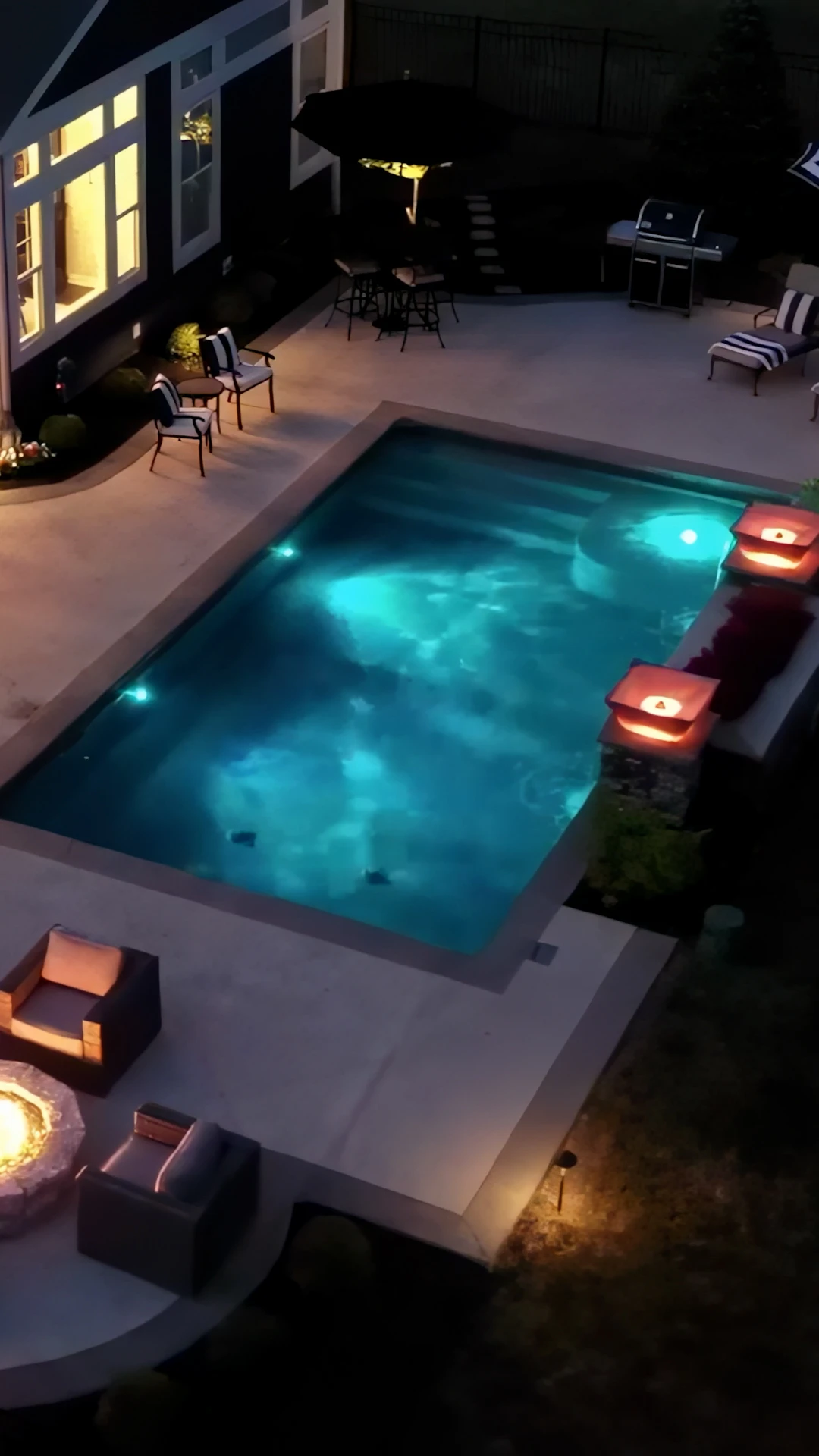
What a Creek-Buffer Milton Pool Actually Costs — and Where the Budget Goes
A straightforward subdivision pool in Alpharetta or Johns Creek runs $135,000 to $185,000 for a 16-by-32 shell with a paver deck and standard equipment. Those numbers don’t translate to Milton creek-buffer estates. A typical build on a Cooper Sandy, Chicken Creek, or Lake Creek-adjacent parcel runs $265,000 to $425,000, with the higher end reflecting a shell, expanded deck, pavilion, outdoor kitchen, and integrated spa.
Where the extra budget goes — and this is the number clients want to see — roughly 20% to 30% of the total is spent on creek-buffer-compliant design and site work that a flat subdivision lot would never need. That covers:
- PE-stamped stream and wetland survey: $2,400 to $4,800
- Geotechnical report on high-slope or saprolite-risk lots: $3,500 to $6,500
- Segmental or engineered retaining walls for terracing: $18,000 to $65,000 depending on height and linear feet
- Rock / saprolite excavation allowance: $8,000 to $18,000 contingency
- Relocated equipment pad with longer plumbing / electrical runs: $4,500 to $9,000 vs. standard placement
- Compliant stormwater routing with dry wells or daylighted drains outside the buffer: $6,000 to $14,000
- ARB and preservation review fees + extended design cycles: $3,000 to $8,000
That list is where the “Milton premium” lives. It is not a margin markup — it is the cost of building a pool that passes inspection, holds up through freeze cycles, and doesn’t trigger a stop-work order from Community Development at framing inspection. Subdivision builders who bid Milton lots at subdivision prices either absorb change orders later or they cut something the lot required. Either outcome hurts the homeowner.
What a complete Milton creek-buffer contract should itemize: stream survey vendor and cost, buffer classification per watercourse, retaining wall engineering stamp, rock/saprolite allowance in dollars, equipment pad location with plumbing run length, stormwater outfall location, ARB / preservation review timeline, and a calendar-week permit schedule. If any of those eight items is missing from the contract, ask for it in writing before signing.
Financing on these builds is almost always cash, home-equity, or renovation-loan. We see a fair number of HELOC-funded projects in Greystone and Milton Forest where the homeowner has significant equity in a $1.4M to $2.8M house. Construction lenders don’t finance pools. Home-improvement programs like Lyon Financial and HFS can underwrite the shell work, but the landscape and pavilion integrations that make a Milton estate pool actually work are usually carried on personal liquidity.
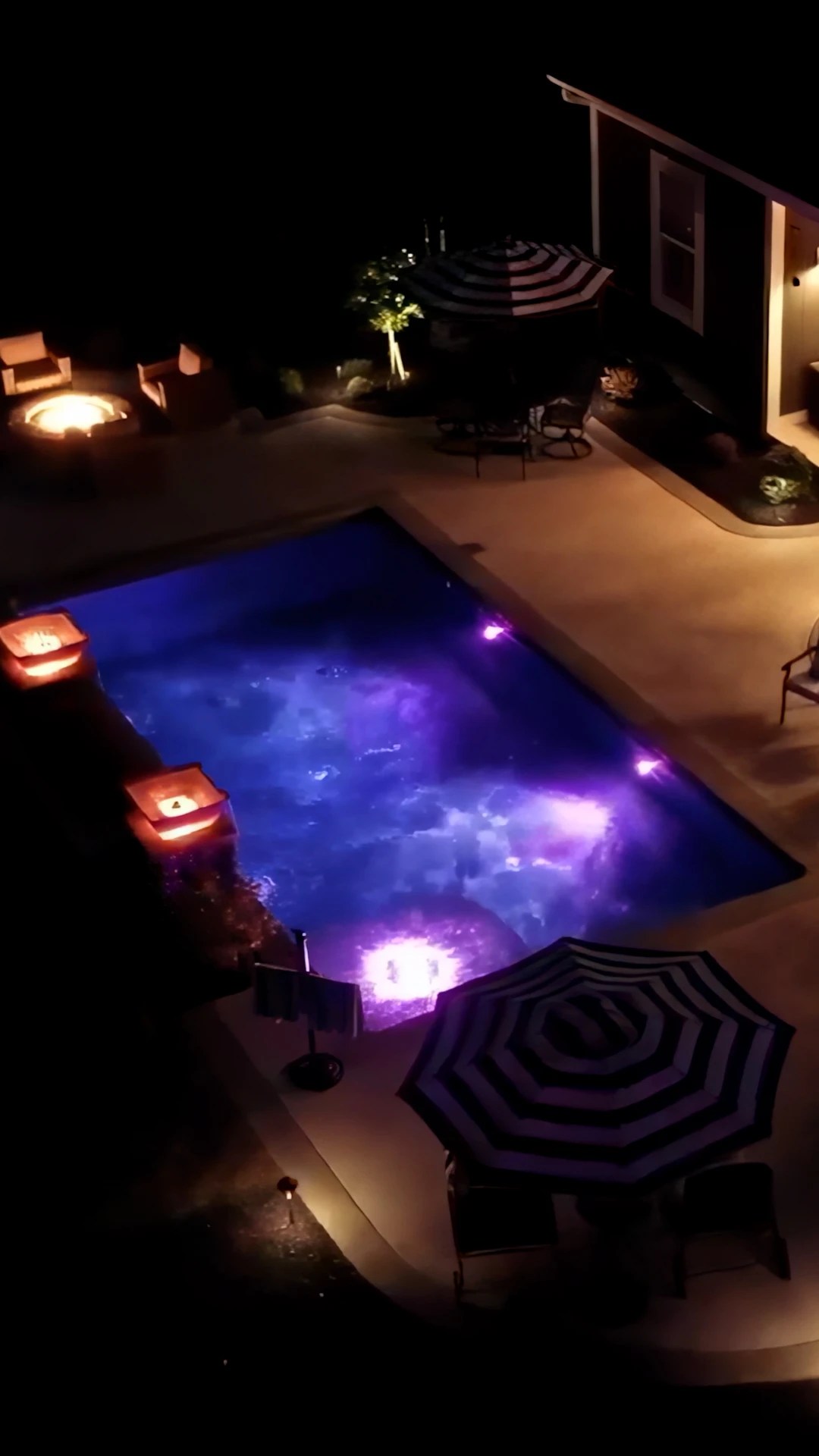
The honest summary for any homeowner on a creek-adjacent Milton lot: don’t shop by per-square-foot price. Shop by whether the builder can name your watercourse classification, your buffer width, your soil profile, and your expected dig surprises before they write the contract. If they can’t, they’re guessing, and your lot is not the place to learn.
Custom Pool Construction across 20+ cities within 30 miles of Winder, GA
Creek-buffer estates, sloped lots, and preservation-overlay parcels are where our engineering-first process earns its keep. If your Milton address backs to Cooper Sandy, Chicken Creek, Lake Creek, or any named tributary — let’s start with a survey, not a sketch.