
“We got approved by the St. Marlo architectural review board in eleven days, but our neighbor in Polo Fields waited seven weeks for a variance on the same wall idea. What’s the difference?” The difference is one word on the submittal: cultured or natural.
That question came from a homeowner off Post Road last spring, and it cuts straight to the center of what Cumming retaining-wall buyers actually wrestle with. The engineering is almost never the hard part. The HOA paperwork, the finish choice, and the thirty-year patina story — those are where money and regret get made.
This post is about one specific fork in the road: manufactured (cultured) stone veneer versus real quarried fieldstone on the retaining walls that hold up Cumming’s rolling lots. If you live in Vickery, Hampton Park, St. Marlo, Lake Windward, Windermere, Three Chimneys, The Collection at Forsyth, Polo Fields, Haw Creek, Mashburn Plantation, or Sadie Farms — this is your decision tree. No retaining-wall 101 filler. Just the material trade-off that drives everything else.
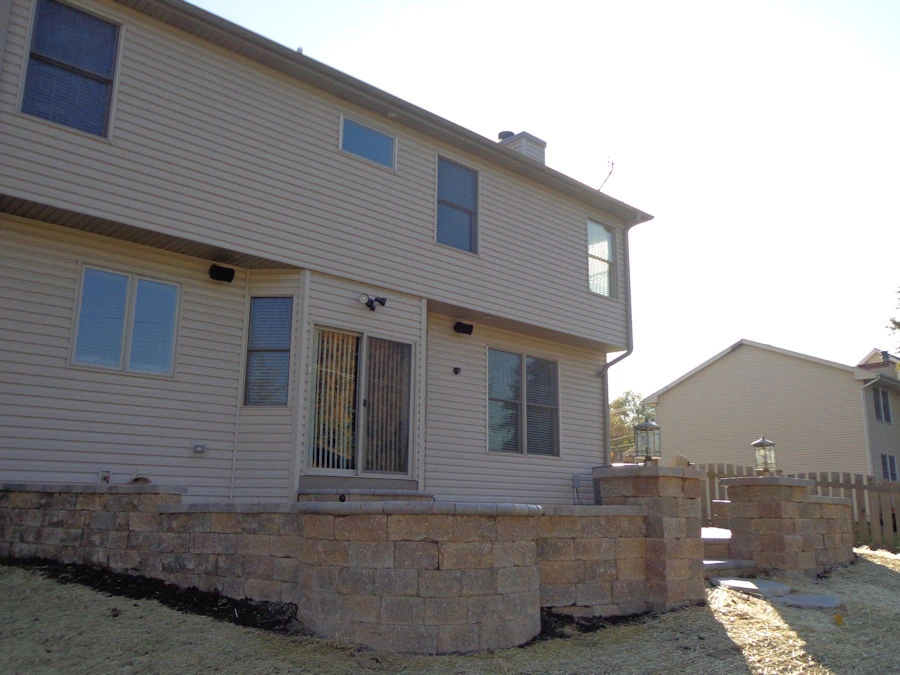
Why the Cumming Grade Forces This Decision in the First Place
Forsyth County is the fastest-growing county in Georgia, population roughly 260,000 and climbing. The homes being built — and re-landscaped — sit on lots with gently rolling foothills pushing toward Sawnee Mountain (1,963 ft) on the north end and the South Forsyth drainage tributaries on the south. Most backyards between GA-400 exits 13 and 17 have a 3 to 8 foot grade drop somewhere on the property. That drop is where the retaining wall lives.
Two site conditions make the wall decision different in Cumming than anywhere else in metro Atlanta. First, the soil: dominant Cecil-series Piedmont clay with pockets of Appling sandy loam in older farm tracts near Bethelview Road. That clay expands roughly 5% when saturated and contracts in drought — a retaining wall built on unamended Cecil clay without proper drainage behind it will telegraph every freeze cycle into visible cracks by year four. Second, the proximity to Lake Lanier raises ambient humidity a few points over Gwinnett and DeKalb, which means the wall face stays wetter longer after rain and cycles through freeze-thaw events more aggressively — around 22 per year in USDA Zone 8a.
That’s the physical setup. Now layer on the HOA factor. St. Marlo, Polo Fields, Vickery, and the newer phases at Windermere all maintain active architectural review boards that must approve any vertical stone feature over 30 inches tall. Their published guidelines don’t say “natural stone only” — but several of them list pre-approved cultured stone lines and require a variance submittal for anything else. That’s the real origin of the cultured-versus-natural conversation.
Cultured (Manufactured) Stone Veneer: What It Actually Is
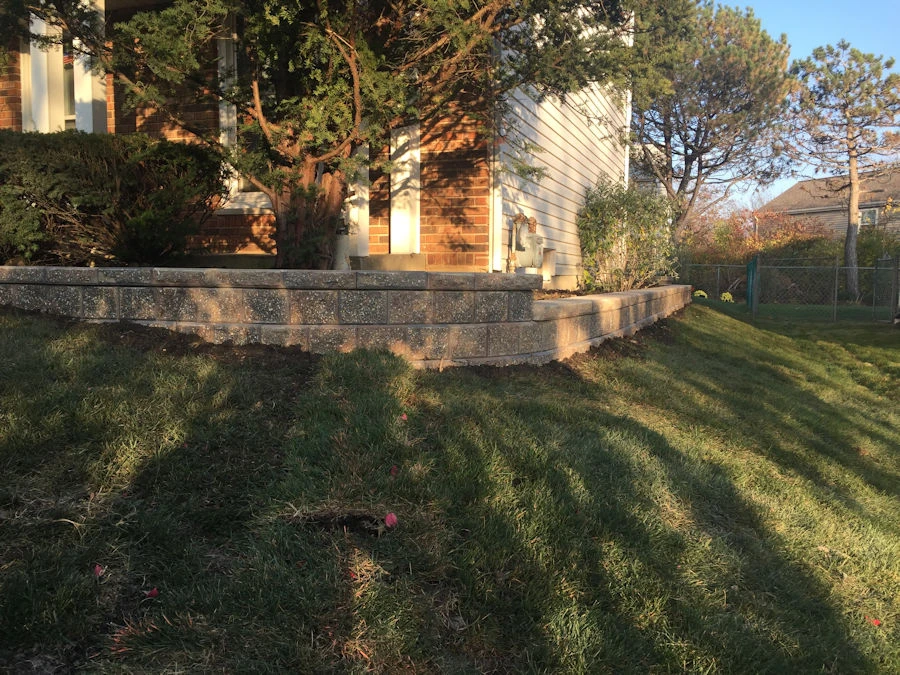
Cultured stone is Portland cement, lightweight aggregate, and iron-oxide pigments cast in silicone molds taken from real stone faces. Boral Versetta, Eldorado Stone, and Cultured Stone by Boral are the three lines you’ll see most often on Forsyth submittals. They are a veneer, not a structural wall — meaning the wall behind them is doing the actual work. On a Cumming retaining application, that structural wall is almost always an engineered segmental block core (typically Allan Block AB Classic or Keystone Standard) with geogrid tiebacks extending 4 to 6 feet back into the hillside every two courses.
Face cost for cultured stone in Cumming right now runs $34 to $48 per square foot installed on the veneer layer alone, on top of the structural core. For a 5-foot-tall, 40-foot-long wall — a common scale behind a Vickery or Hampton Park pool deck — you’re looking at roughly $6,800 to $9,600 of veneer cost added to the $18,000 to $24,000 block-core wall underneath.
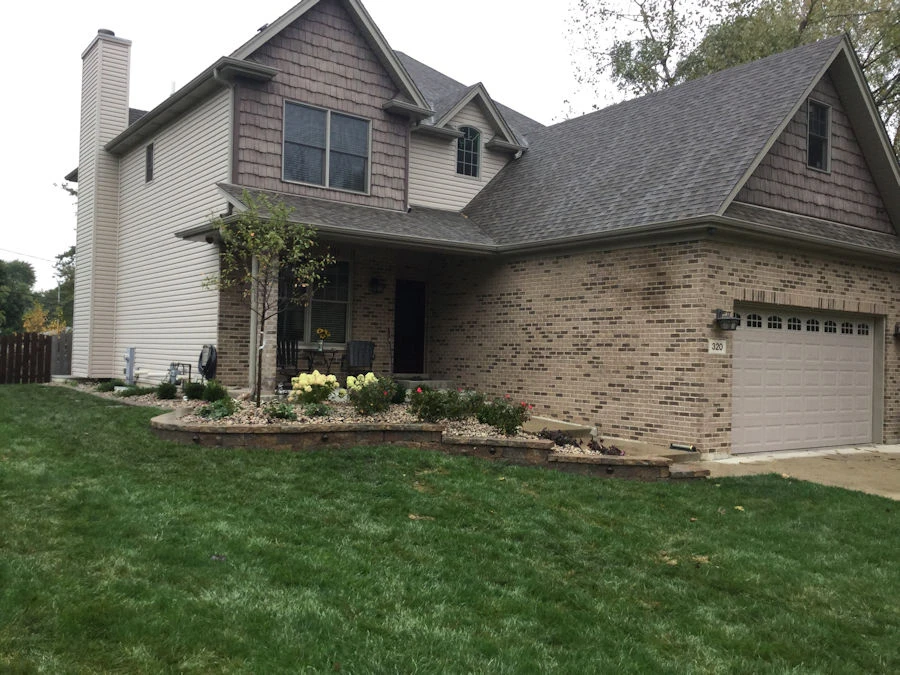
The aesthetic arguments for cultured are real, and they’re not just about price. Because the stones come from molds, color and shape are repeatable — your wall matches your fireplace veneer matches your mailbox pillar matches your pool cabana wainscot. For an architecturally-controlled community like St. Marlo that wants every home in the neighborhood to read as a coherent style, that repeatability is a feature, not a flaw. The approval path is usually 2 to 3 weeks if you submit from the pre-approved product list.
Forsyth County permit note: Retaining walls over 4 feet of exposed face height require engineered drawings and a permit from the Forsyth County Dept. of Planning & Community Development at 110 E. Main St., Cumming. Budget $385 for the base permit plus PE stamp, plus HOA review on top of that.
Natural Stone: Fieldstone, Boulder, and Drystack Realities
“Natural stone” in a Cumming context means one of three things. First: Tennessee fieldstone in the tan-gray blend quarried out of the Cumberland Plateau and trucked down I-75 — the most common choice on higher-end Forsyth builds because it reads as regional and weathers into the landscape. Second: Georgia granite boulder, pulled from local quarries near Ball Ground and Cherokee County, used for the big-stone, stacked-boulder look that some buyers associate with lake-country estates. Third: drystack ledgestone — thin flat cuts laid without mortar — which is really a hybrid aesthetic since structural ledgestone walls are usually mortared on the back side.
Fieldstone installation runs $58 to $88 per square foot in the Cumming market, face measurement. That’s not a veneer number — that’s including the structural mass of the wall itself when it’s built as a gravity wall. For the same 5-foot-by-40-foot wall behind a pool, a hand-fit fieldstone wall typically comes in at $26,000 to $38,000 turnkey. Boulder walls with two-to-four-foot granite stones set with an excavator run in a similar range but trend toward the upper end on sites that need tracked equipment brought in through narrow side yards — a common issue in Three Chimneys and the older Haw Creek phases.
The durability case for natural stone is strong and quantifiable. A properly-built Tennessee fieldstone wall with correct drainage behind it has a practical service life of 80 to 100 years. A segmental block wall with cultured stone veneer over it has a service life closer to 40 to 60 years on the block, and the veneer itself tends to need remedial work — re-pointing, spot replacement of cracked faces — at the 25 to 30 year mark. That’s the 20-year durability gap the angle of this post hinges on.
The Patina Question (This Is Where Most Buyers Miscalculate)
Here’s the part that never shows up in HOA review documents: what does the wall look like at year 15?
Natural stone develops patina. Tennessee fieldstone pulled out of the quarry reads as bright tan with gray veining. Ten years on a Cumming backyard exposed to Lake Lanier humidity, 52 inches of annual rainfall, pine pollen, and oak-leaf tannin, and that same stone reads deeper — warmer browns, soft gray-green lichen starting to establish in the mortar joints on shaded north faces, the occasional rust bloom from iron-rich veins. Most homeowners describe the result as “it looks like it’s always been there.” That’s patina doing its work.
Cultured stone does the opposite. The iron-oxide pigments in cast concrete veneer are UV-sensitive and they fade — typically 15 to 25% loss of color saturation over the first 15 years in full sun exposure. The fade is not uniform. South-facing walls fade faster than north-facing walls. Walls under deck shade fade almost not at all. The result, fifteen years in, is a wall that reads as patchy rather than weathered. Homeowners in the older Lake Windward phases who installed first-generation cultured stone in the mid-2000s are now the ones requesting replacement estimates.
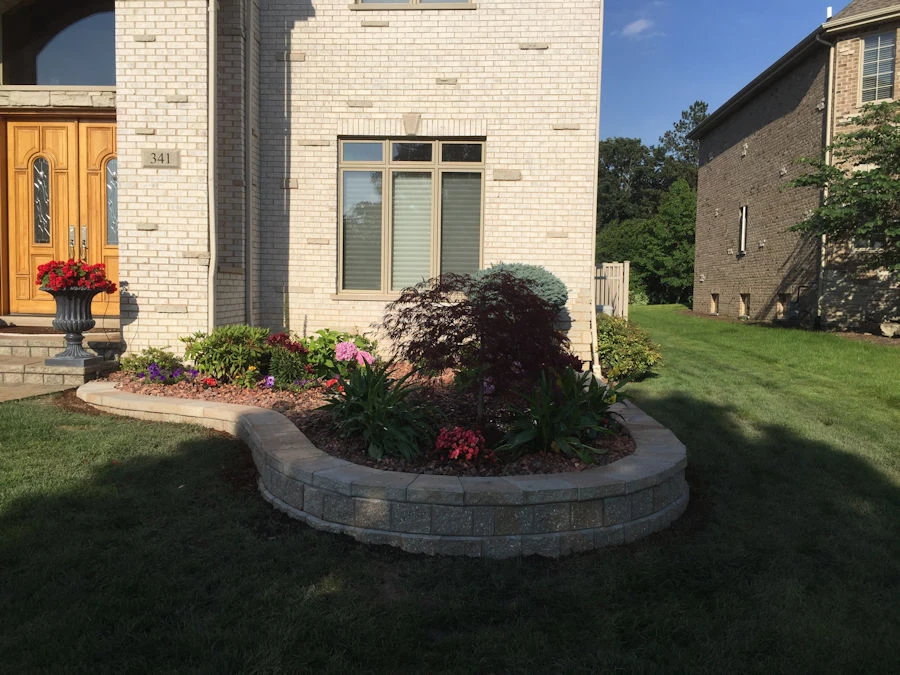
There’s a second patina consideration specific to Cumming’s climate. Lake Lanier moisture drives about 3% higher ambient humidity than you see in Dacula or Loganville, and that humidity drives pool evaporation rates up, which means pool-adjacent walls are hit with chlorinated spray from wind and splash-out more often. Natural stone doesn’t care. Cultured stone’s surface sealant breaks down faster under repeated chlorine contact, accelerating the fade and sometimes revealing the gray concrete substrate underneath through the thinnest face areas. If your wall is within 8 feet of pool water, this matters.
The HOA Variance Reality (and Why Some Buyers Still Pick Natural)
The HOA angle cuts both ways, and it’s worth being honest about it. In St. Marlo and the newer Polo Fields phases, the architectural review board maintains a pre-approved materials list that leans heavily cultured. Natural Tennessee fieldstone usually requires a variance submittal with neighbor-signature acknowledgments and a longer review cycle. The variance doesn’t usually get denied on well-designed plans, but it does take 5 to 7 weeks instead of the 2 to 3 weeks you’d get going straight cultured.
In Vickery, Hampton Park, Haw Creek, and Mashburn Plantation, natural stone is either explicitly welcomed or treated as equivalent to cultured on the application. The Collection at Forsyth’s live-work-play master plan specifically encourages regional materials. Sadie Farms has no HOA architectural control on walls at all — landowner’s choice.
Signature detail — HOA turnaround clocks: Cultured stone from the pre-approved list: 2–3 week review. Natural stone variance: 5–7 weeks. Custom cut ledgestone not on any list: up to 12 weeks if the board only meets monthly. Plan your pool schedule around the wall approval, not the other way around.
The buyers who still pick natural despite the extra variance time tend to fall into two camps. First: homeowners on lots adjacent to Sawnee Mountain Preserve or the Lake Lanier shoreline who want their hardscape to read as continuous with the regional landscape. Second: homeowners planning to stay in the house 20+ years who’ve done the math on the patina curve and decided the $8,000 to $14,000 premium on a 40-foot wall pays back in resale and visual quality at year 15.
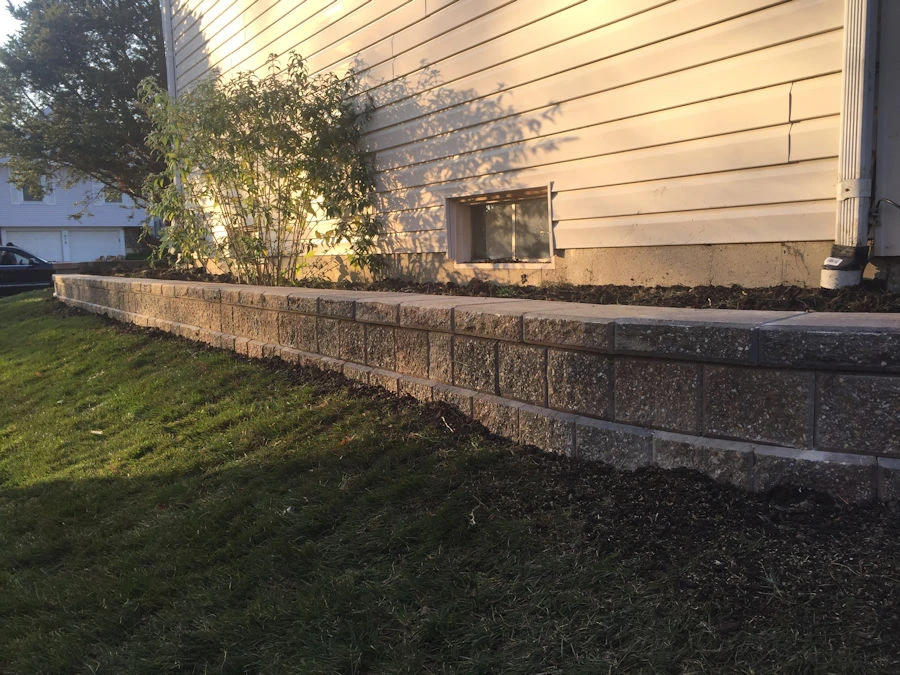
How to Actually Decide — The Honest Framework
Skip the brochures. Here’s the five-question decision tree we run through with every Forsyth County retaining wall consultation.
1. How long are you staying in the house? Under 10 years, cultured is probably the right call — the durability gap hasn’t opened up yet, the fade is still minor, and the HOA turnaround is faster. Over 15 years, the math shifts toward natural on total cost of ownership.
2. What’s your HOA architectural control? St. Marlo, Polo Fields, and newer Windermere phases push you toward pre-approved cultured. Vickery, Hampton Park, The Collection, and most other communities treat both as viable. Sadie Farms lets you do whatever you want. Match the path of least resistance to your timeline.
3. Is the wall inside the pool splash zone? Within 8 feet of water, natural stone handles the chemistry better. Cultured can still work if you’re aggressive about sealant reapplication every 4 to 5 years — but most homeowners don’t do that.
4. What’s the sun exposure? South-facing full sun is where cultured fade is most pronounced. North-facing or shaded walls — common on lots backing into wooded buffers along Post Road or Bethelview — give cultured a longer aesthetic life. If your wall runs east-west with a south face, that’s the argument for spending up on natural.
5. Are you building on Cecil clay or Appling sandy loam? Both benefit from aggressive drainage behind the wall — washed #57 stone backfill, drain tile to daylight or a sump, and in some cases geotextile fabric between the stone and the native soil to prevent fines migration. The drainage spec is the same for both cultured and natural — but it matters more for natural stone gravity walls where the mass of the stone depends on staying drained and dry.
One detail people miss: the utility side. Sawnee EMC is one of the largest electric membership cooperatives in Georgia and serves most of Forsyth County. If your wall is within 10 feet of an easement or if you’re planning landscape lighting integrated into the wall, Sawnee EMC’s 240V service and their conduit depth requirements (18 inches minimum below finished grade) need to be designed into the wall excavation from day one. Adding a lighting conduit chase after the wall is built costs roughly three times what it costs to rough it in during construction.
The relocation wave hitting Cumming right now — buyers coming up from intown Atlanta to Forsyth for schools and lot size — is pushing new build and remodel volume to historically high levels. What that means for retaining walls specifically: inspection scheduling with Forsyth County Planning can run 10 to 14 business days instead of the 5 to 7 days it ran pre-2022. Build that into your project calendar, because the wall inspection has to pass before you can backfill, and you can’t pour the pool deck until the wall is backfilled.
The Quiet Hybrid Option Nobody Talks About
There’s a third answer most homeowners don’t consider: engineered block core with a thin natural stone veneer cut from real Tennessee fieldstone. Cost lands between the two — roughly $48 to $62 per square foot on the veneer face, on top of the structural block core. You get real patina, real stone weight, and the HOA approval path of a veneered wall. The trade-off is the structural life of the block core (40 to 60 years) becomes the limiting factor rather than the stone face, so you don’t capture the full 80-to-100-year durability story of a true gravity-built fieldstone wall.
For most Cumming buyers in the 10-to-20-year ownership window, this hybrid is the sharpest answer — if your HOA will approve the specific stone. St. Marlo will, in our experience, with a standard submittal. Polo Fields typically wants the variance. Vickery and Hampton Park are straightforward approvals.
The honest summary: there is no universally right answer between cultured and natural. There is a right answer for your specific lot, your specific HOA, your specific ownership horizon, and your specific sun exposure. The contractors who tell you one material is always better are the ones who stock one material in volume. Match the wall to the project, not the project to the wall.
Retaining wall installation across 20+ cities within 30 miles of Winder, GA
From HOA-approved cultured stone veneer in St. Marlo and Polo Fields to hand-fit Tennessee fieldstone gravity walls on the Sawnee Mountain side of Forsyth County, we build walls that match the patina story you actually want in year 15.