
It is a Tuesday night in St. Marlo. A Forsyth County homeowner opens a thick envelope from their HOA’s architectural review committee and reads the line that decides the next six months of their backyard: “Open kitchen island submission denied. Please resubmit with covered structure proposal.” They are the third neighbor on their cul-de-sac to get that same letter this year.
If you live inside the architectural review boards that govern Polo Fields, Windermere, St. Marlo, Vickery, and Hampton Park, you have already met the pattern. An open outdoor kitchen — grill, counter, two stools, nothing overhead — hits the ARC and comes back red-lined. A covered outdoor kitchen under a pavilion or pergola with a real roof hits the same board and clears in a single submission cycle. We have watched this happen across Forsyth County for long enough that we stopped calling it a coincidence.
This is a piece about that specific pattern — why the covered version wins approval, what the extra structure actually costs, and whether the math makes sense for the house you plan to sell in year seven or keep for thirty. If you are pricing a kitchen in a fastest-growing county in Georgia where the average 2018-vintage subdivision has a two-page appendix on “accessory structures,” the information below is worth the fifteen minutes.
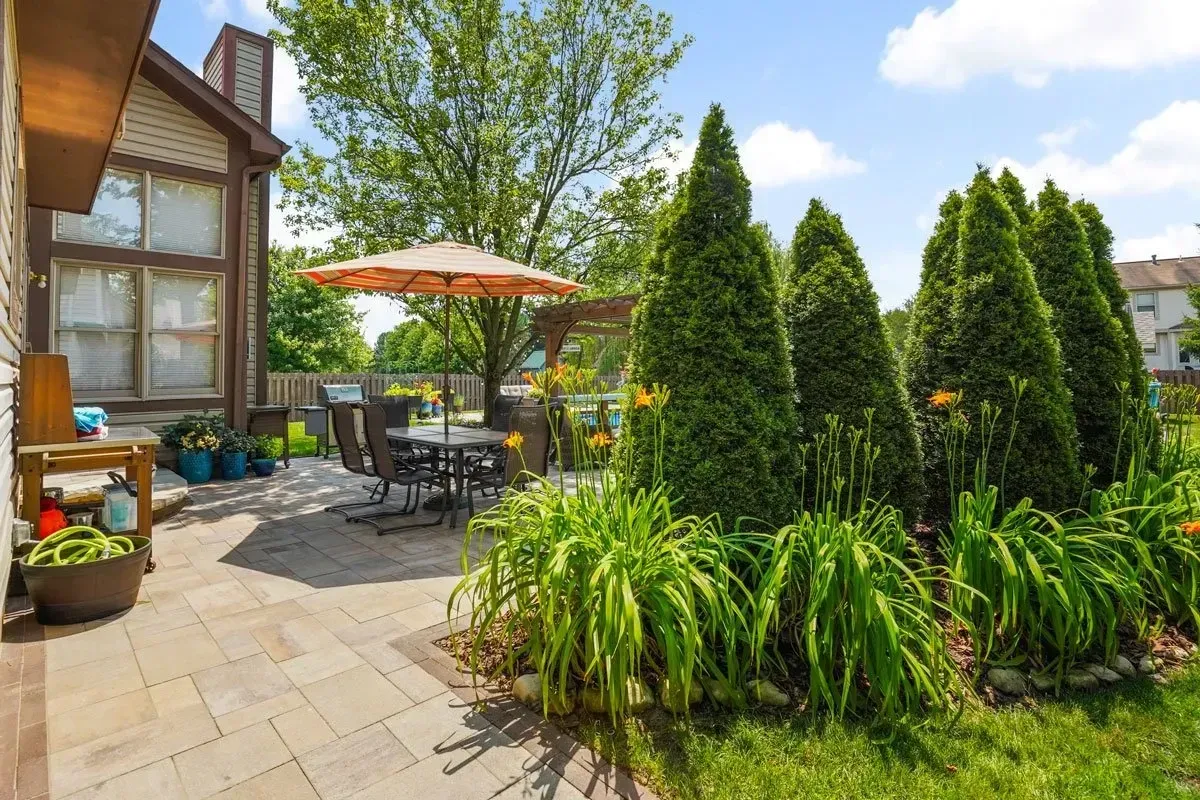
The Scenario That Repeats Every Approval Cycle
A typical call from a Cumming homeowner opens like this: “We submitted drawings for a grill island with a stone base and granite counter. The board came back asking for a pavilion elevation, a roof pitch callout, and a detail of how the chimney will terminate. We don’t want a pavilion. Can you help us win the open version?”
We will try. We have won open kitchen approvals in newer tracts around Bethelview Rd and McFarland Pkwy. But across the high-end ARCs that govern golf-course communities off GA-400 exits 14 through 16, the approval probability on a bare island is roughly 60%. Put the same kitchen under a covered structure — a gable pavilion, a hip-roof pavilion, or an engineered pergola with a louvered or solid top — and that number jumps to about 92% in a single submission round. That is not a marketing number. It is what we track internally across the last two seasons of Forsyth submissions.
The boards do not publish this in their handbook. They publish aesthetic language — “finished,” “permanent,” “integrated with the home’s architecture” — and then apply it through review. A kitchen with a real roof reads as architecture. A freestanding grill island reads as furniture. ARC committees in mature subdivisions like St. Marlo and Windermere consistently reward the first and question the second.
The Approval Numbers, Side by Side
Here is the comparison, pulled from the last twenty-four months of projects we have shepherded through Forsyth ARC committees and permits at 110 E. Main St., Cumming:
Those numbers are the core of the piece. Everything below unpacks why they look that way — because understanding the reasoning is how you either (a) invest in the pavilion and sleep well or (b) push for the open version with documented mitigation.
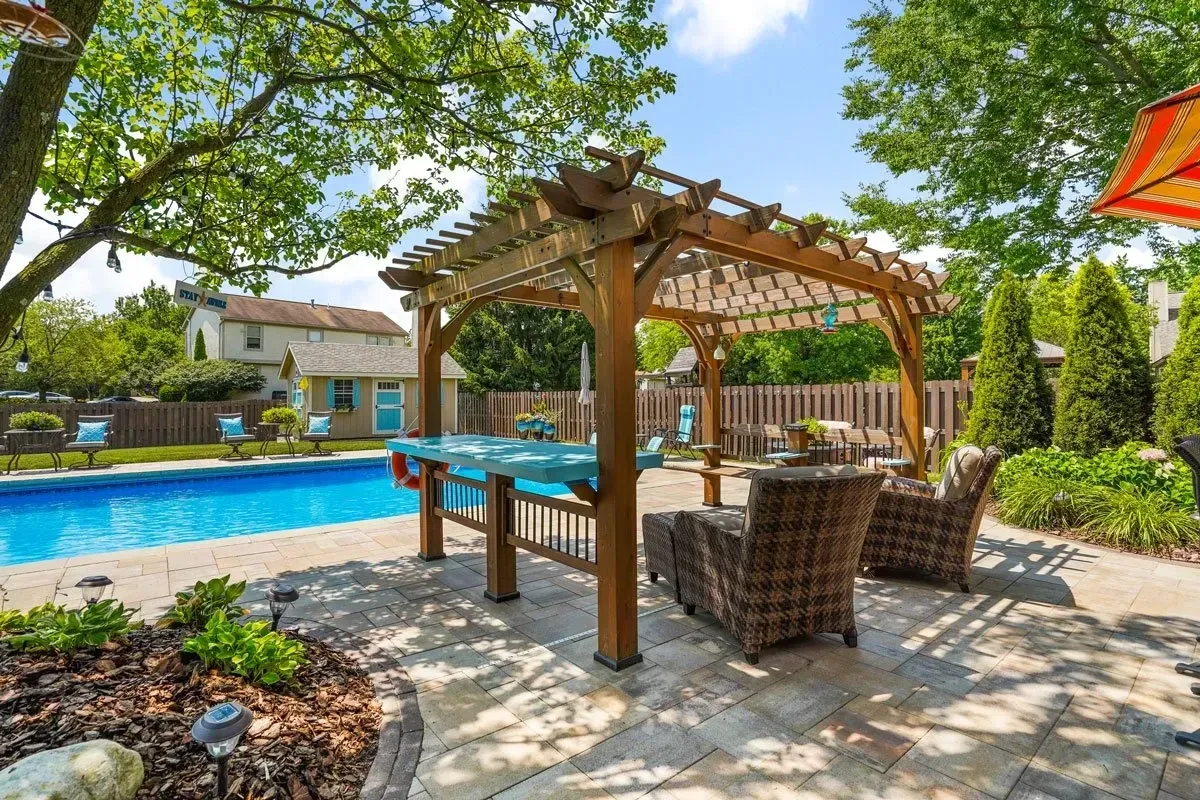
Why HOA Review Boards Prefer the Roof
ARC committees in Cumming’s premium subdivisions are not arbitrary. Three forces drive the preference for covered kitchens, and once you understand them, the approval math stops feeling like a gatekeeping trick:
1. Property value protection. HOAs exist to defend resale values for every house on the street. A freestanding kitchen island reads as personal taste to the committee. A covered outdoor structure reads as a permanent improvement that raises the bar for surrounding homes. The board is not evaluating your taste — it is evaluating whether future buyers on your cul-de-sac benefit from the precedent. A cedar heavy-timber pavilion sets a precedent that elevates the neighborhood. A stand-alone grill does not.
2. Architectural coherence. Boards in subdivisions built between 2000 and 2015 — the heart of Forsyth’s housing stock — were often written with covenant language requiring accessory structures to match the primary home’s architecture. A gable pavilion with asphalt shingles that matches the house roof ties in. A detached grill island with no roofline does not. Committees lean on that language hard.
3. Finished vs. unfinished aesthetic. This is the subjective one, but it is real. Chairs, tables, grills, and umbrellas are furniture. Roofs, columns, and ceilings are architecture. Boards reviewing submissions want to see the “architecture” box checked. A pavilion checks it. An island does not.
Forsyth County permit reality: Any accessory structure over 200 sq ft or with a permanent foundation triggers a full building permit through the Forsyth County Dept. of Planning & Community Development at 110 E. Main St. Most pavilions in the 12’x14′ to 16’x20′ range fall inside that window. Your ARC approval does not replace the county permit — you need both.
The Real Cost Math on the $18K–$38K Pavilion Adder
Let’s put honest numbers on the decision. In Cumming, a covered structure attached to or integrated with an outdoor kitchen lands in this range depending on what you pick:
- Aluminum louvered pergola, 12’x14′: Roughly $18,000 to $24,000 installed. Motorized louvers, integrated LED, aluminum frame in a powder-coated finish. Lightweight, zero-rot, and most ARC boards now recognize them as “permanent structures.” Good for flatter Cumming lots where the grade drop toward Big Creek tributaries is modest.
- Cedar heavy-timber pergola, 14’x16′: Roughly $22,000 to $30,000. Real 8×8 cedar columns, slat or solid top, stained medium brown. The ARC boards love this one. So does the appraiser.
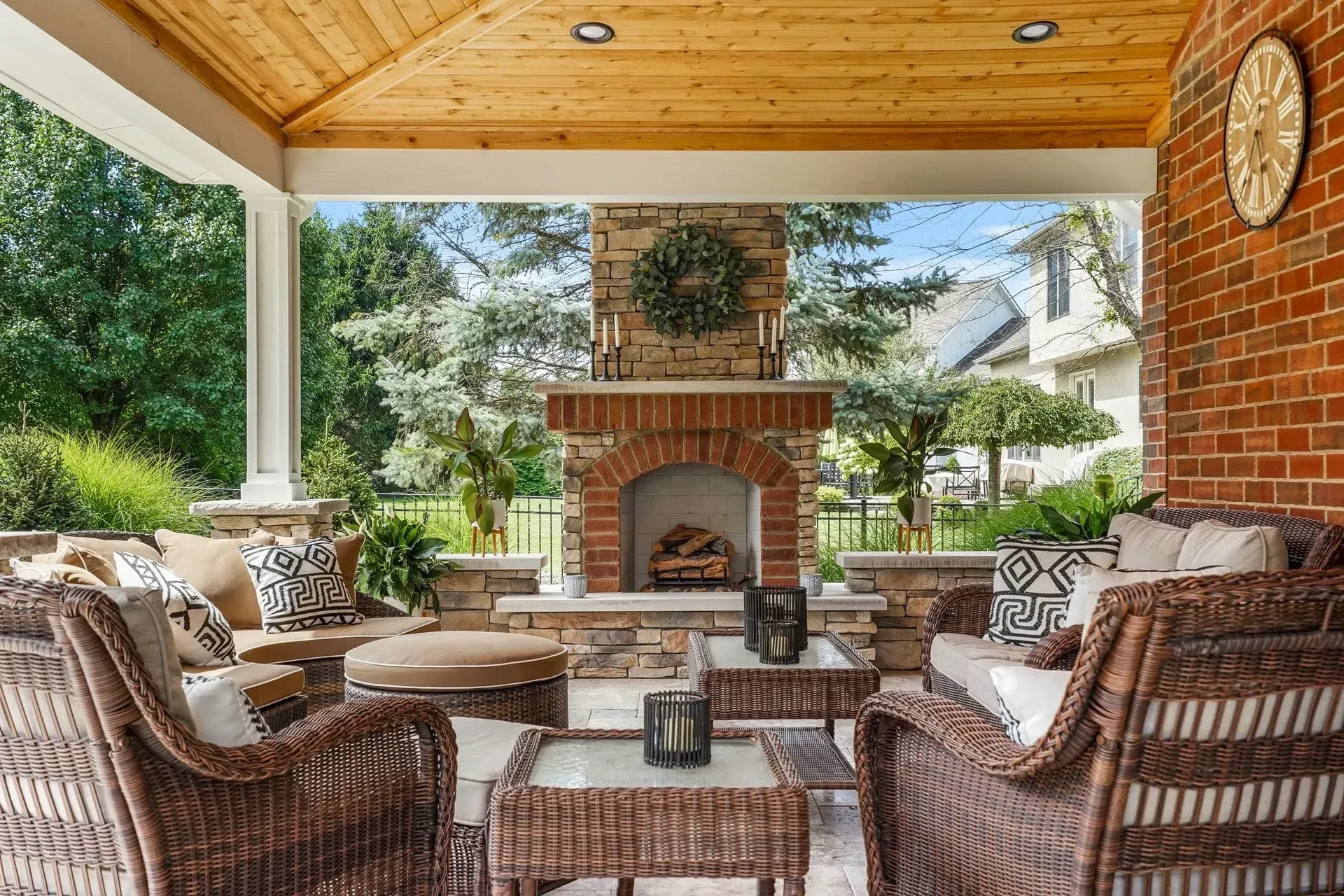
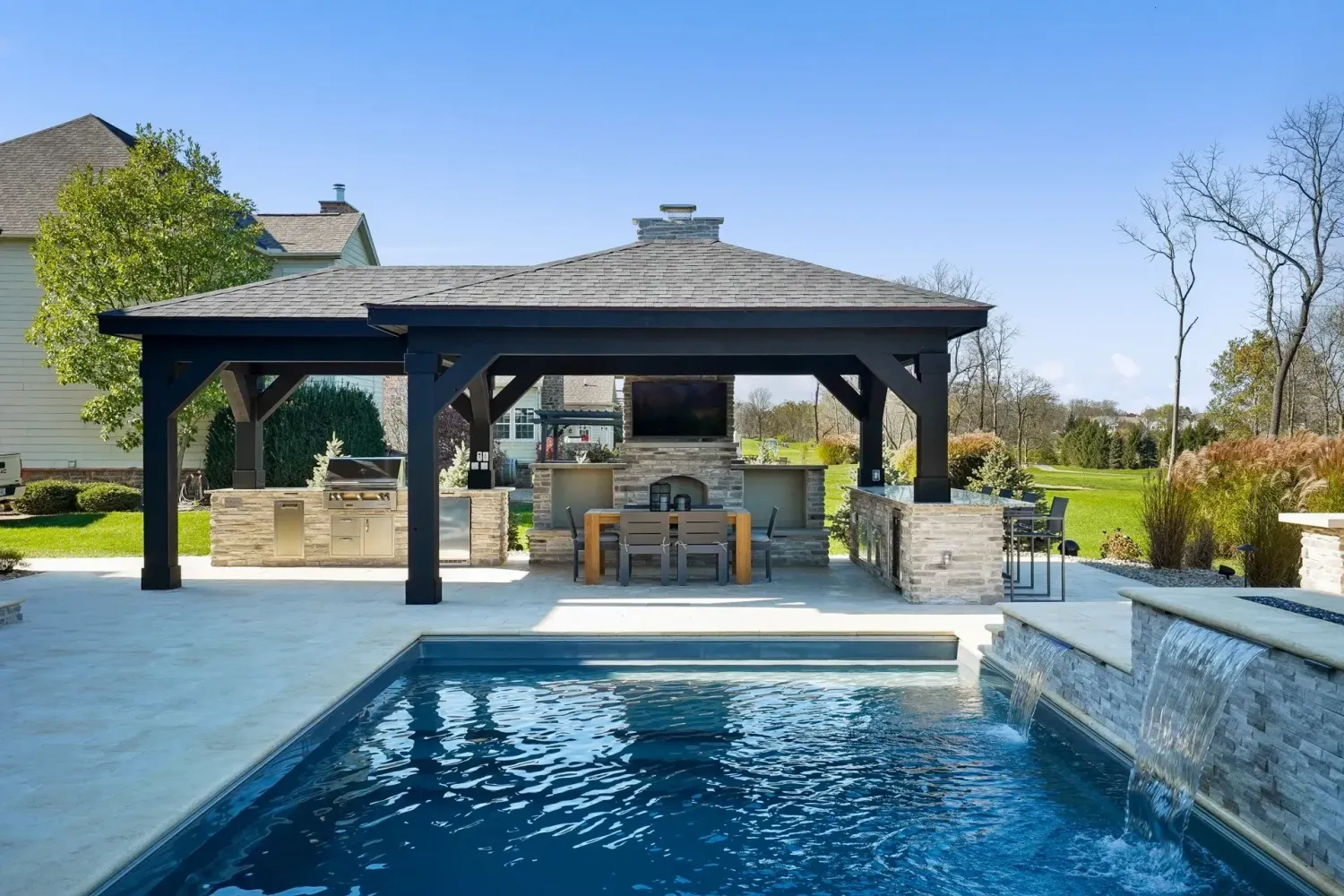
- Cedar gable or hip-roof pavilion, 16’x20′ with asphalt shingles: Roughly $28,000 to $38,000. Cedar tongue-and-groove ceiling, ceiling fan, recessed LEDs, roof pitched to match the primary home. This is the version that sets neighborhood precedent and carries the heaviest appraisal lift.
If your baseline kitchen budget was $42,000, a pavilion adder moves you to somewhere between $60,000 and $80,000 depending on which structure. That is a real number and we are not going to soften it. What we will do is walk you through why, in most Cumming HOA-heavy subdivisions, the covered version pays itself back faster than the open version.
The ROI Math — Appraiser Adds, Usable Days, and Resale
Three returns show up on the covered-kitchen side of the ledger. Take them in order.
Appraiser value add. A pavilion-covered outdoor kitchen in a Cumming subdivision typically adds $12,000 to $24,000 of appraised value versus an open kitchen’s $6,000 to $12,000. Appraisers in Forsyth County have comp data from Vickery, Hampton Park, Three Chimneys, and the newer builds off Post Rd — they price pavilion-covered outdoor rooms closer to interior square footage than exterior hardscape. A 320 sq ft pavilion with a finished kitchen can appraise like you added a sunroom, because functionally, you did.
Usable days per year. Cumming sits at roughly 1,275 ft elevation in USDA Zone 8a, with about 52 inches of annual rainfall and summer highs in the 89–94°F range. A covered kitchen works through rain, high summer sun, and shoulder-season frost mornings. An open kitchen doesn’t. The difference between 140 usable days and 260+ usable days is the difference between “we use it in July and September” and “we use it most weekends from March to November.” For a family of five, that usage math translates directly to dinner-out savings, entertaining savings, and the intangible compound of actually using the investment.
HOA approval near-guarantee. This is the one most homeowners undervalue because it doesn’t show up on a spreadsheet until it does. Failing an ARC submission costs you a 3 to 6 week resubmission window. Sometimes two. If your contractor had allocated that time to your project, they are now scheduling someone else into your build slot. A project that was supposed to break ground in May breaks ground in July, and the Cumming storm season ate your pour window. Boring, expensive, and entirely avoidable by choosing the covered version on the first pass.
Material and Build Specs That Win ARC Approvals
Not every covered structure clears the boards the same way. The specs below are what consistently passes through the ARCs that govern Cumming’s premium subdivisions:
Roof pitch. Match the primary home’s roof pitch within one tick if possible. A house at a 6:12 pitch pairs cleanly with a pavilion at 6:12 or 5:12. A flat pavilion roof on a traditional gabled home often gets flagged. The committees notice.
Shingle color. Specify the same manufacturer and color as the main house roof. “Weathered Wood,” “Driftwood,” or matching architectural shingle — written into the submission. ARC reviewers in Lake Windward and St. Marlo pull out the color chip and check.
Column material. Heavy-timber 8×8 cedar, stained to match trim color, or stone-wrapped 12″–14″ square columns on a poured pedestal. Skinny 4×4 painted posts read as “temporary” and get kicked back.
Electrical service. Plan for 240V service from your Sawnee EMC panel if you are running a full kitchen — fridge drawers, lighting, ceiling fan, TV, maybe a warming drawer. A 240V subpanel off the main service board is the right move. NEC §680 governs anything within 10 feet of pool water; within the same lot, the committee reviewer will expect a GFCI line item in your submission.
Ventilation. A fully enclosed pavilion roof over a grill requires either a louvered detail or an integrated vent hood. Cedar T&G ceilings with 4-inch louvered soffit vents handle the grill heat on most installs under 60,000 BTU. A Big Green Egg or Kamado Joe kamado under a solid roof needs a dedicated ceiling vent — we spec a 6-inch stainless B-vent directly above.
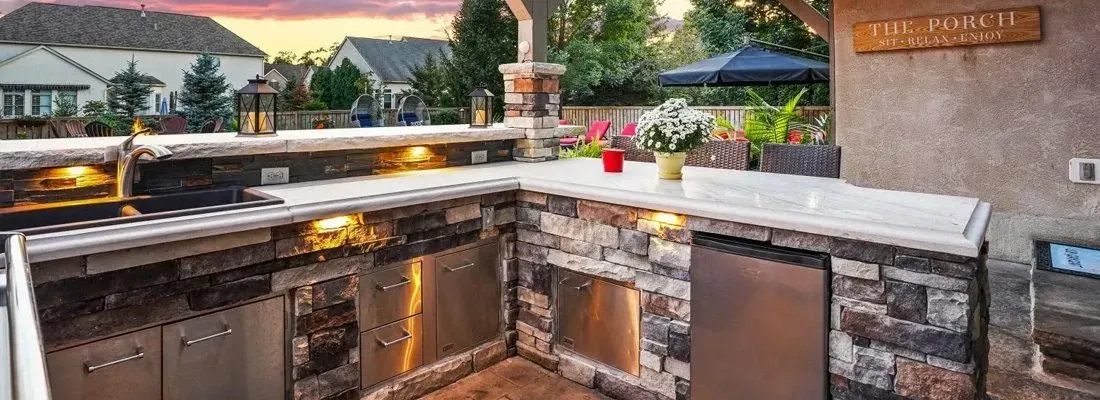
Subdivision-by-Subdivision — What We’ve Seen Pass and Fail
We are not going to publish an ARC’s internal guidelines, but after enough submissions in each of these Cumming subdivisions, patterns repeat. Read this as directional, not universal — every board has one reviewer who changes the tone for a quarter.
St. Marlo. Strongly prefers covered. The golf-course ARC has a handbook line about “finished accessory structures.” Pavilion submissions clear at around 95% on the first round. Open grill islands clear at maybe 50%. The board asks specifically for roof material callouts and column detail.
Polo Fields. Similar pattern to St. Marlo. The committee leans on “architectural integration” language. A cedar pavilion with matching asphalt shingles and 8×8 cedar columns almost always clears. A bare grill island triggers a resubmission request for covering 7 times out of 10.
Windermere. More permissive on material — we’ve cleared aluminum louvered pergolas here that a stricter board would push back on. Still prefers covered. First-round approval on pavilions runs near 90%.
Vickery and Hampton Park. Traditional, detail-heavy boards. They review roof pitch, column detail, and whether the pavilion “reads as a porch addition” to the primary home. A well-drawn gable pavilion passes. An open kitchen gets redirected to a covered submission at least half the time.
Lake Windward and The Collection at Forsyth area tracts. Mixed. Newer subdivisions off GA-400 sometimes allow open kitchens with stricter landscape screening requirements in lieu of a roof. Ask your contractor to pull the exact covenant language before you design.
Mashburn Plantation and Sadie Farms. Farm-community vintage with larger lots — generally more permissive on structure type but still reward cedar, stone, and “permanent-feeling” detail. Both covered and open have cleared here; covered still carries the appraisal premium.
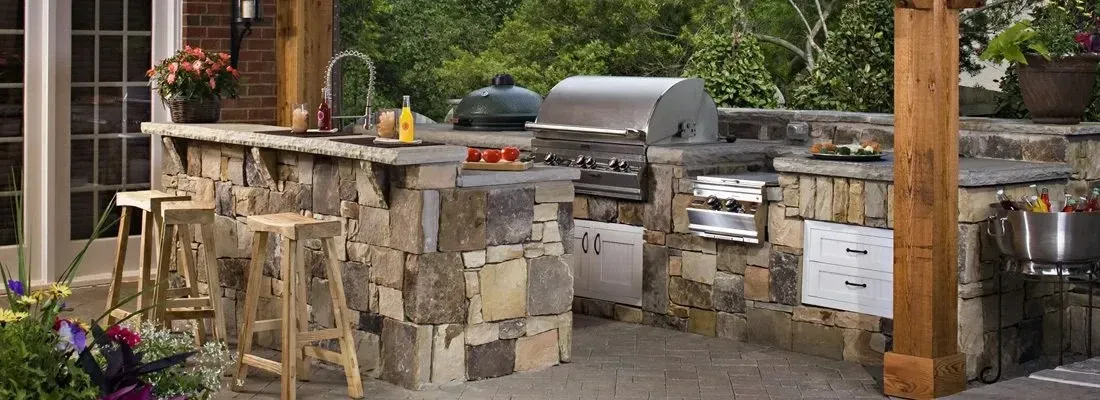
The Kamado-Under-Roof Detail That Trips Most Submissions
If your kitchen centerpiece is a Big Green Egg or a Kamado Joe, the covered build introduces one detail almost every first-time submission misses — the kamado bay needs dedicated airflow. A ceramic kamado running at 650°F radiates a surprising amount of heat upward. A covered pavilion with a closed cedar T&G ceiling directly overhead will either scorch the wood over years or create smoke pooling issues under the roofline.
The fix is a louvered slat detail in the ceiling panel immediately above the kamado, or a dedicated B-vent punching through the roof. We typically spec either a 6-inch stainless B-vent with a rain cap or a 24-inch square louvered ceiling cutout centered on the kamado bay. Cost adds $1,800 to $3,200 on the pavilion build but protects your ceiling and keeps the ARC from flagging future complaints.
Boards in Cumming don’t review this detail proactively, but inspectors do. If you are running any solid-fuel appliance under a wood roof, have your contractor show you a ventilation shop drawing before construction, not after.
Sawnee EMC 240V note: Most outdoor kitchens with a full appliance suite pull between 30 and 50 amps. Sawnee EMC will spec a dedicated subpanel run at 240V / 60-amp service for anything with refrigerator drawers, icemaker, warming drawer, and lighting. Call the utility early — Cumming’s transformer capacity in older 2000-era subdivisions occasionally requires a service upgrade that adds 4–6 weeks to the timeline.
When the Open Kitchen Actually Wins
We are advocates for the covered kitchen in almost every Cumming HOA-governed subdivision, but there are three scenarios where the open version is the better call. Be honest about which situation you are in.
You are in a newer subdivision with flexible covenants. Some 2018+ builds off McFarland Pkwy and the north side of Forsyth toward Dawson County were written with looser accessory structure language. If your covenant permits open kitchens with no committee note, the $18K–$38K pavilion adder is optional rather than near-required.
You have significant grade drop the pavilion would fight. Cumming lots often have 3–8 ft grade drops toward South Forsyth drainage tributaries. Putting a 16’x20′ pavilion on a sloped pad requires structural engineering, block retaining walls, and sometimes a raised deck — the adder jumps from $28K to $55K fast. On those lots, a freestanding grill island on a bluestone paver pad is often the smarter build.
Your house is selling in under 24 months. The pavilion’s appraisal premium lands somewhere between 18 months and 5 years after install, as comparable sales feed back into the neighborhood data. If you are staging for a year-two sale, the open version is often the better near-term ROI — you are paying the pavilion cost on a resale that hasn’t fully captured the lift yet.
Every other scenario in high-end Cumming subdivisions — primary residence, 5+ year horizon, ARC-heavy neighborhood — tilts strongly toward the covered version. The math is not close.
How to Write an ARC Submission That Clears First Round
If you take one operational detail from this piece, take this. An ARC submission in a Cumming premium subdivision should include, at minimum:
- A scaled site plan showing the pavilion location, setbacks from rear and side lot lines, and grade drop notation.
- Elevation drawings on all four sides of the pavilion, with roof pitch labeled.
- A material schedule — cedar species, column dimension, shingle manufacturer and color, ceiling material.
- A lighting plan including any LED, recessed can, or landscape uplight within the structure footprint.
- A photo or rendering showing the pavilion against the primary home’s elevation.
- Written confirmation the structure is within setback distances per Forsyth County zoning.
Six items. Most first-round denials are not about taste — they are about missing one of these. A contractor who has built in St. Marlo or Polo Fields knows the submission format the committee expects. That institutional knowledge is worth more than the drafting fee it replaces.
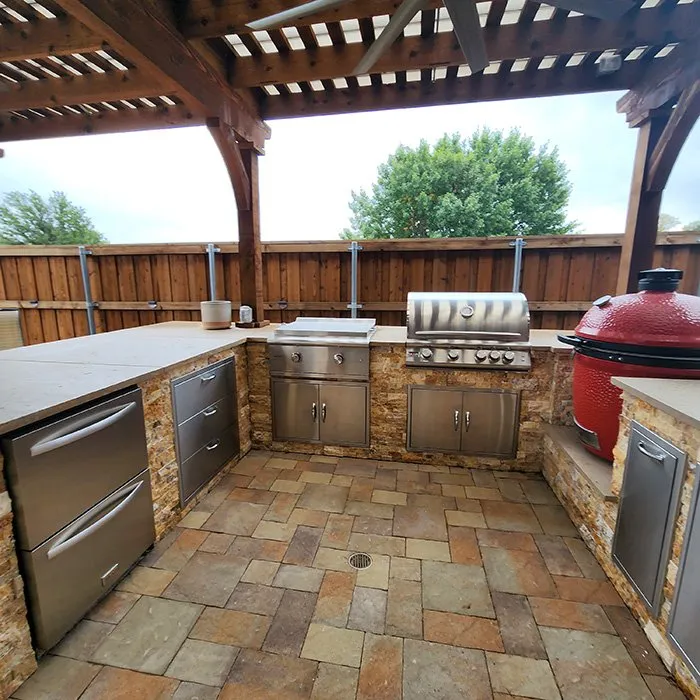
If you are in 30040 or 30041, live inside an active ARC committee, and are staring at a kitchen design that the committee will see in the next quarter, the decision is worth making with real numbers. Covered wins approval, covered wins year-round usability, and covered wins appraisal lift. The $18K–$38K pavilion adder is the most reliable insurance policy in an HOA-heavy Forsyth County build. It’s why, when clients in Lake Windward or Vickery call us after a first-round denial, the first thing we sketch is the roof.
Outdoor kitchens & pavilions across 20+ cities within 30 miles of Winder, GA
We design pavilion-covered kitchens that win Cumming HOA approvals on the first round and appraise like the room additions they are.