
Half the resurfacing quotes handed to East Cobb homeowners with 1980s and 1990s pools are solving the wrong problem. The shell is fine. The plaster still has another decade. What failed is the 12-inch strip of concrete wrapping the edge — and swapping that out costs a fraction of what the sales rep wrote on the whiteboard.
Walk the perimeter of almost any 25-year-old pool in Indian Hills, Atlanta Country Club, or the older stretch of Lower Roswell Rd and you will see the same thing. A hairline crack parallel to the waterline tile. A piece of cantilever concrete that rocks when you press it with your foot. Mortar joints wide enough to drop a quarter into. Tile popping loose one piece at a time.
That is a coping failure. Not a shell failure. Not a plaster failure. The coping is a wear part — water on one side, sun-baked deck on the other, 22 freeze-thaw cycles a year driving moisture into every crack. It was designed to be replaced. The shell it sits on was not.
And yet the quotes landing in Marietta mailboxes read like the whole pool needs to be gutted. $14,000 to $28,000 for a full interior resurface. New tile. New coping. A plumbing upgrade while we’re in there. Sometimes a new deck too. It is the pool industry’s version of a mechanic quoting a new transmission when all you needed was a fluid change.
This post is the diagnostic. How to tell when the coping is the only thing broken, how to price it honestly, what the three coping material choices look like on a real East Cobb deck, and why Cobb County pool barrier code still applies to a coping swap.
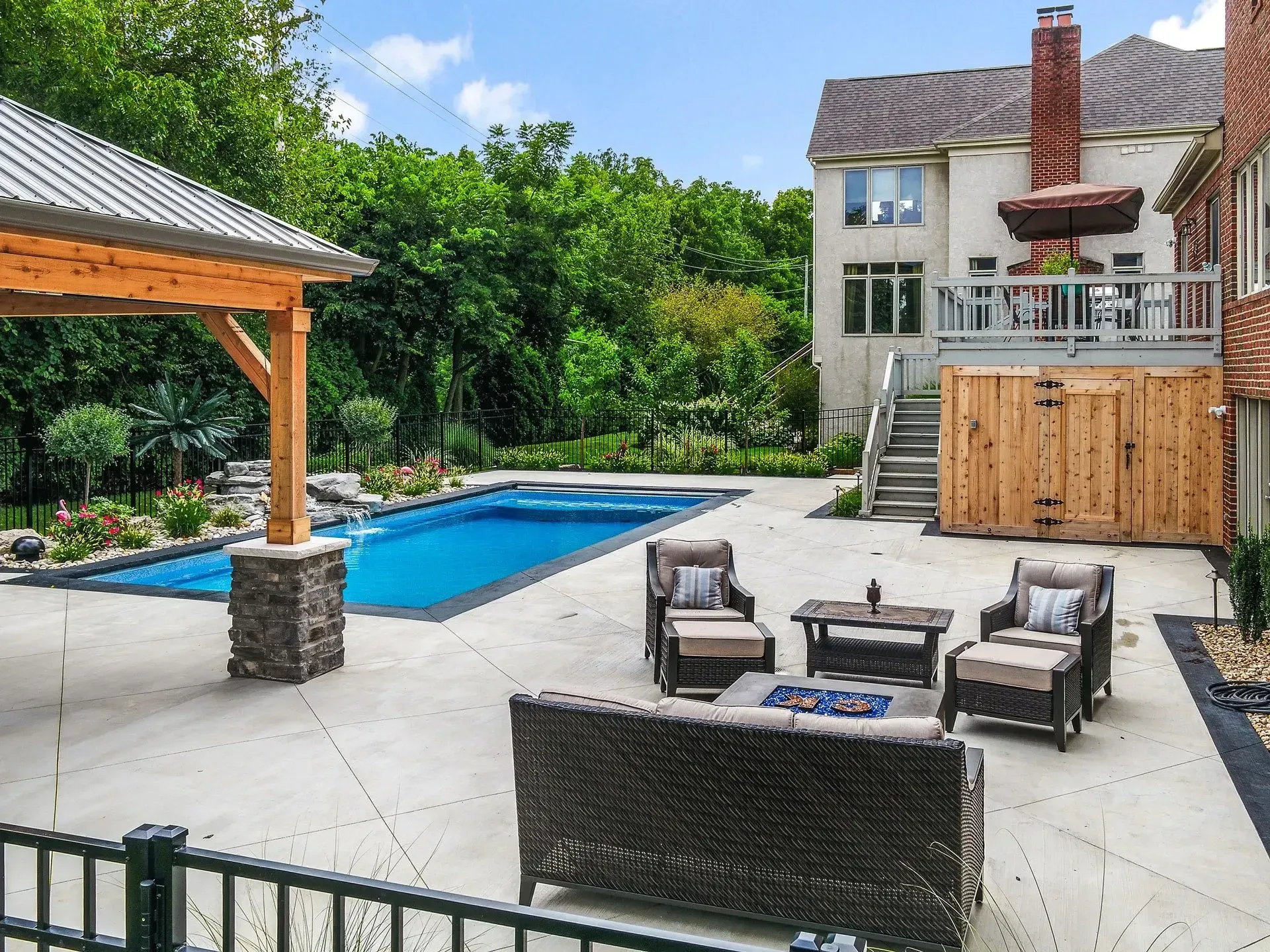
The Contrarian Read: The Shell Is Almost Never What Broke
Here is the sentence that should run through every homeowner’s head before signing a resurfacing contract: the gunite shell of your pool is one of the most durable structures on your property. Properly built, a shotcrete or gunite pool shell in Cobb County will outlast the roof of your house and usually the first generation of owners.
What wears out on a 20-to-30-year-old pool — in order of frequency — is this:
- Coping. The perimeter stone or concrete cap. First to fail. Always.
- Waterline tile. Fails as a direct consequence of coping movement.
- Plaster or interior finish. Cosmetic crazing, staining, rough-to-the-touch spots.
- Equipment. Pump, heater, filter — separate conversation entirely.
Notice where the plaster sits. Third. It is almost always cosmetic long before it is functional. A standard white plaster in Marietta’s Zone 7b/8a climate has a realistic functional life of 10 to 15 years. Pebble interiors push closer to 18 to 22. The shell carries on much longer than either.
So when a sales rep walks your deck, points at crazing lines, and says “you need to resurface,” the honest question is: does the plaster have a problem, or does it just look old? Those are very different jobs. One costs four figures of diagnostic attention. The other costs $14K to $28K.
On East Cobb pools built in the boom running from the late 1980s through the early 2000s — in subdivisions like Walton Woods, Chestnut Hill, and Seven Oaks — the coping is almost always the actual failure point. Shell built correctly. Plaster refreshed once around year 12. What nobody ever touched was the 12-inch strip of cantilever concrete, brick, or stone wrapping the edge.
The honest pricing delta: A full resurface quote in East Cobb typically runs $14,000 to $28,000 depending on finish. A coping-only replacement with matching tile refresh runs $3,400 to $8,600. If the plaster is still functional, the coping swap is a four-to-one savings for the same visual outcome.
Forensic Diagnosis: Four Separations That Tell You Coping Is the Failure
A coping failure has a specific forensic signature. Walk the perimeter with a flashlight after dinner and you can self-diagnose in about ten minutes. Four things to look for — if two or more are present, coping is what is broken, not the shell.
1. Separation at the Bond Beam
The bond beam is the top 8 to 12 inches of the structural shell. Coping sits on it, glued down with a thin mortar bed. When coping fails, the first symptom is a hairline gap between the underside of the coping and the top of the bond beam — often wide enough to slide a business card into. On natural-stone coping it shows on the pool side. On poured-in-place cantilever concrete it shows on the deck side. Either way, it is coping releasing from its bond. Not plaster. Not shell.
2. Lifted or Drummy Tile
Tile is glued to the face of the bond beam, visible at the waterline. When coping shifts even a fraction of an inch, it drags the tile with it. Symptoms: individual tiles on the pool floor, a hollow sound when you tap with a coin, hairline cracks running vertically through multiple tiles in a row. Tile failure above functional plaster is a coping problem — replace the tile without replacing the coping and the new tile fails again within two seasons.
3. Cracked Mortar Between Coping Stones
On brick, travertine, or paver coping (common in East Cobb 1990s builds), the mortar joints are the first thing to fail. Open joints, missing mortar, a visible dip where one coping stone sits lower than the next — that is the coping telling you its service life is up. Re-grouting is a six-month fix at best. The mortar is failing because the coping itself has moved.
4. Deck-to-Coping Gap Widening Year Over Year
The expansion joint between the deck and the back edge of the coping is supposed to be about 3/8-inch wide with flexible sealant. When that joint opens to 3/4-inch or wider — especially on East Cobb’s rolling Piedmont lots with moderate grade — it means deck and coping are separating on different movement planes. That is a coping job. Often combined with a deck repair, but coping is the pivot point.
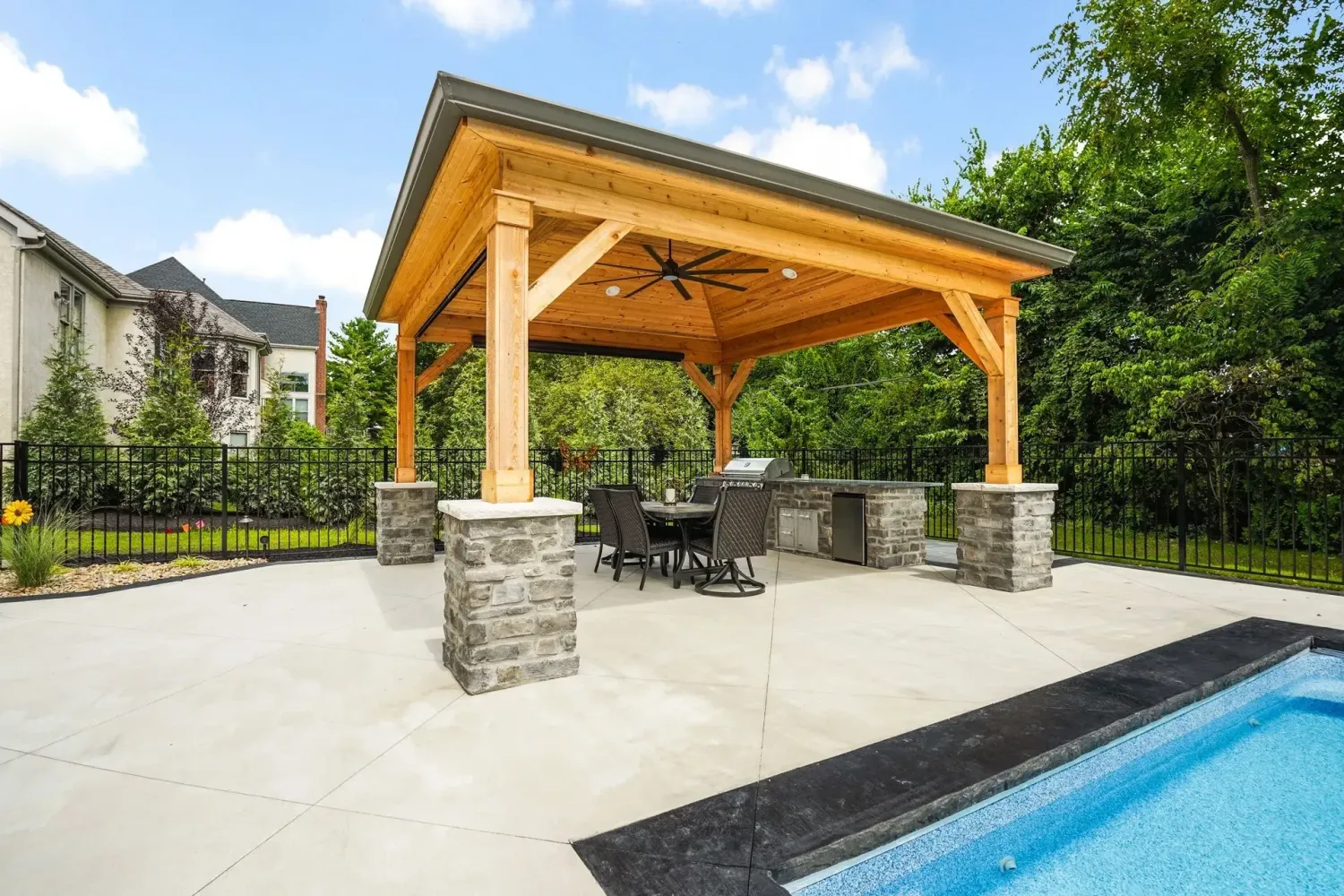
What Is NOT a Coping Problem — So You Don’t Over-Repair
Just as important: knowing what is not coping failure. This is where unnecessary resurface quotes come from.
Shell crazing — the spider-web of hairline cracks across the interior plaster — is almost always cosmetic. Not structural, not leaking, not a reason to gut the interior. A light acid-wash often resolves the appearance. Crazing alone is not a $22,000 problem. Stains (orange, black, greenish) are water chemistry, not surface failure — treatment costs a few hundred dollars. Rough-texture plaster usually has 3 to 5 more years than homeowners assume; it is replaceable the day it cuts feet, not before. A single cracked tile is not a coping problem unless the rest of the tile band shows the forensic pattern above — pool toys, skimmer weights, and freeze-expanded water all break individual tiles without meaning anything about the coping.
Why East Cobb’s Coping Fails Faster: Four Local Accelerators
Marietta sits on Cecil-series Piedmont clay with granite bedrock at variable depth (3 to 15 ft typical). Elevation runs around 1,118 ft in the city, climbing toward Kennesaw Mountain’s 1,808 ft peak on the north boundary. USDA Zone 7b/8a border, 22 freeze events per year, roughly 52 inches annual rainfall. Four things in that profile are hard on pool coping.
Freeze-thaw cycling. Each of those 22 freeze events is a water-into-microcrack-and-widen cycle. Cantilever concrete coping poured in place in late-1980s East Cobb builds is especially vulnerable — the back edge catches runoff and holds it, then freezes and spalls from the inside out. By year 18 to 22, unsealed cantilever coping almost always shows edge spalling.
Clay expansion. Cecil clay is highly reactive — swells wet, shrinks dry. Over a decade that cycle walks the deck an inch or more side to side relative to the shell. The expansion joint absorbs some; the coping absorbs the rest and usually loses first. East Cobb’s better-draining sandy-loam pockets (Indian Hills, parts of Atlanta Country Club) see less movement but never zero.
Mature canopy leaf load. Older East Cobb neighborhoods — Walton Woods, Sope Creek, Chestnut Hill — have an oak and poplar canopy that was not there when the pools went in. Tannin-rich leaf debris sitting in coping joints accelerates mortar breakdown. One of the least-discussed local factors and one of the most consistent.
Slope. Rolling Piedmont grade means many East Cobb backyards have a 3 to 6 ft grade change from house to back lot line. Low-side coping catches runoff. High-side coping fights hillside soil pressure. Both edges fail for different reasons — on sloped lots, expect the low side to fail first, usually by year 18 to 20.
Cobb County permit note: Coping replacement that touches the pool barrier (safety fence, auto-cover anchors, door-alarm sensors on doors giving direct pool access) requires a permit through Cobb County Community Development at 1150 Powder Springs St., even if you are not touching the shell. The coping is considered part of the pool barrier system under the 2020 Georgia Residential Code as adopted by Cobb. Skip it and you’ll pay for the reinspection later.
The Three Coping Options for an East Cobb Replacement
Assume the diagnosis confirms coping is the actual failure. Three realistic replacement choices — each with a different cost, aesthetic, and failure mode twenty years out. Pick based on the pool and its neighborhood context, not a glossy brochure.
Option A: Travertine Bullnose
Travertine is a natural sedimentary stone, most commonly quarried in Turkey. The preferred pool cut is a bullnose edge — a rounded half-pipe lip on the pool side. Common units are 12×24 and 16×24 inches, 1 1/4-inch thickness.
Why it works on East Cobb pools: travertine stays cool underfoot in full July sun (reflected heat, not absorbed), drains naturally through its own porosity, and the bullnose is the hand-friendly lip most buyers want once they feel one. In Atlanta Country Club and Indian Hills — soft, natural, tied to mature landscaping — travertine reads right.
Material and install runs $48 to $72 per linear foot, or roughly $3,900 to $6,200 for a standard 80-to-90-foot perimeter. Sealing is non-optional in freeze-thaw climates — re-seal every 3 to 4 years. Aging pattern: weathers to a softer earth tone over the first five years. Failure mode two decades out is joint deterioration, not stone failure — meaning the next coping conversation is a re-grout, not a tear-out.
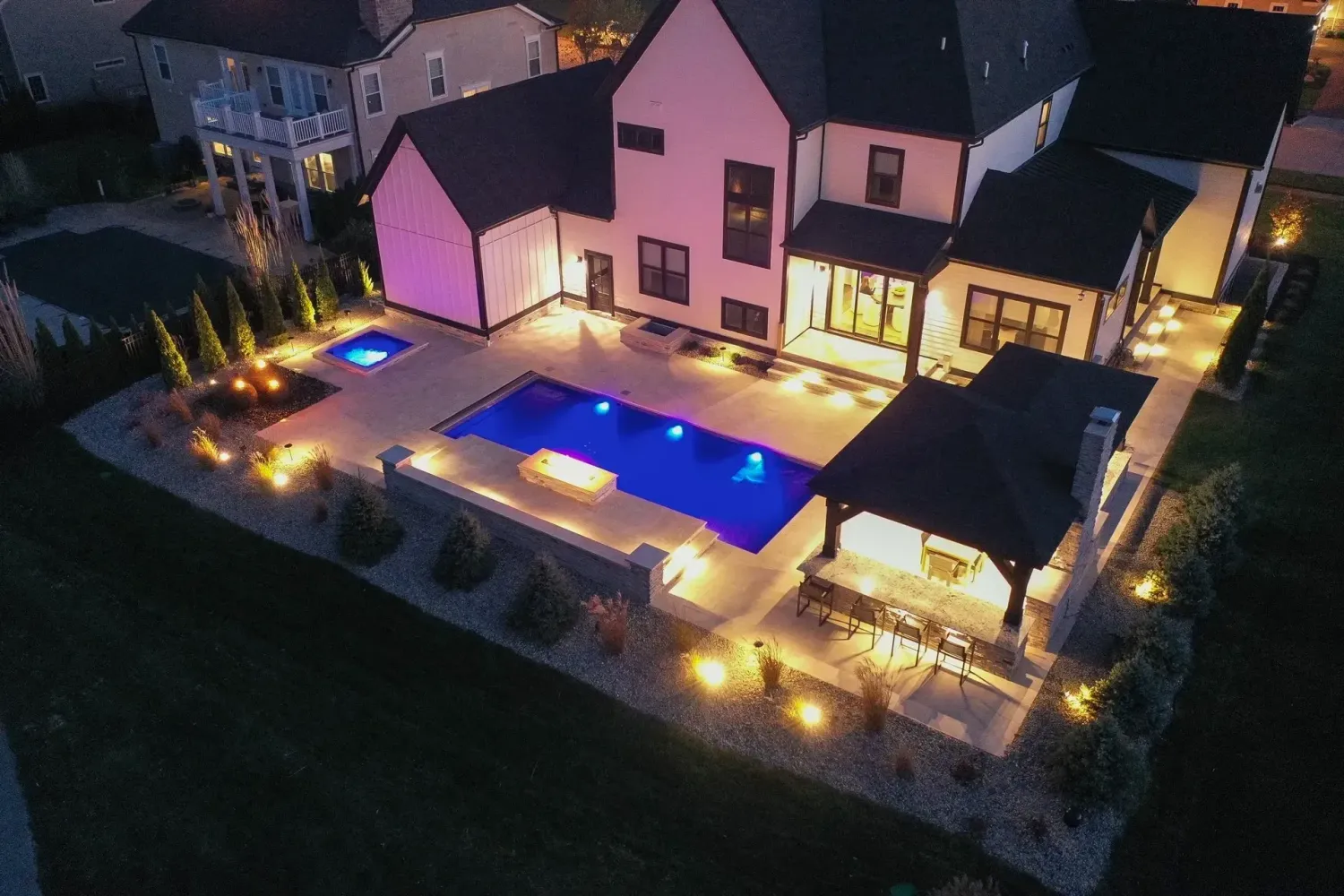
Option B: Concrete Paver Square-Edge
Engineered pavers — Belgard, Techo-Bloc, County Materials — in a square-edge unit. Usually 12×24 inches, 2 3/8-inch thick. Crisp 90-degree geometry on the pool side. No lip.
Where it fits: modern architectural homes in the newer Burnt Hickory infill, or any pool where the deck is already Techo-Bloc or Belgard and matching is the priority. Clean, contemporary, straight-line aesthetic. Also gives the surround a pronounced visual edge on minimalist geometries.
Material and install runs $42 to $58 per linear foot — modestly cheaper than travertine because the units are manufactured (consistent dimensions, factory-square edges, faster install). Color retention is the main differentiator — good-quality integral-color pavers hold 10 to 15 years; lower grades fade by year 7 or 8. Freeze-thaw resistance is strong (these are manufactured for Northern climates). Failure mode is joint-sand wash-out, not unit failure.
Warning: the square edge is less forgiving on feet and less safe for kids. On family pools in Brookstone and Seven Oaks, travertine bullnose is usually the better call despite the higher per-foot cost.
Option C: Drop-Face (Cantilever) Concrete
Poured-in-place concrete with the edge dropping vertically into the pool for 3 to 4 inches — coping and tile band become one continuous concrete surface. Very common on 1980s and early-1990s East Cobb builds.
Why choose it: cheapest up front at $28 to $42 per linear foot. If your pool was originally drop-face and the house aesthetic is utilitarian, matching the original is often correct. Some HOAs — including parts of Atlanta Country Club — require new coping to match the original profile, removing the choice.
Aging pattern: newest-looking for about three years, then weathers faster than the other two options. Hairline cracks appear at joint locations within a decade. Freeze-thaw spalling is the long-term enemy — a high-quality siloxane sealer applied at install and re-applied every 2 to 3 years slows failure significantly.
Contrarian take on drop-face: cheapest up front but shortest functional life. Planning to stay 20+ years? Travertine or paver is cheaper across the full life cycle, even at the higher per-foot cost.

The Sequence and the All-In Cost of a Coping-Only Replacement
A coping-only replacement on an East Cobb pool is a four-to-six-day project. Pool drained to the tile line. Existing coping demolished off the bond beam with hand tools — no heavy machinery inside the pool area. Bond beam cleaned and inspected, any surface damage patched with hydraulic mortar. New coping dry-laid to confirm cut plan, then set in a polymer-modified mortar bed with a consistent 3/8-inch joint. Joints grouted. Waterline tile replaced where required (almost always — coping replacement is the opportunity to refresh the tile for the cost of the tile alone, since the labor is already on-site). New expansion-joint sealant. Pool refilled.
The signature details that separate a good coping job from a cheap one:
- Polymer-modified mortar bed — not plain mortar. The polymer admixture gives flexural strength through freeze-thaw. Specify this in writing.
- Stainless steel anchor pins at corners and every third stone on radiused sections. Skipped by shops racing the bid; the joint cost is the life of the install.
- Polyurethane or polyurea expansion-joint sealant rated for pool-edge exposure. Not caulk. Not silicone.
- Bonding wire continuity check per NEC §680. The equipotential bonding grid loops through the coping perimeter. A lot of 1990s installs are out of code. Fix it while the coping is off.
- Permit on file with Cobb County Community Development before first pour. Non-negotiable — same process on Cobb EMC service addresses (large swaths of East Cobb) or Marietta Power service addresses inside the city.
Done properly on a Marietta pool with an 80-foot perimeter, standard access, no complicating deck damage: $3,400 to $8,600 depending on material. Add $1,200 to $2,400 for a waterline tile refresh (usually yes). Add $800 to $1,800 if the expansion joint needs partial deck repair (common on sloped lots). All-in: typically under $12,000 even in the worst case. Compared to a $14K-to-$28K full resurface on a pool where the plaster still has a decade in it, the math is obvious.
Three questions before agreeing to a resurface: One — what is the measured current thickness of the existing plaster? Over 3/8-inch and the plaster is not at end of life. Two — where specifically is the shell compromised, and can you show me the evidence on-site? A resurface quote without a specific shell complaint is a sales pitch, not a diagnosis. Three — would a coping-only replacement with a tile refresh resolve the visible failure? If the honest answer is “probably yes,” you just saved about $15,000.
None of this means resurfacing is wrong — full interior resurfacing is the right call when plaster measures under 1/4-inch at multiple points, when structural cracks in the shell pass a dye test, when stains have penetrated millimeters into the plaster matrix, or when the owner genuinely wants a pebble or quartz upgrade as an aesthetic choice. Those are real jobs. The problem is that across the East Cobb pool-remodel conversations we see year to year in Indian Hills, Brookstone, Burnt Hickory, and the Atlanta Country Club / Marietta Country Club pockets, roughly one in three resurface requests is genuinely indicated. The other two are coping problems wearing a resurface costume.
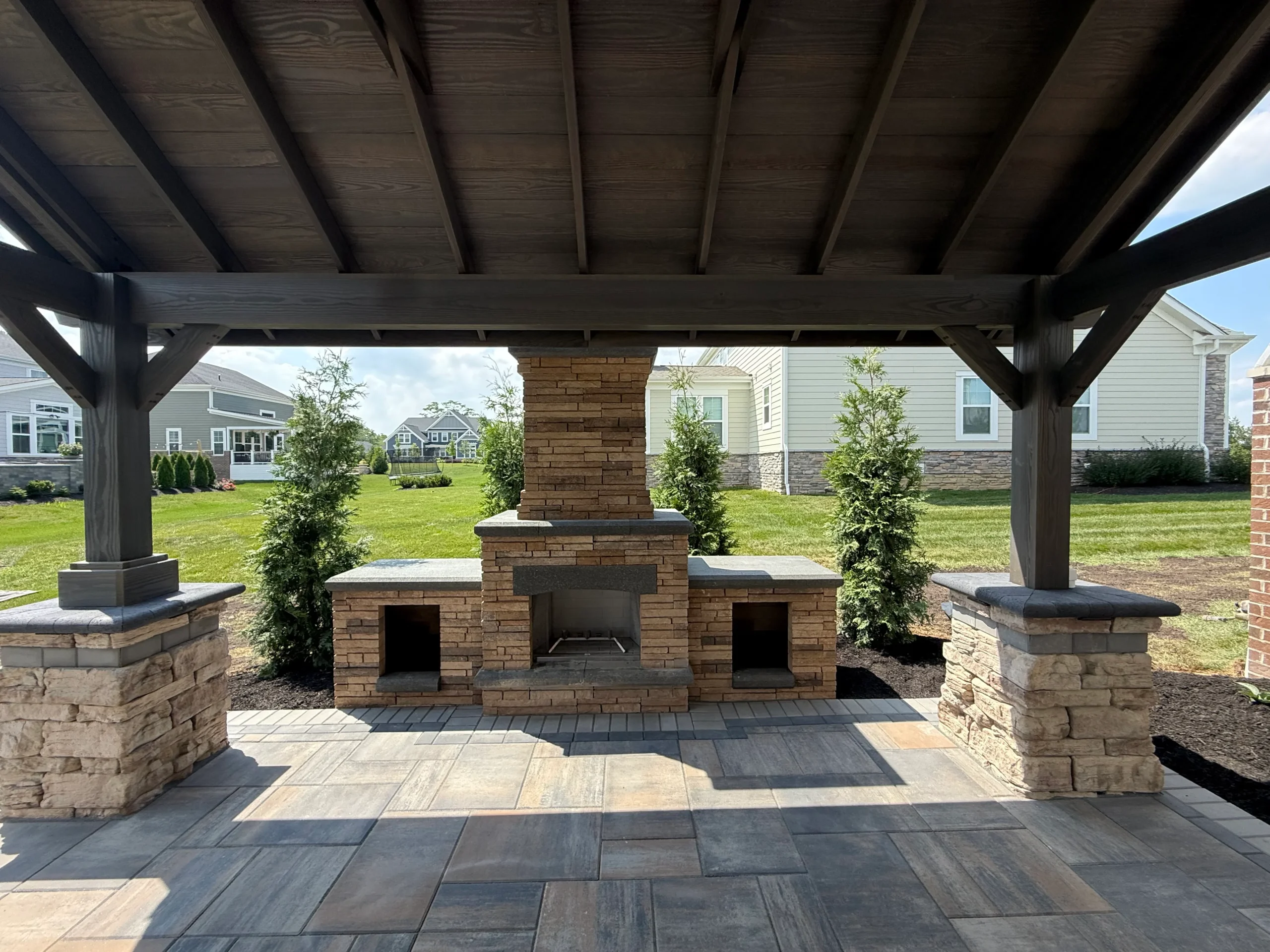
The typical East Cobb pool is in its second or third decade right now. These pools were built by good builders in a boom that started in the late 1980s, on lots with real HOAs (Atlanta Country Club, Indian Hills) that enforced build quality. The shells are not tired. The bond beams are not tired. What is tired is the 12-inch band of material wrapped around the edge — and replacing that band is not the same conversation as replacing the pool.
When a full-resurface quote hits your inbox for a 25-year-old Marietta pool, print it. Walk the perimeter. Look for the four separations in this post. If two or more are present, ask for a coping-only alternate quote. The contractor who refuses to provide one is probably not the contractor you want.
Honest pool diagnostics and coping replacement across 20+ cities within 30 miles of Winder, GA
If a resurfacing quote just landed in your inbox and you’re wondering whether the whole pool actually needs it — we’ll walk the perimeter, measure what matters, and tell you what’s broken and what isn’t.