
The cedar pergola that lasts 15 years in a sun-baked Brookstone backyard gives up the ghost in 8 to 10 years under the same Cobb County sky — if you build it in an East Cobb backyard shaded by 70-year-old oaks. Same wood. Same hardware. Same builder. Different canopy. That is the shade rot test, and it is the decision nobody tells Marietta homeowners they are actually making.
A pergola is two conversations pretending to be one. The first conversation is material — cedar, western red cedar, or powder-coated aluminum. The second conversation, the one that decides whether you write one check or two checks across the next thirty years, is exposure. The two conversations interact. Cedar priced at $8 to $12 per square foot looks like the obvious winner on paper. Put it under the oak canopy that runs from Indian Hills out to Sope Creek and it stops being the winner by year nine.
This piece is about making that decision with your eyes open. Cobb County sits on Piedmont red clay, on the 1,118-foot ridge that rises toward Kennesaw Mountain, and the same terrain that gave your backyard its privacy gave it its moisture pockets. We build pergolas on every side of that equation — sun-exposed Brookstone lots where cedar earns its keep, shaded Walton Woods lots where aluminum is the only honest answer, and split-exposure yards where the right call is a hybrid. The rest of this post shows you how we make the call.
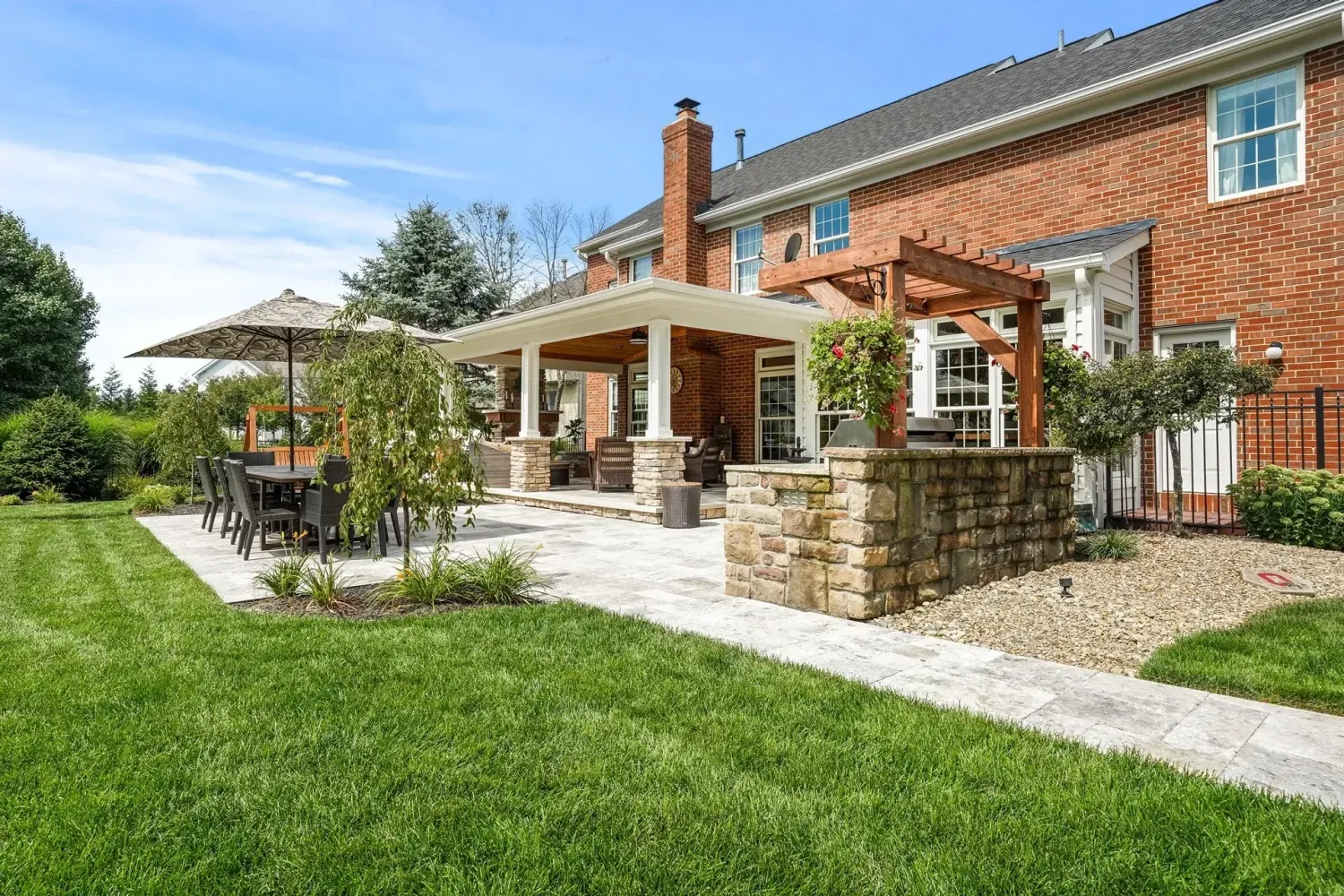
Why East Cobb Shade Is Not The Same As Sun-Facing Shade
Shade by itself does not rot wood. What rots wood is the combination shade produces — surfaces that stay wet longer after rain, lower UV exposure to kill mold spores, cooler morning temperatures that keep dew on the rafters into late morning, and leaf litter from the oak, poplar, and tulip canopy that packs into top-of-beam joints. You get that full cocktail in the old East Cobb neighborhoods between Johnson Ferry and the Chattahoochee. You do not get it in a new-build Brookstone lot on the western side of Hwy 41.
The numbers on Cobb County backyards tell the story. Marietta gets roughly 52 inches of rain a year distributed across 110 wet days. The USDA Zone 7b/8a climate means humidity that sits above 70% for most of June through September. A pergola rafter in direct afternoon sun dries out within ninety minutes of a rain event. The same rafter under a mature oak canopy stays damp for six to nine hours, sometimes longer if a second shower lands on it before it finished drying from the first one. Multiply that by a decade and you get a fungal colony on the north-facing surfaces of every rafter.
The rot starts where you cannot see it. Top surfaces of beams, where two pieces of lumber meet at a notch, where a lag bolt creates a capillary path into end grain. By the time the damage is visible from the patio it has already moved into the structural core. That is the unfair part of cedar in shade — by the time you notice, the fix is full replacement, not repair.
The 2x rule for Marietta cedar: Plan on half the service life in full-canopy shade compared to full-sun exposure. A cedar pergola we would expect to perform 15 years in an unshaded Brookstone lot will realistically deliver 8 to 10 years in a canopy-heavy Indian Hills or Walton Woods yard — even with identical construction, stain, and hardware.
The Three Materials, Honestly Priced For Cobb County
There are three real options when a Marietta homeowner tells us they want a pergola over the spa, over the outdoor kitchen, or over the patio off the kitchen door. We price all three the same way — installed, finished, with hardware and post anchoring, no hidden setup fees. Here is the honest spread across East Cobb and West Cobb projects we priced in the last twelve months.
The price differential is real. A 16 x 20 pergola — a common footprint over a spa spillover or a dining patio — comes in around $2,800 to $3,800 in standard cedar, $4,200 to $5,400 in western red cedar, and $8,300 to $12,200 in a louvered aluminum system. The cost jump from cedar to aluminum is not trivial. The question is not whether aluminum costs more. The question is whether cedar costs less once you count the second build.
This is where the conversation changes. A lot of Marietta pergola quotes stop at the installed price. We run the math across a 30-year ownership window, because that is the horizon most East Cobb homeowners are actually planning on when they buy a home in Atlanta Country Club or Chestnut Hill or Seven Oaks. Here is what that math looks like for the same 16 x 20 footprint.
Sun-exposed lot (Brookstone, open-yard Marietta Country Club, new-build corners of West Cobb): Standard cedar at $3,300 installed lasts 15 years, gets a full replacement at year 15 for another $3,300 inflation-adjusted (call it $4,600 by then), totaling roughly $7,900 across 30 years. Aluminum at $10,000 installed runs for the full 30 years with one powder-coat refresh around year 20 at $1,800. Total: $11,800. Cedar wins the sun-exposed math by about $3,900 across three decades — less than you would expect, but real.
Shade-exposed lot (Indian Hills, Walton Woods, canopy-heavy corners of Sope Creek): Same cedar, same $3,300 installed — but now failing at year 9. Replace at year 9 ($3,900 inflation-adjusted), again at year 18 ($4,600), again at year 27 ($5,400). Total: $17,200 across 30 years. Aluminum still runs $11,800. Aluminum wins the shade math by $5,400, plus you avoid three demolition-and-rebuild events. That is the TCO flip — the material that looks expensive up front becomes the cheap option under canopy.
We keep a running log of every Cobb County pergola we have built since 2018, and the exposure conditions of the lot. The pattern is consistent enough to draw neighborhood-level rules of thumb. These are generalizations — every yard has to get walked — but they hold up well enough to start the conversation.
Cedar Territory (Sun-Dominant Lots)
Brookstone, the western half of Marietta Country Club, newer construction around Burnt Hickory, and corner lots in the developments off Powder Springs Road tend to run open. Afternoon sun hits the patio area. Trees exist but they are not creating a closed canopy. These are the lots where cedar — especially western red cedar sealed with a high-solids penetrating stain like Sikkens Cetol or Messmer’s UV Plus — earns its 18-to-22 year service life. We have one project off Burnt Hickory Road built in 2019 that still looks new, and the only maintenance has been a restain every four years.
Aluminum Territory (Shade-Dominant Lots)
The old East Cobb neighborhoods are mostly aluminum territory. Indian Hills in particular — the established parts with the 60-to-70-year-old oaks — is a place we have stopped recommending cedar for unless the homeowner specifically wants the look and is prepared for the replacement cycle. Walton Woods, canopy sections of Chestnut Hill, lots backing onto Sope Creek or Willeo Creek, and most of the Atlanta Country Club interior are the same story. A Struxure or Azenco louvered aluminum system here will outlive the house.
Split-Exposure Lots (The Hybrid Call)
A lot of Marietta backyards are not one-or-the-other. The patio off the kitchen gets afternoon shade from a single big white oak, but the pool deck twenty feet away bakes in full sun. On those properties we will sometimes spec two structures — a cedar pergola over the sun-exposed pool dining area, and an aluminum pavilion over the shaded kitchen patio. The math works because the cedar zone is genuinely cheaper to own over 30 years, and the aluminum zone pays for itself in avoided replacement.
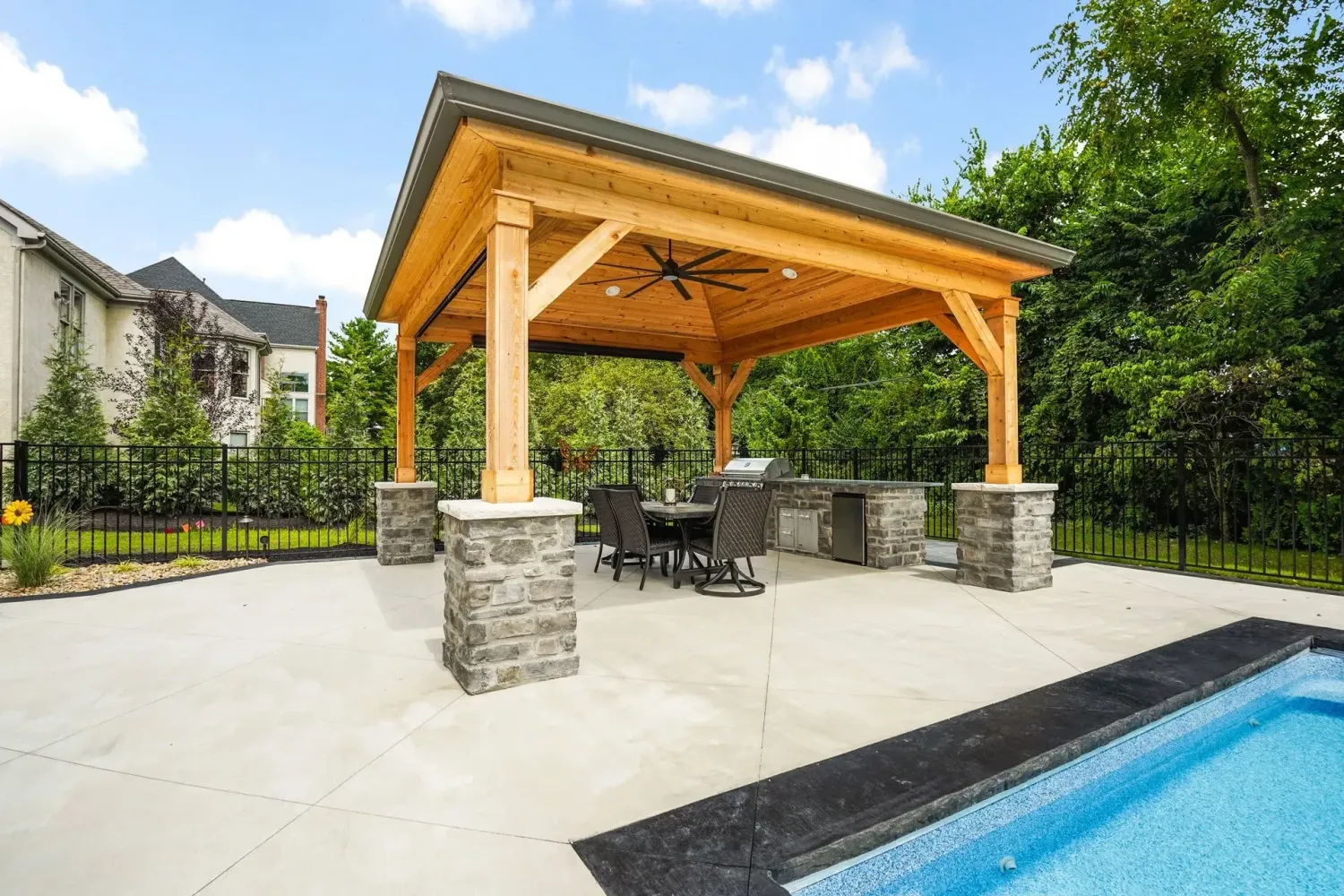
What The Cobb EMC / Marietta Power Factor Adds
Marietta has an electrical wrinkle that most Atlanta-area homeowners do not deal with. The city is served by Cobb EMC outside the incorporated limits and Marietta Power inside the city line. Both utilities have distinct permit and inspection workflows. That matters for pergolas because modern pergolas rarely stop at the roof. Homeowners want integrated uplighting in the rafters, ceiling fans on the center beam, heaters mounted to the posts, and outlets for string lights, TVs, and sometimes a mini-fridge for the outdoor kitchen below.
Running 120V or 240V service to a pergola through one of those utilities is a separate permit track from the pergola itself. Cobb County Community Development at 1150 Powder Springs Street handles the structural permit for the pergola. The electrical side goes through your utility’s service planner. This adds two to three weeks on the front end of any project that wants integrated electrical — which is most of them.
Here is where material choice intersects with the electrical question. Cedar is a non-conductor and hides wire runs beautifully — you can route conduit up through a hollow post and emerge into an eyebolt-mounted junction box, and the whole thing disappears into the staining. Aluminum pergolas are the opposite — most modern louvered systems come pre-wired from the factory with concealed channels for low-voltage lighting and integrated motor control. Neither is a drawback if you plan for it. Both become a drawback if the electrical gets designed after the pergola is already ordered.
Plan the permits in parallel, not in series: For a Marietta pergola with integrated electrical, submit the structural permit to Cobb County and the electrical load calculation to Cobb EMC (or Marietta Power, depending on your address) at the same time. Running them sequentially adds 3 to 5 weeks to your project timeline for no gained efficiency.
The Three Decisions That Actually Matter
Once you have internalized the exposure math and the neighborhood reality, the material decision collapses into three questions. Get these right and the rest of the project — footing design, hardware spec, finish schedule — follows naturally.
1. What does the canopy look like in August, not January? Deciduous trees confuse homeowners because the canopy in winter does not predict the canopy when it matters. The decision point is mid-August, 3pm, under full leaf. If you cannot see blue sky through the branches over your proposed pergola footprint, you are in shade territory regardless of what the yard looks like in February.
2. How long do you expect to own this house? If the honest answer is 5 to 8 years, cedar wins regardless of exposure because you will not see the rot. If the answer is 15+ years, run the TCO math. If the answer is “this is our forever house,” aluminum is the call anywhere other than a completely open lot.
3. Is this structure load-bearing beyond itself? A pergola that is just providing filtered shade has light structural demands. A pergola that is carrying a ceiling fan, a heavy chandelier, solar panels, or a privacy canopy is a different animal. Aluminum’s load-path is engineered and predictable. Cedar’s is organic and degrades with the shade-rot cycle. When the structure matters structurally, aluminum wins the conversation earlier.
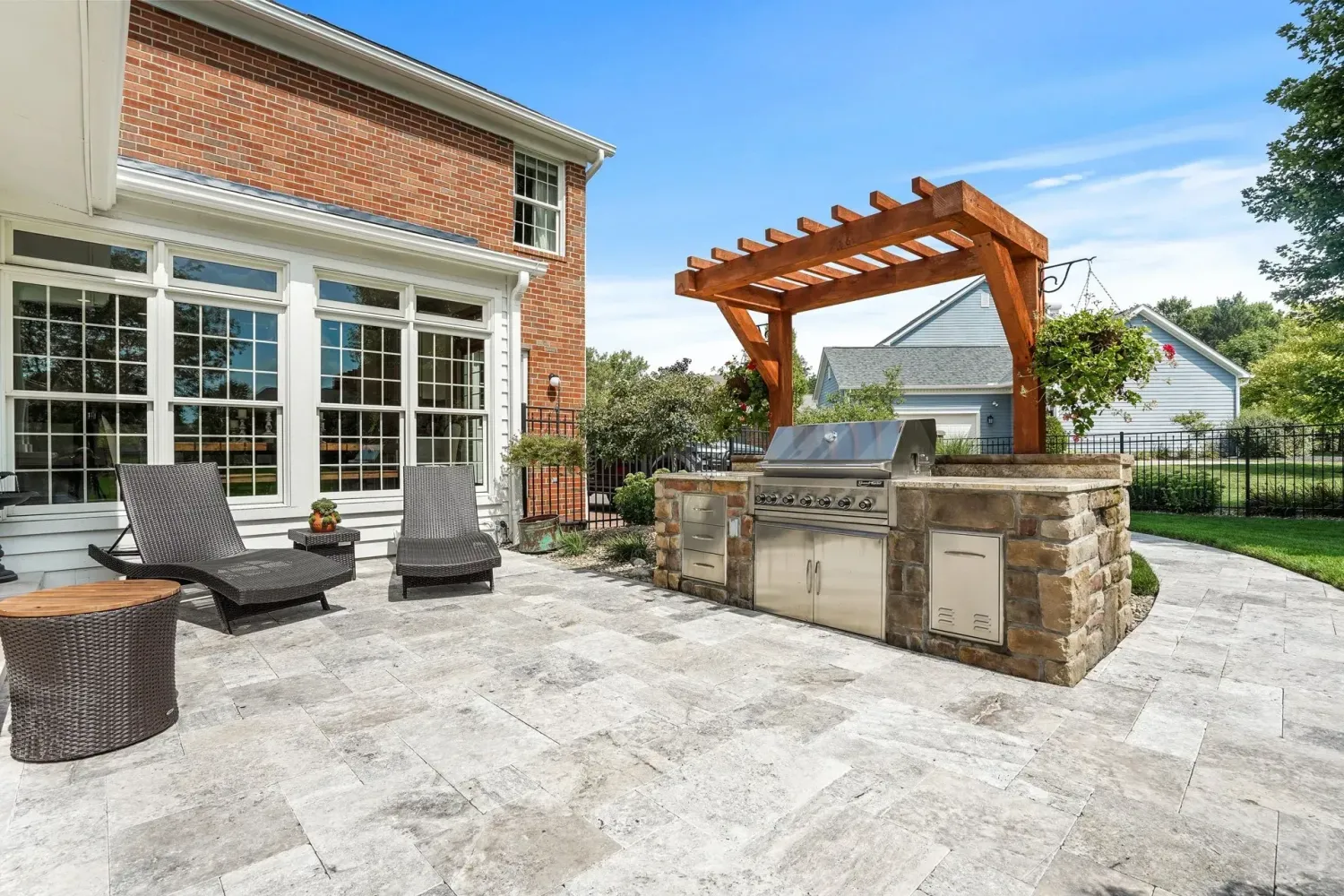
Installation Details That Change The Rot Equation
Material choice sets the ceiling. Installation quality sets the floor. Two cedar pergolas built on the same Indian Hills lot can deliver wildly different service lives if one of them cuts corners on the parts that the shade rot test punishes hardest. These are the details we will not skip on any Marietta cedar build, and the details you should ask about on any competing quote.
Post bases off the slab, not in the slab. Wet cedar posts buried in concrete rot from the bottom up. We use Simpson Strong-Tie CBSQ post bases that hold the bottom of the post 1 inch above the surface, with a galvanized stand-off so standing water drains away from end grain. On a shaded lot this detail alone adds three to four years to the structure’s life.
Top-cap flashing on horizontal beams. Every horizontal beam that carries rafters above it is a water-collection trough waiting to happen. We run a 24-gauge copper or brown-anodized aluminum cap on every top beam on shaded lots. It adds $180 to $320 to the project and pays for itself the first time a September hurricane remnant dumps four inches of rain in a week.
Stain schedule matched to exposure, not to the stain label. Stain manufacturers will tell you their product lasts four to five years. That number is calibrated for moderate conditions. Under a closed oak canopy in Cobb County, plan on a recoat at year three, not five. Our maintenance recommendation for cedar under East Cobb canopy is a rinse-and-inspect every spring, a light recoat every three years, and a full strip-and-stain every nine.
Marietta homeowners usually come to us with a preference already formed. Usually the preference is cedar — because it looks warmer, because the neighbor has one, because they saw it on a Pinterest board. We do not argue with the aesthetic. Cedar reads warmer than aluminum. The grain, the stain tone, the way afternoon sun filters through sawn rafters — none of those are recreated by even a high-end aluminum system. The aesthetic preference is legitimate and we build to it regularly.
The conversation we do push back on is when the preference collides with the site reality. We have had homeowners in Indian Hills, under a 65-foot white oak canopy, insist on cedar knowing the shade rot math. That is their call. But we will put in writing that the expected service life at that address is 8 to 10 years, that we cannot warrant the structure against fungal decay beyond year 5, and that our quote includes a line item explaining the TCO differential so the conversation is documented. You pay us to be right about the building science even when the aesthetic argument points the other way.
The cases where we refuse to build cedar entirely are narrow — lots where the grade traps water at the footing elevation, lots where the rafter zone gets less than two hours of direct sun in August, or lots where the HOA covenants require a specific material we cannot deliver in cedar to code. Atlanta Country Club and some sections of Indian Hills have covenants that push homeowners toward engineered aluminum anyway, often without the homeowner realizing it until the design review comes back.
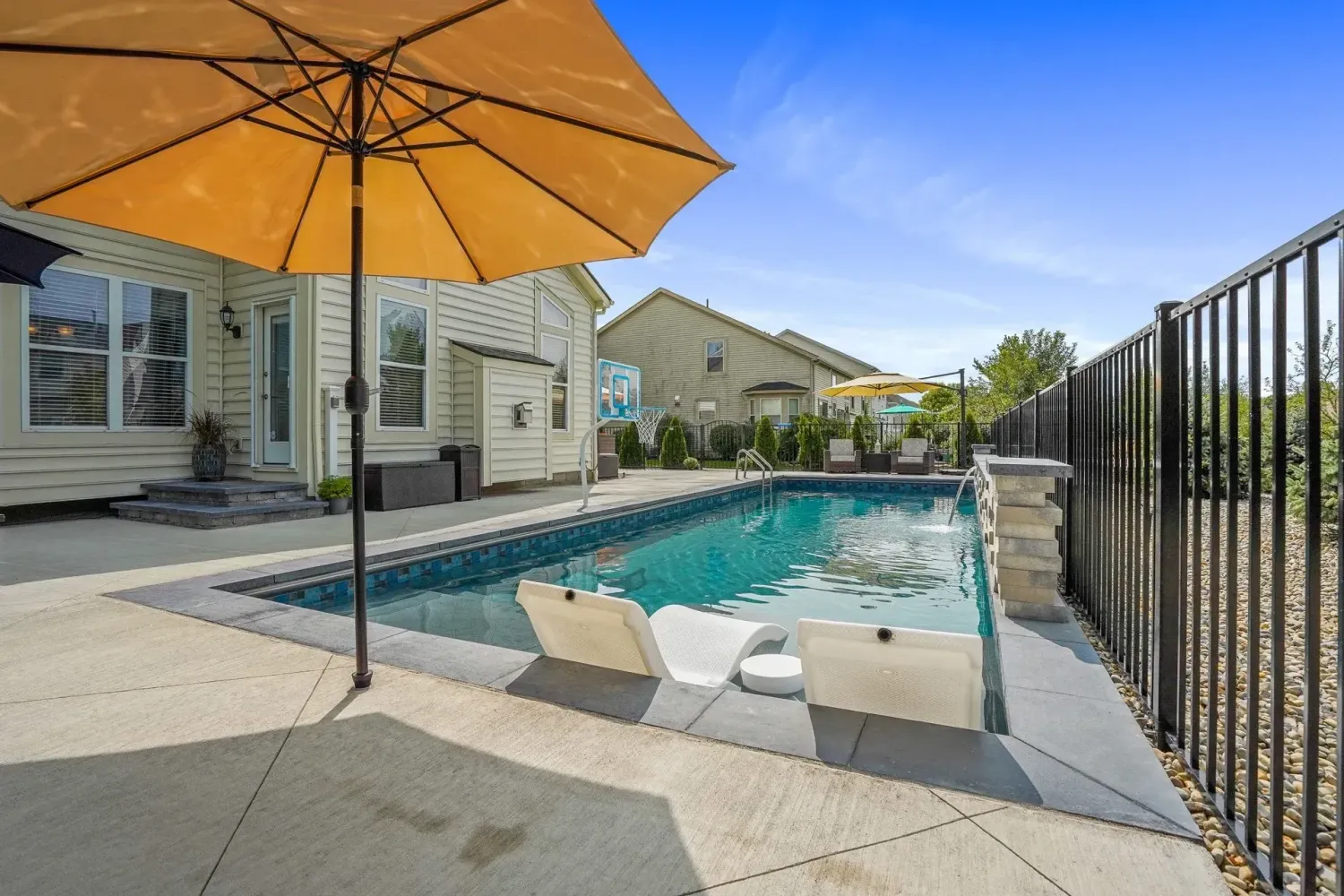
What The Right Call Looks Like On Paper
A good pergola proposal for a Marietta backyard names the exposure condition in writing, names the expected service life in writing, and names the maintenance schedule in writing. When you ask for a quote, you should see a paragraph that reads something like: “Proposed structure: 16×20 western red cedar pergola on Simpson CBSQ anchored posts, sun exposure estimated at 6+ hours August daily, expected service life 18-22 years with Sikkens Cetol recoat every 4 years.” That specificity is what separates a contractor who has walked the yard from one who is emailing you a template.
If the quote you are holding says “cedar pergola, 30-year structure warranty” without naming exposure, hardware, finish, or maintenance, the contractor is selling you a number, not a structure. The Cobb County climate does not reward that level of imprecision. The 52 inches of annual rain, the 22 freeze events, and the summer humidity that sits above 70% will all find the corners that were not specified.
Aluminum quotes should name the system — Struxure Pergola X, Azenco R-Blade, Sunesta Sunlouvre, whatever the dealer carries. They should name the finish (standard powder coat, Kynar, or anodized), the motor (if louvered), and the warranty terms on frame and motor separately. A quote that says “aluminum pergola, lifetime warranty” is hiding the same specification gaps the generic cedar quote is hiding. Good aluminum warranties run 20 years on the frame and 5 years on the motor — anything more generous than that is marketing language, not a warranty.
For most Marietta backyards, here is how the decision actually lands. Open sun-dominant lots — cedar wins on upfront cost and breaks roughly even on 30-year TCO, so the material you choose should match the look you want. Closed canopy shade-dominant lots — aluminum wins on TCO by $4,000 to $6,000 across 30 years and avoids three teardown-rebuild cycles, so the only reason to pick cedar is if you are moving in under ten years. Split-exposure lots — consider two structures, one of each, or go full aluminum if budget allows and you want one design vocabulary across the yard.
This is the test we run on every pergola walk in Marietta. Stand under the proposed footprint at 3pm on a hot day in mid-August. Look up. If you see sky, cedar is on the table. If you see leaves, aluminum is the honest answer. The math after that is a formality. The aesthetic conversation — which you get to have because both materials look good in their right context — is the last conversation, not the first.
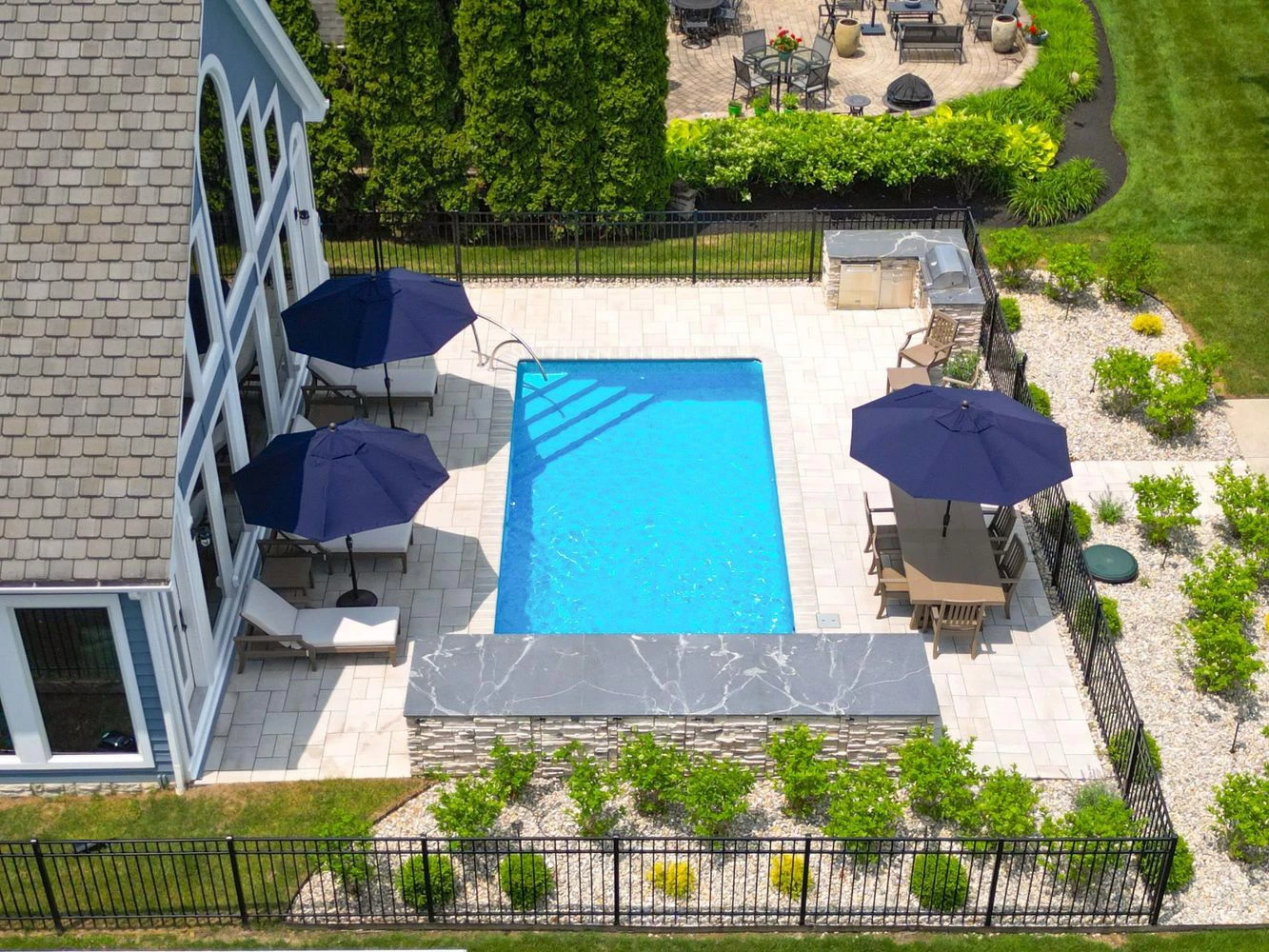
Pergola & Pavilion Design Across 20+ Cities Within 30 Miles Of Snellville, GA
Every Marietta pergola we build gets the exposure test first, the material decision second, and the stain-or-finish schedule written into the contract. That is how a structure built in year one still looks right in year twenty.