
A grandmother in Applewood told me, watching her three adult daughters and six grandkids rotate through a single pool ladder on a July Saturday, that she wanted the next pool to hold the whole family without anyone climbing. That became the brief — bench, swim-out, and tanning ledge poured into the shell, not bolted on after.
The site was 1,270 feet up, off Hwy 53 in Dawson County, on a three-quarter-acre lot that rolled 11 feet corner to corner. When our excavator hit saprolite at 38 inches, the crew stopped digging and the engineer started reworking the rebar schedule. That is the Dawsonville reality. The topography looks like any other wooded Georgia backyard from the driveway, but the subsoil does not behave like Piedmont clay and the seating integrated into the shell has to account for it.
This post is the field playbook we now hand every multigenerational family building within 15 miles of the Dawsonville Pool Room. Six sections, one pool, and every shell-integrated seat that keeps grandma out of a ladder and your adult kids out of each other’s laps.
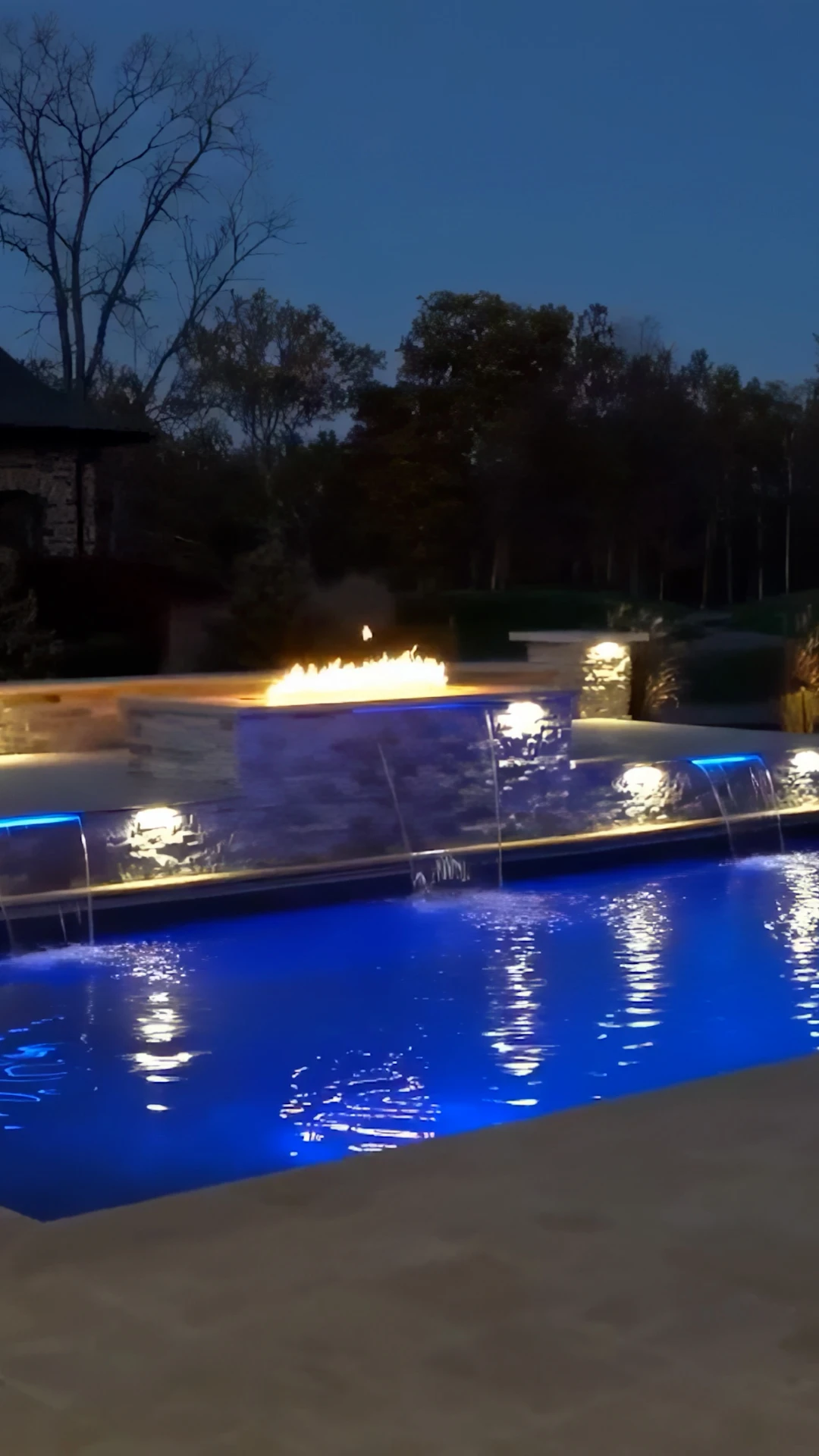
01 — Why Dawsonville Shells Need Seating Built In, Not Added
The distance between a Foxcreek grandmother and a pool ladder is about four feet and twenty years of joint wear. Bolt-on rails flex, the flange leaks at the deck, and by year six the coping grout around the escutcheon plate is the first thing a home inspector flags. Integrated seating — shell-poured bench, monolithic swim-out, tanning ledge with conduit for umbrella sleeves — solves the ergonomic problem and eliminates the maintenance problem in one pour.
Multigenerational use is the real driver here. Dawson County’s population has roughly doubled since 2010 because GA-400 made the foothills a legitimate commute, and the second-home pattern is flipped — adult children live in Sandy Springs or Johns Creek and drive up on weekends. That means your pool on a Saturday is not two kids and a pool float. It is twelve people across four generations, all wanting to be in the water at the same time. A single ladder fails that test by 11 a.m.
There is one more layer specific to USDA Zone 7b/8a Dawsonville. The city averages roughly 30 freeze events a year, ten more than Dacula. Integrated seating poured as part of the shell expands and contracts with the main structure. Bolt-on steel and aluminum handrails do not, and the differential movement is what kills them at the anchor points.
The 30-freeze number matters: Dawsonville sees about 30 freeze events per year at 1,270 ft elevation, versus 20 in Dacula 45 miles south. Every integrated pool detail — especially steel reinforcement at bench cantilevers — has to be specified for that cycle count, not generic metro-Atlanta assumptions.
02 — The Three-Piece Geometry: Bench, Swim-Out, Ledge
The standard integrated seating package we quote for a 16×32 shell in Dawsonville is three distinct elements, each with a specific ergonomic job:
- A 12-inch submerged bench running 7 linear feet along the long wall, set at 42 inches water depth so an average adult can sit neck-deep and still plant feet.
- A 5-foot by 5-foot swim-out alcove poured into the deep-end corner at 48 inches, eliminating the need for a ladder or grabrail. The swim-out acts as a rest landing for adult swimmers and a lookout perch for grandparents watching kids in the shallows.
- An 18-inch tanning ledge spanning the full shallow-end width (typically 12–14 feet), water depth 9 inches, with two 3-inch PVC umbrella sleeves cored during the gunite stage.
None of these three elements is novel. What matters is specifying them together, tied to one structural engineering package, poured in one shell operation. Retrofitting any of them later costs roughly 4–5x the original install because you are cutting concrete, drilling into existing rebar, and re-plumbing returns around features that were not there when the original as-built drawings went to Dawson County Planning.
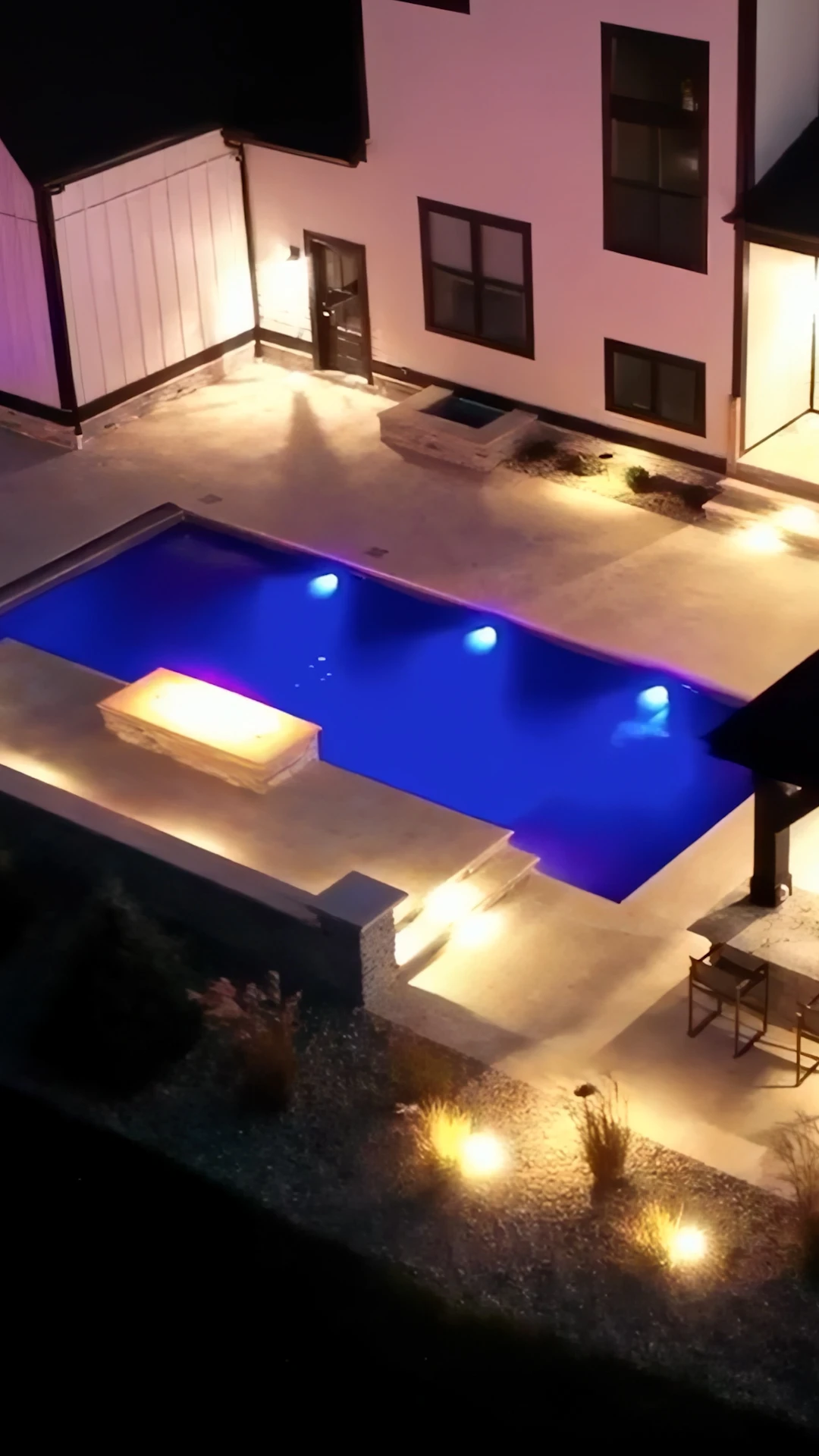
03 — Saprolite, Blast Charges, and the 40% Rebar Adder
Here is where Dawsonville stops behaving like the Piedmont and starts behaving like the North Georgia foothills it actually is. Typical pool excavation on a Cecil series Piedmont lot in Gwinnett hits red clay at 18–24 inches, keeps cutting through clay to 8 feet, and the pool company prices it as a standard dig. On a Dawsonville lot — especially Etowah River Club, Chestatee, or the east face of Kensington Ridge — the story shifts at 3–5 feet when the excavator bucket starts ringing against saprolite and weathered granite.
Saprolite is the in-place weathered parent rock below the thin Cecil topsoil cap. It looks like stony dirt but it behaves like soft rock. You cannot just keep digging with a 3-ton mini-ex; you stage a larger 8-ton machine with a hydraulic breaker, and on the harder stretches you bring in a licensed blaster. Rock blast charges on a 16×32 shell in Dawson County typically run $8 to $14 per cubic yard premium above the standard excavation number, and the blasting subcontractor coordinates with Dawson County Planning & Development at 25 Justice Way for the required notification radius.
That is only half the story. The parent-rock subsoil moves differently than clay over 10 years. Clay swells with moisture; saprolite fractures with freeze cycles. The structural implication for a shell-integrated bench cantilever — which is essentially a horizontal slab projecting into the pool cavity — is that the rebar schedule needs roughly 40% more steel than a Piedmont equivalent. Our standard Dawsonville bench spec uses #4 bar at 6-inch spacing in two mats where a Dacula project might get away with #4 at 9-inch spacing in one mat.
Dawson County permitting: Pool construction permits route through the Dawson County Dept. of Planning & Development at 25 Justice Way, Dawsonville, GA 30534. Budget 2–4 weeks for review, longer if your lot sits inside a river-protection corridor near the Etowah.
04 — Cost Honest: The $14,800 to $22,400 Adder Explained
Here is the real question anyone lifting the hood on this wants answered: what does the three-piece integrated seating package cost on top of a standard 16×32 gunite rectangle. The honest range on current Dawsonville projects is $14,800 to $22,400, and the spread tracks three variables:
- Rock condition ($1,800–$4,400 range): whether the swim-out corner lands in clean saprolite or requires a breaker attachment or blast charges. We can predict 70% of this from the geotechnical probe but the last 30% is discovered on excavation day.
- Rebar density upgrade ($2,600–$4,800 range): the 40% steel adder driven by parent-rock movement. Material cost plus the extra tying labor at the bench and swim-out cantilevers.
- Tanning ledge utilities ($1,400–$3,200 range): umbrella sleeve coring, optional bubbler plumbing, optional LED strip conduit. A bubbler-ready ledge is worth the delta — retrofitting a bubbler into finished plaster is not practical.
The remaining cost is gunite volume, waterproofing membrane around the cantilevered edges, plaster coverage on the non-standard surfaces, and the tile change. Tile is worth calling out: the vertical face of an 18-inch tanning ledge reads at eye level from the deck, so a glass-mosaic waterline band on that face upgrades the whole pool’s visual weight for about $900 in material. We specify this on every Dawsonville multigenerational project now.
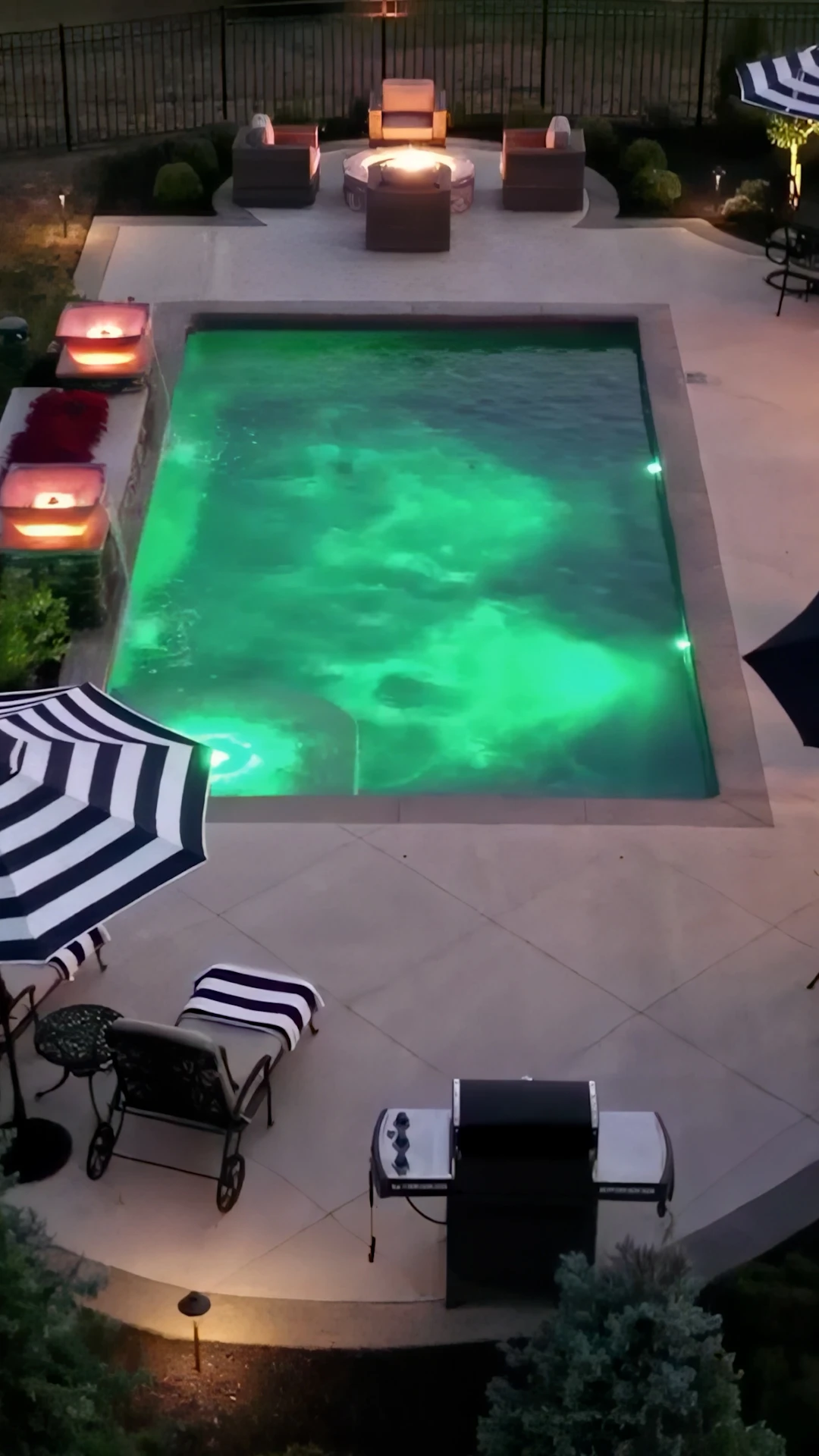
05 — The Amicalola EMC Service Drop and Why It Dictates Equipment-Pad Placement
This is the kind of detail nobody mentions on Houzz. Every Dawsonville pool connects to Amicalola EMC, not Georgia Power, and Amicalola’s standard residential service-drop amperage and meter-base specs drive where your pool equipment pad can actually live on the lot. On a typical Dawsonville install you are running a 100A subpanel to the pool pad to handle the pump, heater, LED lighting, tanning-ledge bubblers if specified, and the salt cell if you went chlorine-generator instead of tablet.
The reason this matters for integrated bench and swim-out design: the return lines feeding the ledge bubblers, and the low-voltage conduit feeding the integrated LED strip on the bench face, both originate at the equipment pad. If the pad has to sit 80 feet from the shell because Amicalola’s service drop landed on the wrong side of the house, you add pipe, you add trenching, and you add a circulation pump head-loss calculation that may push you from a 1.5 HP variable-speed to a 2.0 HP unit.
We walk the service drop, meter base, and existing panel before the first shell drawing on every Dawsonville project. A 30-minute site visit up Hwy 9 saves roughly $1,200 in trenching and avoids a late-stage pump upsize.
06 — Neighborhood Playbook: Applewood, Mountain Laurel, Foxcreek, Riverbend
Four Dawsonville subdivisions account for roughly 70% of the integrated-seating requests we have quoted in the last eighteen months. Each has a quirk worth naming out loud:
Applewood
Lots average just under an acre, with moderate slope averaging 6–8 feet corner to corner. The common build is a 16×32 or 18×36 rectangle with all three seating elements. The specific Applewood gotcha: HOA setback from the rear property line runs 25 feet in most sections, which pushes the pool forward and usually kills a covered pavilion. Budget roughly $18,000 to $21,000 for the bench-swim-out-ledge package here.
Mountain Laurel
Elevation here tops 1,320 feet and the freeze-event count ticks up accordingly. We upgrade rebar one additional size — #5 at the bench cantilever versus the standard #4 — and we specify an additional waterproofing membrane pass on the swim-out alcove. The cost adder sits at the top of the range, $20,000–$22,400, and the longevity payoff is measurable.
Foxcreek
Mostly 2015+ newer construction, which means fewer legacy septic-to-sewer conversion problems than Dawsonville’s older stock. Lots are typically flatter (3–5 feet of grade across a half-acre) and the saprolite depth runs deeper (often 5 feet instead of 3). Excavation premiums are lower here — $14,800–$17,500 is realistic for the full three-piece package.
Riverbend
Proximity to the Etowah River brings a Dawson County river-protection review into the permit package. Budget an extra two weeks on the permit timeline, and plan the equipment pad a minimum of 150 feet from any seasonal wet-weather channel shown on the USGS quad.
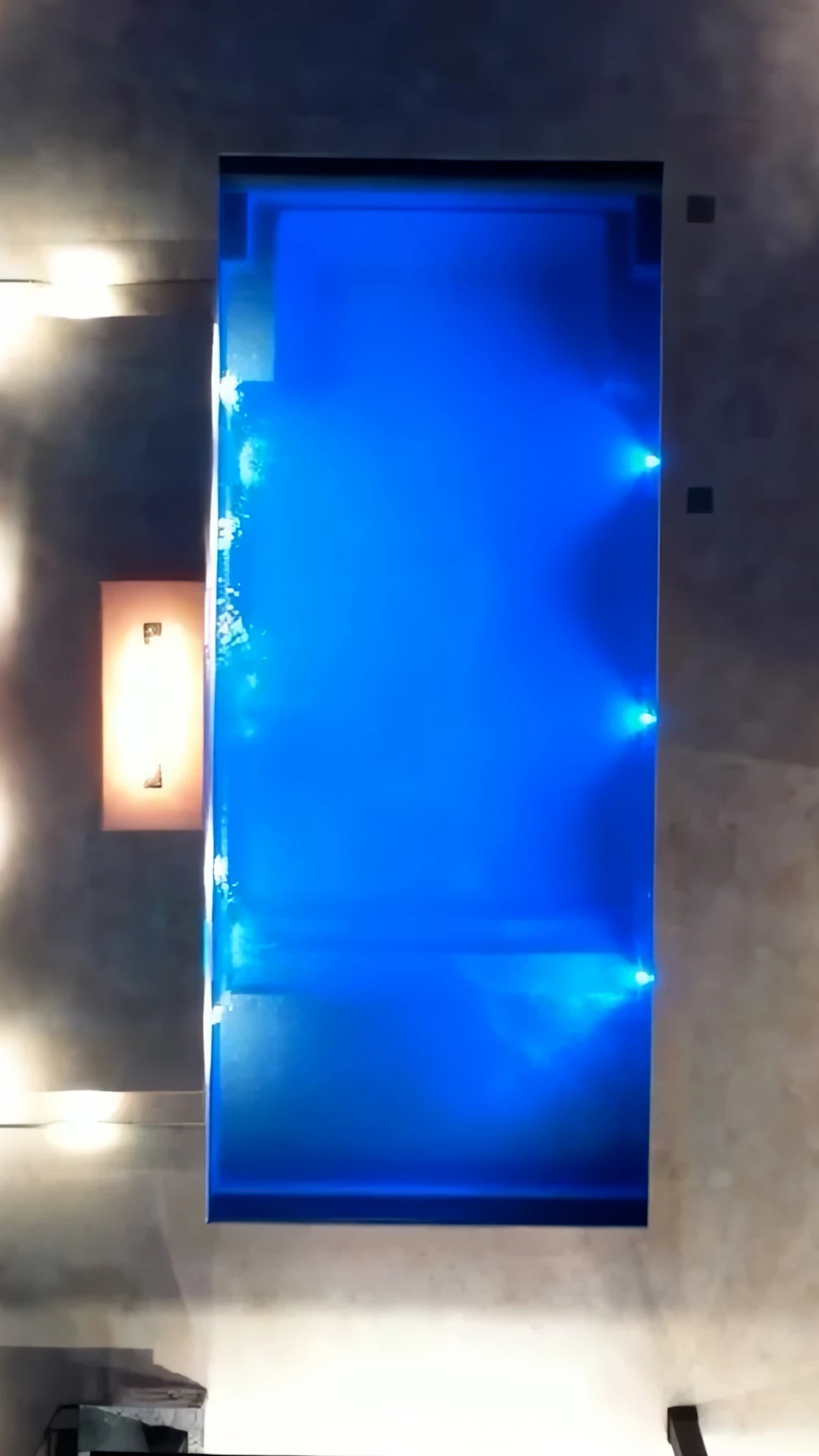
Every one of these neighborhoods shares the same underlying geology and the same permit office at 25 Justice Way. What changes is the slope, the HOA envelope, and the depth to competent rock. When you are interviewing pool builders this summer, the single question that separates serious Dawsonville-experienced contractors from Atlanta-metro generalists: ask them how they calculate the rebar adder for saprolite subgrade. If they blink, they have built most of their projects south of Cumming and have not watched a bench cantilever move 3/8 of an inch over a decade because the parent rock below it fractured through forty freeze cycles.
Trucking also matters more than people expect. Our gunite subcontractor runs out of Buford, and the drive north on GA-400 to Dawsonville costs an extra hour each way versus a Lawrenceville site. That ripples into the morning shot window — we stage gunite trucks to arrive by 7:00 a.m., which means the driver is pulling out of Buford by 5:45 on a Tuesday. Any later and the mix hydrates too much before it hits the shell.
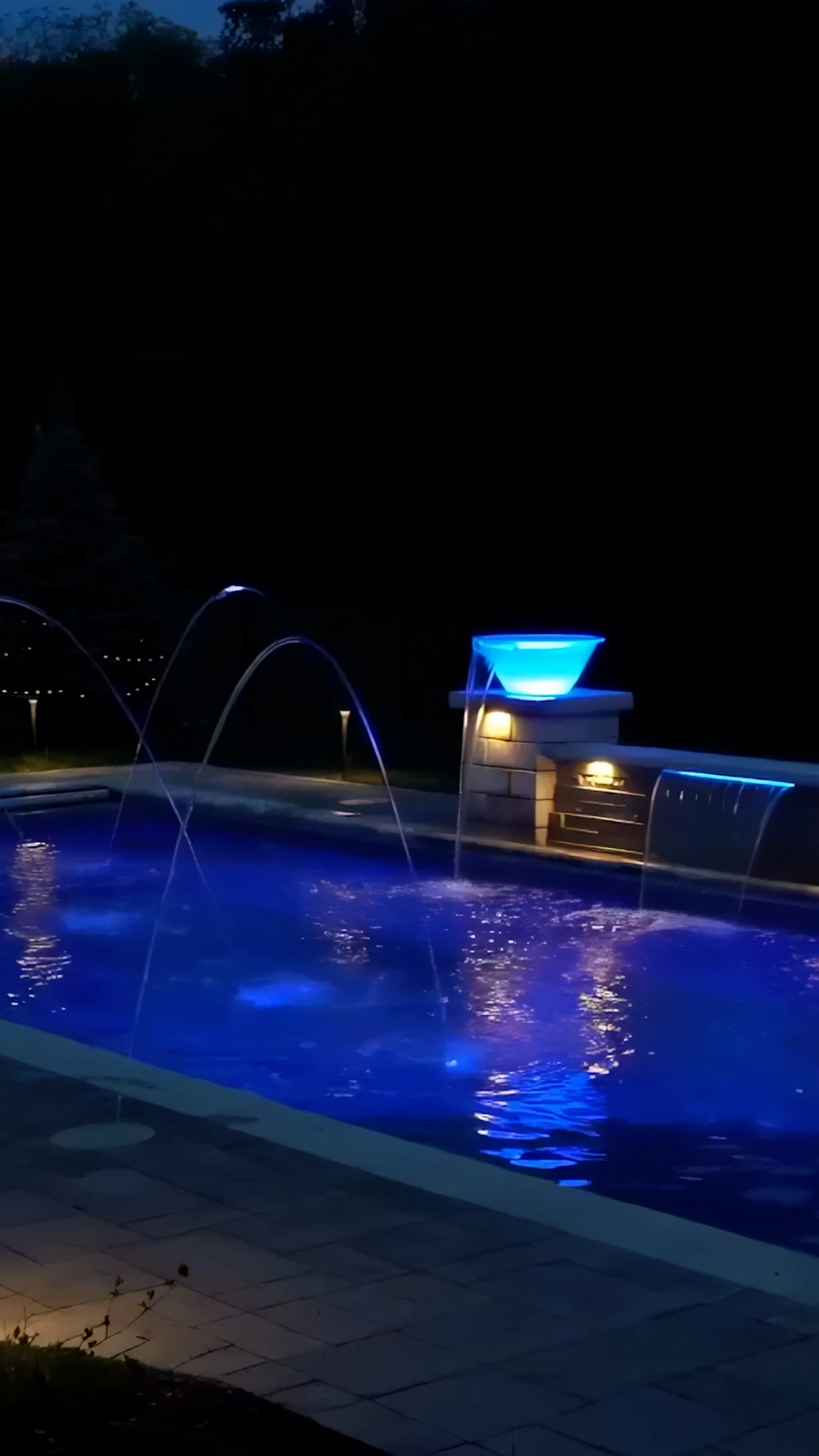
The Applewood grandmother I opened with is now two years into her finished pool. Three daughters, six grandkids, no ladder. The bench holds four adults at neck-depth for conversation. The swim-out lets her kids rest at the deep end without grabbing a wall. The tanning ledge holds two umbrellas and the youngest grandchild’s floating pool chair. The shell cost her family roughly $11,000 more than the bare 16×32 rectangle she originally priced, and it is the difference between everyone rotating through a pool and everyone being in the pool.
That is the Dawsonville math. Build the seating in on day one, spec the rebar for the subsoil you actually have, and walk the Amicalola service drop before the first shovel.
Custom Pool Construction across 20+ cities within 30 miles of Winder, GA
Integrated bench, swim-out, and tanning ledge design for multigenerational families — engineered for Dawsonville saprolite, North Georgia freeze cycles, and weekend-visit ergonomics.