
Four numbers decide whether a Suwanee pool owner sleeps at the River Club or drives home from Hilton Head at 11 p.m. to shock a green shallow end: $4,200 installed, 9 p.m.–7 a.m. off-peak windows, $1,220 annual savings, and a 4.5-year payback. Everything else in this post is how those numbers get built.
Here is the tease, because this is a deep-technical post and you deserve to know where it’s going: 1) why Suwanee specifically is the market where IntelliChem pencils out, 2) what the $4,200 hardware stack actually includes and where it mounts, 3) how Jackson EMC’s rate structure turns a pump schedule into $420 a year, 4) why ORP-plus-pH beats ORP-only on a 25,000-gallon luxury build, 5) what IntelliCenter app control does that a wall panel cannot, and 6) where this system belongs — and where a Hayward OmniLogic or a $1,800 ORP-only controller is the honest answer instead.
This is written for Laurel Springs and River Club owners who travel, for Settles Bridge estate buyers who do not want to think about Langelier saturation indexes, and for builders who are tired of chasing calcium scale on a tile line because a homeowner overshot cal-hypo by 40%. If you do not own a pool in Suwanee yet and you are budgeting for one, the chemistry automation line item is the one most people forget — and the one that saves the most stress over ten years.
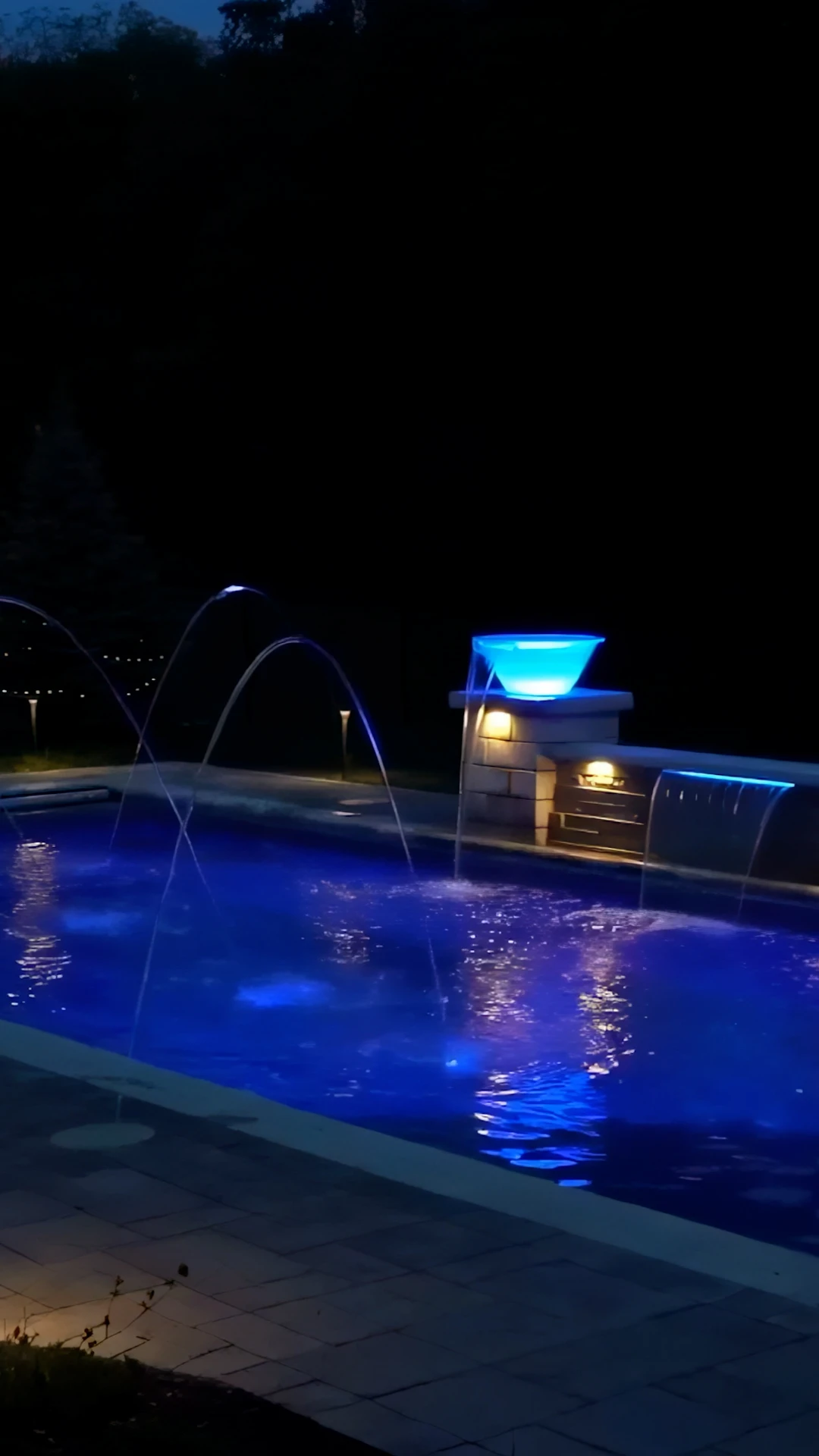
Why Suwanee Is the Market Where IntelliChem Actually Pencils Out
Automated chemistry is sold everywhere in metro Atlanta. It makes financial sense in almost none of those markets at the $4,200 tier. In Suwanee it does — for three specific reasons that do not apply in, say, Loganville or Stone Mountain.
First, the travel demographic. Laurel Springs and The River Club at Suwanee are two of Gwinnett County’s most expensive gated addresses, and a meaningful percentage of owners there are snowbirds, second-home buyers, or business travelers gone 8–14 nights a month. A pool that drifts to pH 8.2 on a Thursday while the owner is in Bentonville is a pool that scales calcium at the tile line by Saturday. A $3,500 acid-wash two years later pays for the IntelliChem twice.
Second, build size. The median custom pool in Laurel Springs and Bear’s Best Atlanta runs 22,000–30,000 gallons with an attached 8-foot spa, a sheet-flow weir, and a raised bond beam — volumes and features where a 0.2 pH swing costs real money in acid and real time in recovery. The bigger the pool, the more IntelliChem earns its keep.
Third, utility. Suwanee sits inside the Jackson EMC service territory, not Georgia Power — and the utility’s time-of-use rate programs push off-peak kWh prices 30–45% below on-peak. A variable-speed pump running eight hours at 1,800 RPM during on-peak hours is a different line item than the same pump running ten hours at 1,500 RPM from 9 p.m. to 7 a.m. IntelliCenter’s scheduling engine is what converts that rate structure into cash.
Signature number, IntelliChem installed cost at Primetime: $4,200, which includes the IntelliChem controller head, mounting bracket, pH and ORP probes, 15-gallon muriatic acid tank, 15-gallon liquid chlorine tank, bonded-loop plumbing taps, IntelliCenter integration license, and first-year probe calibration visit.
The $4,200 Hardware Stack, Piece by Piece
IntelliChem is not one unit. It is a controller head, two probes, two chemical tanks, two peristaltic dosing pumps, and a communications cable back to the Pentair IntelliCenter automation brain. We mount all of it inside a covered enclosure at the equipment pad, because muriatic acid fumes are brutal on adjacent electronics and Suwanee’s 52-inch annual rainfall will corrode an unprotected tank cap in a season.
The controller head sits at eye level on a Unistrut rack, wired to a dedicated 20A GFCI circuit off the pool subpanel. Pentair’s specification calls for a continuous flow of pool water past the probes, so we tap the return line after the heater and before the manifold with a 1.5-inch sidestream loop — flow rate roughly 2 gallons per minute, regulated by a manual ball valve we set during startup. That sidestream is the single most important plumbing detail in the install. Probes that see stagnant water read drift, not drift they read noise, and noise triggers phantom dosing events that waste chlorine.
The ORP probe reads oxidation-reduction potential in millivolts — a proxy for sanitizer strength. Target band is 650–750 mV for a saltwater chlorine cell and 700–800 mV for a liquid-chlorine build. The pH probe reads 0–14 in 0.01 increments. Both probes need recalibration against fresh standard solutions every 90 days; a skipped calibration cycle is how IntelliChem earns its reputation among skeptics for “not working.” It works. The calibration is what does not happen.
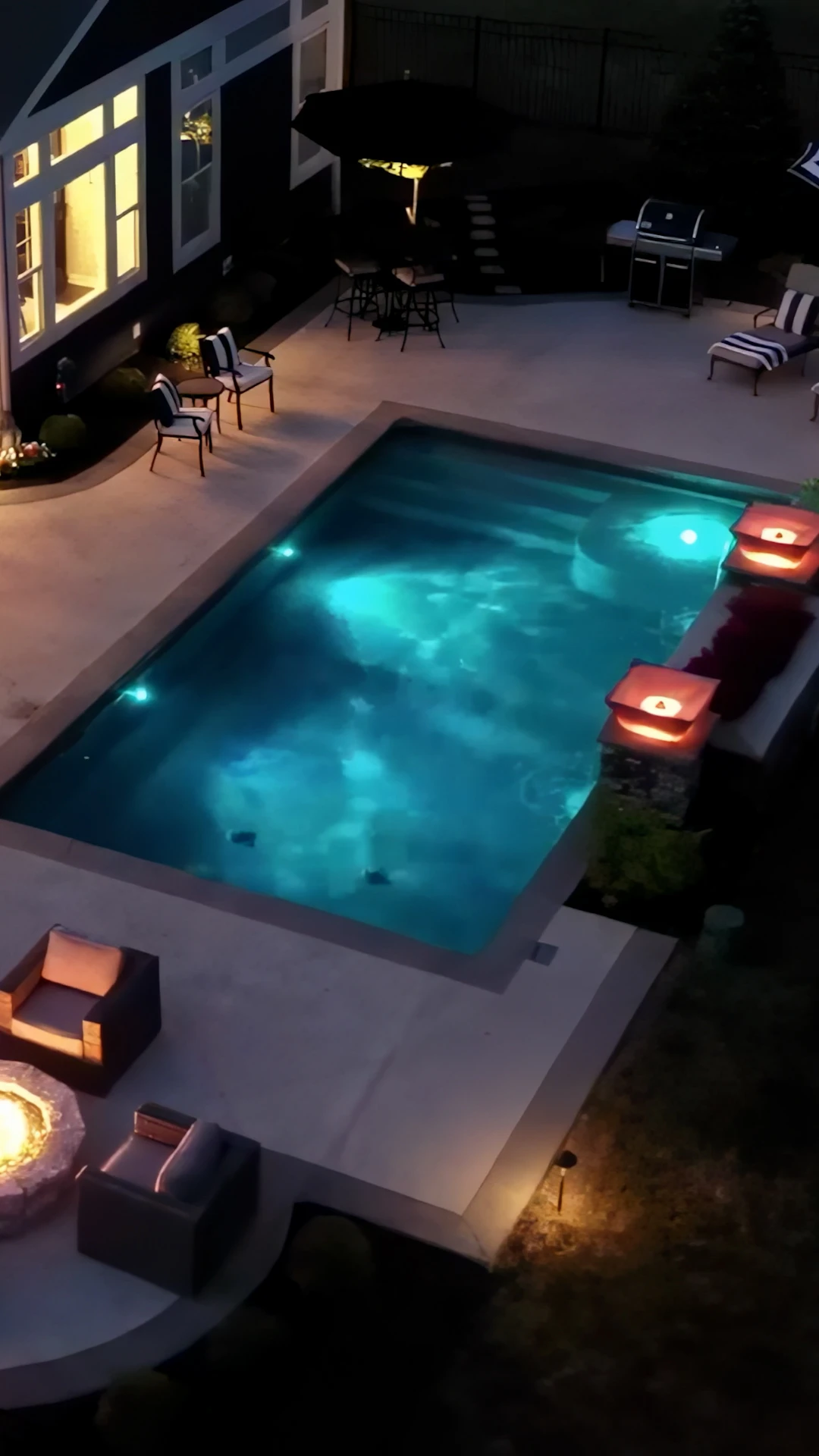
Chemical storage is the line item owners underestimate. The tanks hold 15 gallons each. A 25,000-gallon Suwanee build with a saltwater cell runs through roughly 30 gallons of muriatic acid a year and 40 gallons of liquid chlorine if the salt cell is undersized or inactive on cold nights. We plan for a refill schedule every 10–14 weeks in summer, every 16–20 weeks in winter. Refills arrive in 15-gallon carboys from a pool-supply wholesaler off Peachtree Industrial Blvd — the same corridor used for most Suwanee equipment delivery.
How Jackson EMC’s Off-Peak Window Turns a Pump Into $420 a Year
Jackson EMC offers time-of-use residential rate programs with clearly defined peak and off-peak periods. Peak windows run weekday afternoons; off-peak is weekends, overnight hours, and early morning — typically 9 p.m. to 7 a.m. IntelliCenter lets you load a pump schedule into those off-peak blocks and never think about it again.
Run the math on a 25,000-gallon pool with a Pentair IntelliFlo3 VSF variable-speed pump. Total daily pumping need for one full turnover at a filtration-grade flow is about 8–10 hours of runtime. At 1,500 RPM the pump draws roughly 550 watts. Ten hours times 550 watts equals 5.5 kWh a day, or about 2,000 kWh a year. The spread between Jackson EMC’s off-peak and on-peak summer rate is commonly $0.18 to $0.22 per kWh on the peak side versus $0.08 to $0.11 on the off-peak side. Move 2,000 kWh from peak to off-peak and the annual savings land near $420. That is before the IntelliFlo3 drops to 1,100 RPM during skimming-only hours, which is a separate savings line.
None of that happens without automation. A wall-panel timer does not know what hour Jackson EMC is charging what rate. IntelliCenter does.
ORP-Plus-pH Versus ORP-Only: What the Extra $2,400 Buys
This is the trade-off conversation owners ask us to have honestly, and it is the reason we offer both. An ORP-only controller — Hayward AquaRite Pro’s sense-and-dispense module, for instance, or a standalone Acu-Trol runs about $1,800 installed. IntelliChem at $4,200 is $2,400 more. What does the $2,400 buy?
Three things. First, pH dosing — the ORP-only controllers sense sanitizer and dose chlorine, but they do not dose acid. That means the homeowner is still adding muriatic acid by hand every 7–14 days, which is where most pool chemistry drift actually originates. A homeowner at a Settles Bridge property who pours half a gallon of acid and then leaves for a weekend has just dropped pH to 6.9 and started etching the plaster. IntelliChem doses acid in milliliter increments and stops on setpoint.
Second, predictive logic. IntelliChem’s firmware looks at the rate of pH rise across the last 24 hours and adjusts dose timing to minimize overshoot. ORP-only controllers are reactive — sanitizer falls below 650 mV, chlorine pump turns on, sanitizer rises past 750 mV, chlorine pump turns off. Predictive dosing flattens the oscillation, which means fewer swings in combined chlorine, which means fewer chloramine complaints from guests.
Third, IntelliCenter integration. ORP-only controllers almost universally do not talk to the automation brain. IntelliChem does. That integration is what unlocks app control, SMS alerts, remote diagnostics, and the ability to see pH, ORP, salinity, water temperature, pump RPM, and heater status on one screen from a beach house in Rosemary Beach.
When ORP-Only Is the Honest Answer
We do not sell IntelliChem on every build. If the pool is under 15,000 gallons, the owner is home six days a week, and the build is a $65,000 Village Grove rectangle rather than a $220,000 Laurel Springs resort, ORP-only at $1,800 is the right call. The payback on IntelliChem assumes the owner is either traveling or overdosing chemistry. A hands-on owner with a 12,000-gallon pool and a test kit does not overdose, and the $2,400 never earns back.
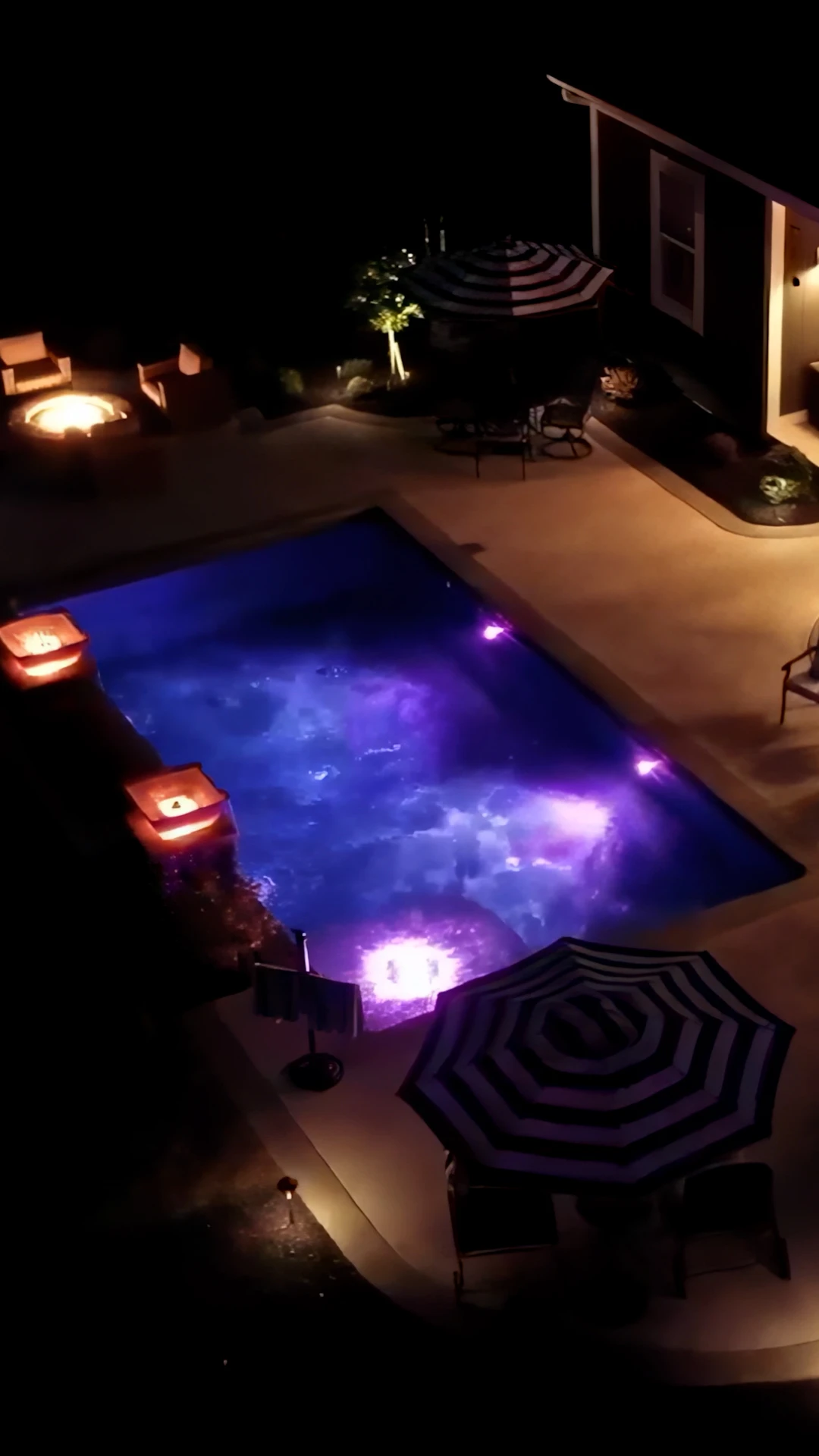
IntelliCenter App Control: What the Wall Panel Cannot Do
The Pentair IntelliCenter app is the reason Laurel Springs and River Club owners get sold on this system. It is a better interface than any competitor’s and it is the only one that gives you chemistry data on the same screen as pump speed and heater state. Six capabilities specifically matter.
1) Live pH and ORP readouts — refreshed every 60 seconds, visible from a phone in Sea Island. You know before you get home whether the pool needs attention.
2) SMS alerts on drift. Configurable thresholds — pH outside 7.2–7.8, ORP outside 650–750 mV, salinity outside 3,000–3,400 ppm, water temp below 58°F (heater failure), or a dosing pump that has run continuously for more than 15 minutes (tank empty or probe fouled). The alert shows up as a text, not a push notification buried under 40 other push notifications.
3) Schedule adjustments from the app. If Jackson EMC changes a time-of-use window seasonally — and they have — you edit the pump schedule from the kitchen, not the pool pad in the rain.
4) Remote diagnostics for the service tech. Primetime techs can pull probe calibration status, dosing pump run hours, and fault history before a truck rolls. That turns a two-hour diagnostic call into a 40-minute parts swap.
5) Feature scheduling. Deck jets, sheet-flow weirs, bubblers, spa heat, and fire-bowl ignition can all run on sequenced schedules tied to sunset times, which update automatically for the 30024 zip code.
6) Multi-site rollup. Owners who have a Suwanee primary and a 30A or Blue Ridge vacation home with IntelliCenter on both can see both pools in the same app. That matters more than you would guess.
The Savings Math: How $1,220 a Year Becomes 4.5 Years Payback
The payback calculation is not theoretical. It is built from four line items a Primetime client can verify against their first-year invoice.
Chemistry savings: $800 a year. A homeowner manually dosing muriatic acid and cal-hypo or liquid chlorine on a 25,000-gallon pool typically overshoots by 20–35% across a season. Overshoot costs money on the acid side (you add base to correct), on the chlorine side (cyanuric stabilizer buildup forces partial drains every 2–3 years), and on the plaster side (pH excursions etch). Precise IntelliChem dosing eliminates 80% of that waste. On a typical Laurel Springs build, chemistry spend drops from $1,400/yr to $600/yr.
Electricity savings: $420 a year. Covered above — pure Jackson EMC time-of-use arbitrage on 2,000 kWh of annual pump load.
Service-call avoidance: $200–300 a year. Three green-pool rescue calls at $150–200 each is an easy year for a travel-heavy owner without automation. IntelliChem plus SMS alerts catches the drift at 680 mV instead of 300 mV, and the rescue call never happens.
Plaster/tile longevity: not counted in the 4.5-year payback, but real. A pool held at pH 7.4–7.6 for ten years does not need a $3,500 acid wash at year 8 the way a manually dosed pool often does. If you amortize avoided acid-wash into the payback, the math gets better.
Total first-order savings: roughly $1,220 a year. $4,200 divided by $1,220 equals 3.4 years if everything lines up; 4.5 years is the conservative number we quote because probes need replacement every 3–5 years at ~$280 each, and we want the payback honest.
Probe replacement schedule: pH probes every 2–3 years at $180; ORP probes every 3–5 years at $280. Skip the calibration cycle and both probe lives drop to 12–18 months. A $75 calibration kit saves $400 in early replacements.
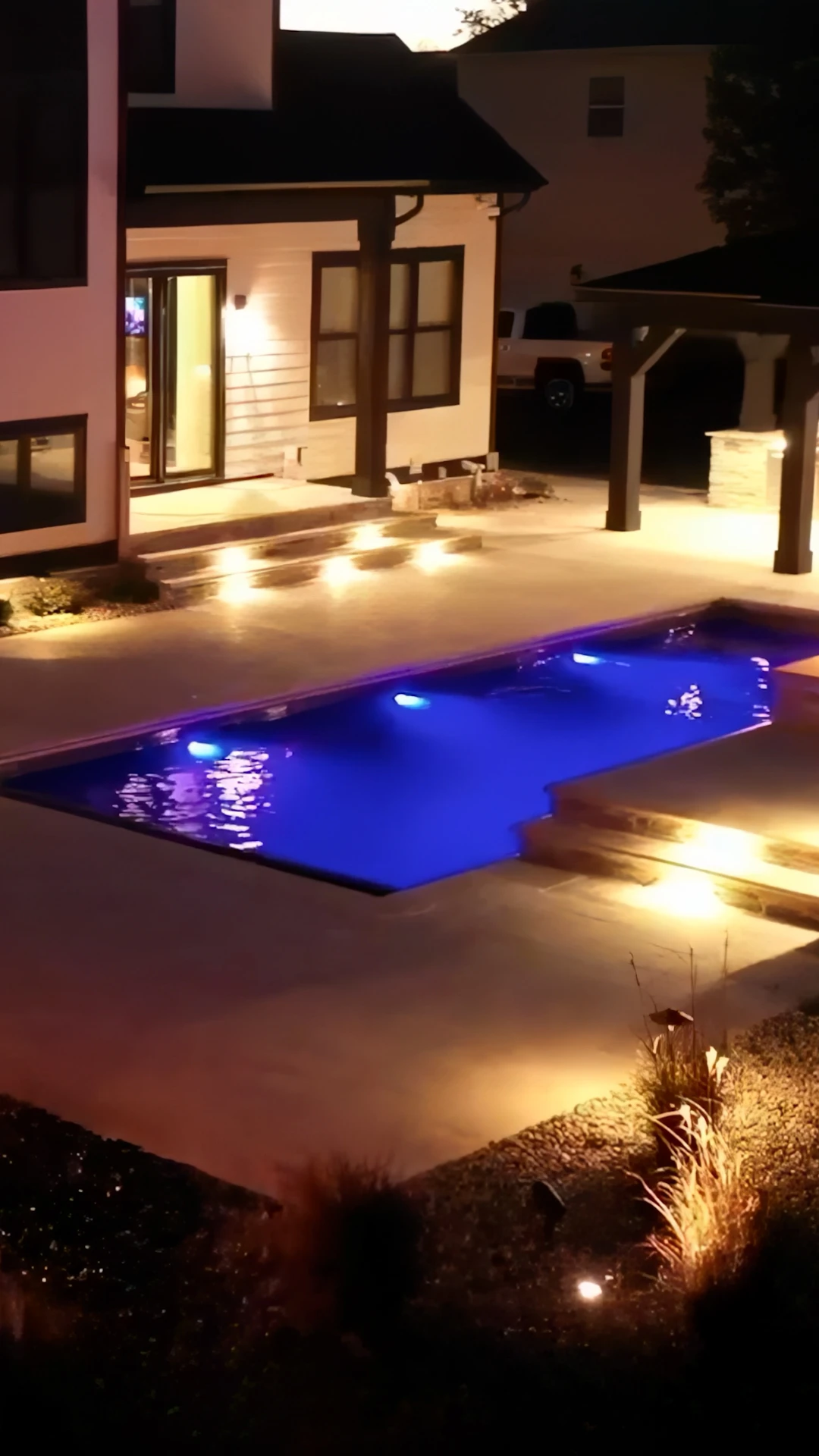
Suwanee Permitting, Install Sequence, and the Laurel Springs Review Wrinkle
Equipment-pad automation does not change the pool permit itself — Gwinnett County Department of Planning & Development at 446 W. Crogan St. in Lawrenceville permits the pool under the same process as any Suwanee build. What changes is the electrical subpanel sizing. An IntelliChem install adds one 20A GFCI circuit and one 15A circuit for the dosing pumps, so we spec a 100A subpanel at the pad rather than the 60A that would serve a non-automated build.
The wrinkle for luxury Suwanee clients is the Laurel Springs architectural review process. It is one of the strictest HOA reviews in Gwinnett County — typical 3- to 4-week turnaround — and the board has opinions on equipment-pad enclosures, generator pads, and any visible tankage. We present IntelliChem with a proposed enclosure material and a sight-line plan at the same time we present the pool shell and coping. Submitting those together cuts review to one cycle instead of two.
Properties in the Chattahoochee River floodplain — some Settles Bridge lots sit in FEMA Zone AE — need elevation certification on the equipment pad if it falls inside the flood zone. IntelliChem tanks cannot be at or below base flood elevation. That is a site-specific conversation we have during pre-construction walkthrough, and it occasionally pushes the pad six to eight feet uphill from where the plan originally sited it. Suwanee’s roughly 1,063-foot elevation and proximity to the Chattahoochee make river-frontage lots unusually sensitive to this.
Alternative: Hayward OmniLogic for Hayward-Ecosystem Homes
Not every Suwanee pool is a Pentair pool. If the existing equipment is Hayward — AquaRite salt cell, TriStar VS pump, H-Series heater — the parallel automation ecosystem is Hayward OmniLogic paired with the Sense and Dispense module. Installed cost lands around $3,900, it offers equivalent app control, and it keeps the homeowner inside one ecosystem for warranty and parts. The capability delta against IntelliChem is minor — ORP/pH predictive logic is a hair tighter on Pentair, and IntelliCenter’s UI is more polished, but both get the owner to the same outcome. We build in either brand. We do not mix them.
When a Subpanel Upgrade Pushes Total Cost Past $5,500
On older Suwanee proper homes — 1980s–1990s ranch/traditional housing stock on Settles Bridge Road or Old Peachtree Road — the main panel often cannot accept a new 100A pool subpanel without service upgrade. A Jackson EMC service upgrade and main-panel swap runs $2,800–4,500 depending on meter relocation. We flag that during site visit and price it separately, because it inflates the IntelliChem budget line in a way that has nothing to do with the automation itself.
Custom Pool Construction across 20+ cities within 30 miles of Winder, GA
From Laurel Springs and River Club estate builds to Village Grove family rectangles, Primetime Pools GA engineers automated chemistry and Jackson EMC-aware pump scheduling into every custom Suwanee project.