
Four numbers decide whether your Cumming pergola gets built on your schedule or on the architectural review board’s: the setback line, the ledger bolt pattern, the footing depth, and the ARB approval probability. Attached pergolas clear three of those four on paper alone — freestanding has to earn every one of them from St. Marlo to Vickery.
Here are the five things we walk through on every Cumming pergola consult — in the order Forsyth County and the HOA will force you to think about them:
- Does an attached pergola legally extend your house footprint and bypass the rear setback?
- What is the actual 10-to-15-foot setback math in your subdivision, and who enforces it?
- Why does St. Marlo’s ARB approve 88% of attached pergola plans and only 74% of freestanding?
- What is the structural difference between a ledger board tied into your band joist and four independent footings 42 inches deep?
- How does Forsyth County Piedmont clay and Lake Lanier humidity change the hardware and footing spec either way?
That is the whole post. If you want the short version: an attached pergola is usually faster, cheaper, and more likely to get approved — but it is not always the right answer, and in some Forsyth County subdivisions an HOA will steer you toward freestanding for sightline reasons that overrule the code advantage. The long version is below.
1. Why Attached Pergolas Bypass the Rear Setback in Forsyth County
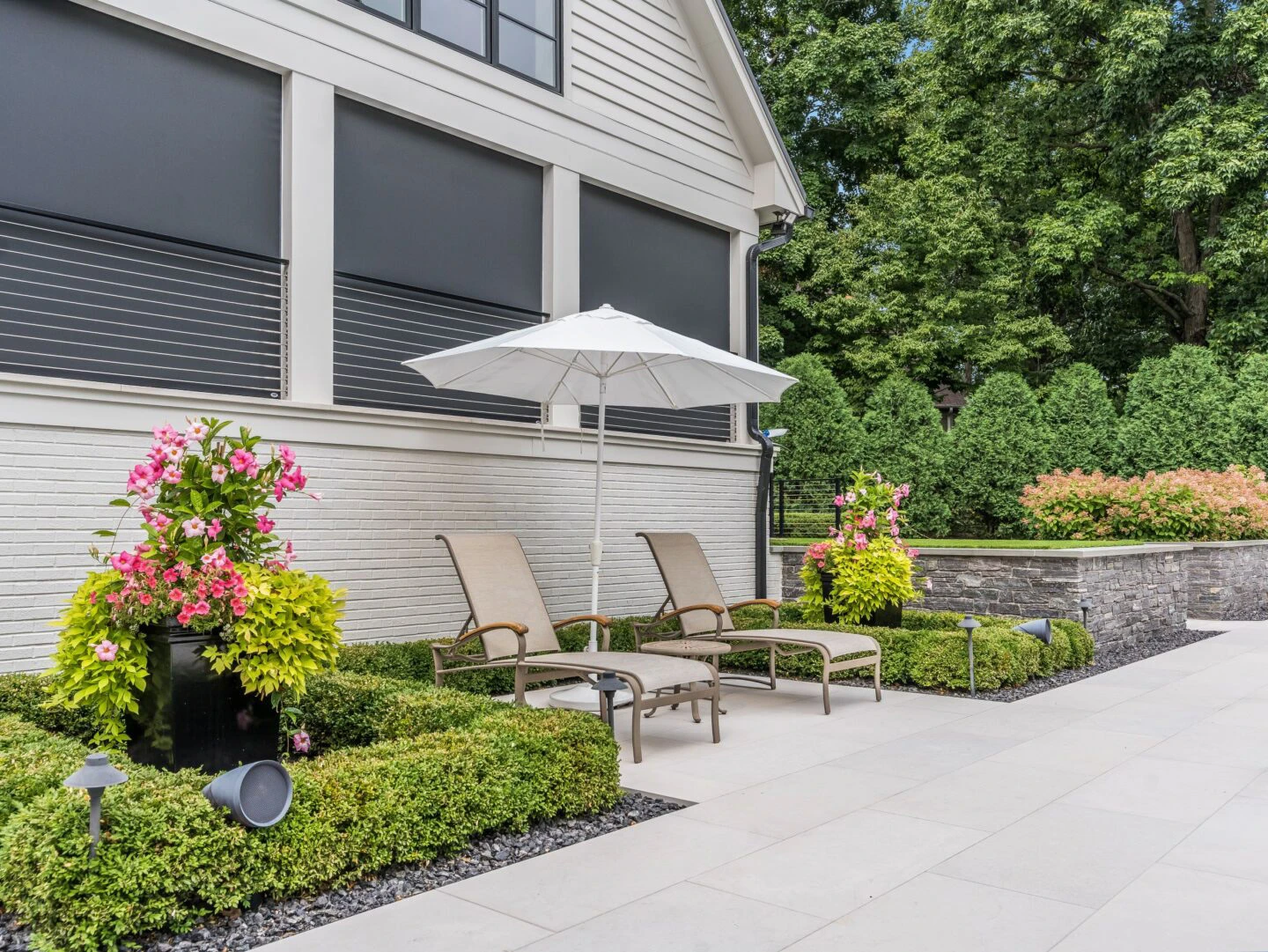
Forsyth County’s zoning code treats a pergola that is physically attached to the primary residence — by a continuous ledger board lag-bolted into the band joist — as an extension of the existing structure. That single classification is what changes everything. An extension lives inside the home’s already-approved footprint envelope. A freestanding structure does not.
In practice, if your rear building line sits 25 feet from the rear property line (standard for R-3 lots in most 2000-2015 Cumming subdivisions), an attached pergola can project off the back of the house into what would otherwise be protected setback territory — because the code is measuring the house, not the pergola. We have built attached pergolas in Haw Creek and Polo Fields that cantilever six to eight feet beyond what a freestanding structure would ever be permitted to occupy.
Freestanding pergolas do not get that courtesy. The county treats them as accessory structures, and accessory structures trigger a rear-yard setback — typically 10 to 15 feet from the property line depending on the subdivision’s recorded plat. If your usable yard is only 35 feet deep (common in the 2005-2010 tract homes off Bethelview Rd), 15 feet of that just became untouchable.
Forsyth County also distinguishes side setbacks. In R-3 residential zones, lots typically carry a 10-foot side yard; corner lots get a 20-foot street-side setback. A freestanding pergola pushed to the side of a property to free up the rear lawn still has to honor that side setback, and the combined effect on narrower lots — say a 70-foot-wide parcel in Sadie Farms or Three Chimneys — can leave you with less than 25 feet of true buildable width. Attached pergolas, again, inherit the house’s already-approved side envelope and quietly skip that math.
The other thing worth naming: Forsyth is the fastest-growing county in Georgia, and the planning department is genuinely busy. Attached pergola permits tend to come back in 5-to-8 business days. Freestanding accessory-structure permits average 12-to-20 business days because they route through an extra plan reviewer. That delta compounds if you’re trying to pour footings before the next freeze window closes in mid-December.
Forsyth County permit office: Forsyth County Dept. of Planning & Community Development, 110 E. Main St., Cumming. Attached pergola permits reviewed under the primary residence permit packet; freestanding reviewed as accessory structure with independent footing inspection.
2. The St. Marlo, Polo Fields, and Vickery HOA Rules That Actually Matter
Forsyth County sets the floor. The HOA sets the ceiling. And in the higher-end Cumming subdivisions, the ceiling is where every pergola project lives or dies.
St. Marlo — the gated golf community off McGinnis Ferry — runs an architectural review board that meets twice monthly. Their published guideline is a 2-to-3-week turnaround on pool and pergola plans, but only if the submission is complete on the first pass. Attached pergolas submitted with a clean elevation drawing, material callouts, and structural ledger detail get approved roughly 88% of the time on first review. Freestanding submissions — same level of drawing — approve around 74%. The gap is almost entirely about sightline from the course: a freestanding pergola in the back third of a St. Marlo lot can block a fairway view from a neighbor’s second floor, and that kills the plan.
Polo Fields is less sightline-sensitive but more material-sensitive. Their ARB requires exterior structures to match or complement the house trim color, which nudges many homeowners toward stained cedar over raw pressure-treated pine or painted aluminum. The attached-vs-freestanding distinction matters less here than the finish schedule.
Vickery — the New Urbanist development with tighter lots and shared rear alleys — almost always pushes attached. The lots are narrow enough that a 10-foot rear setback on a freestanding pergola leaves nothing usable. Our Vickery pergola builds typically attach to the rear of the home directly over a paver courtyard, eight to twelve feet deep, and stop there.
Windermere and Lake Windward are both more forgiving on freestanding structures because the lots run larger and the covenants are older — but both ARBs still require a site plan with setback dimensions drawn to scale. Hand-sketched submissions get bounced. Lake Windward in particular likes to see the pergola footprint overlaid on an existing landscape plan so the board can verify it won’t force the removal of any protected tree larger than 8-inch caliper — a covenant most homeowners forget about until the ARB reminds them.
The Collection at Forsyth, Mashburn Plantation, and the newer luxury tracts off GA-400 exits 14 and 17 are where the ARB process gets genuinely strict. Some of these neighborhoods — built for relocation buyers coming in from metro Atlanta — have boards that review every drawing against a design-intent book. We’ve had attached pergolas approved on the first pass there, and we’ve seen freestanding structures bounce three times for canopy opacity being outside the 40-to-60% open-rafter band the covenants specify.
3. The Structural Difference — Ledger Board vs Four Independent Footings
Below the approval paperwork, the two pergola types are genuinely different structures, and anyone quoting you identical prices for both has not drawn either one yet.
Attached: the ledger board is the whole game
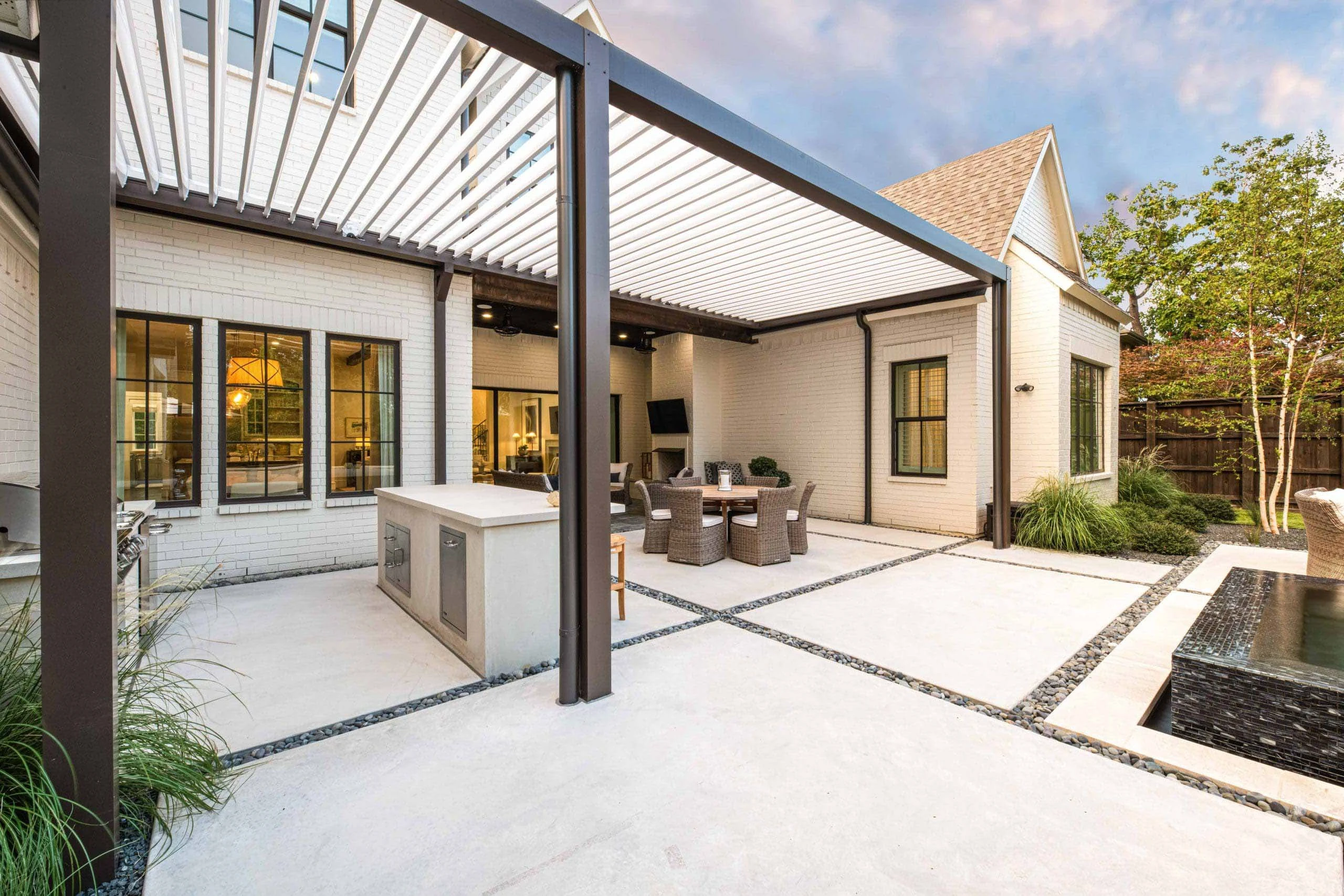
An attached pergola transfers roughly half of its dead and live load into the back wall of the house. That load path goes: beams → ledger board → 1/2-inch galvanized lag bolts through the band joist → framing. The ledger is typically a 2×10 or 2×12 cedar or pressure-treated member, run continuously along the attachment wall, flashed with Z-flashing behind the siding or under the brick ledge.
The failure mode to worry about is water intrusion at the ledger, not structural pullout. In a humid climate like Cumming’s — 52 inches of annual rainfall, Lake Lanier raising the local humidity a few points above Dacula — flashing the ledger wrong means rotted framing inside three to five years. We spec a double layer of self-adhering flashing tape plus Z-flashing on every attached pergola ledger, and we don’t skip it on painted siding homes even when the crew wants to.
Lag bolt spacing on the ledger follows the same framing logic as a deck ledger: staggered pairs every 16 inches on center, minimum two bolts per stud bay, with bolt penetration into framing of at least 2.5 inches past the back face of the band joist. On brick-veneer homes the bolt has to land in the structural wall behind the brick, which means using a hammer drill to pass cleanly through the veneer without cracking it, then sealing the annular space with a non-shrink polyurethane sealant to keep water out of the cavity. Skip that sealing step and you are inviting moisture into a cavity that will not dry out.
Freestanding: four posts, four footings, four problems
A freestanding pergola has no shared load path. Every post is its own column carrying its own quarter of the dead load plus whatever wind and (in USDA Zone 8a) ice loading the canopy picks up during the ~22 freeze events Cumming sees each year.
The footings on a standalone structure are non-negotiable: 42 inches deep minimum in Forsyth County (frost line plus factor of safety), 12-to-16-inch diameter, poured on undisturbed subgrade. Hard-packed Piedmont clay — the Cecil series dominant through central Cumming — actually makes for an excellent bearing soil once you’re past the topsoil horizon, but it also means the hole has to be dug wet, drained, and poured before it rehydrates and slicks up.
Post-to-footing connection is usually a Simpson ABU66Z or CBSQ66-SDS2.5 standoff base — not a buried post. Burying a cedar or pressure-treated post directly in a Forsyth County clay footing is how you get rot at grade in eight to ten years. Standoff bases lift the wood off the concrete, let it drain and breathe, and double the practical service life.
Footing spec for a standard 12×16 freestanding cedar pergola in Cumming: four poured concrete piers, 14″ diameter × 42″ deep, 3,000 PSI mix, rebar cage (4× #4 verticals with #3 ties), Simpson ABU66Z standoff bases, 6×6 cedar posts, 1/2″ × 8″ anchor bolts set in wet pour.
4. The Cost Gap — and Why It’s Not Always What You Expect
On a like-for-like 12×16 cedar pergola with matching beam spacing and rafter detail, the attached version runs roughly $8,500 to $12,500 installed, and the freestanding version runs roughly $11,800 to $16,800. The gap is the four footings, the additional two posts (attached uses two; freestanding uses four), and the longer engineering review.
But that is the paper gap. The real-world gap shifts in both directions depending on two things: the house wall you’re attaching to, and what’s under the ground where the freestanding posts would land.
If the rear wall is brick veneer (common in the 2000-2008 Cumming housing stock), the ledger detail gets more expensive. You’re either lagging through brick into the structural framing behind it (requires longer bolts, larger holes, careful waterproofing) or you’re mounting a secondary ledger standoff that holds the pergola off the brick by two to three inches. That adds $600 to $1,200 to the attached price, closing the gap.
If the freestanding footings land on a drainage swale or on fill soil — Cumming has a lot of mass-graded 2005-2010 subdivisions where the backyard is partially fill pushed out from the building pad — the footings need to be deeper and wider to reach competent bearing. We’ve quoted freestanding pergolas in a few Hampton Park backyards where the soils report pushed footings to 54 inches, which added roughly $1,400 to the structure price. On a 3-to-8-foot grade drop toward a South Forsyth drainage tributary, that depth math is not optional.
One more hidden cost: engineered plans. Freestanding pergolas over a certain footprint — Forsyth County kicks it in around 200 square feet of canopy area or any structure over 12 feet tall — require a stamped structural drawing from a licensed Georgia engineer. That stamped drawing runs $650 to $1,100 depending on the engineer’s load book and how complete your plans already are. Attached pergolas of the same size frequently get waived into the primary-residence permit without a separate stamp because the load path is already documented on the original house plans.
The net-net: on smaller pergolas (10×12 to 12×14) the cost gap between attached and freestanding is almost entirely the four footings plus the engineering stamp. On larger structures (16×20 and up) the gap narrows proportionally because you need heavy beams either way, and the ledger-board detail on an attached pergola at that size gets expensive enough that freestanding starts competing on price directly.
5. The Decision Tree — Which One Actually Fits Your Lot
The honest answer for most Cumming backyards is: attached, unless a specific condition forces freestanding. Here are the conditions that force freestanding:
- The pergola needs to sit over a pool, spa, or fire feature that is not directly adjacent to the house. A ledger is only useful if the structure is within about 14 feet of a rear wall. Once you push past that, cantilever math stops working.
- The rear wall is a full-height window system — common on the newer 2018+ luxury builds in Windermere and The Collection at Forsyth corridor — with no available band joist surface to land a ledger on.
- The HOA specifically requires freestanding for design continuity with an existing hardscape. Uncommon, but Polo Fields has pushed back on attached pergolas where the home’s architecture doesn’t support a rear projection.
- You want a taller pergola — a 10-to-12-foot clearance structure — and the rear roofline is too low to land a ledger at that height without creating a water-diverter nightmare.
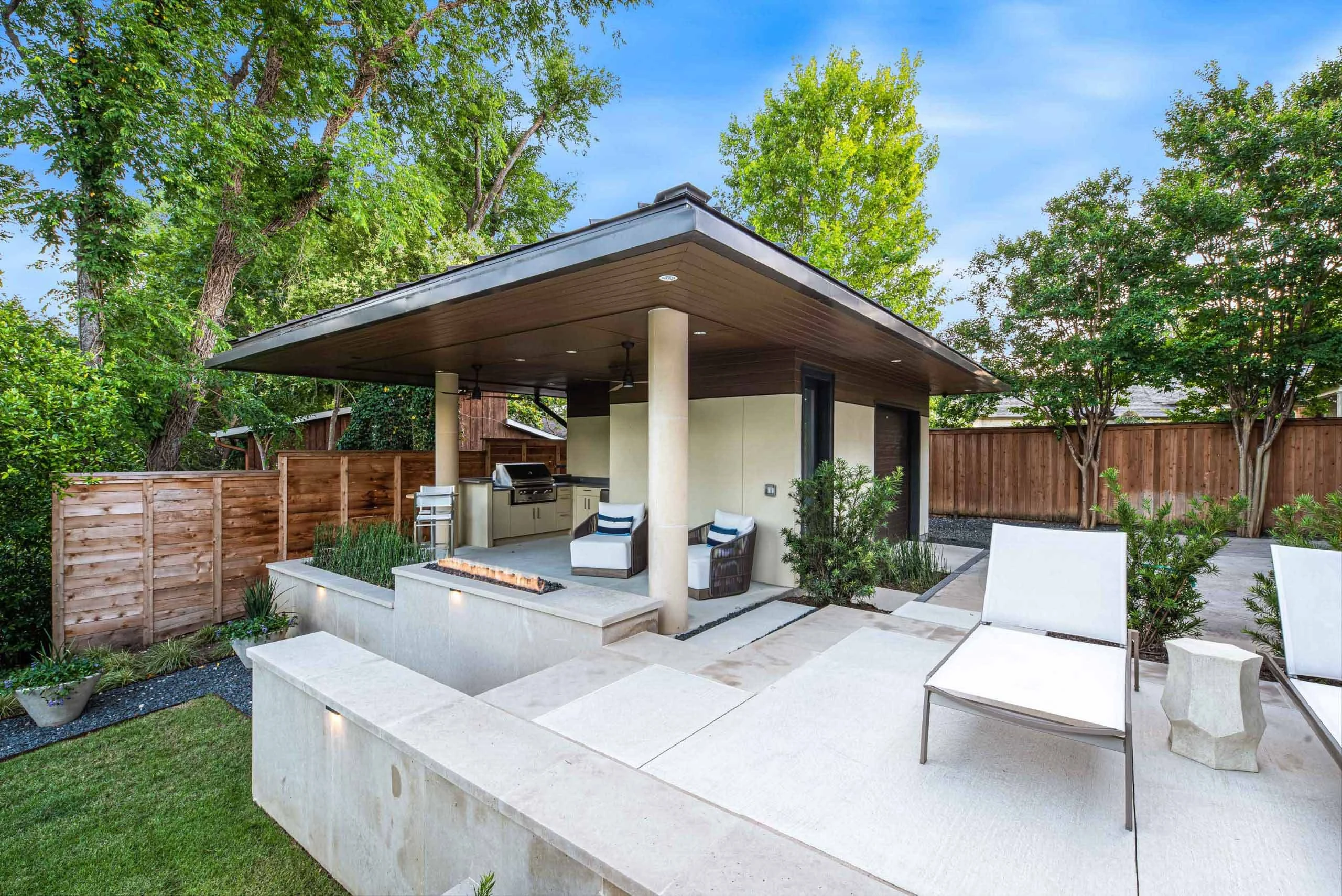
If none of those conditions apply, attached is almost always the answer. You get a faster permit review (Forsyth rolls it into the primary residence packet), a higher ARB approval probability, a lower material cost, and a tighter water management detail because the pergola canopy feeds rainfall back toward the home’s existing gutter system rather than dumping it into a separate drainage plan.
One more variable: Sawnee EMC and accent lighting
If the pergola is going to carry integrated lighting — warm-white LED strip inside the rafter channels, downlights under the beam spans, or a ceiling fan — the electrical feed has to come from somewhere. Attached pergolas share the home’s panel; a short conduit run from the interior, terminated in an exterior weatherproof junction box. Freestanding pergolas require a dedicated 240V trench run from the panel (or a sub-panel in the pergola post base for larger structures), which brings Sawnee EMC into the conversation. Sawnee EMC has specific meter-base and service drop rules for accessory-structure sub-panels, and the inspection queue can add a week to the schedule.
None of this is a deal-breaker for freestanding. It’s just another item on the column that says “things attached pergolas skip.”
What to Bring to a Cumming Pergola Consult
If you’re already past the “which one” question and ready to start drawings, three documents compress a pergola design from four meetings into two:
- Your recorded plat — available from the Forsyth County property records portal or your closing packet. This is the document that tells us your exact rear setback, side setbacks, and any utility easements crossing the back yard.
- Your HOA architectural guidelines — the PDF, not a summary. St. Marlo, Polo Fields, and Vickery each have specific material, color, and height guidelines that change the drawing before we start.
- A photo of the rear wall where an attached pergola might land — we need to see siding type, gutter placement, window and door locations, and roofline height.
With those three, we can usually tell you within one site visit whether attached or freestanding is the right call for your specific lot in Vickery, Hampton Park, St. Marlo, Lake Windward, Windermere, Three Chimneys, Polo Fields, Haw Creek, Mashburn Plantation, or wherever your Cumming backyard sits. From there, permit drawings, ARB submission, and construction typically run 6 to 9 weeks end-to-end for attached, and 8 to 12 weeks for freestanding.
Pergola design & construction across 20+ cities within 30 miles of Snellville, GA
From ledger-attached structures that cantilever off a Haw Creek rear wall to four-footing cedar pavilions sized for a Polo Fields golf-course lot — the setback question gets answered before the first post goes in.