
A 10×14 aluminum louvered pergola carries an 800-pound dead load before a single gust of wind hits the louvers. When that structure bolts into the rear wall of a Laurel Springs custom home, four specific engineering decisions separate a $2,400 attachment that lasts 40 years from an $800 attachment that tears the band board off the house in year six.
Here are the six specifics the Laurel Springs Architectural Review Board — and the physics — will force you to answer before an attached pergola gets built on Gwinnett’s most scrutinized street grid:
- What is the actual dead load plus wind load on a 10×14 aluminum louvered unit in Suwanee’s ASCE-7 wind exposure category?
- Is your Laurel Springs home band board a 2×12 LVL, a 2×10 dimensional, or an I-joist rim — and why does that single answer change your fastener spec completely?
- Why does the ARB require a stamped ledger engineering plan before the permit application even leaves Peachtree Industrial Blvd?
- What is the correct thru-bolt, aluminum flashing, drip edge, and weep path assembly — and why do three of those four get skipped on sub-$1,000 installs?
- How does Jackson EMC’s 240V service change the wiring path if you want motorized louvers or integrated lighting?
- What does $2,400–$4,800 of proper attachment actually buy you versus the $800 lag-bolt-and-caulk job your neighbor’s handyman pitched?
This post walks through each one in the order a Gwinnett Dept. of Planning & Development reviewer at 446 W. Crogan St. will read your plan set. If you own a custom home in Laurel Springs, The River Club, or Bear’s Best Atlanta, the stakes on the ledger connection are higher than anywhere else in Gwinnett — because the house that pergola is bolting into probably cost more than the pergola will in its lifetime of replacements.
1. The 800-Pound Dead Load Nobody Quotes You On
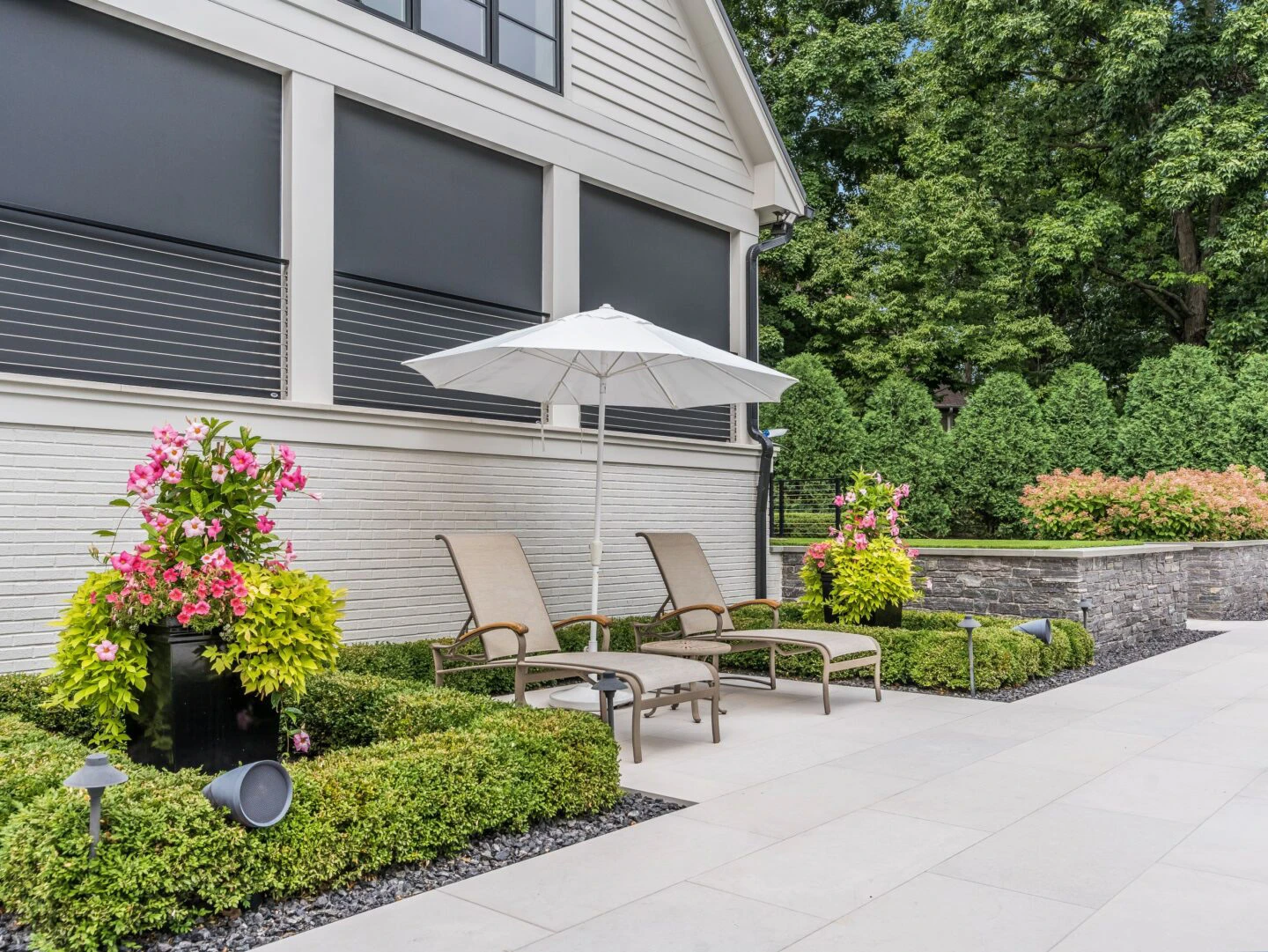
A 10×14 aluminum louvered pergola — the size most Laurel Springs homeowners actually want, because it covers a dining-plus-lounge zone off the rear kitchen — carries a factory dead load of roughly 800 pounds. That is just the aluminum extrusions, louver blades, motor assembly, and powder-coated hardware. It is the number on the pergola before anything happens to it.
Then the wind hits. Suwanee sits in ASCE-7 wind exposure category B for most inland subdivisions — 115 mph basic wind speed for the region. On a 10×14 louvered unit with the blades closed, the effective wind-load surface is not just the roof plane; it is the full perpendicular face when a front-moving gust catches the louvers. On paper, that adds roughly 1,400 to 2,200 pounds of lateral and uplift force depending on louver orientation at the moment of peak gust. Total engineered load at the ledger connection: closer to 3,000 pounds than 800.
A handyman quoting $800 for the install is pricing aluminum-to-wood with four 3/8-inch lag screws into whatever the drill bites. A stamped engineering plan for the same connection calls for a minimum of eight to twelve thru-bolts, specific washer stack, and a structural band that can actually transfer 3,000 pounds of combined vertical and lateral load into the home’s framing without splitting the rim.
Real load math, not brochure math: 10×14 aluminum louvered unit = 800 lb dead + ~1,600 lb peak wind/uplift = ~2,400 lb at the ledger in a 115 mph design-event gust (ASCE-7 Exposure B). Your fastener pattern needs to carry that, in shear and withdrawal, with a safety factor of 2.5 to 4.
2. Why the Laurel Springs 2×12 LVL Band Changes Everything
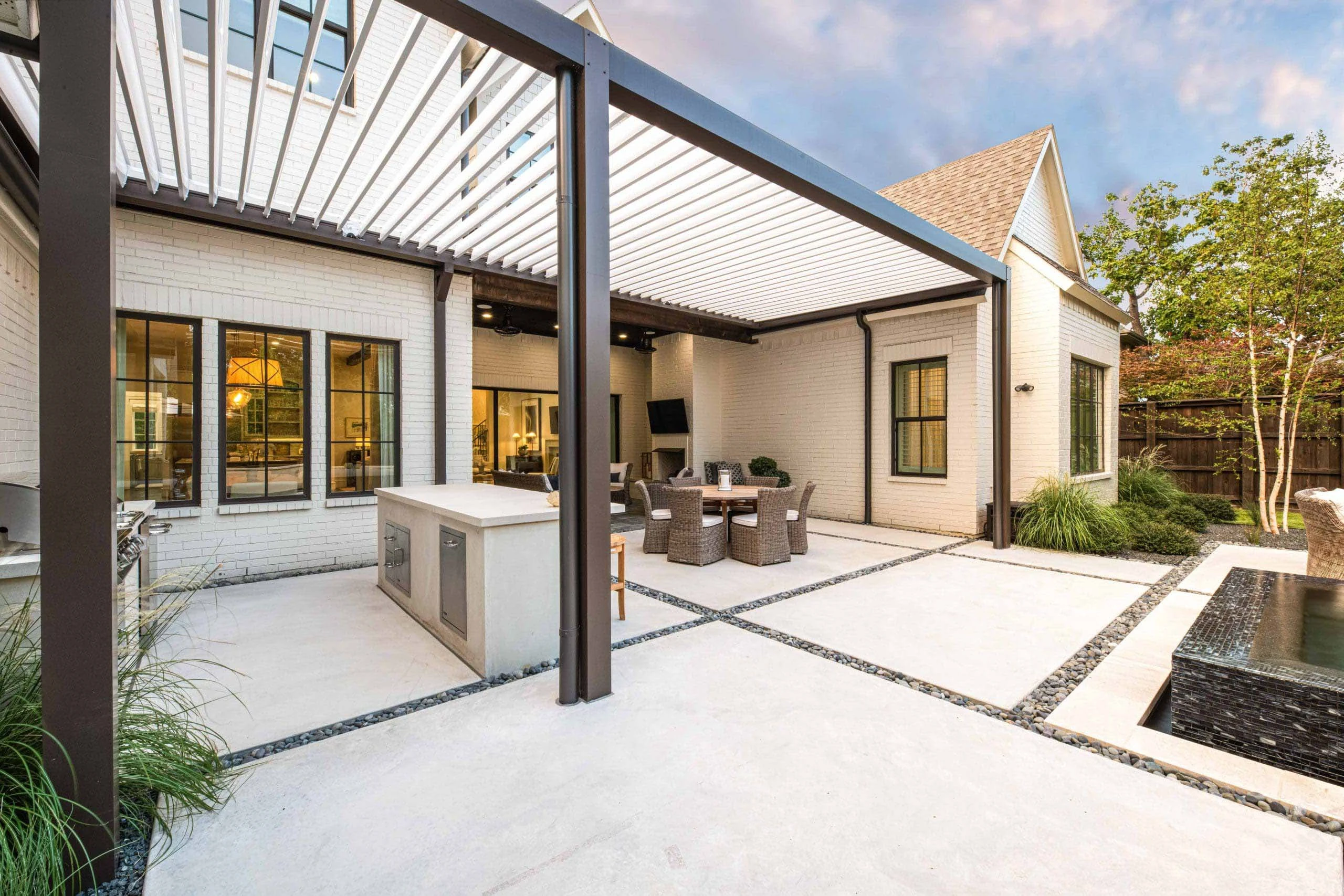
Most 2000-2015 custom homes in Laurel Springs were framed with engineered rim boards — typically 2×12 LVL (laminated veneer lumber) or 1 1/4-inch LSL rim at the floor-to-wall transition. The River Club and Bear’s Best Atlanta estate homes often use even heavier 16-inch LVL rim sections. That is excellent news for an attached pergola. It is also the single detail most installers do not bother to verify before they drill.
A 2×12 LVL band, properly spanned and supported inside the wall cavity, will happily accept eight 1/2-inch thru-bolts spaced on 16-inch centers and carry the full 2,400-pound ledger load with a factor of safety above 3. A 2×10 dimensional pine rim — which you might find on older Suwanee proper ranch homes west of Settles Bridge Rd — cannot. An I-joist rim with an OSB web and a 1 1/4-inch LSL top and bottom flange absolutely cannot, and lag-screwing into the OSB web is one of the most common catastrophic mistakes we see when we inspect failed pergolas.
Before a ledger drills into any Laurel Springs custom home, the engineering plan identifies the rim assembly — pulled from the original house plans or, if those are unavailable, verified with a small exploratory opening behind the interior trim. This is not optional. The ARB will not approve a pergola attachment diagram that does not identify the host structure it is attaching to.
The three band-board scenarios we see in Suwanee
- 2×12 LVL rim — Laurel Springs, River Club, Bear’s Best, The Manor, Woodbury. Standard for 2000-2015 custom builds above ~$800k. Full thru-bolt pattern approved, no blocking required.
- 2×10 dimensional pine rim — older Village Grove homes, some 1990s Highgrove builds, Settles Bridge-area traditionals. Usually requires supplemental interior blocking before the ledger spec will carry.
- I-joist floor system with 1 1/4-inch LSL rim — newer 2018+ builds in infill pockets. Requires engineered blocking or a custom steel plate cap. Sub-$1,000 handyman installs almost always fail here inside two winters.
3. The ARB Ledger Engineering Plan — and Why It Takes 3–4 Weeks
The Laurel Springs Architectural Review Board runs one of the strictest architectural review processes in Gwinnett County — typical turnaround is 3 to 4 weeks, and that is when your submittal is clean. A dirty submittal — missing load calcs, missing flashing detail, missing material schedule, missing elevation drawing — gets bounced back with a letter and resets the clock.
For attached pergolas specifically, the ARB requires a ledger engineering plan that shows, at minimum: the host rim assembly, the fastener type/size/spacing/pattern, the flashing and drip-edge detail, the weep path, the post footing detail on the outboard side, and a stamped structural engineer’s signature on the load calculations. That is not a Gwinnett Dept. of Planning & Development requirement — the county will permit attached pergolas with a simpler submittal — it is a Laurel Springs HOA requirement, and it exists because the HOA does not want the primary residence’s envelope compromised by an aftermarket structure.
The practical effect: you cannot rush this. A Laurel Springs attached pergola project runs a realistic 5 to 8 weeks from signed contract to install — 3-4 weeks for ARB, 1-2 weeks for the county permit (which piggybacks on the ARB-stamped plan), and 1-2 weeks to build and inspect. The River Club ARB is comparable; Bear’s Best is slightly faster. Subdivisions outside the premier gated communities — Village Grove, Highgrove, Woodbury — typically run 2-3 weeks faster because the review is lighter, but the county permit timeline does not change.
4. Thru-Bolt, Aluminum Flashing, Drip Edge, Weep Path — the Four-Part Assembly
A proper attached-pergola ledger connection on a Laurel Springs custom home has four components, installed in this order. Skip any one of them and the install will fail — not immediately, but visibly, in year four to year seven, when rot behind the ledger starts telegraphing through the interior drywall.
Thru-bolt, not lag screw
1/2-inch galvanized thru-bolts with structural washers on both sides, spaced on 16-inch centers minimum. A thru-bolt passes completely through the rim and clamps it between two washers. A lag screw bites into the wood and relies on thread engagement — which degrades over time as the wood cycles with humidity. On an 800-plus-pound dead load, lag screws are categorically wrong. Every failed attached pergola we have been called to inspect in Suwanee was lag-screwed.
Aluminum Z-flashing
A continuous piece of 0.040-inch aluminum Z-flashing rolls over the top of the ledger, rises up behind the house siding by at least three inches, and tucks under the existing weather-resistive barrier. Water that runs down the rear wall of the house now runs over the flashing and falls past the ledger — it does not sit on top of the ledger and work its way into the bolt holes.
Drip edge
The bottom leg of the Z-flashing terminates in a kicked-out drip edge — a 15-degree bend that throws water forward off the face of the ledger instead of letting it track back along the underside. On a 14-foot-wide ledger, the drip edge is the difference between a dry interface and a permanently damp interface.
Weep path
Behind the ledger, between the flashing and the house siding, a continuous 3/8-inch air gap with a bottom weep allows any water that does find its way in to exit before it soaks the sheathing. On brick-veneer homes — common in The Manor and older Laurel Springs cul-de-sacs — the weep path ties into the existing brick weep system at the mortar joints.
5. Jackson EMC 240V Service, Chattahoochee Humidity, and the Motor Wiring Path
Suwanee sits on Jackson EMC for electric service — not Georgia Power, which is a detail that catches Atlanta-transplant installers off guard. Jackson EMC’s residential feed is standard 240V/200A to the meter, but the inspection and permitting path for sub-panel work on the rear elevation of the home runs through Jackson EMC’s own coordinator rather than Georgia Power’s regional office. On attached pergolas with motorized louvers and integrated LED lighting, that distinction affects the timeline by a week.
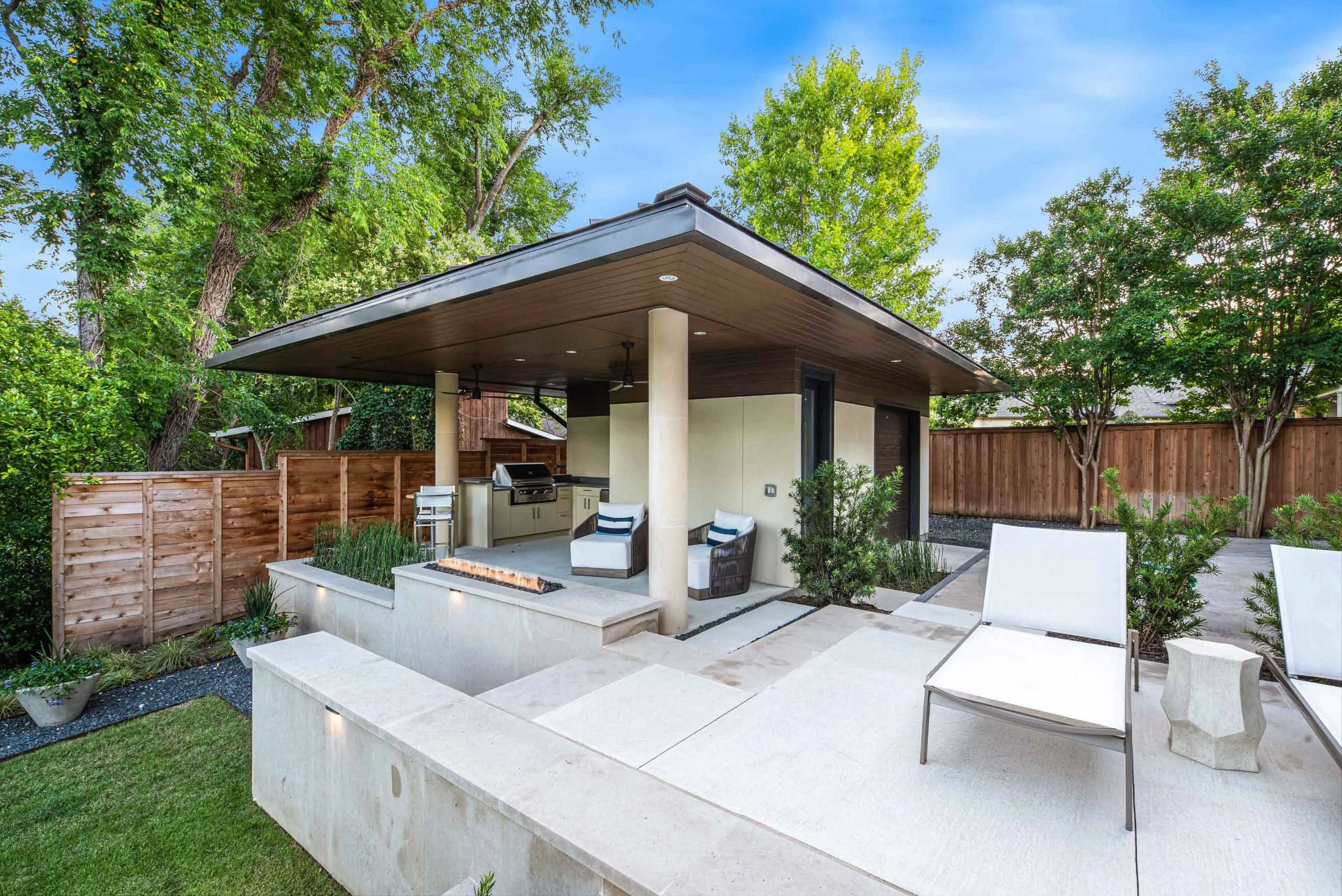
The typical spec for a motorized 10×14 louvered unit on a Laurel Springs home runs a 20-amp dedicated circuit from the interior sub-panel, through the rear wall inside a PVC conduit sleeve, up into the post cavity, and into the motor housing. Controls — Somfy or equivalent — mount either inside the house on a wall switch or out on the post with a weatherproof cover. Rain and wind sensors get tied into the same control circuit so the louvers auto-close in a storm.
Chattahoochee River humidity changes the hardware spec. Suwanee sits at ~1,063 feet elevation, but proximity to the river keeps ambient humidity 5-8% higher than inland Gwinnett locations like Dacula or Lawrenceville on most summer mornings. That matters because galvanized hardware corrodes faster in chronic humidity than in dry-heat environments. Attached pergolas in Settles Bridge and along the river-facing slopes of Laurel Springs get spec’d with stainless thru-bolts and 304-grade washers — an extra $180 to $320 in hardware, easy math against the value of the rest of the assembly.
On river-facing lots in the Zone AE flood designation near Settles Bridge, the pergola footing detail also changes — FEMA flood-zone rules require the outboard post footings to be pinned to a deeper frost-plus-scour depth rather than the standard 24-inch Gwinnett County frost line. It is a small percentage of Suwanee homes but it is worth asking the question before the engineering plan gets drafted.
Suwanee attached pergola, all-in install cost range: $2,400–$4,800 for the properly engineered ledger assembly alone (hardware, flashing, labor, engineering stamp). The full pergola — aluminum unit, motor, post footings, electrical, permit, ARB fee, final inspection — runs $14,000 to $32,000 for a 10×14 to 14×20 louvered system on a Laurel Springs home.
The $800 handyman install is real, and it is real cheap, and it fails. We replace two to three of them a year in Suwanee alone.
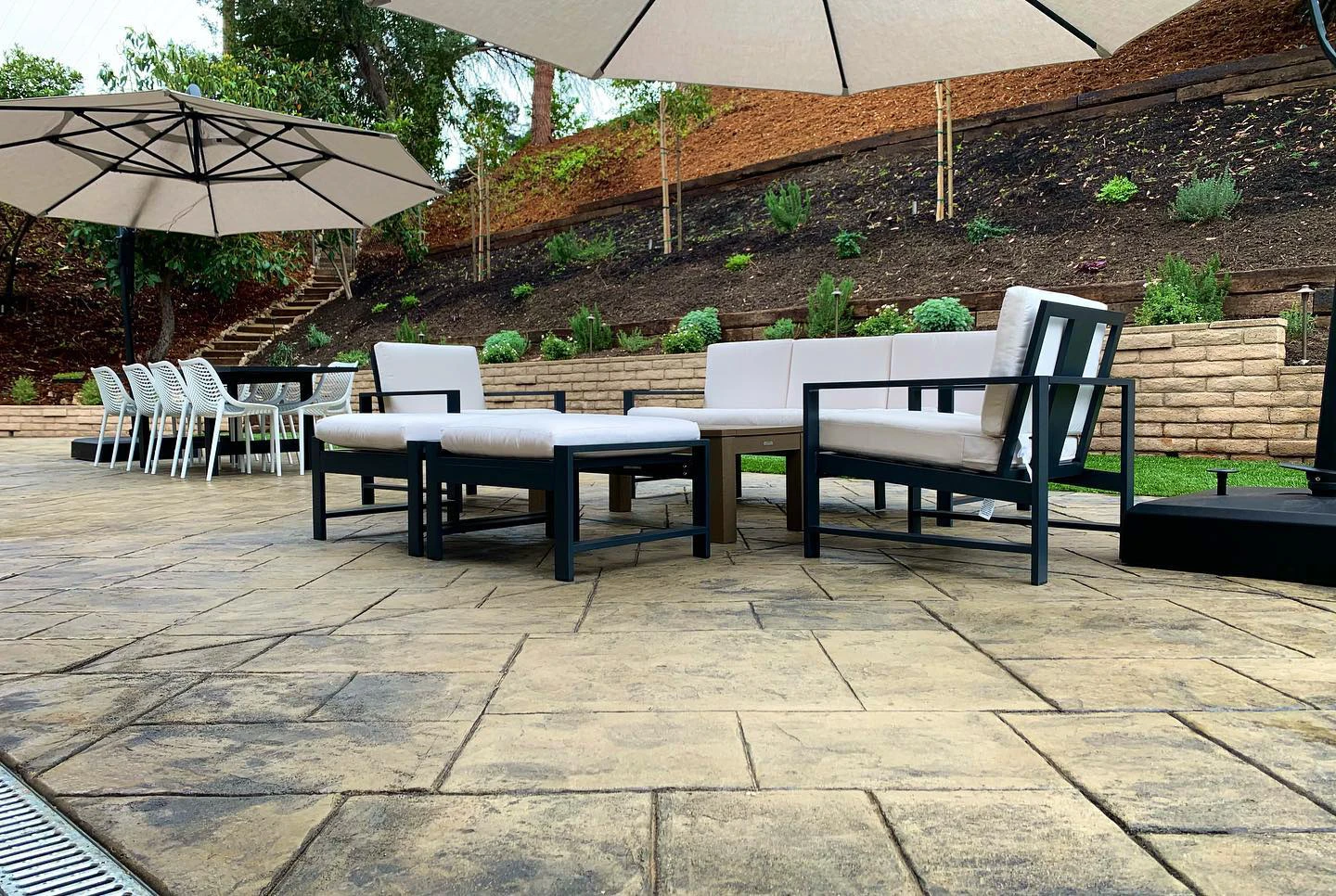
Attached pergola engineering across 20+ cities within 30 miles of Snellville, GA
From Laurel Springs and River Club ARB submittals to Gwinnett County permit packages, we stamp and build ledger connections engineered to outlast the pergola.