
Cedar pergolas in Cumming fail twice as fast as the catalog promises. Lake Lanier sits eight miles from the Windermere gatehouse, and the humidity differential between South Forsyth and Atlanta metro is measurable — which is why the architectural review boards at St. Marlo and Polo Fields now quietly reject wood-frame submissions in new builds.
Here is the problem nobody on a sales call wants to itemize. A builder quotes a 12×14 cedar pergola at $9,800 installed. The homeowner pictures a 20-year structure. What they actually get — in a Forsyth County backyard pulling moisture off Lanier every summer afternoon — is a 10-to-15 year asset with annual staining, post-base rot by year seven, and a rafter sag that nobody warned about. Meanwhile the neighbor two cul-de-sacs over, in a tract built in 2019, has an aluminum pergola that will outlive the house.
This post is the math on why Cumming’s premium subdivisions stopped approving wood. We’ll walk through the three aluminum systems homeowners actually choose — StruXure, Renson, and Pergola-X — the real installed cost for a 12×14 footprint, the HOA approval timeline, and the Sawnee EMC service detail that trips up one in three motorized installs. If you live in Forsyth County and you’re pricing shade, this is the piece.
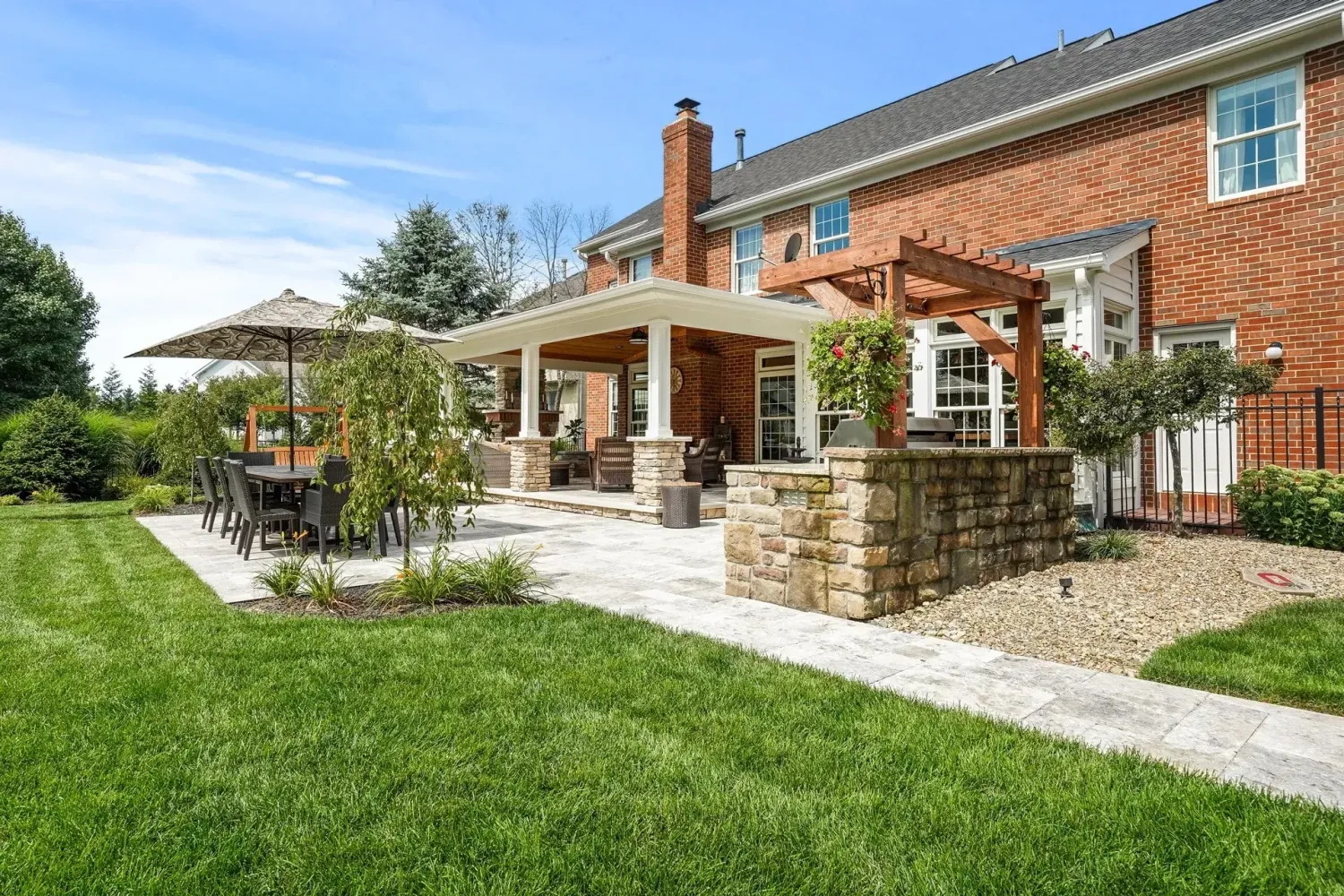
Why Lake Lanier Humidity Kills Cedar Faster in Cumming Than in Dacula
The short version: water vapor off a 38,000-acre reservoir does not respect county lines. South Forsyth backyards sit in the moisture envelope of Lake Lanier’s southern shore, and mean relative humidity in July runs 6–9 points higher than what a weather station in Dacula or Lawrenceville records at the same hour. That sounds small. Compounded across 22 freeze events per year and roughly 52 inches of rainfall, it is not small at all.
What the humidity does to wood is mechanical. Cedar absorbs moisture in the summer, expands, and locks fasteners under tension. The hardware rusts even when galvanized — and especially when a cheaper installer used non-stainless lag bolts. Winter comes, the wood shrinks, the bolts loosen in the expanded holes, and hairline fractures propagate through the post bases sitting in direct contact with concrete footings. The failure pattern is always the same: rot at the base, sag in the rafters, splits along the grain on the south-facing posts.
Builders in drier climates report cedar lasting 20–25 years with maintenance. In Cumming, the realistic range is 10–15 years, and that’s with annual re-staining at roughly $450 per service. We have pulled 11-year-old pergolas out of Hampton Park backyards where the entire post base came up with the concrete — the wood was so saturated it had turned fibrous.
Cumming cedar-rot benchmark: Post-base failures appear in year 7–9 in South Forsyth backyards within 10 miles of Lake Lanier. Same cedar spec in Cherokee County averages year 12–14 before equivalent decay. The delta is moisture, not installation.
What the Windermere and St. Marlo Review Boards Actually Require
The premium subdivisions in Cumming run tighter architectural review than most homeowners expect. Windermere’s ARB operates a typical 2–3 week turnaround on outdoor-structure submissions, and the unofficial but consistent pattern over the past three years is straightforward: wood-frame pergolas trigger a revision request. Aluminum systems in a bronze, matte black, or brushed-sand finish get signed off on the first pass.
The reasoning the boards give on paper is “long-term aesthetic consistency.” The reasoning behind the reasoning is that they watched wood-frame structures weather into seven different shades across one cul-de-sac over a decade, and they do not want the uniform streetscape degrading again. St. Marlo, Polo Fields, The Collection at Forsyth, and several Vickery village sub-phases have all shifted toward the same posture.
If you’re submitting plans, the three details the boards want to see labeled on your drawings are: powder-coat color (with manufacturer’s paint code), post dimensions in inches, and the roof system — fixed louver, motorized louver, or solid bladed. A clean plan set with those three items spec’d correctly usually comes back approved inside 14 days. A plan set missing them comes back with a revision note and adds another submission cycle.
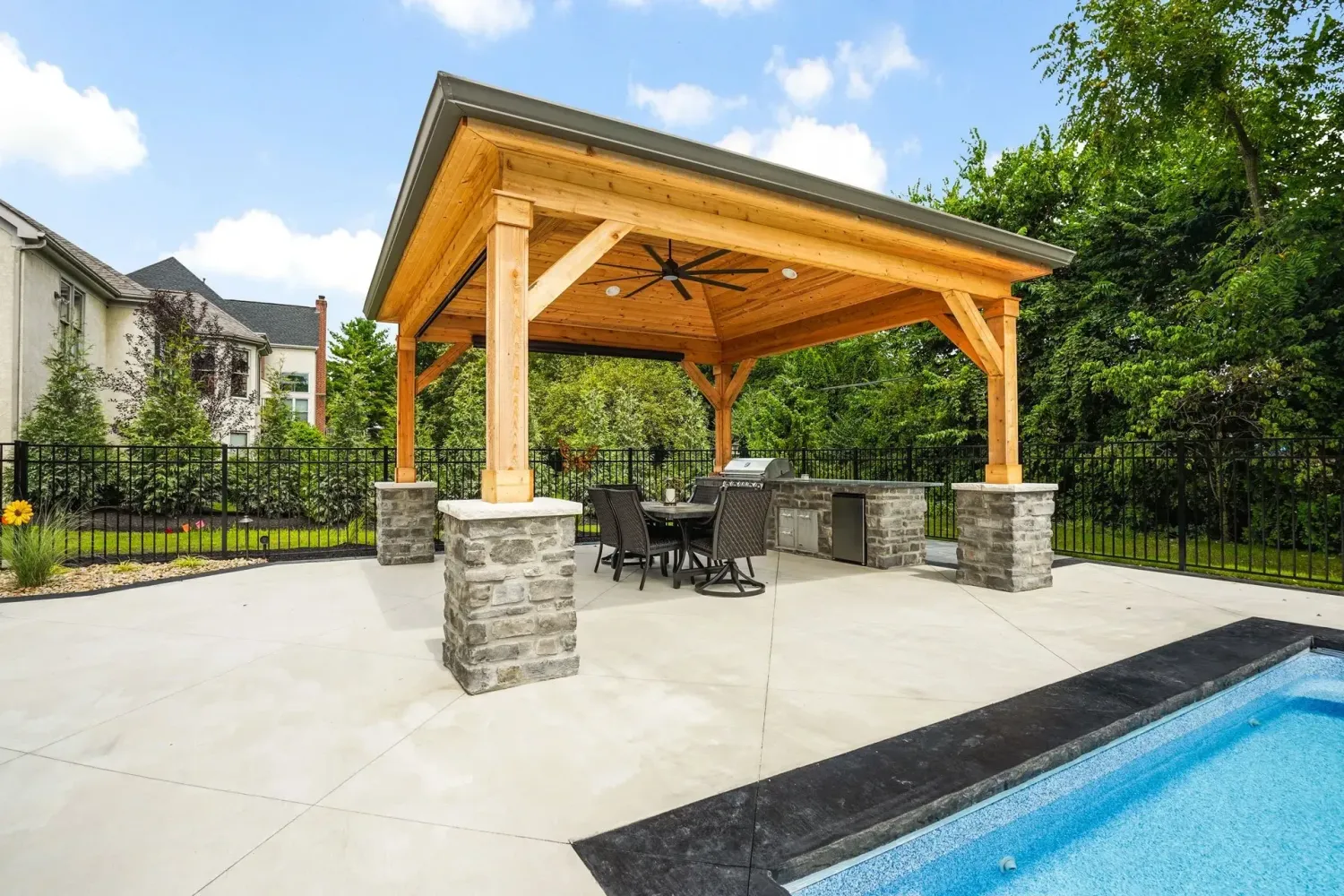
StruXure, Renson, Pergola-X: The Three Systems Cumming Homeowners Actually Pick
There are roughly a dozen aluminum pergola manufacturers selling in Georgia. Three dominate the Cumming market because their dealer networks have a physical presence inside 90 minutes of Forsyth County and because their engineering handles our snow-load and wind-load assumptions without custom calc letters.
StruXure
StruXure is the price-floor serious option. Motorized louvered roof, pivoting blades that rotate 170 degrees, integrated LED lighting channels, and a gutter system built into the rafter extrusion. Installed pricing for a 12×14 single-structure motorized system in Cumming runs $26,000–$31,000 depending on color, lighting package, and whether the slab is new pour or existing. StruXure ships from a Georgia distribution point, which keeps lead time at 6–8 weeks in normal conditions.
Renson
Renson is the Belgian engineering option. The louvers rotate and retract — meaning the roof can open fully rather than just tilt — and the acoustic damping is noticeably quieter in wind. Screens integrate into the post extrusions on all four sides, which matters for a Cumming backyard where mosquito season runs April through October. Installed pricing for a 12×14 Renson Camargue or Algarve sits at $38,000–$44,000. Lead time is 10–14 weeks because the units ship from Europe.
Pergola-X
Pergola-X is the value-engineered middle. Motorized louvered roof, factory-finished in five standard colors, 190 mph wind rating, and a rain sensor as a stock feature on the premium configuration. A 12×14 Pergola-X installation in Cumming typically lands at $22,000–$27,000. The trade-off against StruXure is a slightly simpler extrusion profile and fewer premium integrations — but for a homeowner who wants motorized louvers without crossing $30K, it’s the cleanest option on the market.
The 40-Year Math: Line-Item Comparison Over a Real Ownership Period
This is the section that ends most of the “but cedar looks warmer” conversations at our kitchen-table consults. The brochure price is the wrong number to compare. What matters is total cost of ownership over the period a Cumming homeowner actually keeps the structure — which in a premium subdivision averages 12–18 years before a remodel or a sale. For the buyer keeping the home 30+ years, the numbers get brutal.
Cedar 12×14 installation: $9,800 up front. Annual maintenance realistic floor: $450 for staining and hardware checks. Expected replacement at year 12: $11,500 (construction inflation applied). Second replacement at year 24: $13,800. Third replacement at year 36: $16,500. Cumulative 40-year cost with maintenance: roughly $69,000.
Aluminum 12×14 installation (Pergola-X mid-spec): $24,500 up front. Annual maintenance: effectively zero for years 1–20; a single motor service at year 22 runs about $800. No replacement within a 40-year window — the powder-coat warranty on these systems is 25 years, and the structural frame warranty is lifetime. Cumulative 40-year cost: $25,300.
The delta is not 20% or 30%. Aluminum costs less than half of cedar across a 40-year window, and that’s before you account for the cedar homeowner’s labor, inspection trips, and the weekends lost to restaining. The only scenario where cedar wins is a planned 5–7 year hold followed by a sale, and even then the aluminum structure adds more to resale value than it cost, net of the initial delta.
Real 40-year total cost of ownership (12×14, Cumming GA): Cedar — $69,000 including three replacements. Aluminum (Pergola-X mid-spec) — $25,300 including one motor service. Delta — $43,700 in favor of aluminum.
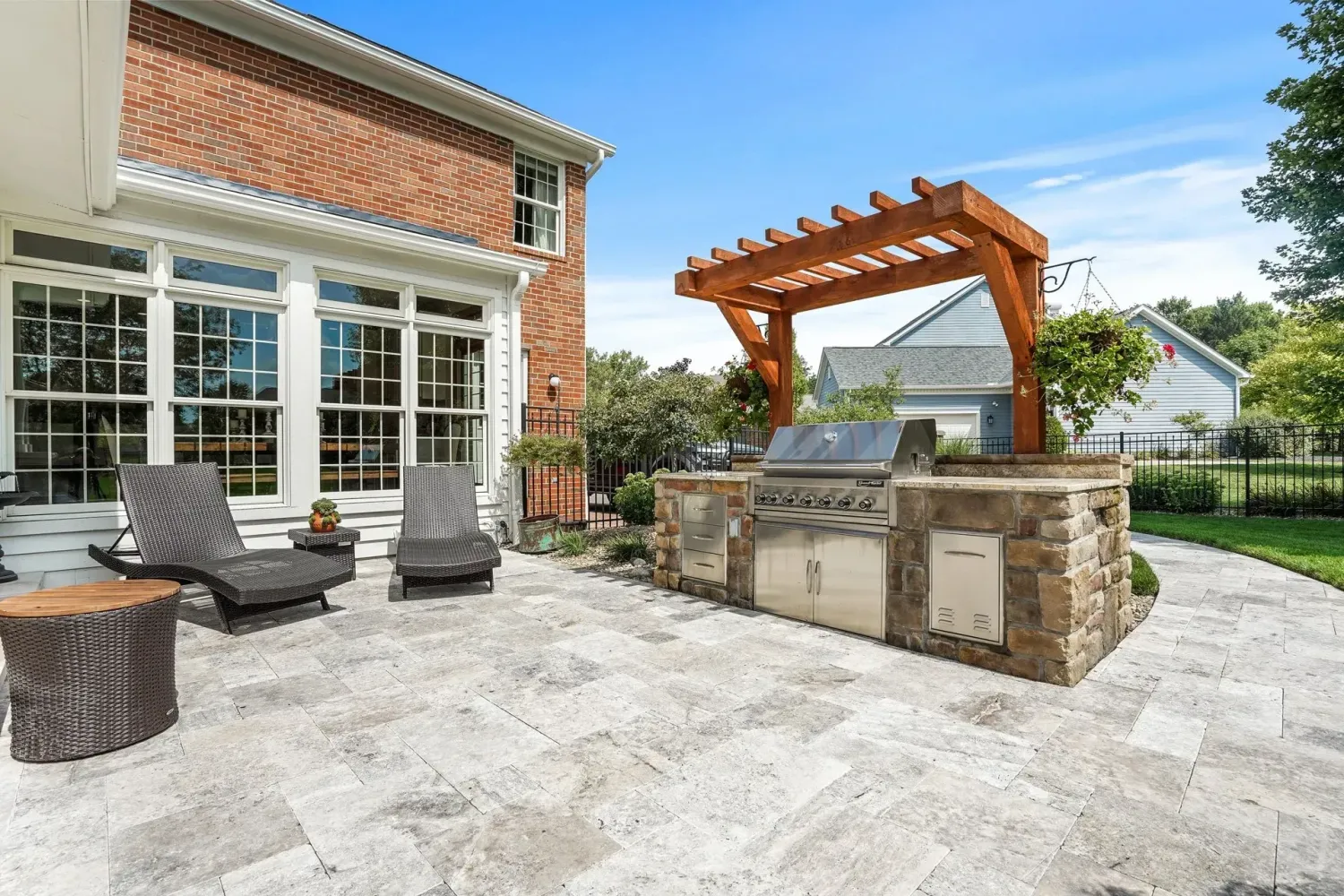
Motorized Louvers, Rain Sensors, and the Sawnee EMC 240V Detail
The feature homeowners actually want, once they see it operate, is the motorized louver roof with an integrated rain sensor. Louvers sit open at 110 degrees for airflow and dappled shade in dry weather. When the sensor detects rain — even a first-drop trigger — the blades close to horizontal inside 12 seconds, and the gutter system routes water to the corner posts and down to grade. The pergola becomes a solid roof for the duration of the storm.
The installation detail that trips up roughly one in three motorized installs in Cumming is the electrical service. The louvers and the LED package run on 120V without issue, but the preferred wiring approach for a premium install with a heater element or integrated screen motors is a dedicated 240V subcircuit. Sawnee EMC is the electric provider across most of Forsyth County, and their service drop on older 2005-era builds was spec’d at 200 amps with limited spare breaker capacity. When the pergola’s heated-screen package pushes the panel past its load calc, the permit comes back requiring a subpanel upgrade before the pergola can be energized.
The fix is simple if it’s scoped at design: budget $1,800–$2,600 for a 60-amp subpanel dedicated to the outdoor living zone, and run it once for the pergola, the outdoor kitchen, and the future pool equipment. The problem is almost always that nobody scoped it — and the homeowner finds out three weeks before the pergola ships.
Sawnee EMC 240V note: For motorized pergolas with heating or screen packages, run a dedicated 60-amp, 240V subpanel at design phase. Retrofitting after the concrete pour doubles the electrical labor cost.
The Forsyth County Permit Path and What the ARB Wants on Your Plan Set
Forsyth County’s Department of Planning & Community Development at 110 E. Main St., Cumming handles pergola permits as an accessory structure under the residential building code. For a freestanding pergola under 200 square feet attached only to a patio slab, the permit is usually a single-page application with the site plan, structural drawings, and anchor schedule. Permit fee runs $120–$180 depending on the valuation you declare.
The county approval is typically faster than the HOA approval. Forsyth’s plan review turns in 7–10 business days. The ARBs at Vickery, Hampton Park, Three Chimneys, and Haw Creek range from 10 days to three weeks. The pattern to budget for: submit HOA and county in parallel, not sequentially, and assume the HOA is the longer critical path.
If you’re in a non-ARB neighborhood in one of the older parts of Cumming — Mashburn Plantation or Sadie Farms — you can skip the ARB step but you still need the county permit. Don’t skip it. The enforcement pattern in Forsyth for unpermitted accessory structures is not aggressive on new construction, but it shows up on the next resale. A $150 permit now is cheaper than a $4,200 re-permit and inspection cycle at closing.
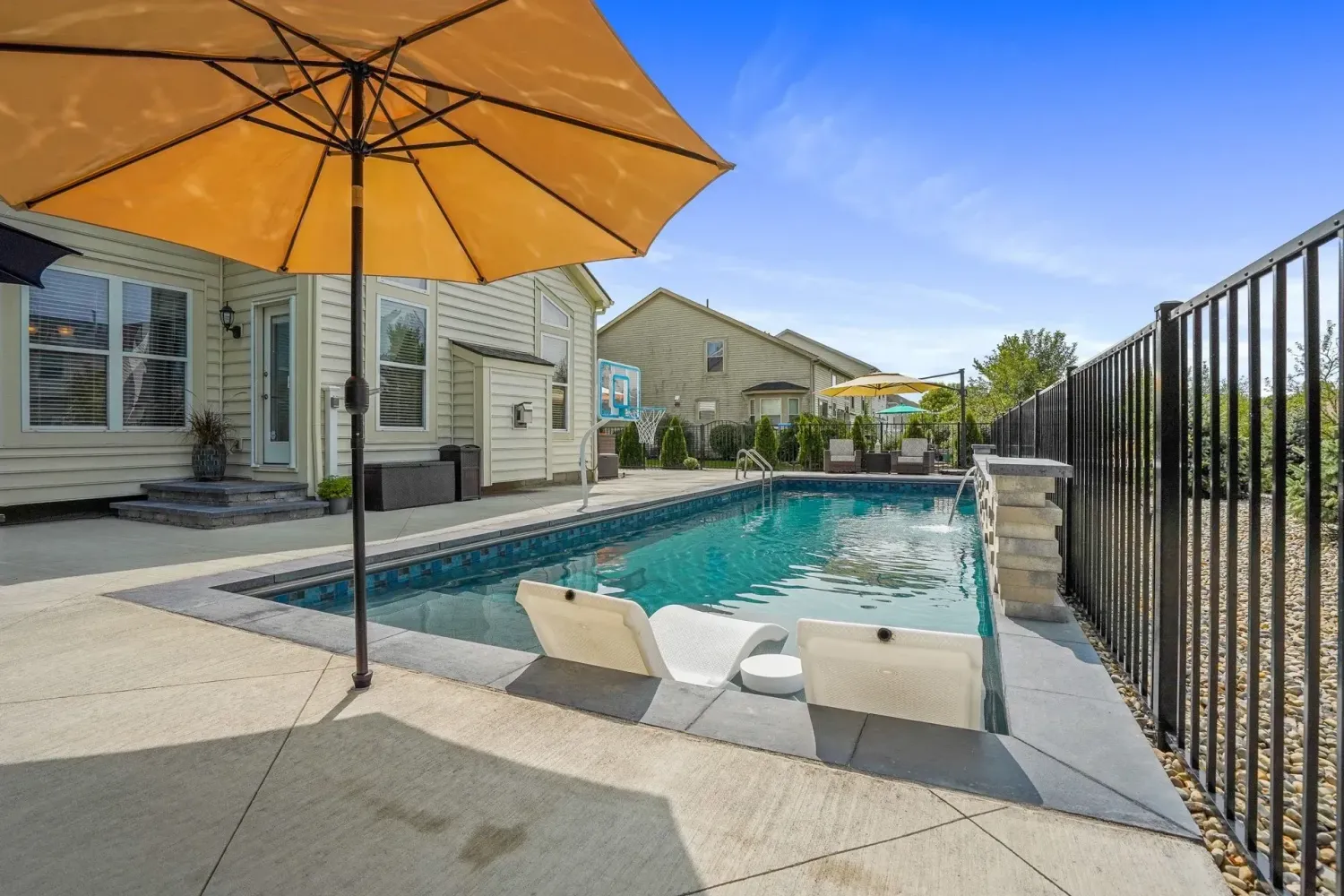
Where Aluminum Pergolas Actually Go Wrong — and How to Avoid It
To be direct: aluminum pergolas are not bulletproof. There are three failure modes we see in Cumming, all of them installation-related rather than product-related. If you know what to ask for up front, none of them will hit your project.
Failure one — footings under-spec’d for clay. Cecil-series red clay in Cumming is dense and high-expansion. A pergola footing sized for generic sandy loam — a 24-inch-diameter, 36-inch-deep pier — will heave in winter freeze cycles and crack the slab. The correct spec for a motorized pergola on Forsyth County clay is a 30-inch diameter, 48-inch depth pier with a rebar cage and an anchor bolt assembly cast in place, not epoxy-set after the fact. If your installer is quoting “standard footings,” ask for the written depth.
Failure two — roof pitch set at zero. Motorized louvered roofs drain through an integrated gutter in the rafter extrusion. That drainage only works if the structure sits at a minimum 1.5-degree pitch from back to front. A lazy install levels the frame for visual symmetry, water pools in the closed-louver position during a Cumming thunderstorm, and the seams start weeping inside a year. The fix costs nothing at install and roughly $3,800 to correct after the fact.
Failure three — screen motors wired to the wrong phase. On a four-side screen package, two motors run the long screens and two run the short. If the electrician wires them without reading the control-board diagram, two screens deploy and two don’t, and the homeowner thinks the whole unit is broken. The fix is a 45-minute service call — but only if the installer is local. A regional installer who drove up from Marietta and billed travel doesn’t come back for a re-wire in two weeks.
The through-line on all three failures: hire a local Forsyth County or Gwinnett installer who has installed a minimum of 20 motorized aluminum pergolas in the past three years. Ask for the list. Anyone who can’t produce it is either new to the category or evasive, and neither is what you want on a $28,000 structure.
Cumming is not Atlanta. The soil is harder, the humidity is higher, and the architectural review boards are tighter. The aluminum pergola category exists because it answers all three conditions at once, and the 40-year math doesn’t favor cedar — not in Forsyth County, not on a property anyone intends to keep.
Aluminum pergolas and outdoor living across 20+ cities within 30 miles of Snellville, GA
Motorized louver systems, StruXure and Pergola-X dealer installs, and ARB-ready plan sets for Windermere, St. Marlo, Vickery, and every premium Forsyth County subdivision.